Key Takeaways
Employee rewarding ROI improves when recognition is tied to measurable business outcomes
Employee rewarding programs can increase retention, productivity, and employee engagement
Tracking employee rewarding ROI helps justify recognition investments and optimize program performance
HR leaders know employee rewarding works. Finance wants to see the numbers.
That gap, between felt knowledge and quantified proof, is where most recognition program budgets stall. The program exists. The spend is approved year to year. But when budget cycles tighten, it is the line item without a number attached that gets cut first.
This post builds the business case. Not the motivational version. The CFO version.
What is employee rewarding, and why does it need a business case?
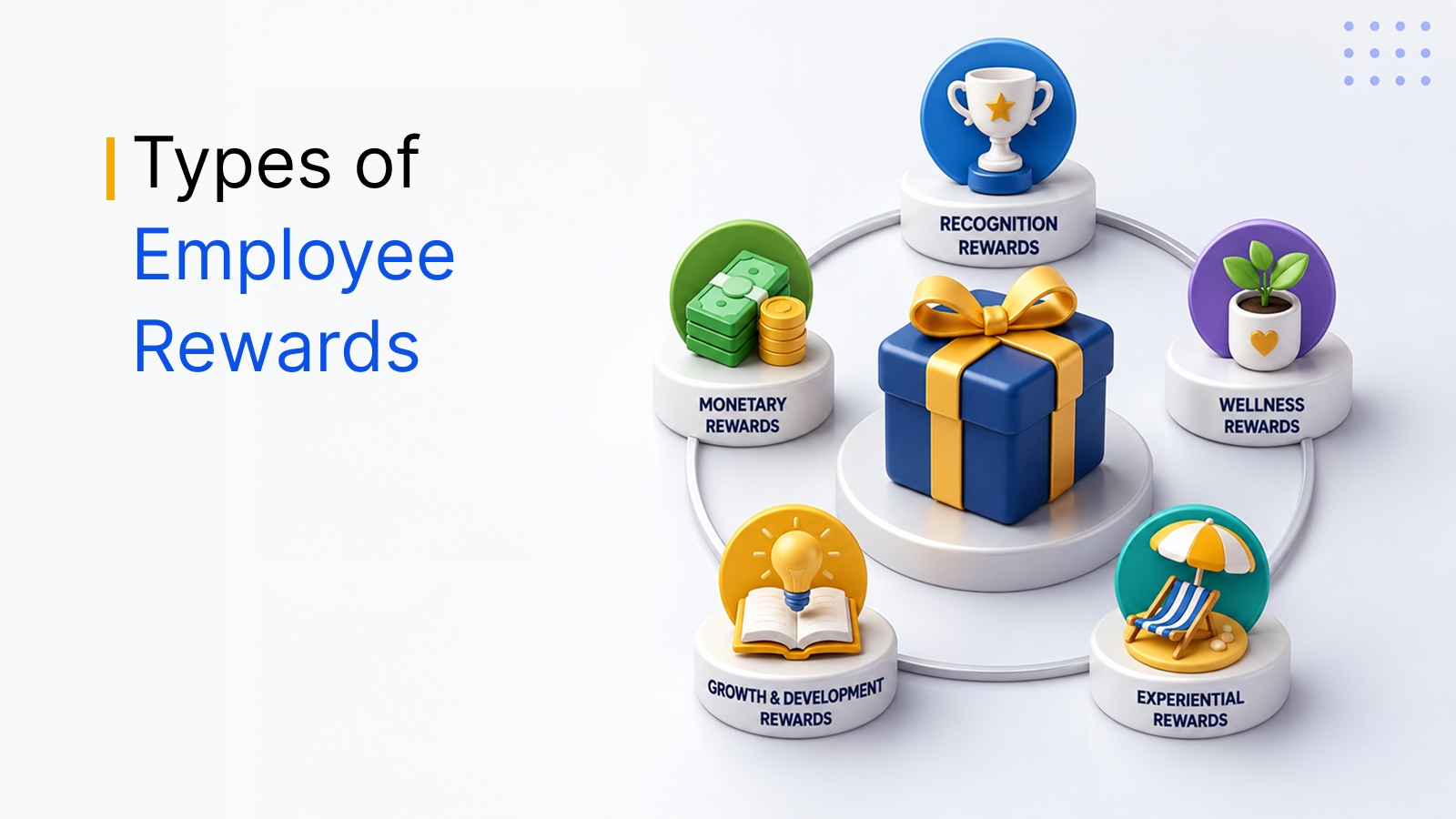
Employee rewarding is the structured practice of recognizing and incentivizing employee contributions through monetary rewards, non-monetary recognition, milestone gifts, peer appreciation, and performance incentives. It is distinct from base compensation. Rewarding is discretionary, timely, and tied to specific behaviors or outcomes.
The business case for employee rewarding exists because its financial impact is measurable at every level of the organization: retention costs, productivity output, absenteeism rates, and eNPS trajectory. The challenge is that most HR teams measure program activity (number of recognitions sent, redemption rates) rather than program outcomes (attrition delta, engagement score movement, manager time savings).
Finance does not fund activity. It funds outcomes. Building the ROI case requires connecting the program inputs to the financial outputs that CFOs track.
What does employee rewarding actually cost?
Understanding the ROI requires understanding the cost baseline. Employee rewarding program costs fall into four categories:
- Reward budget per employee. Industry benchmark is $150 to $300 per employee per year for a structured recognition program, according to Incentive Research Foundation data. Top-performing programs spend $250 to $500.
- Platform cost. SaaS-based recognition platforms typically cost $3 to $8 per employee per month, depending on feature set and contract size.
- Administrative overhead. The time HR and managers spend configuring, nominating, and distributing rewards. Automated platforms reduce this to near-zero for routine recognitions.
- Opportunity cost of not automating. Manual programs using spreadsheets, email, and ad-hoc gift cards typically cost 30 to 40% more in total administration cost than platform-managed programs, according to SHRM benchmarks.
A 1,000-person company running a structured digital rewards program at $300 per employee per year plus $5 per employee per month platform cost spends approximately $360,000 annually. That is the investment. The ROI is measured against it.
Try Empuls
Build a recognition program that proves its value with measurable ROI across retention, productivity, and engagement.
Talk to our ExpertTrusted by 5,000+ companies
What is the ROI of employee rewarding?
ROI from employee rewarding flows through four channels.
Retention savings
Replacing an employee costs 50% to 200% of their annual salary, depending on role seniority, according to Gallup. A 1,000-person company with 18% annual voluntary turnover replaces 180 people per year. If a recognition program reduces voluntary turnover by 5 percentage points, a conservative outcome for structured programs, that is 50 fewer replacements. At an average replacement cost of $30,000 (entry to mid-level), that is $1.5 million in avoided cost annually against a $360,000 program investment. ROI: 316%.
Productivity lift
Gallup finds that highly engaged employees are 17% more productive than disengaged counterparts. Recognition is one of the top five drivers of engagement. A productivity lift of even 5% across a 1,000-person workforce at $60,000 average salary represents $3 million in additional output value annually.
eNPS and engagement improvement
Companies with strong recognition programs show eNPS scores 14 points higher on average than those without structured programs, according to Workhuman and Gallup research. Higher eNPS directly correlates with lower voluntary turnover, lower absenteeism, and higher customer satisfaction scores. Each has its own financial footprint.
Absenteeism reduction
Engaged employees miss 81% fewer days due to disengagement-related absence than disengaged employees (Gallup). Absenteeism costs US employers approximately $1,685 per employee per year in lost productivity. A 10% reduction in absenteeism across 1,000 employees saves $168,500 annually.
How do you calculate employee rewarding ROI?
A simple model HR leaders can take to a CFO conversation:
| Input | Calculation |
|---|---|
| Program cost | (Reward budget per employee + platform cost per employee) x headcount |
| Retention savings | (Voluntary turnover rate reduction x headcount) x average replacement cost |
| Productivity value | (Productivity lift % x headcount) x average fully-loaded salary |
| Absenteeism savings | (Absenteeism reduction % x headcount) x per-employee absenteeism cost |
| Total return | Sum of retention savings + productivity value + absenteeism savings |
| ROI | (Total return - program cost) / program cost x 100 |
For a 1,000-person company at 18% voluntary turnover, using the conservative figures above:
- Program cost: $360,000
- Retention savings: $1,500,000
- Productivity value: $300,000 (conservative 1% lift)
- Absenteeism savings: $168,500
- Total return: $1,968,500
- ROI: 447%
This is the number that belongs in the budget conversation. Not "recognition is important for culture." ROI: 447%.
What happens when employee rewarding is absent or inconsistent?
The cost of not rewarding is not zero. It is the sum of the outcomes above, running in reverse.
Gallup's 2025 State of the Global Workplace report estimates $8.9 trillion lost globally to low engagement, approximately 9% of global GDP. The primary driver of disengagement in most organizations is not poor management or unclear strategy. It is lack of recognition.
Specific costs of absent or inconsistent rewarding:
- Attrition acceleration. Employees who feel underappreciated are 3x more likely to be actively job searching within 12 months (OC Tanner research).
- Manager time cost. Without a structured rewards system, managers spend an estimated 2 to 3 hours per month on ad-hoc recognition tasks that a platform would automate in minutes.
- eNPS drag. Organizations without structured recognition programs show eNPS scores 12 to 16 points lower on average than those with programs. A gap that compounds over time as disengaged employees influence peers.
- Invisible replacement pipeline. High-attrition environments force continuous recruiting, onboarding, and ramp-up cycles that consume HR bandwidth and reduce net output per hire.
The CFO framing: an absent rewards program is not a cost-saving measure. It is a deferred liability with interest.
How does Xoxoday Empuls help you maximize employee rewarding ROI?
01 · Automation
Milestone & peer recognition
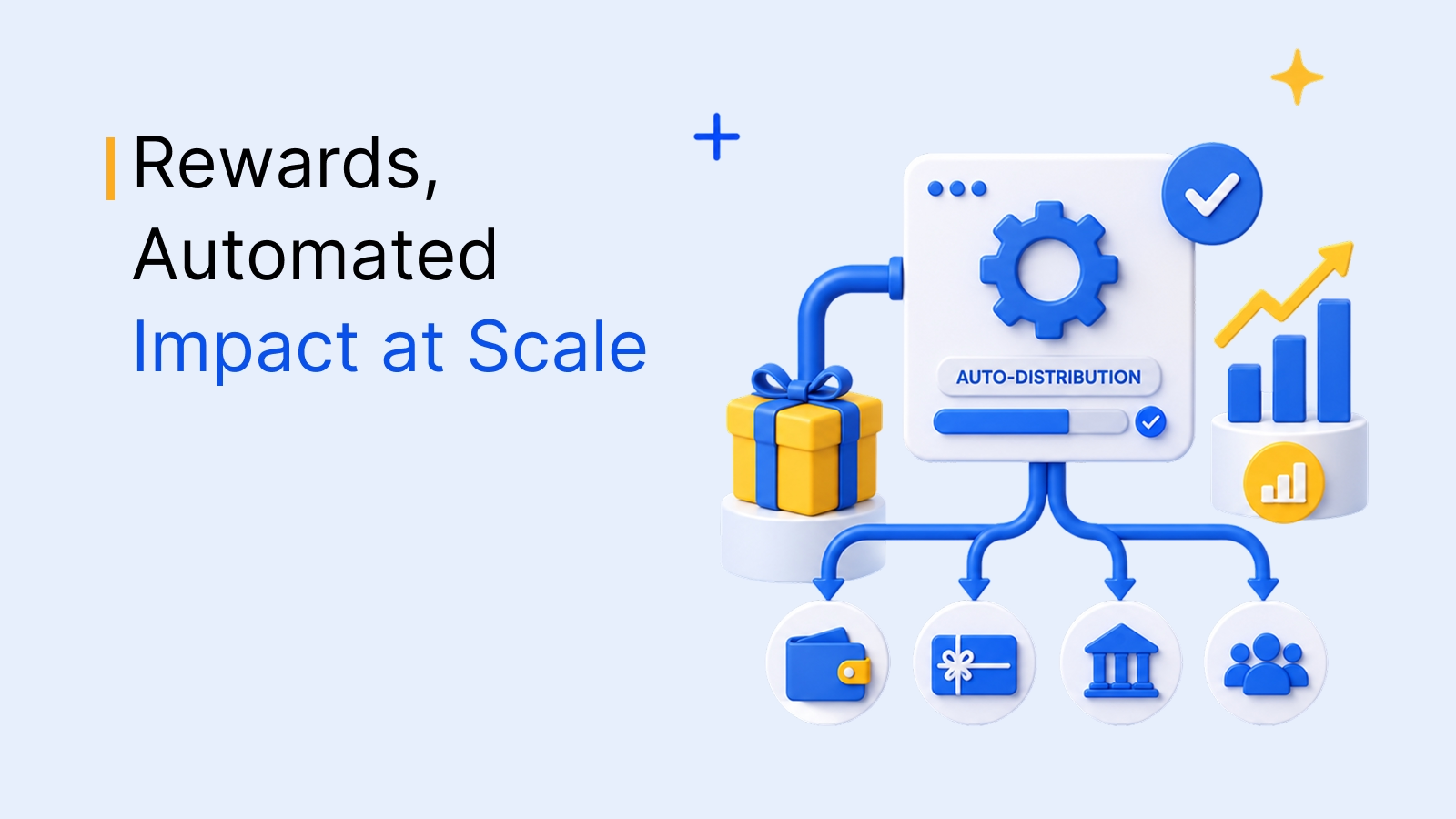
Triggers rewards at service anniversaries and performance events without manual intervention, increasing recognition frequency and reducing administration overhead.
02 · Visibility
Recognition equity reporting
Surfaces recognition distribution by team, location, and demographic so HR can present measurable outcomes to finance.
03 · Manager support
AI-powered nudges
Prompts managers when employees haven't been recognized, converting recognition from an intention into a consistent system behavior.
04 · Global reach
10mn+ reward options
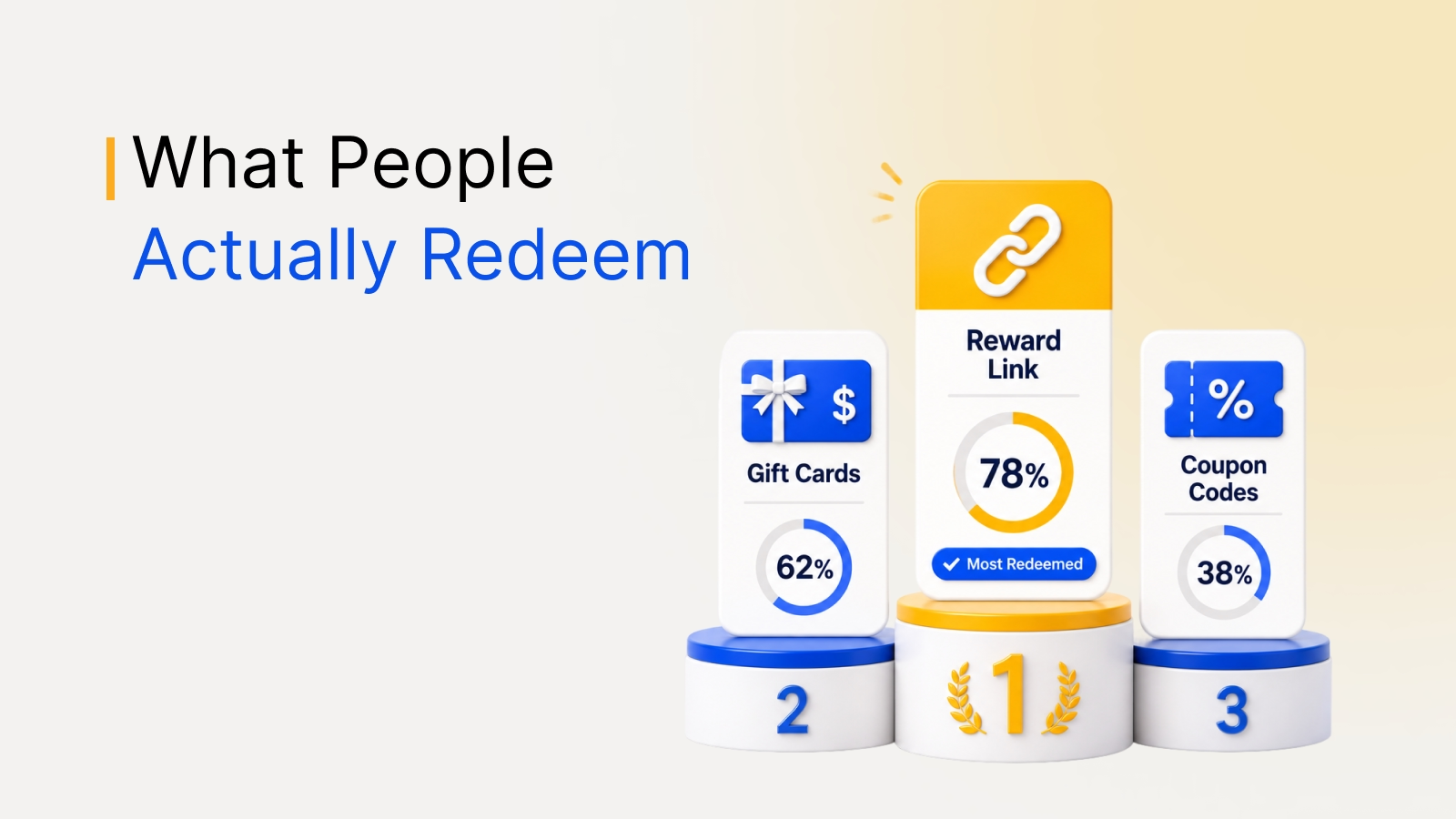
Employees redeem in local currencies from a global catalogue covering gift cards, experiences, merchandise, and prepaid cards.
65M+
Users
across global teams
175+
Countries
with localised rewards
1mn+
Reward options
across catalogues
Your next step to building a rewards program that pays for itself
The ROI of employee rewarding is not hypothetical. It is calculable, defensible, and consistently positive when the program is structured rather than ad-hoc.
The starting point is the audit: what is your current voluntary turnover rate, and what does one percentage point of reduction save you? That number, divided by your program cost, is the minimum ROI threshold your recognition investment needs to clear. In almost every organization at 500+ headcount, structured rewarding clears it comfortably.