Key Takeaways
Different types of rewards support different employee motivations.
The best reward strategies combine monetary and non-monetary rewards.
A balanced reward mix improves engagement, performance, and retention.
Most companies use two or three reward types and treat it as a strategy. Bonuses at year-end. A points catalog. Maybe a recognition channel on Slack. The mix grew over years, not by design, and it shows up in the engagement scores.
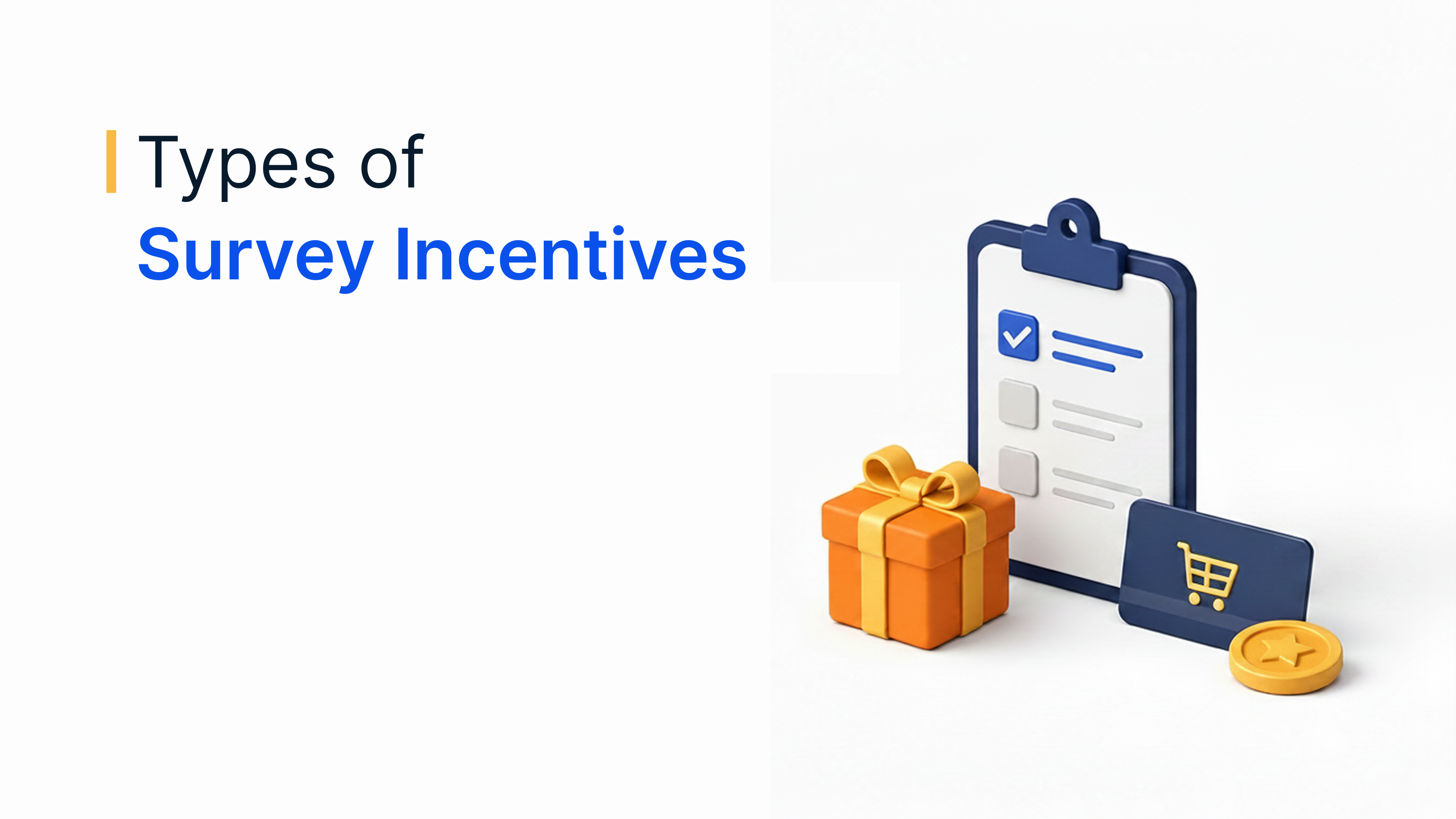
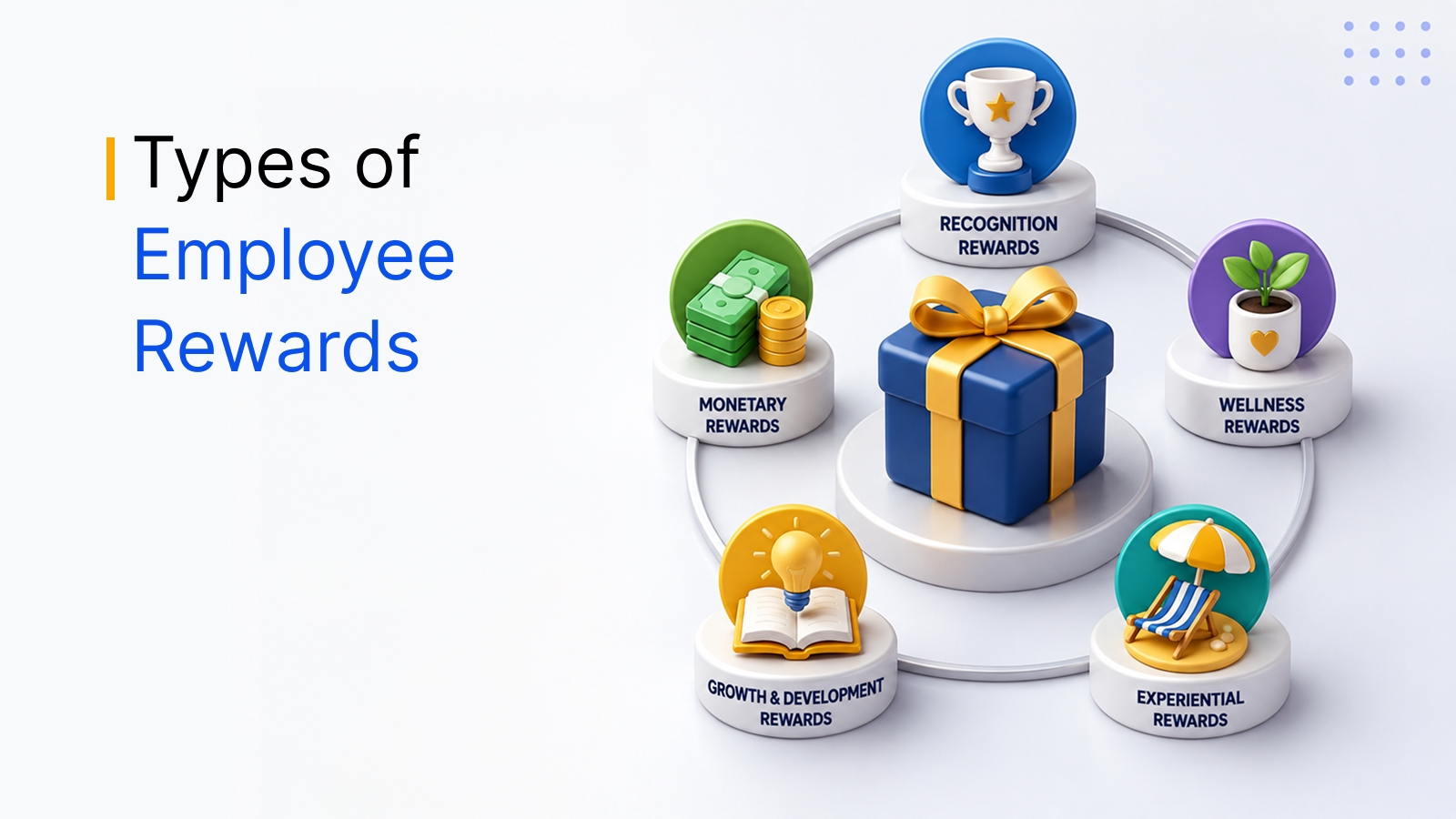
There are six reward types worth knowing: monetary, non-monetary, intrinsic, extrinsic, recognition-based, and experiential. Each solves a different problem. A bonus drives a quarter, recognition keeps a tenured employee from quietly leaving, an experience marks a milestone the employee will remember years later.
This post walks through all six and shows which reward types fit which outcomes: retention, performance, engagement, peer culture. It closes with a framework for building a mix that actually holds.
What are the main types of rewards in the workplace?
There are six categories worth tracking: monetary, non-monetary, intrinsic, extrinsic, recognition-based, and experiential. Every reward your company gives out fits into one or more.
Knowing the six is the easy part. The harder part is that most companies use the same two repeatedly and call it a strategy. Bonuses at year-end. A points catalog for service milestones. That is the whole portfolio.
Gallup finds only 22% of employees say they receive the right amount of recognition for their work. The number has not moved since 2022. The gap is not budget. It is the mix.
A CHRO who can map every reward spend back to one of these six categories already has a clearer strategy than most peers. For more on how rewards differ from benefits, perks, gifts, awards, and incentives, see our guide on the difference between benefits, perks, gifts, awards, incentives, and rewards.
Monetary rewards: the dollar-value category
Monetary rewards have a cash value the employee can spend. Bonuses, raises, spot awards, gift cards, points redemptions, profit sharing. Best when the behavior is measurable and the timing matters. A bonus tied to a closed quarter. A spot award the same week a customer crisis was averted. A referral payout when the hire passes 90 days.
The trap is that monetary rewards normalize fast. A repeat bonus becomes expected. Expected rewards stop motivating.
Non-monetary rewards: everything else of value
Non-monetary rewards are time, flexibility, learning, status, access, autonomy. Best when the goal is sustained behavior or long-term loyalty. SHRM's 2025 Employee Benefits Survey found 68% of organizations rate flexible work benefits as extremely or very important, and 65% rate career development the same. Both deliver outsized retention impact for far less than equivalent cash.
A simple rule: cash buys the next quarter. Flexibility and growth buy the next three years.
Intrinsic rewards: motivation from inside the work
Intrinsic rewards come from the work itself. Mastery, autonomy, meaning, the satisfaction of doing something well. They do the heavier lifting on engagement and tenure. McKinsey's research finds nonfinancial motivators like manager praise, leadership attention, and the chance to lead projects can be at least as effective as the highest-rated financial incentives.
Intrinsic rewards are low cost to scale but design-intensive. They show up in how work is structured, not in the reward budget.
Extrinsic rewards: motivation from outside the work
Extrinsic rewards come from outside the work: pay, perks, public praise, badges, prizes. They are reliable for specific, time-bound behaviors. Hit the number, get the bonus. The action is clear, the response is fast, the loop closes.
The CHRO mistake is treating intrinsic and extrinsic as either/or. They are sequential. Extrinsic rewards open the door. Intrinsic rewards keep the person inside.
| Dimension | Intrinsic | Extrinsic |
|---|---|---|
| Source of motivation | The work itself | External recognition or reward |
| Time horizon | Long-term commitment | Short-term action |
| Cost to scale | Low, design-intensive | High, scales with people |
| Best used for | Engagement, tenure, culture | Specific performance behaviors |
| Risk if overused | Burnout, no recognition | Entitlement, motivation decay |
Recognition-based rewards: the highest ROI category
Recognition-based rewards are public acknowledgments, peer shout-outs, manager praise, milestone celebrations. Gallup's study of 3,447 employees from 2022 to 2024 found those who received high-quality recognition were 45% less likely to have left two years later. The same research estimates a 10,000-person company can save up to $16.1M in annual turnover costs by investing in recognition.
Recognition outperforms cash on retention because it satisfies a need cash cannot: the need to be seen. A wire transfer is anonymous. A shout-out citing a specific thing the person did, and why it mattered, is not.
Experiential rewards: rewards the employee remembers
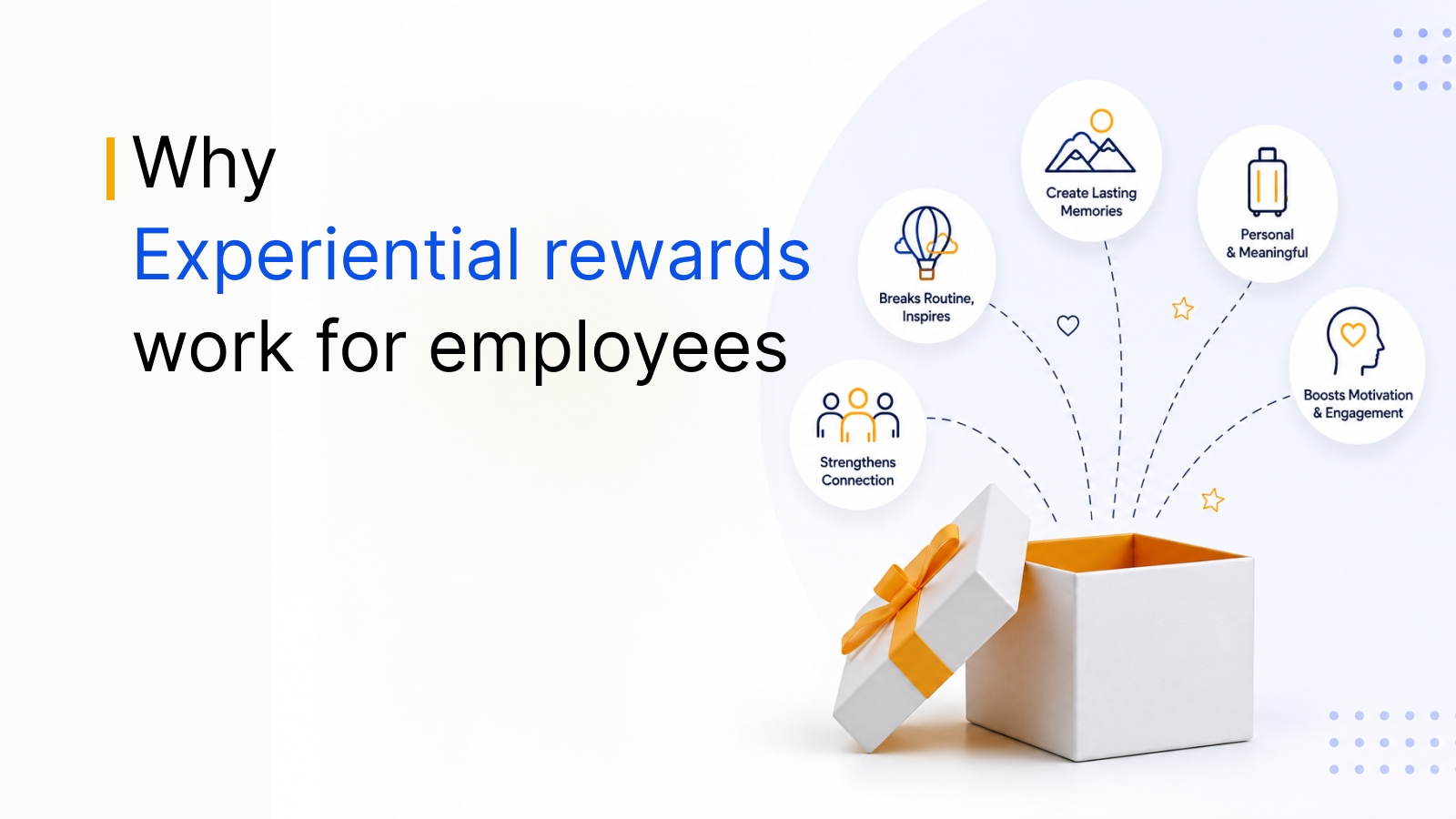
Experiential rewards are trips, events, team adventures, learning experiences. Anything the employee remembers as a moment, not a line item. A trip the employee chose. A course they wanted. A team dinner they will talk about for a year. The memory outlasts the receipt.
Try Empuls
Build a balanced reward mix across all six types with Empuls. Connect recognition, performance, and engagement in one platform.
Talk to our ExpertTrusted by 5,000+ companies
How should a CHRO mix reward types by outcome?
Start with the outcome. Pick the reward.
Most reward strategies invert this. They start with the budget, allocate it across categories, then hope the right outcomes follow. The result is a portfolio nobody can defend when attrition climbs or eNPS drops.
| Outcome you need | Best reward types | Why it works | Frequency |
|---|---|---|---|
| Reduce attrition | Recognition + milestone + non-monetary | Sustained signal the person is seen and growing | Continuous + annual |
| Drive quarterly performance | Monetary + experiential | Time-bound, behavior-linked, memorable | Per cycle |
| Build peer culture | Recognition + intrinsic | Distributes appreciation beyond the manager layer | Weekly or daily |
| Celebrate milestones | Experiential + recognition | Marks the moment in a way the employee remembers | Per milestone |
| Engage disengaged teams | Intrinsic + non-monetary | Restores meaning when extrinsic levers have failed | Ongoing |
How Xoxoday Empuls brings every reward type into one platform
01 · Recognition
Peer and manager shout-outs
Managers send peer-recognition shout-outs tagged to company values, with the system nudging when reports haven't been recognized in 30 days.
02 · Redemption
Points across 10mn+ options
Recognition attaches a points-based reward the employee can redeem across 10mn+ options in 150+ countries.
03 · Metrics
Recognition analytics
Recognition data lives next to eNPS data, pulse survey data, and the milestone calendar for visibility and adjustment.
04 · Consolidation
One unified platform
All six reward types in one place stops fragmentation and makes the mix visible, measurable, and adjustable instead of theoretical.
65M+
Users
across global teams
175+
Countries
with localised rewards
1mn+
Reward options
across catalogues
Common mistakes to avoid when designing a reward system
Five mistakes show up in almost every program that underperforms.
- One reward type carrying the entire strategy. Usually monetary. Cash is easy to budget and hard to differentiate on. A program that is 90% cash is competing on price with every other employer.
- Reward without recognition. A bonus lands in the bank with no story attached. The employee knows they got the money. They do not know what it was for, who noticed, or whether it will happen again. The reinforcement is lost.
- Manager dependency. Programs that rely entirely on managers fail predictably. Managers are busy and recognition gets uneven, so 20% of the team ends up getting 80% of the appreciation.
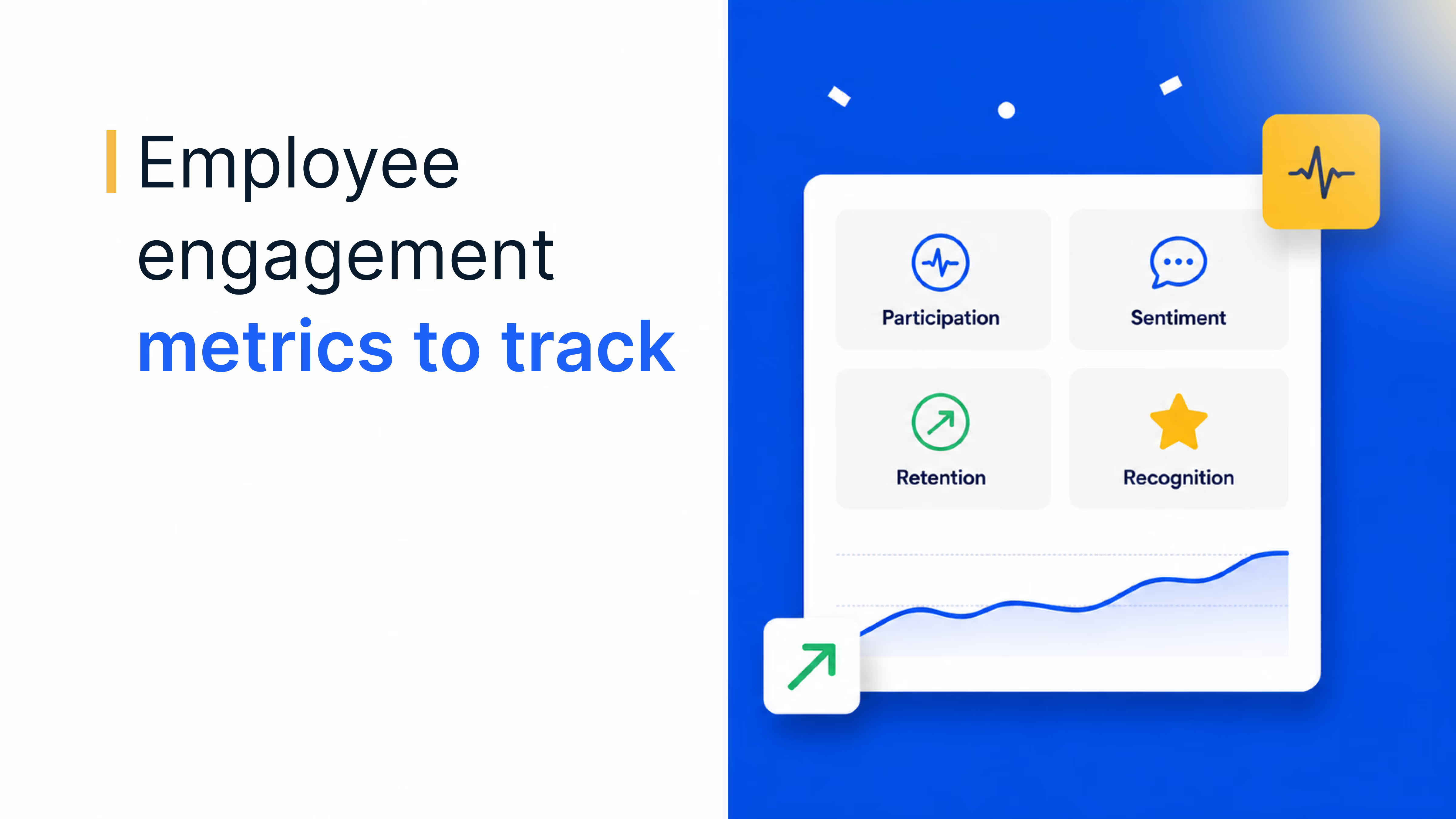
- No data loop. Reward programs without analytics are budget allocations, not strategies. A CHRO should be able to answer: who has not been recognized in 60 days, which team has the most uneven distribution, which reward type drives the strongest engagement lift.
- Mistaking activity for impact. A high volume of recognitions is not a high quality of recognition. Five generic "great job" messages a week are worth less than one specific, timely, personal one.
Your next step toward a reward mix that works
A reward mix is not a list. It is a series of choices about which outcomes you need and which reward types deliver them. The CHROs who get this right do not have bigger budgets. They have clearer frameworks for spending the budget they already have.