Key Takeaways
Cashback and rewards influence behavior by encouraging repeat purchases and engagement.
Well-designed reward programs shape customer decisions beyond price incentives.
Understanding reward psychology helps brands improve retention and loyalty outcomes.
Your competitor just cut prices by 10%. You offered the same discount as cashback. The consumer chose you. That is not a coincidence.
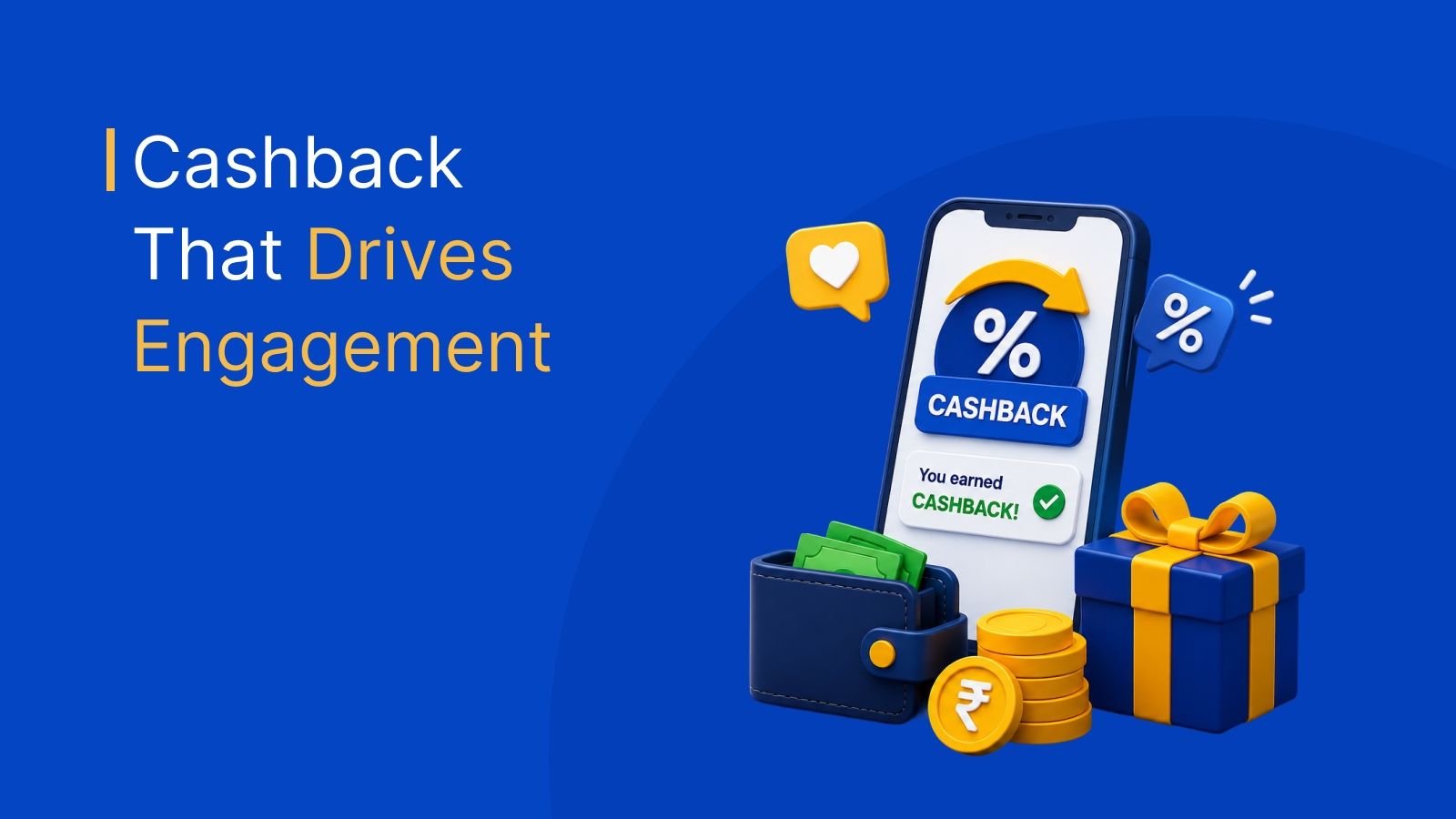
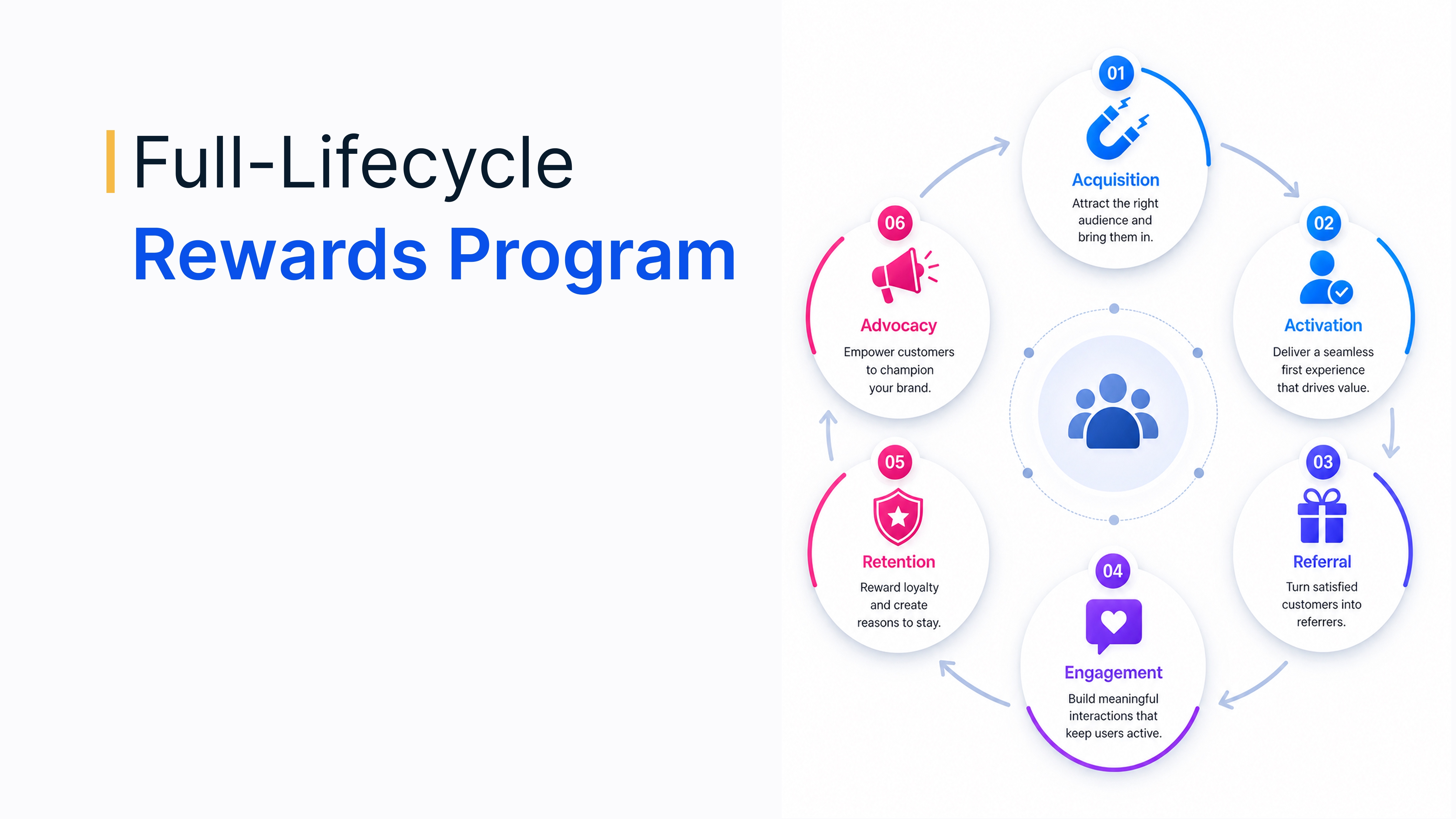
Cashback and rewards programs have crossed the threshold from optional retention tactic to behavioral infrastructure. The global cashback and rewards app market was valued at $4.14 billion in 2025, projected to reach $7.73 billion by 2034. But the number most growth marketers and marketing ops teams should care about is smaller: according to Deloitte's 2025 Consumer Loyalty Survey, 56% of consumers actively increase their spending because of a loyalty program. Not because of a price cut. Because of how the program makes them feel about spending.
This post explains why, with the science and data that most reward program guides skip over.
Cashback is not a discount: the framing effect explained
A $90 product and a $100 product with 10% cashback have identical net prices. They produce different purchase decisions.
This is the framing effect in action. When consumers receive cashback, they perceive it as a windfall gain rather than a price reduction. Research from ESADE Business School and Tuck School of Business shows that consumers treat cashback payments as discretionary windfalls, money that feels like it arrived from outside their normal budget. This makes them more likely to spend that cashback back through the same platform, creating a compounding purchase loop that a straight discount never generates.
Discounts reduce price. Cashback rewards behavior. That distinction determines whether your program is competing on price or building a behavioral relationship.
For growth marketers managing customer acquisition cost, this means cashback delivers something a price cut cannot: a reason to come back that is psychologically distinct from the original purchase decision.
The neuroscience of reward anticipation: why earning feels better than saving
Dopamine does not fire when you receive a reward. It fires when you anticipate one.
Neuroscience research consistently shows that the brain's reward circuit is most active during the seeking phase, not the receiving phase. This is why a notification that says "You've earned cashback on your last order" produces a stronger behavioral response than a static discount applied at checkout. The anticipation of receiving the cashback, checking the balance, and deciding where to spend it generates repeated dopamine activation across multiple touchpoints.
Variable reward schedules amplify this further. Programs that vary the size or timing of rewards, such as bonus cashback on certain days, surprise multipliers for category spending, and tier-unlock moments, produce stronger habitual engagement than fixed-rate programs. The unpredictability keeps the seeking loop active. This is the same mechanism that makes certain apps compulsive and certain loyalty programs genuinely sticky.
For marketing ops teams building program mechanics, the practical implication is clear: reward frequency and unpredictability often matter more than reward size. A program that pays out smaller rewards more often, with occasional surprises, will outperform a program that pays out larger rewards quarterly.
Design reward programs that change behavior
Deploy cashback and rewards infrastructure that drives repeat purchases through psychology-backed mechanics and instant delivery.
Talk to our ExpertTrusted by 5,000+ companies
How reward timing shapes behavior differently
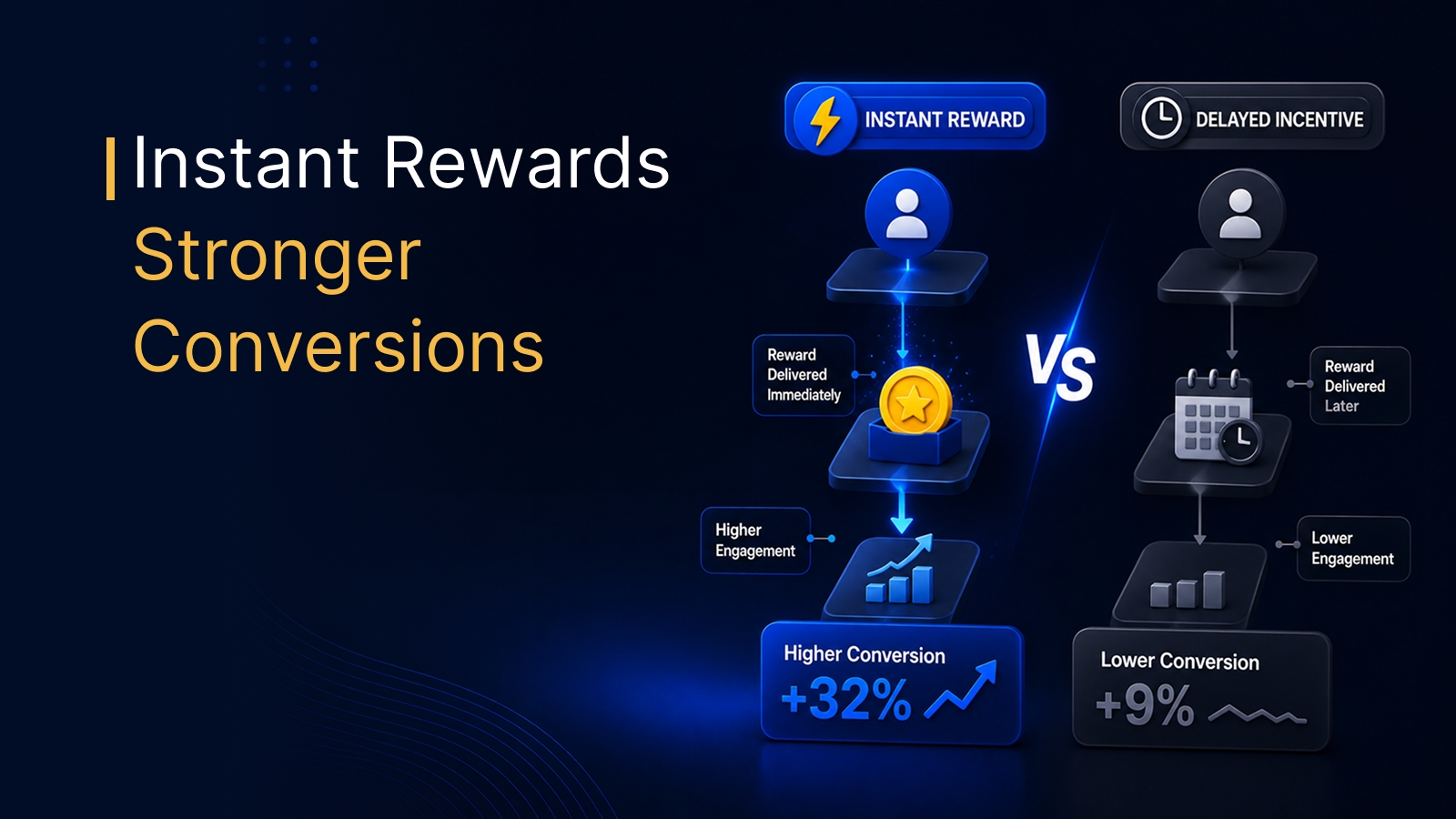
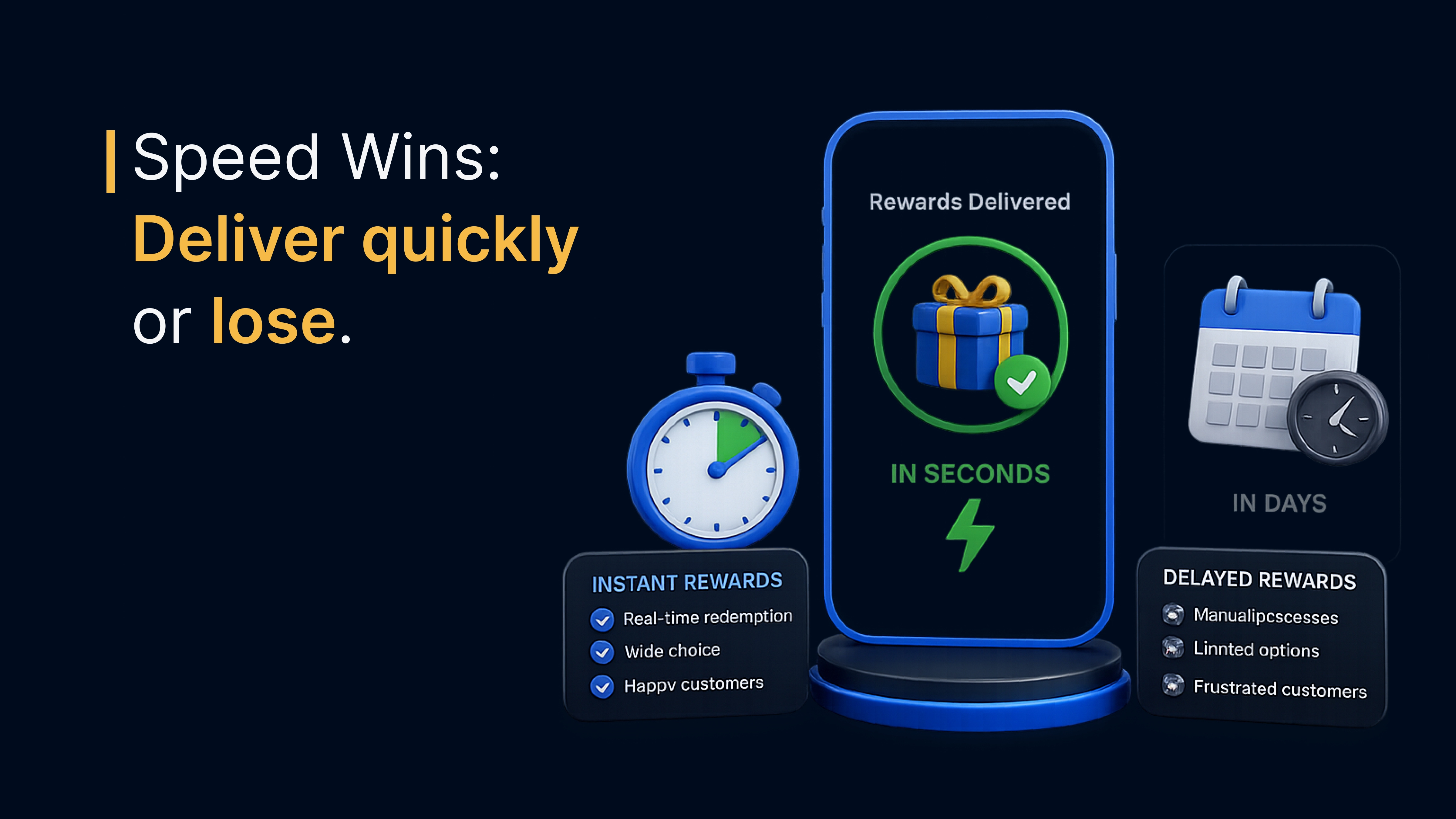
Not all reward delivery is equal. The timing of when a consumer receives their reward produces measurably different behavioral outcomes.
| Reward type | Behavioral effect | Best use case | Redemption rate |
|---|---|---|---|
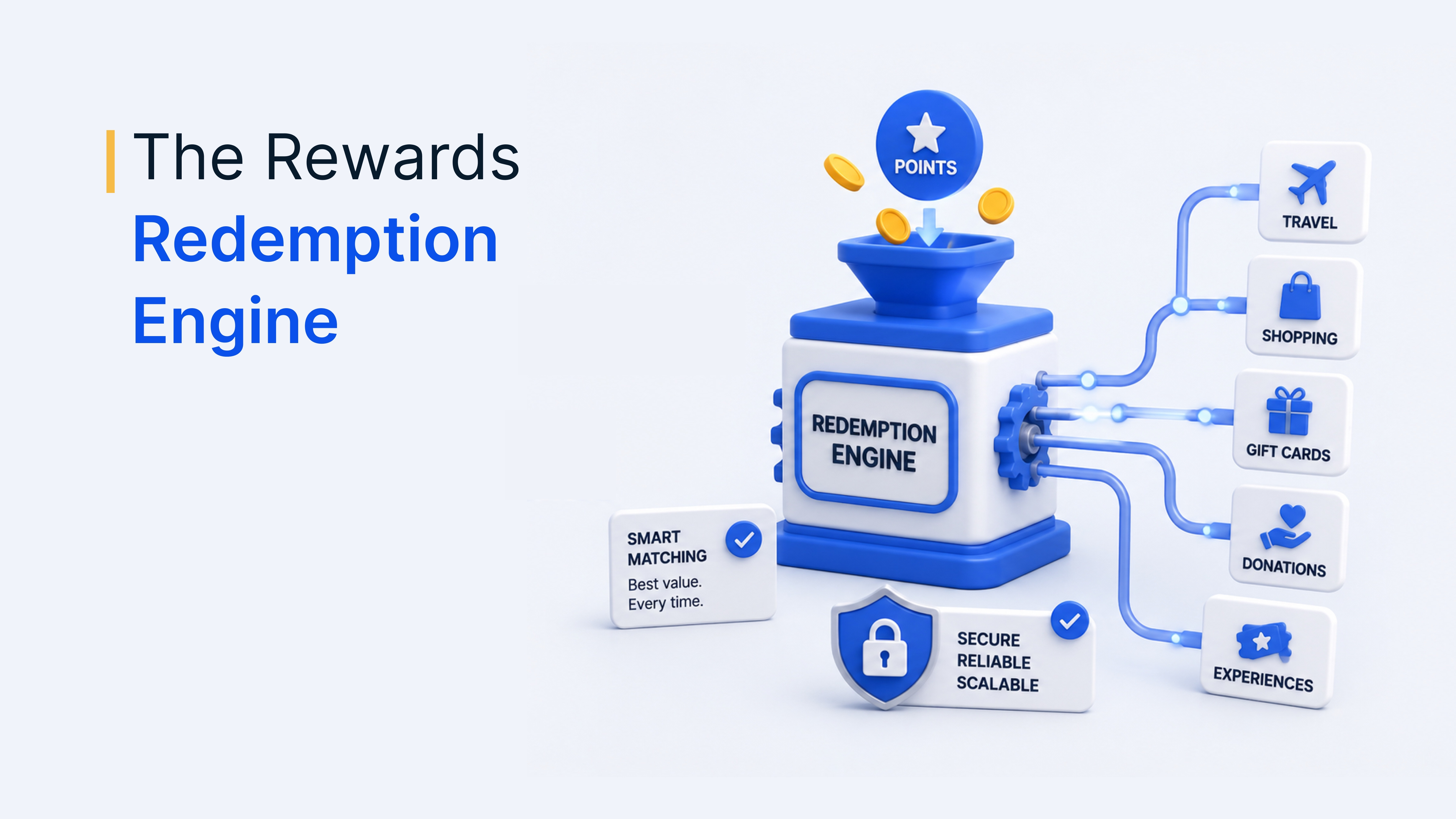
| Instant cashback | Immediate dopamine response; strong repeat purchase within 7 days | Transaction frequency, mobile apps, fintech | High (65 to 80%) |
| Deferred points | Builds habit over time; lower urgency to act | Long-term loyalty, high-value purchases, travel | Medium (40 to 55%) |
| Tiered unlocks | Creates aspiration and status; drives higher spend per visit | Premium customers, subscription programs | High among top tier |
| Gift cards / catalog | Tangible, shareable; strong emotional association | B2B incentives, survey rewards, gifting | Very high (85%+) |
Instant cashback generates a strong dopamine response because the connection between action and reward is immediate and unambiguous. According to behavioral research on temporal discounting, the subjective value of a reward decreases the longer the delay. A $5 reward received in 10 seconds is psychologically more valuable than a $7 reward received in 30 days.
Deferred programs are not wrong. They are better for building long-term habit and driving aspirational behavior, particularly in travel and high-ticket categories. The question is: what behavior does your program actually need to produce?
What the data says: cashback's measurable impact on spending and loyalty
The behavioral theory holds up under measurement.
- Ecommerce platforms offering cashback rewards see 20% higher repeat purchase rates and 22% more returning customers (Rivo, 2026).
- 72% of consumers say loyalty programs make them more likely to spend with their preferred brand; 56% actively increase their spending because of the program (Deloitte, 2025).
- 80% of consumers ranked cashback as their top preferred reward type (Wildfire/PR Newswire, 2022).
- 64% of loyalty program members say cashback on purchases is their most valued reward type (Digital Silk, 2026).
- Loyalty programs generate 5.2x more revenue than their cost, with 83% of program owners reporting positive ROI (Rivo, 2026).
The regional picture reinforces this. In the GCC, the loyalty market reached $3.27 billion in 2025 and is growing at 13.8% CAGR through 2029, driven by banks and fintech platforms embedding rewards directly into everyday card spend. In Indonesia, cashback spending is forecast to grow at 14.1% CAGR through 2029, driven by consumer demand for instant gratification and a preference for cashback over traditional discounts. In the Philippines, growth marketers in BPO and fintech are using cashback to drive digital wallet adoption among a consumer base that responds strongly to immediate, tangible financial rewards.
The common thread across markets: consumers who are rewarded more frequently, and can redeem easily, spend more and stay longer.
How Xoxoday Plum helps businesses deploy rewards that actually change behavior
Understanding reward psychology is straightforward. Executing it at scale across multiple countries, currencies, and user segments is where most programs break.
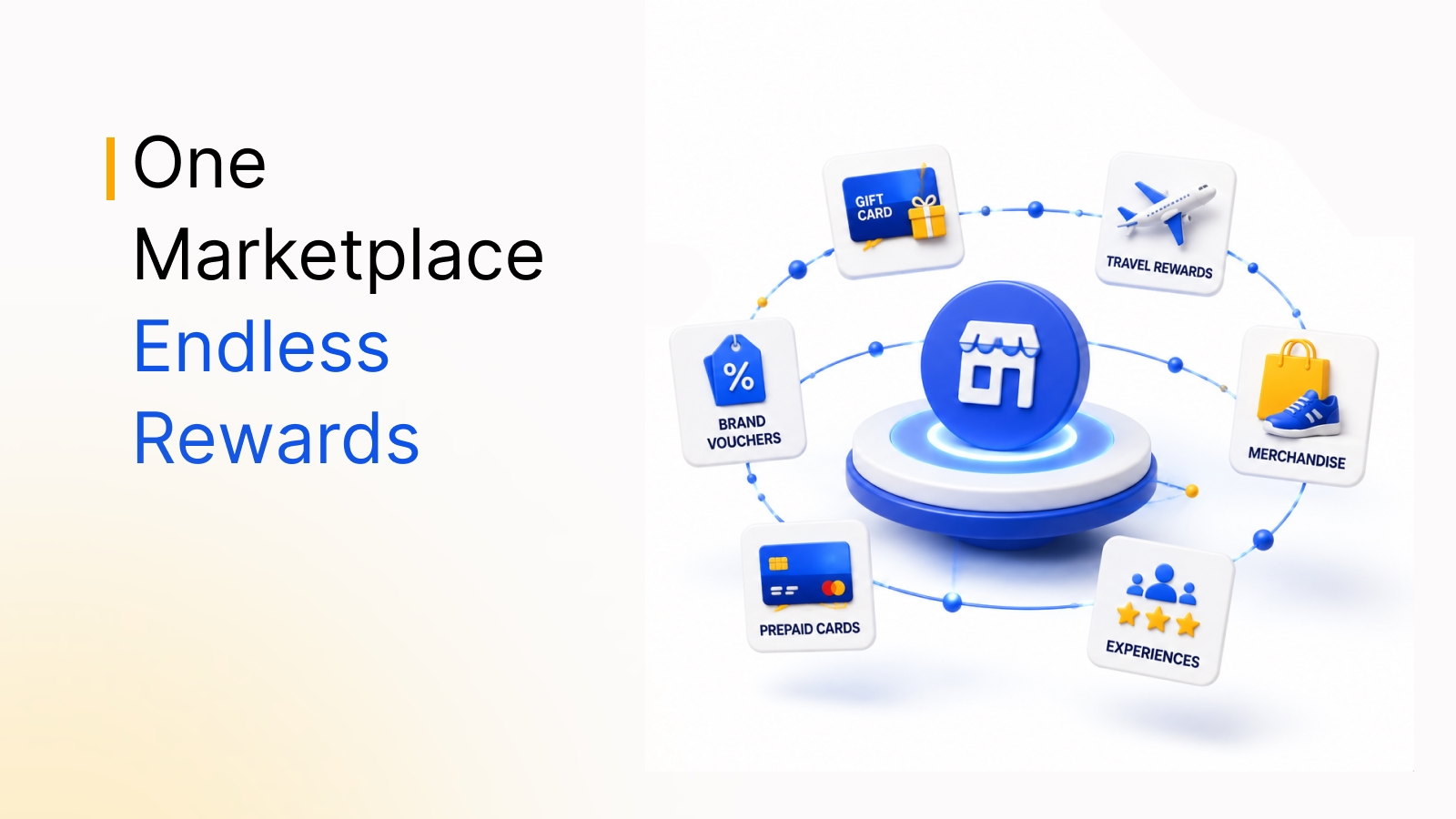
Xoxoday Plum is the delivery infrastructure for reward programs that need to work like the behavioral science says they should. It supports three reward formats that map directly to the behavioral outcomes above:
01 · Instant
Reward links and codes
Immediate post-action reinforcement via email, SMS, or WhatsApp. No login required. High redemption rates because friction is near zero.
02 · Accumulation
Reward points
Points accumulate across transactions, creating the anticipation loop that sustains long-term behavior change.
03 · Tangible
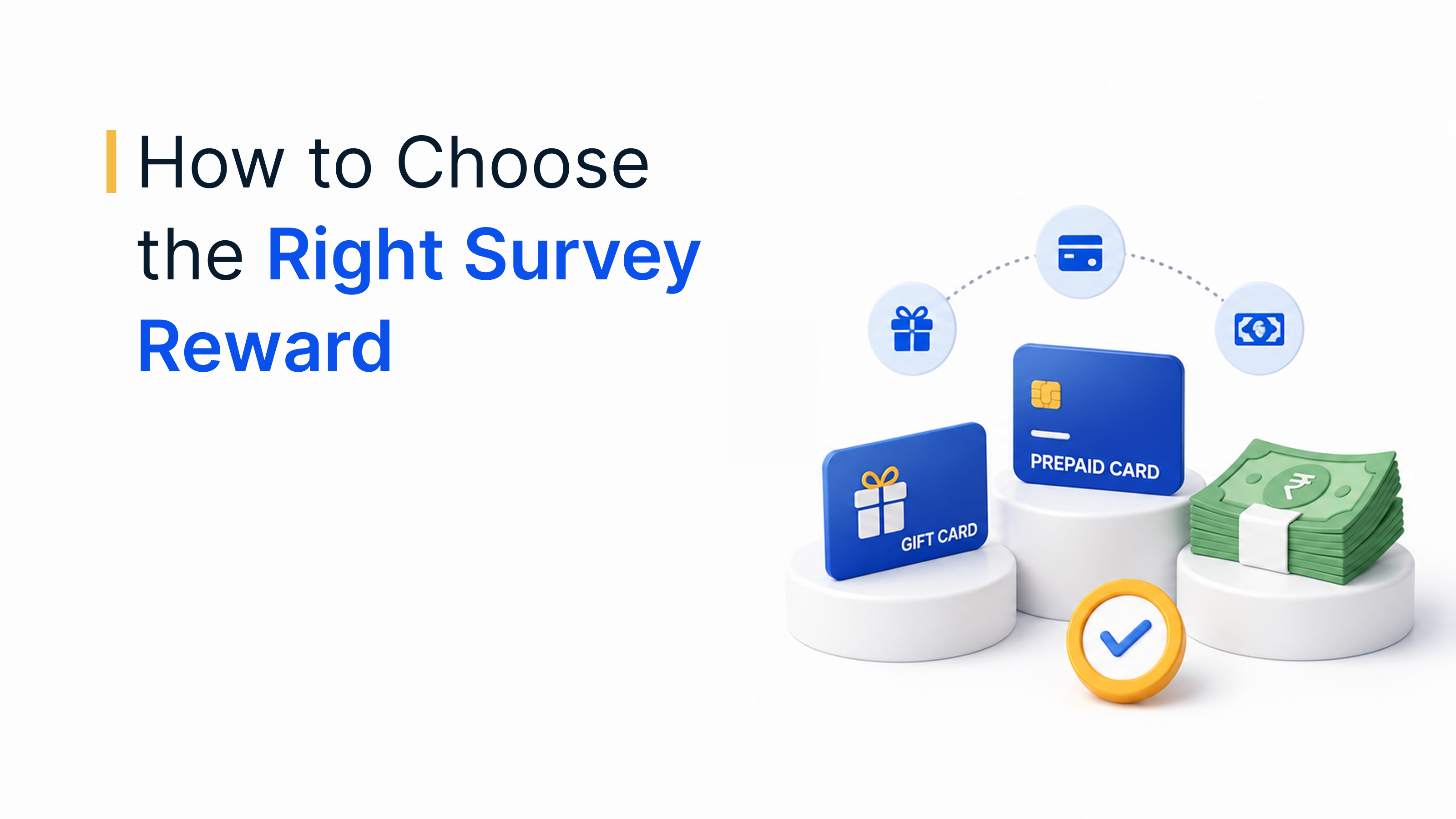
Gift cards and catalog
For B2B incentives, survey rewards, and channel partner programs where tangible rewards produce stronger emotional association than cash equivalents.
04 · Global
Multi-currency delivery
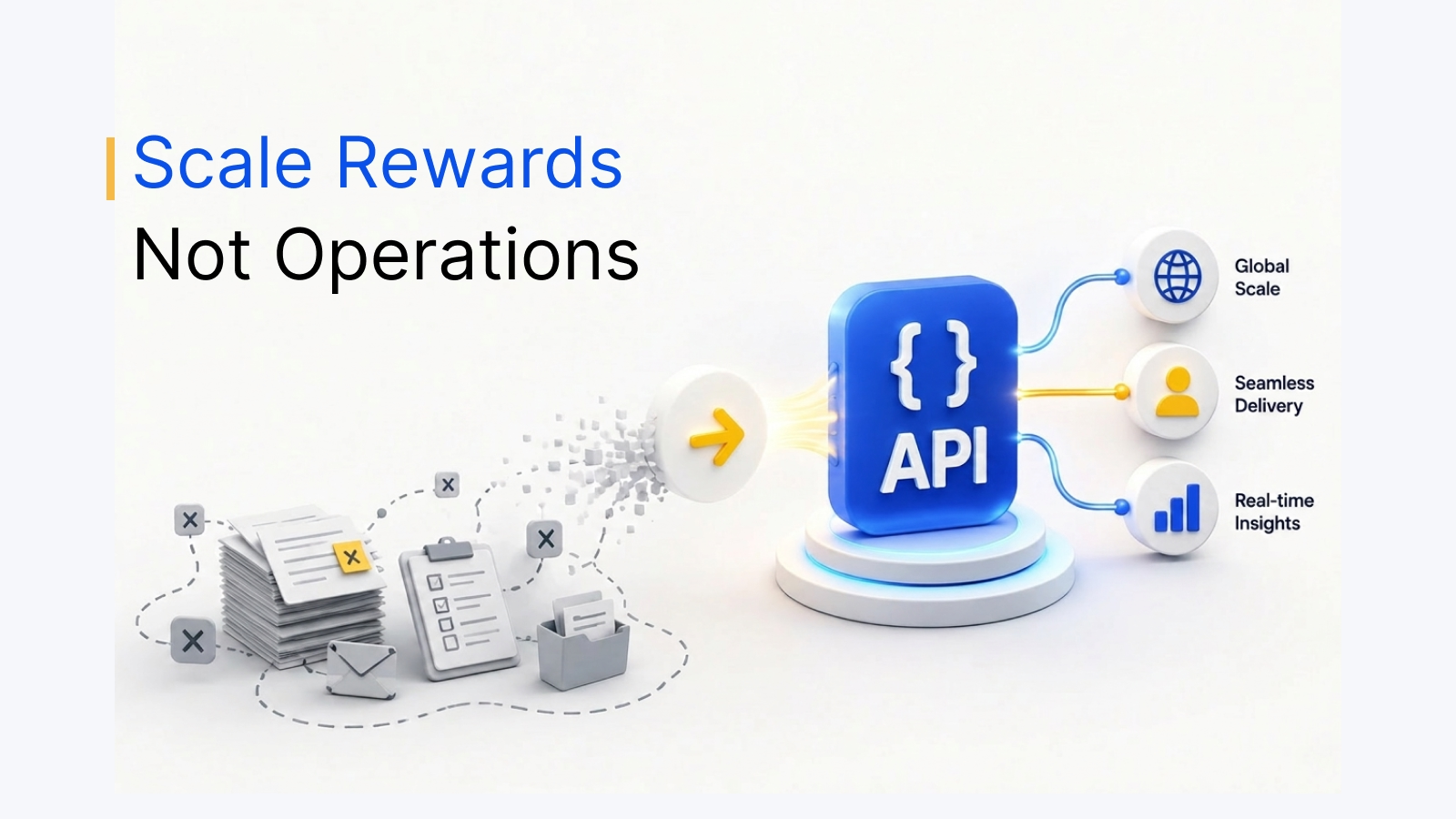
API-first integration into existing CRM, marketing automation, and ecommerce stacks with automatic triggering.
150+
Countries
with localised rewards
1mn+
Reward options
across catalogues
65M+
Users
across global teams
Your next step: diagnosing whether your reward program drives behavior or just costs money
Most reward programs fail not because the incentive is wrong but because the delivery is broken. The cashback is too small to notice, the redemption process too complicated to bother with, or the reward arrives three weeks after the action it was supposed to reinforce.
Start with three diagnostic questions:
- What is the median time between the triggering action and the reward delivery? If it is more than 48 hours for a transactional reward, the behavioral loop is leaking.
- What is your redemption rate? Below 50% means the reward is not landing with enough tangibility to drive behavior change.
- Are you varying reward size and timing, or paying out a flat rate every time? Flat-rate programs plateau. Variable schedules sustain engagement.
The data on cashback and rewards is clear. Consumers who are rewarded well spend more, stay longer, and refer more often. The gap between knowing this and building a program that executes on it is an infrastructure and design problem, not a budget problem.