Key Takeaways
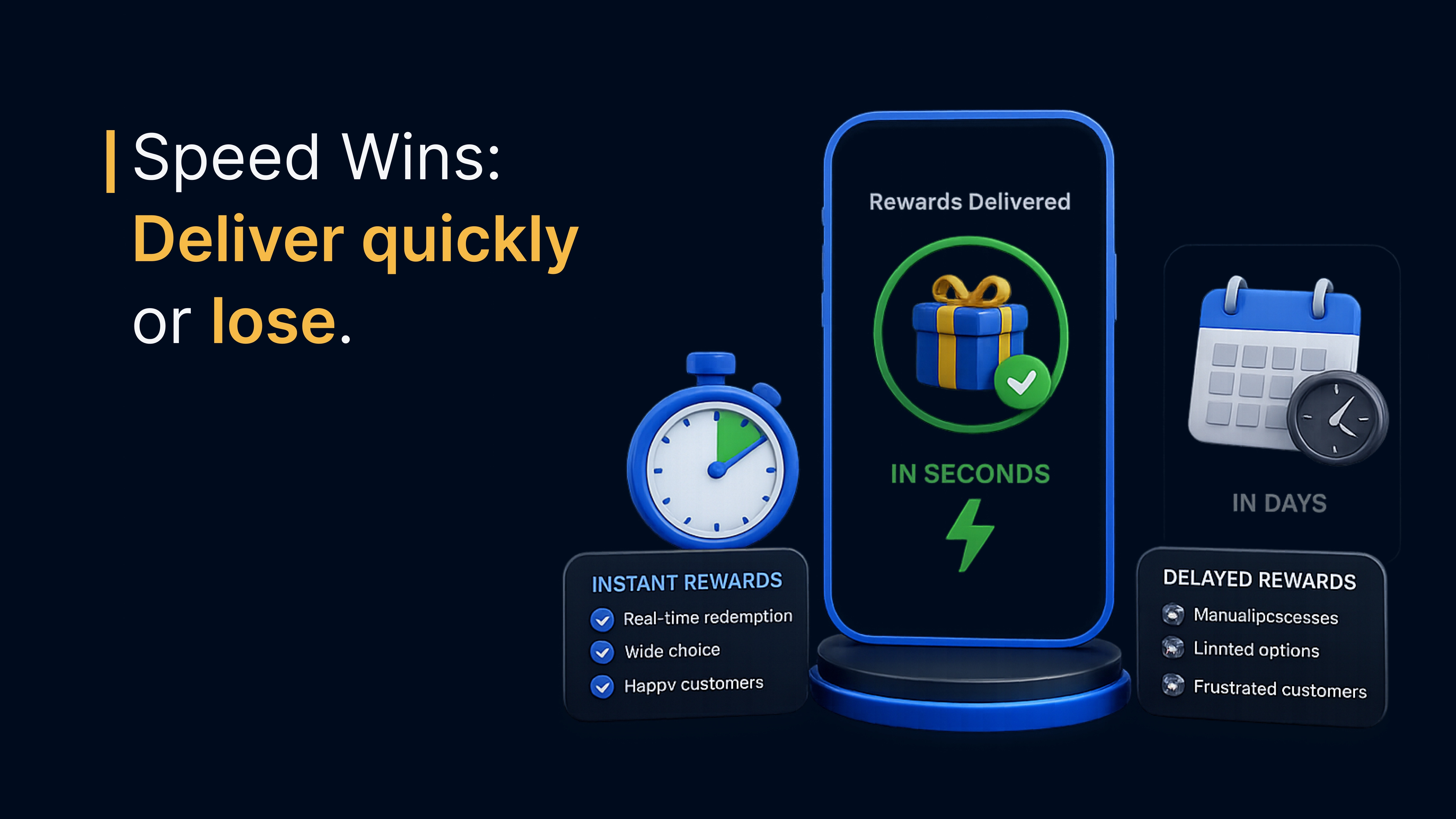
Virtual prepaid Visa cards are issued instantly and work anywhere Visa is accepted, eliminating postal delays and physical card management overhead
Common restrictions include cash withdrawal limits, potential FX markups on cross-border spend, and blocks on recurring billing and restricted merchant categories
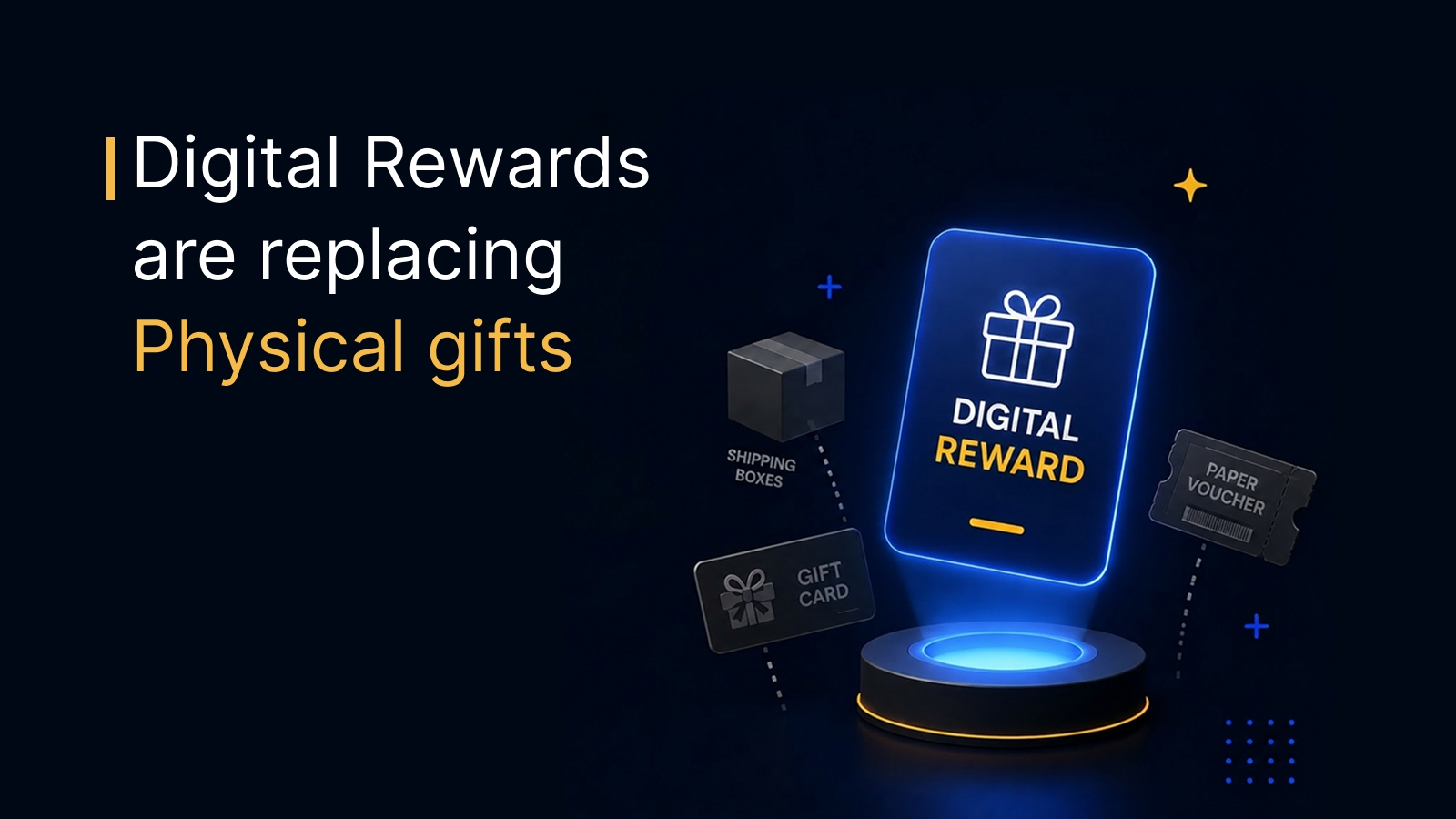
Virtual prepaid Visa cards beat physical gift cards on speed, global reach, and recipient convenience, and 25% of enterprise reward programs prioritize them for that reason
A virtual prepaid Visa card is a digital payment card issued instantly, held in a digital wallet or password-protected account, and spent online or in-store anywhere Visa is accepted. Unlike physical cards that arrive in the mail, virtual cards are active within seconds of issuance. For corporate gifting, employee rewards, and incentive programs, that speed matters.
This guide explains what virtual prepaid Visa cards are, how they work, what restrictions apply, and how businesses use them to send rewards across borders without the waiting, the fraud risk, or the friction of physical mailboxes.
What is a virtual prepaid Visa card?
A virtual prepaid Visa card is a 16-digit card number, expiration date, and CVV generated by an issuer and delivered digitally rather than printed on plastic. The card is:
- Instantly active. The card works the moment the recipient receives the credentials, no activation call required.
- Denomination-locked. The card is pre-loaded with a set amount of money in a specific currency. Once spent, the balance is gone unless reloaded.
- Open-loop. It works anywhere Visa is accepted-online retailers, in-store terminals, or ATMs where cash withdrawal is allowed.
- Address-optional. Many virtual card programs do not require the recipient to register a physical address, making them accessible globally.
The card is issued by a bank partner and runs on the Visa network, so recipients experience it as a standard Visa card. The only difference is delivery-email or SMS instead of Royal Mail.
How virtual prepaid Visa cards work
The workflow is streamlined because there is no postal infrastructure involved:
- The business or platform generates a list of recipients and reward amounts.
- The card issuer provisions virtual cards in the requested currency and denomination.
- Card credentials (number, expiry, CVV) are sent to the recipient via email or SMS.
- The recipient receives the card and can use it immediately at any online or in-store Visa merchant.
- The recipient can also add the card to digital wallets (Apple Pay, Google Pay) if they prefer.
- Depending on the issuer, the recipient can check the remaining balance online or via SMS.
From the payer's side, the experience is equally simple. Instead of managing 500 physical gift cards at the office, a procurement team uploads a CSV of recipients and amounts. The platform handles provisioning, delivery, and compliance. Rewards land in recipient wallets in minutes rather than days.
Send instant global rewards
Plum makes it simple to issue virtual prepaid Visa cards and other reward formats to employees, partners, and customers across 150+ countries in 80+ currencies.
Explore Plum rewardsTrusted by 5,000+ companies
Common purchase restrictions on virtual prepaid Visa cards
Virtual prepaid Visa cards are not credit cards. They are pre-funded, single-use or multi-use instruments with built-in restrictions. The restrictions exist for risk and compliance reasons, and they are worth understanding before a large campaign launch.
| Restriction type | Typical behavior | Why it matters |
|---|---|---|
| Cash withdrawal at ATM | Often blocked or limited to a percentage of card value | Prepaid card issuers reserve cash withdrawals for compliance reasons; some programs allow limited ATM access (e.g., 20% of balance) to deter cash-out arbitrage |
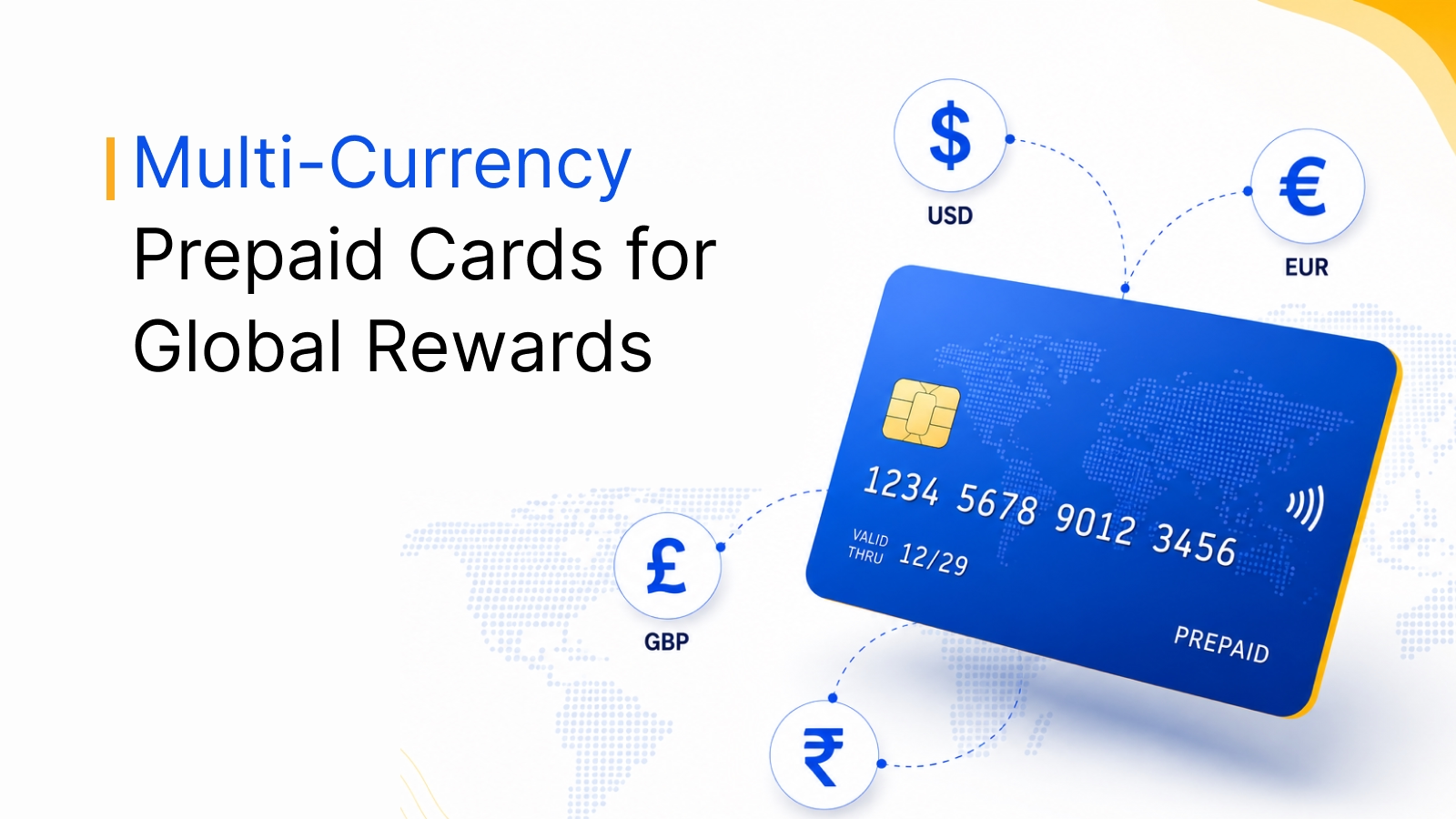
| International/cross-border spend | Usually allowed, but may incur a 1-3% FX markup if not pre-denominated in the recipient's currency | Multi-currency programs pre-select the recipient's currency at issuance to avoid foreign exchange charges at the point of sale |
| Recurring billing & subscriptions | Often blocked by default for security reasons, though some issuers allow whitelisting after first transaction | Subscription charges can be hard to reverse on prepaid cards, so issuers disable them to prevent disputes; recipients can often enable after verifying the merchant |
| Gambling, adult content, restricted merchant categories | Blocked per VISA network rules and issuer policy | Visa prohibits prepaid card spend in certain merchant categories (gambling, adult entertainment, money transfer services); many corporate reward programs add category-level restrictions per company policy |
Most of these restrictions are configurable at the issuer level, so a business sending rewards through a platform like Plum can often negotiate terms. For example, a company sending gift cards to trusted employees might enable recurring billing, while a consumer promotion might keep it blocked.
Virtual prepaid Visa cards vs. other reward formats
Reward programs typically offer three main formats: closed-loop gift cards, open-format reward codes, and prepaid cards. Virtual prepaid Visa cards sit in the third category, but how they compare depends on the business use case.
| Dimension | Closed-loop gift card | Reward code or link | Virtual prepaid Visa card |
|---|---|---|---|
| Acceptance | Single retailer or brand only | Recipient-selected from catalog | Accepted anywhere Visa is accepted globally |
| Delivery speed | Often instant or 24 hours | Instant | Instant |
| Recipient friction | Recipient must go to retailer to redeem | Recipient must find and choose from catalog | Recipient adds to digital wallet or uses card number; no steps required beyond receiving credentials |
| FX cost | Embedded in the gift card price for foreign markets | Borne by the recipient at checkout if wrong currency | None if card is pre-denominated in recipient's currency |
| Unused balance | Usually expires after 6-12 months per merchant policy | Code expires per issuer policy | Remains on card indefinitely (some issuers charge inactivity fees after 12 months) |
| Use case | Brand-specific rewards, corporate partnerships | Multi-merchant choice, lower perceived value | Corporate gifting, global rewards, maximum convenience |
Why businesses use virtual prepaid Visa cards for rewards
100%
Instant activation
Cards work at point of issuance, no waiting
150+
Countries supported
Depending on issuer and currency availability
Forrester research found approximately 25% of HR and marketing professionals prefer digital and prepaid card-based rewards over physical gifts when building global incentive programs. The reasons are clear:
- Speed. Rewards land in seconds, not days. In a competitive talent market, that speed signals that the company values recognition immediately, not eventually.
- Global reach without complexity. A business can send rewards to 50 countries from one dashboard. No regional accounts, no partner negotiations, no waiting for postal services in different time zones.
- Recipient satisfaction. A card that works anywhere and in the recipient's local currency removes friction at the moment the reward should feel best.
- Audit trail. Every card issuance, spend, and balance is logged. Finance teams can prove compliance and reconcile reward spend against actual utilization.
- No waste. If a physical gift card arrives with a postal delay or incorrect address, the cost is sunk. Virtual cards skip that failure mode entirely.
Frequently asked questions about virtual prepaid Visa cards
How do virtual prepaid Visa cards work?
A virtual prepaid Visa card is a 16-digit card number, expiration date, and CVV sent to a recipient via email or SMS. The recipient adds it to a digital wallet (Apple Pay, Google Pay, Samsung Pay) or enters the card details at checkout online. The card is pre-loaded with money and works at any Visa-accepting merchant, online or in-store. Once the balance is spent, the card is empty unless reloaded.
Where are virtual prepaid Visa cards accepted?
Anywhere Visa is accepted. That includes online retailers, in-store terminals, subscription services, and ATMs. The card is treated as a standard Visa debit card by the merchant terminal, so acceptance is nearly universal. The only exceptions are merchant categories that Visa or the card issuer blocks (gambling, adult content, certain money transfer services) and geographies where Visa is not available. ATM acceptance varies by issuer; some allow cash withdrawals while others block them entirely.
Do virtual prepaid Visa cards expire?
Yes. The card itself has an expiration date printed on it (typically 2–3 years from issuance). However, this is different from card balance expiration. Most virtual prepaid cards allow the recipient to spend the balance indefinitely, as long as the card has not expired. Some issuers charge an inactivity fee (e.g., $1–$3 per month) if the card is unused after 12 months of inactivity, so the balance can slowly decay if left untouched. Check the issuer's terms; corporate reward programs usually negotiate inactivity fees away for larger volumes.
Are virtual prepaid Visa cards secure? What fraud protection exists?
Virtual cards are often considered more secure than physical cards because there is no physical object to intercept, steal, or duplicate. Fraud protection depends on the issuer, but typical safeguards include:
- Encryption of card credentials in transit and at rest.
- One-time use card numbers (some issuers offer this for high-risk merchants).
- Velocity checks (flagging unusual spend patterns).
- Zero-liability guarantees (the recipient is not responsible for fraudulent charges).
- Real-time balance and transaction notifications via SMS or app.
Because the card is pre-funded and cannot be overdrawn, the issuer's loss is capped at the card balance. This is why issuers are willing to offer stronger fraud protection on prepaid cards than on credit cards.
How do I load more money onto a virtual prepaid Visa card?
Most virtual prepaid cards are single-issue, meaning you cannot reload them once spent. If a recipient needs more funds, the business sends a new card with a new balance. However, some premium issuers offer reloadable virtual prepaid cards, where the admin can add more balance to the same card. Reloadability is typically available at higher volume tiers or as a premium feature. Check with your platform or issuer about reload terms; Xoxoday Plum, for example, supports both single-issue and reloadable models depending on the campaign configuration.