Key Takeaways
Recognition equity ensures employee recognition reaches every contributor fairly and consistently.
Recognition equity helps reduce bias across roles, locations, and employee groups.
Measuring recognition equity improves employee engagement, inclusion, and retention.
You ran your first inclusive engagement pulse and the results landed with a thud. Recognition activity looks healthy on the dashboard, but when you cut the responses by gender, location, and role, the picture changes. Women on the engineering team say they do not feel seen. Remote employees in the second office report a fraction of the praise their headquarters peers do. The quiet, steady performers, the ones who carry institutional knowledge, are invisible.
This is the diagnostic moment when most HR leaders start asking what recognition equity actually means. This guide defines the term, explains why it matters for companies with 500 or more employees, and gives you a practical framework to measure and close the gap.
What is recognition equity?
Recognition equity is the practice of distributing employee recognition fairly across every group in your workforce, so that praise, appreciation, and rewards reach people regardless of their role, location, identity, tenure, or proximity to leadership.
The recognition equity meaning is rooted in a simple observation. In most companies, recognition flows to a predictable cluster of people: high-visibility roles, employees who sit near decision-makers, and contributors whose work is loud rather than steady. Everyone else, even when their work is just as valuable, is left out.
A useful recognition equity definition treats recognition not as a feel-good activity but as a finite organizational resource. Like budget, headcount, or promotion slots, it has to be allocated deliberately. When it is not, the same uneven pattern shows up year after year. For a broader framing of fairness at work, see our deeper guide on equity in the workplace.
Why does recognition equity matter for HR leaders today?
Three forces have pushed recognition equity onto the CHRO agenda.
First, retention. Recognition shapes whether people stay or leave. When employees feel consistently seen and appreciated, they build loyalty to the work and to the people they do it with. When they do not, they quietly update their resumes. For a 500-plus employee organization, the slow attrition of under-recognized contributors is one of the most expensive and least visible costs on the books.
Second, the gap is real and it is showing up in your survey data. Inclusive engagement pulses are exposing patterns that recognition dashboards used to hide. Women in technical functions, employees of color, remote workers, and quiet contributors consistently report feeling less seen than their peers. The recognition program is running. The recognition is just not reaching them.
Third, recognition equity has become a credibility test for DEI. Many organizations have invested heavily in inclusion training and hiring commitments. But when employees scan who actually gets celebrated in the company feed, the everyday signal often contradicts the formal promise. Recognition equity closes that gap.
Recognition equity in the workplace is no longer a nice-to-have. It is a retention lever, an inclusion proof point, and a strategic priority all at once.
Build recognition equity at scale
See how Xoxoday Empuls helps HR leaders measure and close recognition gaps with AI bias detection and demographic insights.
Talk to our ExpertTrusted by 5,000+ companies
Recognition equity vs recognition equality: what is the difference?
The two phrases sound interchangeable. They are not.
| Recognition equality | Recognition equity | |
|---|---|---|
| Definition | Everyone receives the same recognition | Recognition is distributed based on actual contribution, with fair access for all |
| Approach | "We recognize each team monthly" | "We recognize impact wherever it shows up" |
| Risk | Hides contribution differences. Loud contributors still dominate. | Requires criteria, awareness, and active correction |
| Outcome | Symbolic fairness | Felt fairness |
Recognition equity vs equality is the difference between giving everyone the same trophy at the end of the year and making sure the contribution behind every trophy is actually seen. Equality is easier to implement. Equity is what employees experience.
What does recognition inequity look like in practice?
If you are wondering whether your organization has a problem, look for these recognition equity examples in your own data.
- Proximity bias. Employees who sit near leadership, physically or on calendar, get recognized more often. Remote and hybrid workers in satellite offices receive a fraction of the praise.
- Role visibility bias. Sales closers, public speakers, and product launchers dominate recognition feeds. The compliance analyst who prevented a breach, the operations manager who quietly fixed a supply chain, the support lead whose CSAT scores held the renewal, never appear.
- Tenure bias. Long-tenured employees become invisible because their work is expected. New hires get celebrated for ramping up; veterans go uncelebrated for keeping the engine running.
- Personality bias. Extroverts who self-promote get recognized. Introverts and neurodivergent employees, who often produce the deepest work, are overlooked because they do not market themselves.
- Demographic bias. Women, employees of color, and other underrepresented groups consistently report receiving less recognition than peers doing comparable work. When recognition is left to manager discretion alone, unconscious patterns tend to mirror the rest of the organization. The people who get noticed for other things also get celebrated for their work.
If two or more of these patterns show up in your survey or recognition platform data, you have a recognition equity problem, not a recognition volume problem. For the broader context, see how diversity and inclusion in the workplace connects to recognition outcomes.
How do you measure recognition equity in your organization?
You cannot fix what you do not measure. A practical recognition equity scorecard for a 500-plus employee company has four parts.
- Recognition distribution index. Of all the recognition moments in a quarter, how many unique employees received at least one? The signal you want to see is broad reach across the workforce. When recognition concentrates in a small cluster quarter after quarter, you have a distribution problem.
- Demographic cuts. Slice the same data by gender, location, role family, tenure band, and any DEI dimensions you track. Look for groups that show up systematically less often than their share of the workforce.
- Manager-level fairness scores. Map recognition given by each manager against their team size. Outliers in either direction, managers who never recognize and managers who recognize only one or two reports, need a conversation.
- Felt-fairness pulse. Ask employees directly: "I receive the right amount of recognition for the work I do." Track agreement by demographic over time. Felt fairness is the outcome that matters; the others are inputs to it.
Together, these four signals tell you where recognition is reaching and where it is not. The underlying psychology is well established. Understanding equity theory of motivation explains why perceived fairness, not just actual fairness, drives engagement.
How can HR leaders close the recognition equity gap?
A 90-day playbook for CHROs and VPs People:
Days 1 to 30: Audit. Pull six months of recognition data. Run the four signals above. Identify your two largest gaps. Most often, they are a location, a function, or a demographic group.
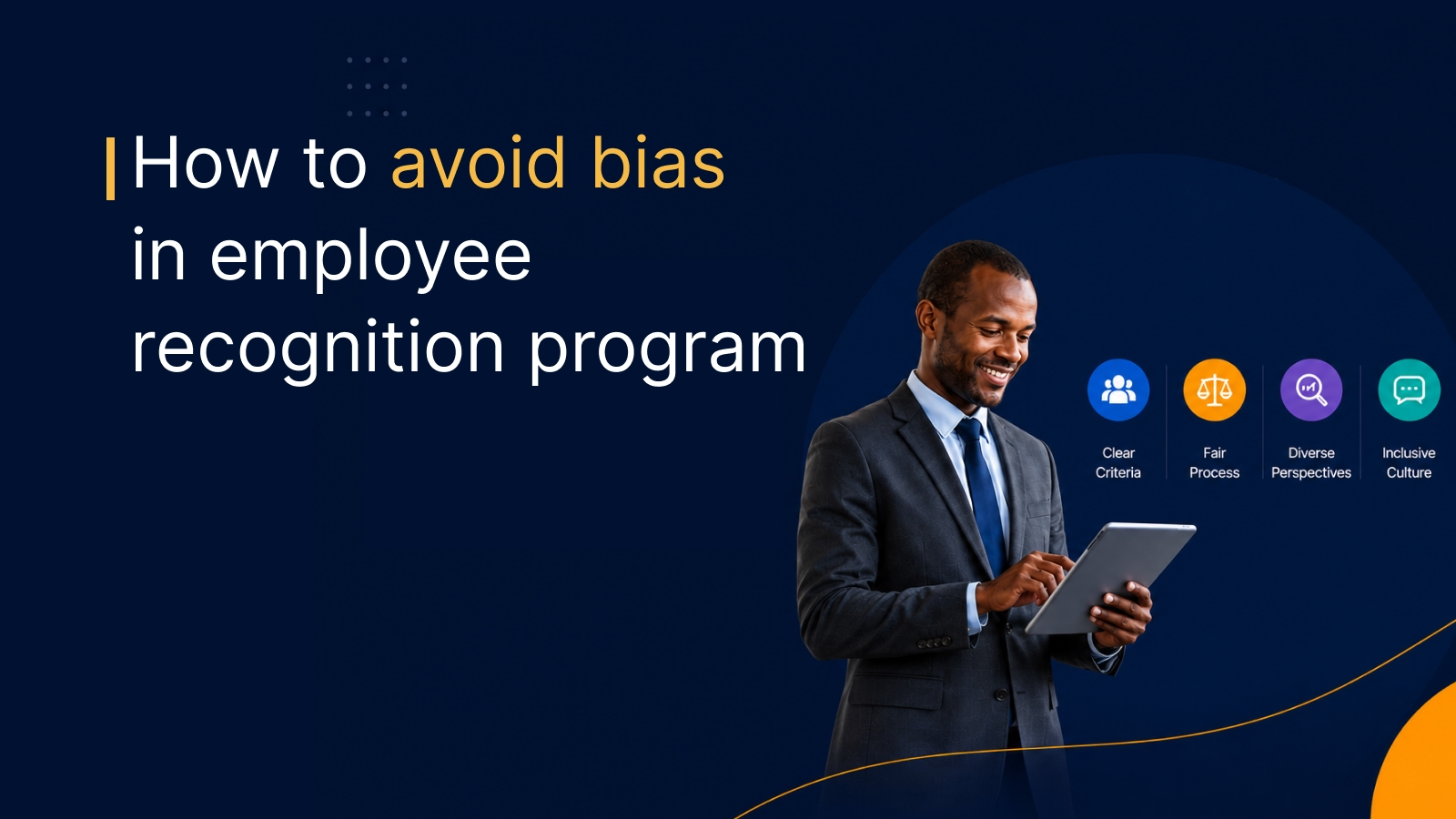
Days 30 to 60: Re-design criteria. Publish clear recognition criteria that describe behaviors, not just outcomes. Add categories that capture quiet impact: mentorship, knowledge sharing, process improvement, cross-functional support. Train managers in short workshops on the five bias patterns above.
Days 60 to 90: Activate peer recognition and geographic equity. Manager-only recognition systems concentrate power. Open the door to peer-to-peer recognition so contributions visible to peers but invisible to managers can surface. For distributed teams, set a per-location recognition floor so satellite offices are never starved of appreciation.
Then close the loop. Re-pulse at day 90 and compare felt-fairness scores by demographic. Share the trend internally. For a deeper tactical playbook, see our guide on how reward and recognition can promote workplace inclusion.
How Empuls helps you build recognition equity at scale
01 · Analytics
Demographic and location insights
See exactly who is being recognized and who is not, sliced by gender, location, role, tenure, and any DEI dimension you track.
02 · Detection
AI bias detection
Surface patterns that suggest favoritism: repeat clusters, departments gone dark, managers who never recognize. Act before the signal reaches employees.
03 · Peer Recognition
Decentralized recognition flows
Bypass the manager layer so impact visible to peers is not lost. Contributions visible horizontally surface what hierarchical systems miss.
04 · Global Reach
Rewards equity across borders
A remote employee in Manila has access to redemptions as meaningful as a colleague in New York, across 65M+ users in 150+ countries.
65M+
Users
across global teams
175+
Countries
with localised rewards
1mn+
Reward options
across catalogues