Key Takeaways
Sales incentives fail when rewards are delayed, unclear, or poorly aligned
Effective sales incentive programs require simple goals and timely rewards
Fixing common sales incentive mistakes improves motivation and sales performance
According to Gallup, only 21% of employees feel strongly motivated at work. Sales teams are no exception.
Most companies try to fix this by spending more on sales incentives. They add new tiers. They roll out bigger SPIFFs. They tweak commission structures. But quota attainment stays flat. Top performers keep leaving. And the reps who stay quietly lose faith in the plan.
The real problem is rarely motivation. It is how the plan is built, and how it is run. Reps know how to sell. What they often do not know is what they will earn, when they will get paid, or whether the reward will feel worth it.
Here are five reasons sales incentive programs fail, and what to do about each one.
Why are most sales incentive plans too complex to work?
Most failing plans started with good intentions. Someone wanted to protect margin. Someone else wanted to push a new product. A third person wanted to reward retention. Each rule made sense on its own. Stacked together, they create a plan no rep can keep in their head.
According to McKinsey, smart changes to compensation plans have a 50% higher impact on sales than spending more on advertising. But that only works when reps can clearly link what they do to what they earn.
Signs the plan has become too complex:
- Reps regularly ask Sales Ops to walk them through their statements.
- Two reps with similar performance get different payouts, and no one can explain why.
- Accelerators, adjustments, and clawbacks have piled up over multiple quarters.
- The plan document is now longer than three pages.
If you cannot fit the plan on one slide, your reps cannot hold it in mind either.
How do sales incentives end up rewarding the wrong behaviors?
Your plan pays reps for specific things. Reps do more of those things. So when the plan pays for the wrong things, you get more of the wrong things.
The classic example is rewarding volume when the business needs margin. Reps start discounting hard to hit unit targets. Revenue goes up. Profit goes down. The same pattern shows up when the plan favors quick wins over strategic accounts, or new logos over expansion revenue.
Harvard Business Review has pointed out that as buying behavior shifts to digital channels, traditional sales incentive plans become less effective at driving the outcomes companies actually want.
Before redesigning the plan, look hard at what behaviors it is producing right now. If those behaviors do not match your strategy, the plan is doing its job. The design has to change.
Try Plum
Deliver sales incentives that move the needle, with instant payouts and rewards that reps actually want.
Talk to our ExpertTrusted by 5,000+ companies
What happens when one plan covers every role, region, and reward type?
Sales is not one job any more. An SDR in São Paulo, an AE closing six-figure deals in Riyadh, a channel partner reselling in Lagos, and a distributor in Jakarta all need different metrics, different rewards, and different timing.
Most plans squeeze all of this into a single template. That template fits no one well. A sales director in Saudi Arabia working on Vision 2030 deals needs accelerators on strategic accounts. A BPO sales floor in the Philippines needs fast, repeatable rewards that work across hundreds of reps. An FMCG dealer program in Indonesia needs locally relevant rewards delivered through channels reps already use.
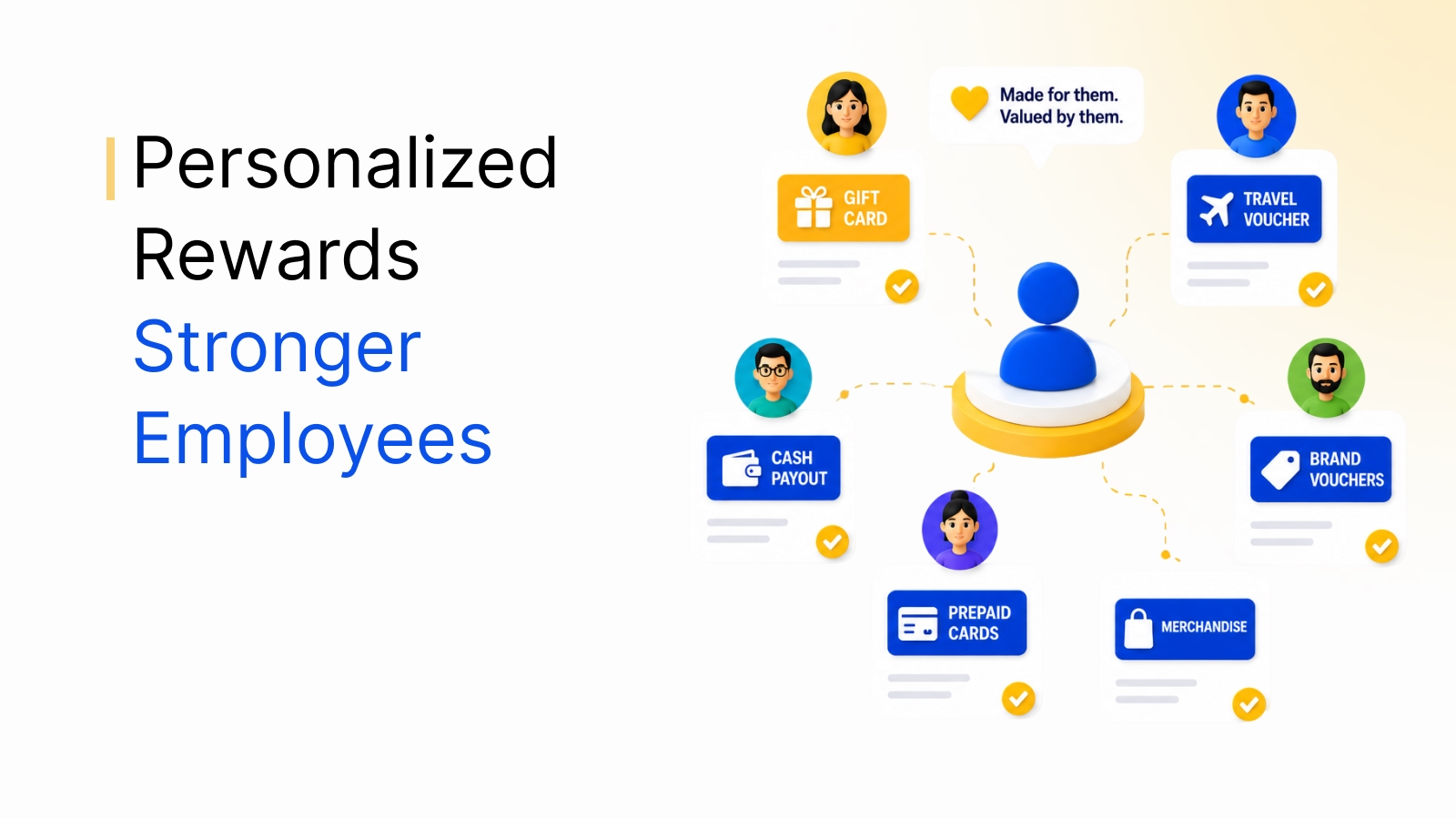
Reward preference makes this even harder. SHRM research suggests employees prefer non-cash rewards when those rewards feel personal and meaningful. A USD 100 gift card lands very differently in Nairobi than in New Jersey.
Why do slow, manual payouts break sales team trust?
Plan design gets all the boardroom attention. But payouts are where you actually lose your sales team.
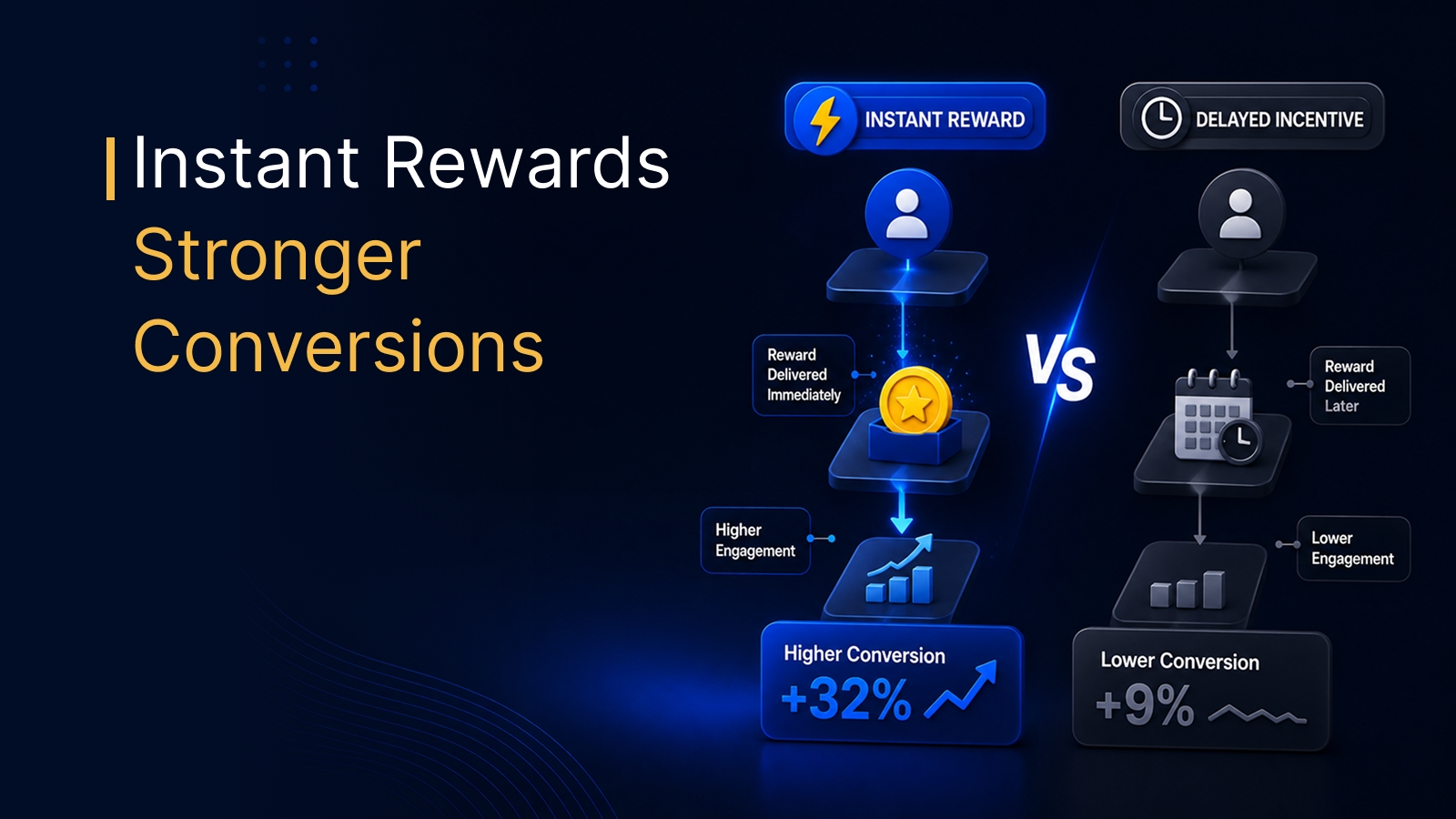
Picture this: a rep closes a deal on the 15th. They expect their SPIF by the 30th. Instead, they wait six weeks while Sales Ops chases CRM data and reconciles spreadsheets. By the time the reward arrives, the moment has passed. Worse, the rep starts to question every future payout.
McKinsey research has found that companies that connect their incentives clearly to performance outcomes outperform peers and reduce attrition along the way. Slow payouts undo all of that. Once reps lose trust in the plan, it takes months to win it back.
For most companies with 500 to 2,000 employees, the real bottleneck is not the plan. It is how rewards get delivered. Spreadsheets. Procurement queues. Currency conversion calls. That is where the delays come from.
How can you tell if your sales incentive program is actually working?
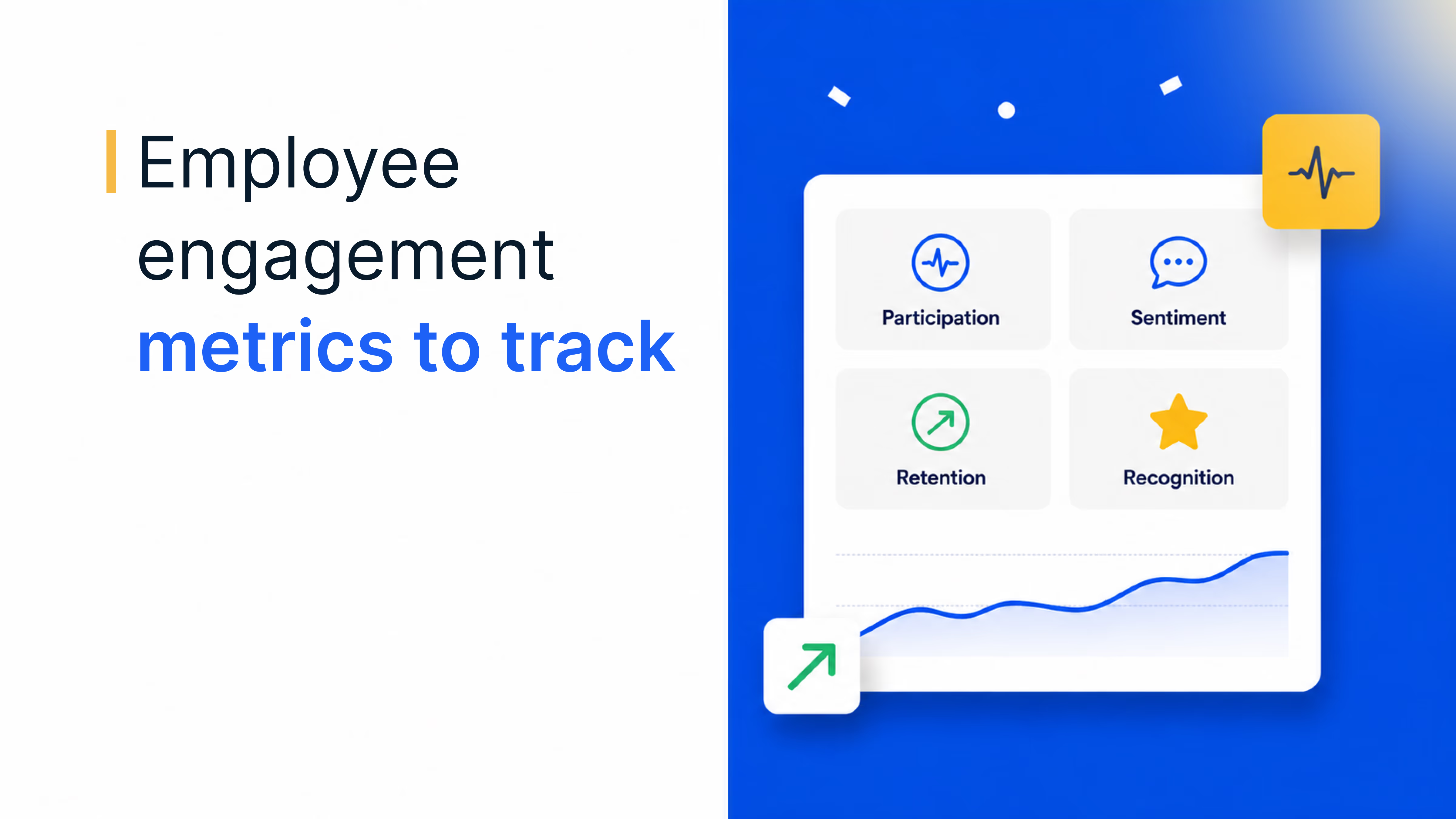
Most programs track three things: how much was paid out, who hit quota, and what the program cost. Very few track what reps actually do with their rewards.
Are reps redeeming their gift cards, or letting them expire? Are they picking experiences over cash? Are channel partners in different markets responding to different reward types? These are the signals that show whether the program is building ongoing engagement or simply paying out and moving on.
Incentive Research Foundation research has found that well-structured incentive programs can lift individual performance by 22% and team performance by 44%. To get there, you need data that goes beyond payroll: redemption rate, time to redeem, reward preferences by region, and re-engagement after a payout.
How do you fix a sales incentive plan that has already broken?
Most broken plans do not need a full rebuild. They need fewer rules, applied better.
You are not alone in needing the reset. According to the Alexander Group 2024 Sales Compensation Trends Survey, only 19% of companies rate their current plans as highly effective, and 89% are making changes to their plans this year. Here is a practical reset (the data on compensation effectiveness comes from Alexander Group research):
- Compare what the plan rewards to what the business actually needs. Where they do not match, you have your starting point.
- Cut the structure back. Three components beat seven. One base metric, one strategic accelerator, and one SPIF is usually enough.
- Treat plan design and reward delivery as separate problems. The commission rate is one decision. The reward itself is another.
- Build a different plan for each major role. SDRs, AEs, expansion AMs, and channel managers each need their own version that reflects what they can actually influence.
- Stop defaulting to cash. Let reps pick what they want from a curated catalog, so the reward feels personal.
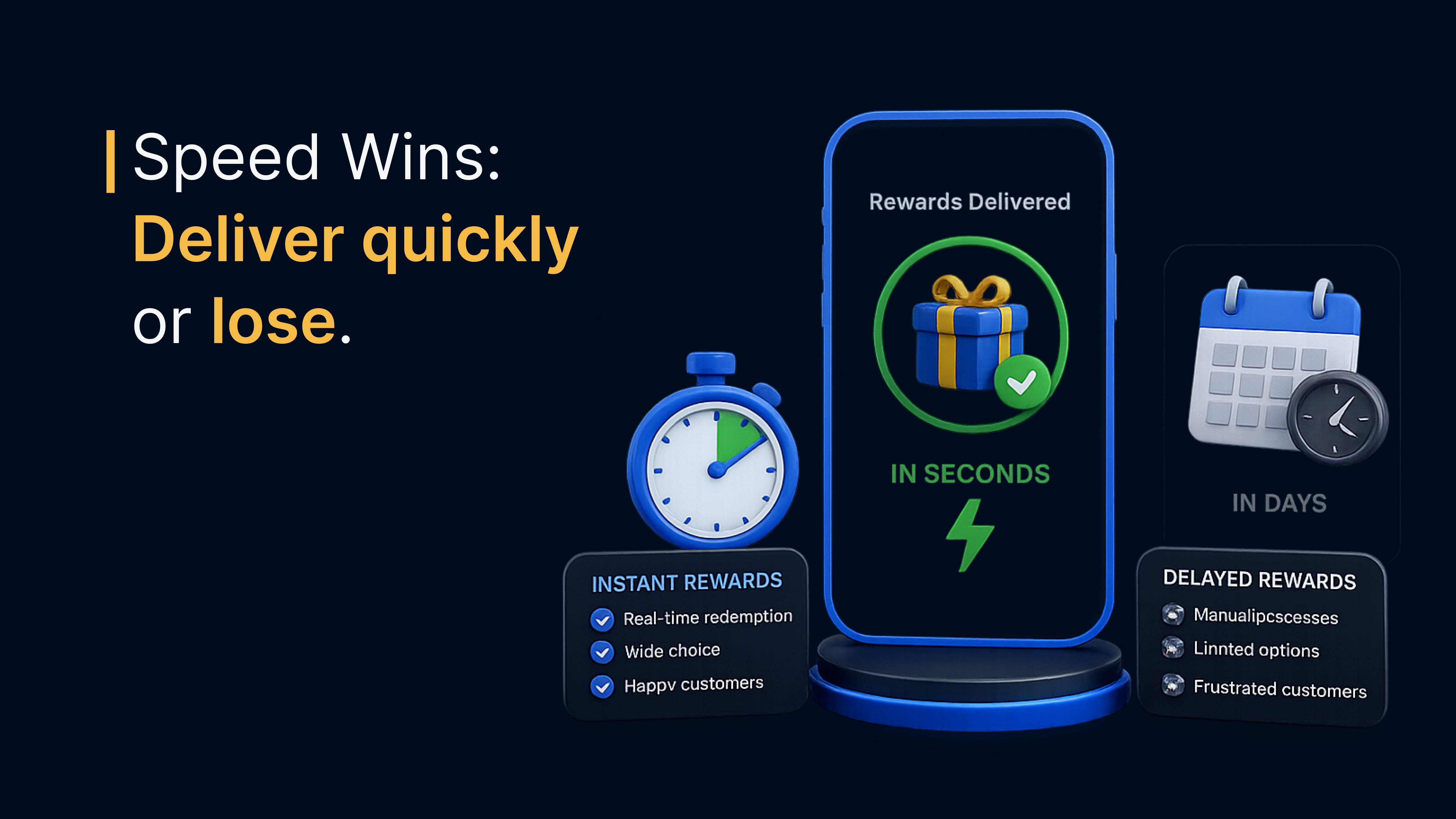
- Speed up payouts. Move from weeks to days.
What does a modern rewards and payout layer look like?
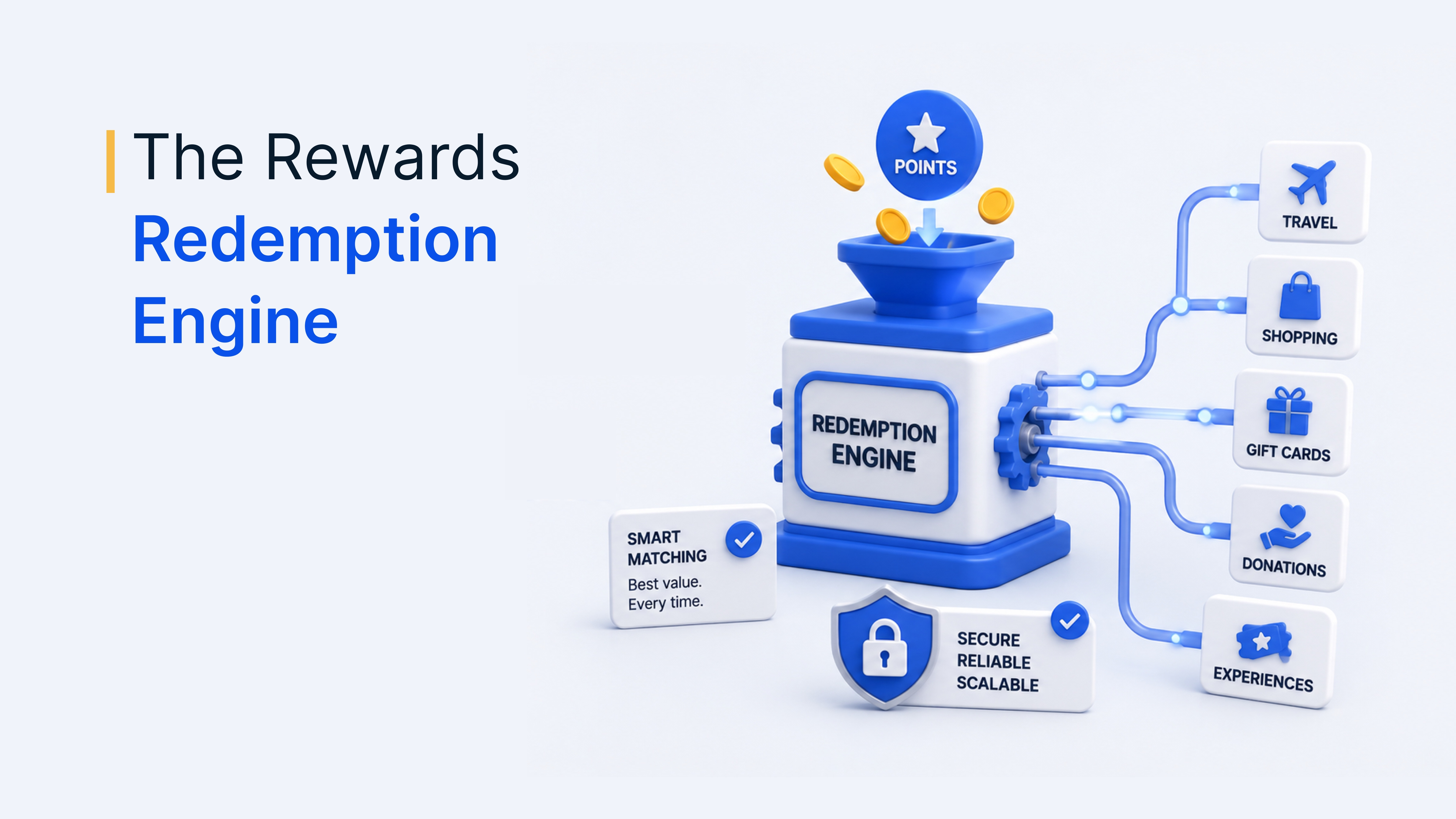
01 · Unified
Global rewards marketplace with 10mn+ options
Gift cards, prepaid cards, experiences, and travel all accessible from one platform.
02 · Speed
Instant, multi-currency reward delivery
Recipients in 150+ countries get their rewards within minutes, not weeks.
03 · Integration
API-first connection to CRM systems
SPIFFs trigger automatically the moment a deal closes, with full audit trails.
04 · Insight
Redemption analytics and engagement tracking
See what reps choose, which rewards drive repeat behavior, and ROI by program.
150+
Countries
with localised rewards
1mn+
Reward options
across catalogues
65M+
Users
across global teams
For sales teams running global programs, Xoxoday Plum's rewards and incentive management closes the gap between what reps earn and what they actually feel. That gap is where most programs fail.
Closing thought: fix the layer that decides whether your plan works
Sales incentives are one of the most powerful tools in a revenue org, and one of the most often mis-run. The companies that pull ahead are not the ones with the highest commission rates. They are the ones whose reps believe in the plan, trust the payout, and actually use the rewards they earn.