Key Takeaways
The rewards market will reach $187.5B by 2033 at 8.5% CAGR, driven by API-first distribution models.
51% of small businesses use spreadsheets for incentives; automation is 33% more effective overall.
Gift cards are 30% of incentive budgets in North America; 70% of firms plan to increase that spend.
The campaign closed on Thursday. Three hundred channel partners earned their incentive. By Monday, the procurement manager is still untangling a spreadsheet, chasing sign-offs on denominations, and fielding emails from distributors asking where their reward is.
The scale of this problem is not small. The rewards and incentives market was valued at USD 89.2 billion in 2024 and is projected to reach USD 187.5 billion by 2033 at a CAGR of 8.5%, according to Market Mind Partners. The shift driving that growth is not more reward programs, it is the move from manual fulfillment to automated, API-first distribution.
What is a rewards API?
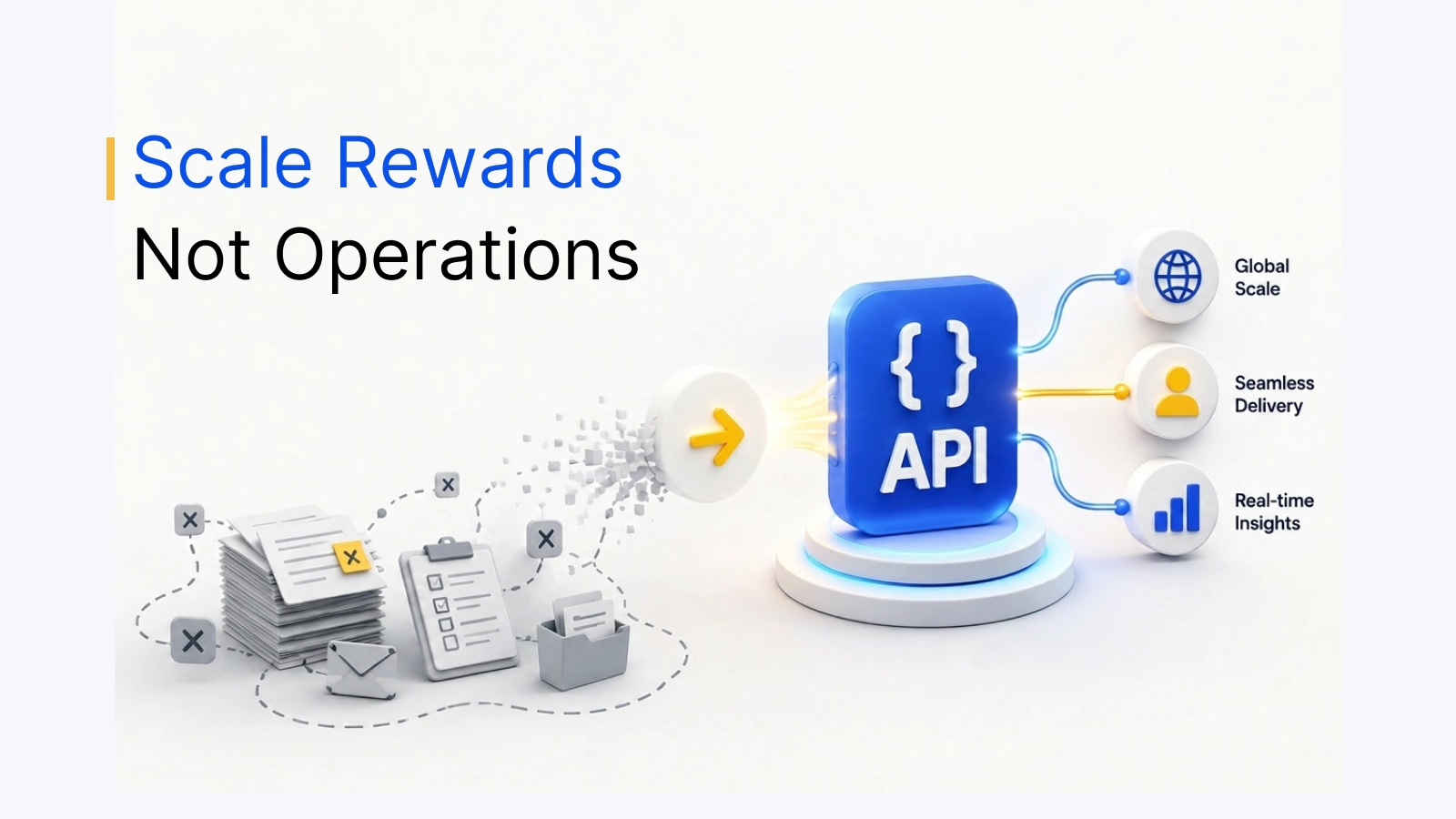
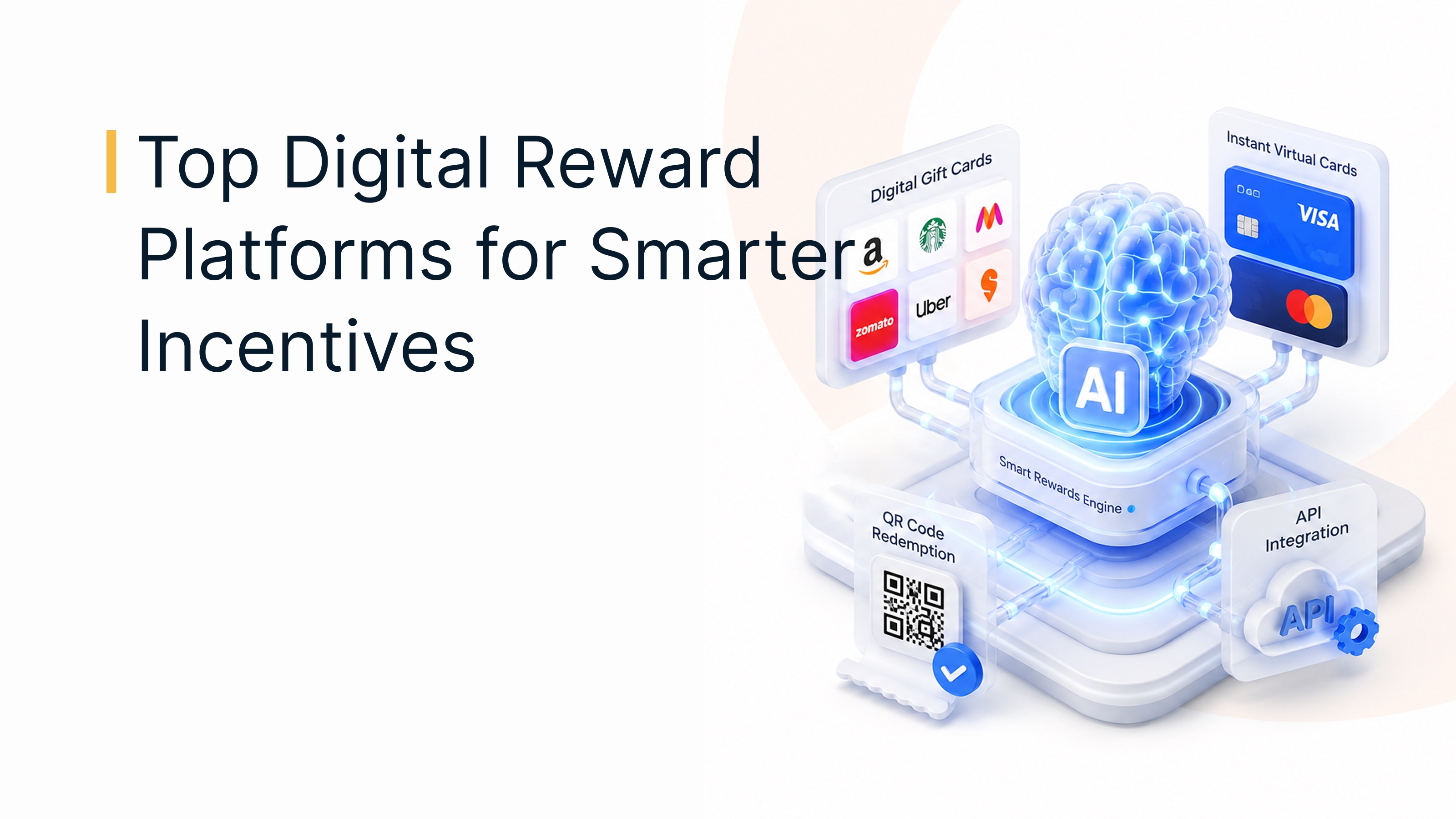
A rewards API (Application Programming Interface) is a set of protocols that allows software systems to communicate and automate the delivery, tracking, and management of digital rewards. It acts as a bridge between your existing platform, a CRM, HRMS, marketing tool, or custom app, and a global reward catalog, enabling your system to issue gift cards, vouchers, points, or prepaid cards without human intervention.
42% of global retailers have integrated digital rewards APIs to enhance customer retention and automate incentive delivery (Market Reports World, 2025).
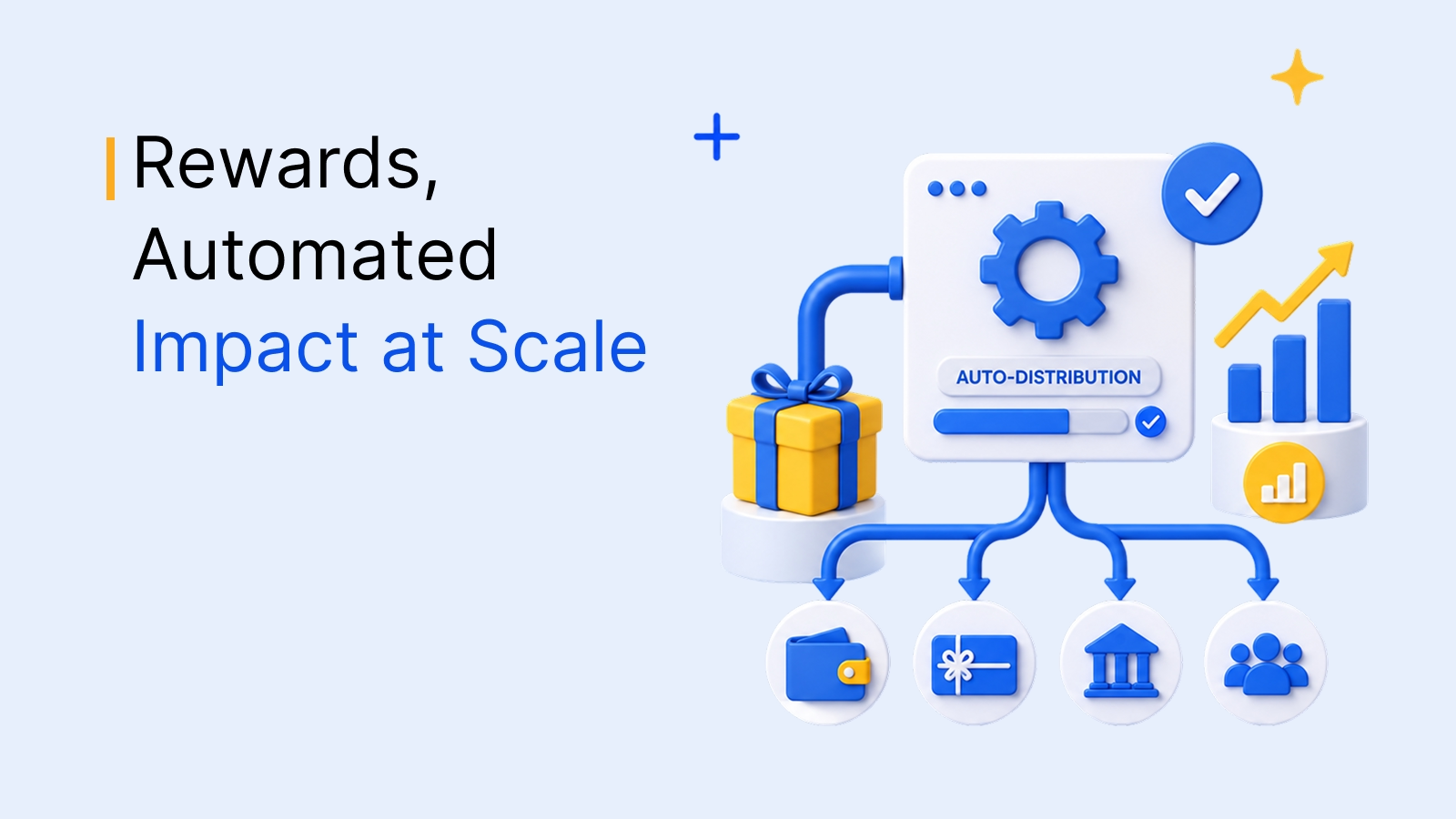
Think of it as the plumbing behind a reward program. Your system holds the rules and the triggers. The API holds the catalog, the delivery rails, and the redemption logic. When the two connect, rewards move without anyone pressing send.
How a rewards API works
The mechanics follow a clear sequence, and understanding each step is what separates a good integration decision from an expensive one.
Table 1: How a rewards API processes a reward
| Step | What happens | Who handles it |
|---|---|---|
| Trigger | A defined event fires in your system (survey complete, milestone hit, order placed) | Your platform |
| Evaluation | Business logic checks eligibility, value, and recipient details | Your platform or API rules engine |
| Issuance | API call sends the reward request to the catalog provider | Rewards API |
| Delivery | Reward is sent to the recipient via email, SMS, or in-app notification | Rewards API |
| Tracking | Redemption status, click data, and fulfillment confirmation are logged | Rewards API dashboard |
Webhooks handle the real-time element. Rather than polling for status updates, your system receives an instant notification when a reward is issued, delivered, or redeemed, keeping your data current without additional API calls.
Try Plum
Automate reward delivery with a global rewards API. Event-triggered rewards, instant delivery, 150+ countries, post-redemption billing.
Talk to our ExpertTrusted by 5,000+ companies
What you can do with a rewards API: five core use cases
45% of enterprises have implemented workflow automation in recognition processes as of 2025. These are the five workflows where a rewards API earns its place fastest.
Employee recognition and milestones
HR systems already track tenure anniversaries, performance ratings, and onboarding completion. A rewards API connects those events to instant reward delivery, removing the manual step between "milestone logged" and "employee rewarded." For a procurement manager overseeing a distributed workforce, it means one integration handles Riyadh and Manila the same way it handles Chicago.
Customer incentives and loyalty
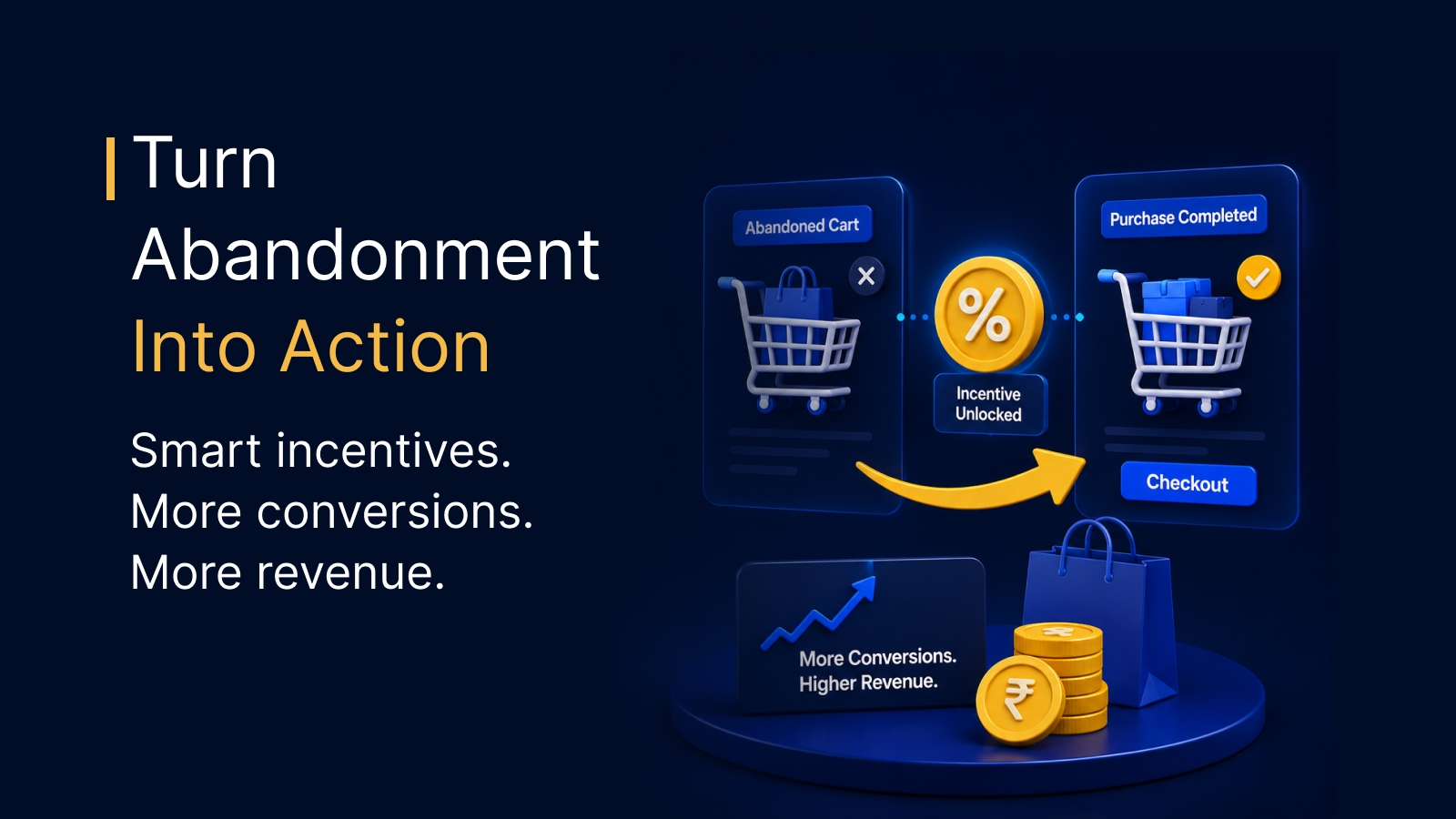
When a customer completes a referral, hits a loyalty tier, or finishes a purchase flow, a rewards API issues the incentive in real time. Corporate gift-card allocations account for 30% of incentive program budgets in North America, with 70% of North American firms anticipating further increases in 2026, according to the Incentive Research Foundation (IRF).
Channel partner payouts
Distributor and reseller incentive programs involve multi-tier structures, regional currencies, and quarterly payout cycles. The API handles the calculation and sends the reward. Procurement sees budget spend and redemption in one place, not three.
Referral program rewards
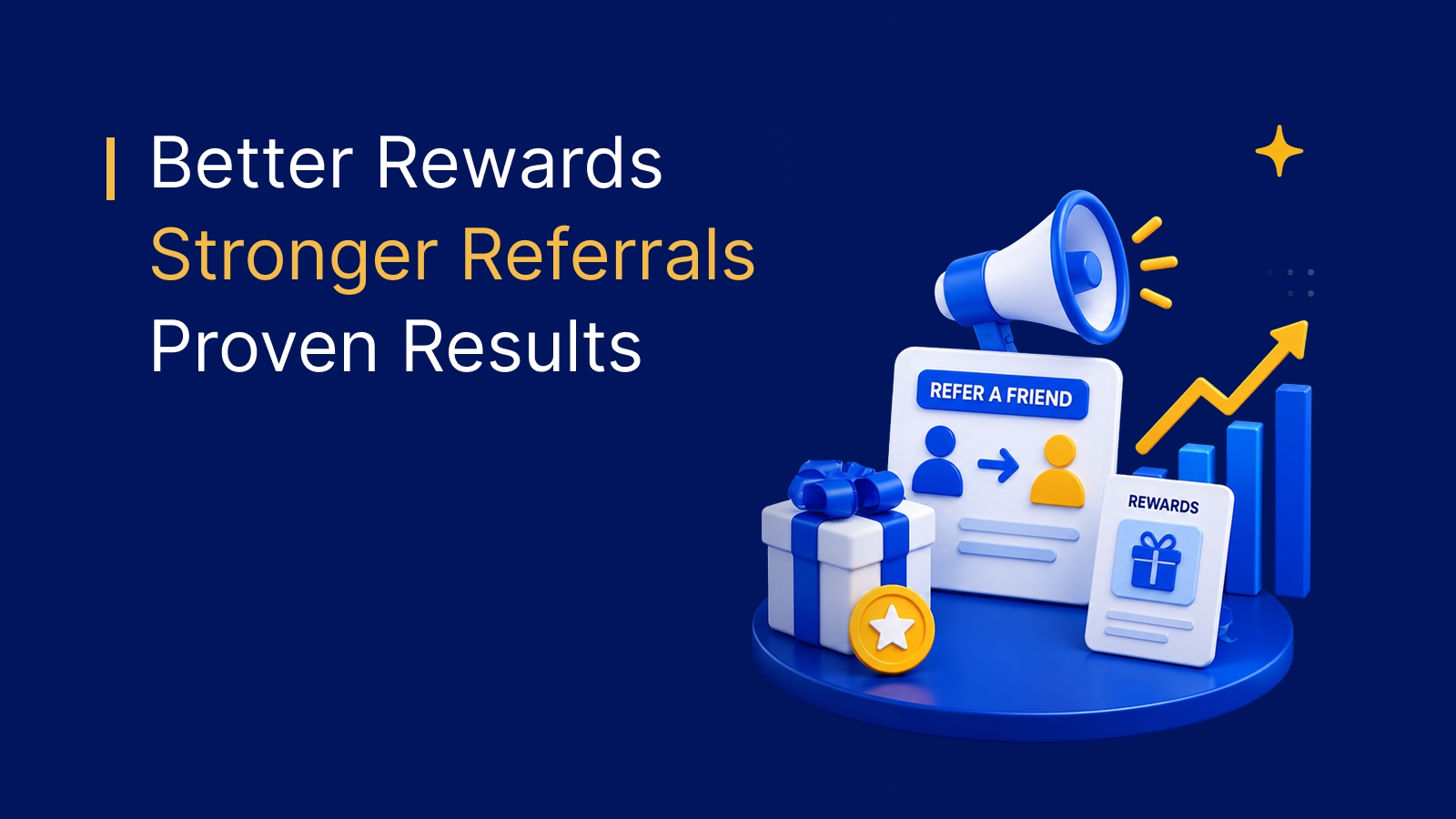
Growth marketers running referral campaigns need rewards that trigger the moment a referral converts, not three days later. API-based delivery closes that timing gap and links directly to the CRM events that define conversion.
Survey and research incentives
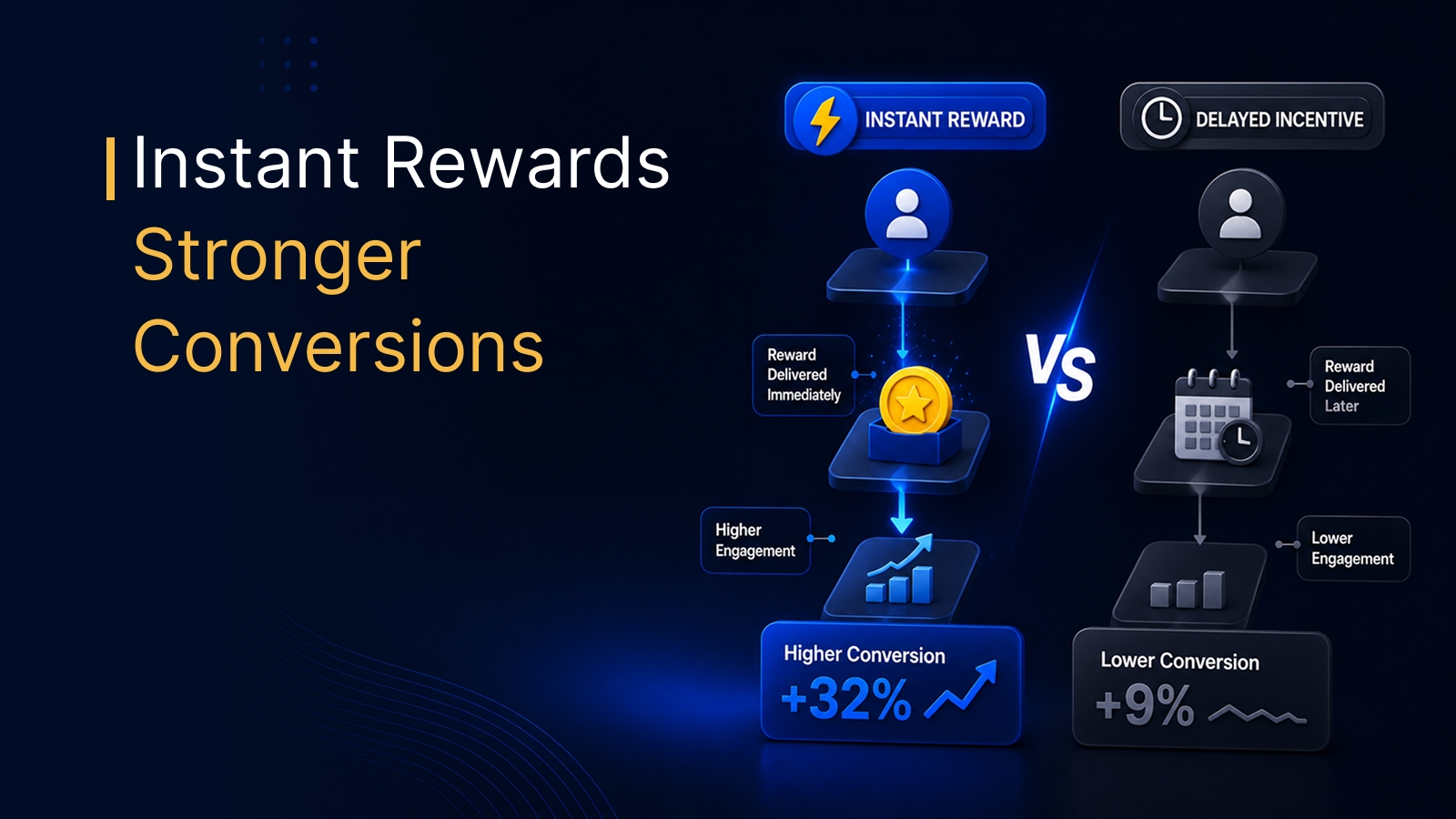
Survey completion rates drop when incentives arrive late. A rewards API issues the reward the moment a form is submitted, no manual gift card purchase, no follow-up email.
Rewards API vs. manual distribution: why the gap widens at scale
Manual reward workflows feel manageable at 50 recipients. At 500, errors compound. At 5,000, the process breaks. 51% of small businesses still use spreadsheets for incentive-related processes, and companies using automation are 33% more effective than those relying on manual equivalents.
Table 2: Rewards API vs. manual distribution across five dimensions
| Dimension | Manual distribution | Rewards API |
|---|---|---|
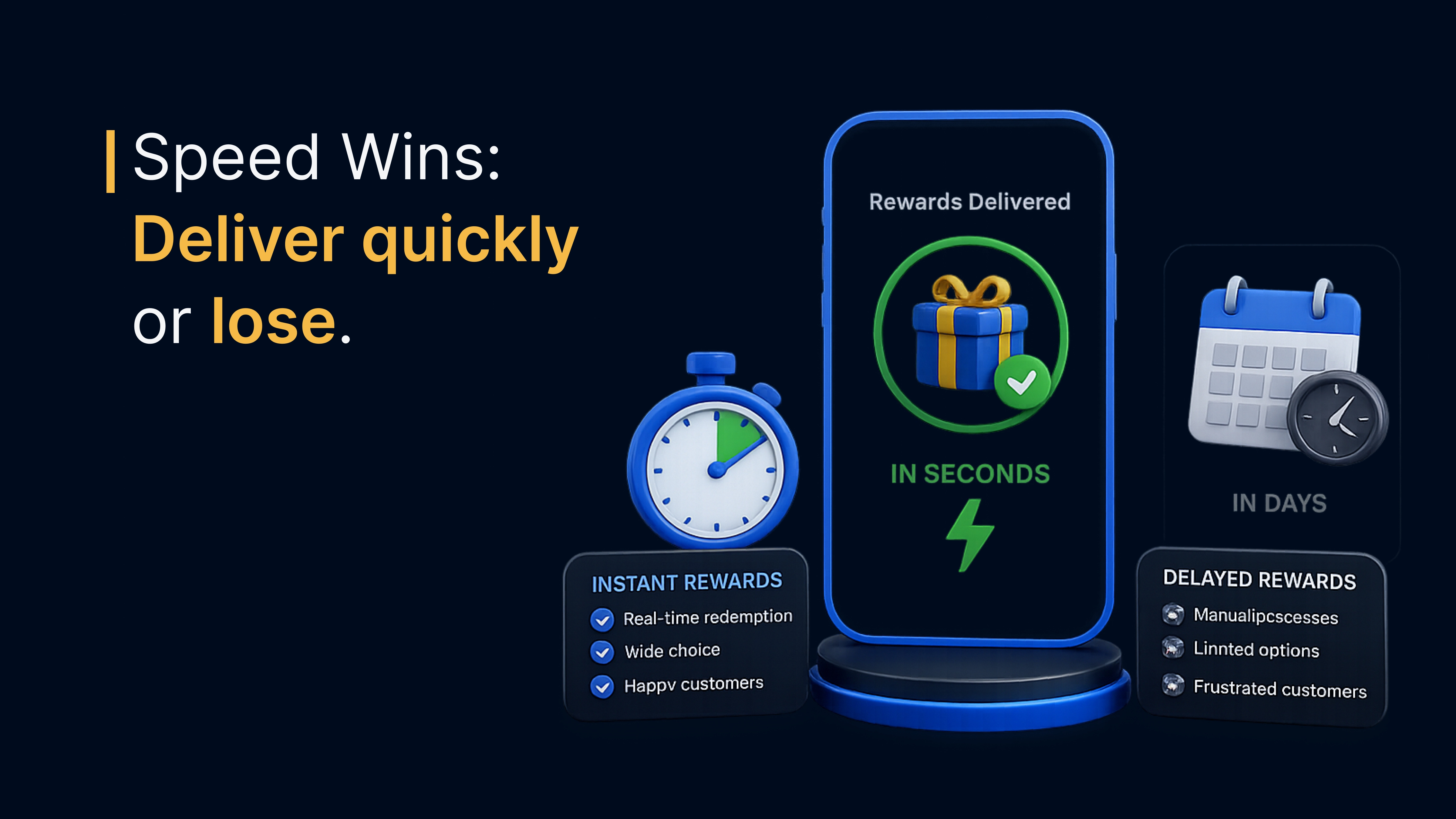
| Delivery speed | Hours to days; dependent on human action | Seconds; event-triggered automatically |
| Error rate | High; manual data entry and denomination mismatches | Near-zero; logic-driven issuance |
| Global reach | One market at a time; separate procurement per region | 150+ countries from a single integration |
| Redemption visibility | None or delayed; requires manual reconciliation | Real-time dashboard with click and redemption data |
| Scalability | Linear cost increase with volume | Fixed integration cost; scales without added headcount |
The cost of manual distribution is not just operational. Delayed rewards lose their motivational impact. A channel partner who earns a quarterly incentive and receives it six weeks later has already stopped thinking about what earned it.
What to look for when evaluating a rewards API
Not all rewards APIs deliver equally. These six criteria separate platforms built for scale from those that work only at low volume.
- Catalog depth and local relevance. A catalog of 500 options in three countries will not serve a GCC-based CEO running a fintech incentive program or a Philippines BPO procurement team distributing rewards across shifts. Look for 10mn+ options covering locally redeemable brands in your target markets.
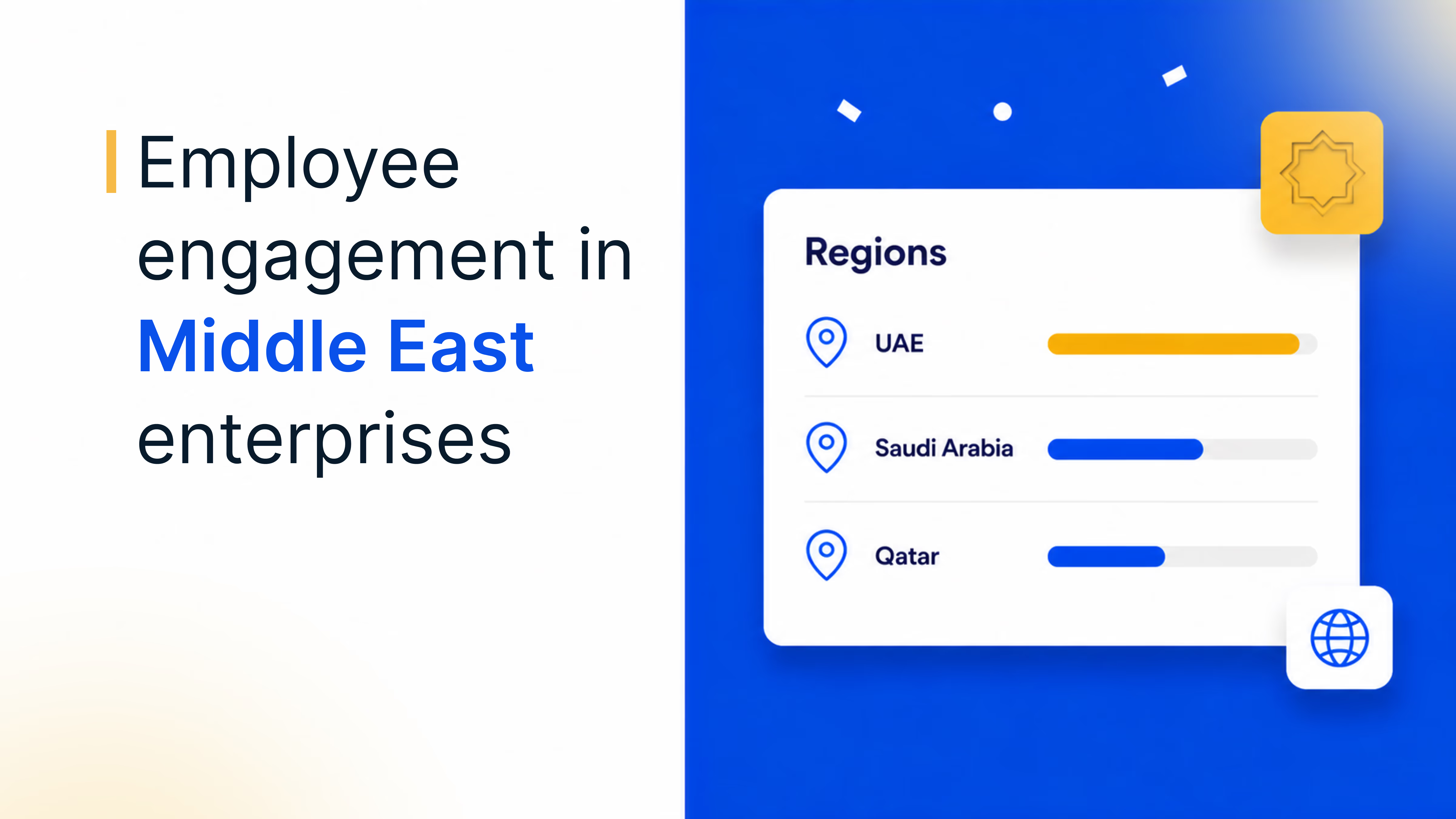
- Global coverage with multi-currency support. Fintech adoption in the UAE and Saudi Arabia exceeds 60%, according to CoinLaw, with government-backed digital ecosystems accelerating demand for API-first reward infrastructure. Your API needs to match where your recipients are.
- Compliance certifications. SOC 2 and GDPR compliance are non-negotiable for enterprise buyers in BFSI, healthcare, and government. Verify before shortlisting.
- Real-time delivery and webhook support. Delayed reward delivery is a program design failure, not a technical footnote. Confirm the API supports webhook-based notifications and instant issuance.
- Documentation quality and sandbox access. A well-documented API with a sandbox environment lets your developer team test and validate integration before going live, reducing implementation risk significantly.
- Post-redemption billing. For procurement teams managing budget exposure, paying only for rewards that are actually redeemed is a significant financial control. Not all platforms offer it. Ask before you shortlist.
How Xoxoday Plum's rewards API is built for global scale
01 · Catalog
10mn+ reward options
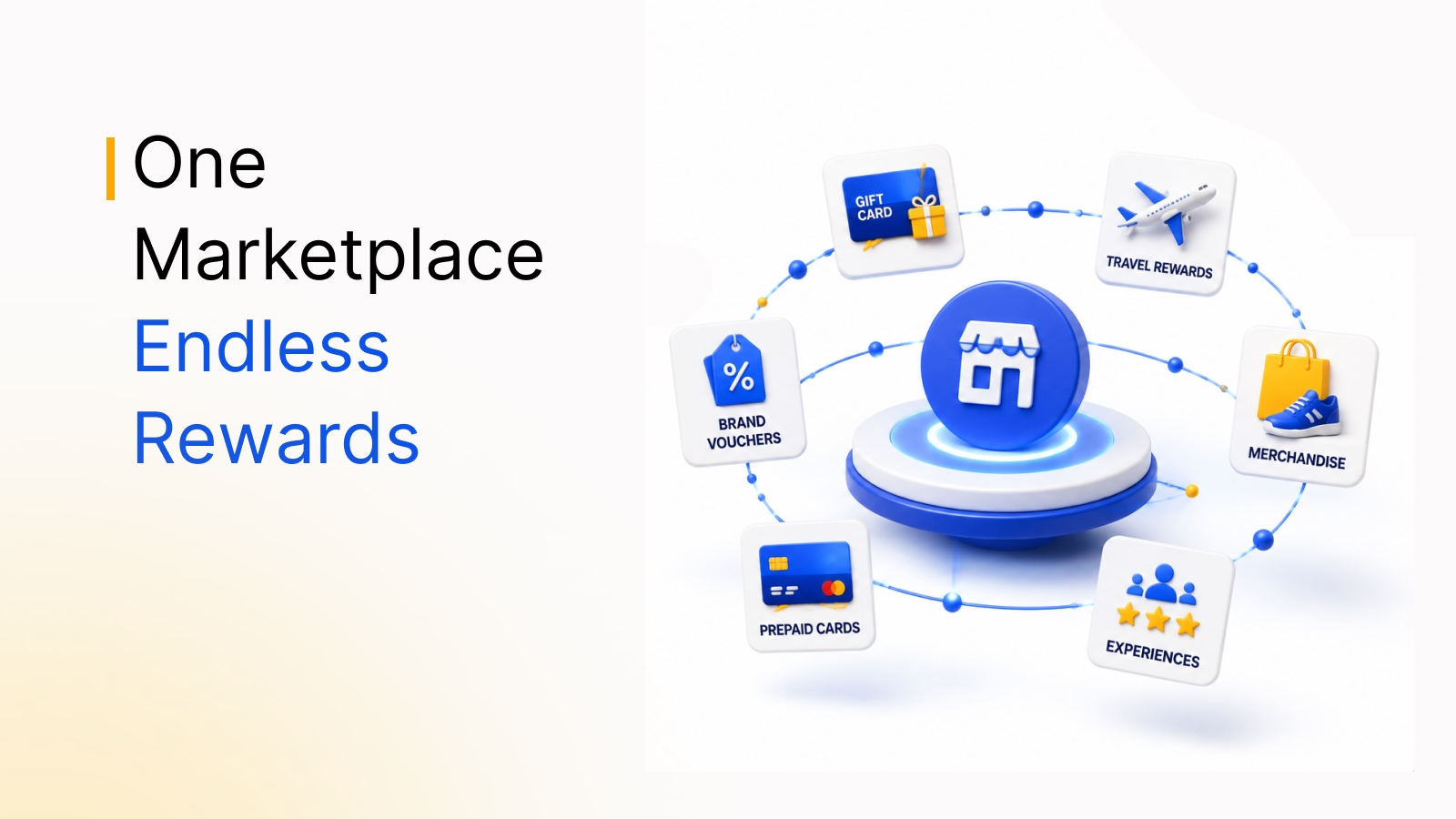
Gift cards, experiences, prepaid cards, and merchandise across 150+ countries from a single integration point.
02 · Architecture
RESTful with webhooks
RESTful architecture with OAuth 2.0 authentication, webhook support, and sandbox environment for rapid testing.
03 · Billing
Post-redemption model
Procurement teams pay only for rewards claimed, not rewards issued, reflecting actual usage and budget efficiency.
04 · Compliance
SOC 2 & GDPR
SOC 2 certified and GDPR compliant with native integrations into Salesforce, SAP, Workday, HubSpot, and Qualtrics.
150+
Countries
with localised rewards
1mn+
Reward options
across catalogues
65M+
Users
across global teams
Your next step toward automated reward distribution
A rewards API is not a technology project. It is a decision about whether your reward programs should run on human effort and spreadsheets or on infrastructure built to deliver at scale.
Start with the workflow your team touches most and complains about most. Map where the manual steps are. That is where an API pays back its integration cost the fastest, and usually within the first quarter of use.