Key Takeaways
Only 26% of UAE employees are engaged, but the real cost is the 74% who stay disengaged and reduce effort without leaving
Recognition programs that depend on manager memory fail at scale; peer-to-peer infrastructure is what makes recognition consistent
Measuring eNPS score movement and recognition frequency monthly gives CHROs a six-month early warning before disengagement becomes attrition
Most CHROs in the UAE have read the Gallup numbers. Very few have changed what they are doing because of them. That is not cynicism. It is the structure of the problem. The engagement frameworks that work in Chicago or London were built for monoculture workforces on permanent contracts, with no compliance overhang and managers who stay in their roles long enough to build trust. The UAE is none of those things.
A workforce of 200-plus nationalities, 89% of whom are on employer-linked visas, with Emiratisation obligations on one side and high expat mobility on the other, requires a fundamentally different approach. This guide is for the HR leader who knows employee engagement UAE-wide is a problem but has not found a fix that accounts for the GCC's specific complexity.
Why Employee Engagement in the UAE Is a Different Problem Entirely
Employee engagement is the degree to which employees invest discretionary effort in their work and feel genuinely connected to the organization they work for. That definition holds everywhere. What changes in the UAE is almost everything else.
Start with workforce composition. Approximately 89% of the UAE's private sector workforce holds non-UAE nationality. For this group, employment and residency are linked. The financial stakes of a job change extend beyond salary – they include housing, schooling, and legal status. That changes how disengagement looks. An expat employee who has mentally checked out is less likely to resign immediately than their counterpart in a Western market. They stay, reduce effort to the minimum, and wait.
That silence is expensive.
The Emiratisation dimension adds another layer. UAE enterprises with 50 or more employees face Nafis compliance obligations that tie headcount targets to Emirati talent specifically. When an Emirati employee disengages and exits, the cost is not just a vacancy – it is a Nafis score reduction that can trigger financial penalties. Engagement is not an HR aspiration here. It is a compliance and financial priority, and the two are rarely treated together.
The State of Workforce Engagement in UAE Enterprises: What the Numbers Say
20%
Global engagement rate
Lowest level since 2020 (Gallup 2026)
26%
UAE engagement rate
Above MENA regional average
18%
UAE actively disengaged
Working against organizational goals
$10T
Annual cost of disengagement
~9% of global GDP (Gallup 2026)
The UAE sits above the regional average on engagement. That is the good news. According to Gallup's State of the Global Workplace 2026 Report, global employee engagement fell to 20% in 2025 – its lowest level since 2020. The UAE tracks higher at approximately 26% engaged and 18% actively disengaged. By regional standards, that is a meaningful lead.
The harder truth: 26% still means roughly three out of four UAE employees are not giving their best effort.
Gallup estimates that low engagement costs the global economy $10 trillion annually – approximately 9% of global GDP. For enterprises operating in Aviation, BFSI, and Telecom across the GCC, the per-seat cost of a disengaged employee is not theoretical. It shows up in service quality, customer complaints, and eventually in churn that requires expensive replacement hiring.
The PwC Middle East Workforce Hopes and Fears Survey 2025 adds a nuance the headline engagement rate misses. Seventy-eight percent of Middle East employees say they look forward to going to work – well above the 64% global average. Yet 45% report feeling fatigued at least once a week. High surface enthusiasm and creeping burnout are running side by side. Most engagement strategies in the region are not built to hold that balance.
Bring engagement measurement into your GCC enterprise
Empuls gives HR leaders real-time visibility into recognition frequency, eNPS trends, and engagement risk – so you can intervene before disengagement becomes attrition.
Explore EmpulsTrusted by 5,000+ companies
What Drives Disengagement in GCC Enterprises
| GCC Vertical | Engagement Challenge | Business Impact | Fix |
|---|---|---|---|
| Aviation & Telecom | Top-down recognition only; no peer-to-peer at scale | High attrition in frontline roles | Peer recognition + AI nudges |
| BFSI | Compliance culture; recognition feels formal and infrequent | Emirati exits trigger Nafis penalties | Structured R&R tied to milestones + eNPS |
| Realty | Project-based teams; no continuous engagement loop | Low tenure, transient workforce | Milestone celebrations + mobile rewards |
| Government | In-country data requirements restrict platform choice | Engagement tools unused or inaccessible | On-premise / in-country hosting, Arabic support |
The structural causes of disengagement in GCC enterprises differ by vertical, but they converge on a few repeating patterns.
- Top-down recognition with no peer infrastructure. In Aviation and Telecom, recognition flows from manager to employee, formally and infrequently. A cabin crew supervisor managing 40 reports cannot meaningfully recognize each person every month. Without peer-to-peer infrastructure, most recognition simply does not happen. It is not a motivation problem. It is a math problem.
- Disconnected tools. Many UAE enterprises run recognition on one platform, employee surveys on another, and rewards through a spreadsheet or an annual gift catalog. When data does not connect, HR leaders have no visibility into whether an employee who received peer recognition last quarter is now at risk. The signal exists. The system does not surface it.
- Falling manager engagement. Gallup's 2026 report found that global manager engagement fell from 27% in 2024 to 22% in 2025 – the largest year-over-year drop on record. Managers who are disengaged create disengaged teams. In GCC enterprises where managerial spans of control are wide and turnover in management roles is high, this compounds quickly.
- The expat tenure dynamic. Expat employees consistently rank career development that builds transferable skills above compensation in exit interviews. An engagement strategy built primarily around financial incentives – the default in much of the GCC – misses the actual retention lever for the workforce's largest segment.
Building an approach that works for this workforce means building a culture of recognition that is systematic, not episodic.
The Hidden Cost of Disengaged Employees UAE CHROs Cannot Ignore
79%
of employees who quit cite lack of appreciation
SHRM Employee Job Satisfaction and Engagement Report
Disengaged employees are expensive in ways that do not show up on a headcount report. The most visible cost is attrition. SHRM data shows that 79% of employees who leave their jobs cite lack of appreciation as a key reason for going. That is not a minor factor – it is the dominant reason people decide to stop trying and start looking. Recognition gaps do not announce themselves. They accumulate quietly in missed acknowledgments, generic praise, and the slow realization that contributions go unseen.
The more corrosive cost is the employee who stays disengaged without resigning. In the UAE, where visa-linked residency creates a financial anchor, that population is larger than in most markets. A team of 200 in which 74% are not fully engaged is not running at 26% capacity. Disengagement concentrates in the roles that touch customers most often and in employees with the most institutional knowledge – precisely the people whose exit causes the most disruption.
Research by Gallup and Workhuman found that 55% of employees receive recognition that meets none of the five pillars of strategic recognition: authentic, personalized, equitable, embedded in culture, and tied to employee needs. When recognition is generic – the same message to all 12 reports, sent on the same Friday schedule – it stops working faster than it started. The manager thinks they are recognizing. The employee does not feel it.
Employee Engagement Strategies That Work Across a Multicultural Workforce
Building engagement in a workforce of 200-plus nationalities requires deliberate choices about what works at scale versus what relies on individual manager effort.
- Build peer-to-peer recognition first. Employees who receive at least monthly recognition are twice as likely to feel productive and engaged, according to Gallup and Workhuman research. Peer programs distribute that load across the whole team. Organizations with strong recognition programs see 31% lower voluntary turnover, according to a Gallup meta-analysis of 65,000 workgroups. The math works because the system does the work, not any single person.
- Create Emiratisation-specific engagement tracks. For Emirati talent, engagement is also a compliance question. Named mentors, structured development plans with visible promotion pathways, and recognition tied to Emiratisation milestones address both retention and Nafis compliance. Generic engagement programs treat this population identically to expat staff, which misses the specific drivers that determine whether an Emirati employee stays or exits.
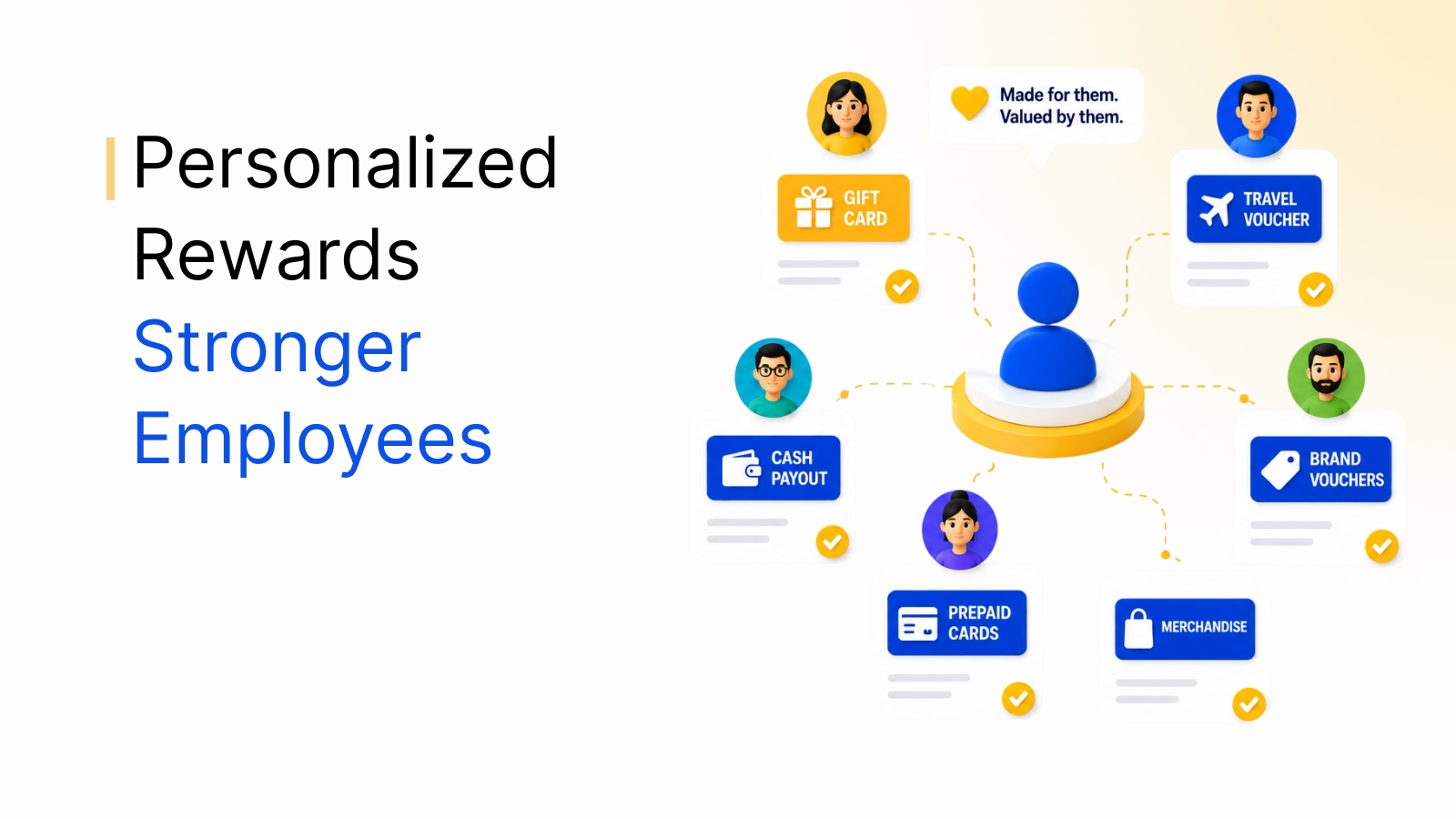
- Invest in culturally relevant rewards. A global rewards catalog that includes local brands, regional experiences, and Ramadan-appropriate recognition options lands differently than a generic voucher. Recognition that means something requires knowing what that looks like for someone from the Philippines working in Dubai versus someone from Egypt working in Abu Dhabi. Localization is not a nice-to-have in a 200-nationality workforce.
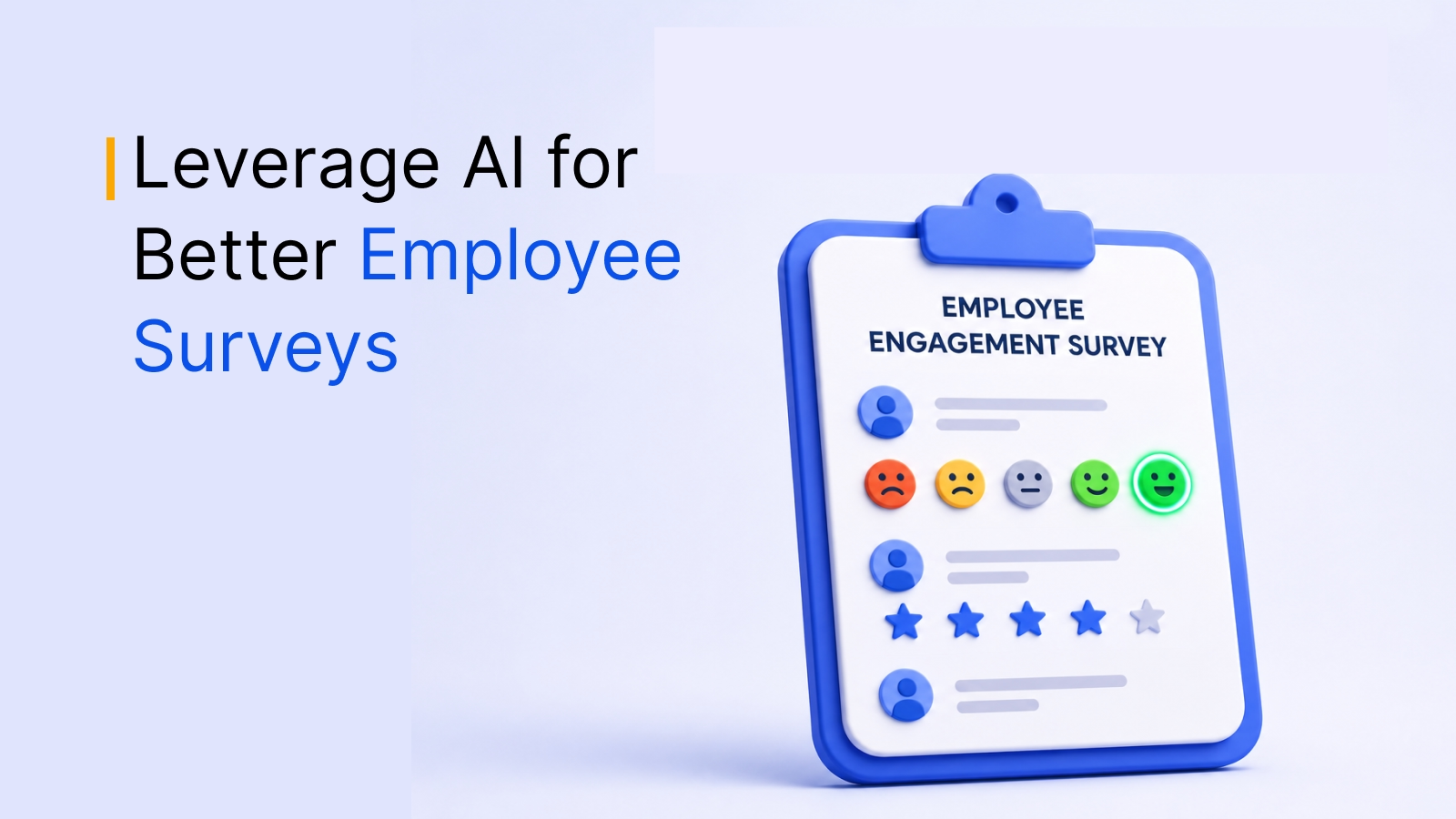
- Switch from annual surveys to pulse listening. Social desirability bias in high-power-distance cultures means annual surveys in the UAE tend to overreport satisfaction. Running shorter pulse surveys every four to six weeks, and triangulating results with exit interview data and manager-level retention rates, gives HR leaders a more accurate read of where disengagement is forming.
How to Measure Employee Engagement Before It Becomes an Attrition Risk
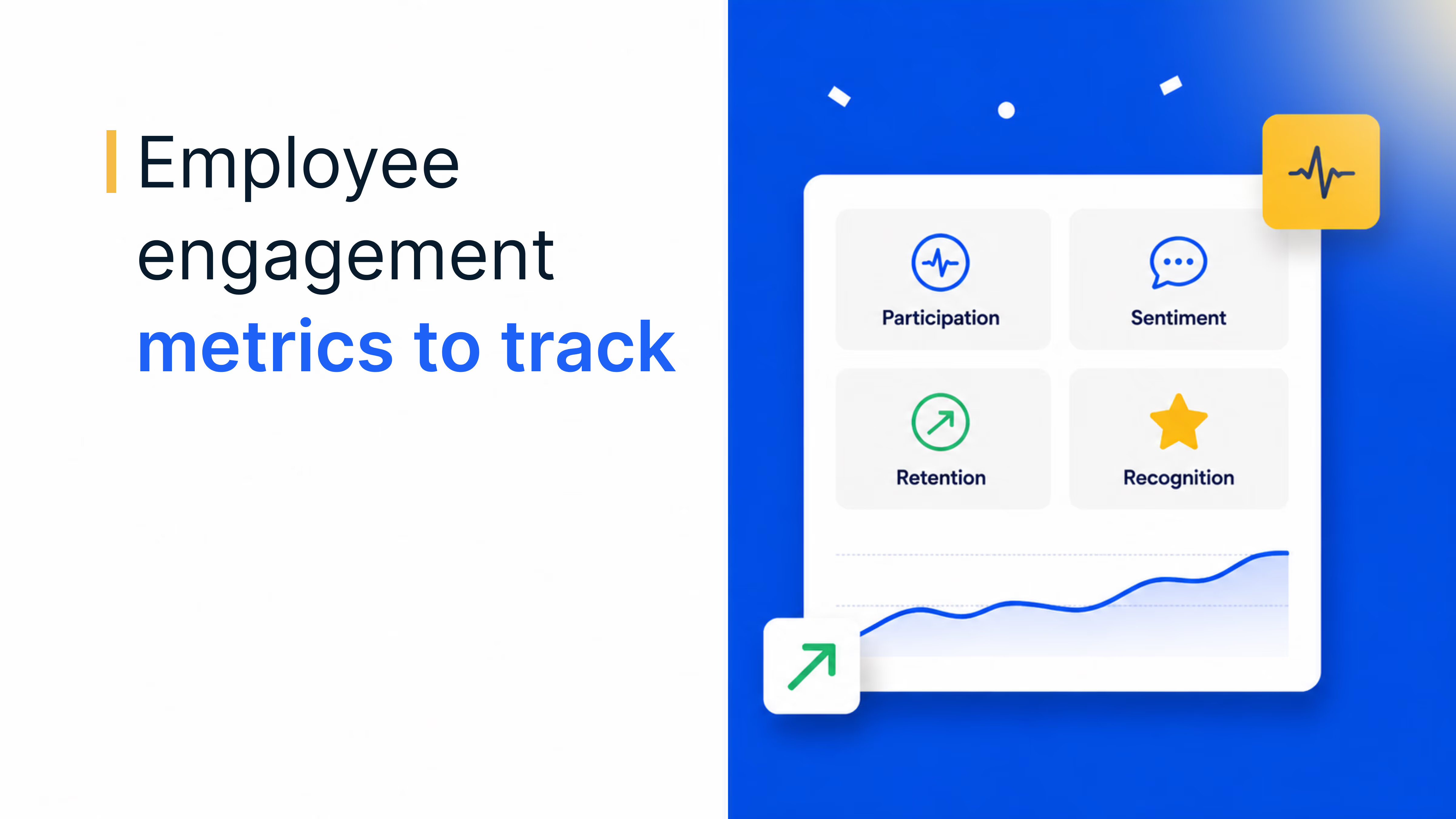
The four most reliable early indicators of disengagement are measurable. Most enterprises in the GCC are not tracking any of them.
eNPS score movement
A decline in the 'I feel valued at work' question on a pulse survey is one of the earliest leading indicators available. A score below 20 is a warning. A score that drops by five or more points quarter over quarter means the problem is already in motion.
Recognition frequency per employee
If fewer than half your workforce received peer or manager recognition in the last 30 days, the gap is already present. The threshold is not demanding – once a month is enough to shift engagement outcomes. Below that, absence is felt even when no one says anything.
Recognition distribution equity
If 20% of your team receives 80% of all recognition, the other 80% are working in effective invisibility. Tools that surface recognition data by team, department, tenure, and location make this visible. Without that data, the inequity does not surface until someone leaves and cites it in an exit interview.
Manager-to-employee ratio signals
When the ratio exceeds 1:10 and no peer-to-peer infrastructure exists, consistent recognition becomes statistically unlikely. A manager with 15 direct reports and monthly 1:1s has roughly 90 seconds per week per person to notice, record, and act on engagement signals. No recognition system that relies solely on manager attention can survive those odds.
A recognition gap that goes unmeasured for six months typically surfaces in an exit interview twelve months later.
How Empuls Supports Employee Engagement in GCC Enterprises
Building a systematic engagement program at enterprise scale in the GCC requires infrastructure, not intent. Empuls is an AI-powered employee engagement platform designed for enterprises managing complex, multicultural workforces. It brings peer recognition, manager recognition, eNPS and pulse surveys, milestone programs, and a localized rewards catalog into one platform – so HR leaders have a single view of where engagement is strong, where risk is forming, and what to do about it.
In the GCC, Empuls is built for the region's specific requirements. Arabic language support and in-country data hosting make deployment viable for government and financial services accounts where data residency is non-negotiable. The rewards catalog covers options relevant across 200-plus nationalities – regional brands, local experiences, and Ramadan-appropriate recognition – not a default catalog built for a Western consumer market.
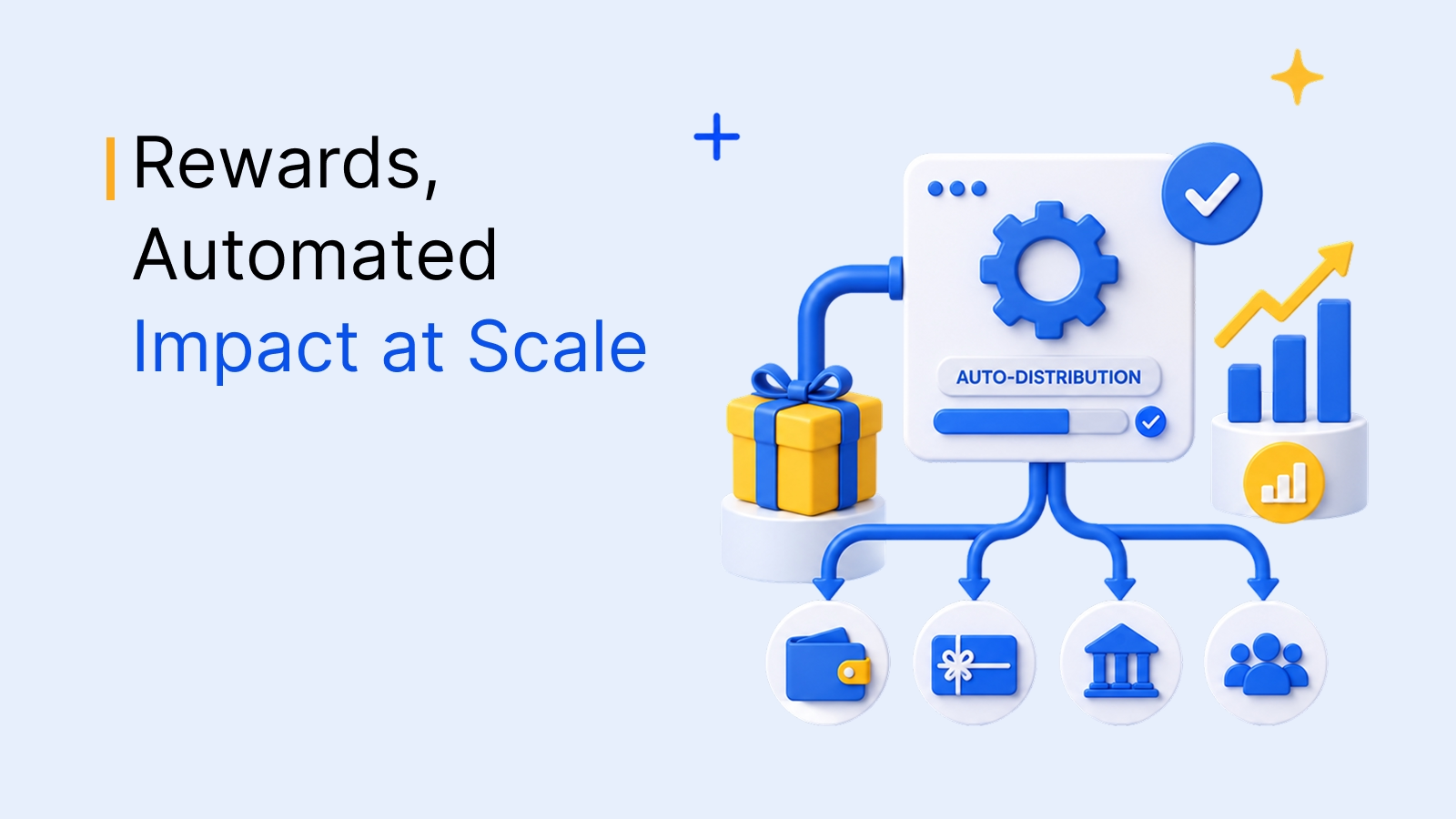
The AI copilot, Em, handles the noticing work that managers at wide spans of control cannot do manually. It surfaces employees who have not received recognition in the last 30 days, coaches managers on recognition frequency, and automates award generation with AI-created visuals. A manager who receives a nudge – 'Your senior analyst has not received peer recognition in 45 days' – can act in under 60 seconds. Without the nudge, that same manager may not notice for months.
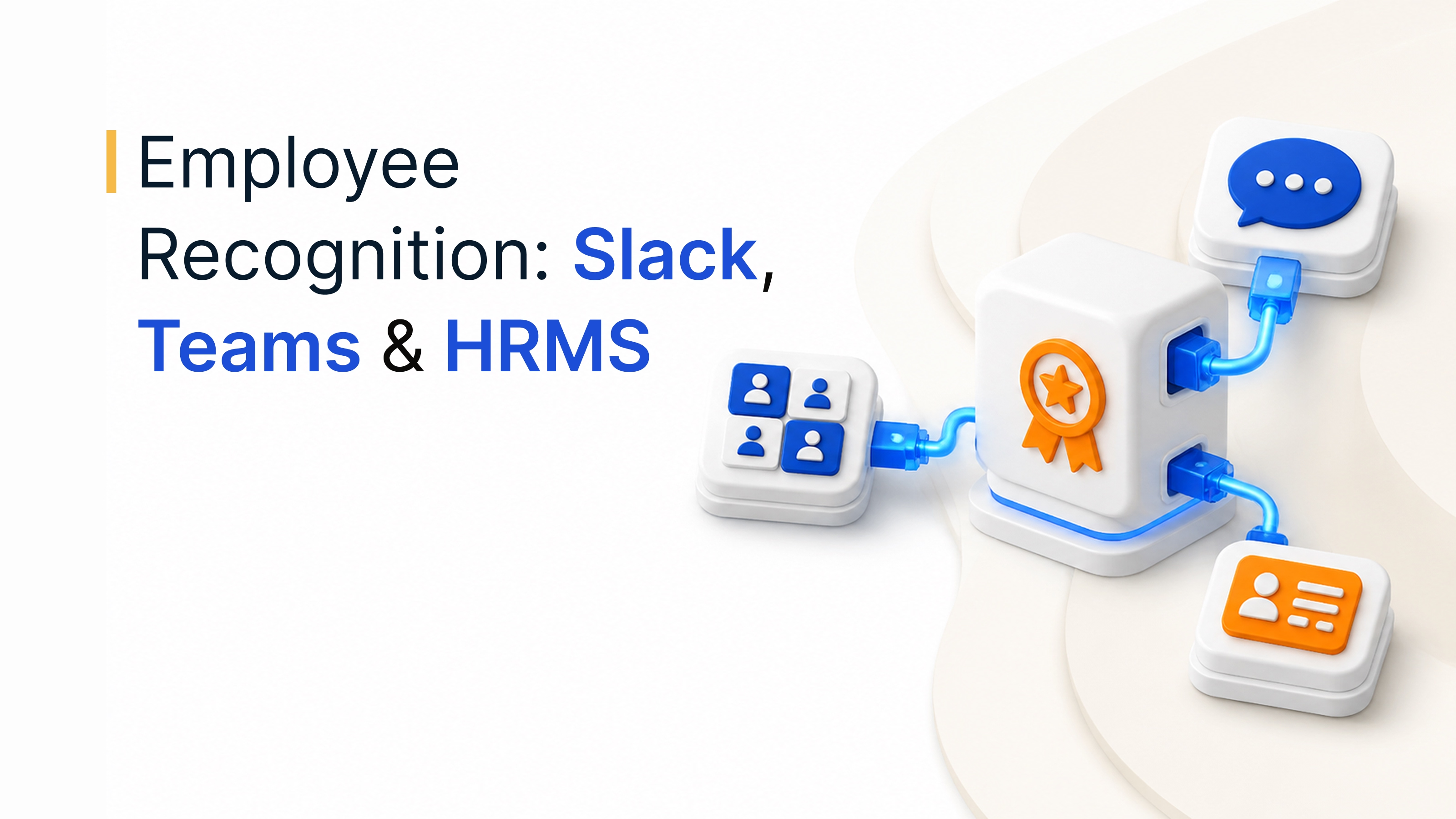
Empuls integrates with SAP SuccessFactors, Workday, Oracle, and 20-plus other HRIS systems, so recognition and feedback happen in the workflow employees already use. Enterprises including Riyadh Air and DAMAC have used Empuls to build recognition programs at the scale that Aviation and Realty in the GCC actually operate.
Your Next Step Toward Engagement That Holds
The warning signals for disengaged teams in the UAE are not subtle. What most enterprises are missing is a system that converts those signals into action before they become attrition. Start with the measurement question: how many of your employees received peer or manager recognition in the last 30 days? If the answer is less than half, the gap is already costing you.
The fix is not a culture campaign or a message from the CEO. It is recognition infrastructure that makes the right behavior easy for managers and visible for HR. That is what a systematic engagement program delivers – not engagement as an aspiration, but engagement as an operating rhythm.