Key Takeaways
40% of consumers forget to redeem rewards they've already earned, and most transit loyalty programs never fix that gap.
The odds of converting a loyal rider into a repeat rider are 60-70%, against 5-20% for a brand-new prospect.
A shared claim-and-redeem ledger between rider and conductor turns a points program from paperwork into a habit.
A rider downloads the app, claims a few points, then forgets it exists by the third trip. That's not a marketing failure. It's what happens when a loyalty program is built as a feature instead of a system riders can feel working.
Most transit operators launch a points program assuming the hard part is getting riders to sign up. It isn't. The hard part is making the points feel real, easy to use, and something staff can support without slowing down boarding.
This post covers what separates a loyalty program that changes rider behavior from one that quietly dies in a drawer of unused app installs, and how Xoxoday Loyalife handles both the design and the execution.
A loyalty program only works if it changes riding behavior
According to McKinsey, the odds of converting a loyal customer into a repeat purchase run 60-70%, against 5-20% for a new prospect. For a transit operator, that math translates into something concrete: a rider who feels the loyalty program working picks the bus over a rideshare app on a day when either would work. A points balance that never grows, or never gets spent, does not create that habit. It just sits there.
Most public transport loyalty programs stall on design, not effort
The failure rarely comes from a lack of budget or intent. It comes from three design gaps that show up in almost every transit program built the same way: unclear earn rules, no staff-side visibility into what a rider has, and a redemption process disconnected from the actual point of payment.
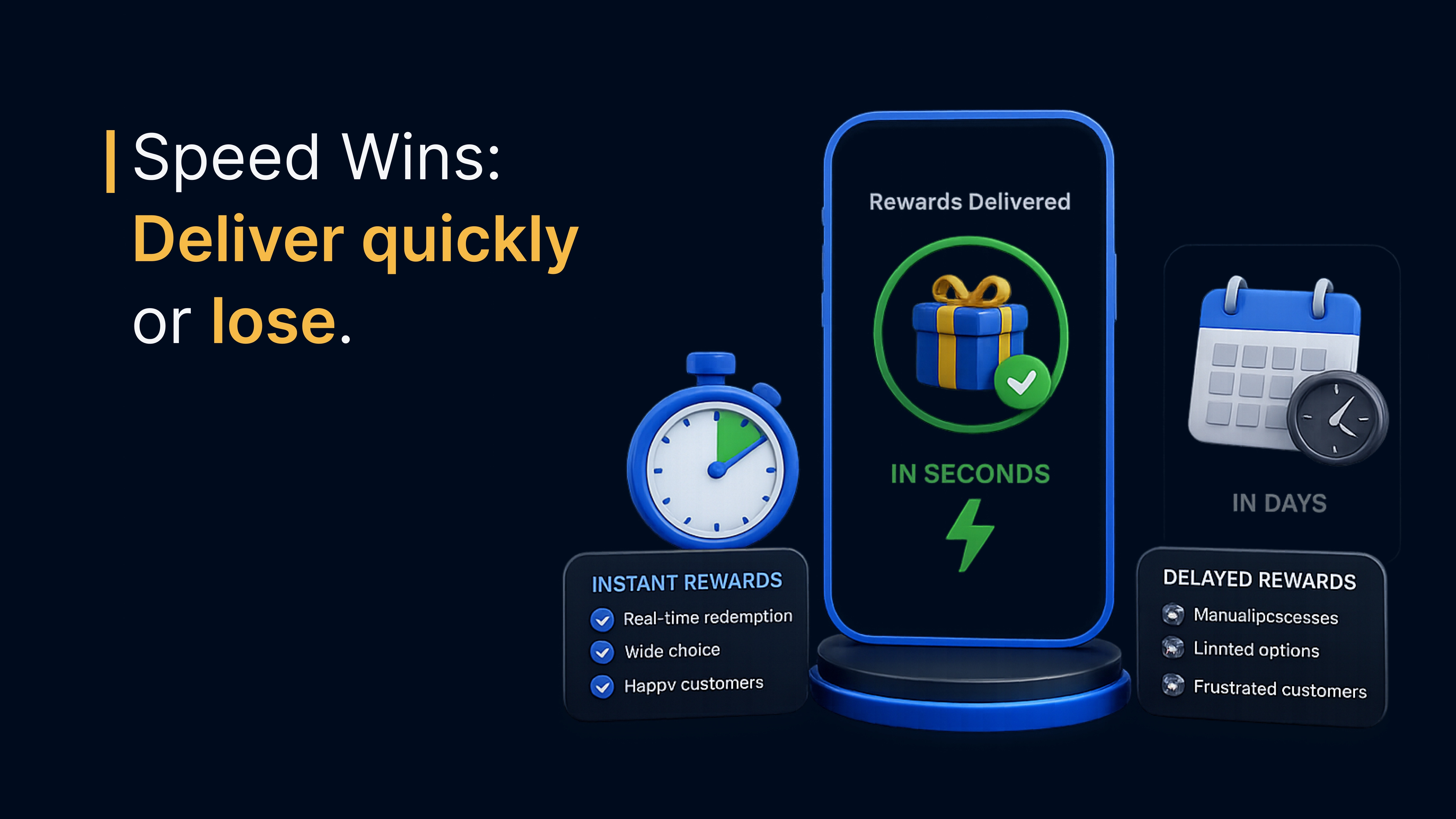
That last gap is the most costly. According to Deloitte's 2025 Consumer Loyalty Survey, 40% of consumers admit they sometimes forget to redeem rewards they've already earned. A program riders can't act on quickly enough loses them to indifference, not to a competitor.
See how Xoxoday Loyalife runs a transit loyalty program
Book a free 30-min demo.
Book a free 30-min demoTrusted by 5,000+ companies
What a working transit loyalty program looks like day to day
A program built around clear earn rules and fast redemption needs two flows that take seconds each: claiming points after a trip, and redeeming them before the next one.
How a rider claims points after a completed trip
The rider submits a booking ID and the travel date. The system checks both against the trip data the operator already has, then awards the predefined point value for that route once they match.
How redemption works at boarding
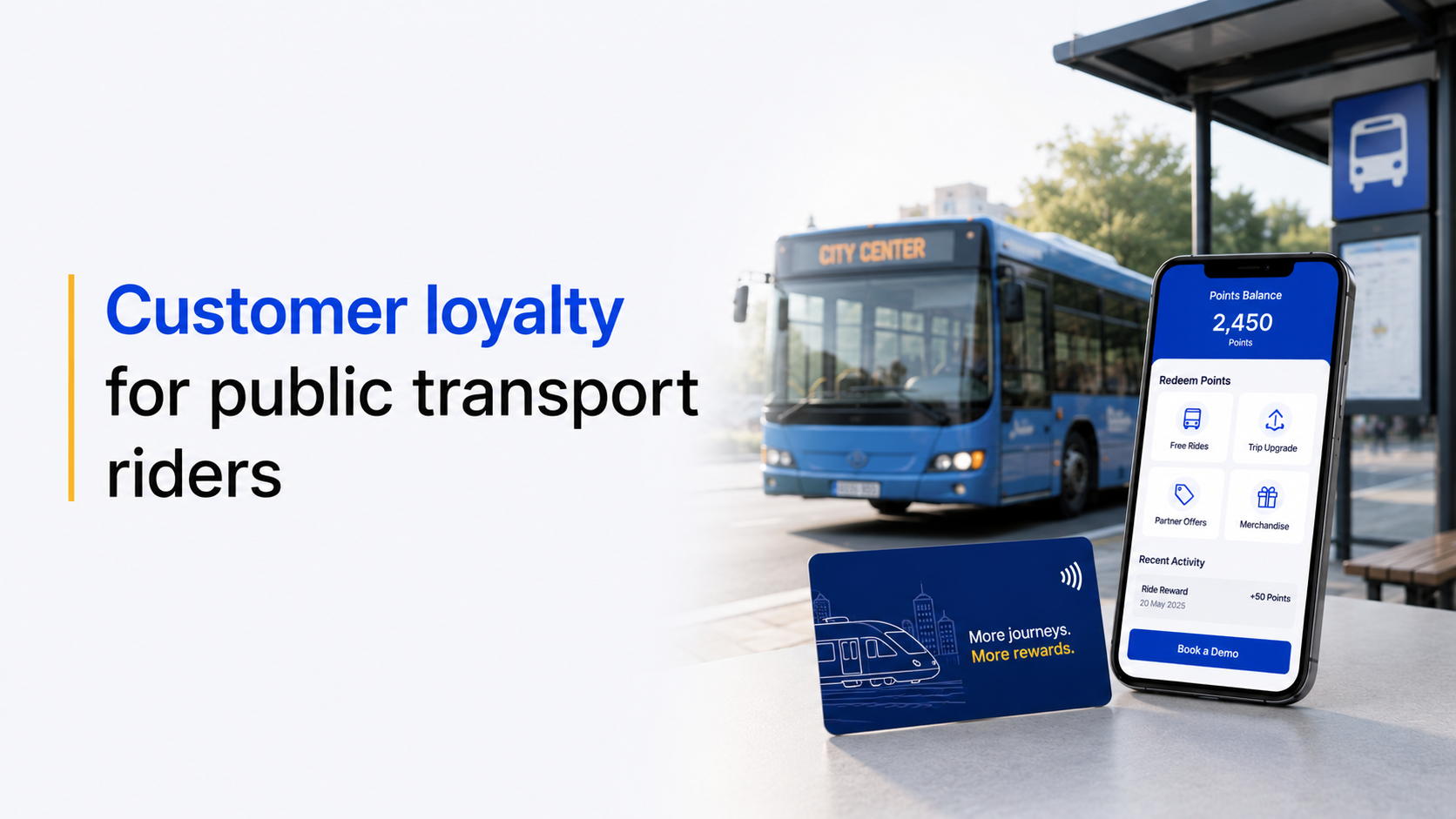
The rider opens the app and generates a QR code. The conductor scans it, enters the fare amount, and the system converts that amount into points at a fixed, predefined rate. If the balance falls short, the remaining amount is payable in cash on the spot.
Give conductors and riders the same ledger, or expect reconciliation headaches
A loyalty program with two separate records of what got redeemed is a program nobody trusts by month two. Riders need to see their own claim and redemption history to believe the balance on their phone. Conductors need the same view from their side, so a disputed fare takes one glance to resolve instead of a call to a back office.
How Xoxoday Loyalife runs a transit loyalty program from earn to redemption
Loyalife handles the parts of a loyalty program that usually get built as afterthoughts: predefined earn rules tied to real trip data, a staff-facing redemption screen that adds no extra hardware, and a shared transaction history both sides can see.
| Program type | Earn visibility for rider | Redemption experience | Staff tooling | Reporting |
|---|---|---|---|---|
| Manual/paper program | None until claimed by hand | Slow, staff does the math | Paper log | None |
| Basic app, no live sync | Balance shown with a delay | Medium, second system lookup | Separate ledger | Limited |
| Xoxoday Loyalife | Updated after each trip | Under 10 seconds via QR | Same screen as fare collection | Shared ledger, built-in reporting |
The same rules engine also powers how a points-based airline program handles high-frequency redemption and why relationship-driven loyalty outperforms transactional discounts, so a transit operator adopting this isn't buying a single-use redemption tool. It's running a full loyalty program.
The takeaway for transit operators
A loyalty program earns its keep the moment a rider stops thinking about it and starts relying on it, checking a balance without wondering if it's accurate, redeeming a fare without a second system to reconcile. Get the earn rules, the shared ledger, and the redemption speed right, and the rest, habitual ridership, follows on its own.