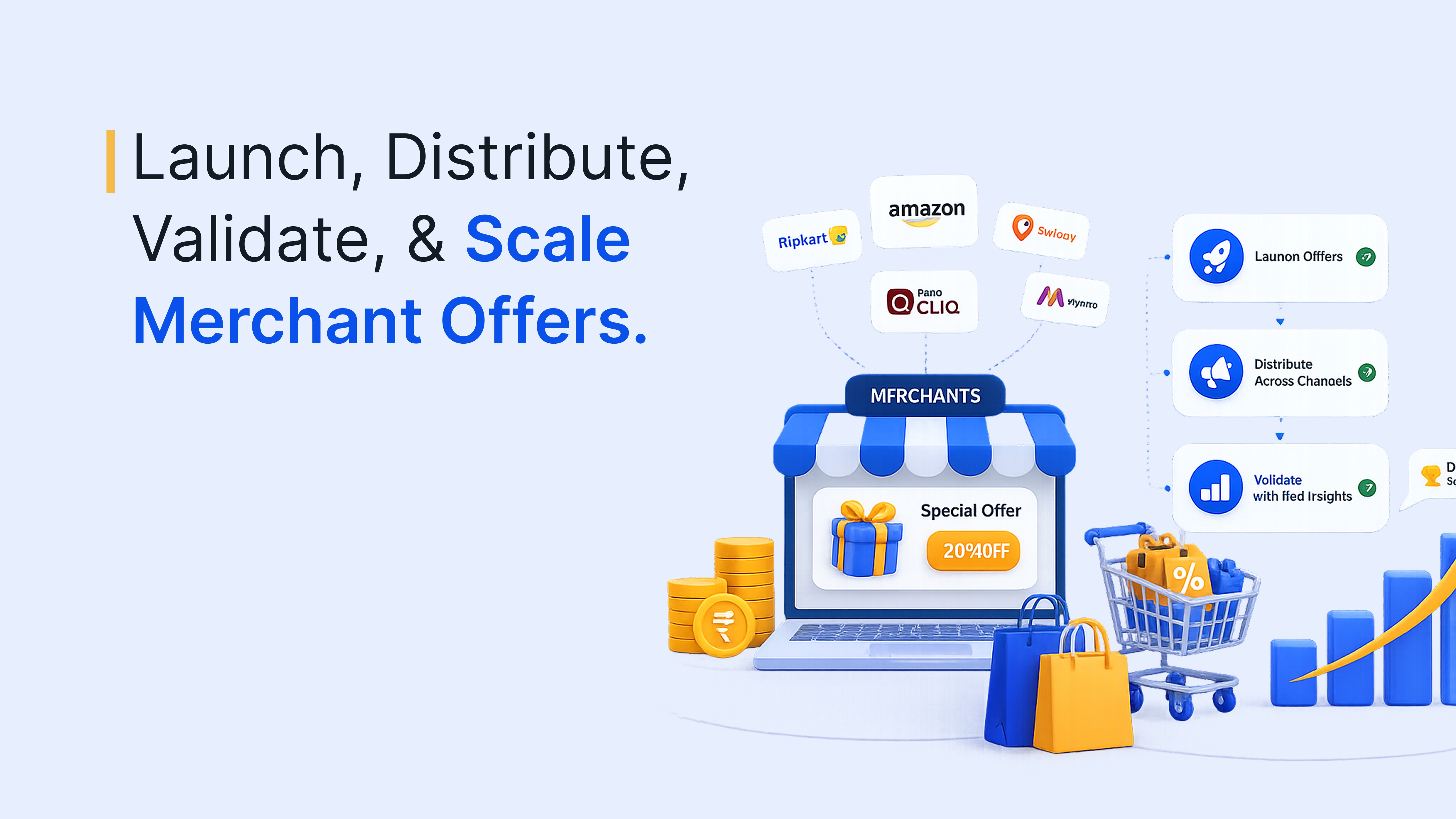
Key Takeaways
Merchant-funded offers cost the distributing brand nothing in discount margin, since the merchant funds the reward.
Most in-house programs fail on validation, not distribution, letting duplicate or bot redemptions drain a merchant's budget.
A platform that runs corporate, merchant, and customer workflows in one system replaces manual invoicing, spreadsheets, and separate validation tools.
A regional bank once offered its cardholders 20% off at a partner gym chain. Three weeks in, half the redemptions were coming from five IP addresses, and the merchant pulled out of the program before the second month closed.
That's the risk hiding inside every merchant-funded offer. The mechanics look simple: a merchant funds a discount, a brand or bank distributes it, a customer redeems it. What actually breaks a program is everything in between, who validates the redemption, who tracks the budget, and who catches the fraud before the merchant does.
This post covers how merchant-funded offers work end to end, where in-house builds and point solutions fall short, and what a platform built for the full three-sided workflow needs to do differently.
What merchant-funded offers are, and why brands are building programs around them now
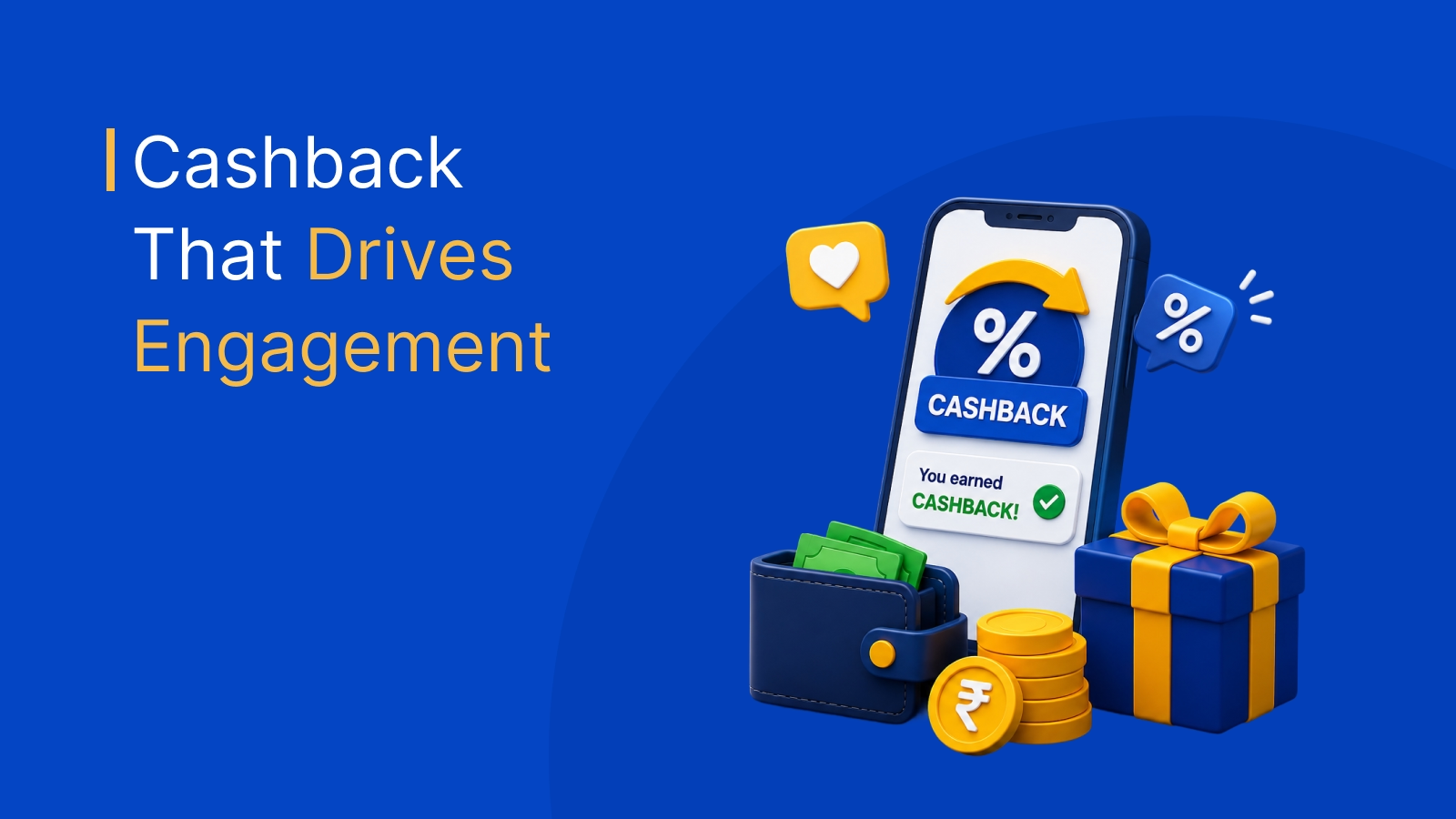
A merchant-funded offer is a discount, cashback, or reward that a merchant pays for entirely, distributed through a brand, bank, or platform the merchant doesn't own. The distributing brand gets a promotion with no discount cost of its own. The merchant gets targeted access to a customer base it didn't have to acquire on its own.
This is the model behind card-linked cashback inside banking apps, retailer partnership discounts, and reward-marketplace deals bundled into a card program. It sits alongside other sales promotion campaigns a brand might run, but funded by someone outside the brand's own budget. It's spreading because customer acquisition keeps getting more expensive, and merchants would rather fund a targeted offer to a warm audience than run another untargeted ad.
72%
of consumers spend more with brands whose loyalty or reward programs they use
2025 Consumer Loyalty Program Survey, Deloitte Insights
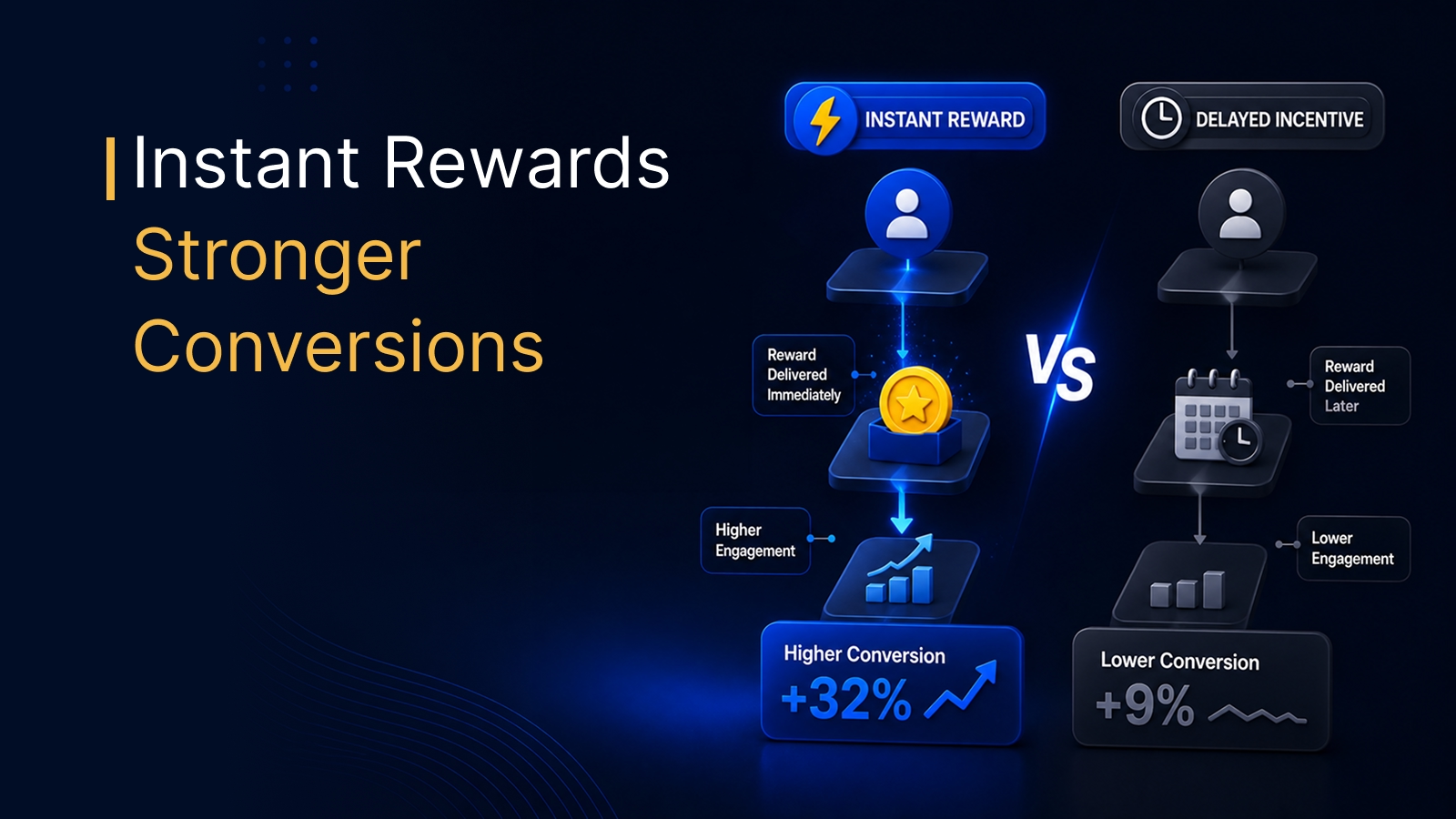
Deloitte's 2025 Consumer Loyalty Program Survey found that 72% of consumers say a brand's reward program makes them more likely to spend with that brand, and 56% say it directly increases how much they spend. A merchant-funded offer is one of the few reward mechanics where that spend lift doesn't come out of the distributing brand's own margin.
Why running merchant-funded offers in-house breaks down at scale
Most teams that build these programs in-house hit the same wall. They can run one offer type well. The moment they need fixed-value discounts, free-format offers, and product-based offers running at the same time, the spreadsheet-and-email process falls apart.
Three failure points show up again and again:
- No per-offer budget controls (redemption caps, minimum spend, maximum discount, time windows), so a popular offer can burn through its funding before anyone notices.
- No expiry tracking, so discounts stay live for weeks after the merchant meant to pull them.
- No single publishing point, so the same offer gets re-uploaded by hand to every portal and channel it needs to appear on.
Each of these is solvable in isolation. Together, they're why most in-house programs stay small: nobody wants to scale a process that already needs three people to babysit one offer. The cost shows up quietly, in marketing hours spent re-uploading the same offer to a fourth portal, and in merchant trust that erodes every time a budget cap gets missed.
The redemption and validation gap most cashback offers management software ignores
Cashback offers management software usually gets distribution right and validation wrong. Most tools can push an offer to an app or an inbox. Fewer can confirm, at the moment of redemption, that the person redeeming it hasn't already claimed it five times from a different account.
Deloitte's research found that 40% of consumers admit to sometimes forgetting to redeem a reward altogether. Every extra step between offer and payoff, an account signup, a login wall, a code that has to be typed in manually, costs a program real participation before fraud ever enters the picture.
Real validation needs three things most point solutions skip:
- Merchant-side confirmation at the point of sale, not just a code that looks structurally valid.
- A redemption path that doesn't force an account signup before the customer gets value.
- Multi-currency, multi-country support if the program runs across regions.
See it in action
See how Plum runs merchant-funded offers end to end.
Book a free 30-min demoTrusted by 5,000+ companies
What to evaluate before choosing a merchant-funded offers platform
Most evaluation checklists focus on catalog size and channel count. Those matter less than whether the platform can answer four operational questions before a program goes live.
- Who gets reimbursed, and how fast: does the merchant wait for a manual invoice, or draw down from a prepaid wallet the platform manages?
- What happens at redemption: is fraud caught before the discount applies, or discovered afterward in a reconciliation report?
- Can a merchant run five stores under one account, or does each location need a separate login and a separate offer setup?
- Does the platform connect to the CRM, marketing automation, or HRMS tools the program already reports into, or does data have to be exported and re-uploaded?
A platform that answers all four without a custom integration project is the difference between a pilot that stays a pilot and a program that scales past one merchant category.
How a card-linked offers platform plays out across three different users
A merchant-funded offer only works if three separate users can each do their job inside the same system: the corporate team funding and approving offers, the merchant creating and honoring them, and the customer claiming and redeeming them.
What the corporate or brand team does
The corporate side approves and publishes rewards before they go live, onboards and manages the merchants participating in the program, and manages cash flow through a merchant wallet instead of a manual invoice cycle for every redemption.
What merchants and stores do
Merchants create and share their own offers inside the limits corporate sets, manage their store profile and locations, and process redemptions using a store PIN for validation at the point of sale.
What the customer experiences
The customer claims a reward and adds it to a wallet, then redeems it, in most well-built programs, without ever creating an account.
A merchant offer redemption scenario, from creation to payout
Picture a mid-size electronics retailer offering $99 off a flagship phone for one week. The retailer sets a fixed-value offer against a product normally priced at $799, caps total redemptions, and uploads a display image and logo. The offer publishes to the retailer's own storefront and to any partner portal it's connected to.
A customer sees the offer, claims it, and gets a shareable QR code and link. No login required. At checkout, the merchant scans the code. The system checks it against the redemption cap and flags anything that looks like a duplicate or bot claim before the discount applies.
If the retailer runs the same promotion across five store locations, each store validates independently with its own PIN, but redemptions still count against one shared cap so the offer can't be claimed five times over by visiting five branches. The merchant gets reimbursed from the balance already sitting in its merchant wallet, not through a manual invoice cycle weeks later.
How Xoxoday Plum runs merchant-funded offers end to end
Xoxoday Plum runs the corporate, merchant, and customer sides of a merchant-funded offers program inside one platform, as part of the same digital rewards platform that also handles corporate gifting and payouts, instead of stitching together a distribution tool, a validation tool, and a separate merchant portal.
Offer management
Plum supports fixed-value, discount, free-format, and product-based offers in one system, with budget controls (redemption caps, minimum spend, maximum discount, day and time windows), automatic alerts when an offer nears expiry, and one publishing window to push an offer across every connected web portal at once.
Multi-channel offer distribution
Offers distribute across email, SMS, social, web, and mobile apps from a single setup. A near me option surfaces offers by store location using Google Maps, and every offer generates a shareable URL and QR code that work across both online and offline channels.
Redemption and validation
Store PIN-based validation plus merchant-side confirmation guard against fraud at redemption. Guest redemption lets a customer redeem without creating an account, and multi-geography support covers redemption across multiple currencies for programs that span countries.
Merchant management
Merchants get self-service onboarding to join a program without a sales call, a merchant wallet that holds prepaid credit for campaigns and module subscriptions, and support for multiple storefronts under one merchant account, each running its own offers. A merchant with locations in three cities manages all three from a single login instead of juggling three separate merchant relationships.
Plum's positioning attracts merchants that are typically reluctant to join standard card-linked offer networks, including recognizable brands like Amazon, Walmart, Nike, Starbucks, Target, and Marriott. That matters for a program's credibility with cardholders: a merchant network built only from small local businesses funds smaller, less compelling offers.
What an AI-powered, omnichannel merchant-funded offers platform adds
Beyond running the workflow, an AI-driven offers platform decides which offer a given customer sees, tracks how the program performs, and connects it to the rest of a company's stack.
Younger customers are far more willing to trade data for relevance, which is exactly what a recommendation engine needs in order to work.
| Generation | Will share data for tailored offers | Would opt into hyper-personalization | Would spend more if personalized |
|---|---|---|---|
| Gen Z | 89% | 62% | 51% |
| Millennial | 87% | 64% | 53% |
| Gen X | 78% | 55% | 38% |
| Baby boomer | 64% | 33% | 19% |
Plum's AI engine builds on signals like clicks, page views, offer claims, validations, and favorites to surface four recommendation categories: top picks for a specific customer, offers that might interest them, offers others in their segment are claiming, and trending offers overall. Segments can be built on behavioral data and proprietary scoring models, then targeted with offers based on that data across the full customer base.
On the reporting side, real-time dashboards track redemption and validation rates, with customizable filters by country, reward category, time period, and program ID, plus a reporting API for pulling redemption data into other business tools. Because most offer programs don't run in isolation, Plum connects to HRMS, CRM, survey, ABM, and sales and marketing automation tools already in a company's stack, along with GDPR, SOC 2, ISO 27001, CCPA, and CRPA compliance for programs operating across multiple regulatory regions.