Key Takeaways
Embedded rewards fire inside the product workflow, not alongside it, which is why they consistently outperform standalone loyalty programs on activation
Custom reward infrastructure costs $100K to $500K and takes 6 to 18 months to build; a rewards API gets you live in 4 to 8 weeks
Six fintech and SaaS use cases are driving embedded rewards adoption in 2026, from neo-bank KYC completion to real-time gaming payouts
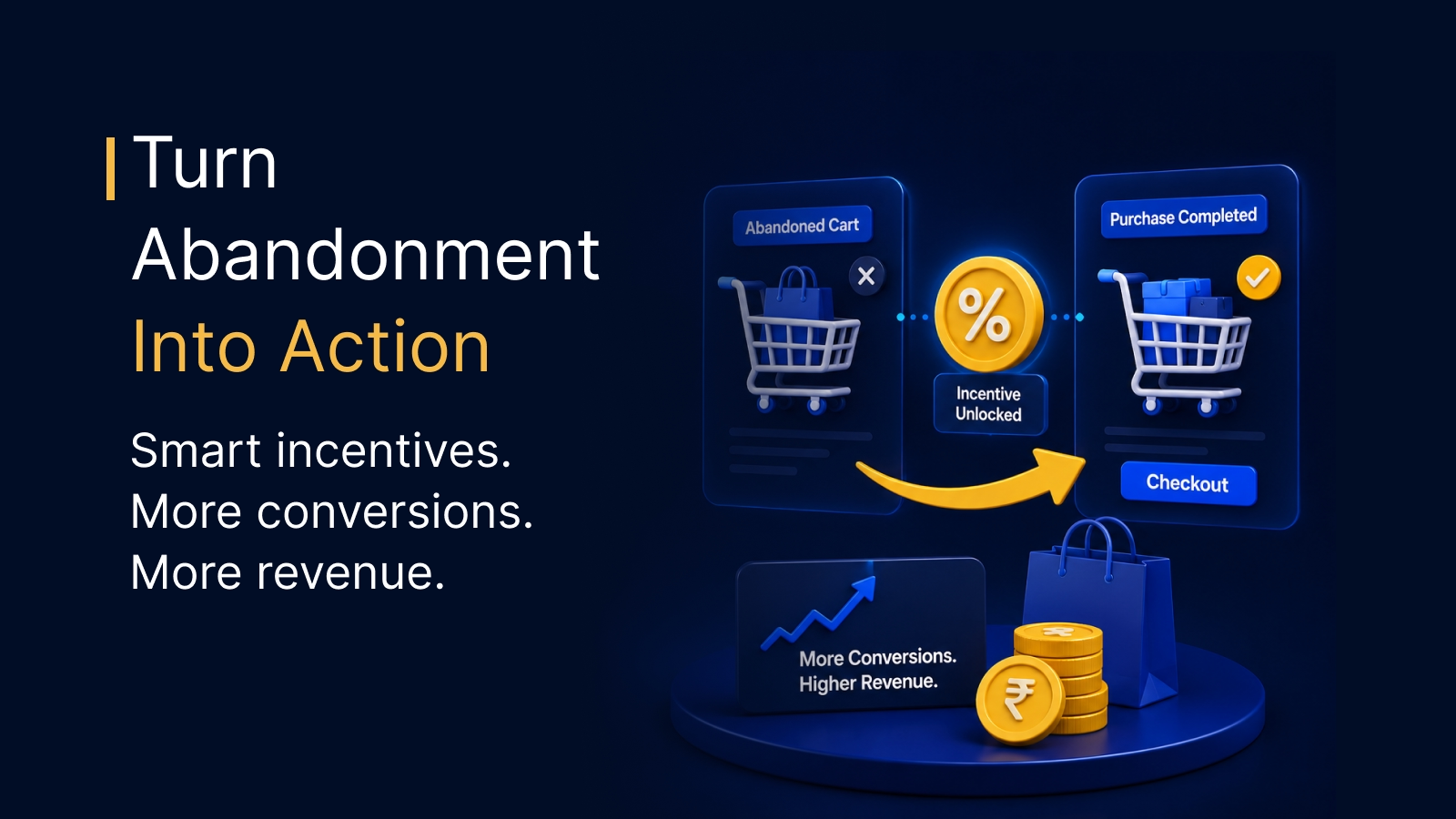
A product manager at a neo-bank had a KYC completion problem. The form was short. The UX was clean. Reminder emails went out on schedule. Completion still sat at 62%. What moved the number was a gift card that fired automatically the moment a user submitted their documents. Six weeks later, completion was at 81%.
Embedded rewards are doing exactly what they were designed to do: not a loyalty tab users ignore, but an incentive woven directly into the product flow. The reward was invisible infrastructure until the moment it mattered.
The global embedded finance market reached $148 billion in 2025 and is on a 31.5% annual growth trajectory (Precedence Research). Payments and lending got there first. Rewards are the layer that comes next. For product and growth teams at fintech and SaaS companies, the question is no longer whether to embed rewards. It is how to do it without spending six months and a significant engineering budget building infrastructure that already exists.
What Embedded Rewards Are (and What They Are Not)
Most people picture a loyalty program when they hear rewards. Points that accumulate slowly. A separate app to track them. A redemption catalog nobody visits until a flight gets cancelled.
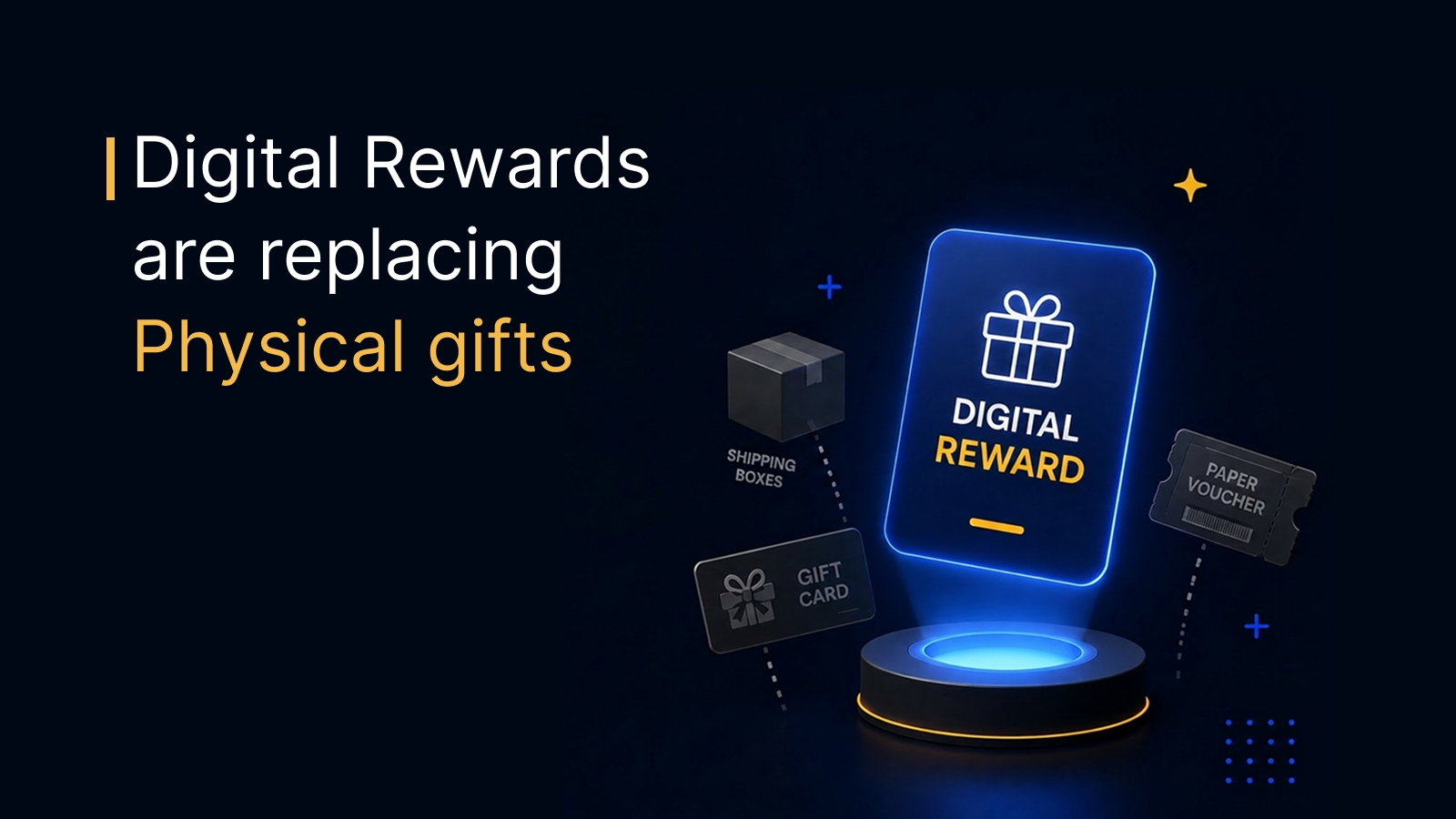
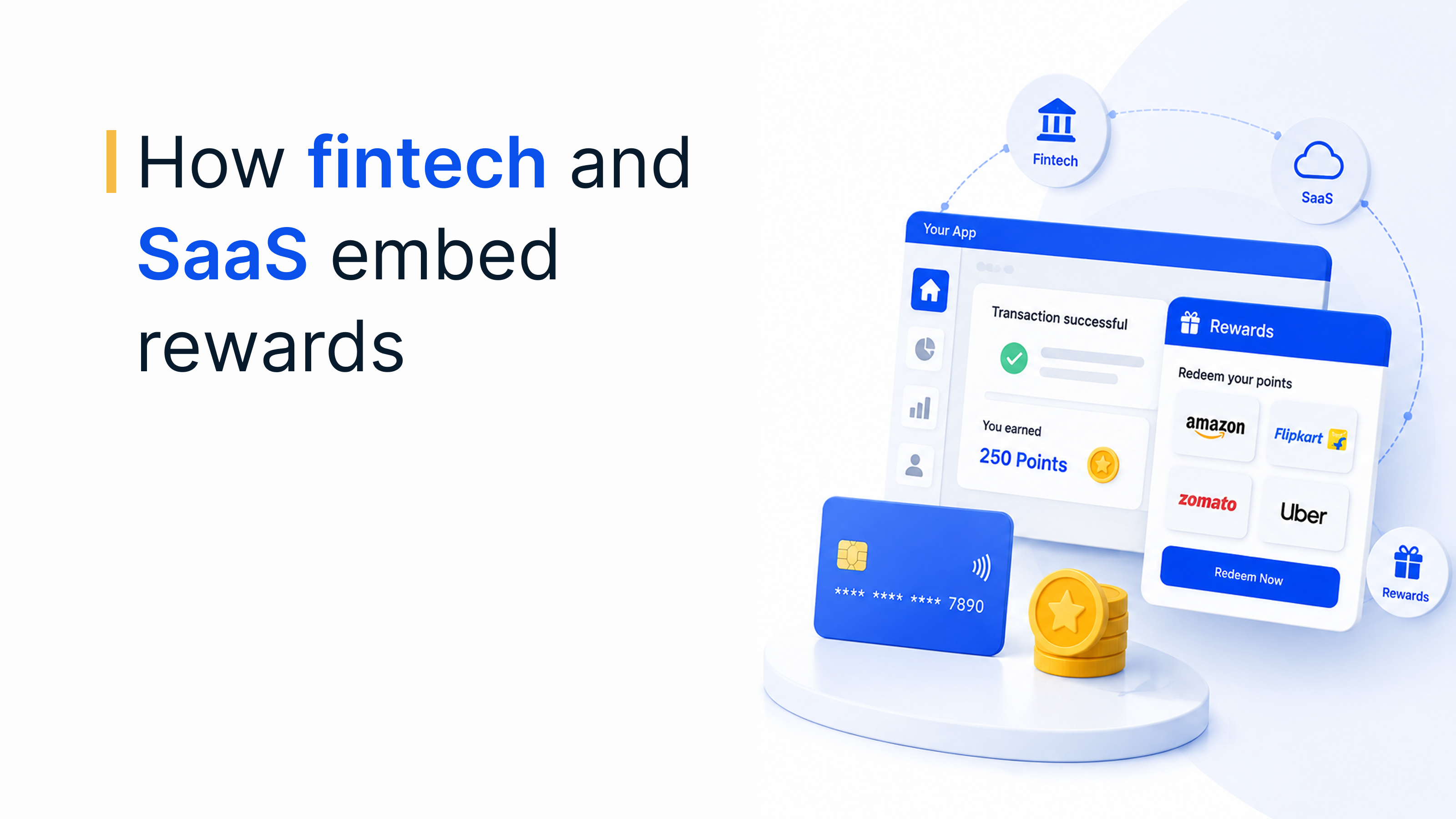
Embedded rewards are structurally different. They live inside the product experience, not alongside it. When a user hits a milestone and a reward appears in their notification tray without leaving the app, without signing up for anything separate, that is embedded rewards. The incentive is part of the workflow, not a detour from it.
Three models exist in practice:
- In-app reward events: a trigger fires within the product and a reward appears instantly in the same interface.
- API-triggered payouts: a backend event, such as KYC approval, a first deposit, or a survey submission, automatically dispatches a reward to the recipient's email, SMS, or wallet.
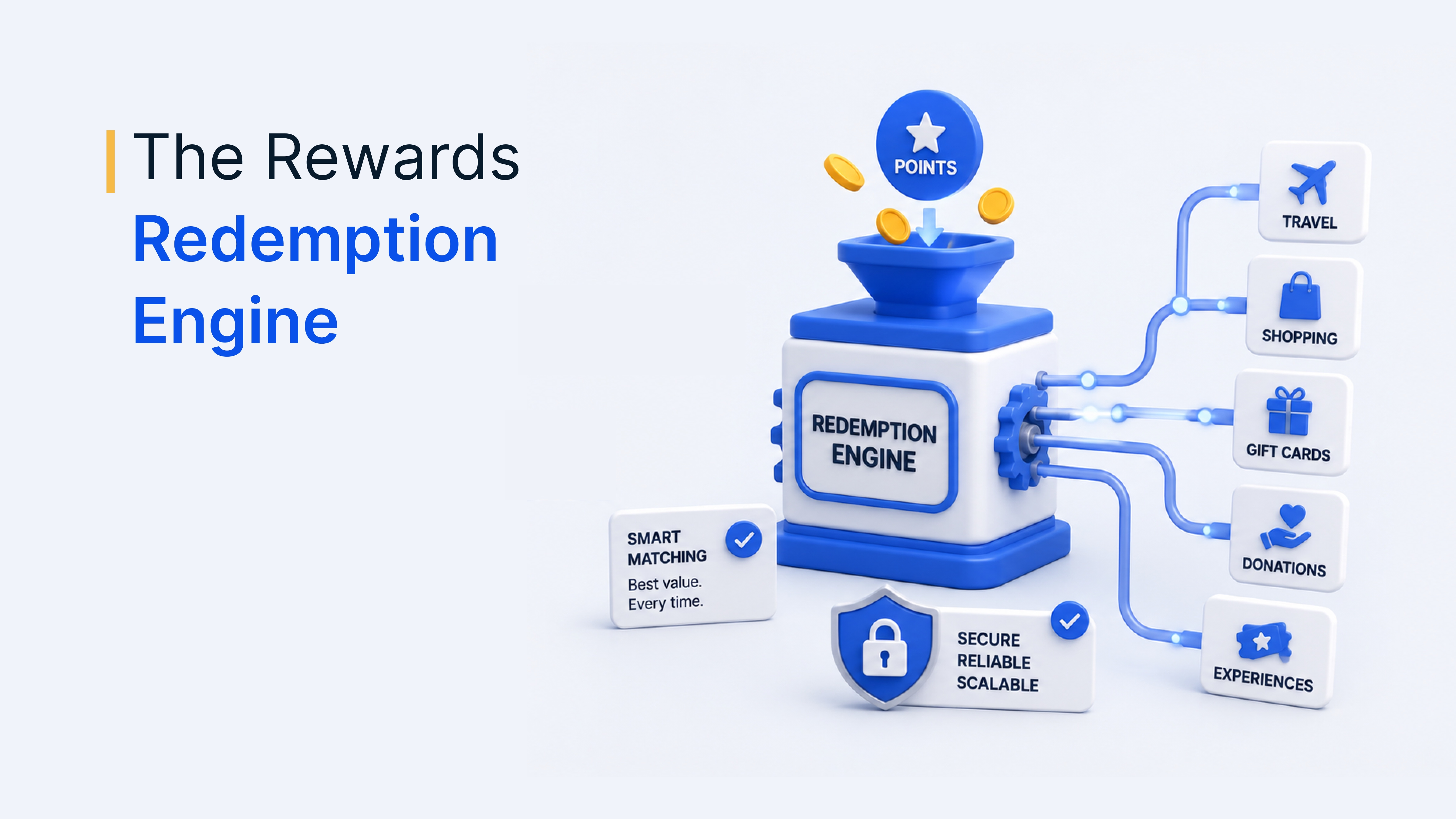
- White-labeled redemption stores: the platform hosts a branded reward catalog under its own domain, where users spend points or credits earned through product activity.
The model that fits depends on the use case and the integration depth the team is willing to support.
Why the Timing Is Right in 2026
Bain & Company estimates that US embedded finance transaction value will exceed $7 trillion by the end of 2026, up from $2.6 trillion in 2021. Most of that momentum has been in payments and lending. Rewards are the layer that follows.
Payments give users a reason to stay in the app. Lending gives them capital when they need it. Rewards give them a behavioral reason to keep engaging after the initial activation event. The platforms that have figured this out are seeing measurable impact on the metrics that matter.
The data is consistent. According to Bond Brand Loyalty, 72% of consumers say loyalty programs make them more likely to spend with a brand. Across industries, the average ROI on loyalty programs is 5:1 (Gitnux, 2026 Data Report). For fintech and SaaS platforms with large user bases and rich behavioral data, embedded rewards are one of the few growth levers that improves both activation metrics and retention simultaneously.
$148B
Global embedded finance market
2025 market size, growing at 31.5% CAGR (Precedence Research)
$7T
US embedded finance transaction value
Projected by end of 2026, up from $2.6T in 2021 (Bain & Company)
72%
Consumers more likely to spend
With brands that offer loyalty rewards (Bond Brand Loyalty)
5:1
Average ROI on loyalty programs
$1 invested returns $5 in profit on average (Gitnux, 2026)
The embedded rewards opportunity in 2026
See how Plum's Rewards API works in your product stack
Embed rewards directly into your product without building infrastructure. 10M+ reward options, 150+ countries, live in 4-8 weeks.
Book a 30-min demoTrusted by 5,000+ companies
Six High-Value Use Cases Across Fintech and SaaS
Embedded rewards are not one use case. They are infrastructure that different platform types deploy differently. Six patterns dominate.
Survey and research platforms
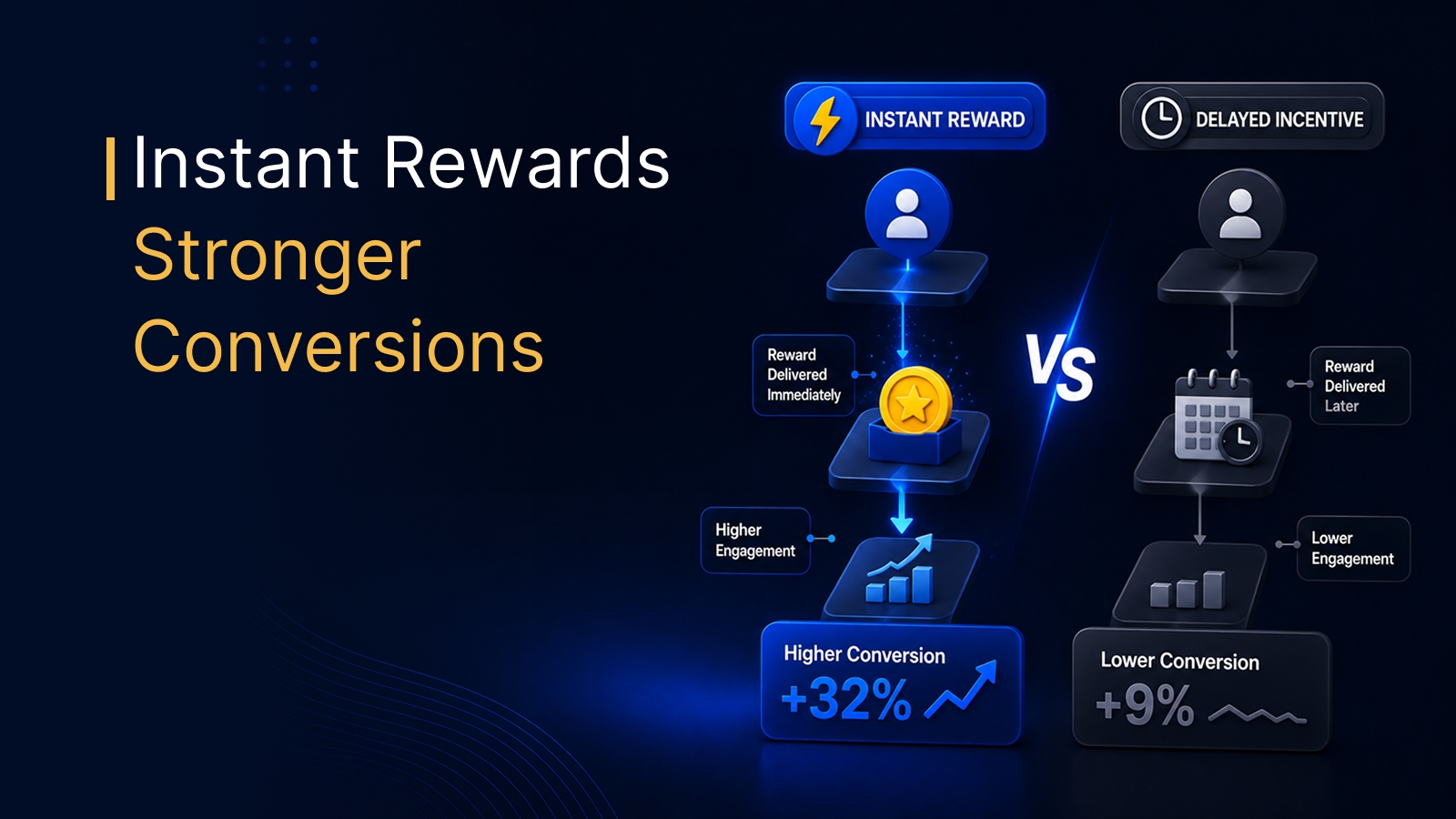
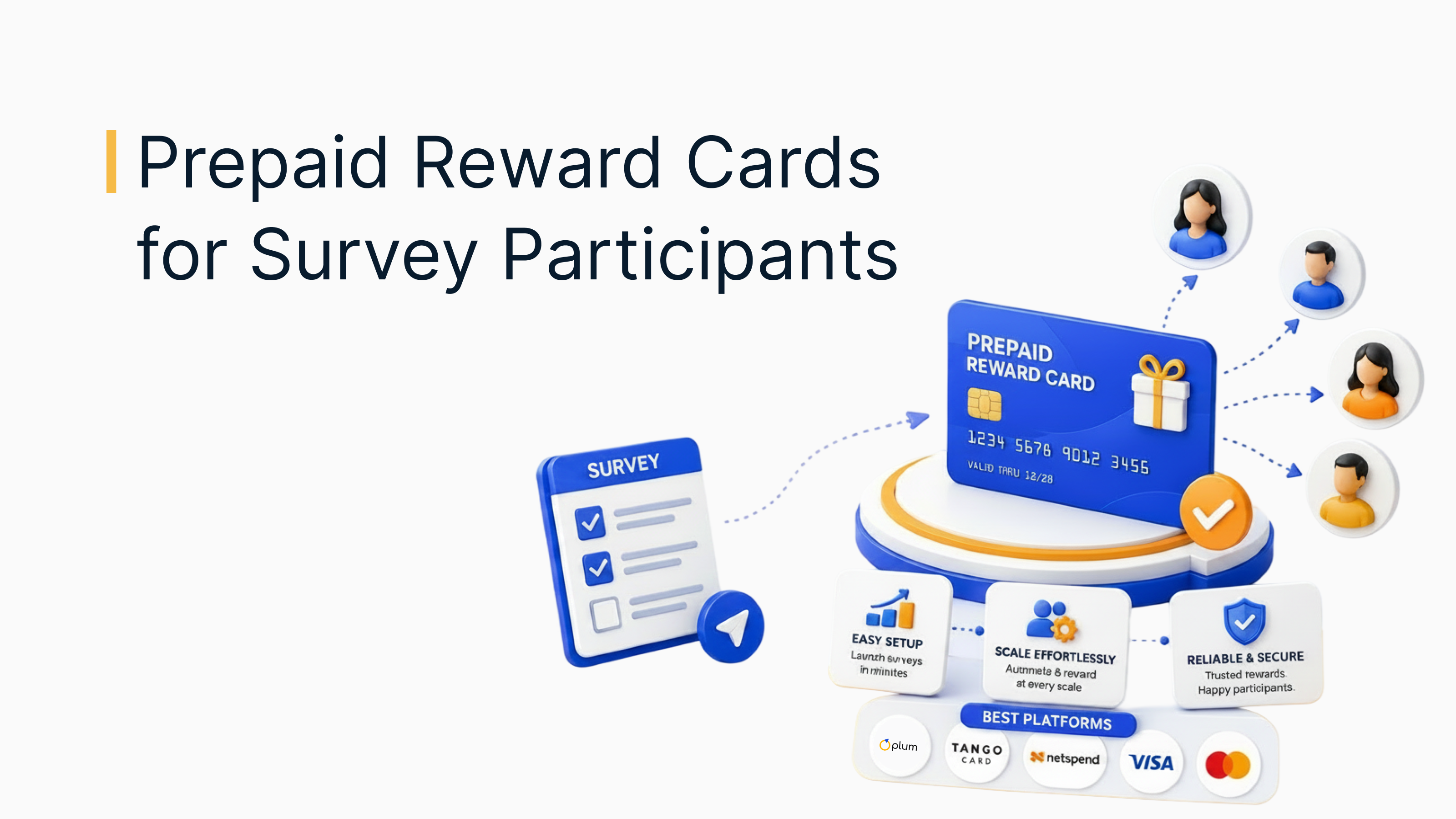
Survey completion drops when respondents have no tangible incentive for their time. Platforms that trigger an instant digital gift card on survey completion report higher completion rates and stronger repeat participation. The reward must arrive in under 60 seconds or the behavioral link between effort and reward breaks.
Referral and growth programs
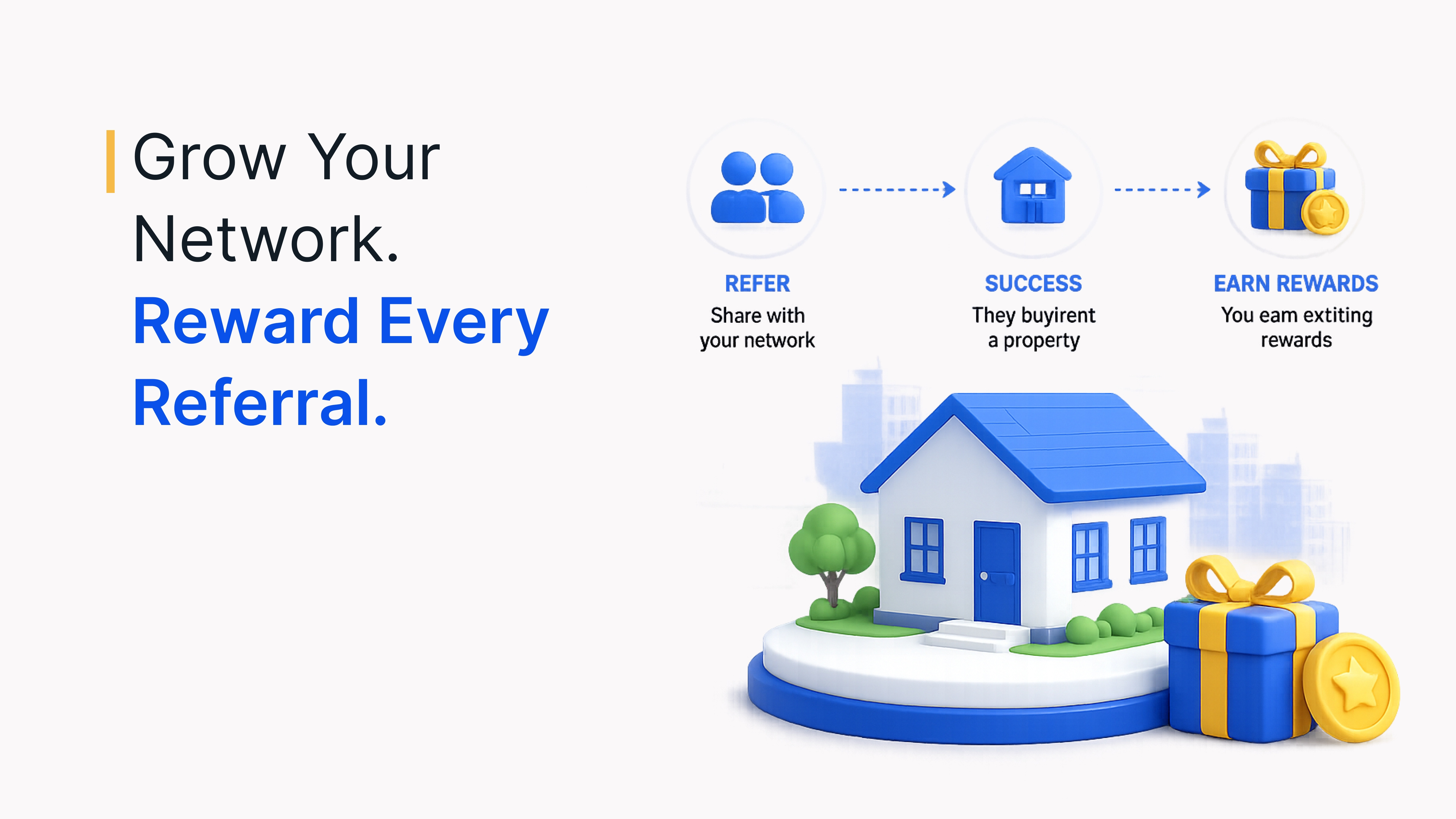
Referral programs that pay out in cash equivalents often create compliance headaches. Platforms that embed gift card or prepaid card rewards at the point of referral conversion cut bank transfer delays and shrink fraud exposure. Reward choice matters: 81% of consumers say seeing progress toward a reward motivates participation (Attentive, 2026), which means a visible progress bar plus a meaningful catalog outperforms a flat cash payout every time.
Wellness and health apps
Behavior change does not sustain without reinforcement. Wellness platforms that trigger rewards at activity milestones see higher habit formation. The reward anchors the behavior to a moment of success, not to a scheduled check-in that arrives too late.
Gaming and entertainment platforms
Gaming platforms use event-triggered rewards, match wins, streaks, tournament finishes, to drive re-engagement. The key technical requirement here is high-volume, real-time issuance. A tournament final may require thousands of rewards to dispatch in minutes.
Neo-banks and fintech apps
Banks with loyalty programs see 18% higher deposit growth than those without (Gitnux, 2026). Neo-banks use embedded rewards at KYC completion, first transaction, spending milestones, and referral events to build early user habits and reduce first-month churn, which is where most fintech apps lose the users they worked hardest to acquire.
Sales and channel incentive platforms
SaaS platforms running sales incentive programs use rewards APIs to automate SPIF payouts at quota attainment or deal closure, without manual processing. SaaS loyalty programs that embed incentive mechanics report a 35% boost in upsell rates (Gitnux, 2026).
How a Rewards API Works: From Trigger to Delivery
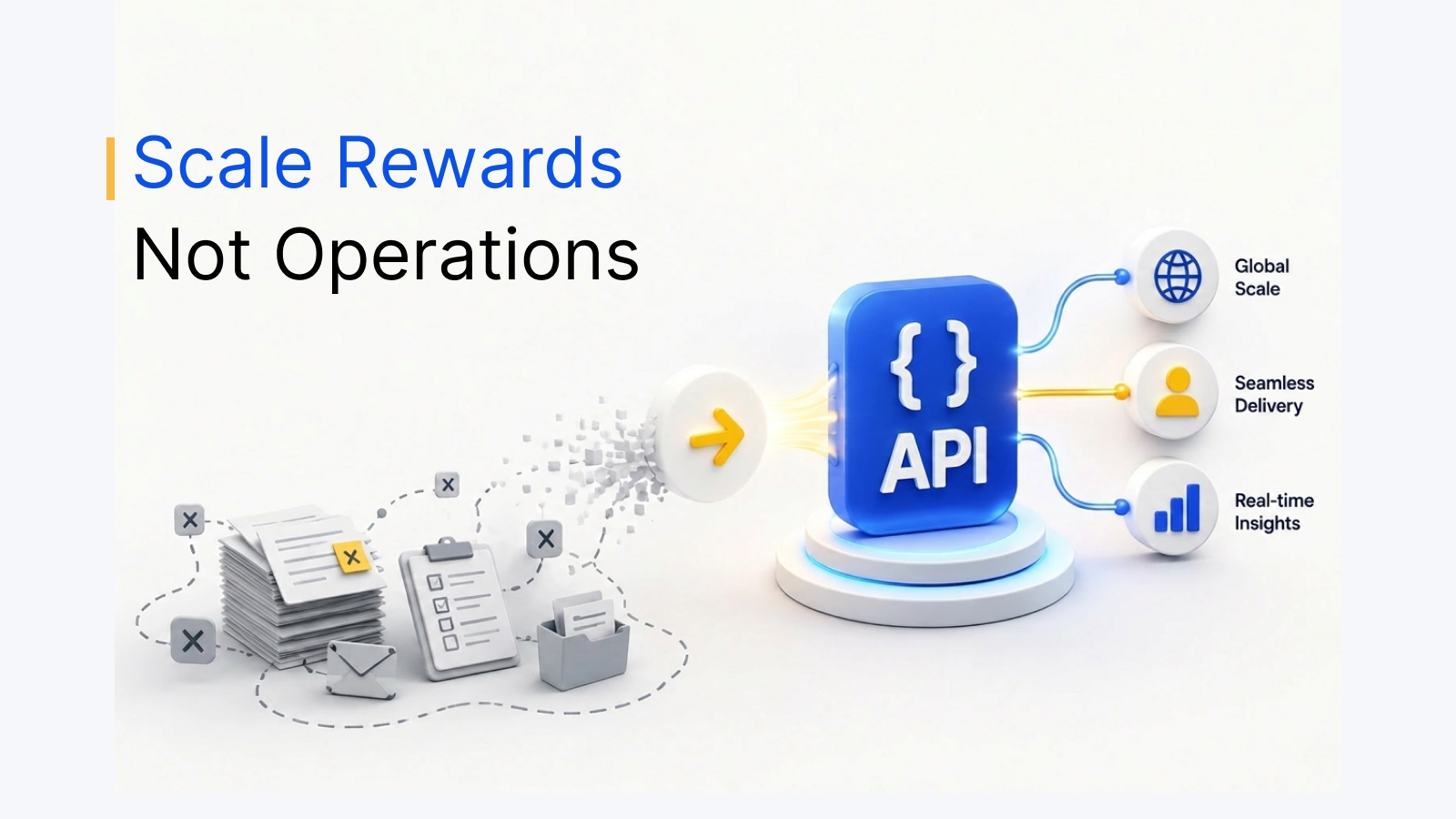
Most product teams assume rewards are complicated because they have only seen the consumer side: points dashboards, tier upgrades, redemption catalogs. The backend is simpler. Here is why.
Step 1 - Event fires. A defined action in the platform sends a call to the rewards API. The trigger could be a survey submission, a KYC approval, a referral conversion, or any other event the product can detect.
Step 2 - Eligibility check. The API validates the trigger: is this user eligible? Has the budget threshold been reached? Does this look like a duplicate or fraudulent claim? Rules are set once and enforced on every call.
Step 3 - Catalog selection. The platform pre-selects a reward type or surfaces a choice to the recipient from a configured catalog. Global products need a multi-currency, multi-country catalog here. A rewards API that covers only one region becomes a scaling bottleneck as the product expands.
Step 4 - Instant delivery. The reward dispatches to the recipient's preferred channel. For most digital use cases, the target is delivery in under 60 seconds. Delays at this step break the behavioral reinforcement loop the whole system is designed to create.
The integration itself, REST API, webhook support, sandbox environment, typically takes a small development team one to four weeks to connect, depending on the complexity of the eligibility logic.
Build vs. Partner: What PMs Usually Get Wrong
The first instinct for most product teams is to build. They have the platform, the user data, and the engineering capacity. How hard can a rewards layer be?
Hard. Because rewards infrastructure is not a feature. It is a supply chain.
Building in-house means owning the gift card vendor relationships, the multi-currency settlement logic, the fraud detection layer, the recipient-facing delivery experience, and the compliance requirements, which include KYC thresholds and 1099 tax form collection in the US. A custom rewards platform costs $100,000 to $500,000 or more to build initially, takes 6 to 18 months to launch, and runs 20% to 30% of the original build cost annually in maintenance (Enable3, 2026).
Working with a rewards API partner changes that math. The partner owns the catalog, the vendor contracts, the currency handling, and the compliance layer. The product team connects via API and configures reward rules.
A specialist platform goes live in 4 to 8 weeks on average, compared to 6 to 12 months for an in-house build (360insights). Custom builds also carry a 66% rate of cost overruns and a 50% to 70% failure rate as scope grows (360insights).
| Criteria | Build in-house | Partner via API |
|---|---|---|
| Upfront cost | $100K–$500K+ | Platform and integration fee |
| Time to launch | 6–18 months | 4–8 weeks |
| Annual maintenance | 20–30% of build cost | Covered by partner |
| Compliance ownership | Entirely your team | Shared with partner |
| Catalog depth | Limited to what you build | 10M+ options from day one |
The cases where building makes sense are narrow: platforms where the reward catalog itself is a core product differentiator, or products with volumes high enough to justify owning the economics. For most fintech and SaaS teams, rewards are infrastructure, not the core product, and should be treated accordingly.
The Evaluation Checklist for Embedded Rewards Platforms
Not all rewards APIs are equal. Before choosing one, product and growth teams should assess five dimensions:
Catalog depth and format. Does the platform support gift cards, prepaid cards, cash-equivalent payouts, and merchandise? A gift-card-only catalog creates friction for recipients in markets where digital gift cards are less established.
Global reach. Coverage claims vary widely. Verify that the number of countries listed includes active, locally relevant catalogs, not just technical availability. Multi-currency settlement and local language support matter as soon as the product scales beyond one region.
Enterprise controls. For any platform handling real money at volume, maker-checker approval workflows, role-based access, budget thresholds, and audit logs are not optional. They become critical as multiple teams touch the program.
API quality and sandbox. A developer-ready API means clean REST documentation, webhook support, accessible sandbox credentials, and idempotent request handling so duplicate triggers do not produce duplicate rewards. Time-to-first-integration is a reliable signal of platform maturity.
Compliance support. US platforms need 1099 tax form collection above IRS thresholds. International platforms need KYC controls and country-specific compliance. Owning this without a partner adds a compliance function to a product team's scope that most teams are not staffed to handle.
How Xoxoday Plum Powers Embedded Rewards at Scale
Xoxoday Plum is built for product and growth teams that need to add embedded rewards without building the infrastructure themselves.
The platform supports four integration modes: a headless Rewards API with full control over the redemption experience, an SSO-based white-labeled storefront, a JavaScript widget for in-product embedding, and a bulk distribution dashboard for non-API teams. A PM can start with the dashboard and migrate to the API as volume grows, on the same platform.
The catalog covers 10 million reward options across 150+ countries, including gift cards, prepaid cards, PayPal, bank transfers, and merchandise across 30+ categories. Delivery runs through email, SMS, WhatsApp, and in-app channels. Enterprise controls include maker-checker workflows, fraud detection, role-based access, budget management, and a full audit trail.
Case study: global pharmaceutical company. A global pharmaceutical company connected Plum's Rewards API to their existing sales incentive platform. Before integration, fulfillment was manual: a team collected order details, placed orders with the vendor, and sent voucher codes by hand. Delivery took 15 to 30 days. After connecting via REST API, with no rebuild of the core platform, fulfillment became instant and fully automated. Over 20 months, the platform processed more than 21,600 rewards and $730,000 in incentive value, at a 99.9% fulfillment rate.
Fintech companies in the GCC, including payment platforms in Bahrain and the UAE, use Plum's API to deliver reward payouts without managing catalog infrastructure. The demand for API-first reward delivery in that region is growing fast, driven by a fintech sector that needs instant global payout options and cannot sustain a 12-month in-house build cycle to create them.
Rewards Are Now Product Infrastructure, Not a Campaign
The framing has shifted. Embedded rewards are not a marketing campaign that runs for a quarter and gets measured on open rates. They are infrastructure, the same category as payments processing or notification delivery. They run in the background, fire at defined moments, and quietly change the behavioral patterns of every user they touch.
For fintech and SaaS PMs, the decision is not whether to add rewards. It is how fast to integrate them, and whether building the infrastructure yourself is actually a product decision or an avoidance of the procurement process. A good rewards API gets you from zero to live in weeks. What you build with the data and the behavioral loops afterward is the actual product work.