Key Takeaways
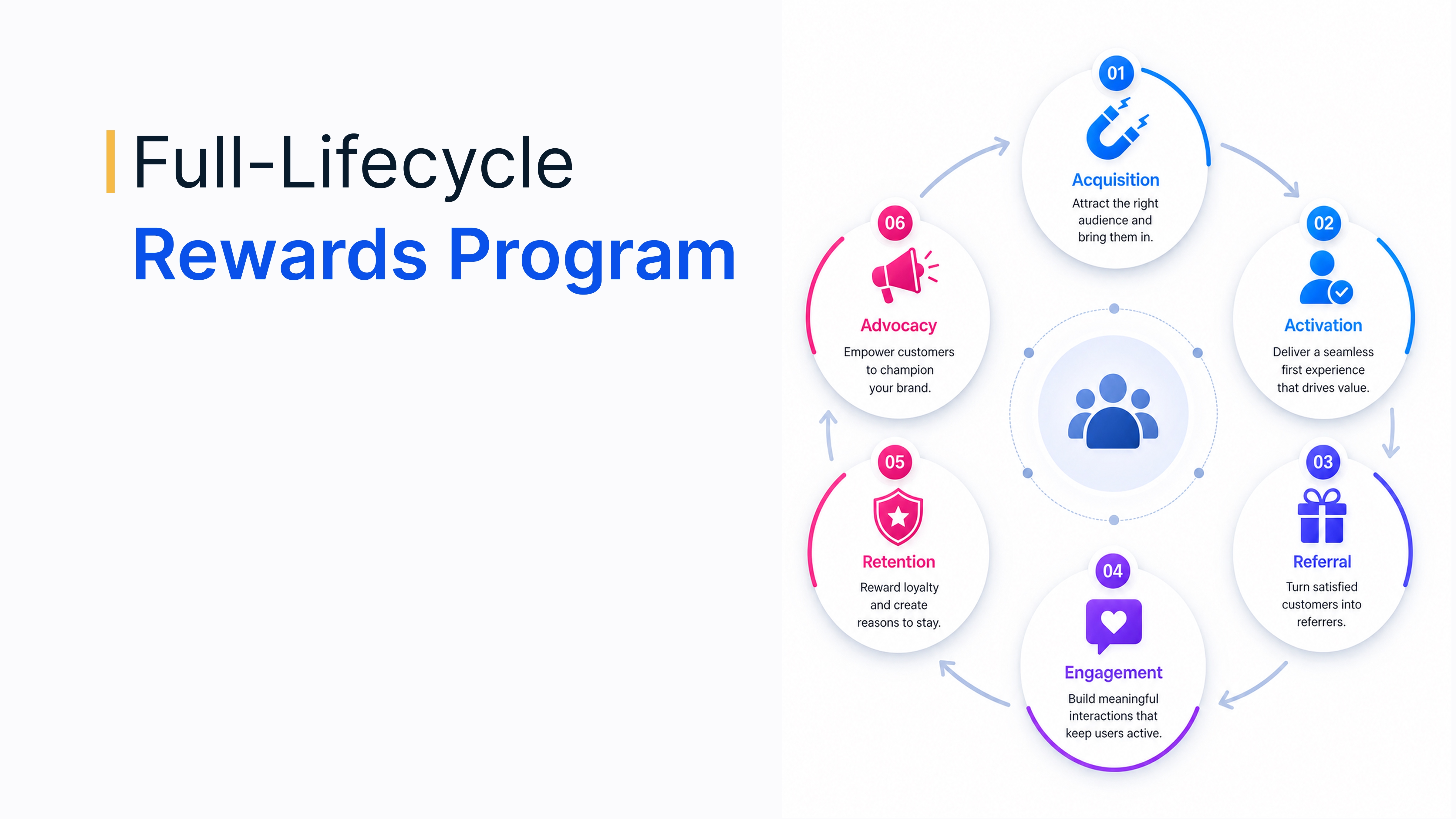
A full-lifecycle rewards program links a reward to a specific customer action at each stage (acquisition, activation, referral, retention) instead of running five disconnected campaigns.
Manual, vendor-dependent reward operations cost banks in slower campaign launches, no ROI visibility, and inconsistent spend across branches.
Connecting rewards to CRM and core banking triggers drove measurable lifts: 25% higher referral conversion, 35% more sign-ups, and 45% more first-time transactions in real deployments.
A customer who signs up for a checking account this month can be gone within a year, and most banks will not see it coming until the account goes quiet. Retail banking has stopped competing on interest rates and started competing on whether a customer feels like anything more than a number in a core banking system. Credit unions face the same pressure with a tighter budget and a member base that expects the relationship to feel personal, not transactional.
This post breaks down what a connected, full-lifecycle rewards program looks like for a bank or credit union, why the disconnected version most institutions run today keeps leaking customers, and how to build one that ties directly into acquisition, activation, referral, and retention.
Why banks need one connected rewards system, not five campaigns
A rewards program only works when it follows the customer through every stage of the relationship, not just the stage marketing happens to be running a campaign for this quarter. Most banks run acquisition, onboarding, referral, and retention as five separate initiatives, and that separation is where the problems start:
- Separate teams, separate metrics. Acquisition, onboarding, referral, and retention are each owned by a different team, with its own vendor, budget, and success metric.
- The handoff gap. A new customer gets a sign-up bonus, then hears nothing meaningful again until a retention team notices churn risk. That gap is where the relationship quietly dies.
- No forward design. Treating the lifecycle as one system means the reward for opening an account is designed to lead somewhere, toward a first transaction, a referral, and a habit that makes switching banks feel like a hassle rather than an upgrade.
- A tighter constraint for credit unions. A member-owned model means every dollar spent on rewards competes directly against the rates and fees members already expect to beat a traditional bank's, so stage-by-stage automation matters more, not less, since a credit union cannot afford to waste reward spend on a member who was never going to stay for branch and community ties alone.
Why most bank reward programs stall before they drive retention
Reward programs stall when they are run manually, disconnected from core banking data, and not tied to what actually predicts whether a customer stays.
McKinsey's analysis of retail banking customer behavior found that banks losing primary-customer status to switching lose nearly half their share of high-value relationships once digital engagement falls behind. Digital engagement and reward relevance are close cousins: a customer who never sees a reward that reflects how they actually bank has no reason to open the app more than once a quarter.
The deeper problem is structural. A rewards team running spreadsheets and manual approval workflows cannot react to a customer's actual behavior in real time, so every reward ends up generic instead of earned.
A few signs a bank's rewards program is already running blind:
- Marketing cannot say which reward, if any, a specific customer received in the last 90 days without pulling a vendor report
- The same welcome offer goes to every new account regardless of how the customer actually banks
- Reward budget is set once a year instead of adjusted by stage performance
- No one on the team can tie a specific reward to a retention outcome with confidence
See Plum in action
See how Plum automates lifecycle rewards for banks and credit unions.
Book a free 30-min demoTrusted by 5,000+ companies
The real cost of running rewards manually, stage by stage
Manual reward operations cost banks in three ways: slower campaign launches, no visibility into what is actually working, and inconsistent spend across the customer base.
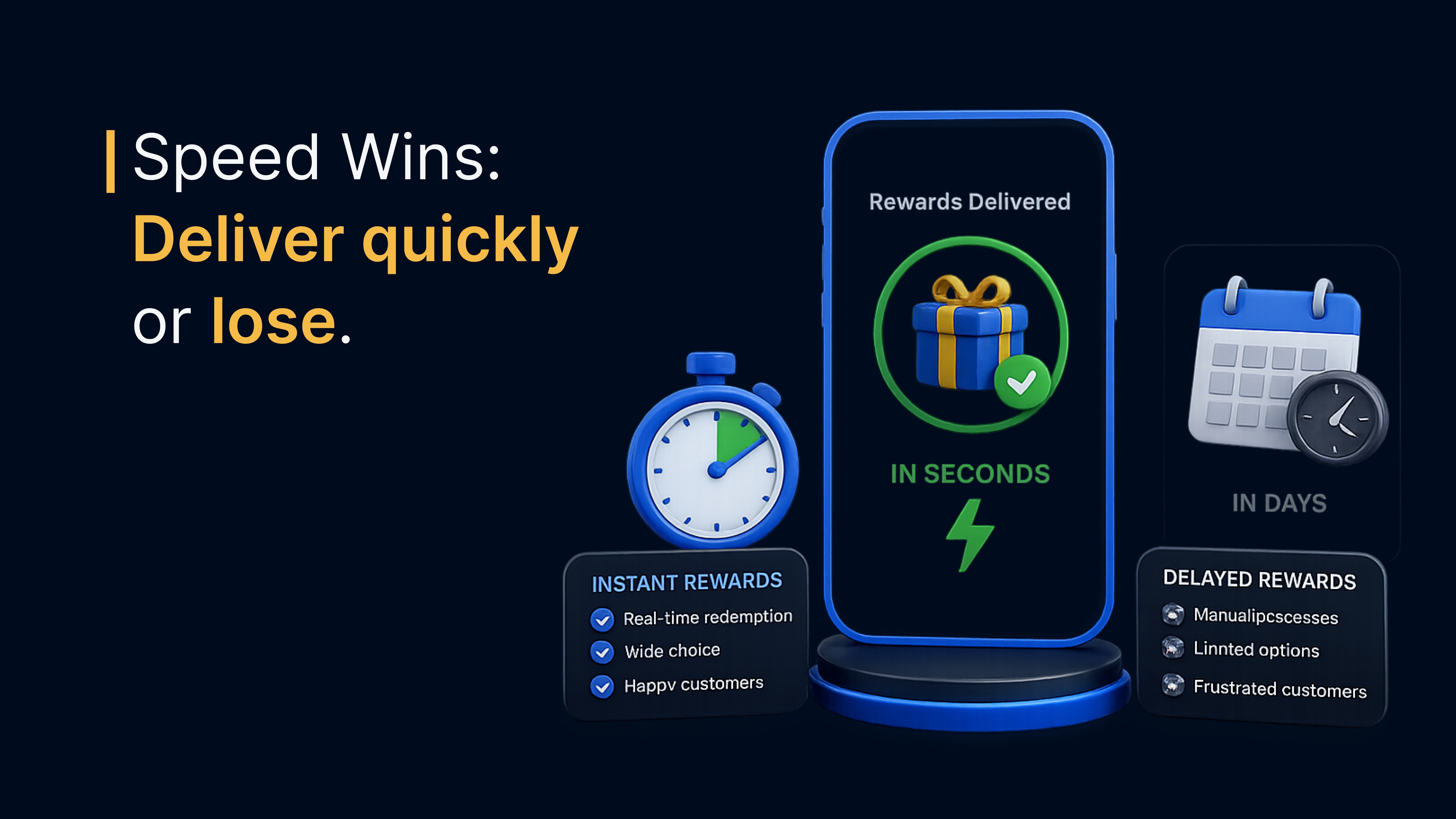
A campaign that requires manual vendor coordination for gift cards or physical rewards can take weeks to launch, by which point the moment that mattered, a first paycheck deposit, a new credit card, a lapsed login, has already passed. Marketing and product teams end up flying blind on redemption and ROI because the data lives in a vendor's system, not the bank's own analytics stack.
Budget also drifts without structure. One branch might spend heavily on onboarding incentives while another under-invests in the referral stage that costs the least to run and produces the most durable new customers.
What a full-lifecycle rewards program looks like in banking
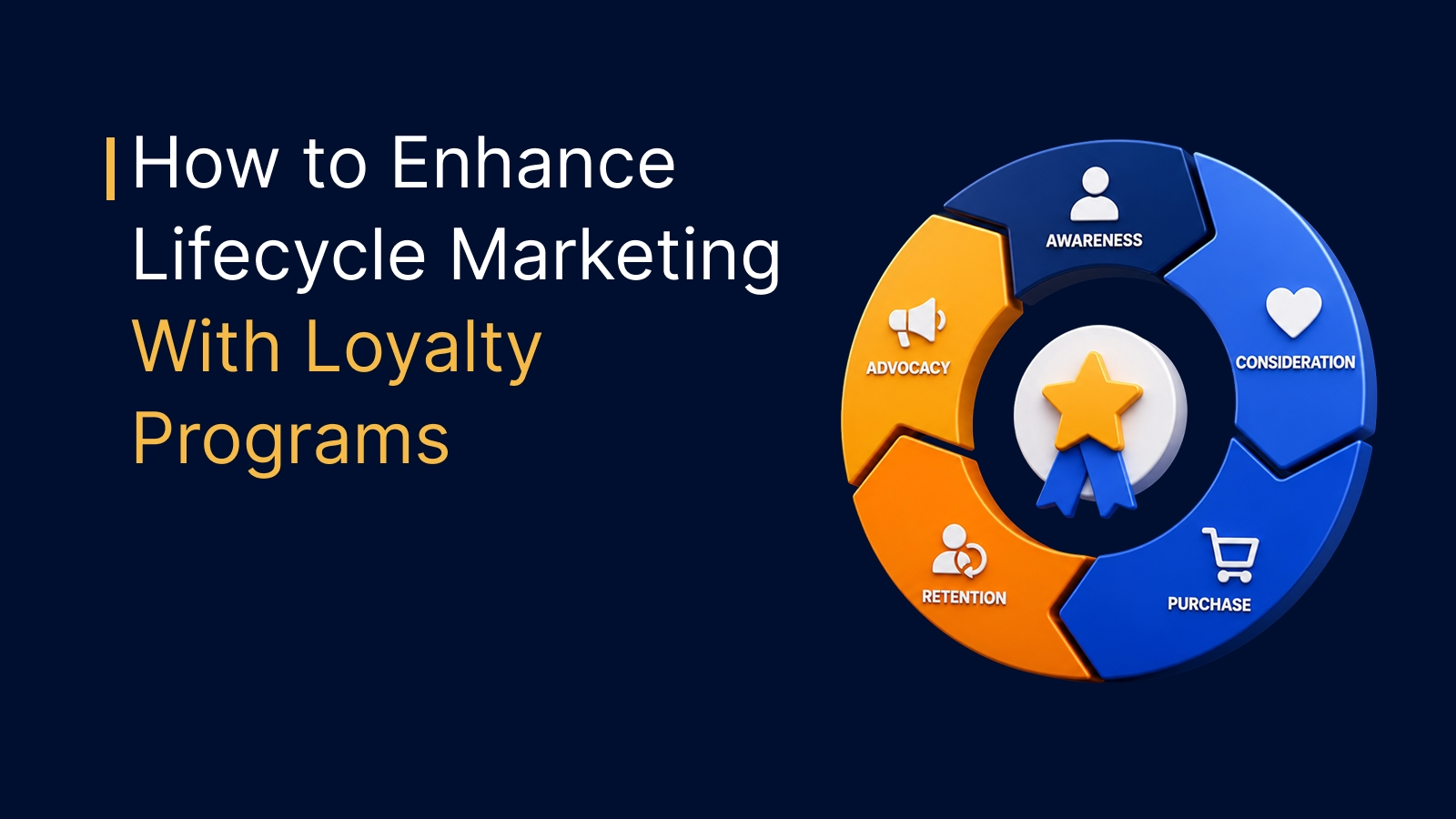
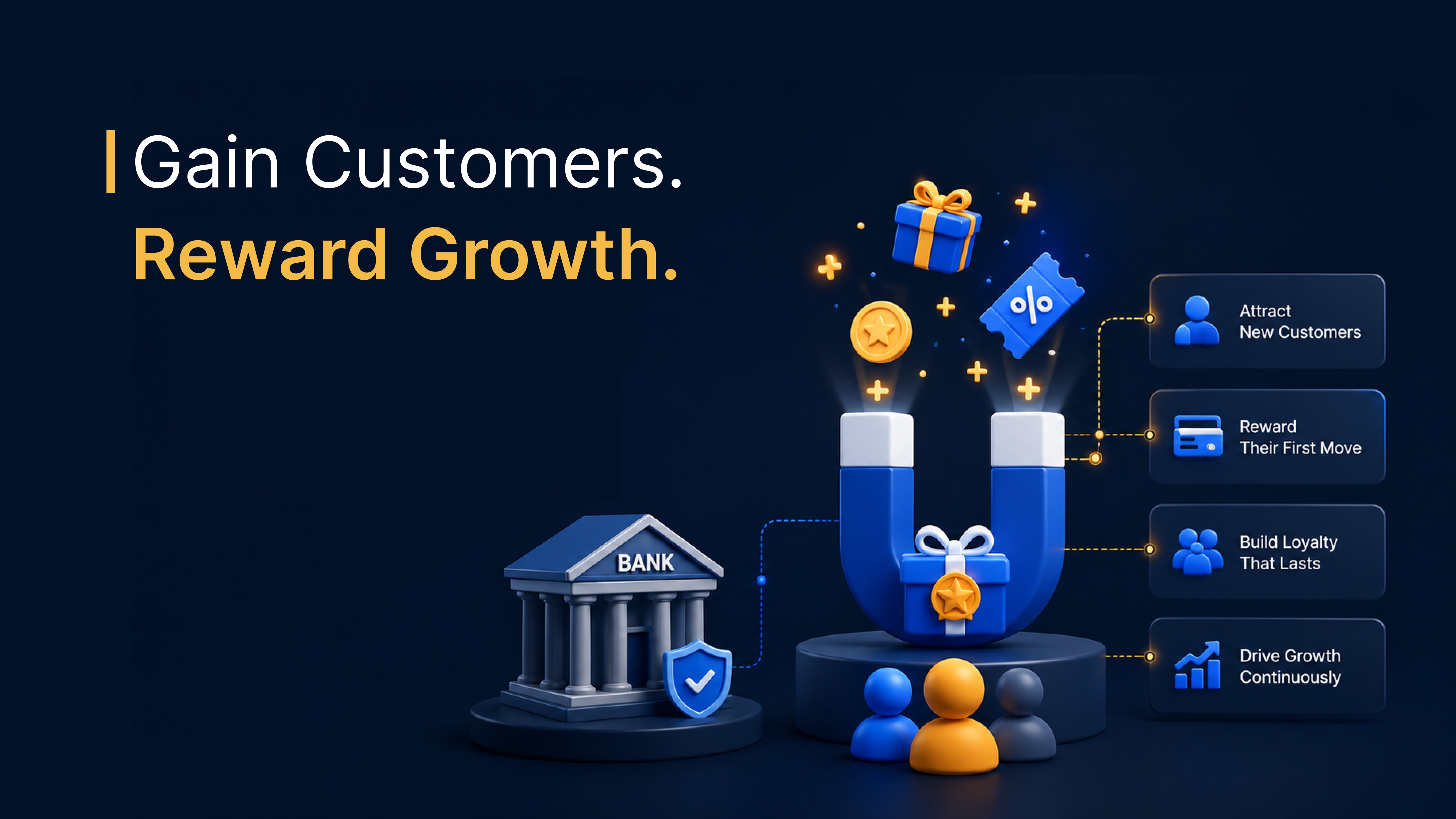
A full-lifecycle program links a reward to a specific customer action at each stage, so the reward itself becomes the mechanism that moves someone forward, not just a thank-you gift.
Acquisition: rewarding the sign-up that actually converts
The reward at sign-up should be tied to completing onboarding, not just clicking submit. A welcome incentive that unlocks after a customer verifies identity and funds the account filters out low-intent sign-ups and rewards the ones worth keeping.
Activation: turning a new account into a used account
A dormant account is a lost customer with extra steps. A first-transaction offer, often in the range of a modest cash-equivalent reward, gives a new customer a concrete reason to make that first transfer, debit swipe, or bill payment inside the first thirty days, which is when the habit either forms or does not.
Referral: making customers the acquisition channel
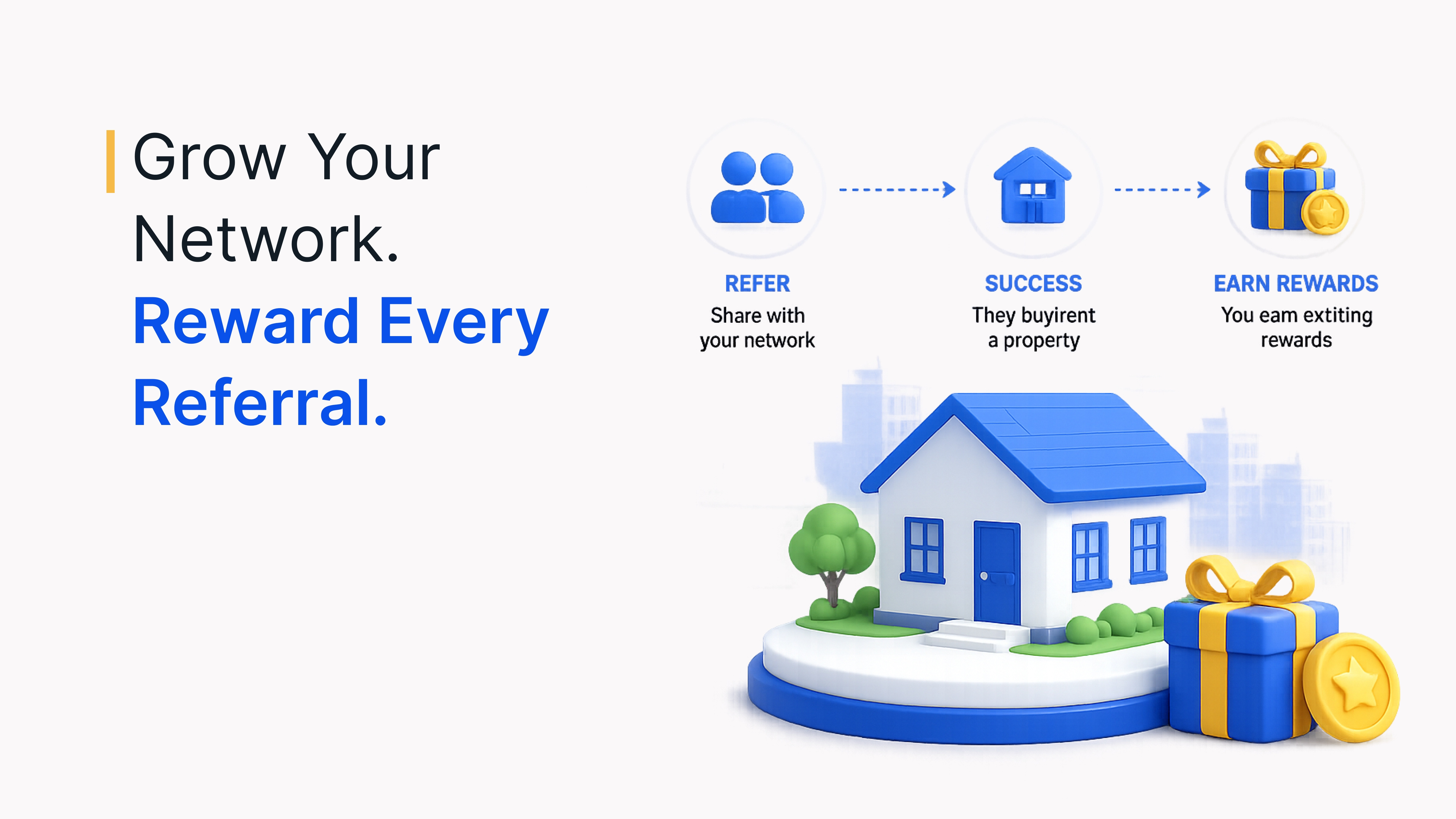
Referral rewards work best when they are automated end to end: the existing customer gets credit the moment a referral completes, with no manual reconciliation. Banks running this well typically budget a few hundred dollars or less per successful referral, since the acquisition cost still comes in well below paid channels.
A well-built referral flow usually includes:
- A unique, trackable referral link or code tied to the referring customer, generated automatically at account level
- An instant reward trigger the moment the referred customer completes account funding, not just sign-up
- A reward the referrer can choose from a catalog rather than a single fixed gift, which increases redemption
- Fraud checks that catch duplicate or self-referrals before a reward pays out
Engagement and retention: rewarding the behavior that predicts loyalty
Milestone and gamified rewards, tied to account anniversaries, spend thresholds, or product adoption, keep a customer's attention between the big moments. These rewards tend to run smaller individually, often in the tens of dollars, but they compound because they arrive often enough to matter.
Where banks prioritize rewards, by region
Which lifecycle stage a bank should invest in first depends heavily on region, since the competitive pressure and customer behavior differ by market.
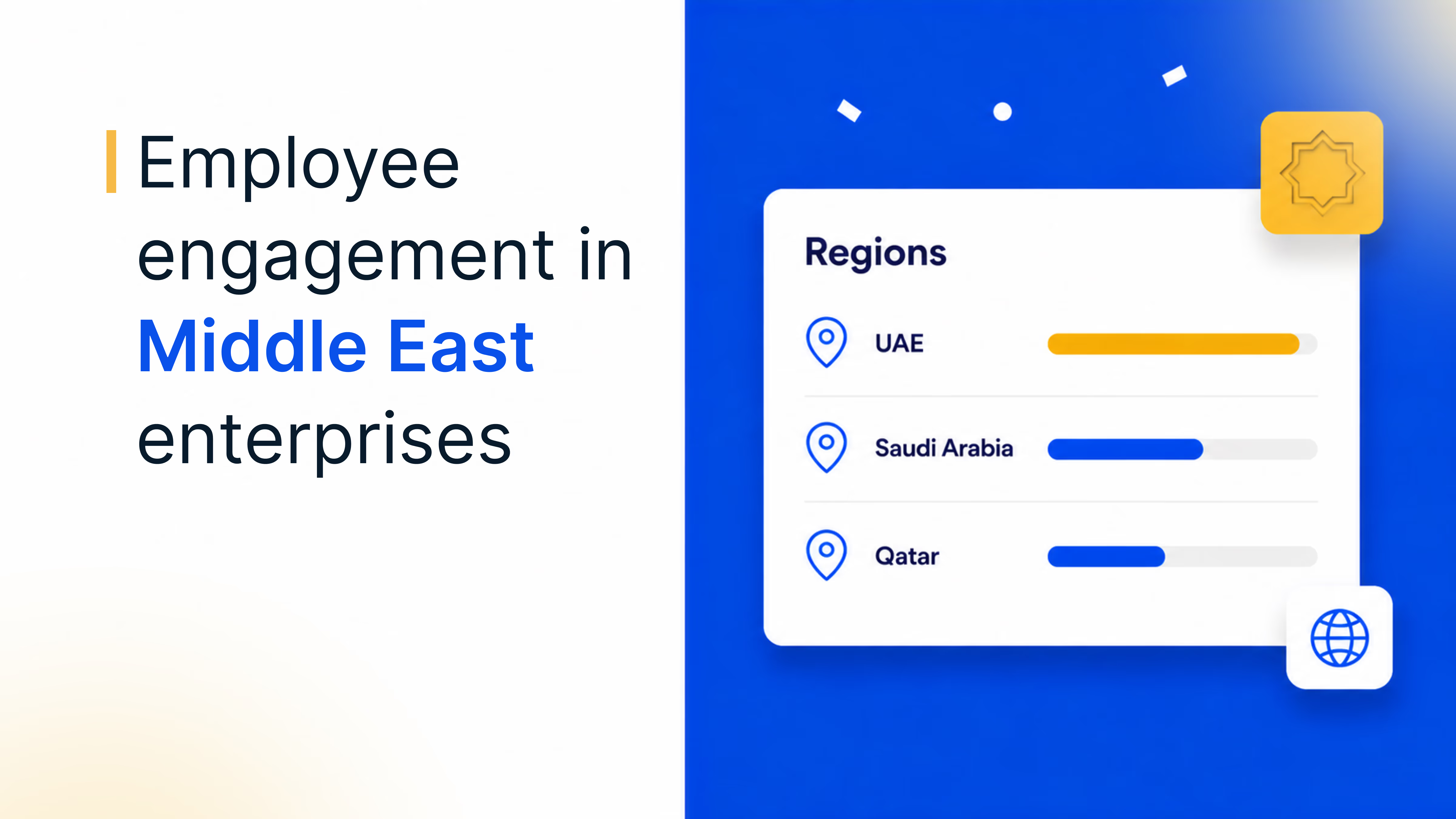
In the GCC, banks and financial houses compete on loyalty tied directly to card spend and mobile banking app usage, so engagement and retention rewards carry the most weight. In Africa, banks face long procurement cycles but are still the primary loyalty buyer in the market, and rewards delivered through WhatsApp perform well where it is the dominant channel. In Southeast Asia, fintech and neo-banks push hardest on acquisition and activation, since API-first reward delivery lets a new digital bank launch a sign-up incentive without building catalog infrastructure from scratch.
| Region | Priority lifecycle stage | Why |
|---|---|---|
| GCC | Engagement and retention | Loyalty tied to card spend and mobile banking app usage |
| Africa | Retention via existing channels | Long procurement cycles; WhatsApp-led delivery performs well |
| Southeast Asia | Acquisition and activation | API-first delivery lets neo-banks launch fast without building catalog infrastructure |
How Plum powers full-lifecycle rewards for banks
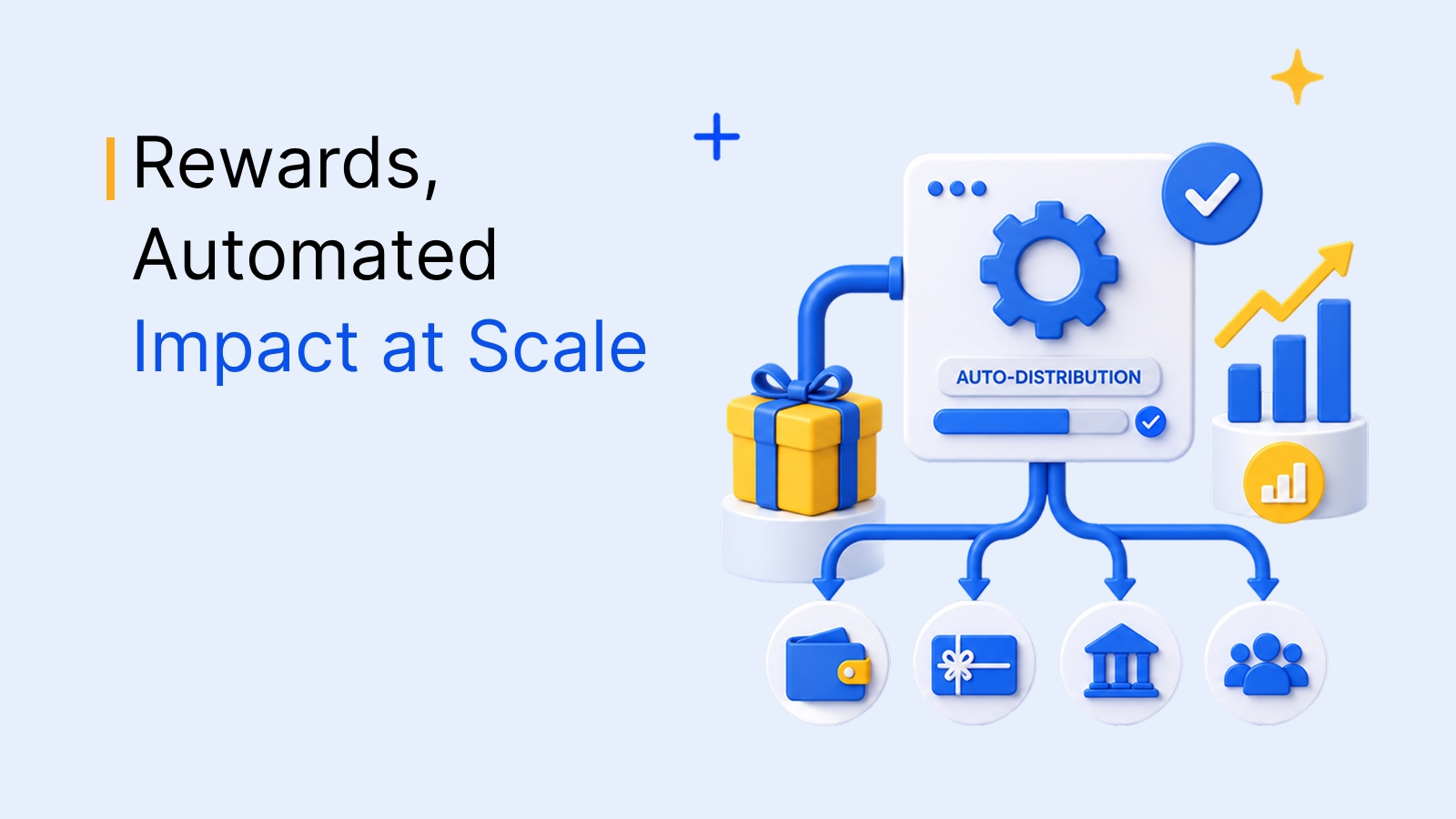
Plum works as the reward engine sitting behind a bank's acquisition, activation, referral, and engagement programs, so every stage draws from the same catalog and the same automated workflow instead of five disconnected vendors.
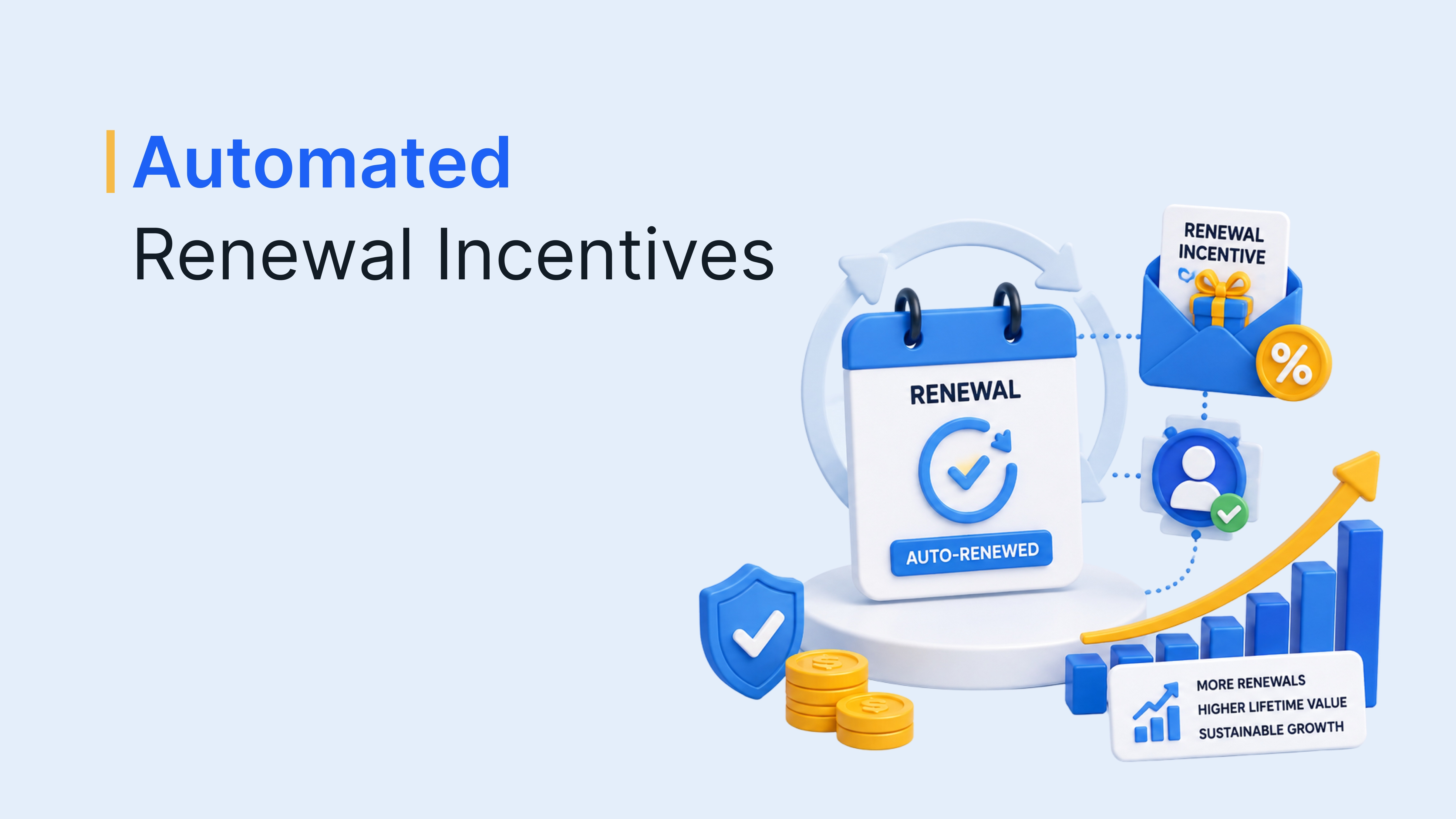
Plum connects to a bank's existing CRM and core banking systems through an API, which means a reward can fire automatically the moment a customer completes an action, funds an account, refers a friend, hits a spend milestone, rather than waiting on a manual approval cycle. A global accounting-software company used this same approach to automate its own referral incentives: after replacing manual reward fulfillment with Plum's API, the company saw a 25% increase in referral conversion and acquired 1,900 new customers in four months, while cutting acquisition costs by removing logistics overhead entirely.
Banks see similar results when they connect rewards to onboarding and first-transaction moments instead of running them as one-off promotions. One retail bank that automated its sign-up incentive saw signups increase by 35%, cut onboarding drop-off in half, and doubled the speed of account activation. Another bank that tied rewards to first-transaction behavior saw first-time transactions rise by 45% and inactive accounts drop by 40%.
25%
increase in referral conversion
After moving referral incentives to Plum's API
35%
increase in sign-ups
Retail bank automating its sign-up incentive
45%
rise in first-time transactions
Bank tying rewards to first-transaction behavior
What this looks like operationally for a bank's rewards or growth team:
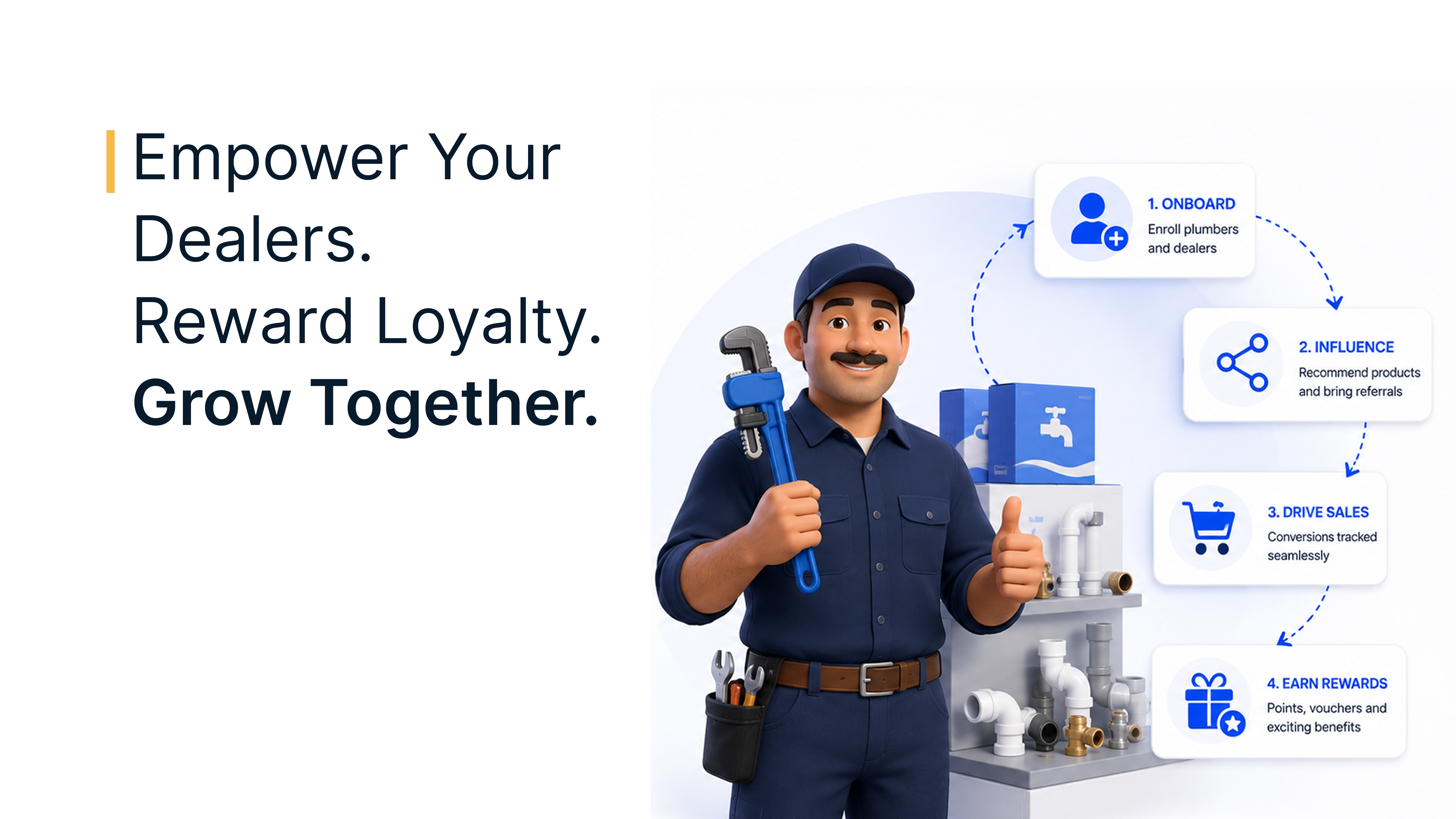
- A single dashboard for campaign setup across acquisition, activation, referral, and engagement, instead of separate tools per stage
- Reward rules configured by trigger event (account funded, referral completed, spend threshold hit) rather than by manual campaign date
- Real-time redemption and spend data feeding back into the bank's own analytics stack instead of sitting in a vendor's portal
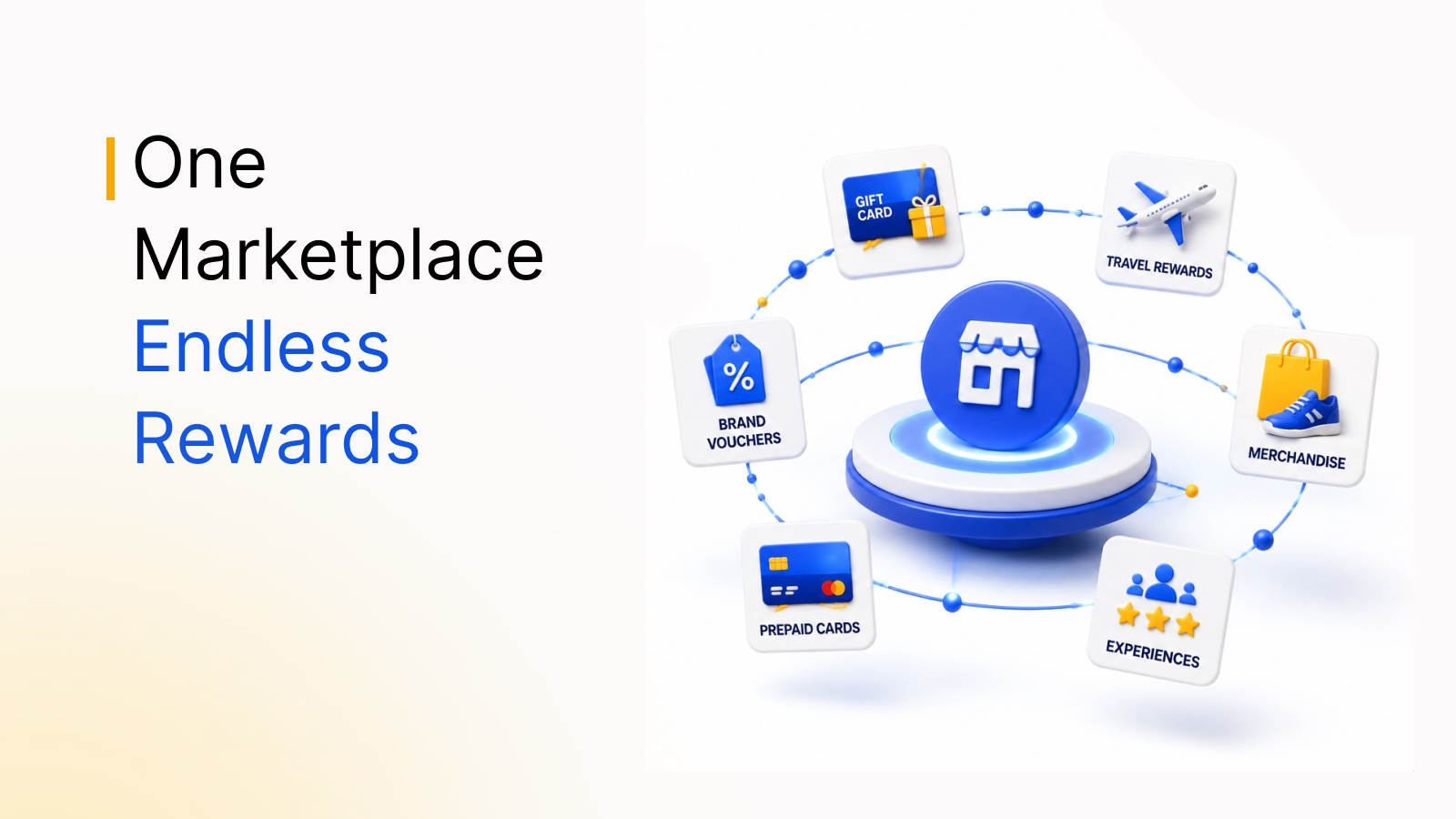
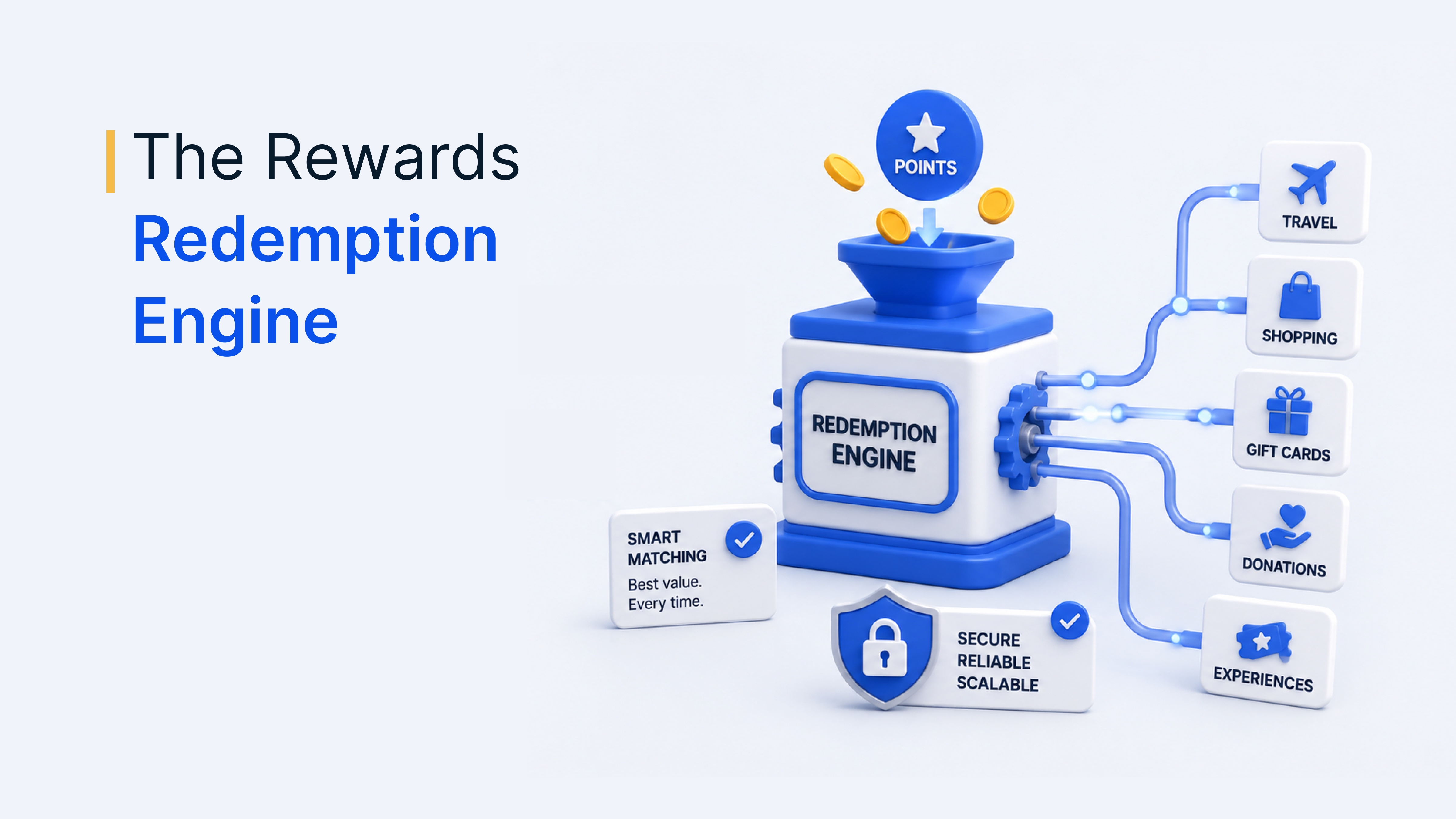
- A catalog spanning gift cards, cash-equivalent transfers, and experiences, so the same integration supports every reward type a program needs
What banks get in practice: uptime, compliance, and reach
A rewards system is only as useful to a bank as its ability to run without downtime, meet compliance requirements, and reach customers wherever they redeem.
Plum maintains 99.84% uptime and supports GDPR compliance for customers worldwide, which matters for banks operating under strict data-protection requirements. The catalog spans 150+ countries and more than 10 million reward options, letting a bank reward a customer in Lagos or London from the same integration without managing separate vendor relationships per market.