Most HR teams buy employee experience software the way they buy insurance: because everyone else has it, not because they know which parts they actually need.
That gap shows up fast. A platform bought for surveys ends up bolted to three other tools for recognition, rewards, and internal comms, and nobody owns the whole picture anymore.
Before you sign another contract, it helps to see how the ten platforms HR leaders actually shortlist stack up, and where each one earns its place.
What Employee Experience Software Actually Means Now
The category used to mean pulse surveys and not much else. The category has changed.
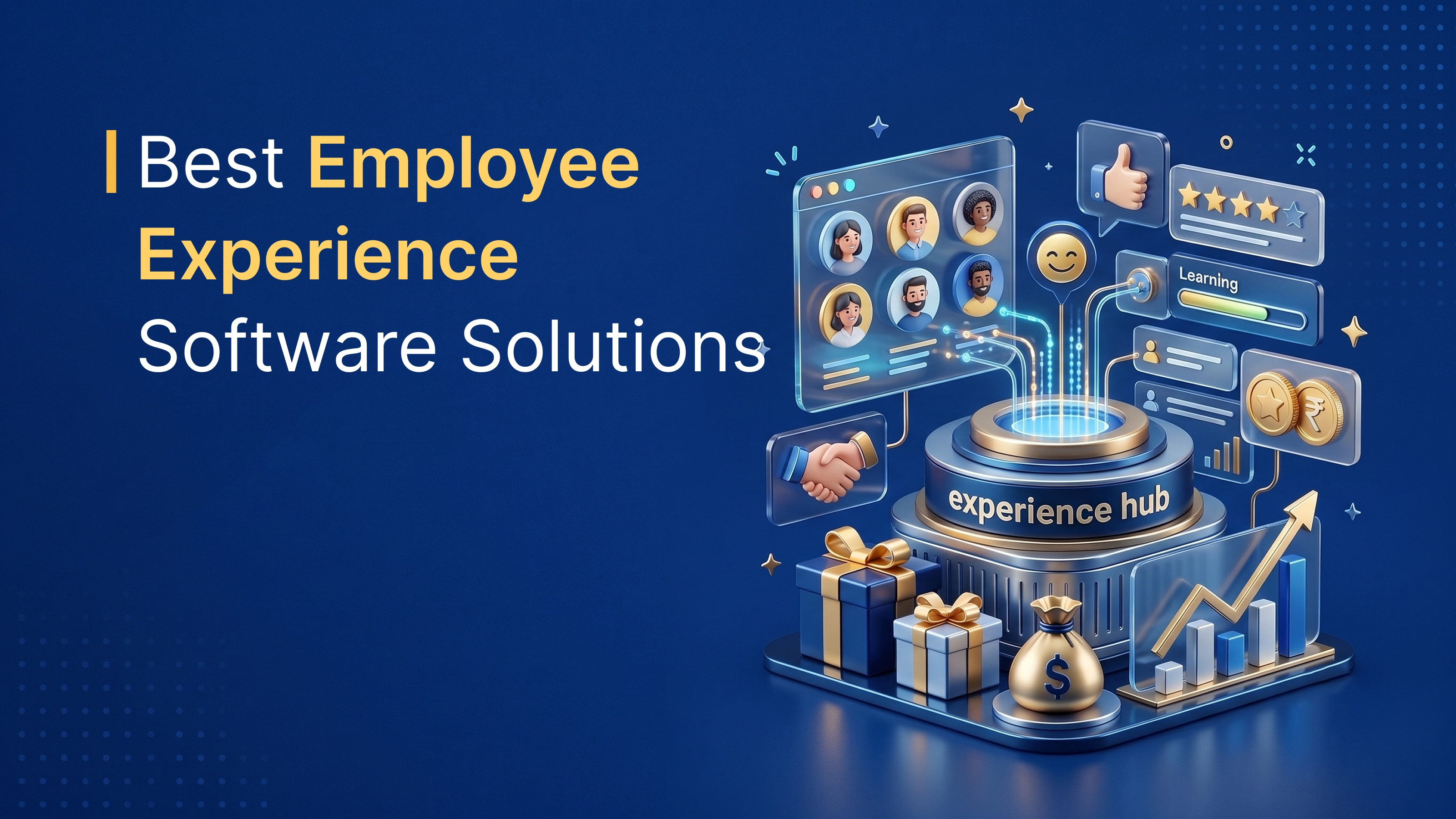
A modern employee experience platform now spans listening (surveys, eNPS), recognition and rewards, internal communication, and increasingly, benefits and wellness, all reporting into one engagement signal.
21%
Engaged worldwide
of employees, per Gallup
$438B
Lost productivity
the global cost of disengagement
Source: Gallup, State of the Global Workplace 2025 Report.
The Gallup number is why EX has moved from an HR nice-to-have to a board-level metric. Retention, not just satisfaction, is now the number CHROs get asked about in the boardroom.
How We Evaluated These 10 Platforms
Three things mattered most. Ranking pulled from breadth of modules (does it replace or just add another tool), how the platform performs for distributed and global teams, and how transparent the vendor is about setup and pricing.
See how Empuls unifies engagement, recognition, and rewards
Recognition, surveys, communication, and rewards, all on one platform with Xoxoday Empuls.
Book a free 30-min demoTrusted by 5,000+ companies
The 10 Best Employee Experience Software Platforms, Ranked
Ranked on module breadth, global reach, and pricing transparency. Every capability below comes from each vendor's own public product information.
1. Xoxoday Empuls
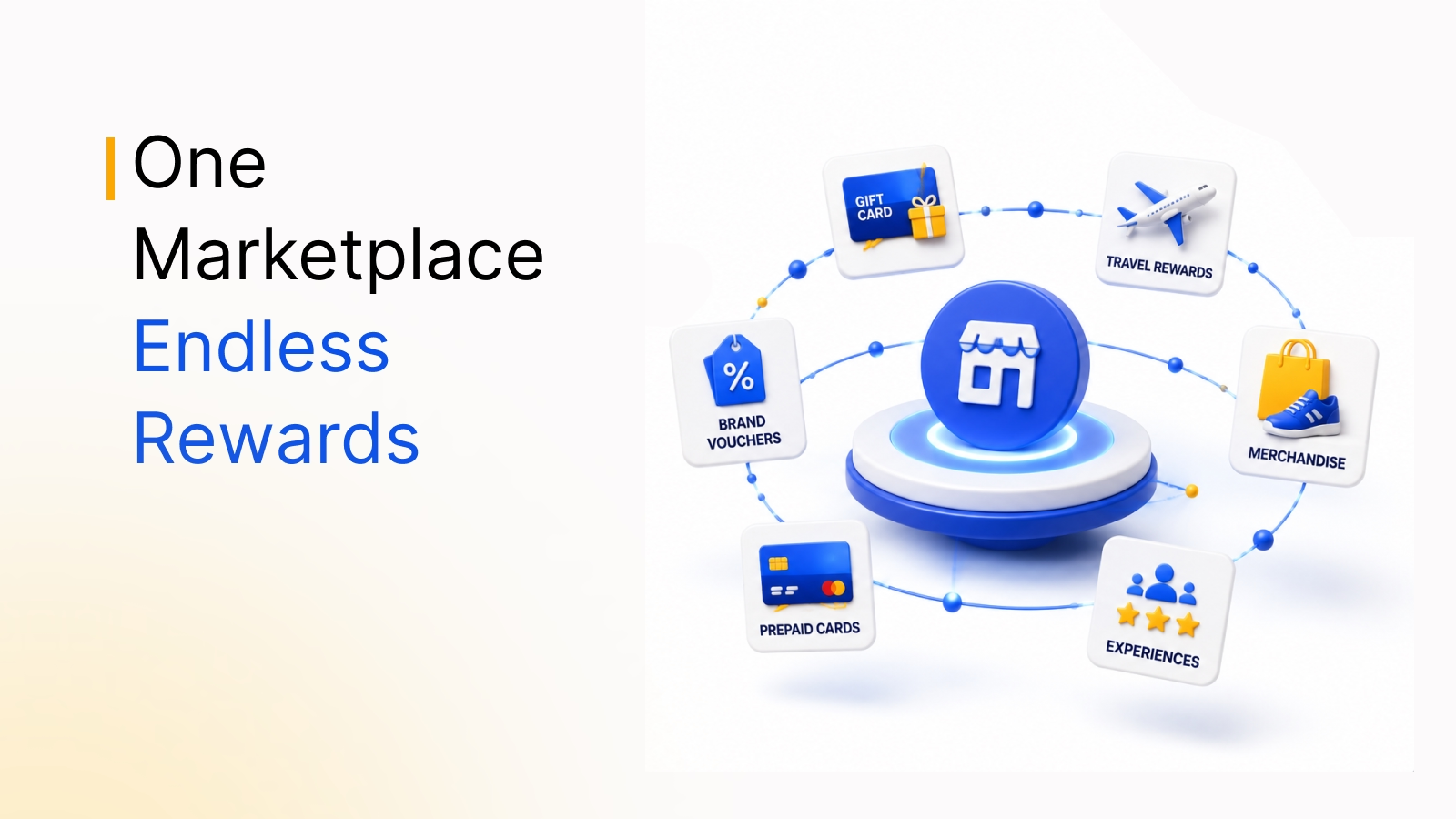
Empuls combines recognition, eNPS and pulse surveys, internal communication, and lifestyle benefits in a single platform, with a rewards catalog spanning 10M+ options across 150+ countries. Teams running four separate point tools for these functions typically consolidate into one Empuls instance.
The platform's AI layer surfaces employees who haven't been recognized in a while, closing the gap that usually favors whoever sits closest to the manager. Because listening, recognition, and rewards report into the same dashboard, HR can trace a dip in eNPS to a specific team's recognition activity instead of cross-referencing two separate exports.
Standout: the only platform on this list where survey results, recognition activity, and reward redemption all live on one dashboard.
2. Qualtrics
Qualtrics built its name on enterprise-grade experience management, extending its customer experience engine into employee listening with predictive analytics and lifecycle feedback.
Its statistical modeling can flag flight-risk segments before an exit interview happens, which appeals to HR analytics teams that already run Qualtrics on the customer side and want one vendor relationship. That depth comes with a steeper learning curve than most engagement-first tools on this list.
Standout: deep sentiment analysis for large, data-mature HR organizations.
3. CultureAmp
CultureAmp centers on continuous listening: engagement surveys, 360-degree feedback, and performance enablement, aimed at HR and business leaders who want dashboards over spreadsheets.
Benchmarking against peer companies is a core selling point, letting HR leaders show a board whether engagement scores are actually competitive rather than just trending up or down in isolation. Recognition exists as a lighter add-on rather than a core module.
Standout: strong analytics layer for mid-market to enterprise engagement programs.
4. Lattice
Lattice pairs performance management (goals, reviews, 1:1s) with engagement surveys and an HRIS layer, positioning itself as a single system for performance and people data together.
Because performance and engagement data sit in the same system, managers can see whether a team's dip in eNPS lines up with a stalled goal cycle, a correlation that's much harder to spot when the two tools live separately. It's a stronger fit for organizations that want performance management first and engagement second.
Standout: the tightest link between performance reviews and engagement scores of any tool here.
5. Perceptyx
Perceptyx focuses on employee listening at scale: engagement, lifecycle, and pulse surveys built for large organizations with multiple business units.
Its people analytics layer is built to roll survey data up across dozens of subsidiaries into one enterprise view, without losing the ability to drill back down to a single business unit's results. That scale-first design makes it a heavier lift for a single-entity company than most tools on this list.
Standout: built for enterprises running listening programs across dozens of subsidiaries.
6. Officevibe (Workleap)
Officevibe keeps its footprint narrow and specific: lightweight pulse surveys and manager coaching tools, priced for teams that do not need an enterprise suite.
Setup typically takes days rather than the weeks an enterprise rollout requires, which makes it a common first step for a startup HR team testing whether pulse surveys change manager behavior before committing budget to a bigger platform.
Standout: the fastest platform here to deploy for a single-team pilot.
7. 15Five
15Five combines continuous performance management with engagement check-ins, built around manager enablement rather than HR-only dashboards.
Weekly check-ins and 1:1 prompts live directly in a manager's workflow, so engagement data gets acted on in the same conversation where a goal or review would normally come up, rather than surfacing separately in an HR dashboard weeks later.
Standout: a manager-first workflow that fits organizations without a dedicated people analytics function.
8. Betterworks
Betterworks leans on OKR and goal-tracking software with engagement and performance data layered on top, aimed at organizations that want performance and experience data in the same view.
The OKR cascade view lets leadership see whether a drop in engagement tracks with missed goals at the team level, a lens most listening-first platforms don't offer. Organizations that don't already run formal OKRs will find less value in that core strength.
Standout: goal-tracking depth that outpaces most engagement-first competitors.
9. Limeade
Limeade started in corporate wellness and has broadened into employee experience, keeping wellbeing as its core differentiator against listening-first competitors.
Its programs track physical, financial, and emotional wellbeing alongside engagement scores, giving HR a way to connect burnout indicators to a team's survey results instead of treating wellness and engagement as two unrelated initiatives.
Standout: wellbeing program depth for organizations prioritizing burnout and health metrics.
10. Applaud HR
Applaud focuses on the HR service delivery side of experience: a single portal for employee requests, onboarding, and case management layered on top of existing HCM systems.
It sits in front of an existing HCM rather than replacing one, giving employees a single portal to raise a request or track a case instead of navigating whichever backend system HR happens to use. That makes it less a listening or recognition tool and more an operational layer for HR service delivery.
Standout: the best fit for organizations whose main EX gap is HR service delivery, not engagement measurement.
Employee Experience Software at a Glance
Ten platforms, side by side. Here's how they compare on paper.
| Platform | Best for | Core focus | Standout capability |
|---|---|---|---|
| Xoxoday Empuls | Consolidating 4+ tools into 1 | Recognition, surveys, comms, benefits | Unified engagement + rewards dashboard |
| Qualtrics | Enterprise data-mature HR teams | Experience management | Predictive sentiment analysis |
| CultureAmp | Mid-market to enterprise | Listening + performance | Engagement analytics depth |
| Lattice | Performance-led orgs | Performance + engagement | Reviews tied to engagement scores |
| Perceptyx | Large multi-BU enterprises | Listening at scale | Cross-subsidiary survey infrastructure |
| Officevibe (Workleap) | Small teams, fast pilots | Pulse surveys | Fastest single-team deployment |
| 15Five | Manager-led organizations | Performance check-ins | Manager enablement workflow |
| Betterworks | Goal-driven organizations | OKRs + engagement | Goal-tracking depth |
| Limeade | Wellbeing-first programs | Corporate wellness | Burnout/health metric depth |
| Applaud HR | HR service delivery gaps | HR portal + case management | Employee request/case handling |
What to Look for Before You Buy
A feature list tells half the story. Before shortlisting, weigh these four factors against your actual headcount and geography, not just what a demo shows you.
- Module breadth. Does it replace three tools or add a fourth?
- Global reach. Can it pay out rewards and run surveys in every country you operate in, not just your headquarters market?
- Admin configurability. Can HR ops run it without a vendor ticket for every change?
- Pricing transparency. Does the vendor publish real pricing signals, or make you sit through three sales calls to find out?
How Empuls Approaches Employee Experience
Most of the platforms above solve one piece of the puzzle well. Empuls was built around a different bet: that recognition, listening, communication, and rewards work better as one system than as four integrated ones.
The consolidation shows up in practice. A pulse survey flags a disengaged team, a manager sends recognition through the same platform, and the reward redeems from a catalog covering 150+ countries, without a single data handoff between tools. For HR teams managing distributed or global workforces, that consolidation is often the difference between an EX program that gets used and one that quietly dies after the pilot. See how AI can run a more effective employee engagement survey inside that same system.
Employee Experience Trends Shaping 2026
Three shifts are reshaping this category heading into 2026, and they matter more than any single feature comparison.
AI is moving from reporting to prediction. Instead of flagging that engagement dropped last quarter, platforms now predict which teams are likely to disengage next quarter, before exit interviews confirm it.
Wellness and benefits are converging with engagement data. A platform that measures sentiment without connecting it to action is already behind, a shift covered in more depth in our look at employee wellness trends for 2026.
Global deployment is no longer optional. A platform that cannot run surveys and pay out rewards consistently across a distributed, multi-country workforce is not really an enterprise EX platform, regardless of its feature list. Measuring the gap starts with a clear baseline: see the employee engagement index for how to build one.