Key Takeaways
Masons and contractors decide the brand on-site, but most building materials brands have no way to reach them.
A QR scan on the bag gives masons and contractors a direct reason to keep choosing one brand.
Geo-tagged scan data turns guesswork about regional demand into a real-time map.
Ask a mason which brand of cement or wall putty he used on last month's job, and he'll usually tell you without hesitation. Ask him why, and the answer is almost never the brand's marketing. It's what he trusts, what's easy to work with, and what he's used for years.
That's the real problem for a building materials brand. Masons and contractors are the ones actually deciding which brand ends up on a wall or floor, not the homeowner and not always the dealer. Yet most brands have no direct line to the people making that call.
This post breaks down how a QR-code-based influencer loyalty program changes that, without touching how the product moves through the dealer network.
Inside an influencer loyalty program for masons and contractors
It's a rewards layer built specifically for the tradespeople who decide brand on-site: masons and contractors buying and using product in 5kg, 10kg, or 20kg bags. It runs alongside the existing dealer network, not instead of it.
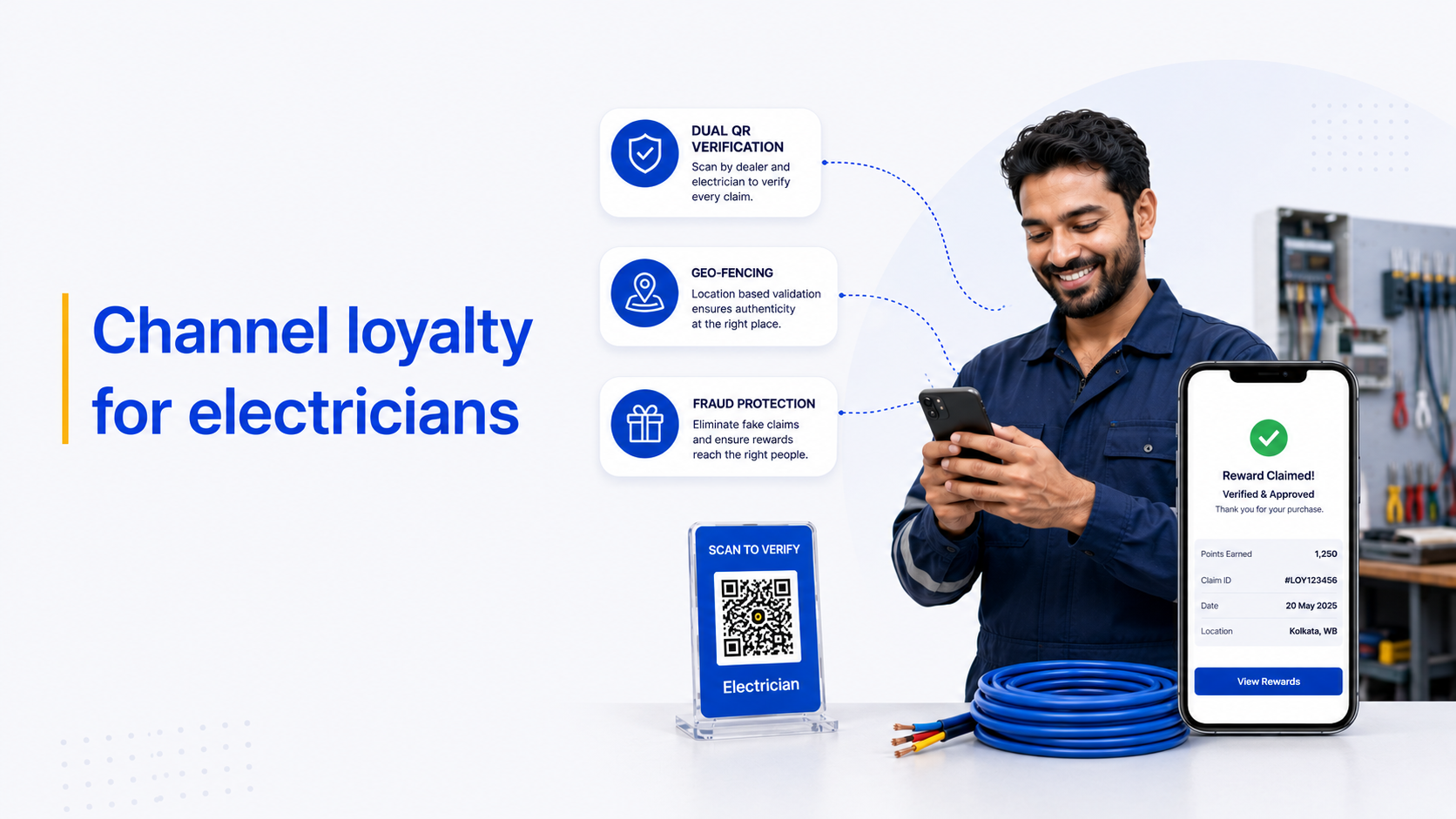
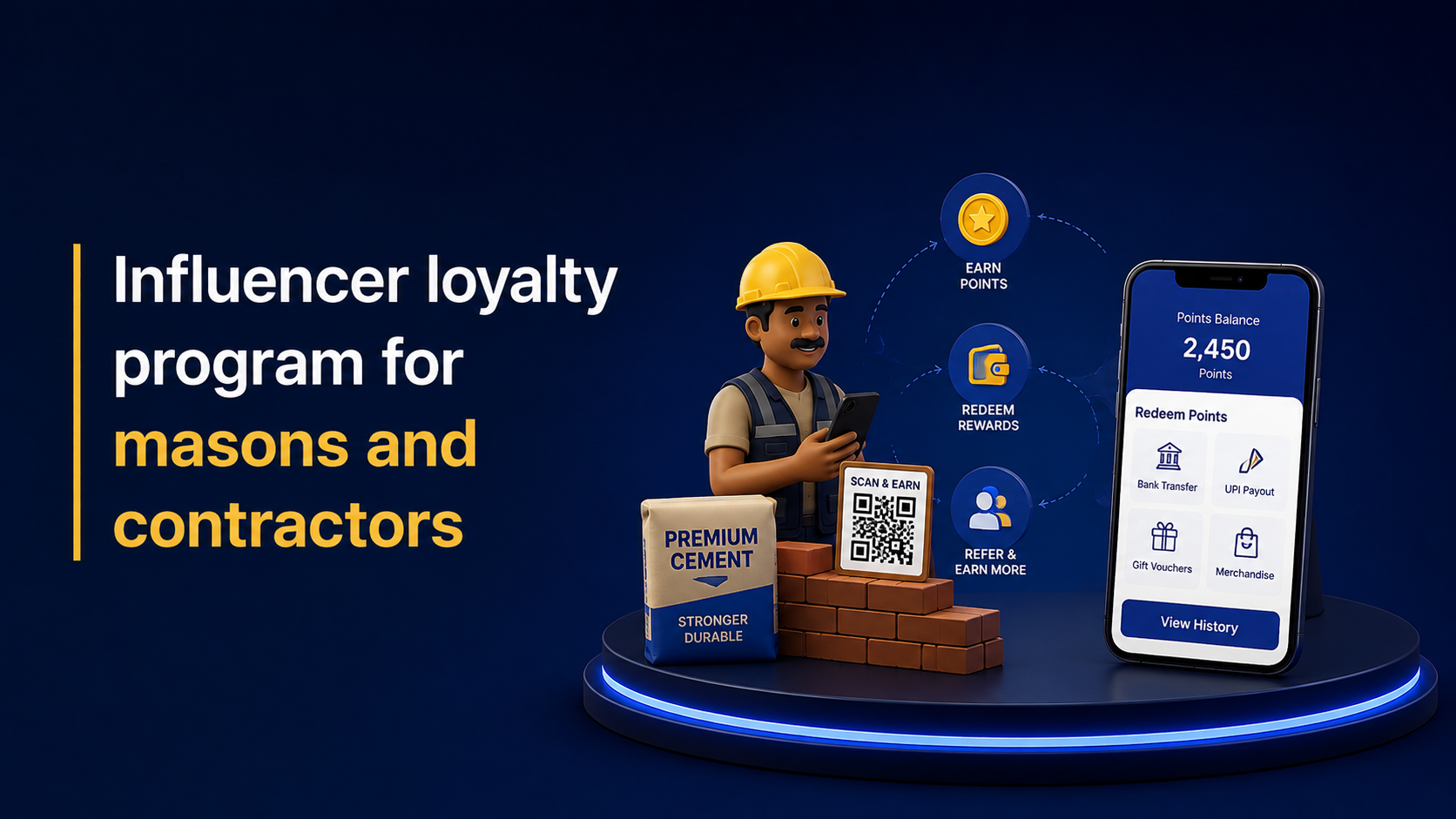
Each bag carries a QR code. When a mason or contractor scans it, they earn points and build a direct relationship with the brand, something that never existed while the dealer sat in the middle of every transaction.
Why brands can't reach the masons and contractors who choose them
According to Forrester, rising prices are projected to drive a 25% decline in brand loyalty across categories where switching costs are low. Building materials fits that pattern closely. A mason recommends whatever he's used before and trusts, not what a brand spent on advertising.
The instinct is to compete harder on price.
40%
of a brand's perceived value comes from factors other than price
including loyalty programs
Source: Deloitte, 2026
That's the gap an influencer loyalty layer is built to close, by giving brands a direct channel to the people actually making the on-site call.
| What the brand can see | Dealer-only model | QR-scan model |
|---|---|---|
| Who's influencing brand choice on-site | No visibility past the dealer | Registered mason/contractor profile |
| Repeat brand usage | Untracked | Scan history per user |
| Regional demand by SKU | Estimated from dealer orders | Geo-tagged scan data by SKU and batch |
See how Xoxoday Loyalife turns mason and contractor scans into regional demand data
Book a demo.
Book a demoTrusted by 5,000+ companies
How a QR-scan influencer journey works for masons and contractors
The mason or contractor downloads the brand's loyalty app, available in regional languages so literacy or English fluency isn't a barrier. Registration takes a short profile: name, mobile number, and an optional ID field for larger redemptions.
From there:
Scan the QR code printed inside the bag. The system validates the code against SKU, batch, and activation rules. Points appear on the home screen immediately. The app auto-captures scan location, feeding brand-side demand data with no extra step from the user.
Masons and contractors can check points and scan history anytime, which is what keeps the program active between projects instead of forgotten.
The data brands get once masons and contractors start scanning
Every scan becomes a data point: which regions are scanning most, which SKU size is moving fastest, which batches are performing after a print cycle. Geo-heatmaps show activity down to the pin code.
That detail turns into decisions. A brand can spot a SKU underperforming in one district and act before a dealer even flags slow inventory, reading real on-ground influence instead of guessing at it.
How Xoxoday Loyalife turns masons and contractors into repeat brand advocates
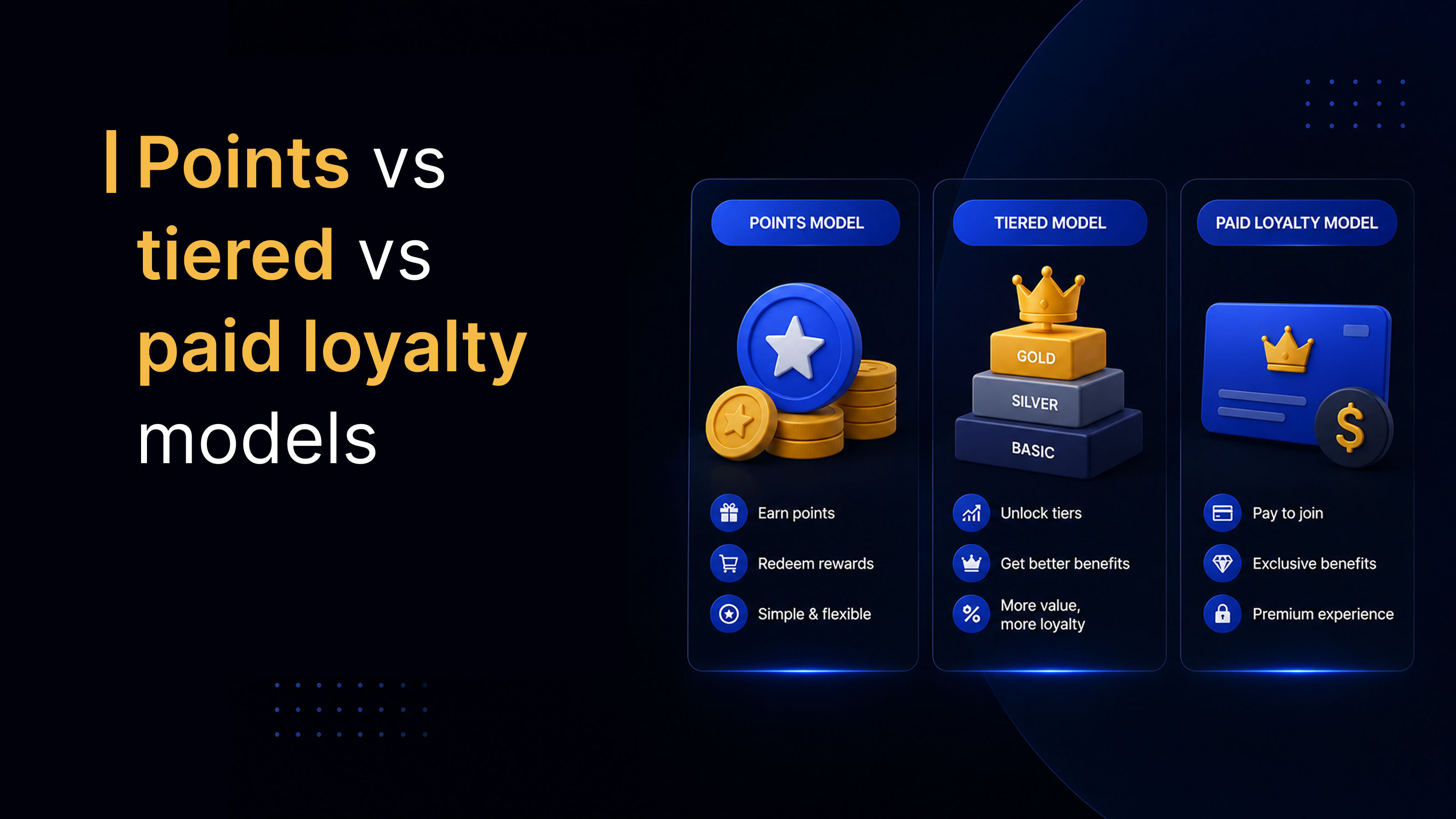
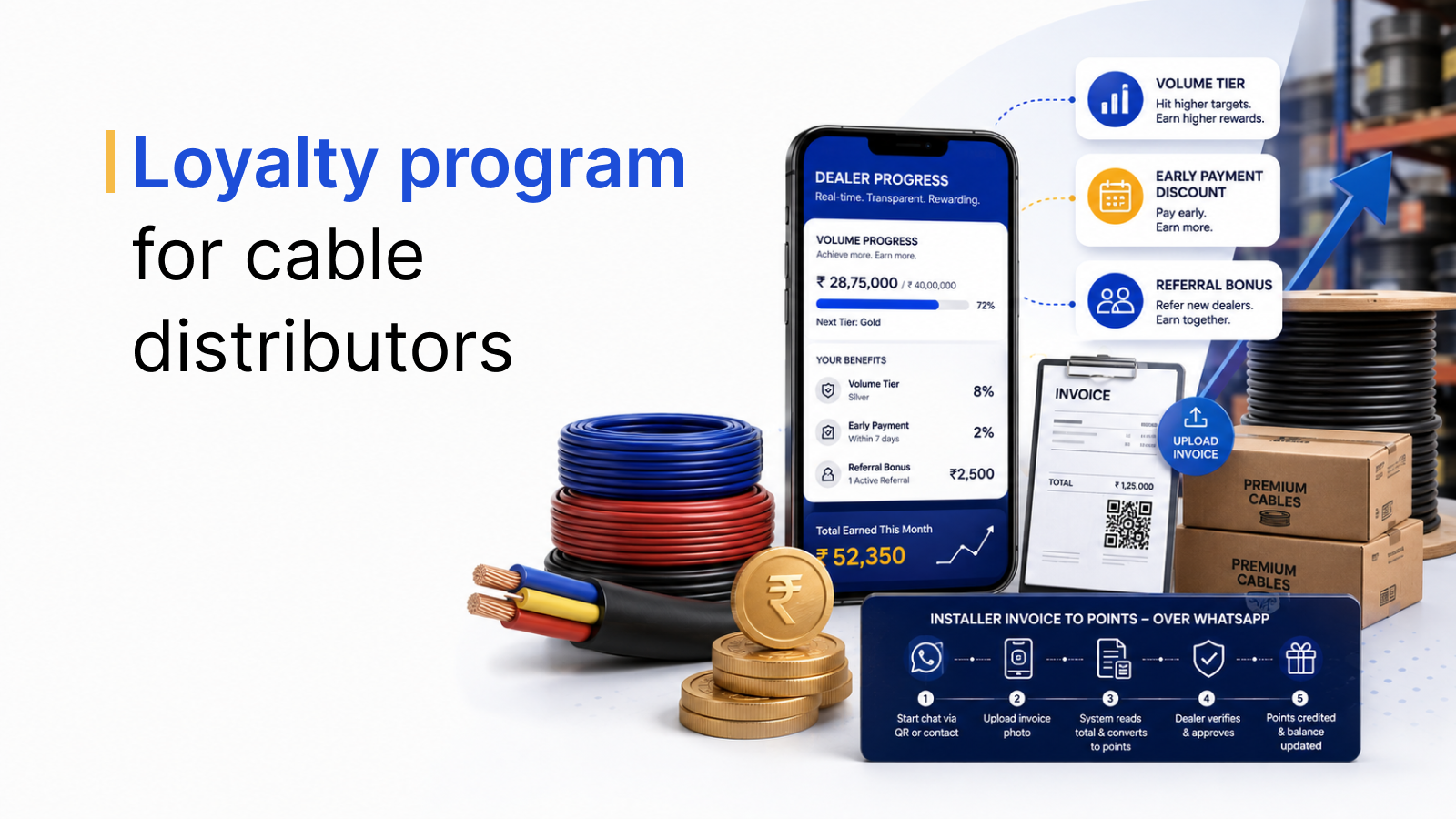
This is where Loyalife's rule engine and rewards layer take over. A flat points system gets used once and forgotten. Its tiering lets a brand give masons and contractors a reason to keep specifying the same brand: hit a threshold, unlock better rewards, keep going.
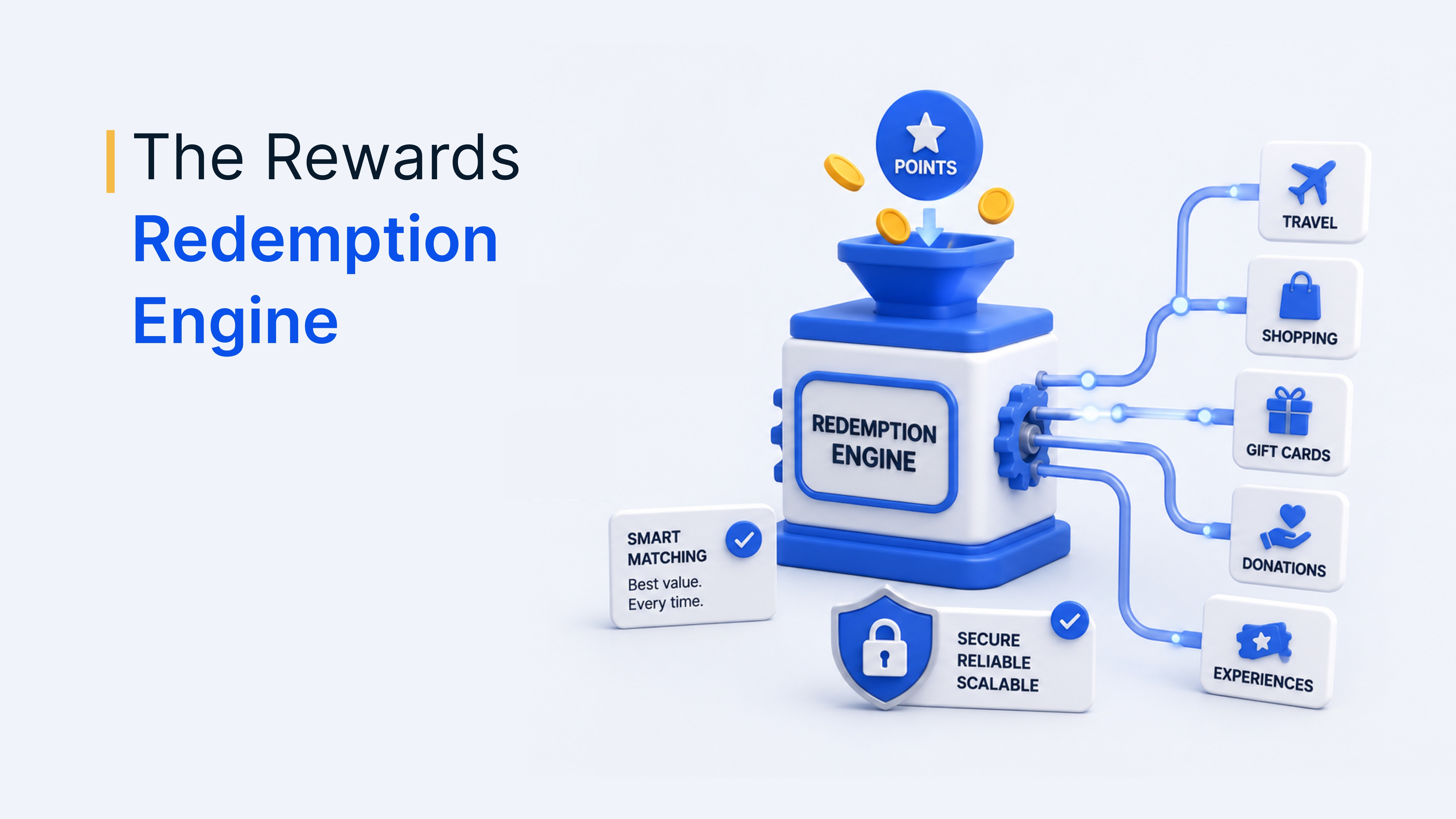
Redemption splits two ways inside the platform. Up to 80% of a wallet balance can go out as a UPI payout straight to a bank account. The remaining 20% can be redeemed on branded merchandise: tools, workwear, and site gear masons and contractors already use.
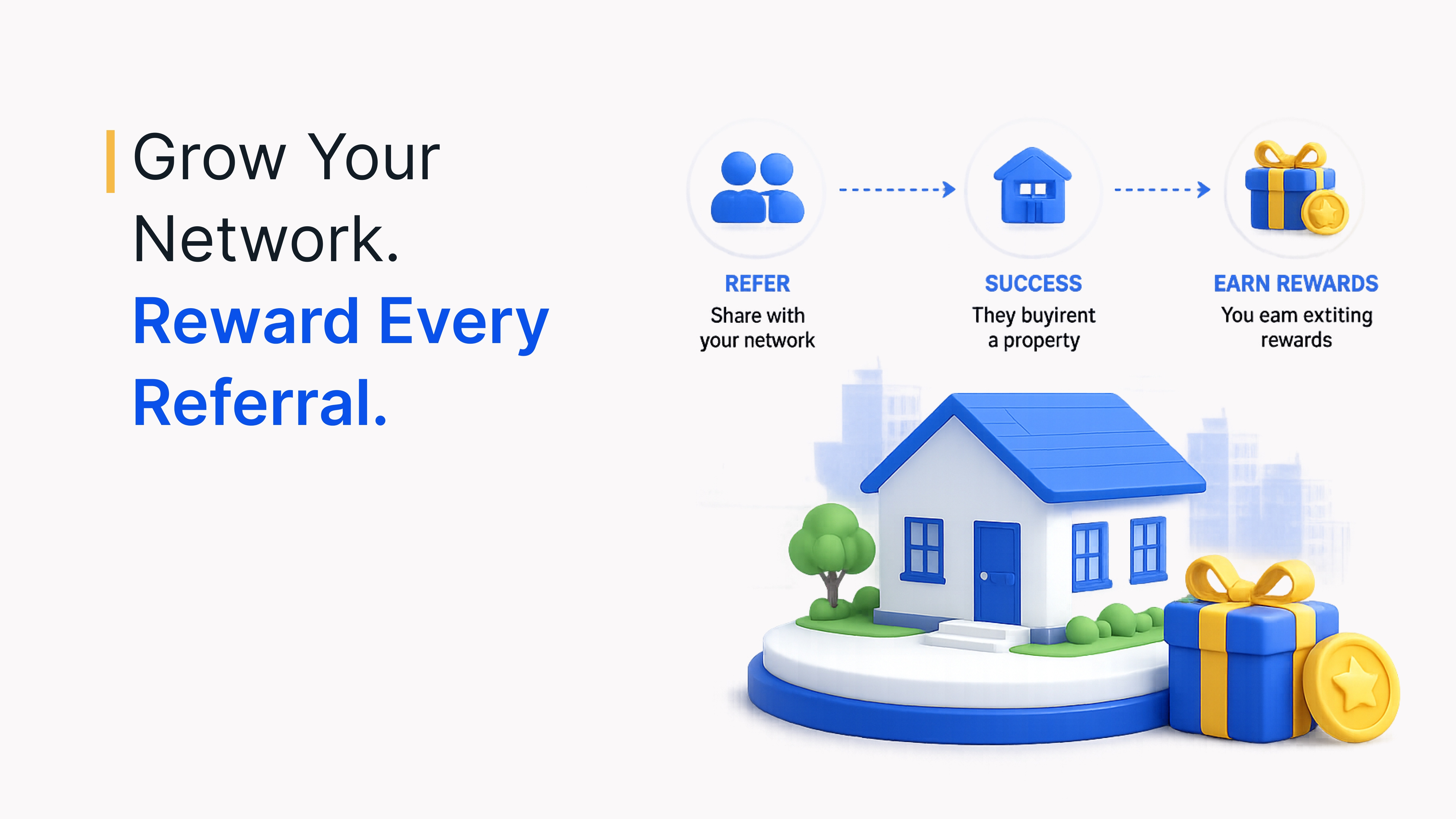
Loyalife's referral engine adds to this. When a mason or contractor brings in another tradesperson who signs up, both sides earn points automatically. Trade networks already run on word-of-mouth; this just attaches a reward to it.
The QR layer's fraud and duplicate-claim checks
Points programs only work if they're earned honestly. Each QR code is generated for one-time use, tied to a specific SKU and batch, and linked to the device that first scans it. A repeat attempt on the same code gets flagged and blocked automatically.
Combined with geo and timestamp data on every scan, the system catches the pattern that matters: someone trying to claim the same bag's points twice, or from two locations at once.
Loyalife runs this fraud layer inside the same platform used for accrual and redemption, so brands aren't bolting on a separate tool.
Turning on-site influence into a channel a brand can actually measure
A QR scan on the bag doesn't change how the product moves through dealers. What it changes is whether the brand knows who's choosing it on-site, and whether that choice repeats.
In a category where switching happens on habit and price, that's the difference between guessing at loyalty and building it deliberately, one scan at a time.