A VP of People at a 2,000-person SaaS company opens three separate dashboards before her Monday standup: one for recognition, one for pulse survey scores, one for rewards redemption. None of them talk to each other, and none of them tell her whether her team is actually doing better this quarter than last.
The disconnect, not a lack of tools, is the real problem most companies are solving for.
Why happiness and productivity stopped being separate problems
Global employee engagement fell to 20% in 2025, Gallup's lowest recorded level and the first time the index has dropped two years in a row. The numbers are stark. One point of decline in 2024 alone cost the world economy an estimated $438 billion in lost productivity.
Companies used to treat happiness as an HR concern and productivity as an operations concern. The data no longer supports keeping them apart: organizations in the top quartile for engagement see 23% higher productivity and 51% lower turnover than the rest, per the same Gallup research. Before comparing tools, it helps to know where your own team stands; see how the employee engagement index is calculated to build that baseline.
What actually makes a tool worth adopting
Most vendors in this category sell dashboards. Few sell action. Before ranking anything, three criteria mattered most: does the tool close the loop between feedback and a visible change, does it work across recognition, surveys, and rewards instead of one alone, and does it scale pricing and support to companies between 500 and 10,000 employees without an enterprise-only paywall.
See how Empuls connects recognition, surveys, and rewards
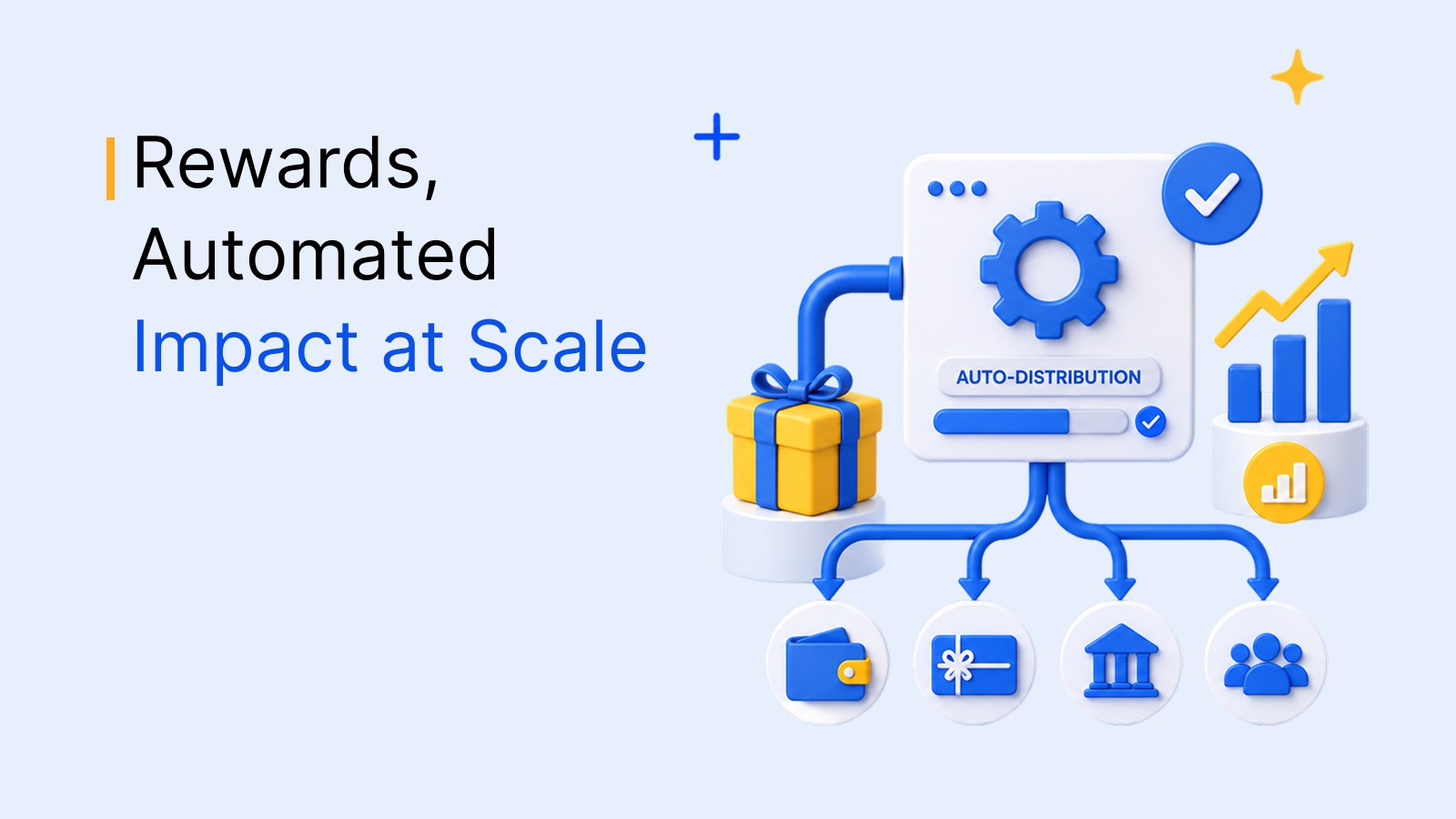
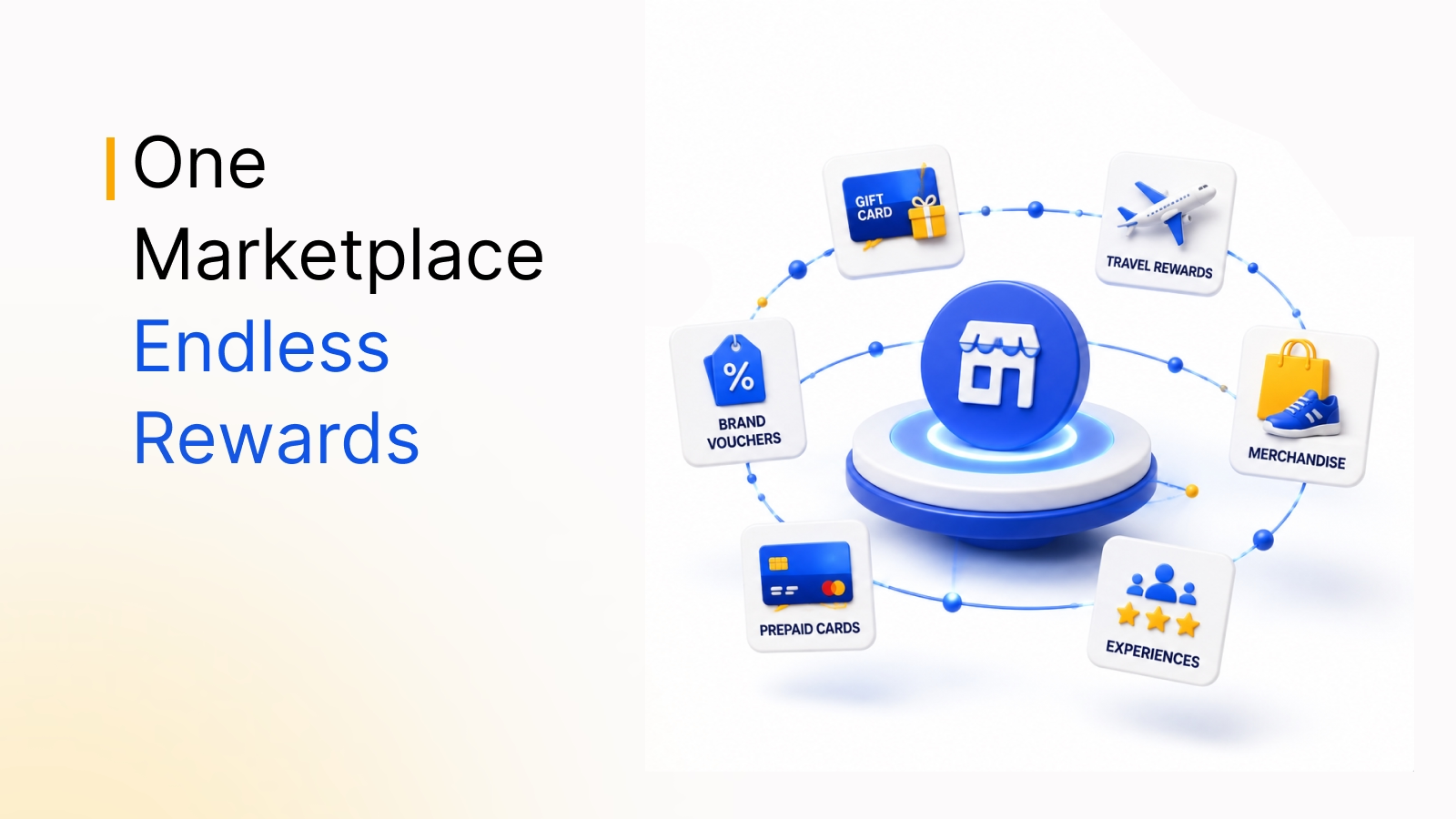
Recognition, pulse surveys, a global rewards catalog, and sales commission automation, all on one platform.
Book a free 30-min demoTrusted by 5,000+ companies
The 10 tools, ranked
This list is ranked by fit, not popularity. It is a working list, built around the three criteria above.
| Tool | Best for | Company size fit | AI capability |
|---|---|---|---|
| Xoxoday Empuls | Recognition, surveys, rewards, and commissions in one platform | 500-10,000+ | AI-driven insights and nudges |
| Lattice | Performance management with engagement built in | 200-5,000 | AI-assisted review summaries |
| CultureAmp | Survey-led engagement and people analytics | 500-10,000+ | AI benchmarking and analytics |
| Quantum Workplace | Engagement surveys and Best Places to Work certification | 200-10,000+ | AI-driven survey insights |
| Engagedly | AI-driven performance, OKRs, and engagement in one suite | 200-5,000 | AI talent management |
| Winningtemp | AI pulse surveys with predictive wellbeing signals | 100-5,000 | Predictive people analytics |
| Mesh.ai | Continuous feedback and OKR tracking with an AI layer | 100-2,000 | AI-assisted goal tracking |
| Perceptyx | Employee listening and people analytics with automated nudges | 1,000-10,000+ | AI-driven behavioral nudges |
| Fringe | Lifestyle benefits marketplace employees personalize themselves | 200-5,000 | Personalization engine |
| Forma | AI-managed lifestyle benefits wallet | 200-10,000+ | AI-managed benefits spend |
1. Xoxoday Empuls
Recognition, pulse surveys, rewards, and sales commissions on one platform. Best for companies tired of stitching four point solutions together; the sales commission layer is the one differentiator nothing else on this list has. Empuls also gives managers a single place to act on a low eNPS score, send recognition, and trigger a reward, so a data signal never sits idle waiting for someone to log into a second tool.
Standout: the only platform on this list that also automates sales commissions alongside recognition, surveys, and rewards.
2. Lattice
Performance management with engagement built in. Best for companies already running formal review cycles who want engagement data attached to performance data. Because reviews, goals, and engagement scores share one system, a manager can see whether a team's dip in sentiment lines up with a stalled review cycle instead of treating the two as separate data points.
Standout: the tightest link between formal performance reviews and pulse survey results of any tool on this list.
3. CultureAmp
Survey-led engagement and people analytics. Best for HR teams that want deep benchmarking against industry norms. Its comparison data spans thousands of participating companies, so a score that looks flat quarter over quarter can still be framed against peers in the same industry and headcount band.
Standout: benchmarking data deep enough to show a board whether engagement is actually competitive, not just improving.
4. Quantum Workplace
Engagement surveys and the platform behind Best Places to Work certifications. Best for companies that want external validation alongside internal data. The certification doubles as a recruiting asset, giving HR a public signal to point to alongside the internal survey data most competitors on this list keep private.
Standout: the only platform here that doubles as a public employer-branding credential through its certification program.
5. Engagedly
AI-driven performance, OKRs, and engagement in one suite. Best for fast-growing companies consolidating goal-setting and engagement. It's built for headcount that doubles year over year, with an AI layer that flags when a newly formed team's goals and sentiment scores start drifting apart before a manager notices manually.
Standout: goal-setting and engagement tracking live in one workflow, so a stalled OKR and a dip in sentiment surface together.
6. Winningtemp
Swedish-built AI pulse survey platform focused on predictive wellbeing signals. Best for companies wanting earlier warning signs of burnout. Its predictive model scores wellbeing trends at the team level, giving HR a heads-up weeks before a resignation letter confirms what the data already showed.
Standout: predictive wellbeing scoring that flags burnout risk before it shows up in a resignation.
7. Mesh.ai
Continuous feedback and OKR tracking with an AI layer. Best for teams that run on quarterly goals and want feedback tied directly to them. Feedback logged mid-quarter attaches to the specific goal it relates to, so a review conversation starts from context instead of a manager reconstructing the quarter from memory.
Standout: feedback that attaches directly to a specific OKR, instead of living in a separate, disconnected survey.
8. Perceptyx
Employee listening and people analytics, now including the behavioral nudge technology it acquired from Humu in 2023. Best for large enterprises that want survey data paired with automated manager nudges. Those nudges translate a survey finding into a specific, small action a manager can take that week, rather than leaving the insight sitting in a report nobody acts on.
Standout: automated manager nudges built on acquired behavioral-science technology, not just a survey dashboard.
9. Fringe
Lifestyle benefits marketplace employees personalize themselves. Best for companies where generic perks aren't landing with a distributed workforce. Employees swap a benefit they'll never use for one they will, which raises perceived value of the same budget without HR having to guess what each team actually wants.
Standout: the widest self-service perk catalog on this list, built for employees who want to choose their own benefits.
10. Forma
AI-managed lifestyle benefits wallet. Best for companies wanting benefits spend automated without a manual approval queue. The AI layer flags spend that falls outside a category's intended use, which keeps a flexible wallet from turning into an unmonitored budget line.
Standout: the most automated benefits-spend workflow here, with AI handling approvals instead of a manual queue.
How Empuls approaches this differently
Most platforms on this list solve one piece: surveys, or recognition, or benefits. The fix isn't another dashboard. Empuls was built around a different assumption, that disconnected tools are themselves the problem.
Recognition, pulse surveys, a global rewards catalog, and sales commission automation run on one platform, so a manager acting on a low eNPS score and a recognition workflow pull from the same data instead of three logins. For companies replacing a single-purpose recognition platform, the immediate difference is fewer systems to reconcile, not just a lower price.
The real cost of getting this wrong
20%
Global employee engagement in 2025
Gallup's lowest recorded level, down two years in a row
Source: Gallup, State of the Global Workplace
Companies that delay consolidating these tools are not avoiding a cost. They are deferring it. A 51% turnover gap compounds every quarter a disengaged team stays disengaged. For a more detailed breakdown of where that gap comes from, see nine employee retention strategies that actually work and how to reduce employee attrition.
How to choose based on your team's stage
A 500-person company evaluating this list should weight ease of rollout and price transparency over benchmarking depth. A 5,000-person enterprise should weight integration support (Salesforce, SAP, UKG) and compliance credentials like SOC 2 more heavily than any single feature.
Neither should sign a contract before running a pilot with real managers, not just HR. Pilot first, sign later. If rewards and benefits are part of the evaluation, it's worth reading how a total rewards strategy ties compensation, recognition, and wellbeing together, so the tool you pick fits the broader plan rather than becoming another disconnected line item.
The tools on this list solve different slices of the same problem: people who don't feel seen don't perform, and platforms that don't talk to each other make that harder to fix than it needs to be. Start with the gap that's costing the most right now, not the tool with the longest feature list.