Key Takeaways
Insurance churn hides in the 12-month silence between renewals, not just at the price comparison.
Five policy moments (onboarding, premium payment, claims-free streaks, referrals, renewal) each convert into an engagement trigger.
One white-label rewards program can run across every product line, currency, and market from a single admin.
Your best policyholder bought a plan 11 months ago and has not heard a useful word from you since. The premium auto-debits. The app sits unopened.
When the renewal notice lands next month, a competitor's quote is one search away, and nothing you have done in the past year gives them a reason to stay.
That silence is the real churn risk in insurance. Not price alone, not the claims experience alone, but the long stretch of nothing in between.
This post covers how a policyholder rewards program fills that gap: which insurance moments are worth building incentives around, how the mechanics actually work, and how to run one program across products, currencies, and markets without standing up new infrastructure for each.
Insurance loyalty erodes in the silence between renewals
Insurance is one of the few things a customer pays for and then hopes never to use. That structure works against engagement. There is no weekly login, no reorder, no reason to come back until the bill or the bad day arrives.
The cadence varies by line but the gap is always there. A motor policyholder touches the brand once a year. A life policyholder may go three or four years between any meaningful contact. A health member interacts more, but usually only to complain about a claim.
Deloitte's 2024 global insurance outlook makes the point directly: insurers need to support customers year-round, not only at the point of sale, renewal, or a claim. The gap between those events is where loyalty is won or lost, and most carriers leave it empty.
The cost is quiet. A policyholder who feels nothing for their insurer does not complain. They take the first competitive quote at renewal, because you gave them no reason to weigh anything besides price.
The policy moments worth building incentives around
Engagement does not need constant contact. It needs the right contact at moments the policyholder already cares about. Insurance hands you five of them, and each maps cleanly to a reward trigger.
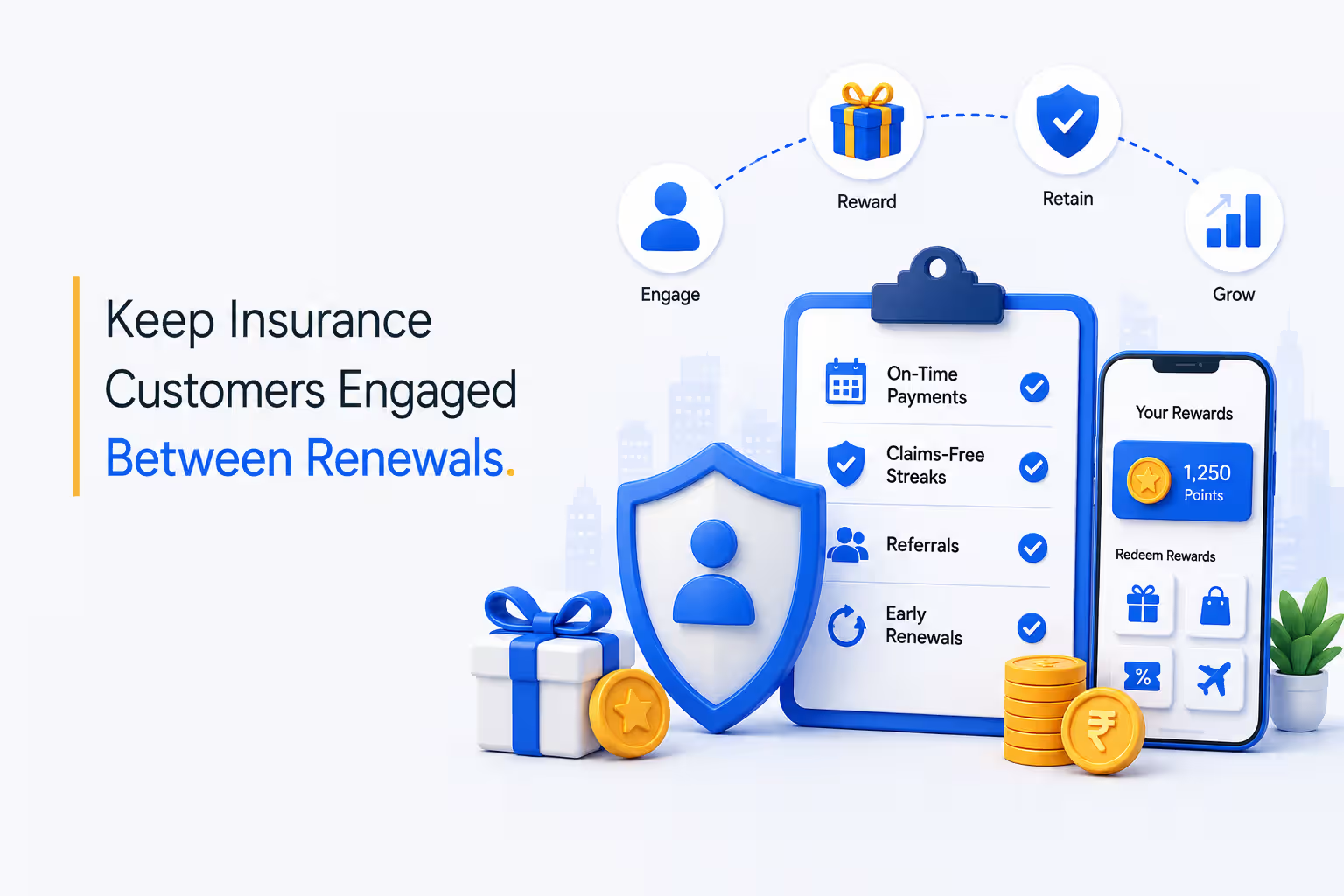
| Policy moment | Reward trigger | Engagement outcome |
|---|---|---|
| Onboarding (first 30 days) | Welcome points on activation | Early app login, completed profile, digital-first habit |
| Premium payment | Points for each on-time payment | Auto-pay adoption, fewer involuntary lapses |
| Claims-free period | Milestone bonus at 6 and 12 months | Retention through the quiet middle of the year |
| Cross-sell or second policy | Bonus points on a new line added | Deeper wallet share, higher switching cost |
| Healthy actions (health lines) | Points for a checkup, steps, or telehealth use | Lower claims cost and regular app contact |
| Going paperless or digital KYC | Points for e-statements and self-service | Lower servicing cost, more digital touchpoints |
| Feedback or NPS survey | Reward for a completed survey | Response data plus a reason to re-engage |
| Self-service claim | Points for filing a claim in-app | Fewer call-center contacts, faster resolution |
| Policy anniversary | Tenure milestone reward at 3 and 5 years | Recognition that rewards loyalty directly |
| Referral | Reward when a referred policy is issued | Low-cost acquisition from the existing base |
| Renewal | Loyalty bonus for renewing early | Renewal locked in before the shopping window opens |
Look at what the renewal row does. A loyalty bonus for renewing early moves the decision forward, before the policyholder starts comparing quotes. You stop competing on price at renewal and remove the reason to compare at all.
Two rows carry more weight than the rest. The premium-payment trigger nudges customers onto auto-pay, the single strongest predictor of a policy that does not lapse by accident. The cross-sell trigger has the highest return, because a policyholder with two lines is far harder to lose than one with a single policy.
Health insurers get an extra lever the others do not. Rewarding a checkup, a step count, or a telehealth visit engages the member and lowers claims cost at the same time, which is rare for an engagement tactic to do.
How earned rewards pull policyholders back
A rewards program works in insurance for one reason: it gives a low-contact relationship a reason to become a regular one. Points that accrue quietly each month turn a dormant policyholder into someone who opens the app to check a balance, browse a catalog, and redeem.
According to McKinsey, personalized customer experiences lift retention by roughly 20%. A rewards program is one of the few tools that lets an insurer personalize at scale: reward the behaviors you want, and let the policyholder choose what the points become.
Three mechanics do most of the work:
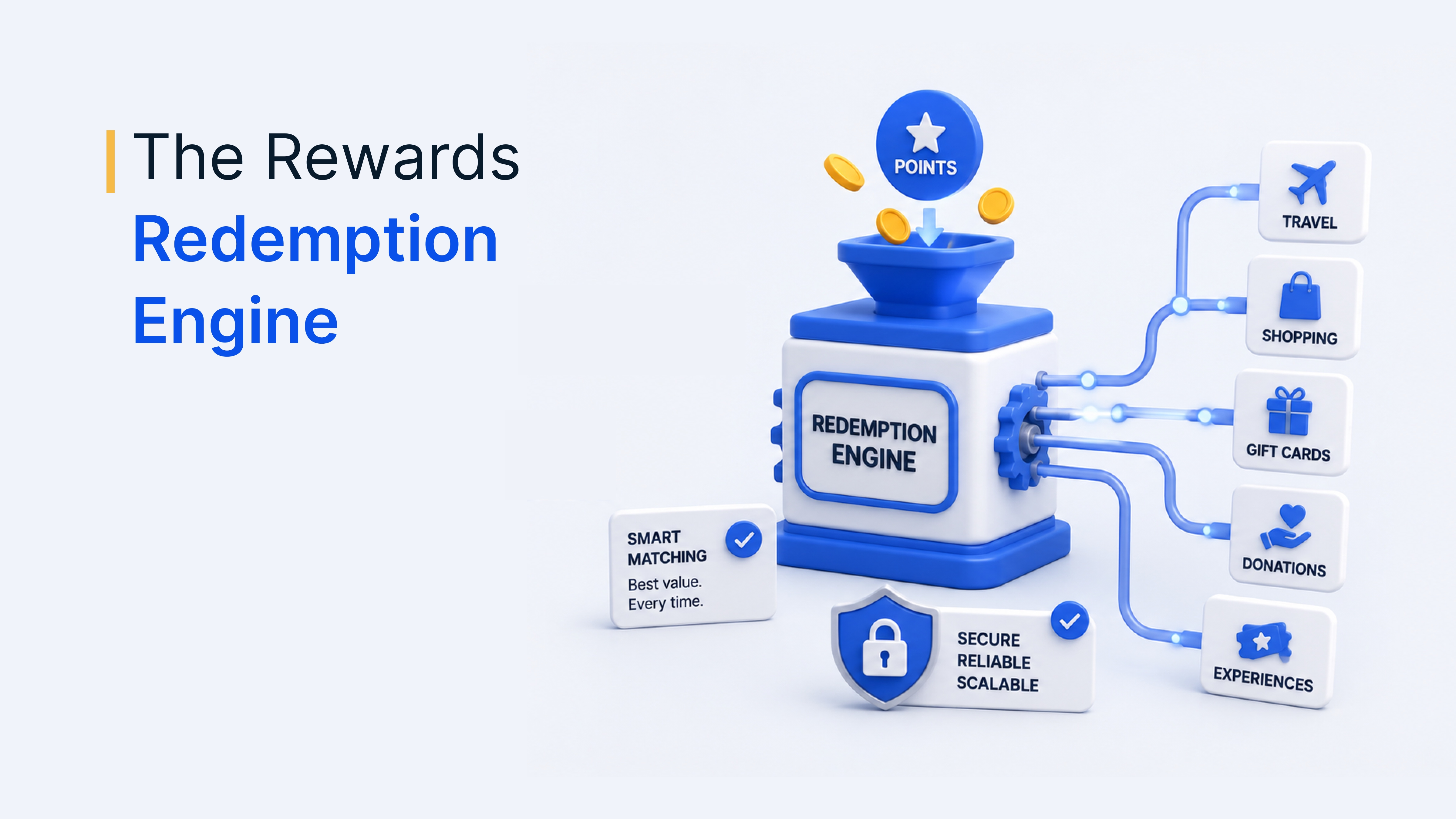
- Choice at redemption. A policyholder who can redeem for a local gift card, a flight, a hotel night, or a donation stays engaged far longer than one handed a fixed, generic voucher. Relevance drives the second and third visit.
- Gamification with tiers and streaks. A "6 months claims-free" badge with a points bonus gives the empty middle of the policy year a shape and a target.
- A branded points currency. Renaming points to "Miles," "Rewards," or "Credits" across the app, emails, and balance screens makes the program feel native to the brand, not bolted on.
Real-time wallet balances matter more than they sound. When points update the moment a premium clears, the reward feels earned and immediate, not promised and forgotten. A tier-based catalog adds a second layer: high-value policyholders can see premium rewards a basic tier does not, which gives the relationship somewhere to grow.
See Plum in action
See how Plum powers policyholder engagement for insurers.
Book a free 30-min demoTrusted by 5,000+ companies
How to launch a policyholder rewards program
A program stalls when it is designed as a catalog first and a behavior second. Reverse that. Start from the two or three actions you most want policyholders to take, then attach rewards to them.
- Pick the behaviors before the rewards. Usually on-time payment, digital adoption, and referrals. These are the actions that move retention and cost.
- Set earn rules per behavior. Fixed points for onboarding, recurring points per premium, milestone bonuses for claims-free periods.
- Curate the catalog to the market, not the maximum. A focused catalog of relevant local brands redeems better than an everything-enabled default.
- Choose a delivery channel policyholders actually check. In much of Southeast Asia that is WhatsApp, not a buried in-app inbox.
- Define your success metrics up front. Redemption rate, repeat redeemers, and renewal rate among members, measured against non-members.
- Run a single line or market first. Prove the mechanics on motor or health, then extend the same program to other lines.
Common mistakes to avoid
- Rewarding activity that does not affect retention (points for opening an email), which trains engagement with no business return.
- A catalog so broad it feels generic, or so thin it gives no reason to return. Curate to the region.
- Points that expire silently and erode trust. If you use expiry, tell the policyholder well before it hits.
- Ignoring compliance lead times. Some catalog categories (for example, certain major-brand gift cards) require a one-time brand verification of 5 to 10 business days, so plan the launch calendar around it.
Running one program across products, currencies, and markets
Most insurers are not running one product in one country. They run life, health, and general lines, often across several markets, sometimes through a bancassurance arm with its own brand. A program that only works for one line in one currency creates more admin than it removes.
According to Aberdeen Group, companies with the strongest omnichannel customer engagement retain about 89% of their customers, compared with 33% for those with weak engagement. In Southeast Asia, omnichannel increasingly means WhatsApp: a program that delivers points alerts and redemption links through the channel policyholders check will beat a buried in-app inbox every time.
Running this at scale takes specific capabilities, not generic flexibility:
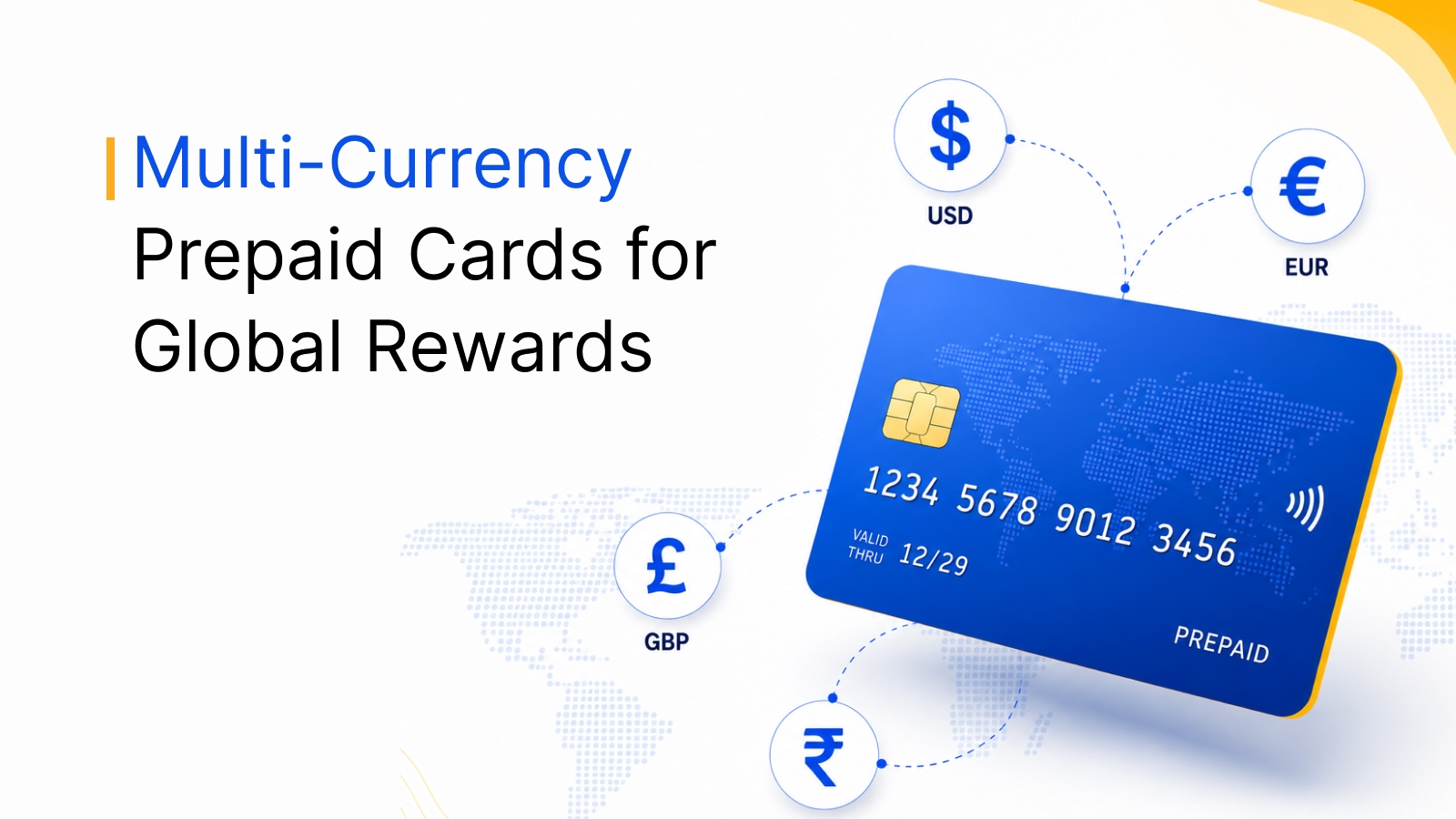
- Multi-currency and multi-language, so a policyholder in Jakarta and one in Manila each see a local catalog in their own currency, from the same program.
- Multi-tenant structure, so each product line or subsidiary runs as its own program with its own rules, under one regional platform.
- Maker-checker governance and audit logs, so catalog and rule changes need dual approval and every change is recorded, which regulated insurers require.
- Region-curated catalogs, so the reward set reflects what people in that market actually want rather than a single global list.
Data privacy sits underneath all of it. A policyholder program handles customer data across markets, so GDPR-compliant handling is a baseline requirement for BFSI buyers, not a nice-to-have.
How Plum powers insurance customer engagement
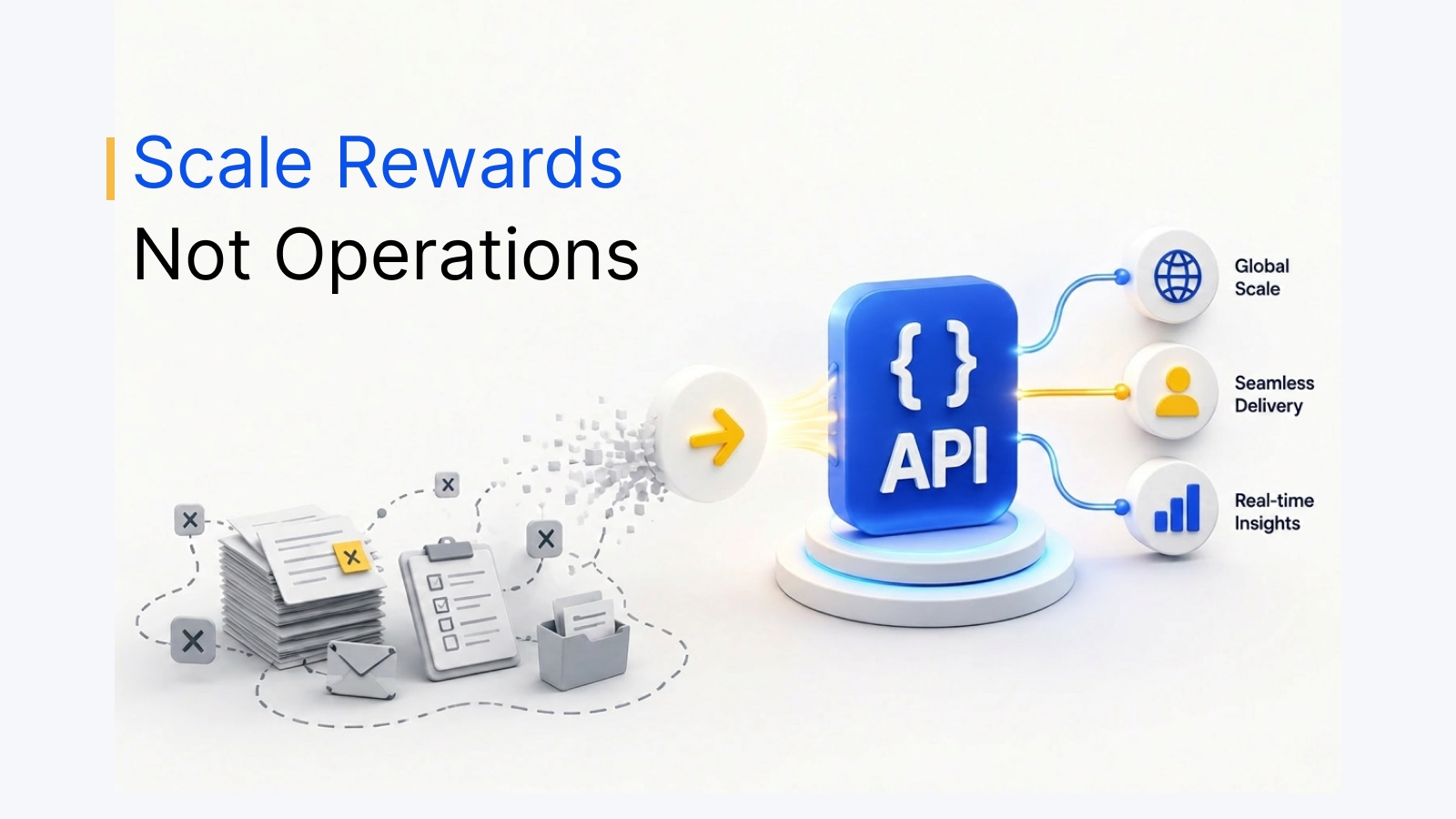
Everything above describes what a policyholder rewards program needs to do. Plum is the marketplace and admin layer that runs it, white-labeled to the insurer's brand and live without building redemption infrastructure in-house.
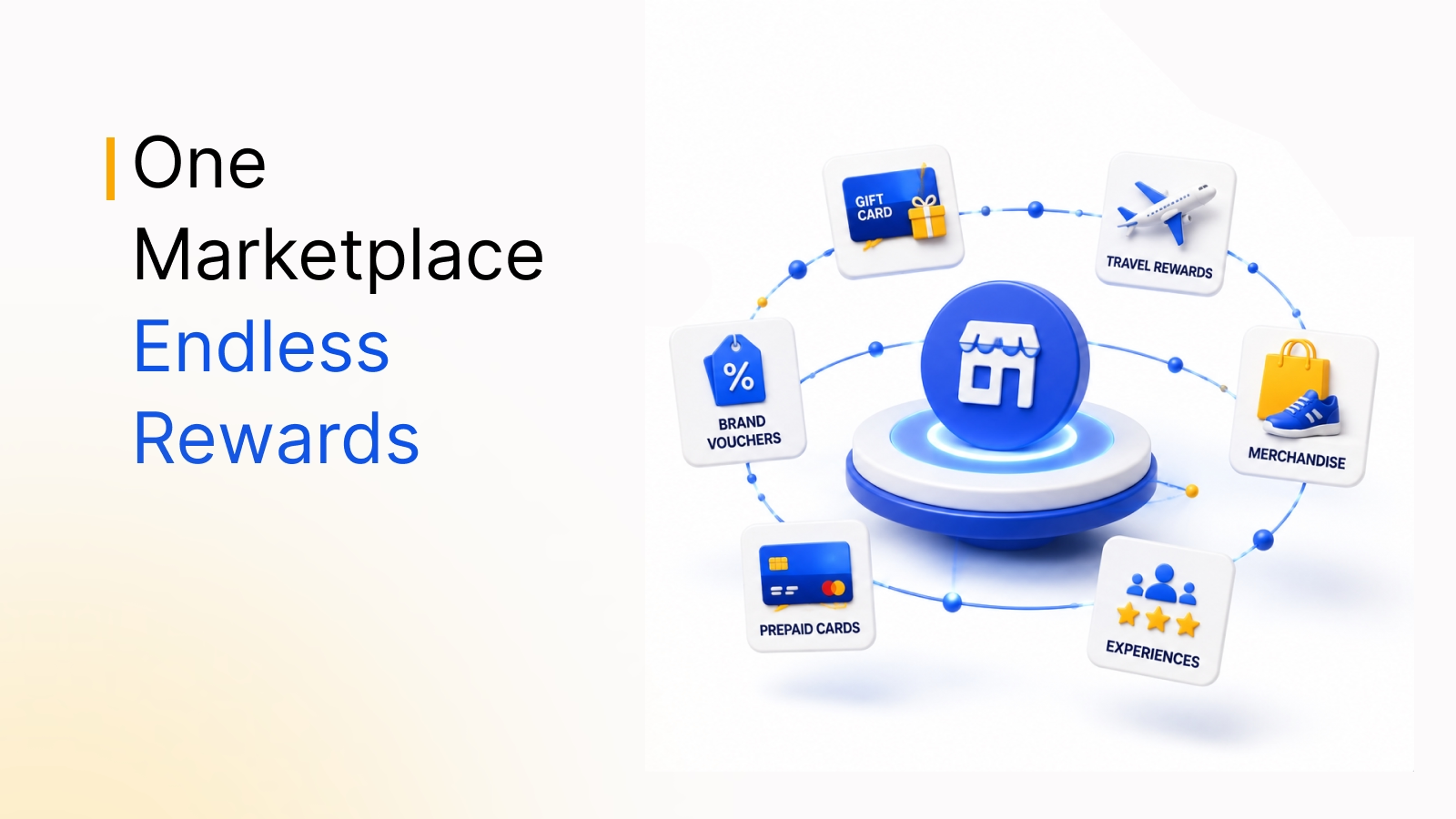
The engagement engine is the catalog. A points balance only holds attention if there is something worth redeeming for, and catalog depth is where thin programs fail.
10M+
reward options
175+
countries covered
65M+
engaged end users
5,000 global + 180 local
gift cards
900 airlines, 300,000 hotels, 1,200 lounges
travel redemption
For an insurer, that breadth means a policyholder in any market finds something they actually want, which is what turns a first redemption into a habit. Points can convert to local gift cards, physical products, flights, hotel nights, lounge access, or a donation, plus an outbound miles exchange for carriers running a miles currency.
Deployment models that fit an insurer
How the program sits inside your stack depends on how much of the experience you want to own:
- Custom storefront. A bespoke front-end on the fulfillment backend, best for insurers and bancassurance arms with a dedicated tech team that wants full control of the redemption experience.
- Company-funded marketplace. The insurer funds a wallet and policyholders redeem points against the global catalog, best for a straightforward loyalty program with the fastest path to live.
- Standard storefront. A white-labeled site configurable out of the box (branding, catalog, points rules, language, currency) for programs that need to launch without custom development.
The distribution formats behind each policy moment
Different moments need different reward mechanics, and the platform ships the formats to match:
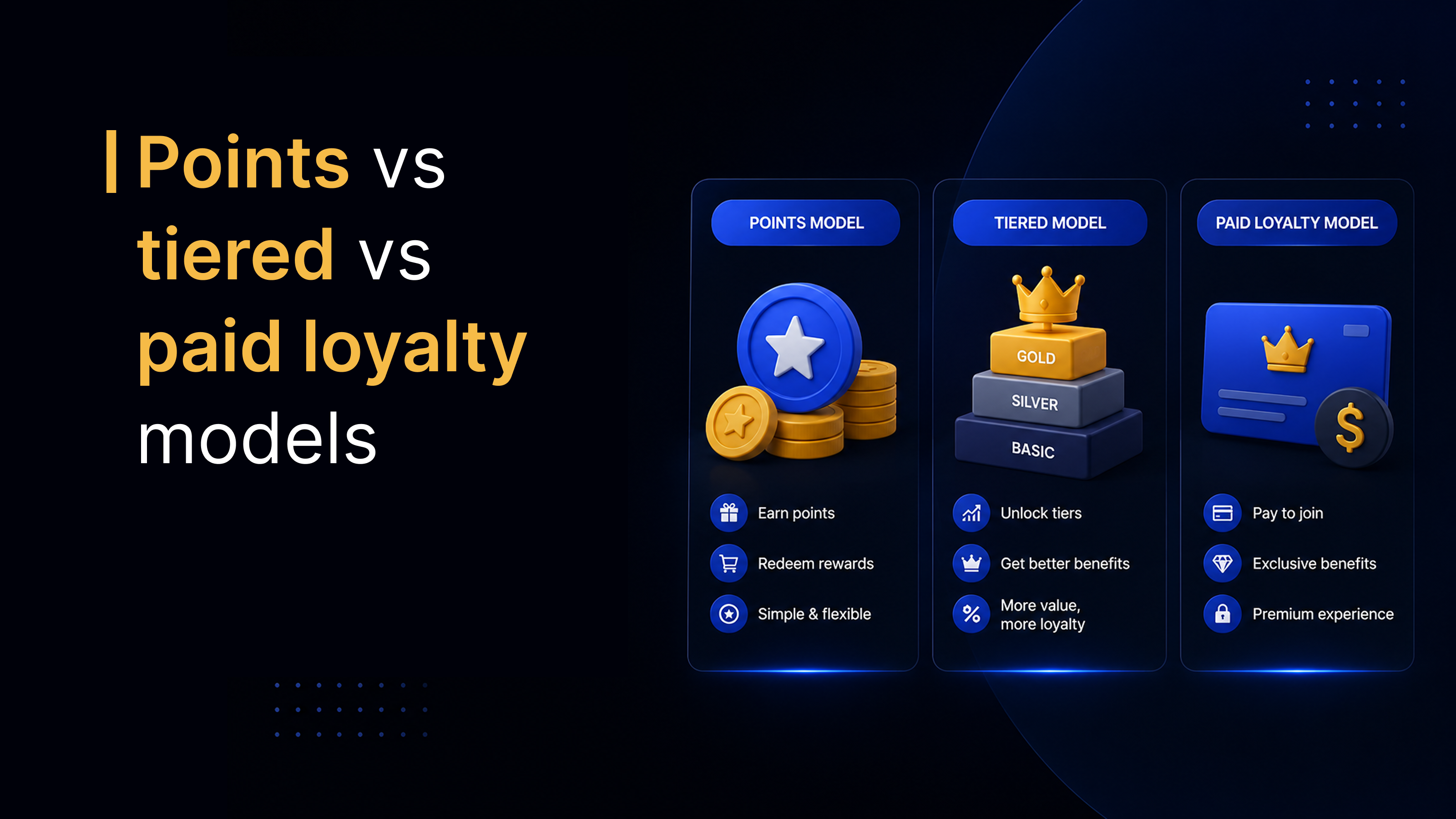
- Reward points for the ongoing relationship. Points tied to the policyholder's email or phone, auto-accumulating, redeemable in part or full, paid only when used. This is the backbone for premium-payment and loyalty triggers.
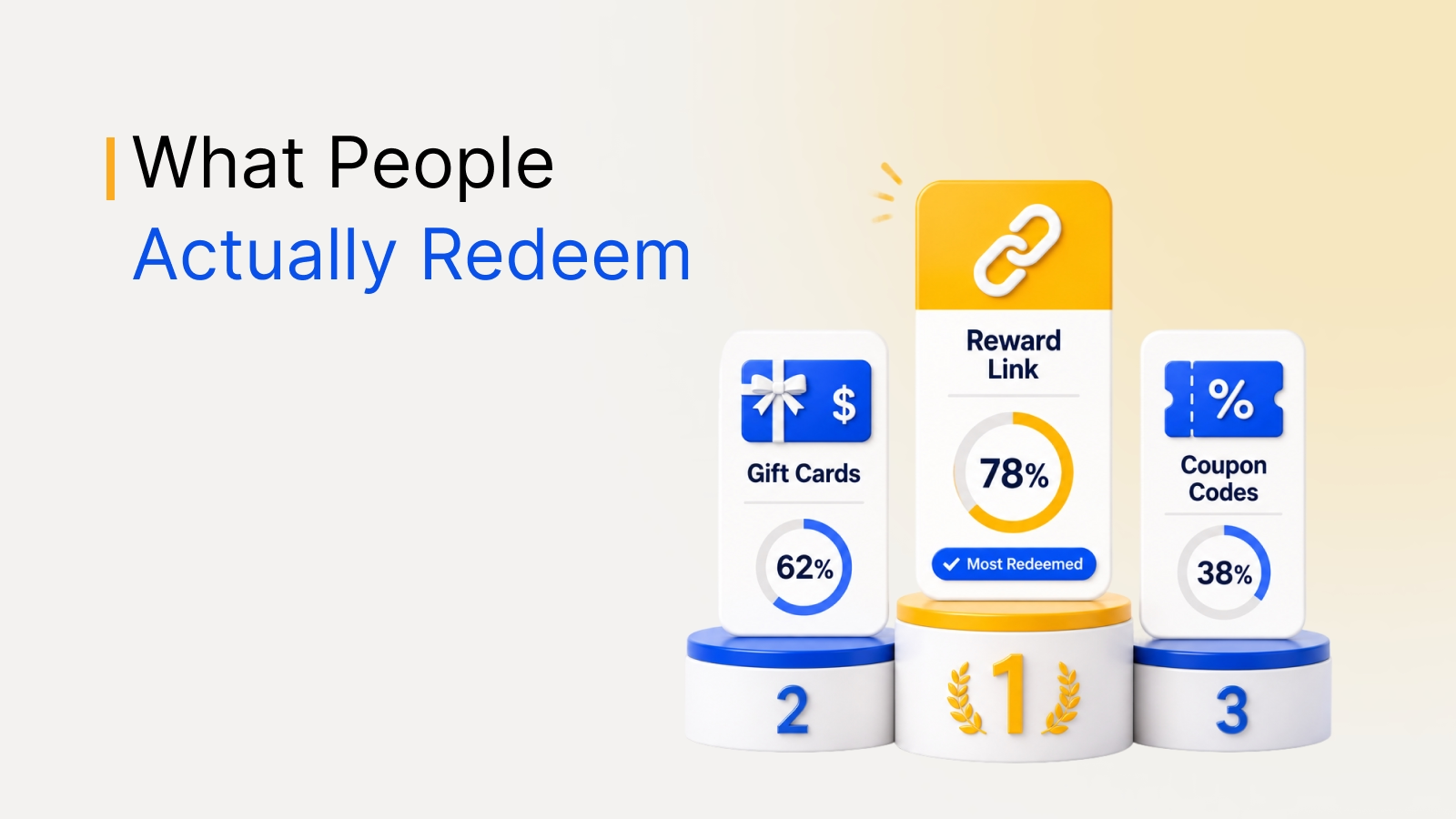
- Reward links for one-time actions. A shareable, no-login redemption link, ideal for referral rewards and survey or NPS incentives where the recipient redeems once.
- Brand gift cards for milestones. A specific card chosen by the admin, delivered by email, SMS, or WhatsApp, for anniversary and festival gifting where the brand of the reward matters.
Admin, governance, and AI controls
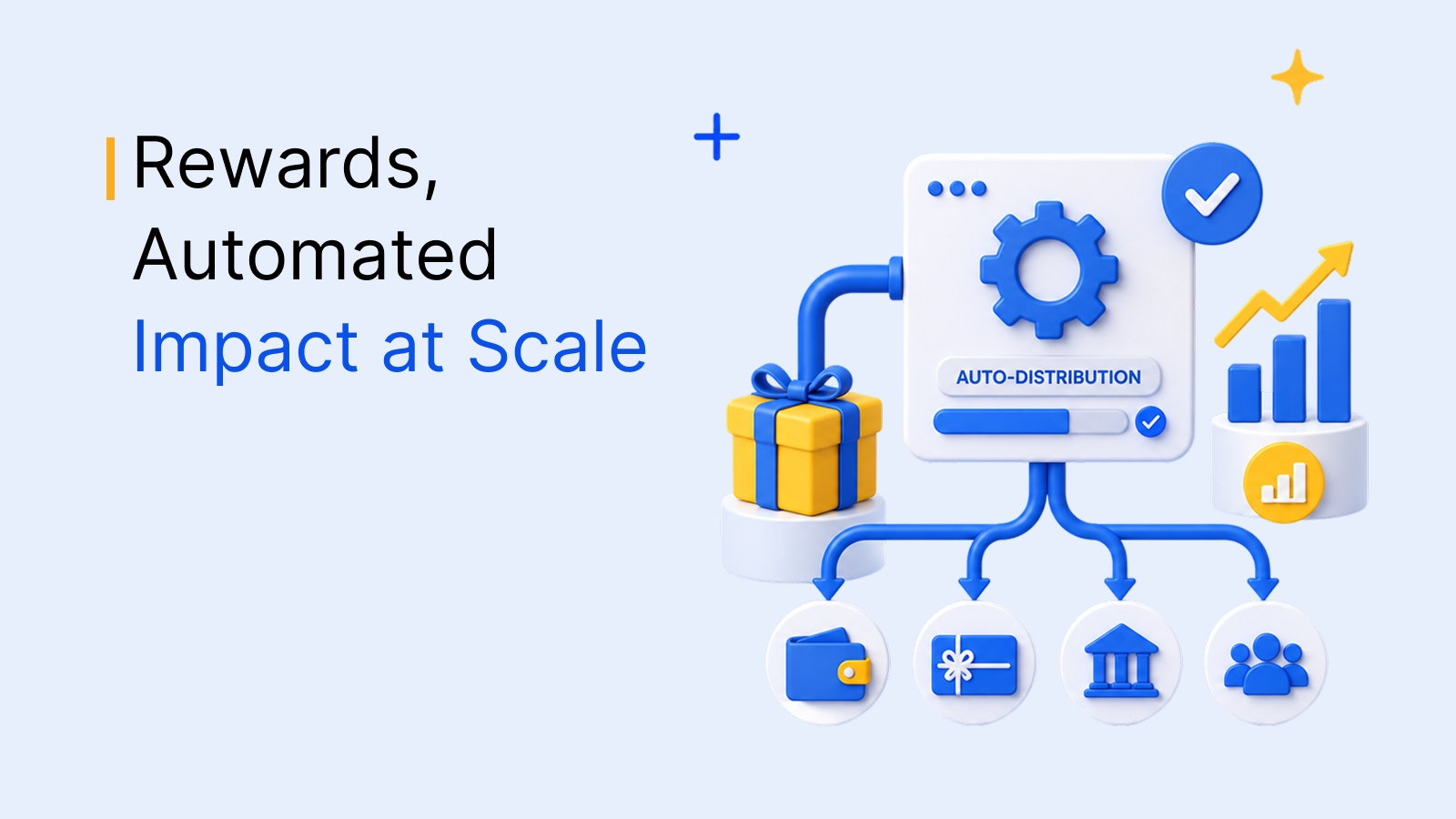
The admin portal is where a lean marketing team runs the program without engineering:
- Conversion-rate control. Set the point-to-currency rate globally or per category, in real time, to manage margins and steer redemption.
- Category limits and budget tracking. Min and max thresholds per category, a central wallet with recharge alerts, and per-campaign cost reporting.
- Redemption reminder nudges and personalized recommendations that surface a reward a policyholder is likely to want from their history and behavior.
- Fraud detection that flags anomalous transactions, and maker-checker approval with a full audit log for regulated programs.
Reliability and support
Reliability is contractual, not aspirational. Defined support SLAs set a one-hour response target for critical issues, two hours for medium, and four for minor, each with a resolution window. Program assistance covers onboarding, accrual, redemption, reporting, and campaign design, so the insurance team is not running it alone.
The retention metrics that prove it worked
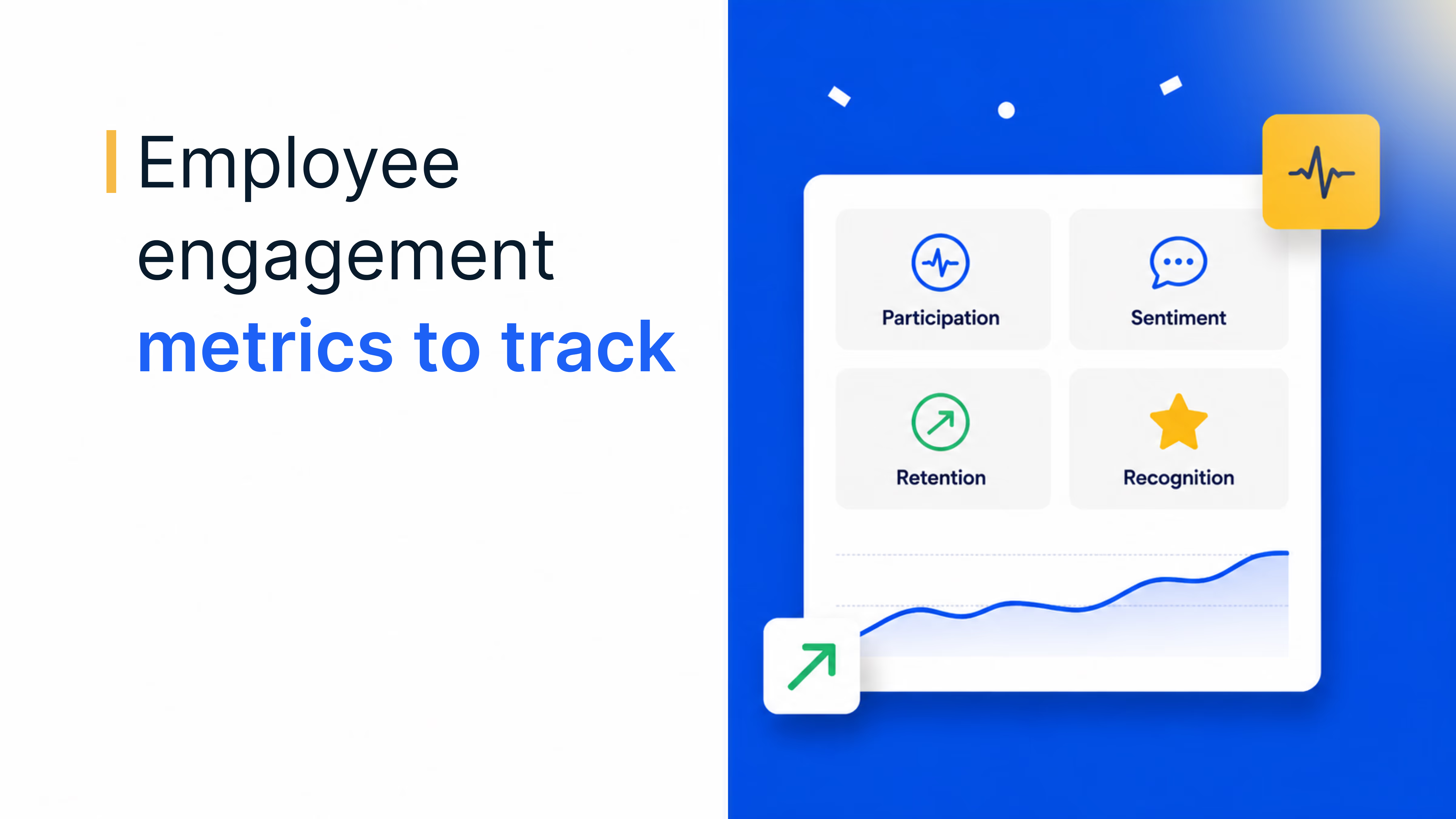
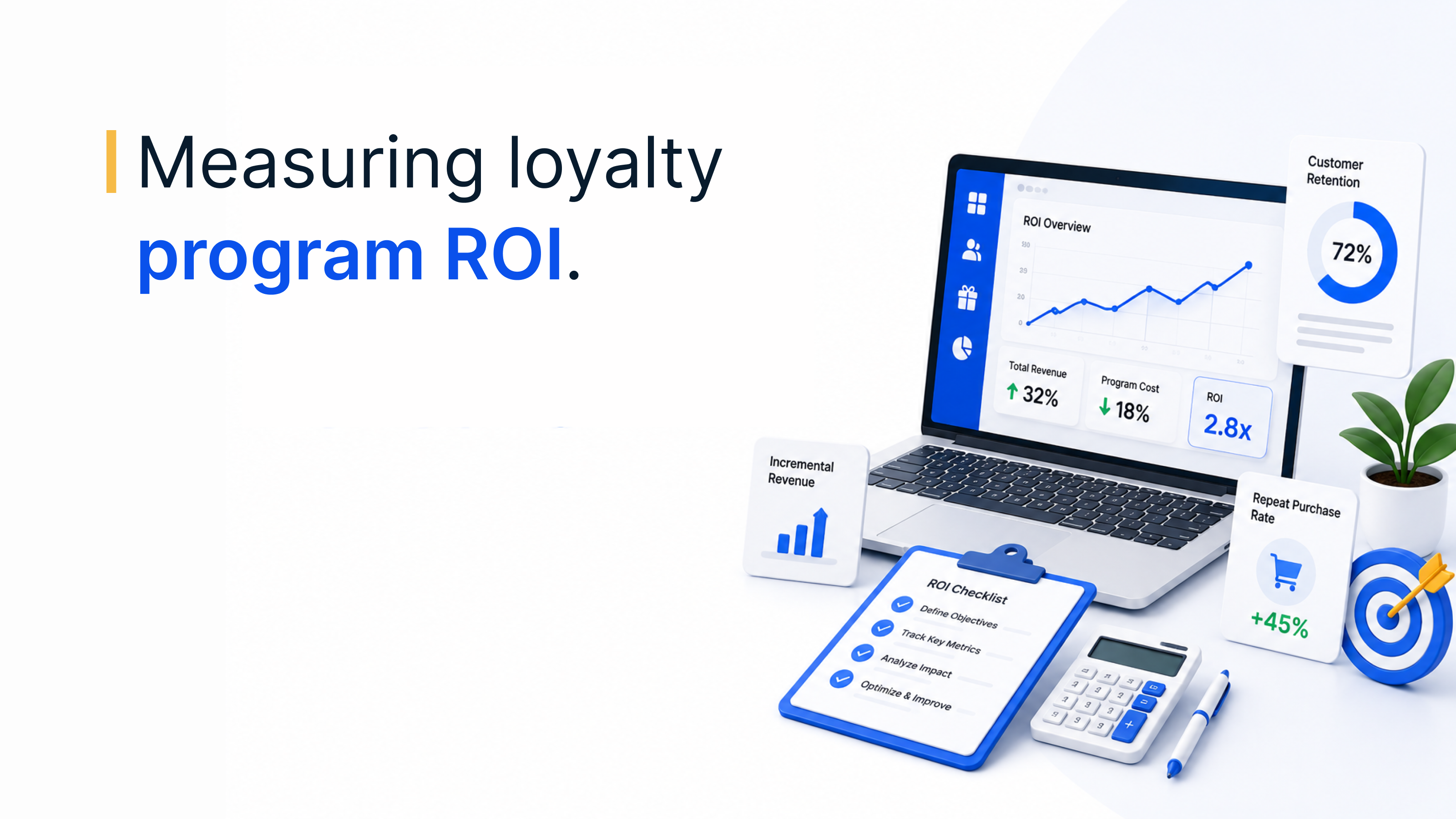
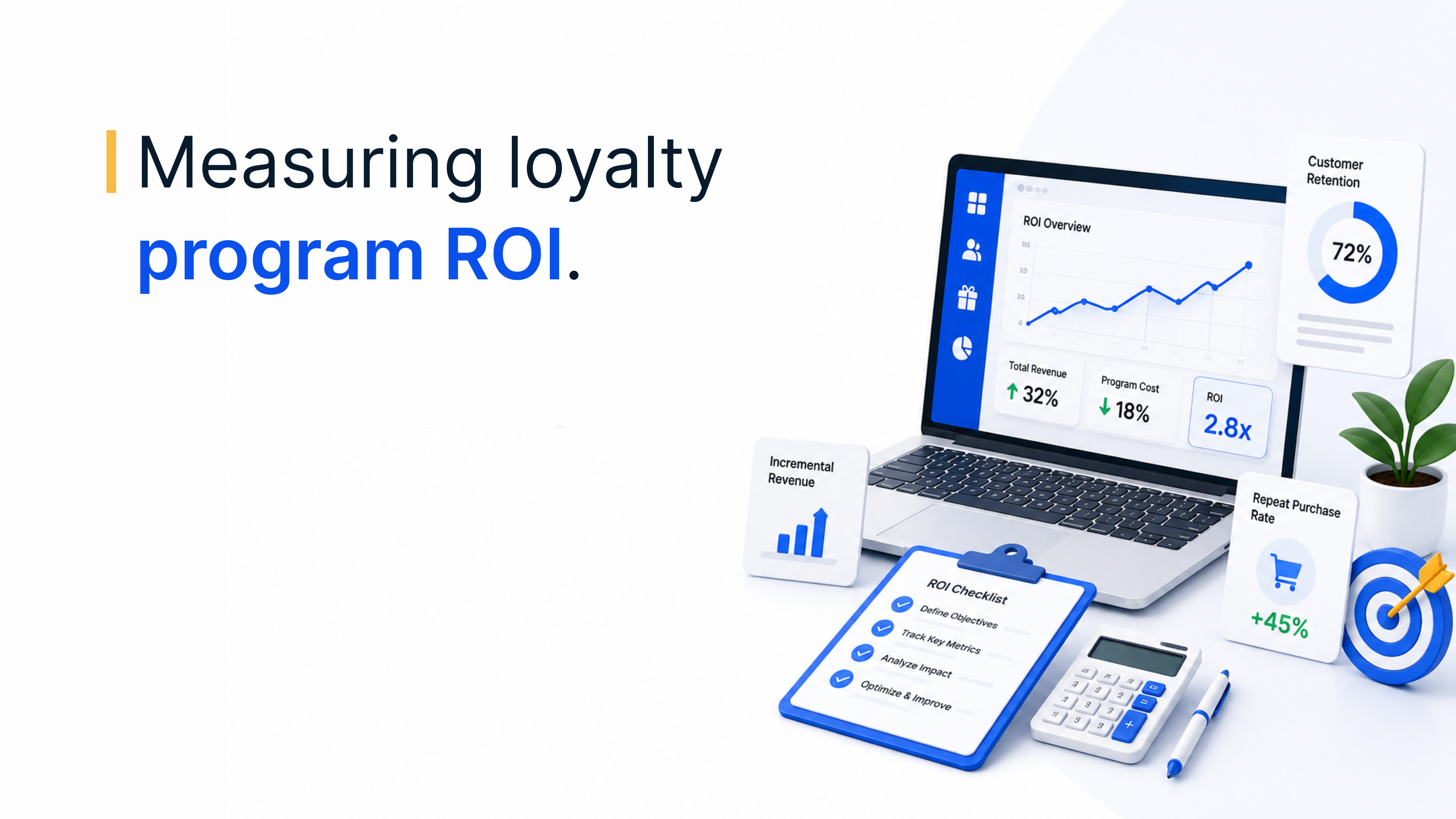
A rewards program earns its budget only if you can show it moved retention, not just handed out points. The redemption dashboard is where that case gets made. Track four numbers from day one:
- Redemption rate. The share of issued points actually redeemed. Low redemption means the catalog or the triggers are wrong, and it is the earliest warning sign.
- Repeat redeemers. The share of policyholders who come back for a second and third redemption. This is your real engagement signal, not first-time activation.
- Renewal rate among active members versus non-members. The number that ties the program to revenue.
- Lapse rate at premium-payment points. To confirm payment-linked rewards are cutting involuntary churn.
Live analytics show category performance and adoption trends in real time, so you adjust the catalog and triggers while a campaign is running, not after it ends.