Key Takeaways
Onboarding rewards cut one bank's signup drop-offs by 50% and doubled activation speed
Xero replaced physical referral gifts with instant digital links and grew referral conversion 25%
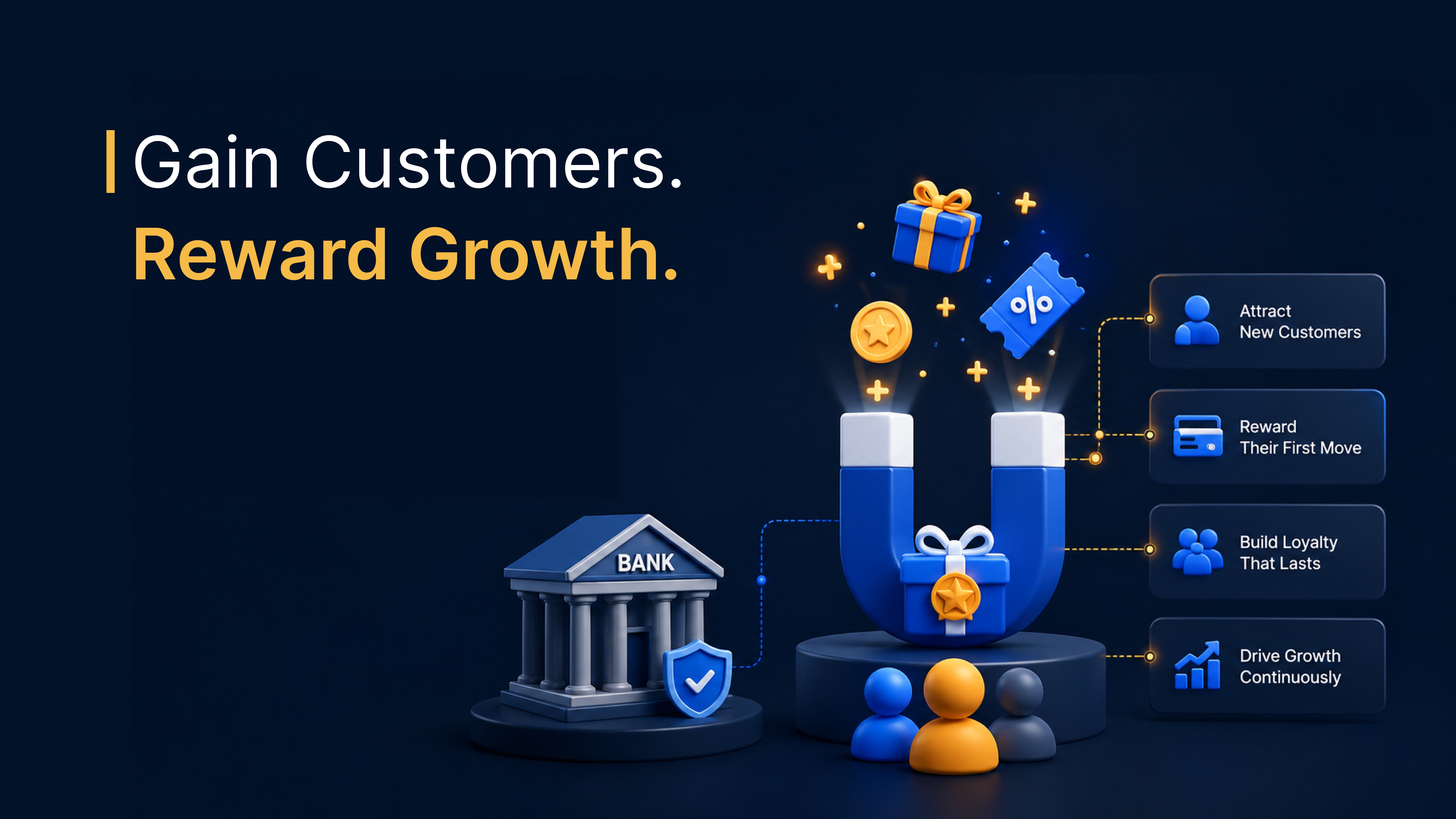
The strongest acquisition triggers for banks are first transaction, salary deposit, card activation, and autopay setup
A customer opens a savings account on their phone, finishes KYC in under five minutes, and gets a confirmation email. Thirty days later the account has a balance and nothing else: no debit swipe, no bill payment, no salary deposit. It's open, but it isn't a customer.
That gap between account opened and account used is where most bank acquisition budgets quietly disappear. A signup that never transacts costs the same acquisition spend as one that does, and it never earns any of it back.
This post covers where reward triggers actually close that gap, how referral programs turn existing customers into a growth channel, and what a working, KYC-linked reward system looks like in practice.
Why banks are rethinking customer acquisition around rewards
Paid acquisition costs keep climbing while digital-only banks and fintech apps chase the same account holder. Rewards give a bank a lever on what a customer does after signup, not just whether they sign up. Three shifts are driving this:
- Referrals are already mainstream marketing infrastructure. Forrester reports 54% of B2C marketers run referral programs inside a broader loyalty program, and another 38% run a standalone referral program
- Acquisition economics favor triggered rewards over ad spend, because the person receiving the offer already trusts the person sending it
- Banks are being pushed toward platform economics. McKinsey's Global Banking Annual Review 2026 argues banks need a model that pushes acquisition and servicing cost toward zero, and reward triggers inside onboarding and referral flows get there without touching the core banking stack
New bank accounts rarely become active customers on their own
A new account holder who doesn't transact in the first 30 days rarely turns into a profitable customer. Most banks have no mechanism that rewards the specific actions, first transaction, salary deposit, card activation, that turn a signup into revenue.
35%
Increase in successful signups
Source: Xoxoday internal case study
2x
Faster onboarding and account activation
Source: Xoxoday internal case study
50%
Reduction in signup drop-offs
Source: Xoxoday internal case study
Here's what usually breaks between signup and activation:
- No reason to come back. KYC finishes, the app sits on the home screen, nothing prompts a first transaction
- The first transaction has no urgency attached. Without a reward window, "I'll set up my salary deposit later" becomes never
- Card activation lags issuance. A card that ships but doesn't get used in week one often doesn't get used at all
Tying a reward to a specific action closes that gap. Signups that used to sit dormant start transacting inside the reward window instead of months later, if at all.
Manual referral and gifting programs break down at bank scale
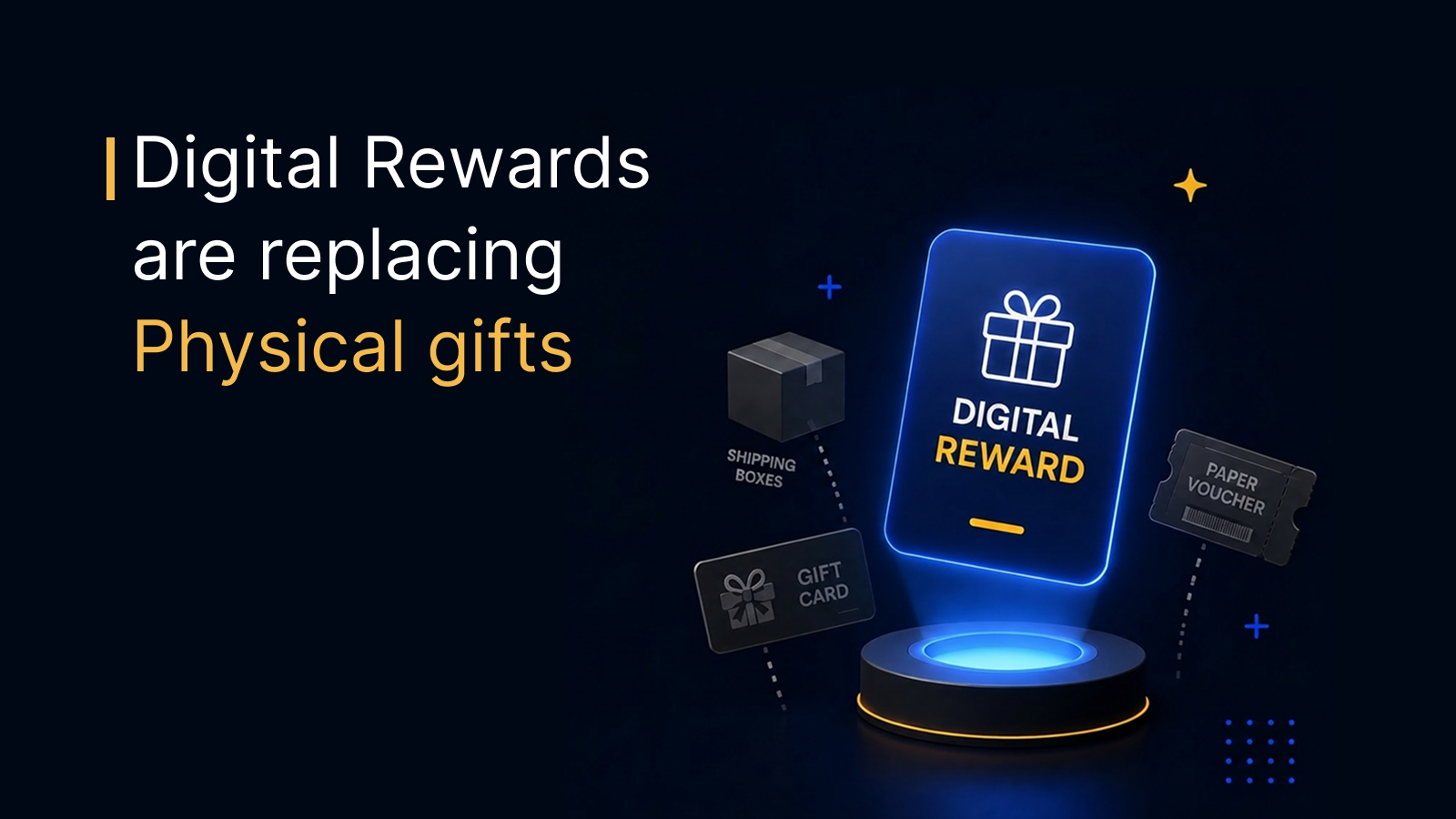
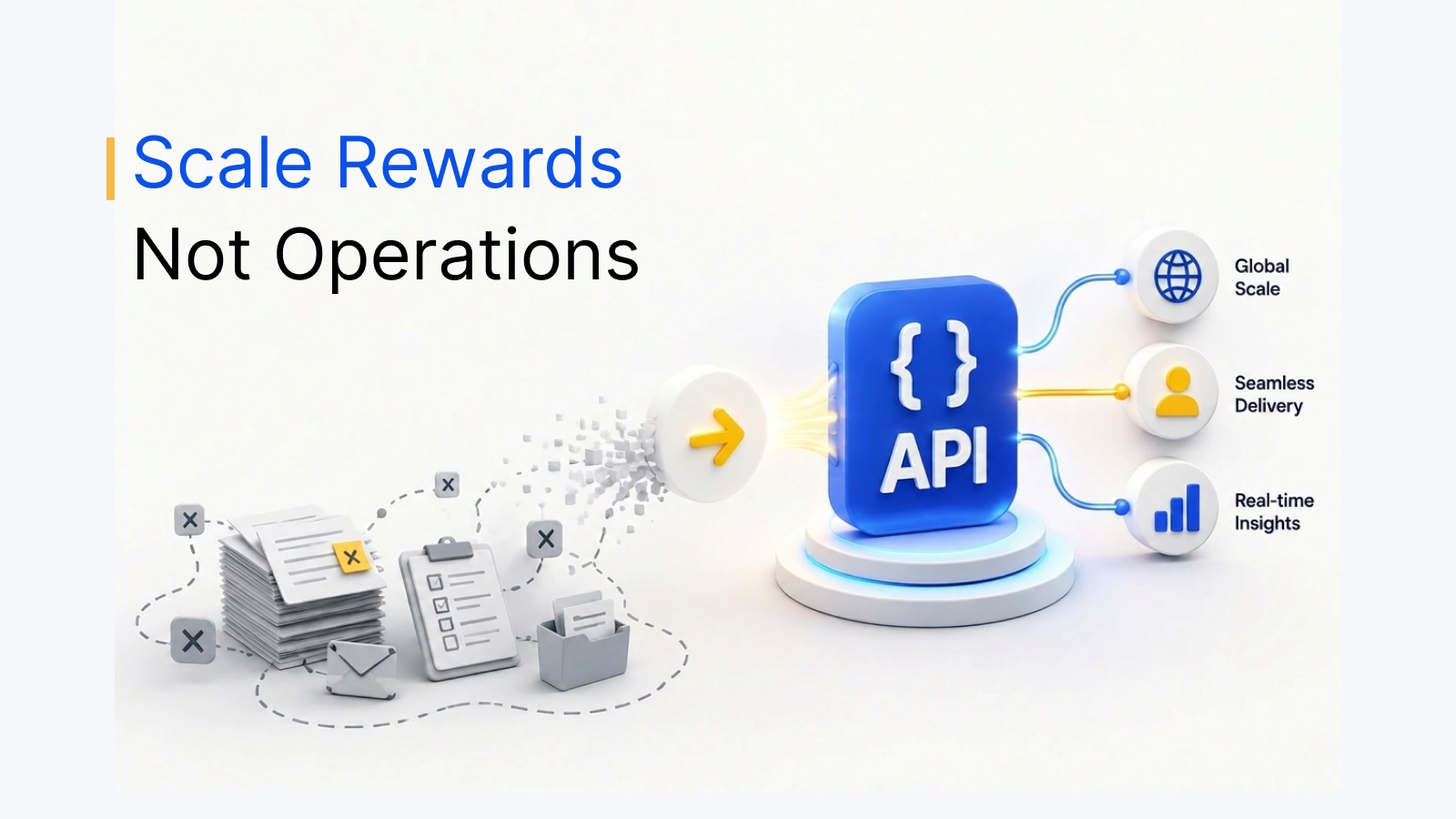
Referral programs built on physical gift cards or manual voucher issuance break down at volume. Banks end up managing inventory and shipping logistics instead of running a growth channel.
Xero, the global accounting software company, ran its referral program this way before switching to a digital model. Its three failure points map directly to what a bank hits at scale:
- Upfront inventory cost. Gifts get bulk-ordered and hand-packed before a single referral converts
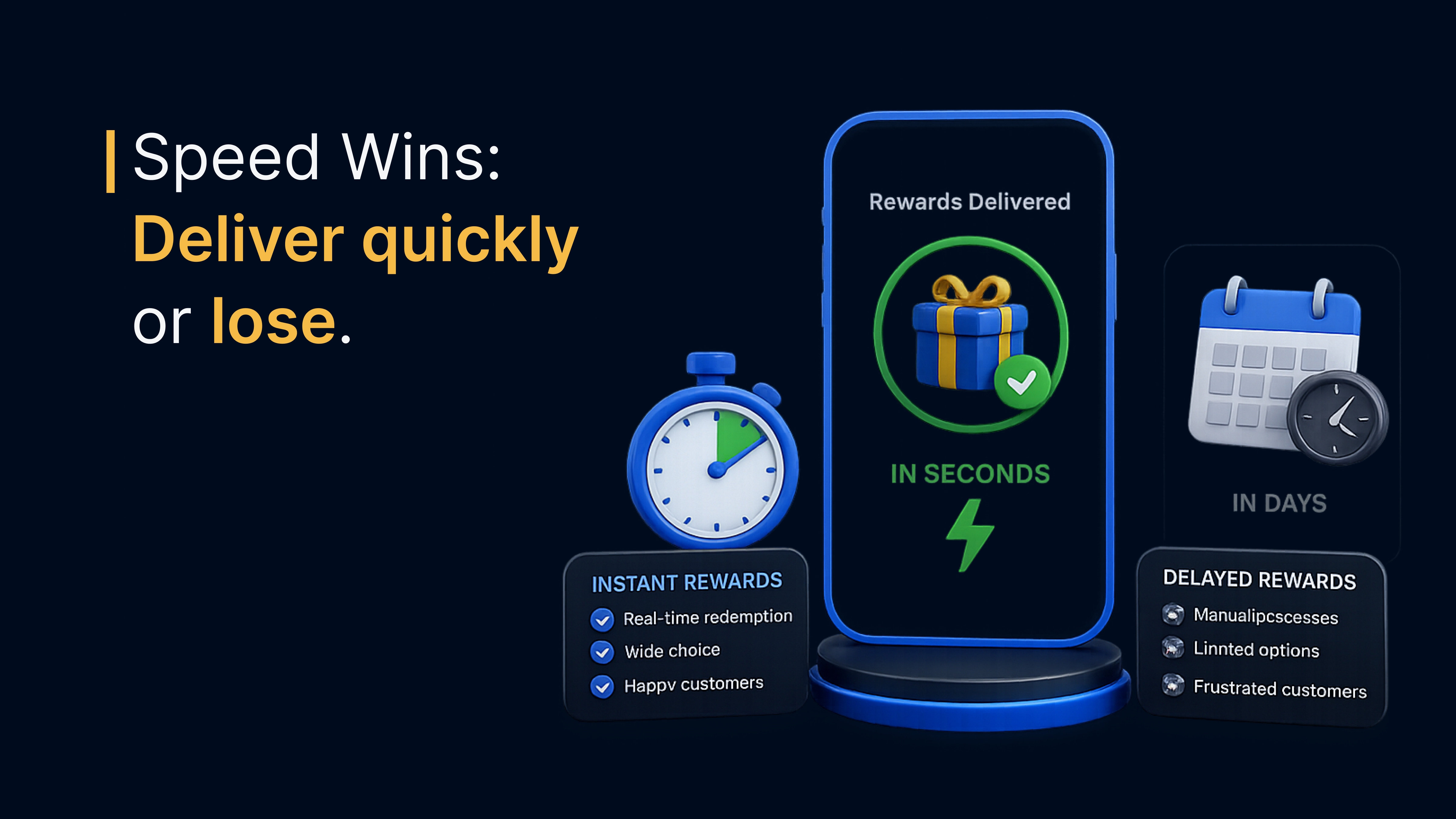
- Multi-day delivery kills the moment. The goodwill from a referral fades fast; a gift that arrives a week later lands flat
- Zero referral-to-conversion visibility. No data connects a specific referral to a specific new account, so the program can't be optimized
See how Plum triggers rewards from your KYC or CRM events
Get a walkthrough of automated, threshold-triggered acquisition and referral rewards.
Book a free 30-minute demoTrusted by 5,000+ companies
Where banks can trigger rewards across the acquisition journey
Four actions inside the account-opening journey convert best when a reward sits behind them:
- First transaction incentives: reward a new customer's first debit card swipe, bill payment, or transfer
- Salary account engagement: reward customers who set up direct salary deposits within 30 days of account opening
- Credit card activation: reward the first card transaction to drive usage before the card goes dormant
- Auto bill payments and subscriptions: reward customers who set up recurring payments for utilities, EMIs, or subscriptions
These four triggers aren't interchangeable. A first transaction reward proves the account works. A salary deposit reward locks in the primary banking relationship. A card activation reward fights the drop-off that happens when a card ships but never gets swiped. An autopay reward turns a single transaction into a recurring one, which is what actually drives long-term account profitability.
Reward value should scale with the behavior's long-term worth, not its difficulty. A one-time bill payment might earn a small reward. A salary deposit, which signals a customer is treating the account as primary, justifies a larger one, because it correlates most closely with retention.
A regional bank running this model treats the first 30 days as its highest-leverage window: reward the debit swipe if it happens by day 7, reward the salary deposit if it's set up by day 20, and treat any account still inactive by day 30 as a re-engagement case, not a lost cause.
The digital account-opening journey from KYC to reward
A reward-linked onboarding flow runs in four steps, from the moment a customer starts an application to the moment a reward lands in their inbox.
| Step | Trigger | What happens |
|---|---|---|
| 1 | Application started | Customer starts the account-opening journey via mobile app or web |
| 2 | KYC submitted | Customer submits ID proof, address verification, or completes video KYC |
| 3 | Verification complete | The bank's KYC or CRM system marks verification complete |
| 4 | Reward triggered | A connected reward system triggers the reward automatically via email or SMS |
The trigger sits on the verification event, not a manual review queue. The moment a CRM or core banking system marks a customer verified, the reward fires without anyone opening a spreadsheet.
How referral rewards turn customers into an acquisition channel
A referral reward program pays both the existing customer and the new signup. For banks, four triggers work best:
- Account opening referrals: reward existing customers when a referred friend opens a savings or salary account
- Credit card referral rewards: pay bonus points, cashback, or a waived annual fee for a successful referral
- Loan and mortgage referral bonuses: offer rate discounts or bonus rewards for referred loan customers
- App adoption referrals: reward customers who refer friends to digital banking, plus a bonus tied to the friend's first transaction
Referral programs also need guardrails a generic marketing referral doesn't. A single-use, time-bound reward link tied to a specific referral prevents the same code from being reused or shared publicly, and an expiry window keeps unclaimed rewards from sitting as open liability on the books.
Sizing matters here too, in a different way than onboarding rewards. A savings account referral and a mortgage referral shouldn't pay the same amount. The reward should track the lifetime value of the product being referred into, not a flat per-referral rate, or the program ends up overpaying for low-value accounts and underpaying for the referrals that matter most.
The referrer-to-redemption flow, step by step
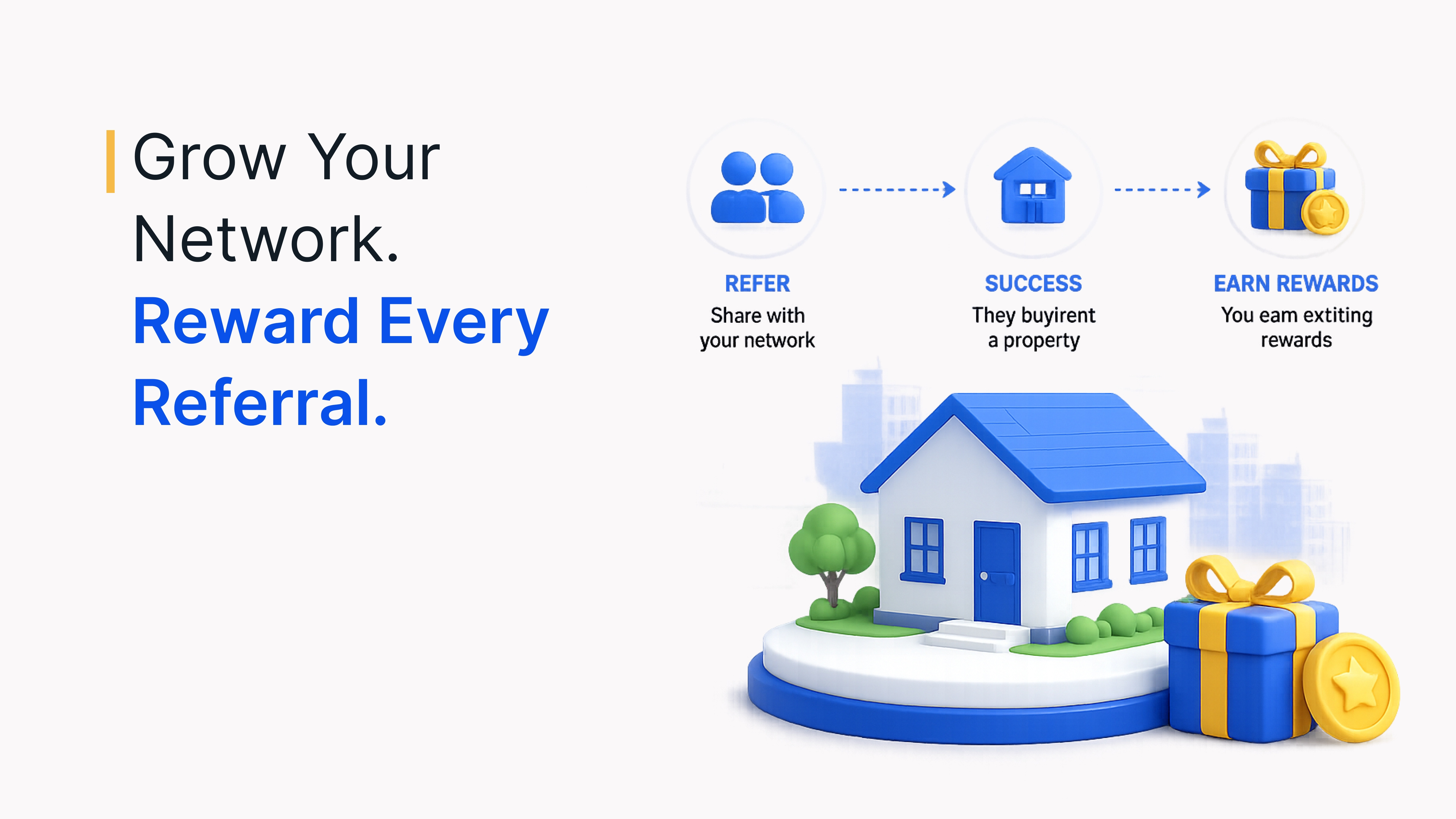
- An existing customer taps "Refer a friend" in the banking app
- The friend receives a personalized invite link
- The friend completes mobile onboarding and signs up
- The friend submits KYC documents and passes verification
- The CRM confirms verification and logs the referrer
- Both the referrer and the new customer receive their reward via email or SMS
How Plum automates acquisition and referral rewards for banks
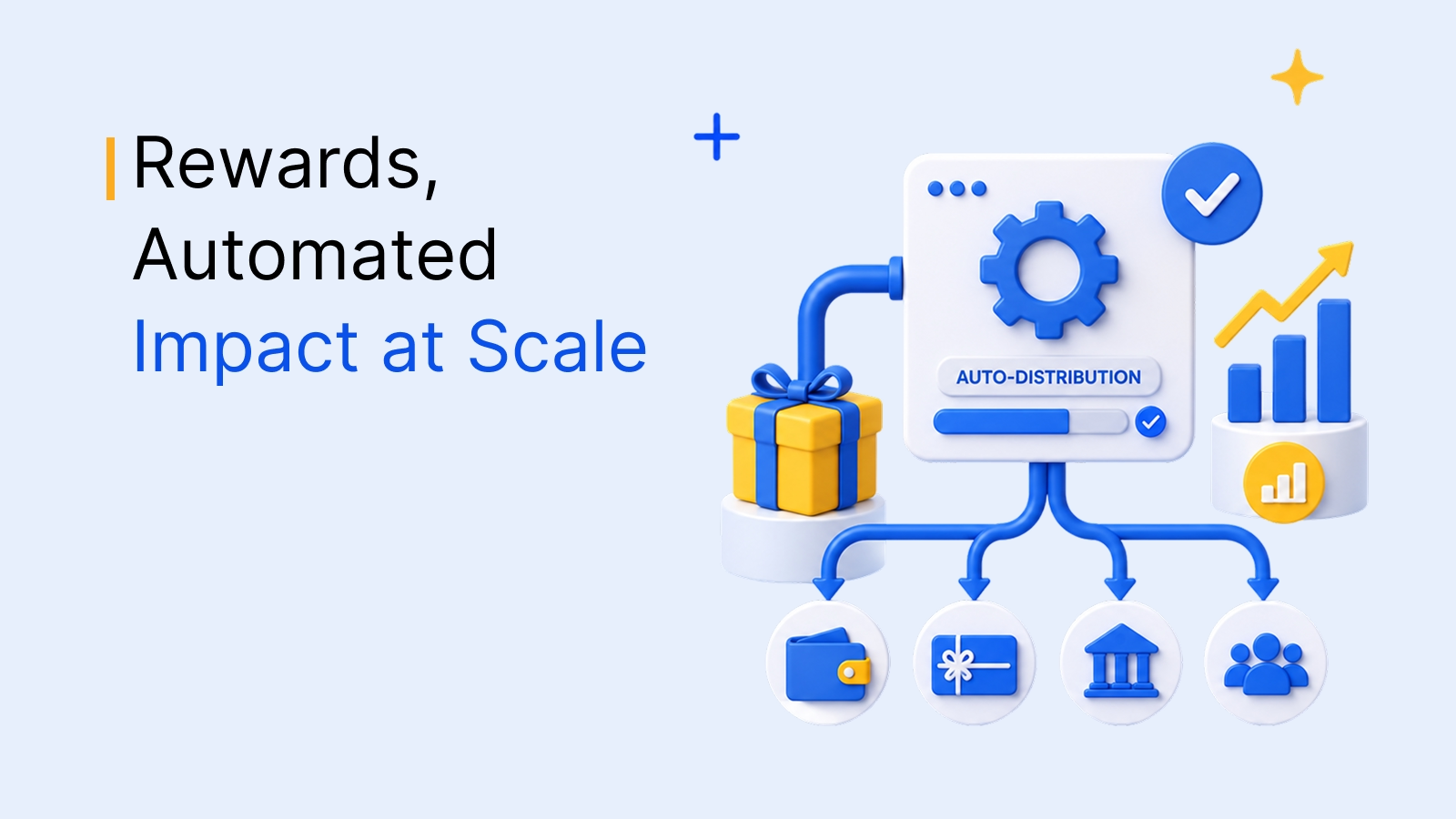
Xoxoday Plum connects to a bank's existing CRM, ERP, or KYC system through an API, so a reward fires the moment a customer completes a qualifying action. No manual approval step required. Setting up a campaign takes three steps:
- Select the reward catalog for the campaign, curated for the target market
- Add recipients, individually or in bulk, via email or SMS
- Turn on automation, which handles delivery and reporting without further input
The bank's team builds the campaign once. It runs on every qualifying customer after that.
How Xero turned referrals into 1,900 new customers in four months
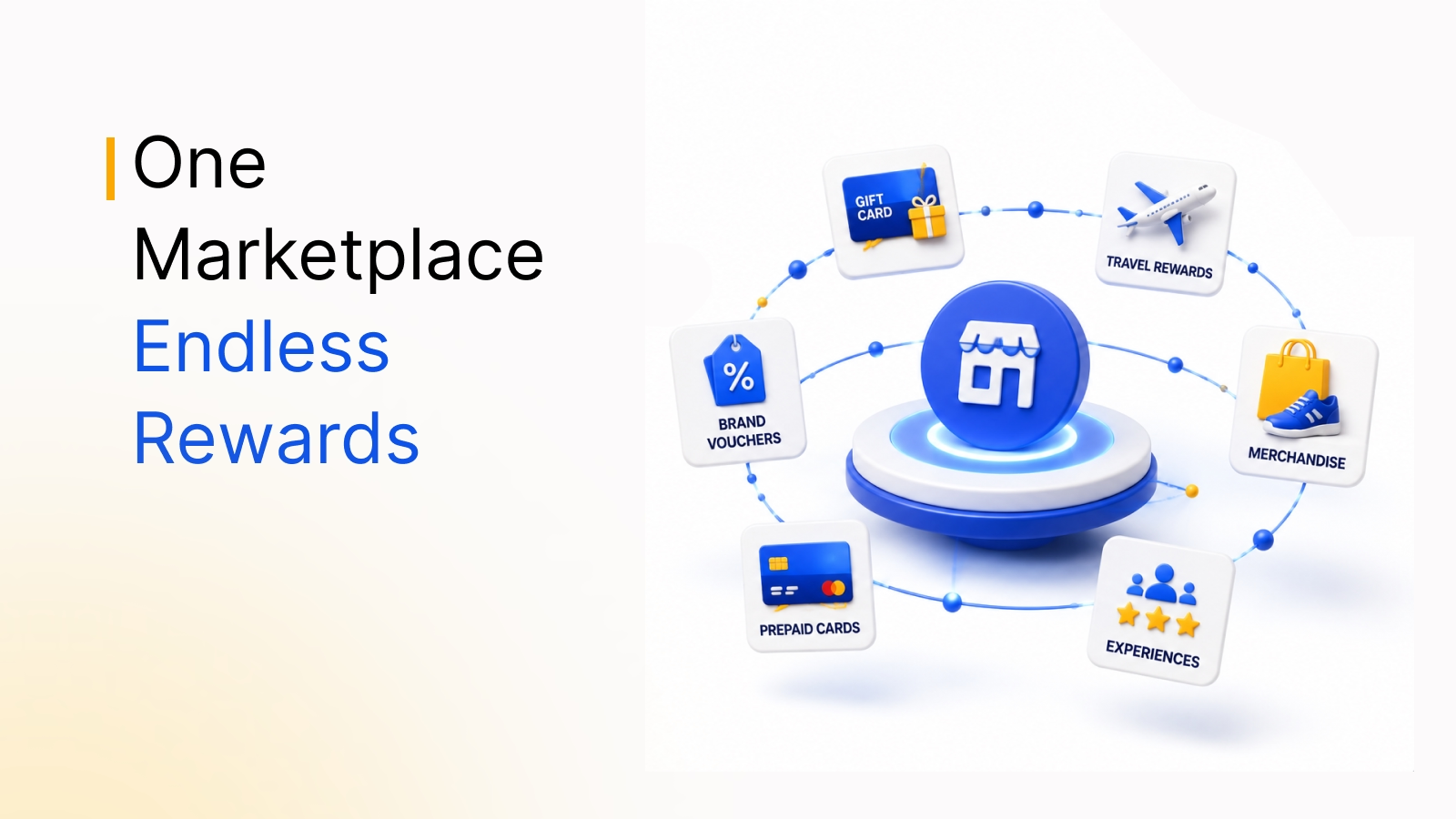
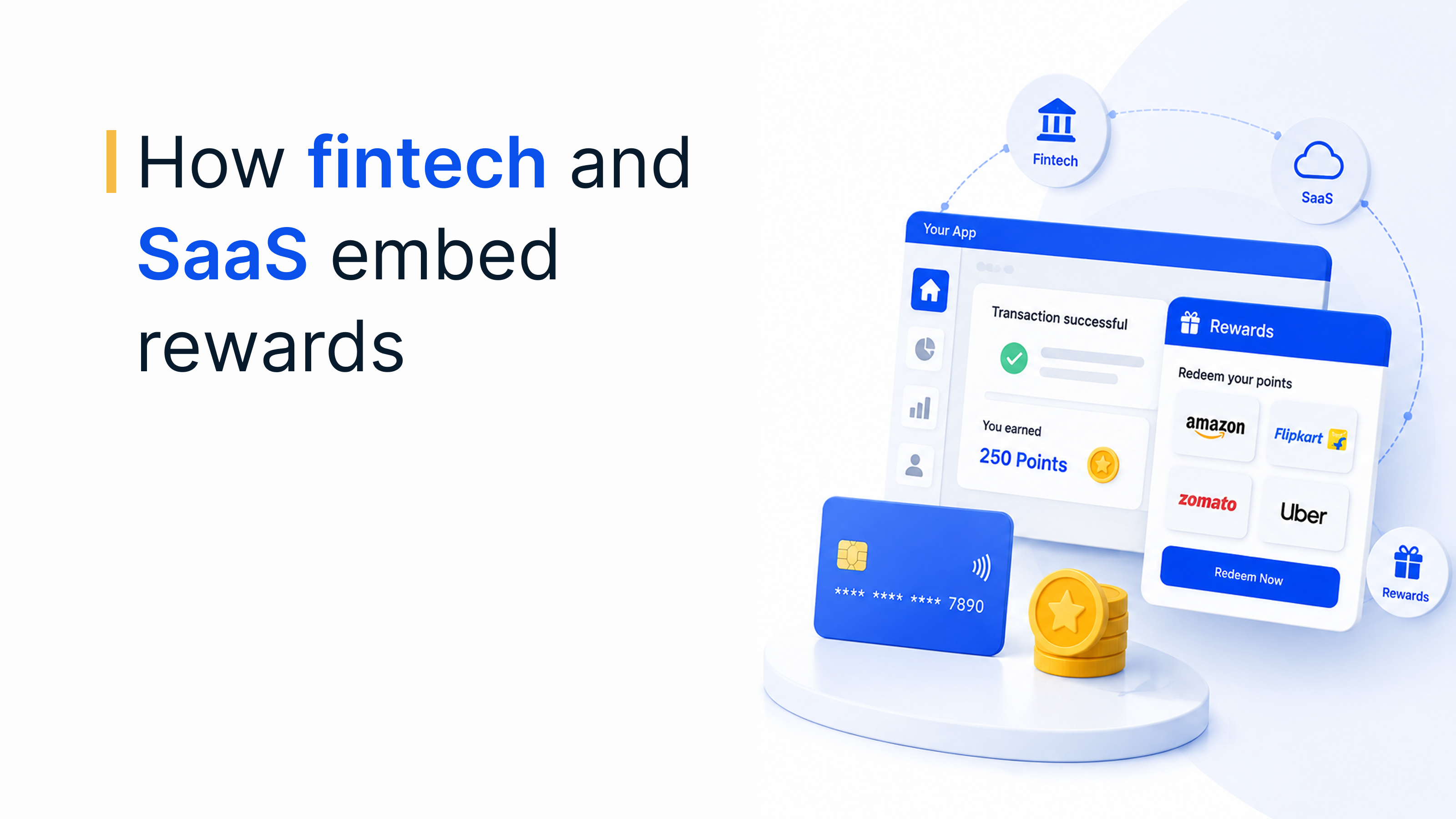
Xero replaced its physical-gift referral program with Plum's REST API. A qualifying referral now triggers a unique reward link instantly, and the recipient chooses from a locally curated marketplace across three currencies: GBP, AUD, and SGD.
25%
Increase in referral conversion rate
Source: Xero, via Xoxoday
94%
Same-day reward delivery
Source: Xero, via Xoxoday
3
Currencies and markets served from one platform
Source: Xero, via Xoxoday
A bank running the same acquisition-trigger model on onboarding rewards saw the same pattern hold: faster activation, more successful signups, and fewer drop-offs, all from rewarding the actions that predict whether an account gets used.
Why the reward catalog needs to be local, not just digital
Digital delivery solves speed. It doesn't automatically solve relevance. A reward that lands instantly but only offers gift cards from brands in one country still feels like an afterthought to a customer outside that market.
Xero's referral catalog runs across three currencies, GBP, AUD, and SGD, because a UK customer and a Singapore customer don't want the same reward menu. Banks operating across multiple markets face the same requirement: one campaign, but a catalog that adjusts to where the recipient actually is. This matters more for banks than for most industries. A reward that requires a customer to convert currency, use a card that doesn't work locally, or wait for a physical voucher to clear customs erodes the goodwill the reward was supposed to create in the first place.
The reporting layer banks need to track acquisition ROI
An acquisition rewards program only proves its value if a bank can see redemption volume, customer behavior, and order status in one place, not scattered across email confirmations and spreadsheet exports.
| Metric | What it measures | Why it matters for ROI |
|---|---|---|
| Redemption reports | Total value and mix of rewards redeemed | Shows real program cost against new-account value |
| Customer insights | New vs. returning, average order value, lifetime value | Separates one-time signups from customers building a relationship |
| Redemption category mix | Which reward categories customers actually choose | Informs catalog curation so rewards stay relevant |
| Order status reporting | Orders created, fulfilled, pending, returned | Flags fulfillment problems before they become support tickets |
The reporting sits inside the same platform issuing the rewards, using the same API and integration layer that triggers them. A growth team sees which campaign drove which outcome without pulling data from three systems.
What it takes to launch an acquisition rewards program without a big engineering lift
Most banks assume a rewards layer means a multi-quarter integration project. In practice, the lift is smaller than the compliance review that follows it.
- The API connects to an existing KYC, CRM, or core banking system. There's no new database to stand up or maintain
- Reward catalogs and campaign rules get configured in an admin console, not shipped as code, so marketing or growth teams can adjust them without engineering tickets
- A sandbox environment lets a bank test the full trigger-to-redemption flow, from KYC event to reward delivery, before anything goes live
- Most rollouts start on one product line, typically savings account opening, before extending to credit card activation and referrals once the first campaign proves out
That sequencing matters more than the technology. A bank that tries to launch onboarding rewards, referral rewards, and card activation rewards in the same sprint usually ships none of them well.
Your next move on acquisition rewards
The banks getting real return from rewards aren't running a generic points program bolted onto marketing. They're rewarding the four or five actions that predict whether a new account becomes a real customer, then building a referral loop on top that pays for itself in lower acquisition cost.