Key Takeaways
A generic gift tells a C-suite buyer no one researched them, and they notice immediately.
Timing decides whether a gift reads as gratitude or pressure, not the price tag.
The real bottleneck in executive gifting is operational scale, not creative ideas.
Most ABM gifting campaigns get one thing backward. They optimize for the moment the gift arrives, not the moment the recipient decides what it means.
A VP of marketing at a 400-person SaaS company can spend three weeks building an account list, briefing sales on messaging, and still lose the CFO's attention in four seconds, the time it takes to glance at a branded tumbler and toss it in a drawer. The gift landed. The relationship didn't move an inch.
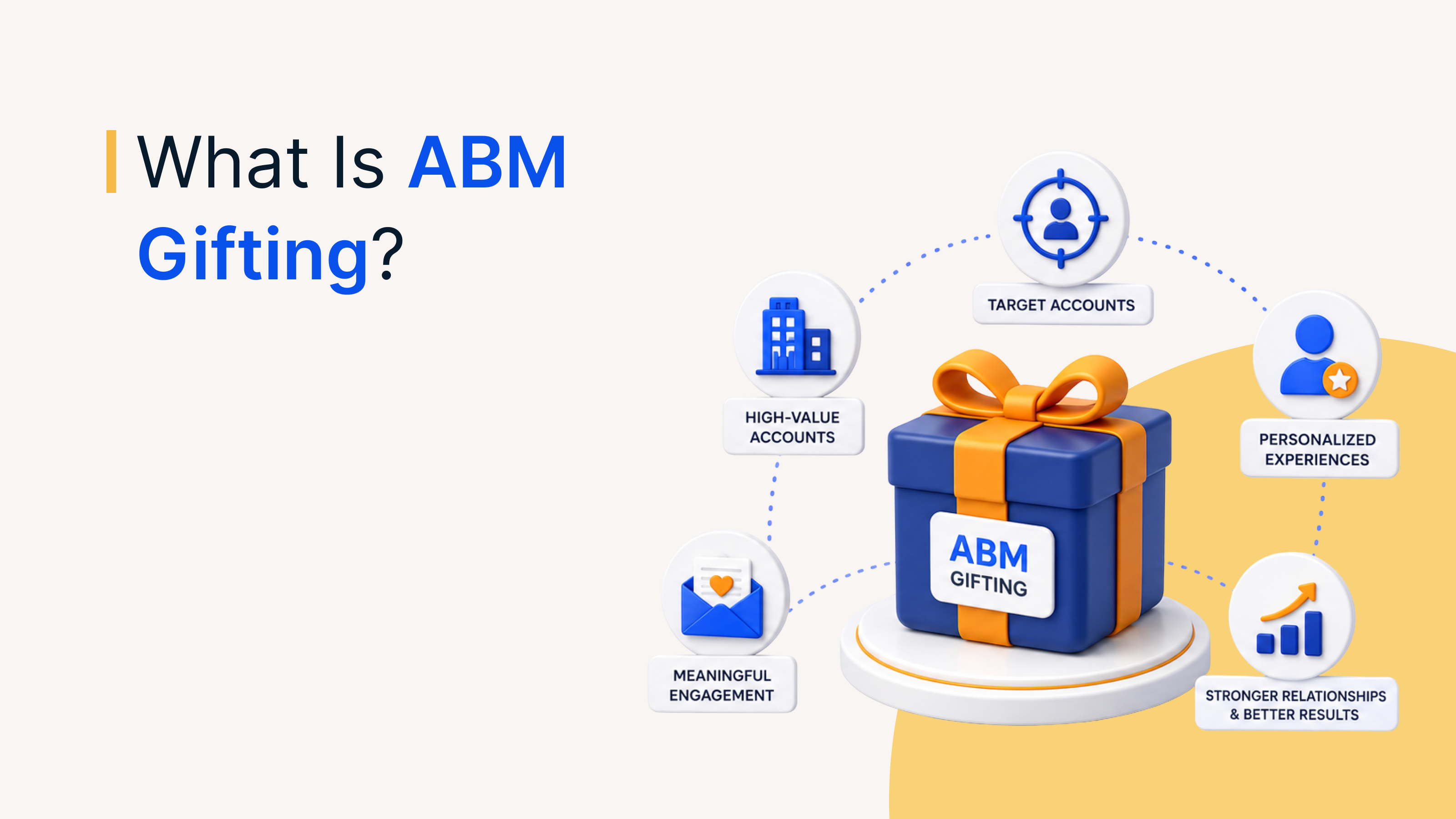
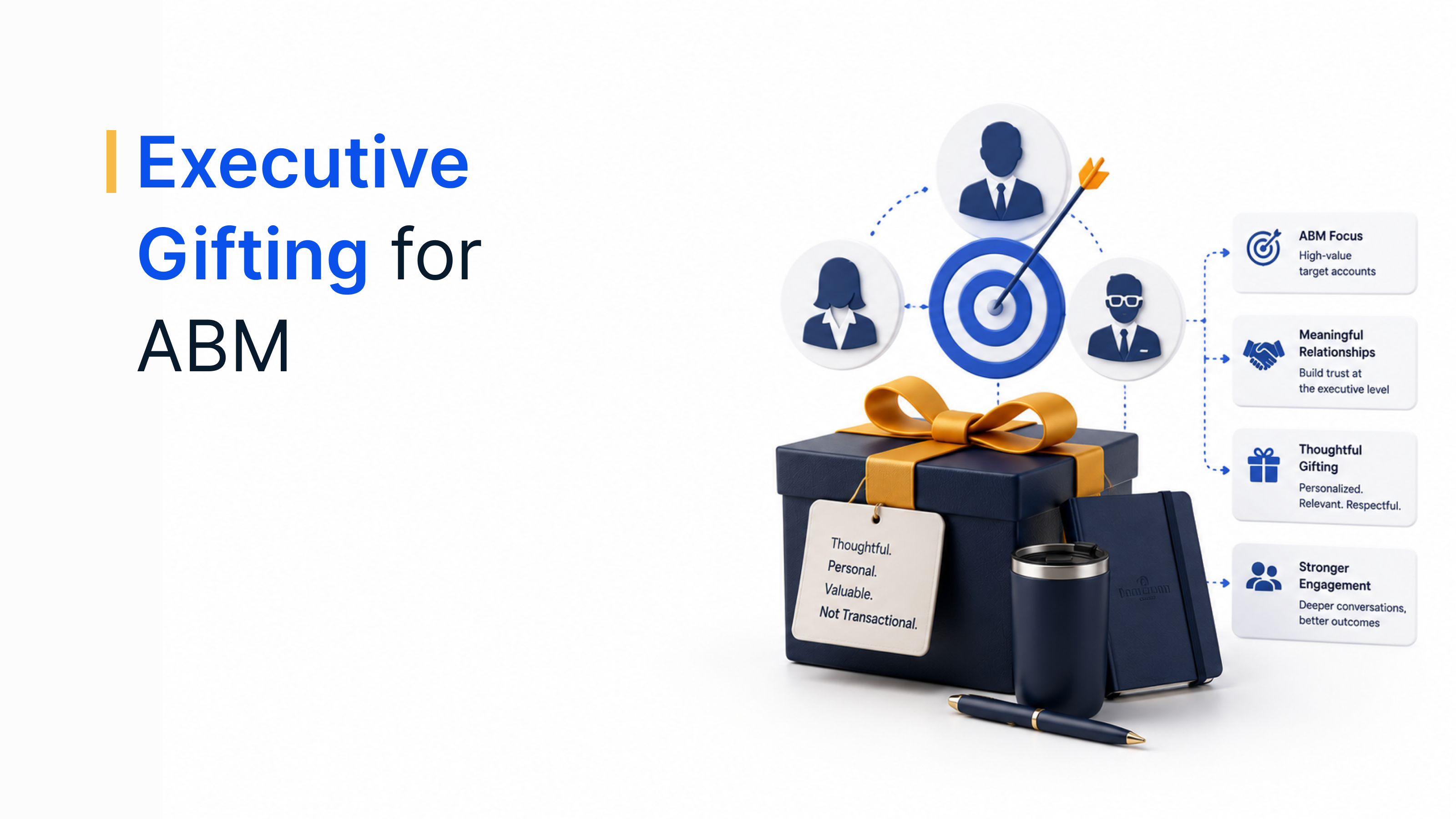
This is the gap between executive gifting done as a checkbox and done as a signal. Growth marketers and marketing ops teams running ABM at scale keep hitting the same wall: gifts that work for a mid-level buyer read as noise to a C-suite decision maker, and no one on the team has a clear line for where thoughtful ends and transactional begins.
Why C-Suite Engagement Is the Hardest ABM Challenge
C-suite buyers are not harder to reach because they're busier. They're harder to reach because they've been pitched to for twenty years and can spot a sales tactic wearing a bow.
75%
of businesses
say ABM has boosted their ability to engage buyers earlier in the funnel
Source: Forrester (via TheCMO).
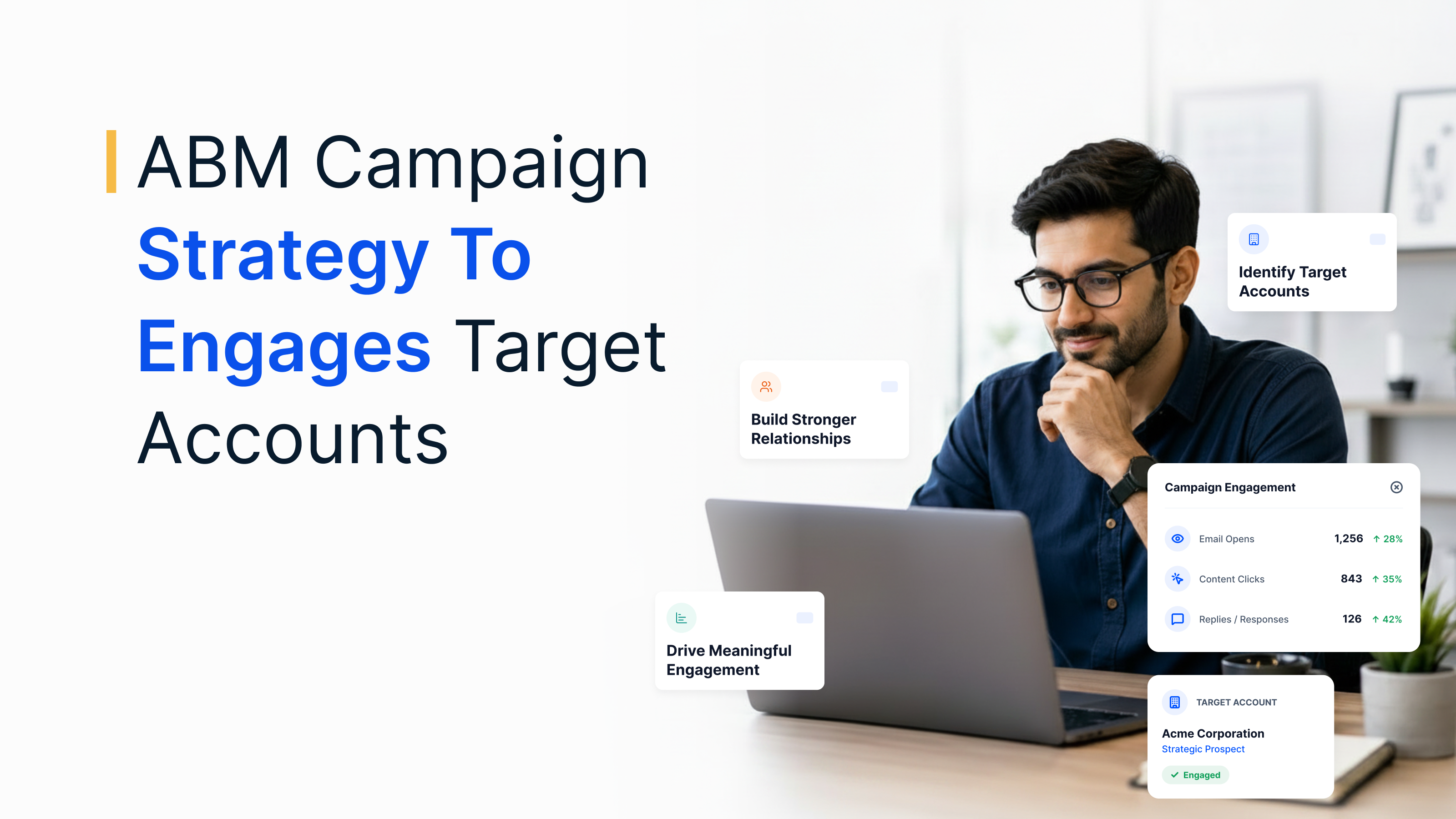
That earlier engagement matters most at the executive level, where the buying committee forms opinions long before a demo gets booked. Miss that window with a generic gesture, and there may not be a second one. The same sequencing discipline behind building an ABM campaign strategy that actually engages target accounts applies here: the timing of the touch matters as much as the account list itself.
Consider what happens when a Fortune 500 CMO receives the same holiday gift her procurement manager gets. She doesn't feel targeted. She feels processed.
The Difference Between Gifting and Bribing, Where the Line Is
Every marketing ops lead has asked this question at least once: is this a relationship gesture, or does it look like we're buying influence? Timing decides most of it. The line is not about dollar amount alone.
A gift sent before a contract negotiation, tied explicitly to a decision, reads as pressure. A gift sent after a helpful conversation, unrelated to an open deal, reads as gratitude.
Most gift and entertainment policies draw this distinction with three tests: value caps, timing restrictions during active procurement, and disclosure requirements. Financial services and pharma enforce this hardest, but the underlying logic applies to any B2B seller pursuing a C-suite buyer. Send during negotiation, and even a modest gift can trigger a compliance flag. Send it as a genuine thank-you weeks later, and the same gift builds trust instead of suspicion.
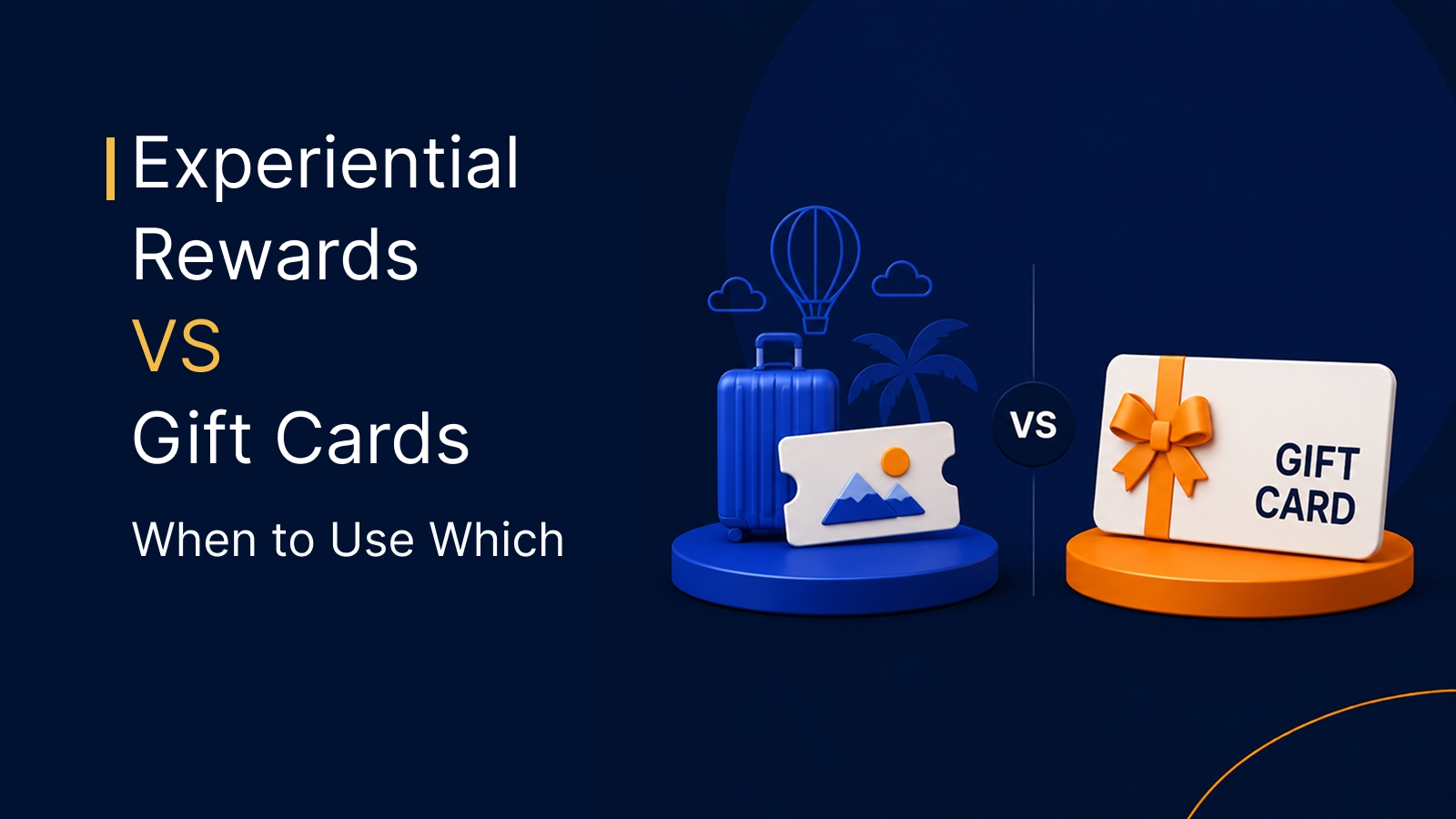
What Senior Executives Actually Value (Hint: Not Another Gift Card)
Executives receive gifts constantly. Most of them are forgettable because they signal effort, not attention.
A generic gift card reward tells the recipient that no one thought about who they are, just that a budget line needed spending. Compare that to a curated item chosen because it matches something specific about the person: their industry, their public comments on a podcast, a cause they've publicly supported.
Three things consistently land with senior buyers:
- Relevance to their role, not their title. A CFO cares about different signals than a CMO, even at the same company.
- Quality over quantity. One well-chosen item beats a branded gift basket every time.
- Restraint on branding. Heavy logo placement reads as promotional, not personal.
None of these tactics require a bigger budget. They require better research before the gift gets picked.
See how Plum personalizes gifting for every account tier
Trigger executive-grade gifting from the CRM signals that already tell you when an account is worth acknowledging.
See Plum in actionTrusted by 5,000+ companies
Gift Value, Timing, and Context: The Three Variables That Matter
Three variables decide whether an executive gift builds a relationship or gets discarded. Get any one wrong, and the other two don't matter.
Value has to match the relationship stage, not the account's contract size. Early-stage prospects warrant modest gestures. Long-tenured partners can support more.
Timing determines how the gift gets read. A gift after a helpful call feels earned. A gift right before a renewal decision feels engineered.
Context is what turns a purchase into a message. Context is what makes it personal. Strip it out, and even an expensive item becomes generic.
97%
Higher ROI
from account-based programs vs. other marketing strategies, when touchpoints are tracked to account engagement
Source: Forrester (via TechFunnel).
| Tier | Account value | Gift investment | Personalization depth | Timing |
|---|---|---|---|---|
| Tier 1 | $500K+ ACV | $150–350 curated item or experience | Fully bespoke, researched individually | Post-milestone, unrelated to active deals |
| Tier 2 | $100K–500K ACV | $75–150 curated item | Role-based selection from a curated set | After a helpful interaction |
| Tier 3 | Under $100K ACV | $25–75 item or digital gift | Category-based, batch-personalized | Standard account touchpoints |
Measurement enters the picture here, too.
14%
Higher pipeline conversion
when gifting touchpoints are tracked back to account engagement, not treated as a one-off gesture
Source: Gartner (via TheCMO).
Teams that can't answer "did this move the account forward" are guessing.
Format Options: Experience Gifts, Donations, Curated Premium Items
Not every executive wants a physical object sitting on their desk. Format matters just as much. The item alone isn't the whole message.
Experience gifts. A private dining credit, a wellness session, a curated travel add-on, work well for executives who already have everything material they need. They signal thought without adding clutter.
Charitable donations. Made in the recipient's name, these work for executives who've publicly aligned with a cause. This format also sidesteps most gift-acceptance policies, since many companies exempt charitable gestures from standard gift caps.
Curated premium items. A well-made desk accessory, a piece from a brand the recipient already respects, remain the safest default when you don't know enough about the person yet to go bolder.
The right format depends on how much you actually know about the recipient, which is exactly the constraint most ABM teams run into next.
Personalizing at the Executive Level: How to Research Preferences at Scale
Personalization sounds simple until you're doing it for forty accounts instead of four. The bottleneck is rarely creativity. It's operational: researching forty different executives, sourcing forty different items, and shipping forty individually tracked packages without the process collapsing into batch orders.
56%
of marketers
say personalized content is key to a successful ABM strategy
Source: Forrester (via Madison Logic).
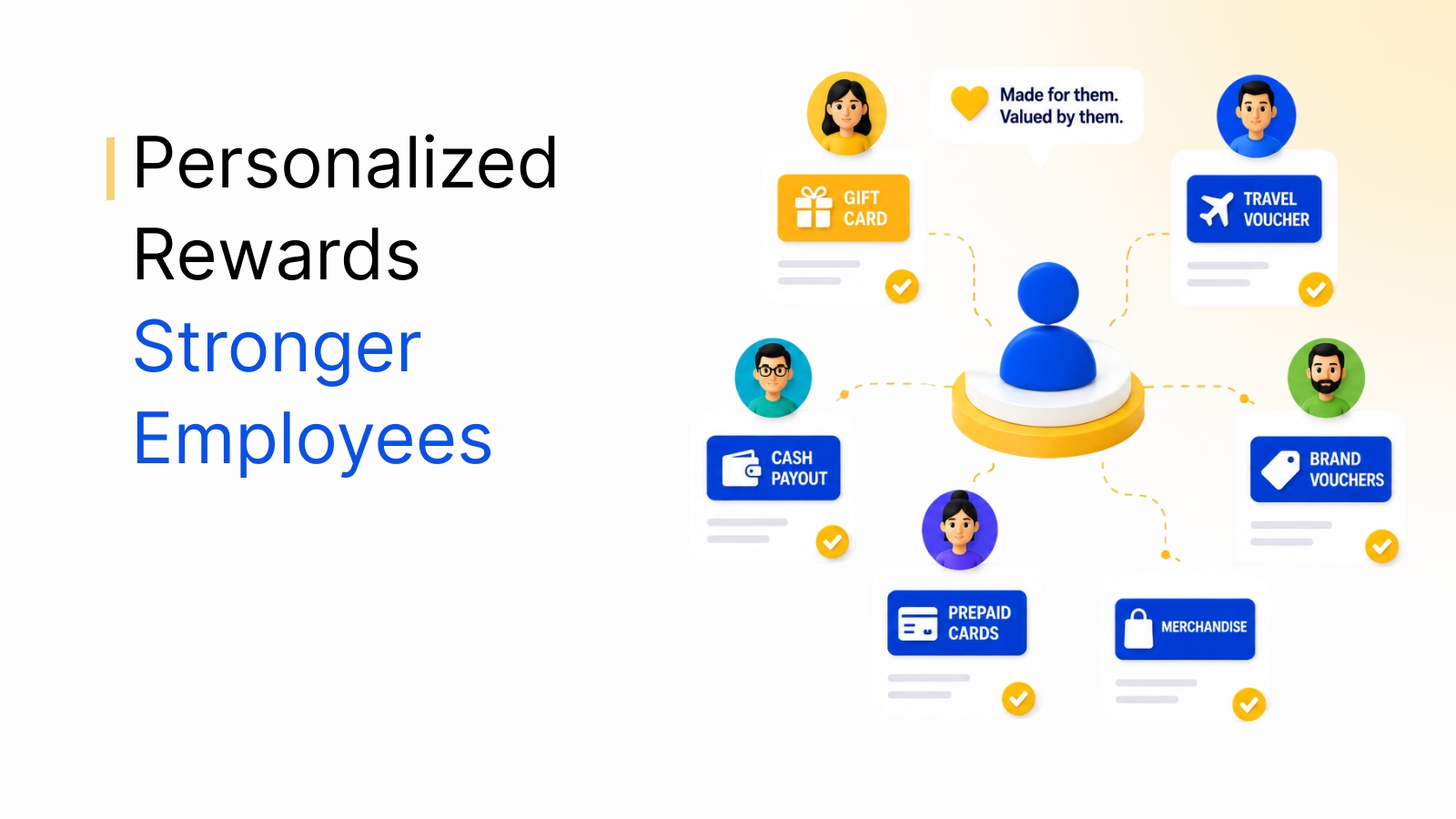
Gifting is content, in the sense that it communicates something about how well you understand the recipient. The teams that scale this well don't personalize from scratch each time. They build a framework: a short set of signals (public role changes, recent company news, stated interests) that maps to a curated set of gift options, so personalization becomes a selection process, not a research project every single time.
An ABM gifting platform built for this removes the manual research-and-fulfillment cycle that breaks most in-house attempts once the account list grows past a dozen names.
Corporate Gifting Policy and Compliance: Staying on the Right Side
Compliance isn't the department that says no. It's the function that keeps a good gifting program from becoming a liability.
Most enterprise gift policies share a common structure: a value cap per recipient per year, a prohibition on cash or cash-equivalents, and a disclosure requirement when a gift crosses a threshold. Public sector and regulated industries, finance, pharma, government-adjacent buyers, enforce these far more strictly than a typical SaaS buyer would.
Before sending anything to a named executive, three questions settle most edge cases:
- Does the recipient's company have a published gift-acceptance policy, and does this gift fall within it?
- Is there an active procurement or negotiation underway that would make timing look coordinated?
- Would this gift need to be disclosed if the recipient's compliance team asked about it?
If any answer creates hesitation, the safer move is a smaller gesture or a documented, disclosed one, not a bigger gift sent quietly.
How Plum Approaches Executive-Grade Gifting at Scale
Xoxoday Plum solves the exact bottleneck most teams hit once ABM gifting moves past a handful of accounts: matching real personalization to real operational scale.
Plum's catalog spans 10M+ reward options across 150+ countries, which means the same platform that handles a $25 thank-you gift for a mid-market account also handles a curated premium item for a Fortune 500 CFO, without switching vendors or tools. Every gift ships with individual tracking and instant digital delivery where physical shipping isn't the right format.
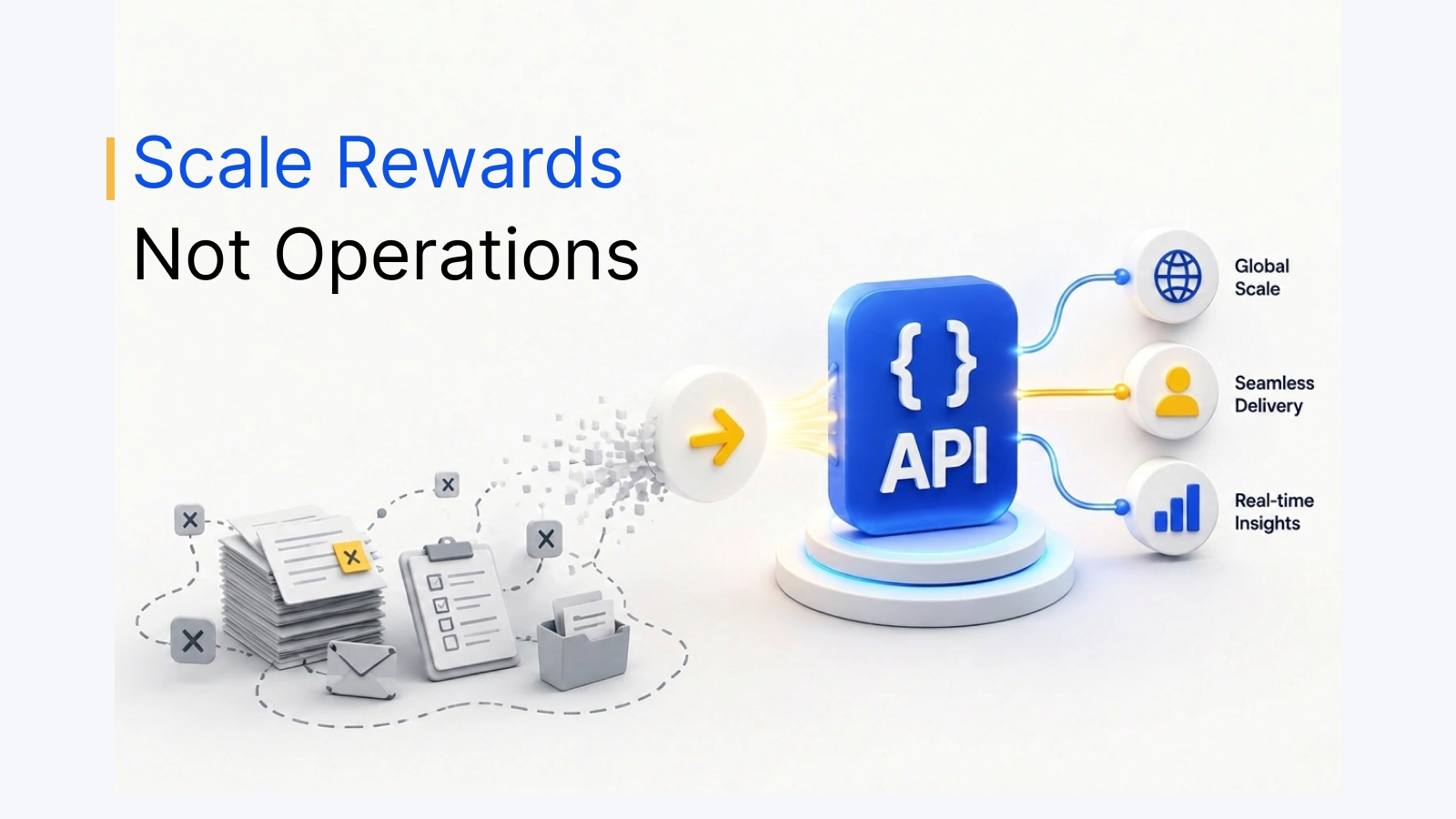
The API-first architecture means marketing ops can trigger personalized gifting directly from the CRM signals that already tell the team when an account hits a milestone worth acknowledging. A gifting program that triggers off real CRM signals scales. One that runs on manual research becomes a spreadsheet nobody maintains past the first quarter.
Getting Executive Gifting Right, One Account at a Time
The teams that get executive gifting right treat it as a signal, not a spend line. Every gift is a signal. It either sharpens how the recipient sees the relationship, or blurs it into noise.
Start smaller than feels comfortable. Pick five accounts, research them properly, and measure what happens to engagement over the next sixty days before scaling the list. The discipline of doing it well for five accounts is what makes it repeatable for fifty.