A procurement manager, an HR lead, and a growth marketer can all open the same corporate gifting platform's homepage and see three different products.
One reads catalog breadth. Another reads compliance coverage. The third reads CRM integration depth. Most buyer's guides rank vendors on a single scorecard anyway, as if all three were shopping for the same thing.
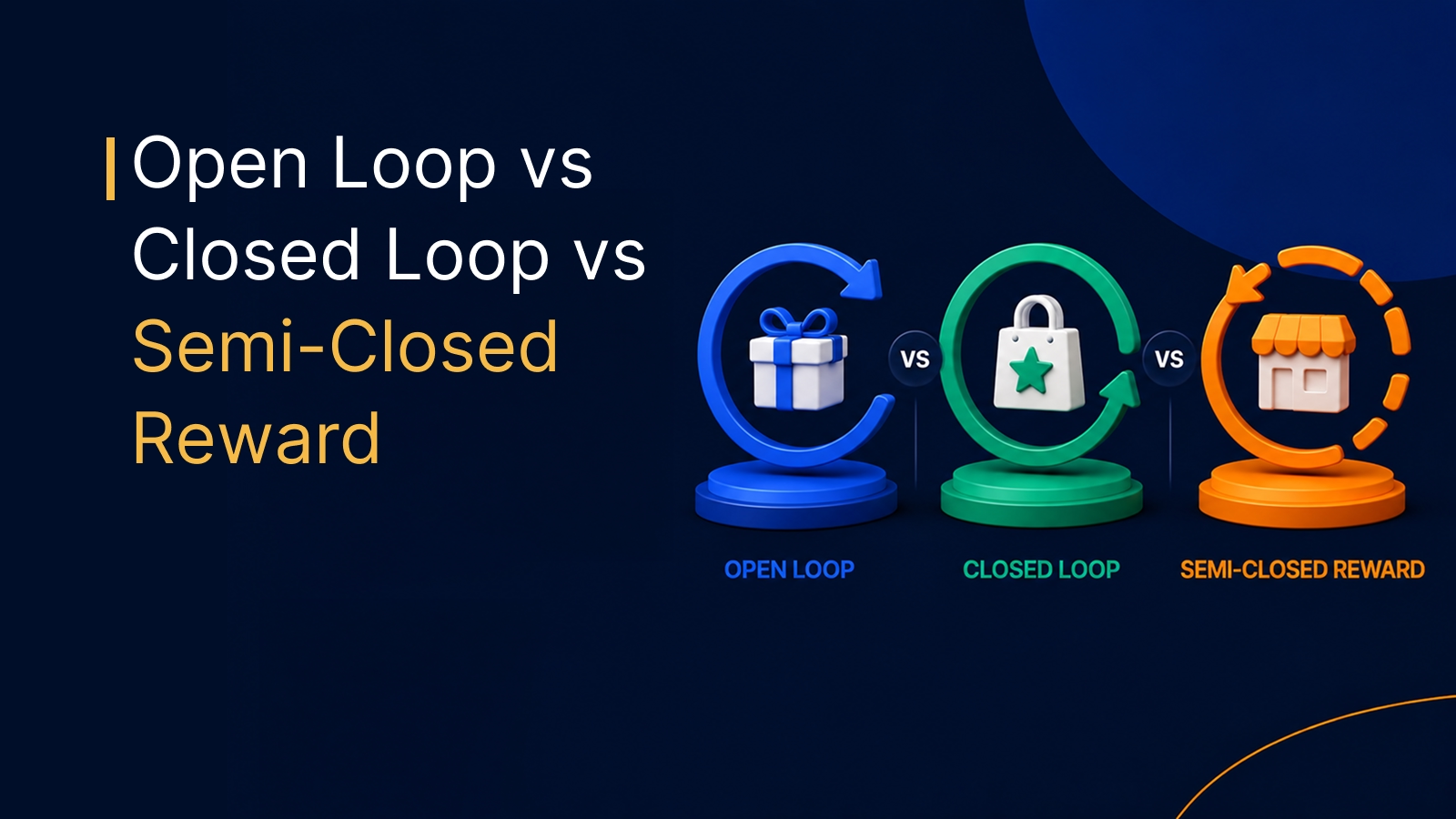
The ten platforms below get organized by what each buyer role actually needs to see, not a single features list pulled from a homepage.
How to actually evaluate a corporate gifting platform
Gartner's B2B Buying Report puts the average number of solution providers a buying team reviews at 6 to 10. Forrester's 2025 B2B Buyer Experience Survey found buyers who define their requirements before that search report 40% higher satisfaction with the final choice. Most gifting-platform searches skip that step and start with the vendor list instead.
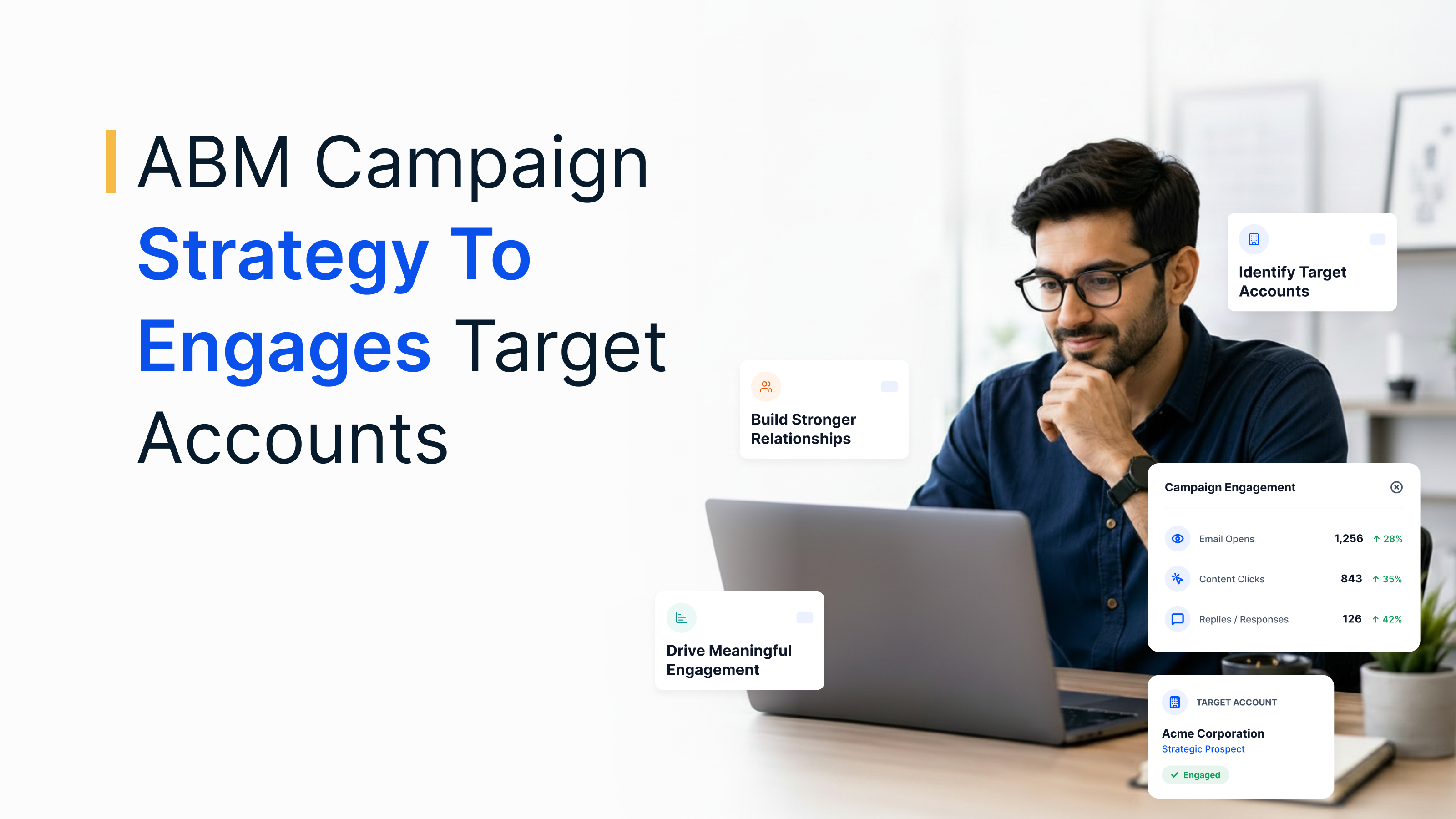
A procurement manager weighs pricing transparency and compliance coverage first. HR wants recipient choice and gifts that trigger themselves off an anniversary date, no export required. A growth marketer wants a straight line from a gift to a closed deal in the CRM.
The right platform for one role is often the wrong one for another, even inside the same company.
Run gifting, incentives, and payouts from one platform
See how Plum covers the procurement, HR, and growth-marketing criteria from a single catalog and API.
Book a free 30-min demoTrusted by 5,000+ companies
The 10 corporate gifting platforms compared
Ranked on how clearly each vendor supports the criteria above, drawn from each platform's own public product pages. For a pure ops-and-country-count ranking of the same category, see the 10 best corporate gifting platforms.
1. Xoxoday Plum
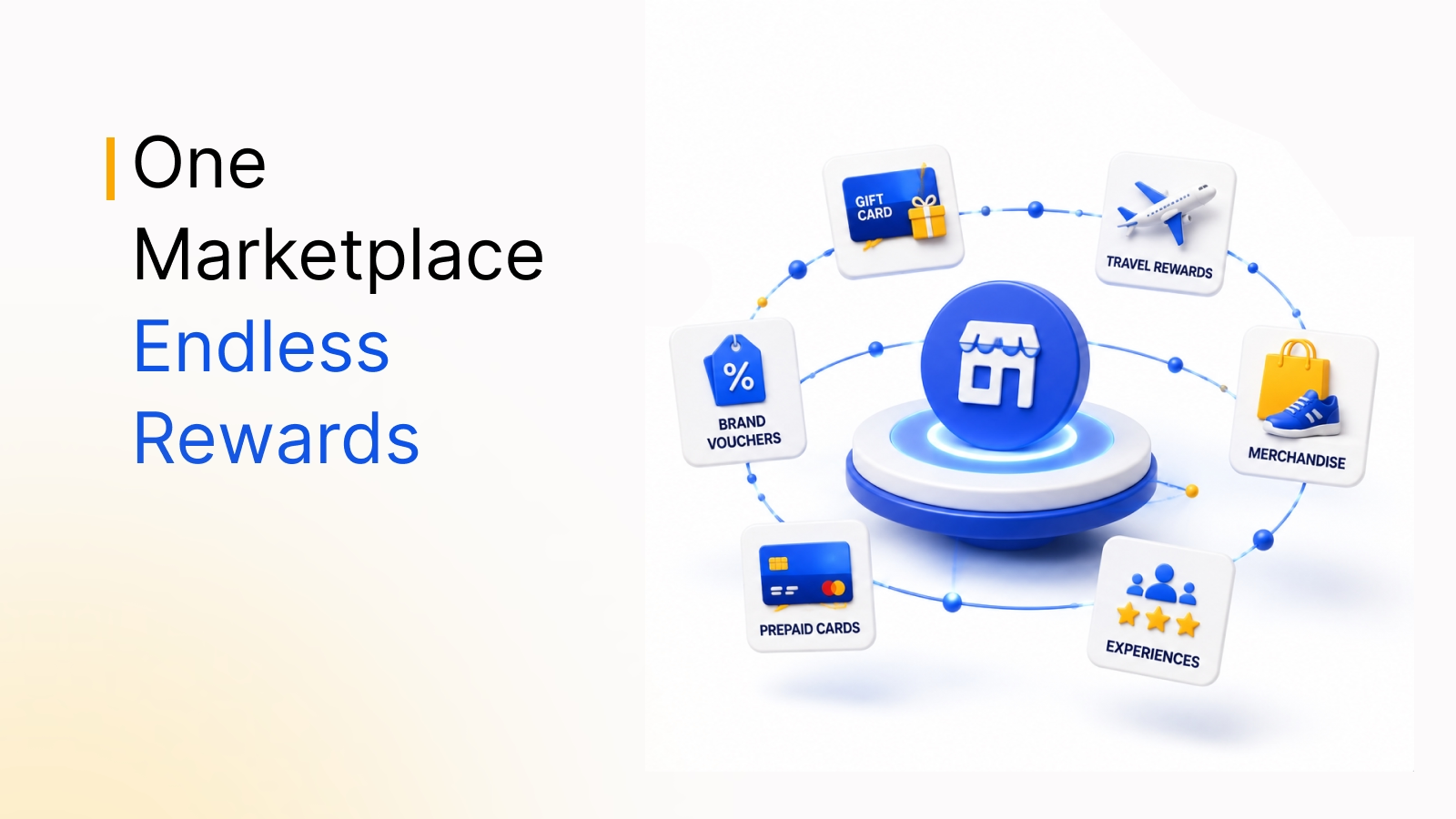
Best for teams that need one vendor across gifting, ABM, and payouts. Plum runs a 10M+ option catalog with instant delivery in 150+ countries and 50+ local currencies through a single API, so procurement isn't approving three separate contracts for three reward use cases. A CRM stage change, an HR event, or a completed survey all trigger the same reward action, so the send shows up in the same revenue-attribution or HR reporting view as everything else the team runs.
2. Sendoso
Best for sales and ABM teams wanting fulfillment owned end to end. Sendoso handles warehousing and shipping in-house and integrates directly into the CRM tools a sales team already runs pipeline through. Owning the warehouse network end to end is how it keeps custom swag and branded merchandise consistent at volume, without a third-party logistics handoff.
3. Goody
Best for HR and marketing teams where bounced addresses are the recurring failure point. Recipients claim a gift through a link and supply their own shipping details, which removes the most common reason a bulk send stalls. That claim-link model is why it's become a default choice for sales gifting specifically, where a rep often doesn't have a prospect's address at the moment they want to send something.
4. Snappy
Best for HR teams running recognition and milestone programs specifically. Gifts trigger off events like work anniversaries, with an HR-first lean in a category where most competitors default to sales use cases. Triggering directly off an HRIS event means a milestone gift ships without an admin manually tracking dates in a spreadsheet.
5. Loop & Tie
Best for brands that want a sustainability story attached to the send. Recipients pick from curated collections sourced from small businesses, with shipping tied to environmental initiatives. Sourcing from independent makers also gives a gift a story worth mentioning in the note that comes with it, something a mass-market catalog item rarely offers.
6. Thnks
Best for fast, low-value relationship touches. A coffee or a bottle of wine sent by text or email, with no account required, built for frequency over catalog depth. That low-friction, no-account model suits a rep who wants to send a small thank-you the same day, not run a formal gifting campaign.
7. &Open
Best for enterprise teams that want a managed service rather than a self-serve dashboard. &Open handles brand presentation and logistics on the sender's behalf for larger campaigns. That managed model trades self-serve speed for a dedicated program team that has already solved the sourcing and logistics problems a smaller in-house team would be tackling for the first time.
8. Givingli
Best for programs prioritizing recipient flexibility above all else. Digital gift cards can be swapped for cash value across a wide set of brands instead of staying locked to one category. That flexibility removes the "wrong gift card" complaint HR programs usually field, since a recipient who doesn't shop at a given brand can convert it instead of letting it sit unused.
9. EvaBot
Best for personalization-led programs. An AI chat interface asks recipients about preferences directly instead of relying on a static filter list. That conversational approach solves the same mismatched-gift problem recipient-choice catalogs address, but through a guided Q&A instead of an open catalog browse.
10. Giftsenda
Best for budget-conscious programs. Senders are only charged once a gift is claimed, cutting spend on sends nobody redeems. Pay-on-claim pricing shifts the financial risk of a low-response campaign away from the sender, which matters most for a first-time program still proving out response rates.
Comparison matrix: the criteria that actually separate these platforms
Ten platforms don't fail on the same criterion.
| Evaluation criterion | Xoxoday Plum | ABM-focused tools (e.g. Sendoso) | Recipient-choice tools (e.g. Goody, Snappy) | What good looks like |
|---|---|---|---|---|
| Compliance & sanctions screening | Built into every send across 150+ countries | Often an add-on | Rarely a core feature | Automatic, not a manual review step |
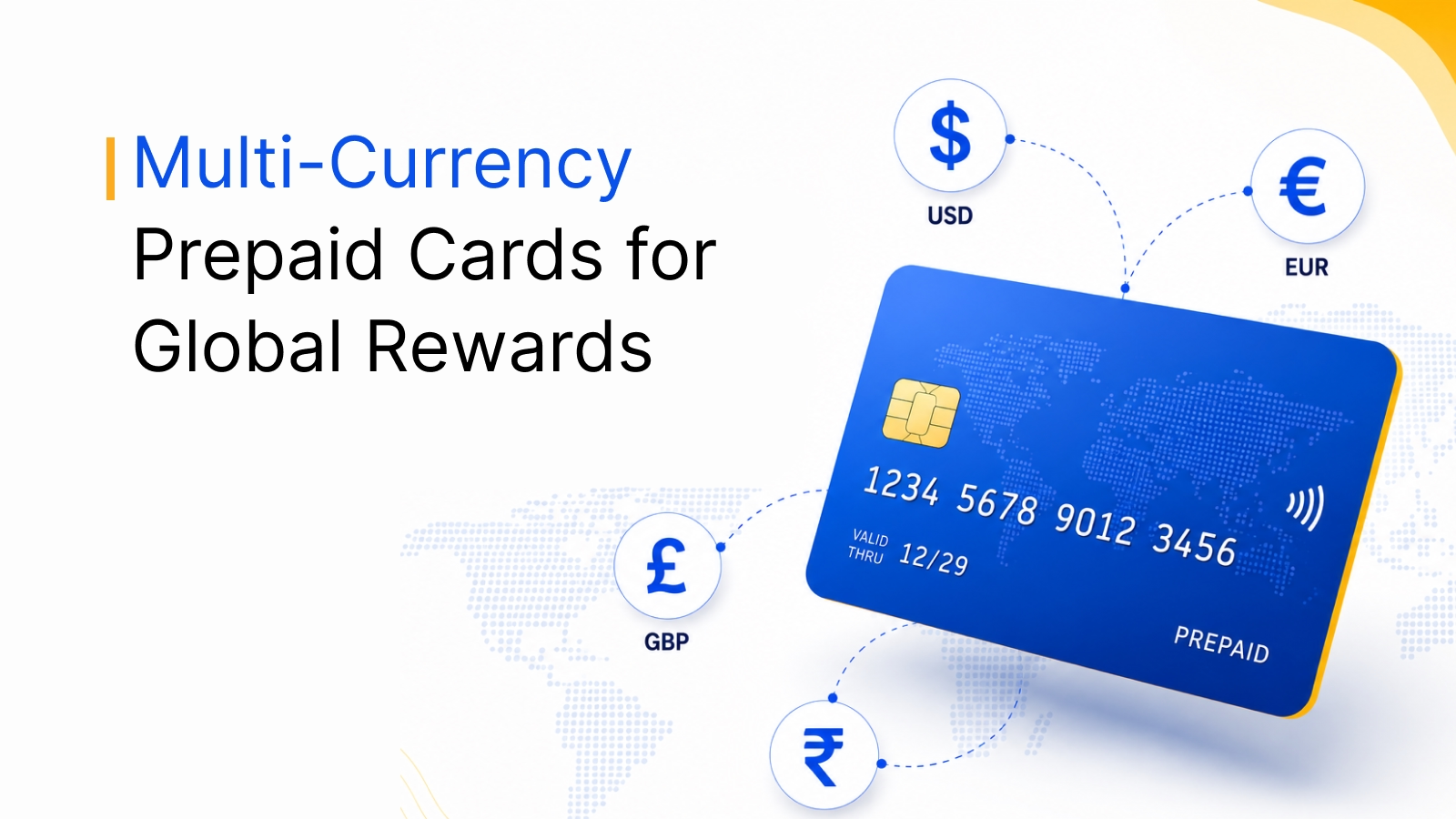
| Local currency support | 50+ currencies, no conversion fee passed to recipient | Limited to major currencies | Limited to major currencies | Recipient never eats a conversion fee |
| API / CRM / HRIS integration | Native API, triggers off any connected event | Deep CRM integration, sales-focused | Lighter integration, event-based triggers | Gift fires automatically, no export step |
| Catalog breadth | 10M+ options: gift cards, prepaid cards, experiences | Curated catalog, sales-oriented | Curated catalog, recognition-oriented | Options span more than one use case |
| Pricing transparency | Published starting tiers | Quote-based | Mixed | Real numbers before a sales call |
Why compliance and currency support decide more deals than catalog size
McKinsey's 2025 Global Payments Report frames it plainly: as cross-border regulation keeps diverging by country, the platforms that scale are the ones that codify local compliance into their infrastructure rather than handling it case by case. It never shows up on a homepage. A gifting platform that can't do that pushes the work back onto the buyer's own ops or legal team, one new country at a time.
A compliance gap like that never shows up on a feature list. A platform with a wide catalog but thin compliance coverage looks identical to one that has both, right up until a send to a sanctioned region or an unsupported currency gets flagged after the fact.
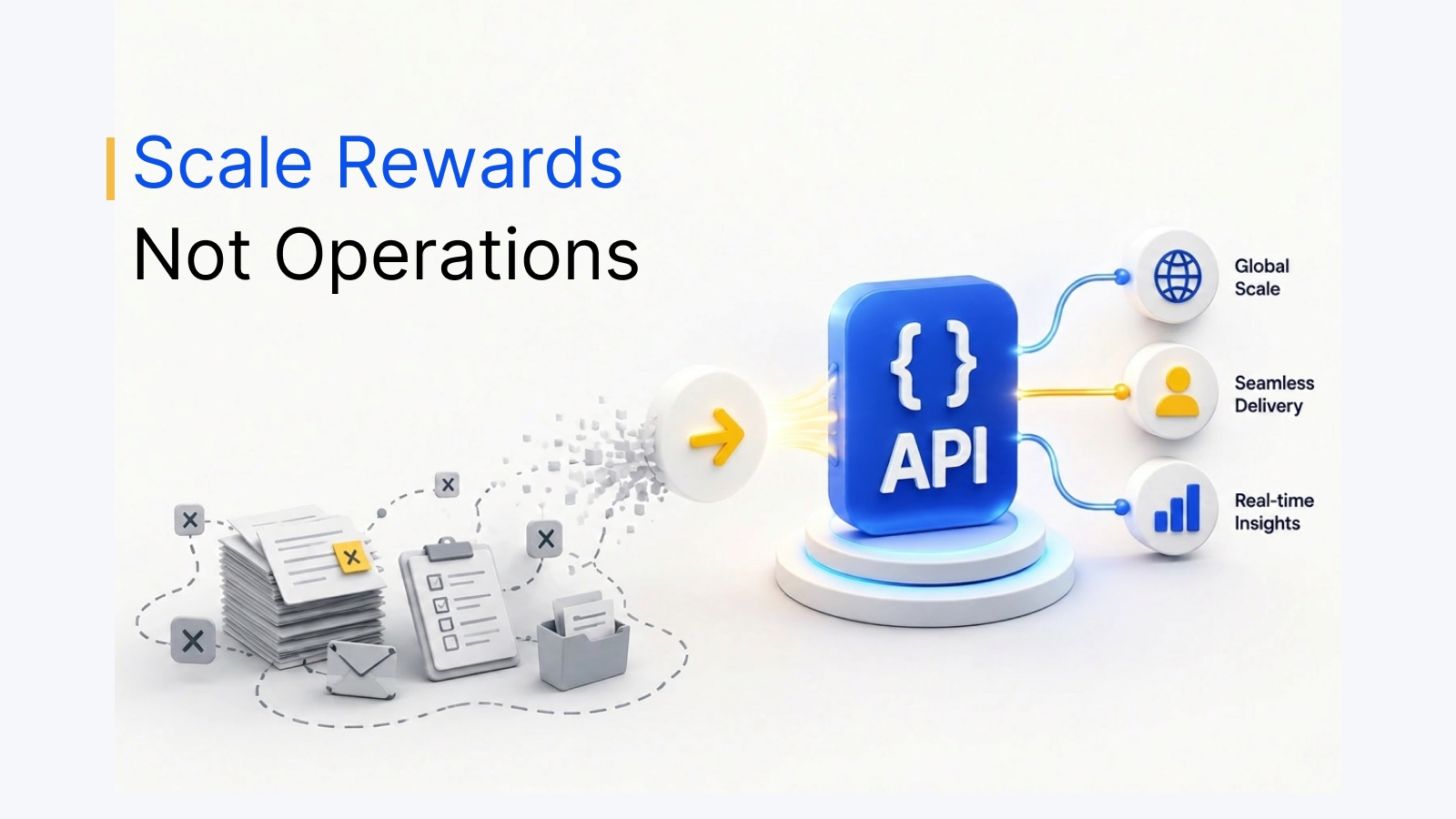
For a related angle on where that manual work piles up, see how API-based rewards compare to manual fulfillment.
How Plum approaches the buying decision
Plum's answer to the role-based evaluation problem is to not force a choice between the three lenses. One vendor covers all three.
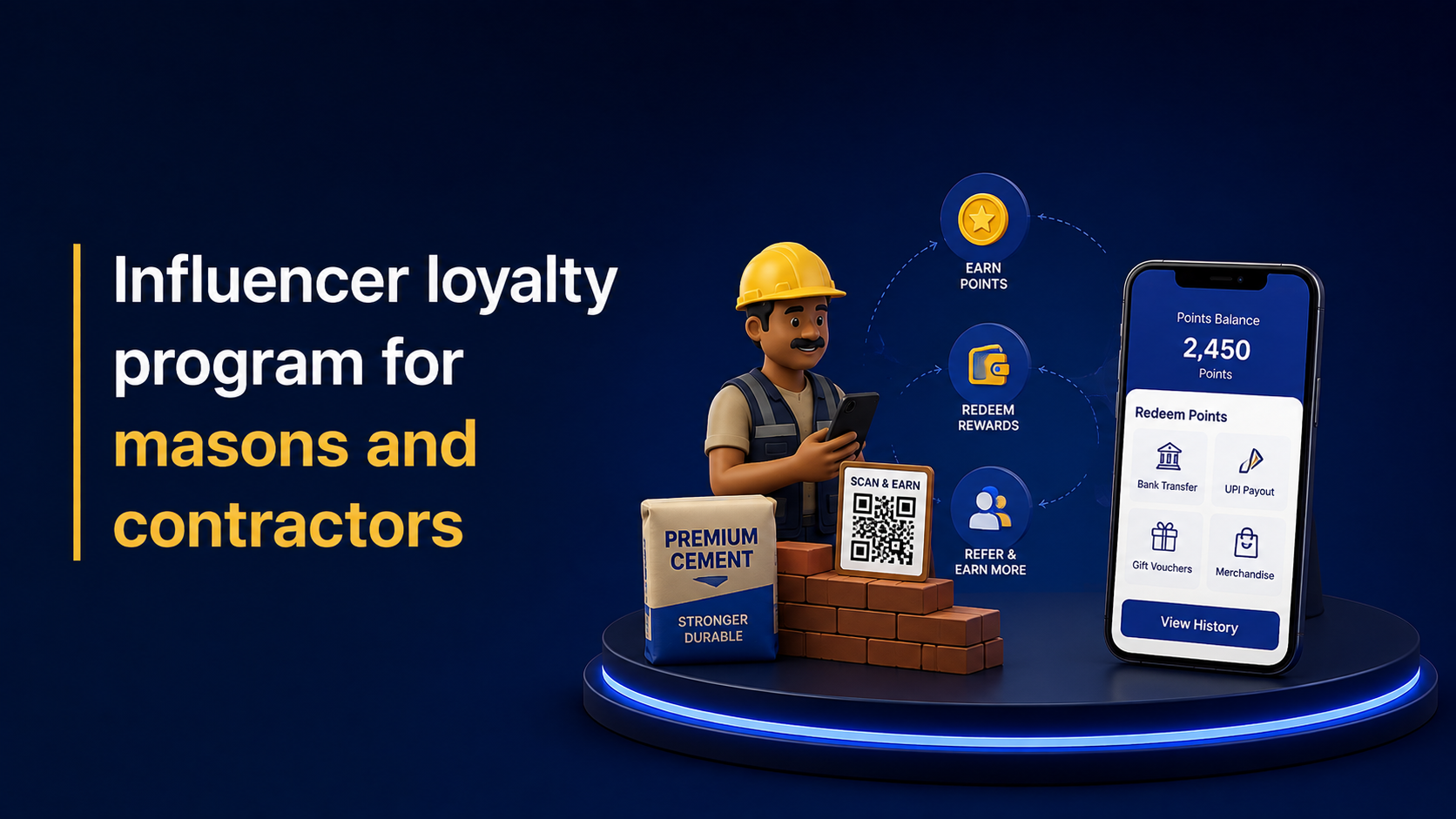
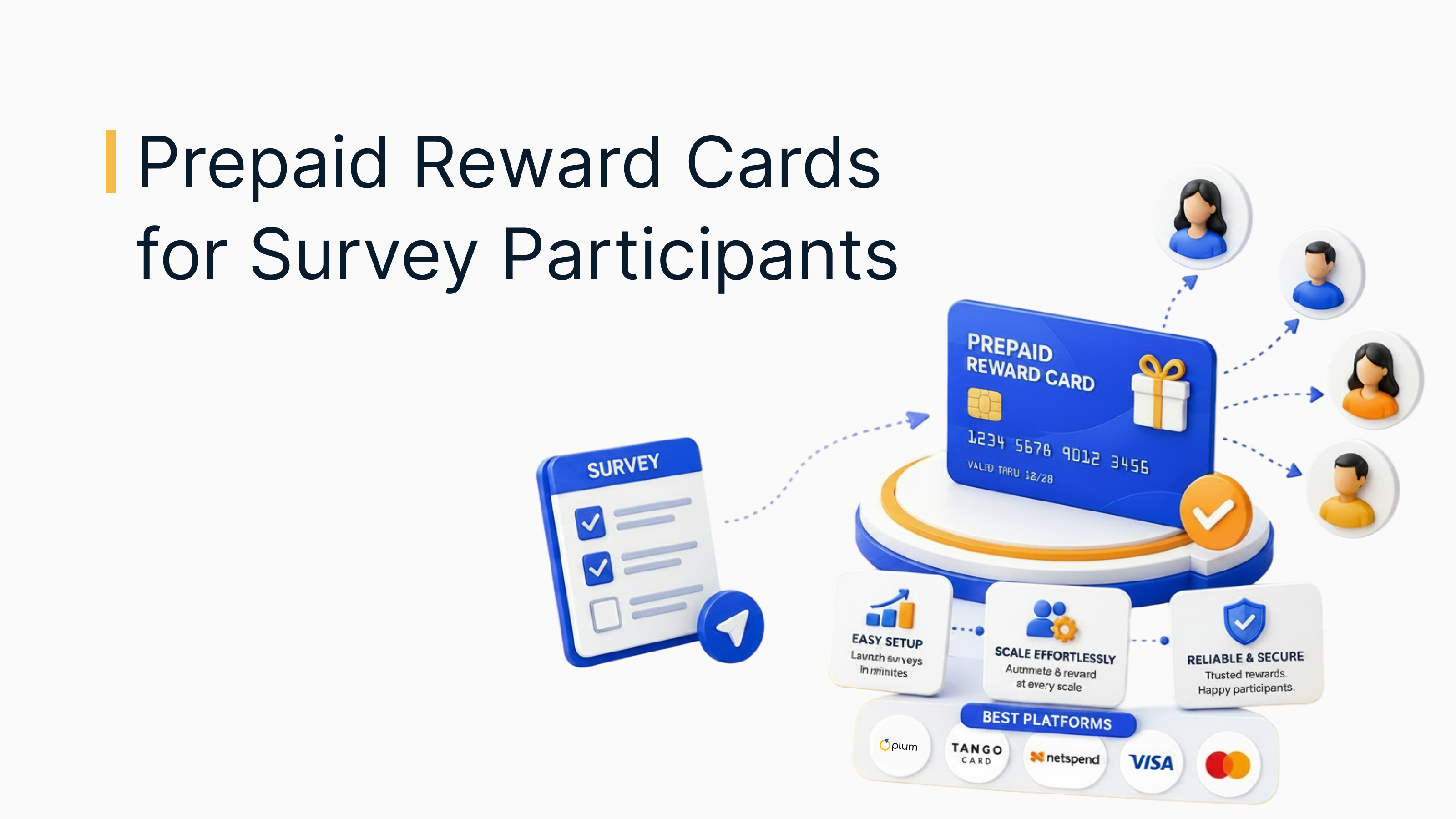
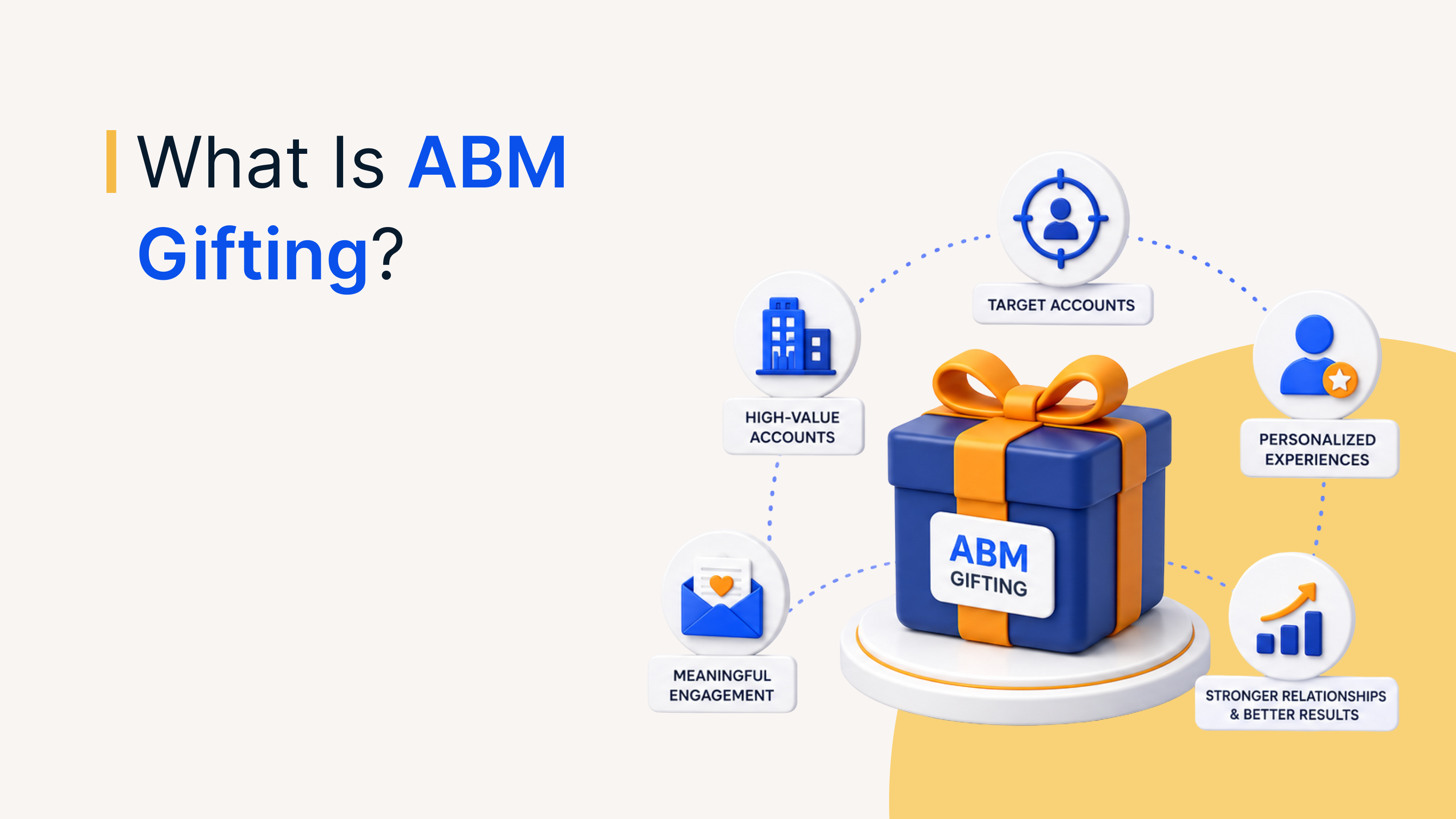
The same API and catalog that power an ABM gifting program also power employee milestone gifts and survey incentives, with compliance and currency handling built in rather than layered on per country.
150+
Countries
instant digital delivery
10M+
Reward options
gift cards, prepaid cards, experiences
50+
Currencies
local payout support
Source: Xoxoday internal data, 2026.
That consolidation is what a procurement manager, an HR lead, and a growth marketer can all sign off on without each one compromising on their own criteria.
See how Plum fits your evaluation criteria. Book a free 30-min demo.
Questions to ask before you sign
Five questions surface it fast.
- Does compliance and sanctions screening run automatically, or does it require a manual review per country?
- What happens to the exchange rate when a recipient redeems in a currency other than the one you funded?
- Does a gift trigger off an existing CRM/HRIS event, or does someone export a list first?
- Is pricing published, or does every quote require a sales call?
- If this program needs to cover a second use case next year, does the same contract support it?