Key Takeaways
A 5% increase in customer retention can boost profits by up to 95%, making loyalty software one of the highest-ROI investments a CMO can make
Enterprise loyalty programs need more than a points engine: look for member CDP, multi-country deployment, fraud controls, and coalition support
The loyalty management market is set to nearly double to $32.52B by 2031, and the CMOs investing now will have the retention advantage that compounds
Most CMOs can name three tools their team uses to run loyalty. Ask them to name the one platform that ties member behavior, reward redemption, and retention ROI into a single view, and the room goes quiet.
That gap, a fragmented loyalty stack where data lives in separate systems and no one has a complete picture, is the most common reason enterprise loyalty programs underperform. The problem is rarely the program design. It is the technology.
This guide is written for CMOs, loyalty managers, and retention leaders actively evaluating customer loyalty program software. Not for brands just getting started, but for enterprise teams that already know loyalty matters and need a framework to choose the right platform.
What Is Customer Loyalty Program Software?
Customer loyalty program software is a platform that enables businesses to design, run, and measure loyalty programs from a single system. It handles the mechanics of earning and redemption, manages member profiles, automates reward distribution, and provides the analytics needed to understand what is working and what is not.
The category spans a wide range. At one end are lightweight plugins built for ecommerce stores, designed for fast setup and basic points tracking. At the other end are enterprise loyalty management platforms that support multi-country programs, coalition networks, member data platforms, and compliance requirements for regulated industries.
For an enterprise CMO, that distinction matters. Choosing a platform built for a different scale creates technical debt from day one.
Why Enterprise Brands Are Reassessing Their Loyalty Technology in 2026
The business case for investing in loyalty technology has never been stronger, and the cost of getting it wrong has never been higher.
According to research from Bain and Company, cited in Harvard Business Review, a 5% increase in customer retention can raise profits by 25% to 95%. The same research shows that acquiring a new customer costs 5 to 25 times more than retaining one. For enterprise brands spending heavily on acquisition, these numbers reframe loyalty from a marketing initiative to a financial priority.
5–25x
Cost to acquire a new customer vs. retaining one
Bain and Company / Harvard Business Review
25–95%
Profit increase from a 5% rise in customer retention
Bain and Company
12–18%
More incremental annual revenue: members vs. non-members
Accenture
4.8x
Average ROI reported by companies running loyalty programs
McKinsey Next in Loyalty
The market reflects this shift. According to Mordor Intelligence, the global loyalty management market stands at $16.44 billion in 2026 and is projected to reach $32.52 billion by 2031, growing at a CAGR of 14.62%. Enterprise brands in BFSI, retail, telecom, and hospitality are driving the bulk of that investment.
For brands in the GCC and KSA, this is especially visible in BFSI. Banks and financial houses in the UAE and Saudi Arabia are investing in card-linked loyalty programs tied directly to mobile banking behavior, a use case that demands enterprise-grade software. In the Philippines and Indonesia, retail and FMCG brands are consolidating fragmented tools to build unified member profiles that work across physical and digital channels.
The brands that invest in the right loyalty management platform now will compound that advantage over the next three to five years.
See how enterprise loyalty programs are built on Loyalife
Join 5,000+ enterprises using Loyalife to run loyalty at scale
Book a demoTrusted by 5,000+ companies
The Five Types of Loyalty Programs Your Platform Should Support
One of the most important questions to ask any loyalty software vendor is whether their platform supports the type of program you actually need. According to Open Loyalty, 72% of consumers join loyalty programs to save money via discounts, cashback, or redeemable points. But enterprise brands rarely run a single program type.
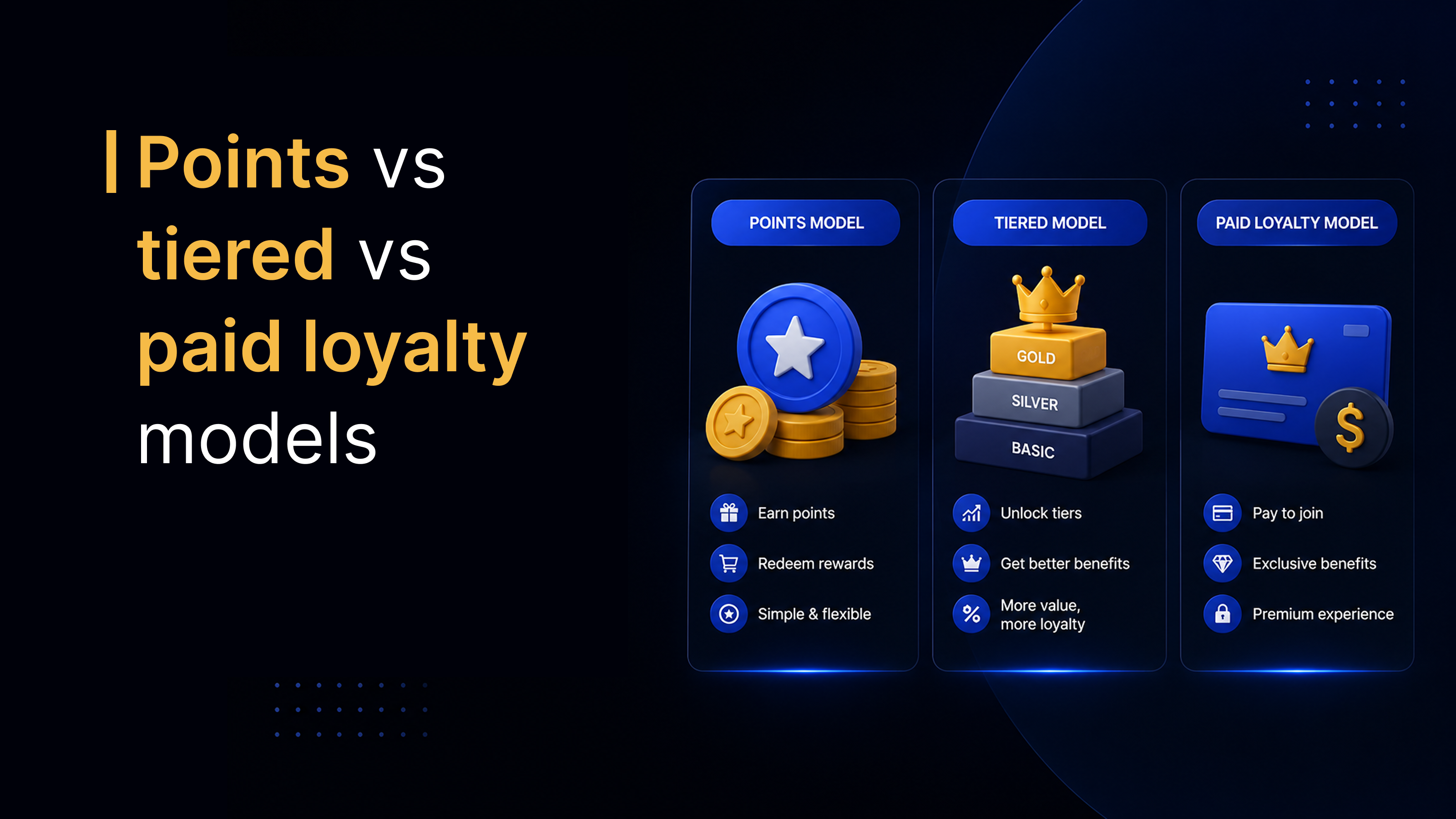
Here is the summary view of what any enterprise loyalty platform must support. For a deeper walkthrough, see this complete guide to customer loyalty programs.
01
Points-based programs
The most widely understood model: customers earn points per transaction and redeem them for rewards. The complexity for enterprise brands is in the rules engine, specifically the ability to set different earning rates by product, category, channel, or customer segment.
02
Tiered programs
Tier structures create aspiration. Members unlock new benefit levels as they spend more, which increases switching costs and rewards the customers who generate the most revenue. For BFSI brands in the GCC, tiered programs tied to card spend and relationship depth are the standard model.
03
Referral programs
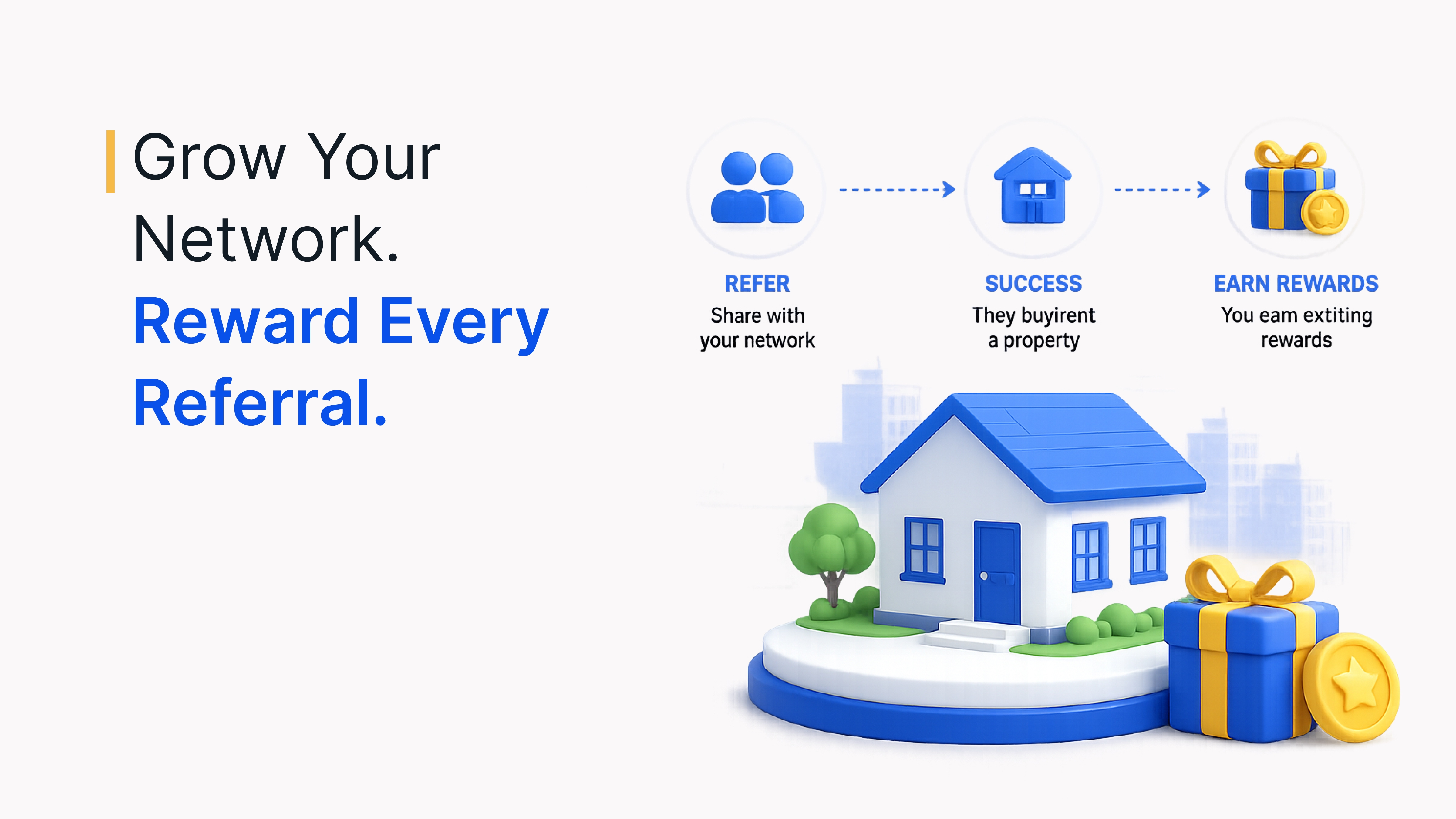
Referral mechanics turn existing members into acquisition channels. The software must track referral links or codes, validate the qualifying action, and distribute rewards to both parties automatically.
04
Paid and subscription programs
Subscription loyalty, where members pay for access to a premium tier of benefits, is one of the fastest-growing program structures. Enterprise brands use it to create predictable revenue and deepen engagement beyond transactional behavior.
05
Coalition programs
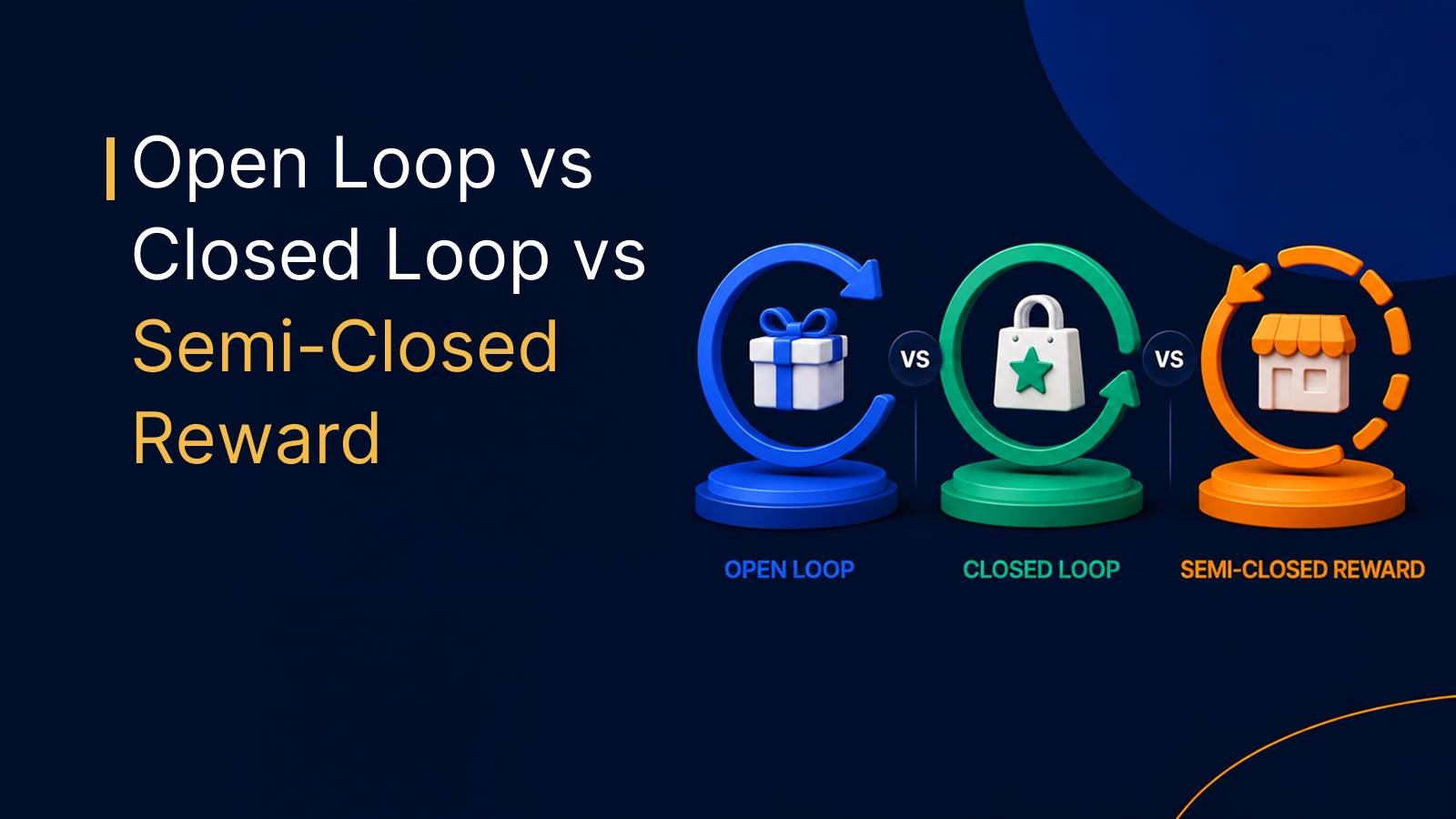
Coalition loyalty, where multiple brands share a single rewards ecosystem, is the model most likely to be underserved by ecommerce-focused platforms. For enterprise brands in retail, travel, and financial services, the ability to manage a multi-brand points currency with shared redemption and separate program rules per partner is non-negotiable. Most lightweight loyalty tools do not support this at all.
Key Features to Evaluate in a Loyalty Management Platform
When shortlisting customer loyalty management software, most evaluation frameworks focus on front-end features: points, tiers, redemption. Those matter. But for enterprise brands, the more critical evaluation is at the infrastructure layer. You can also see how features show up in real programs by reviewing customer loyalty program examples from leading brands.
- Member data platform (CDP). Every loyalty interaction generates data. A platform that does not give you a unified member profile across channels leaves you blind to the customer relationships you are trying to strengthen.
- Rules engine. Can your loyalty team change earning rules, tier thresholds, or campaign multipliers without raising a developer ticket? A rigid rules engine becomes a bottleneck at enterprise scale.
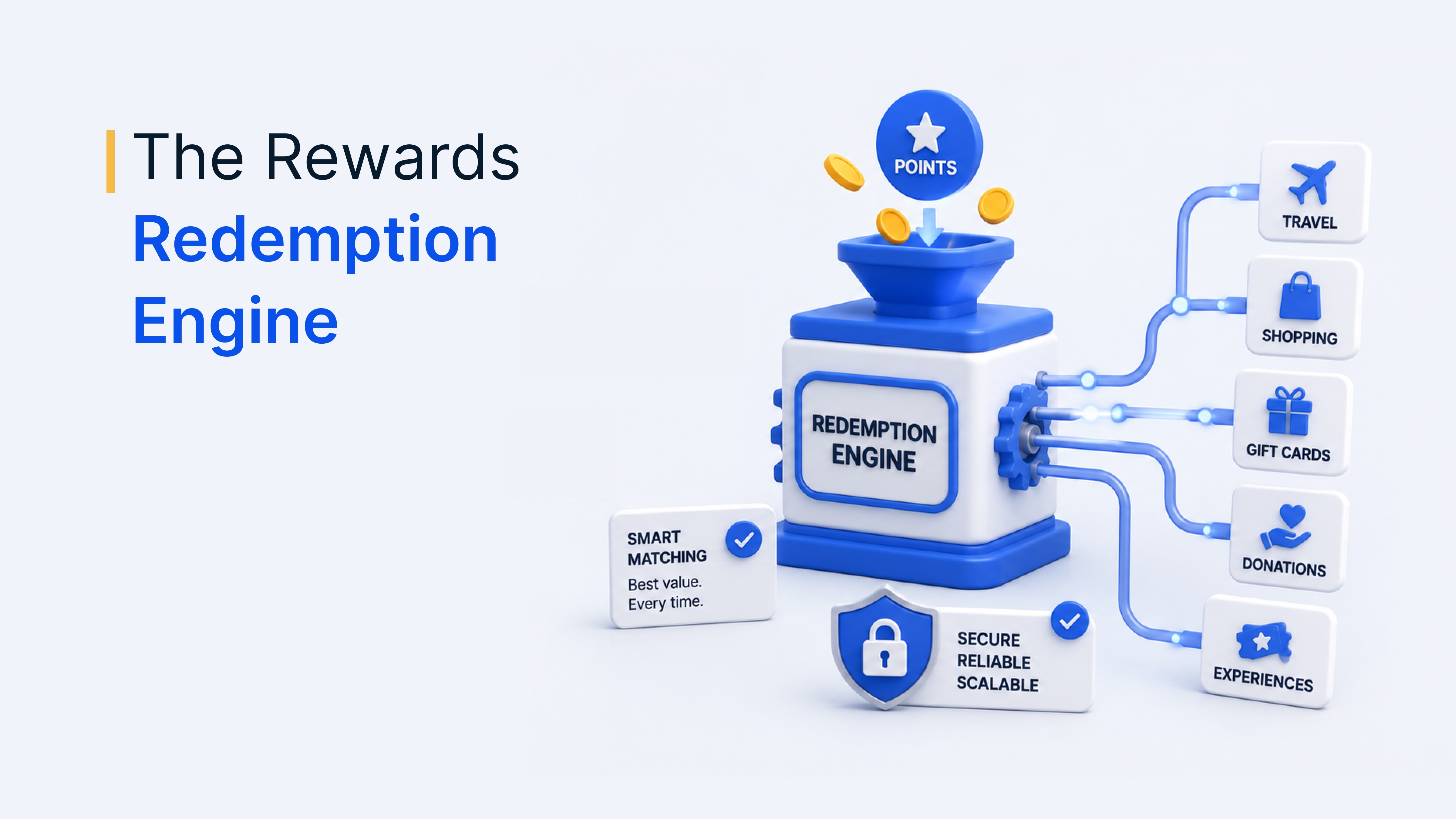
- Rewards catalog and redemption infrastructure. The breadth and quality of reward options directly affects redemption rates, which drives the ROI of the entire program. Look for global catalogs with options across currencies, categories, and languages.
- Omnichannel engagement. Members should earn and redeem across mobile apps, web, in-store POS, and partner channels, with real-time balance updates at every touchpoint.
- Analytics and reporting. The platform must surface customer lifetime value of members vs. non-members, repeat purchase rate, redemption rate, and program ROI. Dashboards that only show enrollment numbers are not sufficient.
- Fraud and risk management. At scale, loyalty fraud is a real cost. Points manipulation, fake referrals, and account takeover attacks are common. Enterprise platforms must include automated fraud detection and configurable risk rules.
- Integration layer. The platform must connect to your existing stack: CRM, CDP, ecommerce, banking core, POS, and marketing automation. API-first architecture is the standard for enterprise deployments.
How Loyalty Software Requirements Differ at Enterprise Scale
Not all loyalty software is built for the same problem. The requirements for a mid-size ecommerce brand and those for a BFSI enterprise running a 10-million-member program across five countries are fundamentally different.
According to Mordor Intelligence, large enterprises accounted for 65.42% of loyalty management software revenue in 2025. That share reflects how much is at stake in the initial platform decision. Switching platforms after a program has scaled carries significant migration risk, including points balances, tier histories, and partner integrations that cannot simply be exported.
| Requirement | Enterprise loyalty platform | Ecommerce loyalty plugin |
|---|---|---|
| Member data platform (CDP) | Included | Rarely available |
| Multi-country, multi-currency | Supported natively | Limited or unavailable |
| Data residency and compliance | Configurable (on-prem / private cloud) | Cloud-only, shared infrastructure |
| Coalition program support | Supported | Not supported |
| Channel and dealer loyalty | Supported | Not supported |
| Fraud and risk management | Automated, configurable | Minimal |
| White-label mobile app | Available | Rare |
| Implementation model | Dedicated implementation team | Self-serve |
For brands operating in regulated markets, the compliance dimension adds another layer. Banks and financial institutions in the GCC and KSA frequently require in-country data hosting for government-linked accounts. Platforms that cannot support on-premise or private cloud deployment are disqualified from those procurement processes before the evaluation begins.
How to Choose Customer Loyalty Program Software
The evaluation process for enterprise loyalty software is not a feature checklist exercise. It is a strategic decision with a long implementation tail and meaningful switching costs if you get it wrong.
- Define your program type and scope. Start with what you are building, not what vendors are selling. Are you running a consumer program, a channel partner program, a coalition, or all three? The program type determines the non-negotiable platform requirements before you open a single RFP.
- Audit your current stack. Map every system that touches customer or transaction data today: CRM, POS, ecommerce platform, marketing automation, and any existing loyalty tools. The new platform must integrate without creating data silos. An incomplete member profile defeats the purpose of the program.
- Evaluate against enterprise criteria, not feature lists. Use the criteria above as your minimum bar. Add your specific requirements: data residency rules, compliance standards, program complexity, and expected member volume at year three.
- Shortlist, demo, and model total cost of ownership. Get at least three platforms into a structured demo. Ask to see the rules engine, analytics dashboard, and integration documentation. Model the full cost over three years: licensing, implementation, support, and rewards budget. For more on forces shaping platform investment, see loyalty program trends shaping 2026.
The loyalty management market is growing at pace. Brands that complete this evaluation with rigor, rather than defaulting to the most familiar vendor name, will be better positioned for the next phase of program scale.
How Loyalife Helps Enterprise Brands Build Loyalty Programs That Last
Xoxoday Loyalife is an enterprise loyalty management platform built to run the full loyalty value chain: program design, member management, reward distribution, redemption, analytics, and fraud control, from a single system. For CMOs building a customer loyalty plan that drives measurable retention outcomes, Loyalife is built to support the full lifecycle of that strategy.
01 · Full-stack
One platform for all program types
Consumer, channel, influencer, and coalition loyalty programs run from a single dashboard with shared member intelligence and separate program rules per initiative.
02 · Global reach
10M+ rewards in 150+ countries
Members redeem from a catalog of 10M+ options across 30+ categories, in 50+ languages and 50+ currencies, with $5B+ distributed to date.
03 · Compliance
On-premise and private cloud for regulated markets
SOC 2 certified, GDPR compliant. Supports on-premise and private cloud deployment so client data never leaves the client's own infrastructure.
04 · Operational
Built for loyalty teams, not IT teams
Program rules, tier structures, and campaign configurations can be changed by a loyalty manager without raising a developer ticket, giving your team the agility to respond to market changes fast.
5,000+
enterprises
150+
countries
10M+
rewards options
$5B+
rewards distributed