Ask five procurement managers what "rewards platform" means and you'll get five different answers. One means gift cards. Another means a loyalty engine bolted onto Shopify.
A third means whatever their engineering team is currently patching together, because nothing off-the-shelf fit.
This mismatch in definitions is expensive. Teams pick a platform built for one use case, then discover eighteen months later it can't handle a second currency, a new region, or the partner integration nobody planned for. The rebuild costs more than the original decision would have, if it had used the right criteria.
This list ranks 10 platforms worth evaluating in 2026, based on deployment model, global payout reach, API depth, and how visible redemption data actually is once a reward goes out the door.
What actually makes a customer rewards platform worth switching to in 2026
Most vendors in this category claim the same three things: personalization, AI, and scale. Few can show what happens next.
15-25%
Revenue lift
annual increase from customers who redeem points, at top-performing programs
20%
Of company profit
share loyalty programs can generate when designed well
60% vs 30%
Paid vs. free programs
members likely to spend more after joining a paid loyalty program
Source: McKinsey & Company, "Next in loyalty: eight levers to turn customers into fans" and "Coping with the big switch."
A marketing ops lead at a mid-market SaaS company doesn't care that a platform has "10,000 reward options" in the abstract. She cares that a customer in Manila and a customer in Sao Paulo each get something they can actually redeem, in their own currency, without a support ticket. The distinction matters. Most comparison lists skip it entirely.
Five criteria actually separate the platforms below:
- Global payout reach. Does the catalog localize by country and currency, or does it quietly favor US and UK recipients?
- API depth. Can rewards trigger from inside a CRM, product, or workflow tool, or does someone have to log in and send them manually?
- Redemption visibility. Is there real-time data on what was claimed, or does the data sit with the vendor until someone asks?
- Compliance handling. Who owns tax, KYC, and cross-border regulatory complexity: the buyer, or the platform?
- Deployment model. Self-serve dashboard, managed service, or embeddable API: pick the one that matches how the team actually works.
How we ranked these 10 platforms
Each entry is scored against the five criteria above, weighted toward API depth and global reach. Most switching mistakes happen right there. Every feature claim below comes from that platform's own homepage, described in our own words, not copied from vendor marketing copy.
We excluded any platform Xoxoday already covers in a dedicated one-to-one comparison. If you're deciding between Plum and a specific alternative, that page will go deeper than a shared list entry can.
Send rewards from your own product
See how Plum's Rewards API delivers instant, compliant payouts across 150+ countries.
Book a free 30-min demoTrusted by 5,000+ companies
The 10 best customer rewards platforms for 2026
Ten platforms made the cut. Here's how each one actually stacks up.
1. Xoxoday Plum
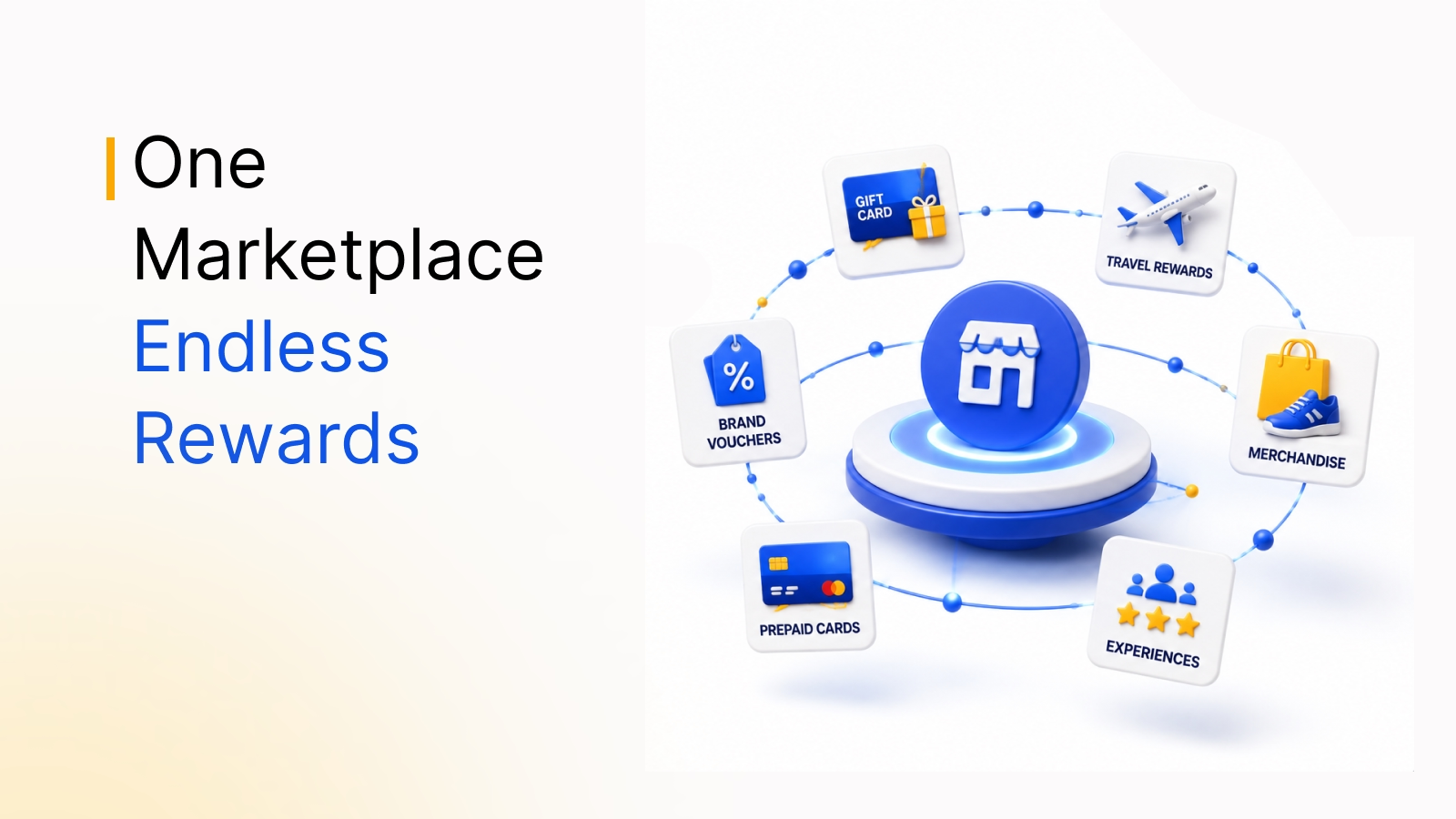
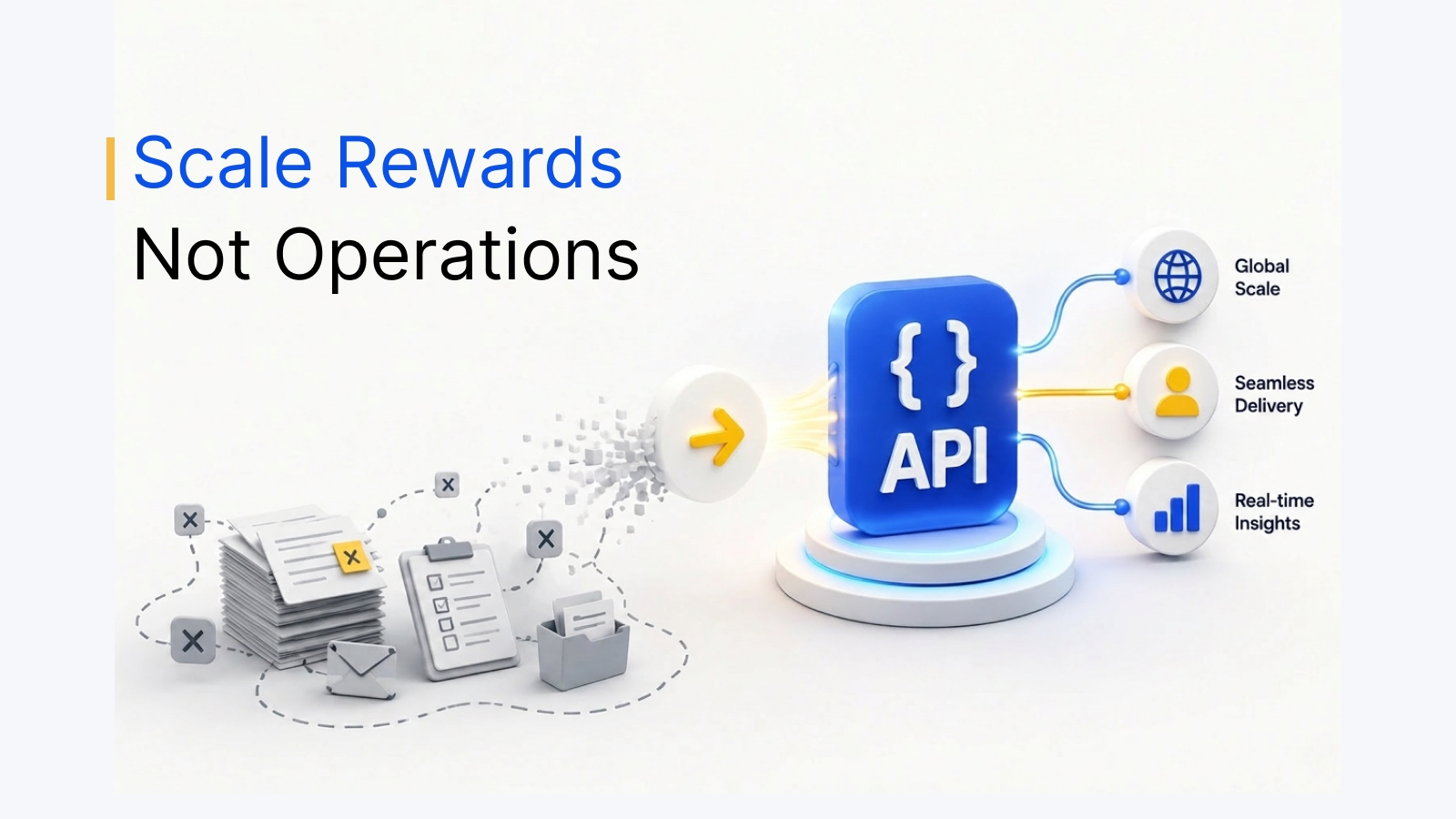
Plum is a global rewards marketplace built around one problem: sending a reward anywhere, instantly, without the buyer building the infrastructure. The catalog spans 10 million-plus reward options across 150-plus countries and 25-plus currencies, and the Rewards API lets a reward trigger directly from a CRM, product event, or survey tool. A support ticket resolution, a referral, or a completed survey can all route through the same call, so growth and CS teams aren't each maintaining a separate rewards integration.
Standout: real-time redemption data, visible per campaign, not aggregated at month-end, so a marketer can see which incentive drove a redemption while the campaign is still live, not after it's already closed out.
2. Blackhawk Network
Blackhawk is the largest gift card distribution network in the world, moving billions in prepaid value through retail and digital channels. Its scale is unmatched for physical gift card programs; its API and self-serve tooling are less built for teams that want to run everything themselves. That's also why it shows up as the distribution layer behind several other platforms on this list, as often as it does as a direct vendor.
Standout: deepest retail gift card distribution footprint of any platform on this list, the network several other vendors here quietly route through for physical card supply.
3. Incomm
Incomm runs one of the largest gift card processing networks in the US, with a strong presence in retail point-of-sale integrations. It's built for volume distribution more than for teams wanting granular, self-serve control over individual campaigns. That domestic retail depth is the tradeoff to weigh against a platform built global-first if a program's recipients sit mostly outside the US.
Standout: US retail point-of-sale integration depth, useful when a reward needs to work at checkout in a physical store, not just online.
4. Sendoso
Sendoso built its name on corporate sending: physical gifts, direct mail, and swag tied to sales and marketing plays. It extends into digital rewards, but its core strength stays in the physical-gift, account-based marketing use case rather than pure digital payout infrastructure. Its in-house warehouse network keeps custom swag and branded merchandise fulfillment under one roof rather than routed through a third party.
Standout: strongest physical-gift-to-sales-workflow integration, so a rep can trigger a send directly from the CRM stage they're already working in.
5. Edenred
Edenred operates one of the largest employee and consumer benefits networks globally, publicly listed on Euronext, with a reward marketplace layered on top of its core benefits business. Its scale comes from decades in prepaid and voucher infrastructure across Europe and Latin America. That benefits-first heritage means compliance and local-currency handling extend naturally to reward use cases layered on top, rather than being built from scratch.
Standout: broadest prepaid voucher network in Europe and Latin America, backed by regulatory infrastructure most newer entrants haven't built yet.
6. Eagle Eye
Eagle Eye is a publicly traded platform focused on AI-driven, real-time offers and digital rewards, strongest in UK and European retail. It leans toward promotional and loyalty-offer delivery rather than broad, catalog-style reward distribution. The company states it powers over a billion personalized offers a week across its retail client base, a volume built for national chains, not a single-location retailer.
Standout: real-time, AI-targeted offer delivery at retail scale, built to personalize an offer at the moment a shopper is deciding, not after they've left the store.
7. Cadooz
Cadooz is a German reward marketplace and gift card specialist with a strong footprint across the EU. It fits teams whose customer base sits primarily in Europe and who need compliant, localized gift card fulfillment rather than a truly global catalog. That regional depth means less time spent confirming VAT and local voucher regulations market by market compared to a broader global platform retrofitting EU compliance after the fact.
Standout: EU-first compliance and localization depth, the kind of market-by-market regulatory groundwork a global-first platform usually retrofits later.
8. Augeo
Augeo is a US-based incentive and loyalty platform covering everything from channel engagement to consumer rewards. It's broad rather than deep in any single use case, which suits teams who want one vendor for several different reward programs at once. That breadth is the tradeoff against a narrower, purpose-built platform: fewer vendor contracts, but shallower depth in any one program type.
Standout: single vendor spanning channel, loyalty, and consumer incentive use cases, which matters most to a company running two or three of those programs today under separate contracts.
9. DT One
DT One specializes in non-cash digital rewards and micropayments, with particular strength across Asia-Pacific mobile and telecom-adjacent use cases. It's a fit for teams whose customers redeem in markets where mobile airtime and data top-ups matter more than gift cards. That telecom-specific reach matters most for a program with recipients in markets where a mobile top-up is a more usable reward than a Western retail gift card.
Standout: APAC mobile top-up and micropayment reach, covering redemption behavior a Western gift card catalog typically misses entirely.
10. 99minds
99minds is a smaller, API-first platform covering gift cards, loyalty, and referral rewards. It suits early-stage teams that want programmatic control without enterprise pricing, though its catalog and country coverage are narrower than the larger platforms on this list. That smaller footprint is the tradeoff for a lower price point, worth revisiting once a program scales past a single-market pilot.
Standout: lowest barrier to entry for API-first teams on a smaller budget, a reasonable starting point before a program has proven it needs enterprise-scale infrastructure.
See how Plum's Rewards API sends a reward from your own product in under a day. Book a free 30-min demo.
How these 10 platforms compare
| Platform | Deployment model | Global reach | API / integration depth | Best for |
|---|---|---|---|---|
| Xoxoday Plum | Self-serve dashboard + embeddable API | 150+ countries, 25+ currencies | Full Rewards API, triggers from CRM or product events | Teams needing instant, compliant global payouts |
| Blackhawk Network | Retail and digital distribution network | Global, retail-partner dependent | Limited self-serve API tooling | Highest-volume physical gift card distribution |
| Incomm | Retail POS-driven issuance | US-dominant | Retail integration focus, less self-serve | Large domestic gift card programs |
| Sendoso | Managed sending platform | US and UK-strong | CRM-integrated, sales-workflow focused | Account-based marketing and sales gifting |
| Edenred | Regulated benefits and voucher network | Europe and Latin America-strong | Enterprise benefits infrastructure | Multinational benefits-plus-rewards programs |
| Eagle Eye | AI-driven offer engine | UK and Europe-strong | Retail loyalty and promotions API | Real-time, AI-targeted retail offers |
| Cadooz | Reward marketplace | EU-focused | Regional integration depth | EU-based customer bases needing local compliance |
| Augeo | Multi-program incentive platform | US-focused | Broad but shallow per use case | One vendor across several reward program types |
| DT One | Micropayment and top-up network | Asia-Pacific-strong | Telecom-adjacent API integrations | Markets where mobile top-ups outperform gift cards |
| 99minds | API-first, self-serve | Narrower catalog and country coverage | Programmatic, budget-friendly API | Early-stage teams wanting API control on a smaller budget |
No platform wins every column. Ranking on criteria instead of reputation is the whole point: a team running a US-only retail gift program has different priorities than a fintech sending payouts across 20 countries from inside its own app.
Talk to a Plum rewards specialist about your specific redemption geography. See Plum in action.
Choosing the right customer rewards platform for your team
The right platform depends less on brand recognition and more on where your customers actually are, how fast they need to be paid, and who's answerable when a payout crosses a border. Match the criteria in this list to your own redemption geography before the vendor call, not during it.