Key Takeaways
91% of channel sellers say incentives directly shape which brand they push – build your program before a rival does
Channel partner churn runs at 10 to 30% annually, and a structured loyalty program is the only tool that actively reduces it
Spreadsheet-based dealer incentives break down past 50 partners: automation is the line between a program and a process
You have 400 distributors across five regions. Fifty haven't logged a sale this quarter. Another 80 are selling your products – but only when nothing from a rival brand is available. Your incentive scheme went out as a PDF in January. Nobody replied.
This is not a motivation problem. It is a visibility and structure problem. A well-designed channel loyalty program solves both.
What is a channel loyalty program?
A channel loyalty program is a structured incentive system that rewards distributors, dealers, and channel partners for sales performance, brand engagement, and training completion. Unlike consumer loyalty programs, which reward end customers, it targets the indirect sales network: the businesses that sit between the manufacturer and the final buyer.
Two distinctions matter here. Distributors operate at scale: they buy in bulk, move product across territories, and often manage their own dealer networks. Dealers are closer to the end sale, frequently face-to-face with the final customer. A distributor loyalty program typically rewards volume and territory coverage. A dealer loyalty program rewards frequency, brand preference, and sell-through at the point of contact. Effective programs address both, but with different mechanics for each.
A channel loyalty program is also distinct from a trade promotion. Trade promotions are short-term price incentives: discounts, co-op rebates, limited-time offers. They shift stock. A channel loyalty program builds behavior over time – consistent product preference, brand advocacy, and active participation in training and campaigns. One resets every quarter. The other compounds.
Why channel partners don't stay loyal without a program
Your distributors and dealers carry your products alongside six to ten others. Without a reason to prioritize yours, they push whichever is easiest to sell, best supported at the point of sale, or currently running the highest promotion.
According to Maritz's 2024 Insights Study, 91% of channel sellers say incentives have a high or very high influence on which brand they choose to promote. That is not a soft preference. It is a buying decision made in real time, every day, by the people who represent your brand to the end market.
91%
of channel sellers say incentives directly shape which brand they push
Source: Maritz 2024 Insights Study
Without a structured program, brands absorb three compounding losses:
- Lost sell-through. Partners default to what moves fastest, not what your brand needs moved. Slower SKUs stay on shelves.
- Lost mindshare. A partner who doesn't hear from you regularly forgets about you. A rival with a better program fills that space.
- Lost data. Without a program, you have no visibility into which partners are active, which are declining, and which have gone fully quiet.
Research from the Incentive Research Foundation shows that channel partner churn ranges from 10% to 30% annually in competitive ecosystems. That churn doesn't just affect volume. It means rebuilding relationships from scratch, repeatedly, with no historical data to guide the effort.
Types of channel loyalty programs and incentive structures
There is no single format for a B2B channel incentive program. The right structure depends on partner type, industry, transaction frequency, and the specific behaviors you need to drive.
Points-on-sales programs reward partners for every verified sale, with points redeemed for rewards. Points accumulate over time, creating a reason to stay engaged between purchase cycles. This works particularly well for dealers with frequent, lower-value transactions.
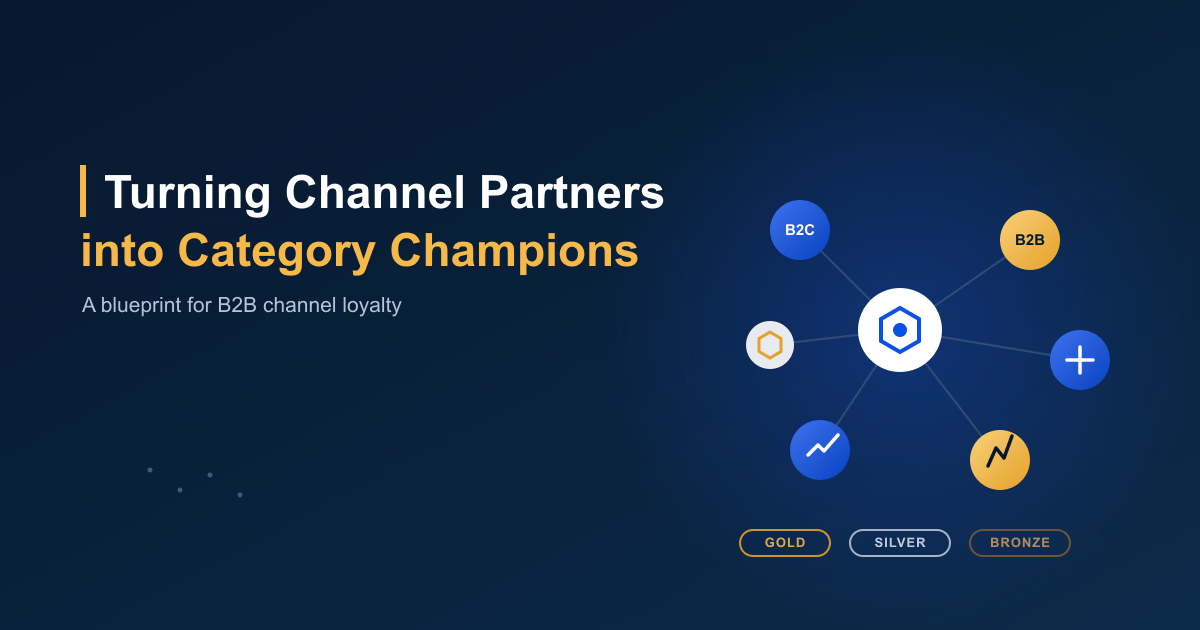
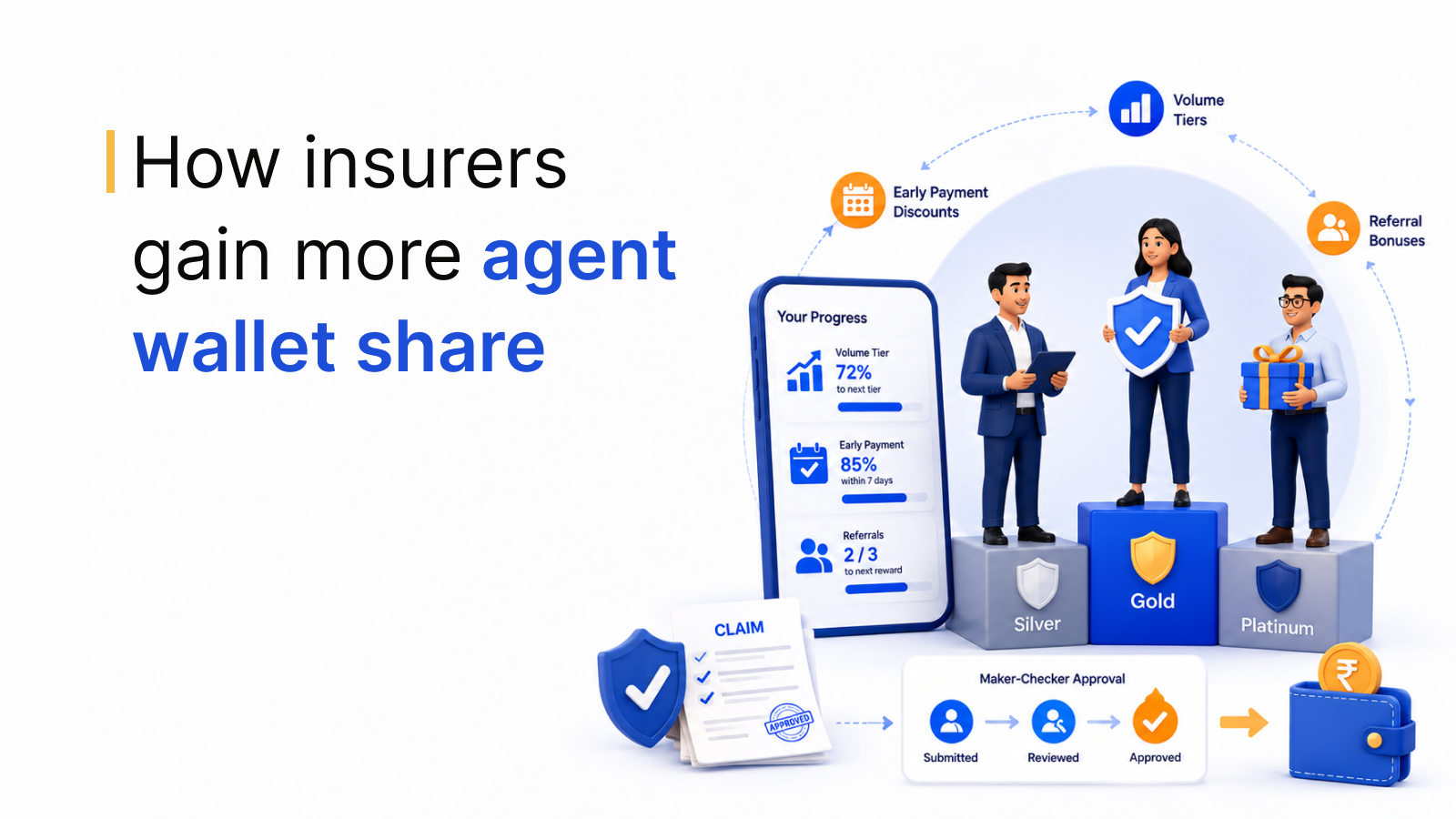
Tiered rebate programs move partners through tiers – Silver, Gold, Platinum – based on cumulative volume or growth targets. Higher tiers unlock larger rebates, co-marketing funds, or exclusive product access. Distributors managing large territories respond well to tier structures because the upside scales with their own growth.
SPIFFs (Sales Performance Incentive Funds) are short-term cash or reward incentives tied to a specific product or period. SPIFFs drive focus when you need to push a new SKU, clear seasonal inventory, or win mindshare in a competitive window. They are most effective when layered on top of a longer-term channel partner rewards program, not used in isolation.
Training and certification rewards give partners points or rewards for completing product training, certification modules, or brand campaigns. This drives product knowledge and brand advocacy, not just transaction volume.
Gamification and leaderboards use contests, milestone rewards, and public rankings to create short-term engagement spikes and a long-term habit of participation. Real-time dashboards showing a partner's standing in the program keep motivation high between redemption cycles.
| Channel loyalty program | Trade promotion | Spreadsheet incentives | |
|---|---|---|---|
| Time horizon | Long-term, ongoing | Short-term, per campaign | Ad hoc |
| Partner visibility | Real-time dashboards | Limited | None |
| Behavior targeted | Engagement, advocacy, volume | Volume only | Volume only |
| Data captured | Full partner activity history | Transaction data only | None structured |
| Scalability | Platform-managed, scales fully | Resets each cycle | Breaks past 50 partners |
See how Loyalife powers channel partner rewards at enterprise scale
10M+ rewards, 150+ countries, WhatsApp-native – built for VP Sales teams managing indirect channels.
Explore LoyalifeTrusted by 5,000+ companies
Five elements every high-performing channel loyalty program needs
The difference between a program that works and one that gets ignored is rarely the reward catalog. It is usually the infrastructure around it.
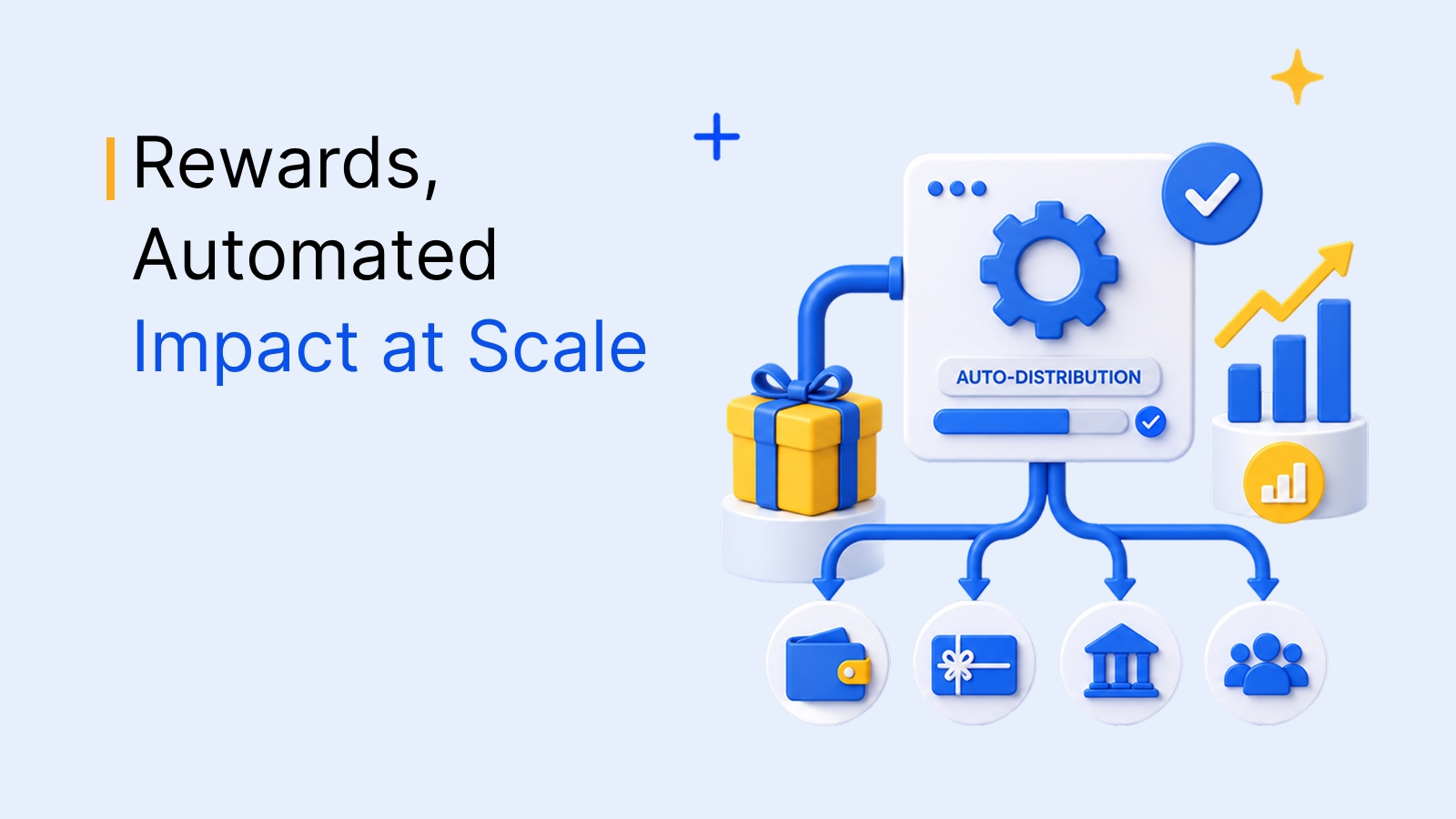
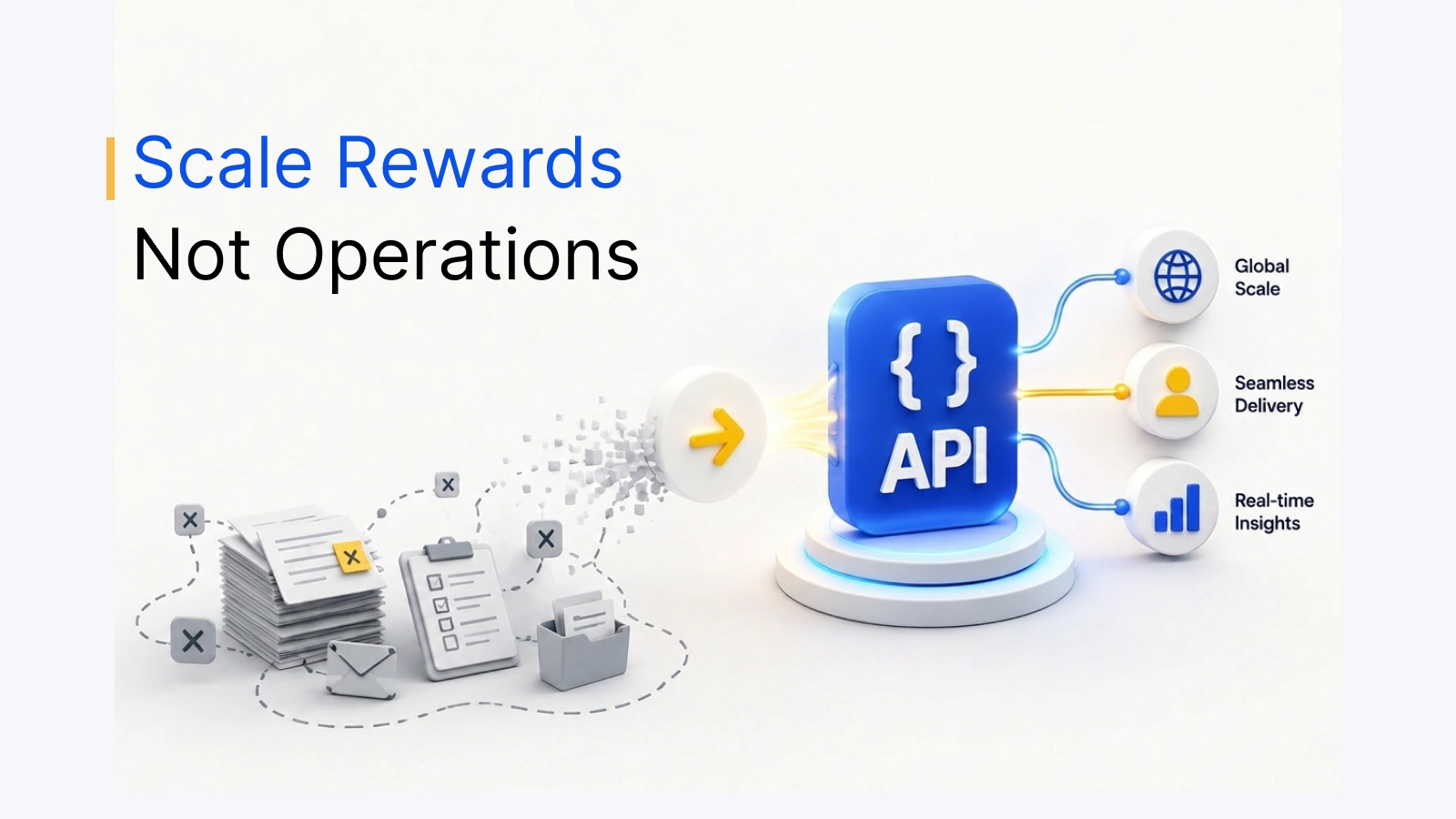
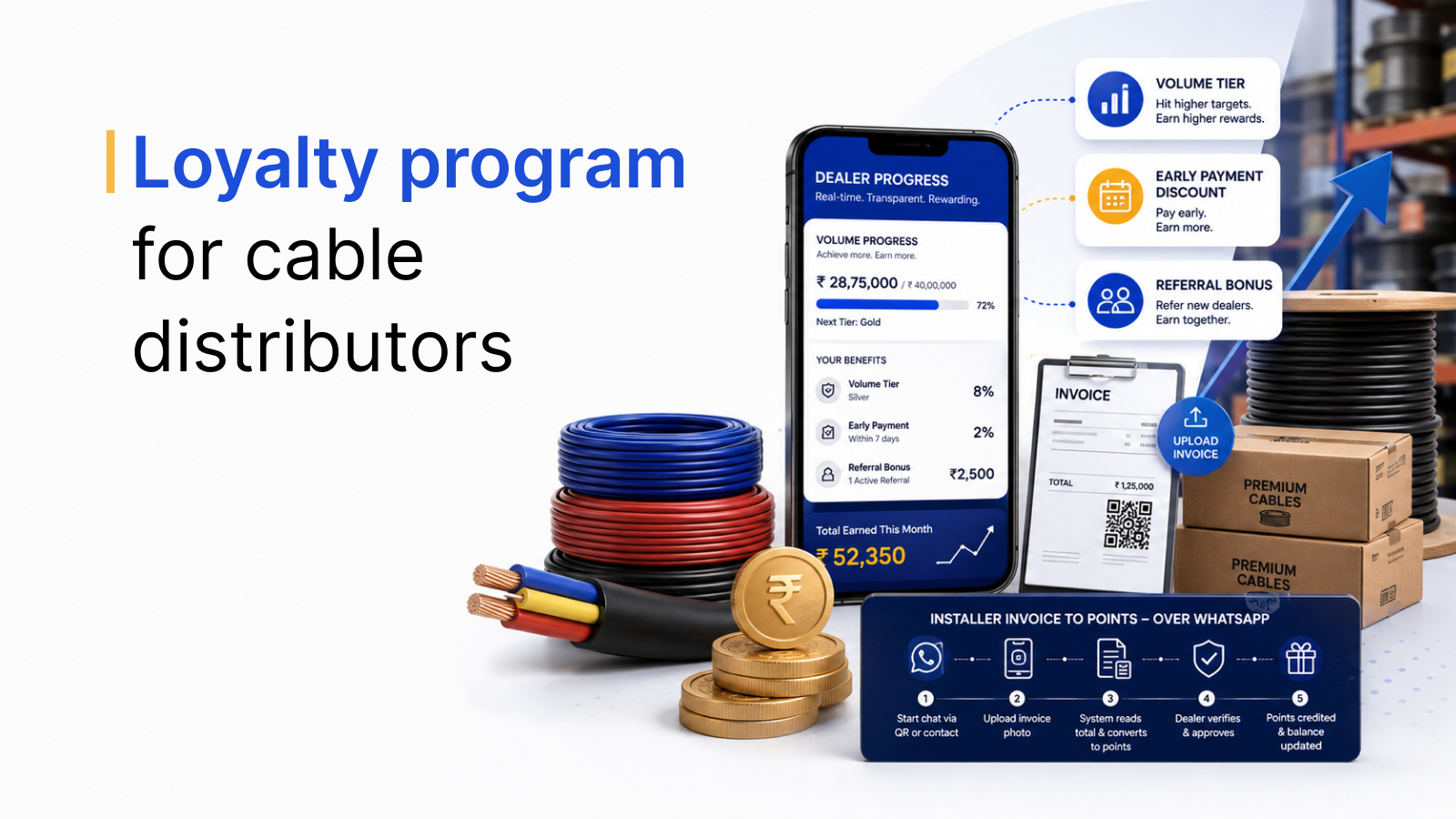
- Automated sales data ingestion. Manual uploads break down at scale. Programs that ingest data directly from CRM, ERP, or DMS systems – or via invoice OCR and QR code scanning – eliminate the friction that causes partners to disengage. If earning a point requires a phone call or a spreadsheet submission, most partners won't bother.
- Transparent tier and scheme dashboards. Partners need to know where they stand in real time. A dashboard showing current points balance, tier progress, and what they need to reach the next level turns a passive program into an active motivator.
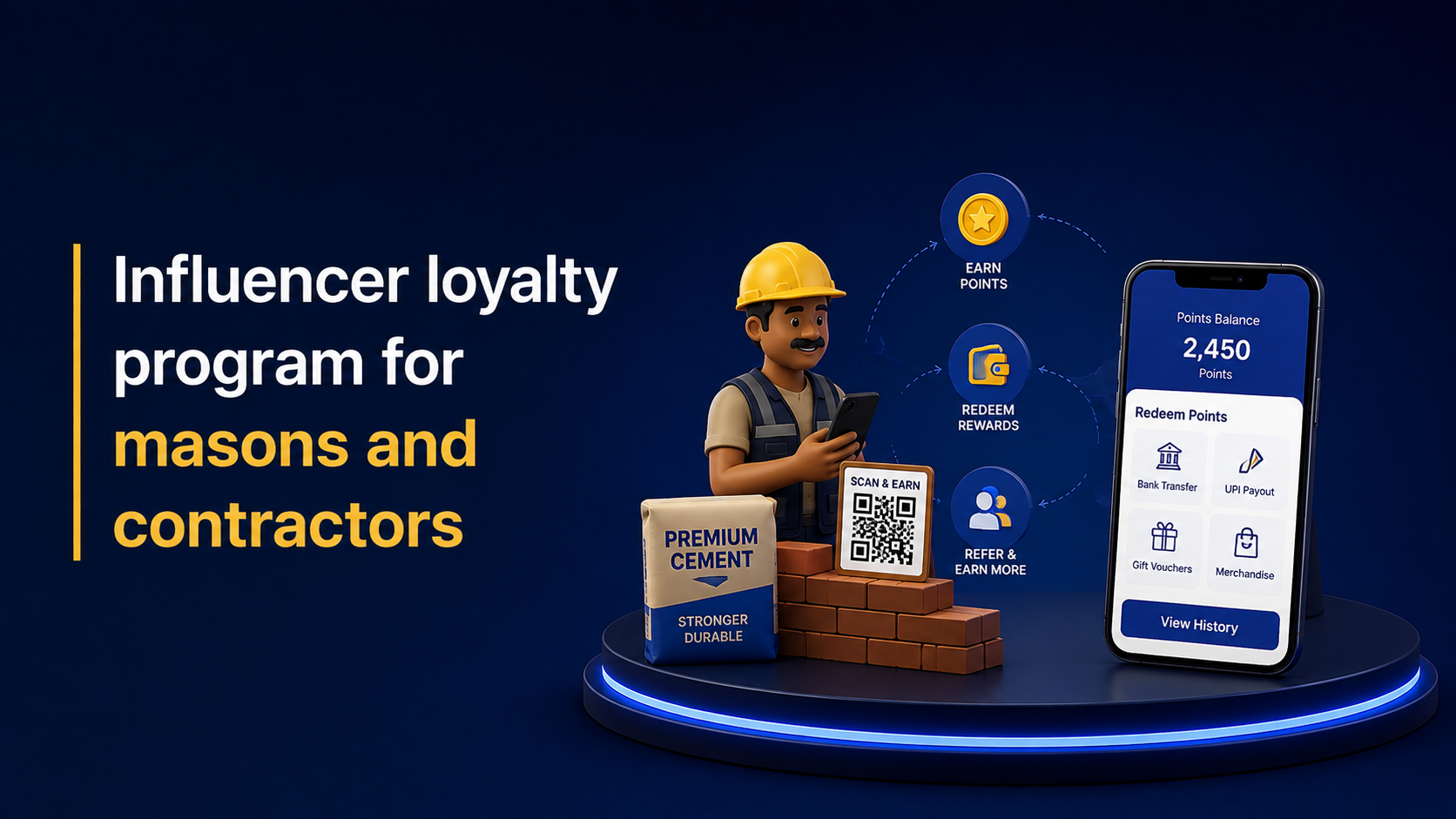
- Mobile-first redemption. In most markets where channel loyalty programs operate – FMCG, automotive, manufacturing, construction – partners are not at desks. WhatsApp-based earning and redemption, QR-code invoice scanning, and mobile app portals are the difference between a program that reaches a field-based dealer network and one that only works for head office contacts.
- Real-time performance visibility for the brand team. A VP Sales who can see which distributors are active, which are declining, and which have gone silent has a fundamentally different conversation with their channel than one working from quarterly reports. Dashboards by region, SKU, partner tier, and sales rep change how the team manages the channel day to day.
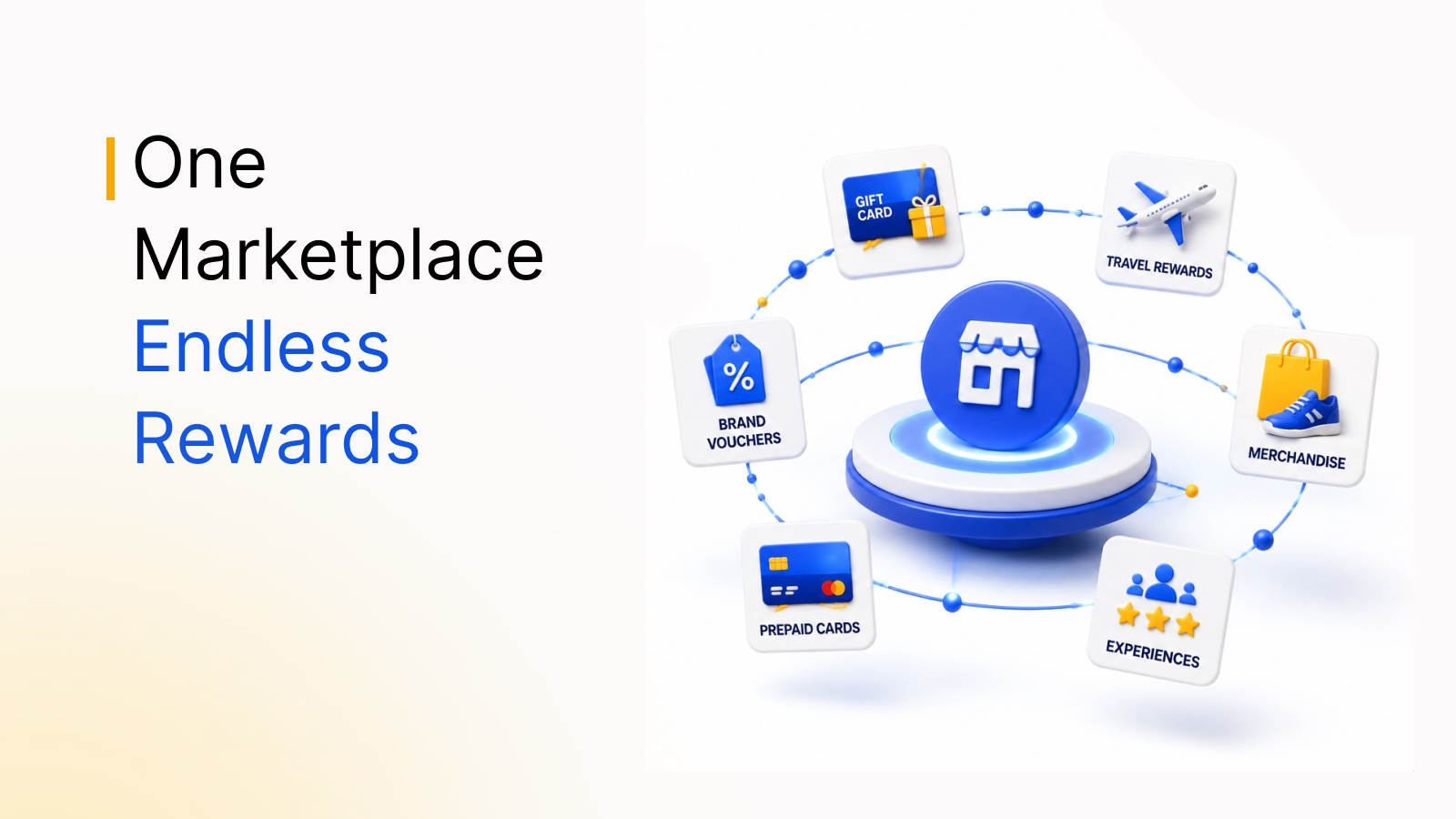
- Multilingual, multi-currency reward catalog. A distributor in Indonesia and a dealer in the GCC have different preferences and different redemption contexts. A catalog built for local relevance drives redemption rates significantly higher than a generic global one.
Industries where channel loyalty programs deliver the highest ROI
A distributor incentive program has the highest impact in industries where indirect sales channels dominate, product commoditization is real, and brand preference is built at the partner level rather than with the end consumer.
- FMCG and FMCD. Distributors and retailers carry dozens of competing brands. A structured program keeps your products in active recommendation. Invoice-scan earning via QR code is now standard in FMCG networks across South and Southeast Asia.
- Automotive and tyres. Mechanics and dealers recommend brands at the moment of replacement. WhatsApp-based mechanic loyalty programs – where uploading an invoice photo earns points instantly – have become the dominant model in markets like India and Indonesia.
- Manufacturing and industrial. Contractors, retailers, and dealers manage multiple overlapping product lines. A tiered dealer loyalty program that rewards both purchase volume and training completion shifts preference in categories where product differentiation is low.
- Construction and steel. Architects, fabricators, and contractors make brand specification decisions upstream of the purchase. Programs that reward specification activity – not just transactions – capture influence at the point where buying decisions are actually made.
According to the Channel Marketing Group, 51% of contractors belong to at least one manufacturer or distributor loyalty program. Of those, 48% report it directly increased their purchasing from that brand. The program is already shaping decisions in these industries. The question is whose program gets the credit.
Common mistakes that kill channel loyalty programs
Most channel loyalty programs don't fail because of bad intentions. They fail because of five predictable operational mistakes.
Running on spreadsheets. A spreadsheet-based distributor incentive program works at 30 partners. At 300, it breaks. Scheme rules become inconsistent, point calculations get disputed, and the team managing it spends more time on reconciliation than on actual partner engagement.
One scheme for all partner types. Large distributors and frontline dealers have different motivations. A rebate that excites a regional distributor managing $2M in annual volume means nothing to a dealer making three sales a week. Programs that don't segment by partner type get ignored by both.
Rewards that miss the mark. Generic catalog items with low perceived value tank redemption rates and signal to partners that the brand doesn't understand them. Reward preferences vary by region, role, and culture. A program that doesn't reflect that quickly becomes invisible.
No communication cadence. Partners forget about programs they don't hear about. A loyalty program with no regular push – no milestone notifications, no tier progress updates, no campaign announcements – has a participation half-life of about 90 days.
No measurement. If the program has no defined KPIs, there is nothing to optimize and no case to renew the budget. When the next planning cycle arrives, the program gets cut.
How to measure the ROI of your channel loyalty program
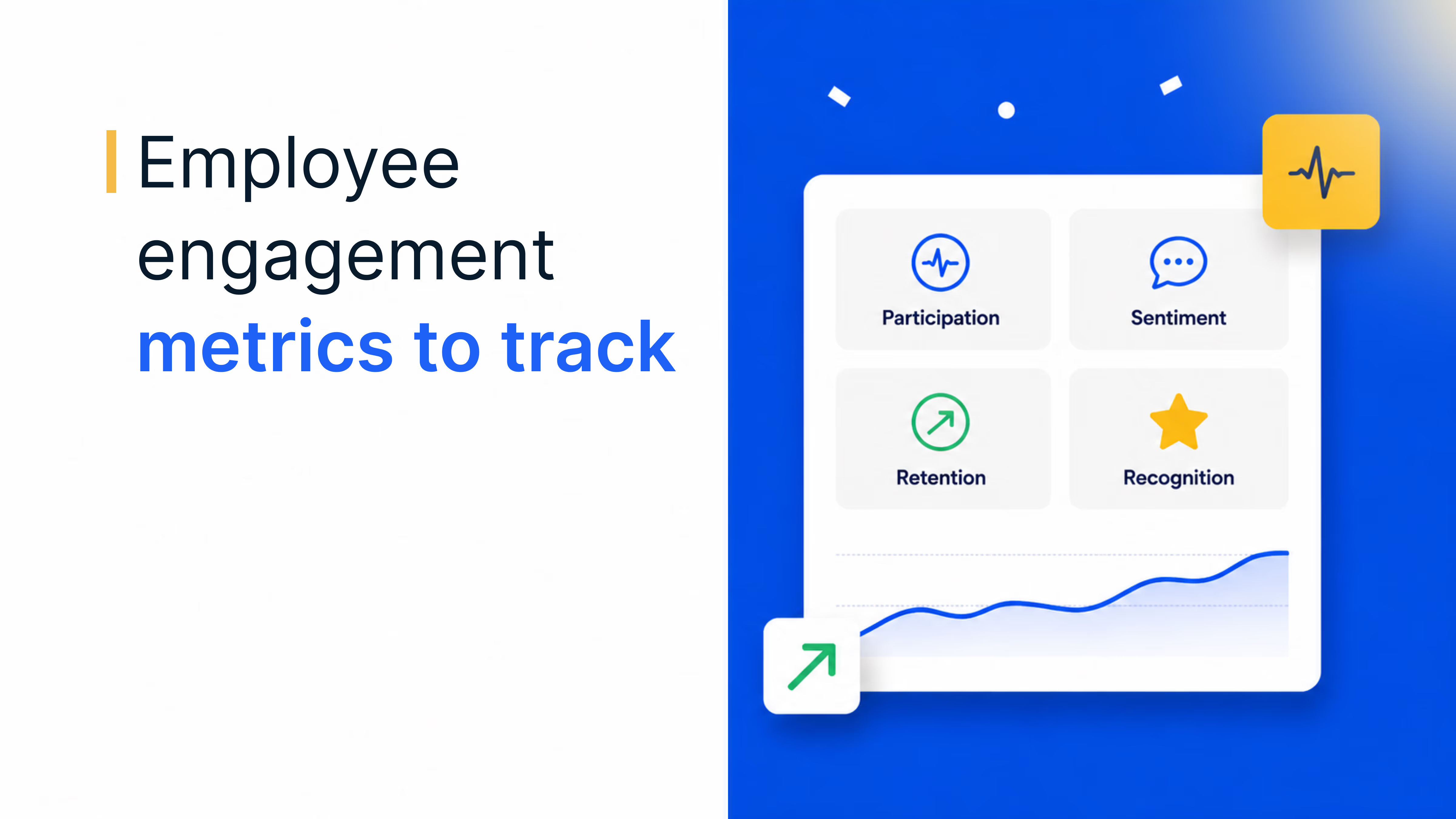
ROI from a channel loyalty program is not one number. It is a set of leading and lagging indicators that, together, tell you whether the program is building the partner behavior you need.
Enrollment rate tracks what share of eligible partners have joined. Low enrollment is a design or communication problem, not a partner problem.
Active participation rate measures of enrolled partners how many engaged in the last 30, 60, or 90 days. This is the real health metric.
Sell-through growth compares revenue from enrolled vs. unenrolled partners in the same tier. This is your clearest attribution signal.
Redemption rate indicates the health of your reward catalog. Low redemption signals a catalog problem, a threshold that is too high, or too much friction in the experience.
Partner churn rate reveals whether enrolled partners stay year over year. High churn means the program isn't delivering perceived value.
Revenue per active partner should be tracked against a pre-program baseline. Growth here is the business case for the next budget cycle.
The global loyalty management market is projected to grow from $13.59 billion in 2025 to $31.11 billion by 2033 at a 10.7% CAGR, according to Grand View Research. The investment in channel loyalty infrastructure is rising because the measurement tools are finally good enough to justify it.
| Region | Key challenge | What works |
|---|---|---|
| GCC and KSA | FMCG and automotive brands running channel programs manually; high-value dealer networks with no structured tier system | Tiered rebates for distributors; digital vouchers and travel rewards for dealer tiers |
| Philippines | Distributor-heavy FMCG and manufacturing; manual invoice reconciliation | QR-based invoice scan earning; e-wallet and GCash redemption |
| Indonesia | Near-100% WhatsApp penetration; dealer loyalty rising in automotive and FMCG | WhatsApp-native earning; local e-commerce vouchers; gamified leaderboards |
| Africa | Large informal channel networks; low smartphone penetration in some segments | Airtime and mobile money redemption; WhatsApp engagement; USSD-compatible earning |
| USA | Mature channel incentive market; buyers focused on ROI proof and CRM integration | Salesforce and SAP integration; compliance-grade audit trails; ROI dashboards |
How Xoxoday Loyalife helps you run channel loyalty at scale
Running a channel loyalty program across hundreds of distributors and dealers – across geographies, languages, and product lines – requires infrastructure that spreadsheets and manual processes cannot provide. Xoxoday Loyalife is an end-to-end loyalty management platform built for VP Sales teams managing indirect channels at scale.
Automated sales data from any source. CRM, ERP, DMS, invoice OCR, and QR code scanning all feed into one program engine. No manual uploads. No reconciliation disputes.
WhatsApp bot and white-label mobile app. Partners check balances, upload invoices, and redeem rewards without opening a laptop. Works across every geography and partner type.
Real-time dashboards for VP Sales. Track active vs. declining partners by region, SKU, and tier. Manage the channel proactively, not from quarterly reports.
10M+ rewards in 150+ countries. Local reward catalogs for every market – from the GCC to Indonesia to Africa. Multi-currency, multilingual, SOC 2 certified, GDPR compliant.
Loyalife powers channel partner rewards at enterprise scale: 5,000+ enterprises, 150+ countries, 10M+ reward options, $5B+ rewards distributed, G2 Leader 2026.
Your next step to running channel loyalty at scale
A channel loyalty program is not a tactical add-on to your sales strategy. It is the infrastructure that turns an invisible, unmanaged partner network into a predictable, measurable revenue channel.
The brands winning in their indirect channels are not the ones with the largest incentive budgets. They are the ones who built a system: clear tier mechanics, mobile-first partner access, automated data ingestion, and real-time visibility for the team managing the channel.