Key Takeaways
A renewal discount lowers the price. A renewal reward adds value without touching it.
Once a subscriber cancels, only 11% ever come back, according to McKinsey, which is why the renewal moment matters more than the win-back.
One automated renewal reward flow lifted feature adoption 35% and completion rates 2.2x in 60 days.
A renewal reminder that gets ignored isn't a messaging problem. It's a motivation problem.
Most subscription businesses treat renewal as a billing event: charge the card, send a receipt, move on. But the moment right before a renewal is the same moment a customer decides whether the product is still worth paying for. Nudge that decision with the wrong lever, another discount, another "don't forget" email, and the renewal rate barely moves.
This post looks at what actually changes that decision: automated rewards fired at the right renewal moment, why they outperform discounts, and how the workflow behind them actually works.
What separates a renewal reward from a renewal discount
A renewal discount lowers the price. A renewal reward adds something on top of it, without touching the price at all. That distinction sounds small. It changes how the customer remembers the transaction.
A discount trains a customer to expect a lower price next time, too. A reward does the opposite. It reinforces that renewing was the right call, without resetting what the customer thinks the product is worth.
| Dimension | Traditional approach | Reward-led approach |
|---|---|---|
| Renewal reminders | Repeated emails and SMS that get ignored over time | Automated rewards fire at the moment renewal action is needed |
| Perceived value | Discounts reduce perceived value over time | Rewards create a sense of gain instead of a lower price |
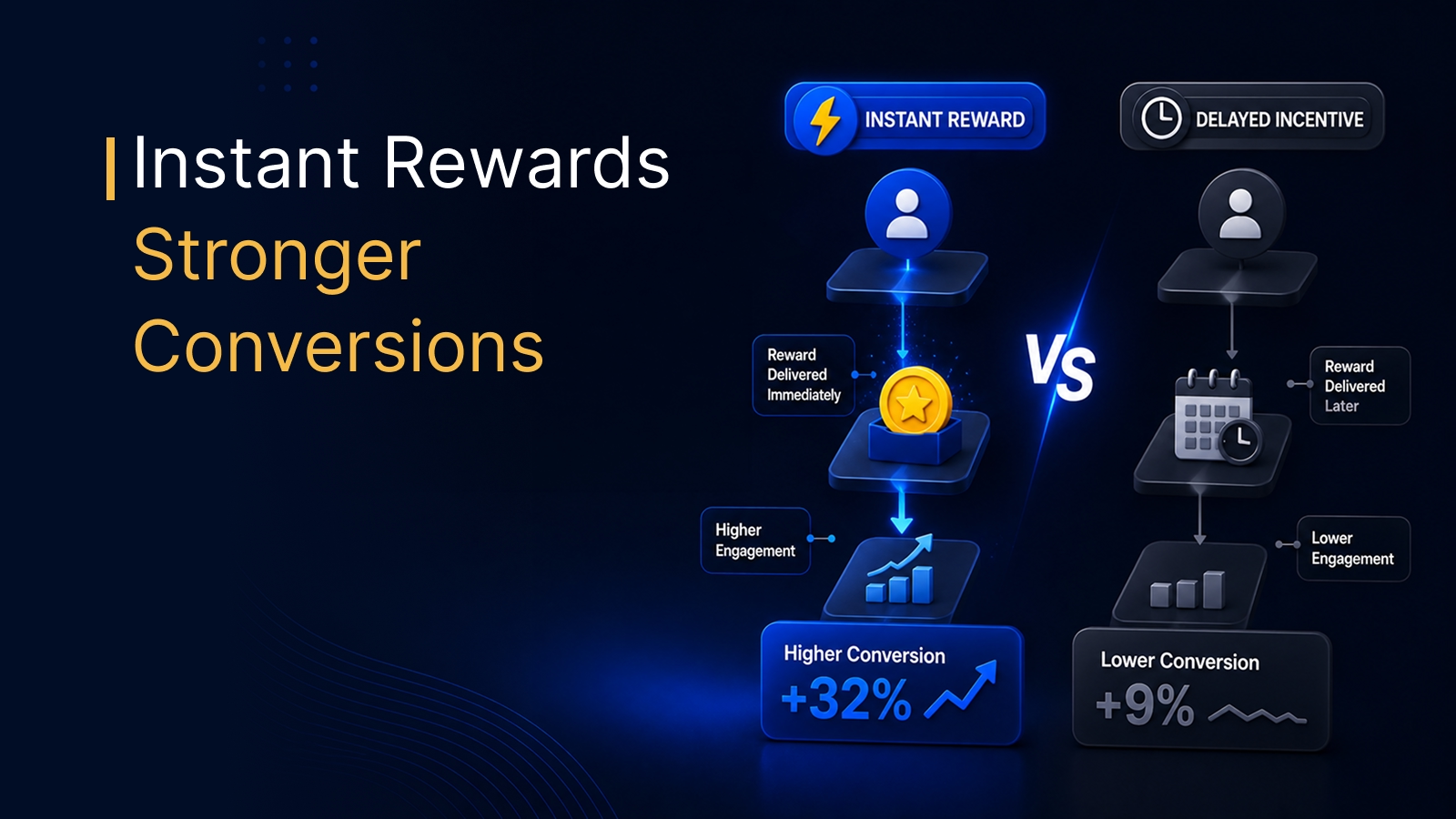
| Post-renewal experience | No immediate benefit, so users delay the decision | Users receive the reward instantly, reinforcing the renewal |
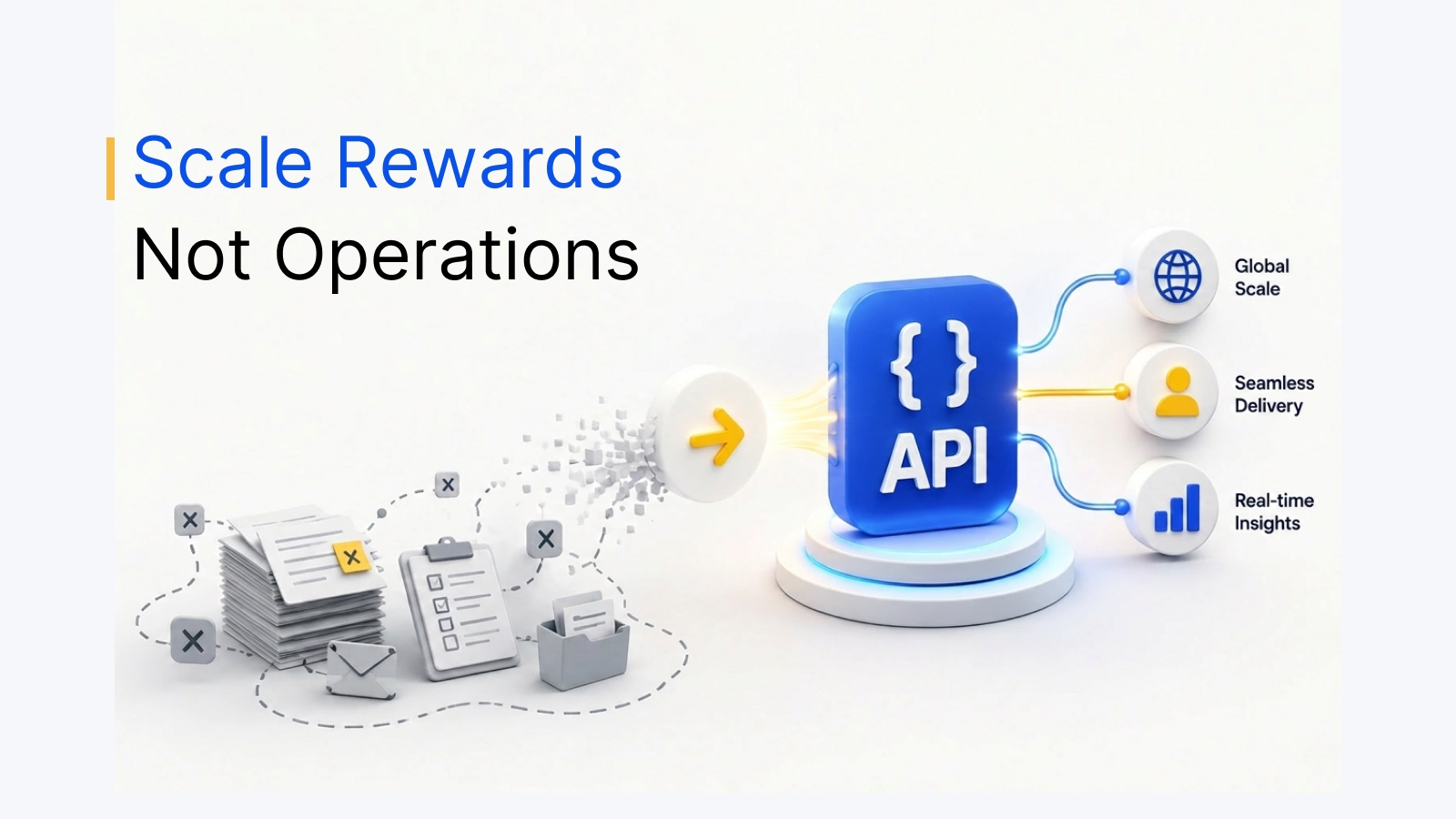
| Distribution effort | Manual reward sourcing causes delays at scale | APIs handle issuance, delivery, and tracking without manual steps |
| Business outcome | Weak engagement drags renewal rates down and churn up | Reward-led journeys lift conversion and retention together |
The pattern holds across almost every renewal-heavy business, from antivirus subscriptions to SaaS seats to streaming tiers. The lever that works isn't a lower price. It's a faster, more certain payoff.
Why most renewal programs stall before they scale
Five things break a renewal program once volume shows up: low renewal intent because customers treat the first purchase as a one-time decision, reminder fatigue from repeated emails and texts, price sensitivity that standard discounts can't overcome, manual reward effort that falls apart past a few hundred customers, and no reward trigger built into the renewal journey at all.
None of these are content problems. A better subject line doesn't fix reminder fatigue. What fixes it is removing the reminder from the equation and replacing it with an action that pays off the moment the customer takes it.
A team running renewal campaigns manually usually hits the ceiling the same way: a spreadsheet tracks who renewed, someone orders vouchers one at a time, and the process that worked for 200 customers a month collapses at 2,000.
The real cost of reminder fatigue
Reminder fatigue isn't a metaphor. It's a measurable decay curve. The fifth renewal email performs worse than the first, and the tenth barely gets opened.
Once a customer starts ignoring renewal notifications, the only lever left is usually a bigger discount. That's an expensive trap. It buys one more renewal cycle while training the customer to wait for the next markdown before acting at all.
Why discounts erode value instead of building loyalty
Discounts work once. They rarely work twice without getting bigger. McKinsey's research on subscription businesses found that good perceived value, not price, is the strongest reason consumers subscribe in the first place, cited by 62% of respondents, and once a subscriber cancels, only 11% ever come back.
That gap matters more than the discount itself. The chance to win someone back after they have already canceled is small. The chance to keep them from canceling by rewarding the renewal itself, at the moment they're deciding, is the higher-leverage move.
[How cashback rewards outperform discounts on repeat purchase](/blogs/plum/cashback-reward-campaigns)
See Plum in action
See how Xoxoday Plum automates renewal rewards end to end.
Book a free 30-min demoTrusted by 5,000+ companies
What an automated renewal reward journey actually looks like
An automated renewal reward journey runs in five steps, and the customer only experiences four of them. The billing or CRM system fires a signal the moment a renewal happens. The reward system takes it from there.
- Reward notification received. The customer gets an email with the renewal reward details right after the renewal event fires.
- Open the reward experience. One click takes the customer straight into the rewards store, no login required.
- Select a reward and complete checkout. The customer picks a voucher or reward option and confirms the order in the same session.
- Voucher confirmation and measurable lift. One SaaS platform that automated exactly this flow measured a 35% increase in feature adoption within 60 days, and a 2.2x improvement in completion rates across onboarding and feature-usage actions, once the reward step replaced a manual follow-up email.
Renewal moments worth rewarding beyond the renewal itself
Renewal isn't one moment. It's several, and each one is a separate opportunity to fire a reward instead of a reminder.
- Early renewals. Rewarding a customer who renews ahead of their expiry window reduces last-minute drop-offs and makes the renewal cycle easier to forecast three months out, not three days.
- On-time renewals. A reward for renewing exactly on schedule, with no early action required, still beats silence. It marks the transaction as a decision worth reinforcing instead of a default that happened to go through.
- Multi-device or plan upgrades. A reward tied to upgrading a plan or adding a device turns a routine renewal into a higher-value purchase, without a hard sell attached to it.
- Lapsed customer win-back. A targeted reward can bring back a user whose subscription already expired, recovering revenue a reminder email never would have touched.
- Bundle and referral incentives. Bundling a renewal with an extended plan, or pairing it with a referral reward, raises basket value from a single interaction instead of two separate asks.
How Xoxoday Plum automates the renewal reward workflow
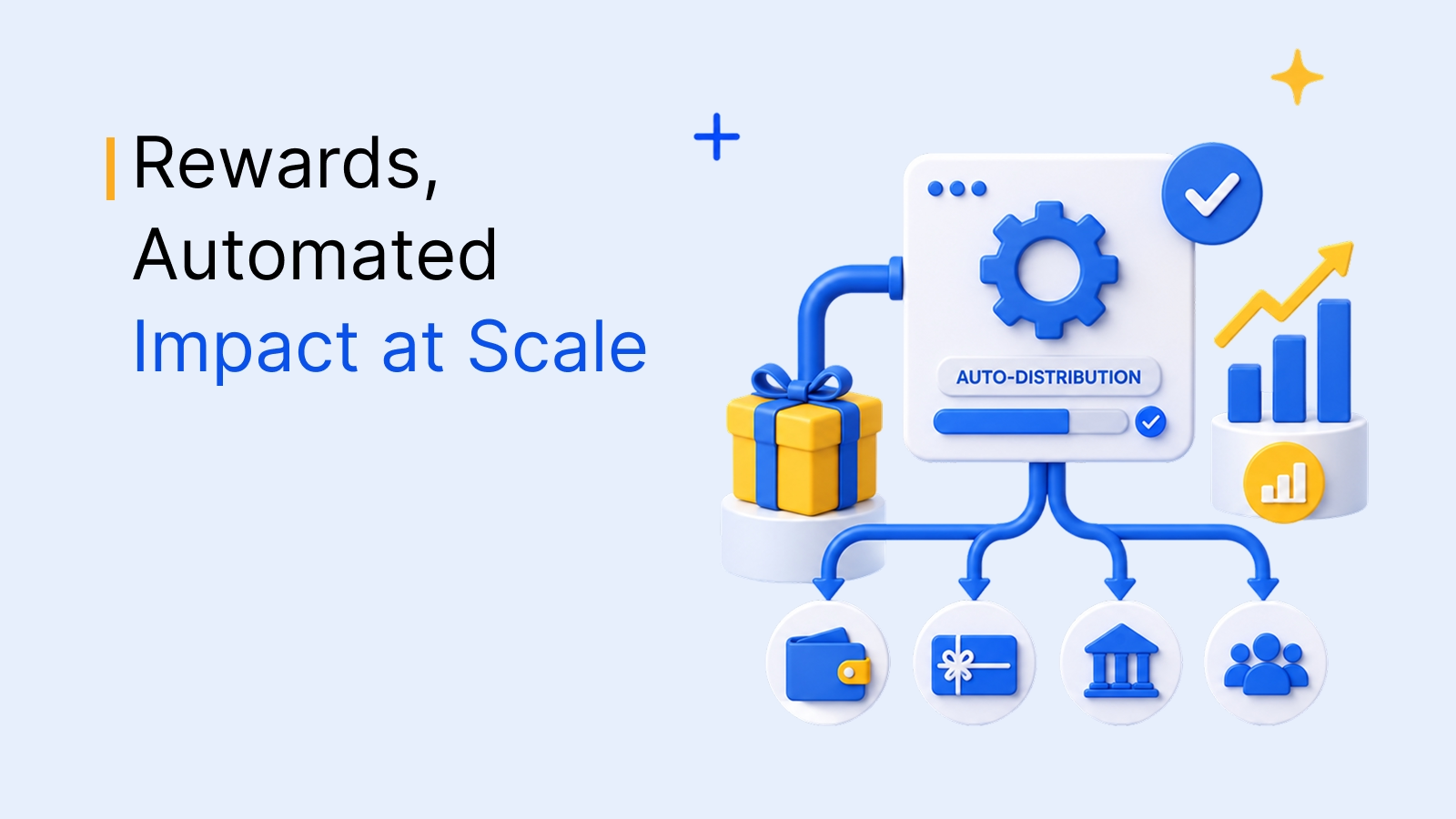
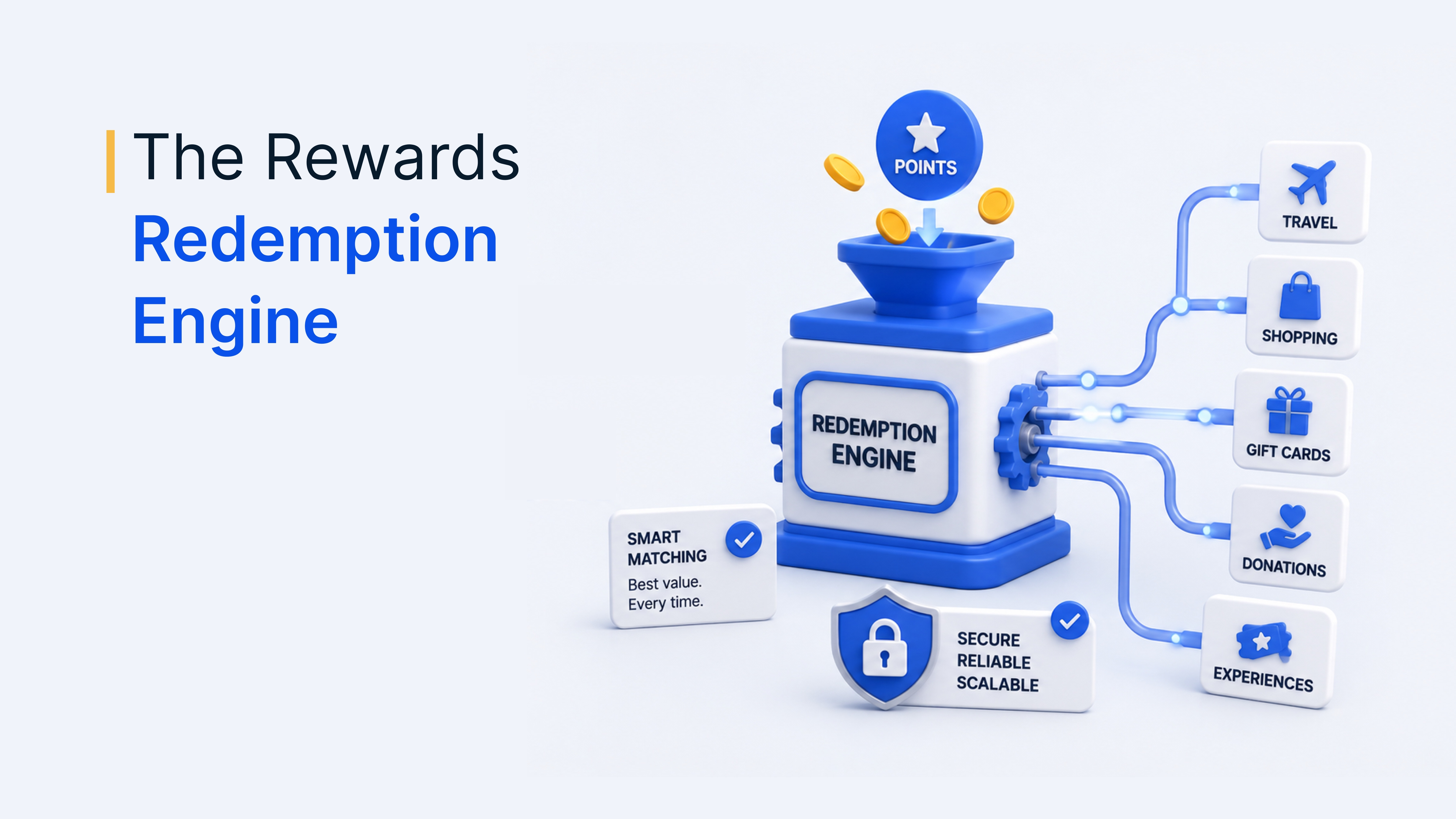
Xoxoday Plum connects to the systems that already know a renewal happened, billing platforms, CRMs, and internal subscription engines, through a REST API, and turns that signal into an issued reward without a person in the loop.
The trigger logic stays wherever the business already runs it: a successful charge, a plan upgrade, a resolved payment failure. Plum's job starts after that signal fires, issuing the reward instantly in the format the customer picks, a gift card, a reward link, or points, and tracking delivery in real time.
For businesses renewing customers in batches, such as an annual plan cycle that resets for thousands of accounts on the same date, Plum supports bulk issuance alongside individual API calls, with webhook-based status tracking so a failed delivery gets flagged and retried automatically instead of surfacing days later in a support ticket.
End to end, the workflow breaks down into a few connected pieces:
- Event trigger. A webhook or API call from the billing/CRM system fires the moment a qualifying renewal event happens, no manual export or handoff required.
- Rule mapping. The event maps to a pre-configured reward rule, so a plan renewal, an upgrade, and a win-back can each carry a different reward without separate integrations.
- Instant issuance. Plum issues the reward in the format the customer picks, gift card, reward link, or points, within seconds of the trigger firing.
- Delivery tracking. Every issuance is tracked in real time, with webhook-based status updates so a failed delivery is flagged and retried automatically.
- Bulk and individual support. The same API handles single-customer triggers and bulk issuance for cohort-wide renewal dates, like an annual reset for thousands of accounts.
- Reporting. Redemption and delivery data roll up into a single dashboard, so renewal reward performance is visible without stitching together exports from multiple systems.
Why the same reward doesn't work for every renewal segment
A five-year subscriber and a first-time renewal are not the same decision, and rewarding them identically wastes the moment for both.
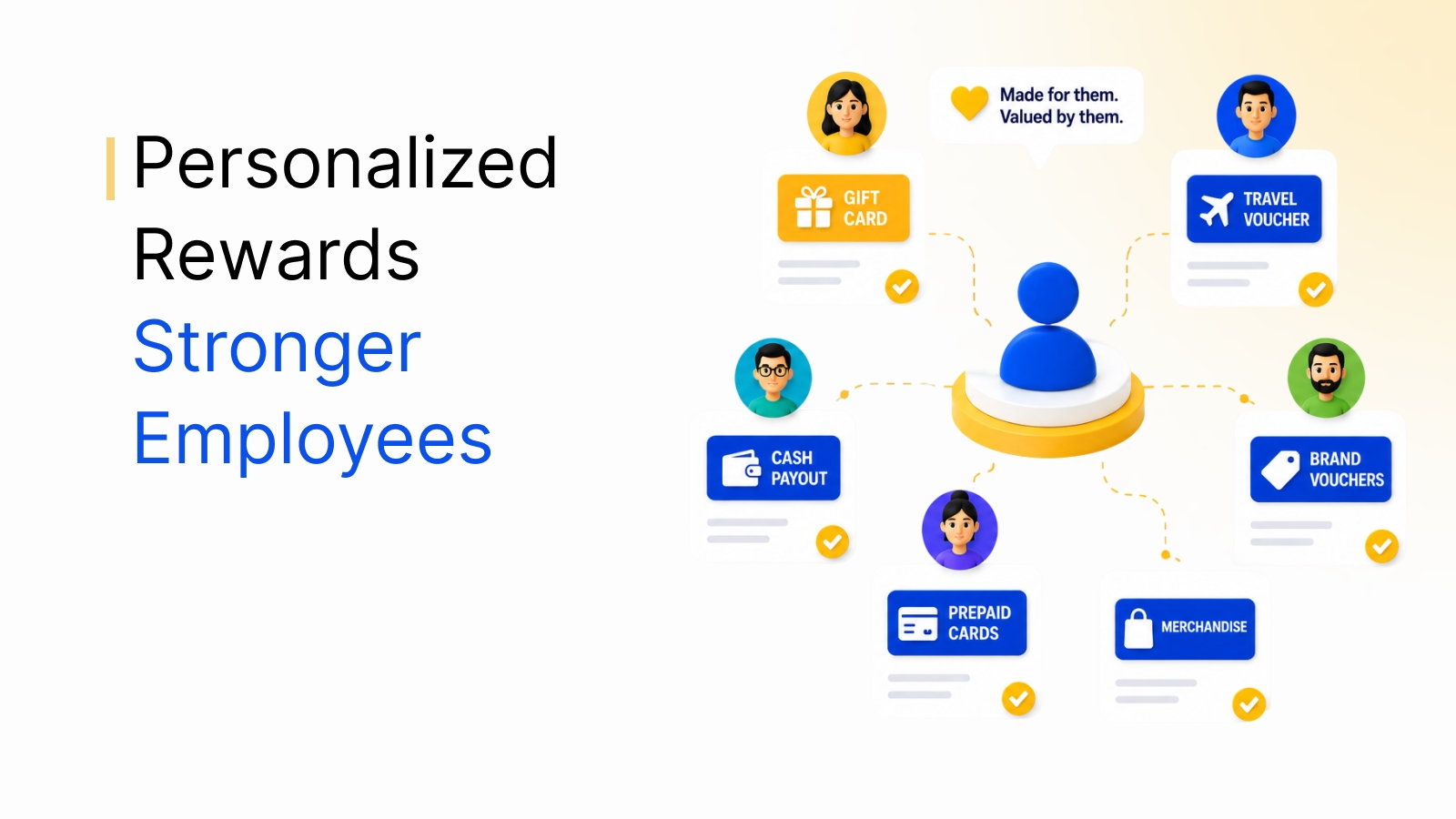
Plum's storefront supports tier-based catalogs, so a long-tenured customer sees a different set of reward options than someone renewing for the first time, without the business building separate reward logic for each segment.
Personalized reward recommendations pull from redemption history and category affinity, so the catalog a customer sees is already narrowed to what they're likely to want, rather than the full options list.
That segmentation matters most at the edges. A customer on the verge of churning responds differently to a reward than one renewing for the fifth year running, and treating both the same way leaves value on the table in both directions.
A global catalog built for renewal moments, not just gift cards
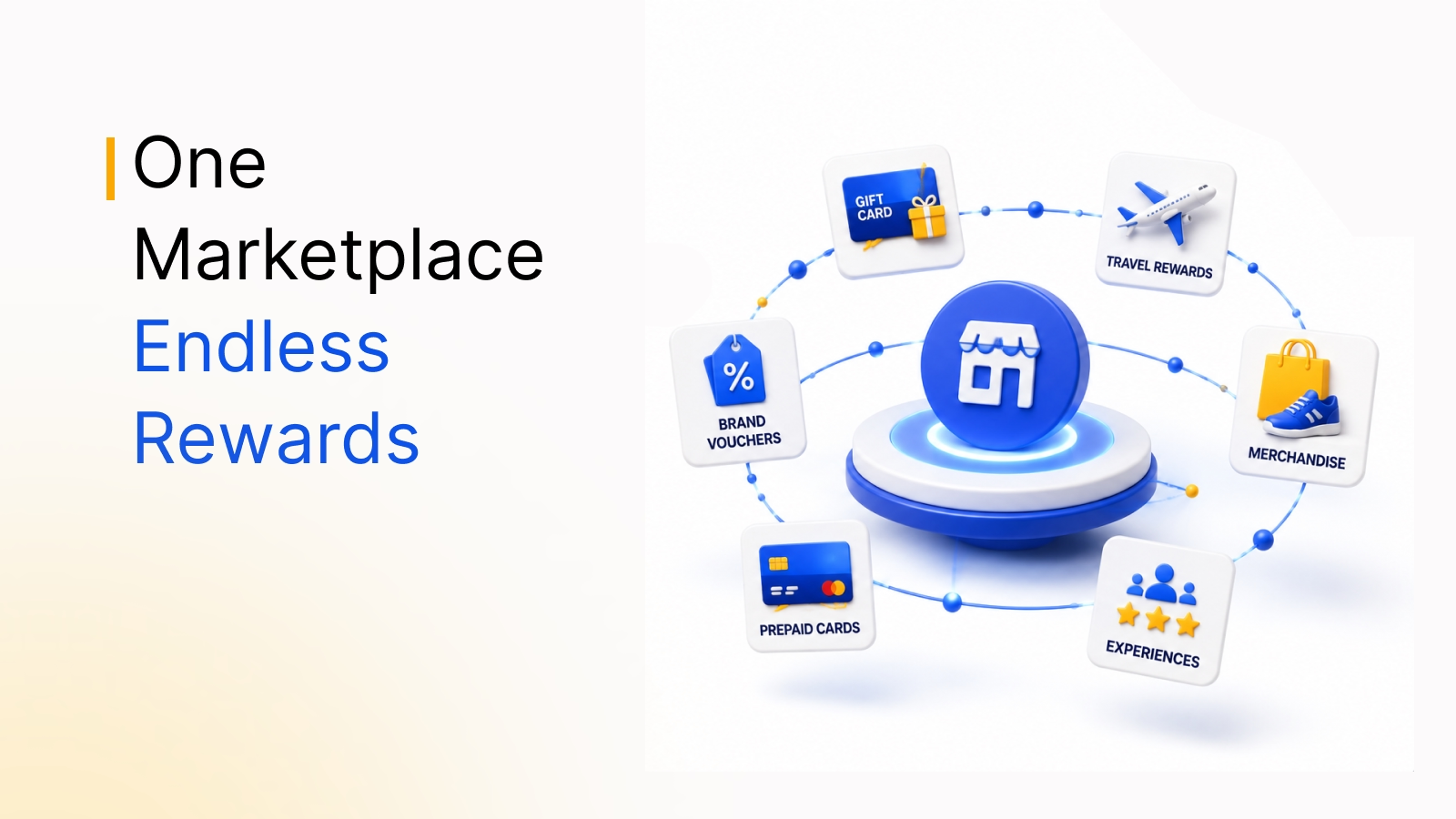
Most renewal reward programs default to a single gift card brand because that's all the vendor offers. A renewal reward only works if the customer actually wants what's on offer, and a subscription base rarely wants just one thing.
300K+
Merchandise items
fulfilled across 20+ countries
200K+
Offers, cashbacks, and discounts
on everyday essentials
1,200+
Airport lounges
accessible via digital QR passes
10,000+
Brand gift cards
across 150+ countries
That range matters most for a consumer subscription business with a broad user base. A catalog limited to e-commerce gift cards misses the customer who would rather have a mobile top-up, a charity donation, or a travel voucher.
How compliance and fraud controls protect renewal reward payouts at scale
A reward program that fails on delivery does more damage than no reward program at all, and one that gets exploited does worse. Automated payouts need the same scrutiny as automated billing.
Plum runs on 99.99% uptime, with fraud prevention, transaction monitoring, and real-time tracking built into every payout, alongside SOC2 and CCPA-aligned controls. A subscription business rewarding a few hundred renewals a month can tolerate manual checks. One rewarding tens of thousands can't, and needs those controls built into the distribution layer itself, not bolted on after a compliance review flags a gap.