Key Takeaways
Tiered loyalty members make 3.6x more annual purchases than non-tier customers, but the model only works when customer value is concentrated
Paid loyalty programs unlock higher spending, but only in multi-benefit ecosystems where value is continuous
Points build frequency infrastructure, but they do not build emotional loyalty on their own
Most loyalty programs fail not because the execution was wrong. They fail because the model was wrong from the start.
A Loyalty Manager building a program for a bank should not be copying what a coffee chain runs. A retailer with 5 million transacting customers needs a different structure than a subscription business with 50,000 premium members. Yet across industries the same pattern repeats: companies pick the model they understand first, usually points, then wonder why engagement stays flat three years later.
This guide breaks down the dominant types of loyalty programs, from points to tiered to paid membership, and gives you a framework to choose the one that actually fits your business, your customers, and your data maturity.
What "types of loyalty programs" actually means
There is a distinction worth making before selecting any model: the difference between a loyalty mechanic and a loyalty model.
A mechanic is the visible surface. Points, tiers, discounts, cashback. A model is the underlying logic of exchange: what behavior you reward, why the customer participates, and what keeps them coming back. Most program design conversations stay at the mechanic level. That is why so many programs are technically functional but commercially flat.
The right loyalty model does three things. It matches how your customers actually behave. It fits how your business generates value. And it gives you a lever to influence the specific outcome you need to move, whether that is purchase frequency, lifetime value, or share of wallet.
12–18%
More incremental annual revenue
Loyalty program members vs non-members
75%
Members who change buying behavior
To boost revenue for the brand they are loyal to
1.8x
Higher ROI from tiered vs non-tiered
Tiered programs consistently outperform flat structures
60%
More likely to increase spend in paid programs
Vs 30% for members of free loyalty programs
What well-matched loyalty programs deliver
According to Accenture, loyalty program members generate 12 to 18% more incremental revenue per year than non-members. That lift depends on whether the model fits the customer context.
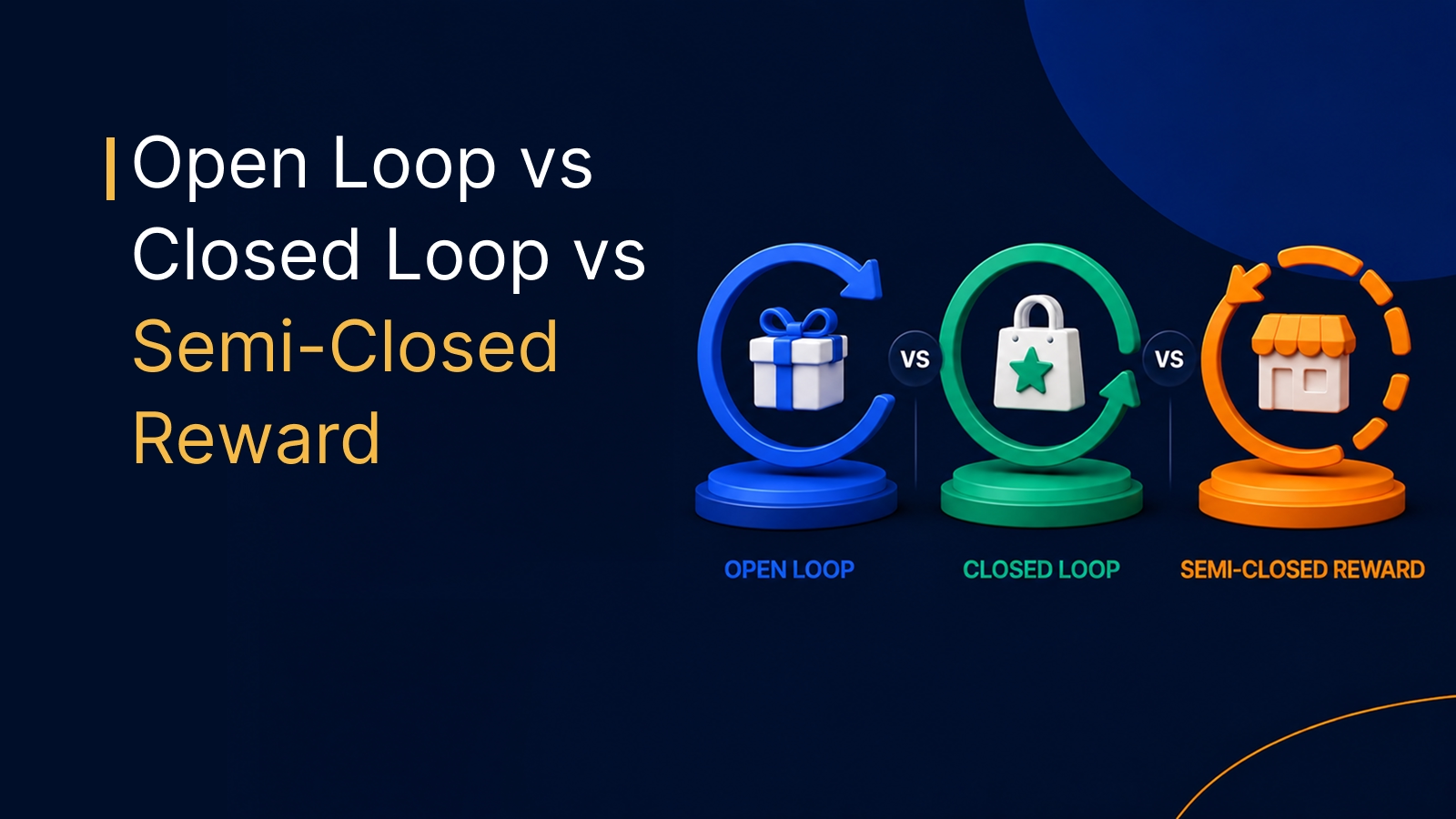
Points-based loyalty programs
The most widely used loyalty program model. For good reason, and with real limitations.
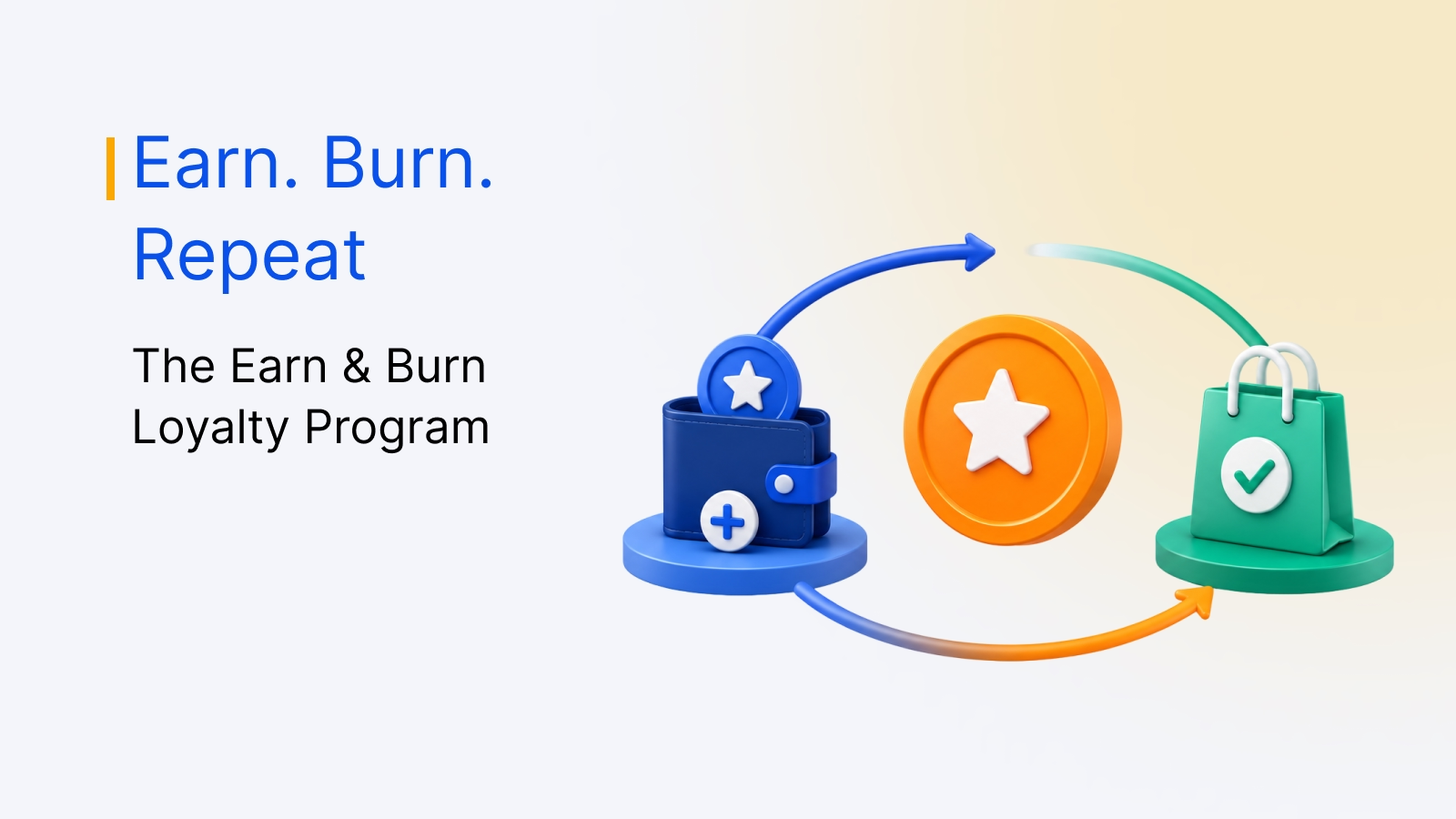
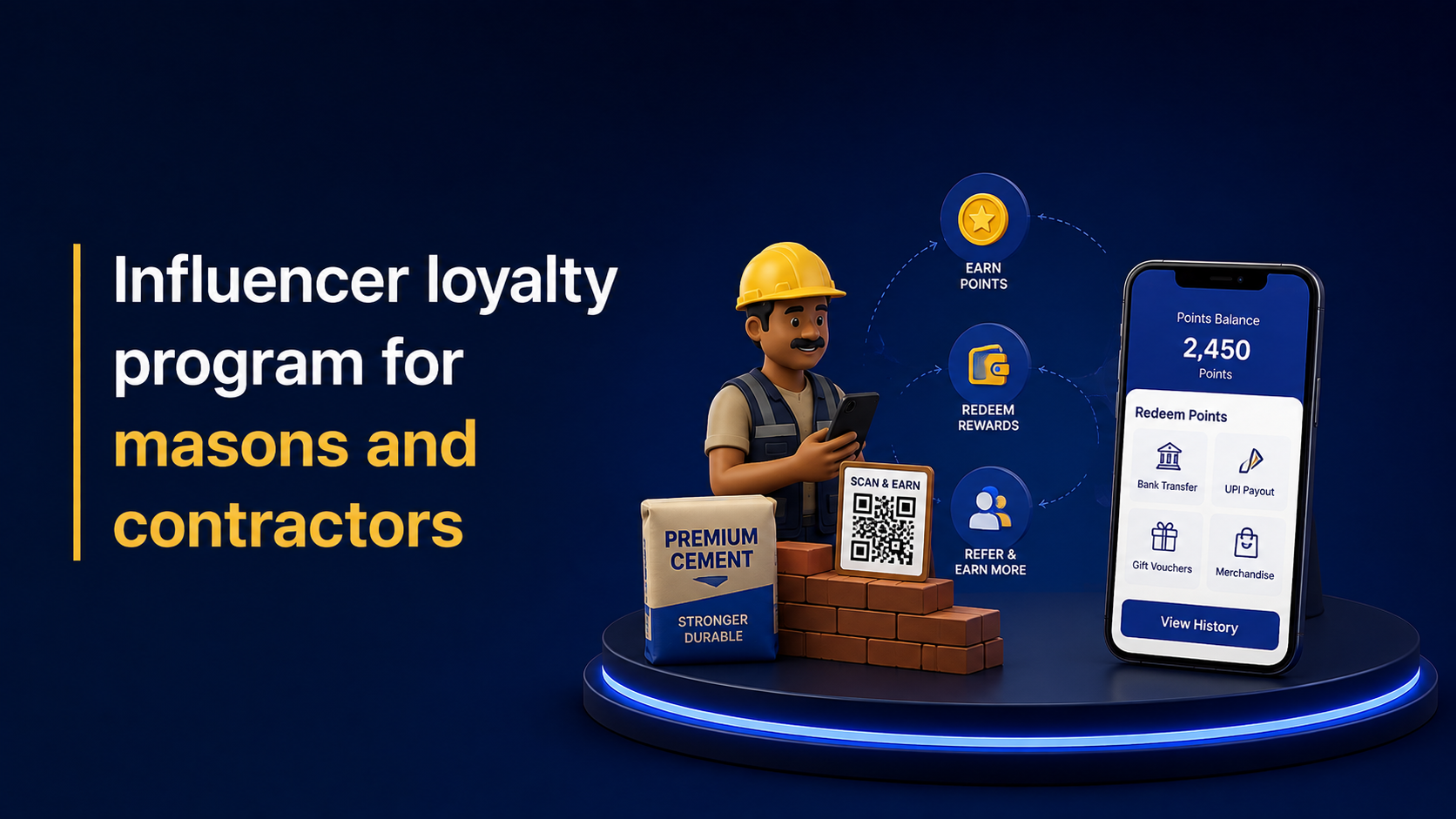
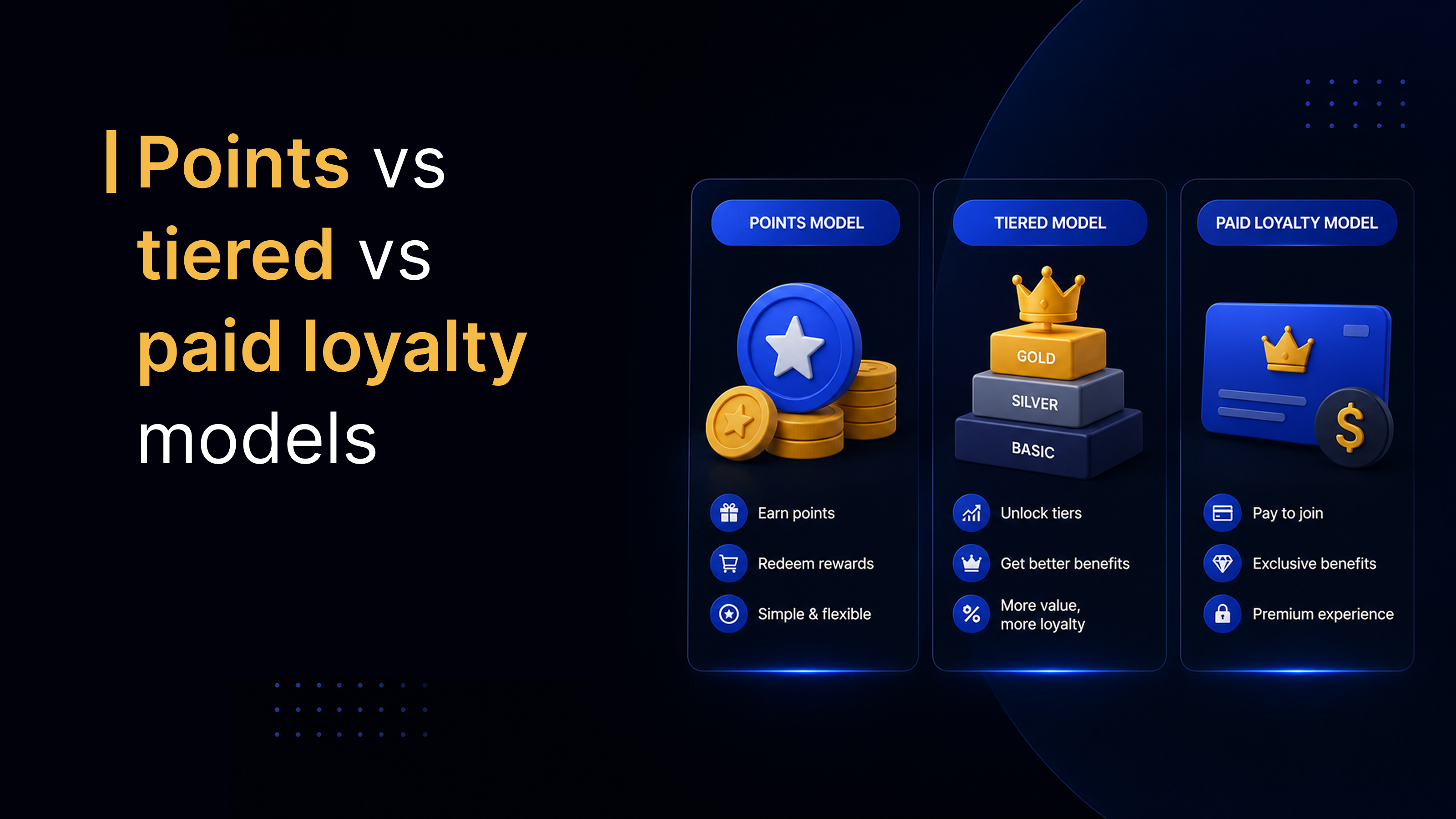
Points programs operate on a closed-loop exchange: spend, earn, accumulate, redeem, repeat. Every transaction generates measurable, accumulable value. In more advanced implementations, points reward non-transactional behavior too, such as app usage, referrals, or reviews, turning a passive earn system into an active behavioral steering mechanism.
According to Deloitte, 60% of consumers aged 18 to 24 prefer points-based loyalty schemes, partly because the value exchange is immediate and easy to understand.
When points work. High-frequency categories where the purchase cycle is short and the customer base is large are natural fits: retail banking, FMCG, quick-service restaurants.
Where they break down. A competitor can copy the mechanic overnight. Points programs do not build emotional loyalty on their own. They build the infrastructure on top of which real loyalty can be developed. A program relying only on points will eventually compete on who offers the highest earn rate.
For BFSI programs across GCC and Africa, points tied to card spend remain the dominant entry model. Banks use points as a foundation and layer tiered benefits and coalition partners on top to differentiate over time.
Explore the full picture in this guide to building a customer loyalty program.
Tiered loyalty programs
Tiered programs do something points programs cannot: they concentrate investment where it creates the most value.
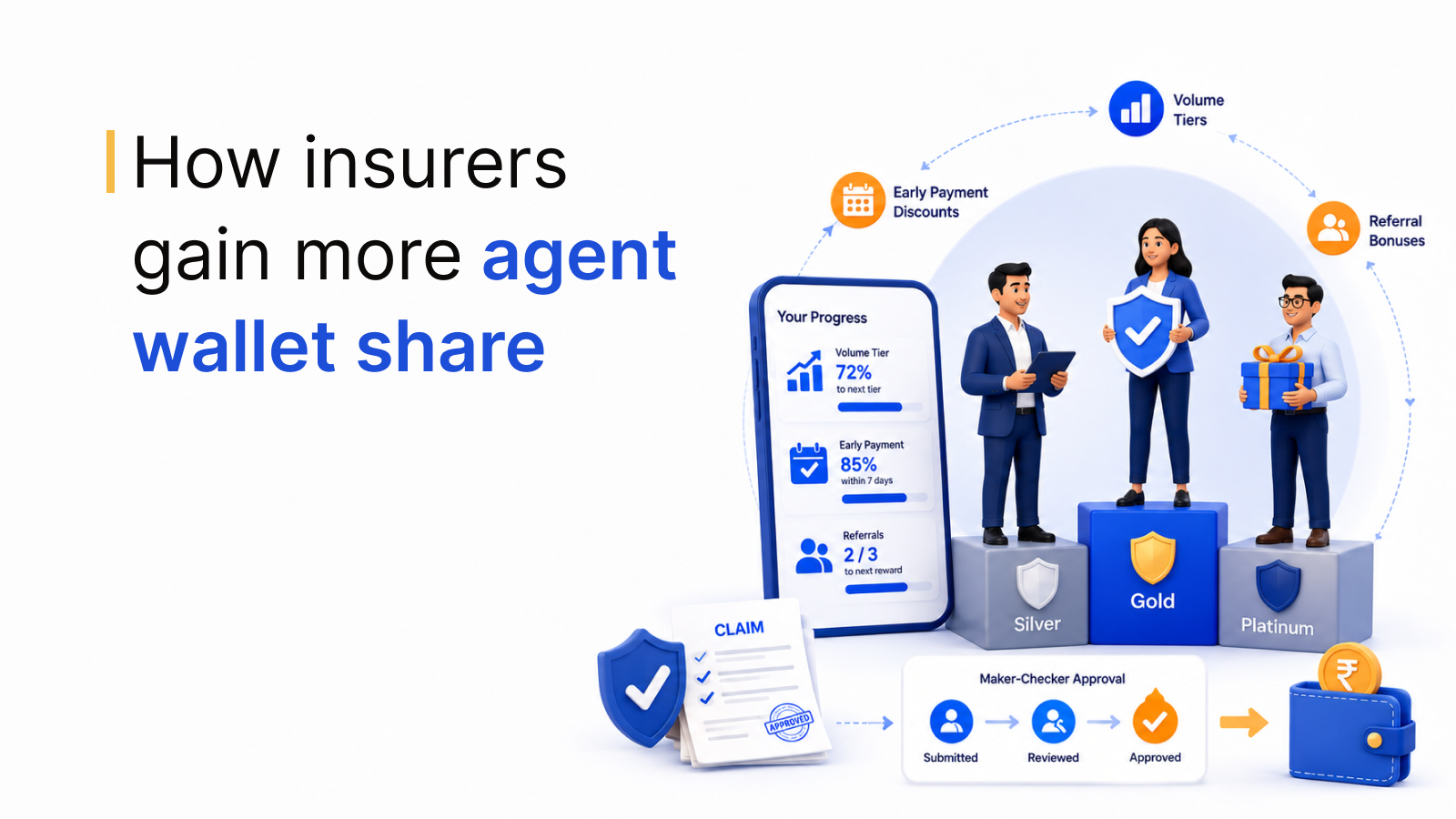
The mechanic is status progression. Customers move through levels, typically Bronze, Silver, Gold, Platinum, by accumulating spend, points, or engagement over a defined period. Each tier unlocks a distinct set of benefits: higher earn rates, exclusive access, priority service, early product drops. Annual resets or progress-decay mechanics introduce a behavioral pressure loop: members maintain activity to protect status they have already earned.
According to research by Rivo, tiered loyalty members generate 73% higher average order value and make 3.6 times more annual purchases than non-tier customers. Separately, 50% of consumers actively change their purchasing habits specifically to reach the next tier.
Best fit. Categories where customer value is not evenly distributed, where a top 20% generates a disproportionate share of revenue, and where status carries meaning. Travel, hospitality, and BFSI programs at scale have built entire business models around tiered recognition.
The design challenge. Thresholds too hard to reach produce disengagement at lower tiers. Benefits that are not genuinely differentiated produce indifference at higher ones. A tiered program is only as strong as what actually changes at each level.
See how every loyalty model runs in one platform
Loyalife supports points, tiered, paid, cashback, and hybrid programs without locking you into one default structure or requiring custom development.
Request a Loyalife demoTrusted by 5,000+ companies
Paid loyalty programs
The paid model inverts the logic of every other loyalty structure.
Instead of earning rewards through transactions, customers pay a fee upfront in exchange for immediate, ongoing access to benefits. The value is unlocked at enrollment, not accumulated over time. Customers who have already paid are more motivated to use the program, more likely to consolidate spend with the brand, and more resistant to switching.
According to McKinsey, members of paid loyalty programs are 60% more likely to increase their spending after joining, compared to 30% for those in free programs. The commitment of payment raises perceived value, which raises usage, which raises spend.
Where it works. High-frequency environments with multi-benefit ecosystems: delivery, content access, exclusive drops, accelerated earn rates. A single-benefit subscription is difficult to sustain without ongoing, visible value delivery.
The enterprise application. Paid tiers are increasingly used as a premium layer on top of an existing free program rather than as a standalone structure. In retail banking, premium banking programs with an annual or monthly fee have adopted this logic successfully across GCC markets.
For a detailed breakdown of the subscription model, see the guide to subscription loyalty programs.
Cashback, coalition, and gamified models
Three additional loyalty program models, each with a distinct use case.
Cashback loyalty programs
Cashback returns a fixed percentage of transaction value to the customer as direct credit, wallet balance, or future discount. The value is immediate and transparent. This makes cashback the fastest model to drive activation and the easiest for price-sensitive customers to understand.
The limitation is that cashback builds no emotional layer. It optimizes price perception and transaction routing but creates a financial relationship, not a loyalty relationship. In BFSI, cashback programs tied to card spend are effective for activation but require tiered or experience-based benefits to retain high-value segments long term.
Coalition loyalty programs
Coalition programs connect multiple brands in a shared loyalty ecosystem. Customers earn and redeem a common currency across partners, which accelerates accumulation and increases perceived value without requiring any single brand to carry the full cost.
The trade-off is control. In a coalition, no single brand owns the full customer relationship or the complete data picture. Coalition models suit markets where customers interact across multiple categories daily.
Gamified loyalty programs
Gamification introduces behavioral mechanics beyond the purchase loop: challenges, streaks, leaderboards, badges, time-limited missions. Research cited by Rivo finds that 87% of gamified loyalty programs retain more customers than non-gamified alternatives.
The critical caveat: gamification amplifies an existing value proposition but does not replace one. It works as an engagement layer on top of a solid loyalty model, not as the model itself.
Hybrid loyalty models: when one structure is not enough
The most mature enterprise loyalty programs do not run on a single model. They layer mechanics over time.
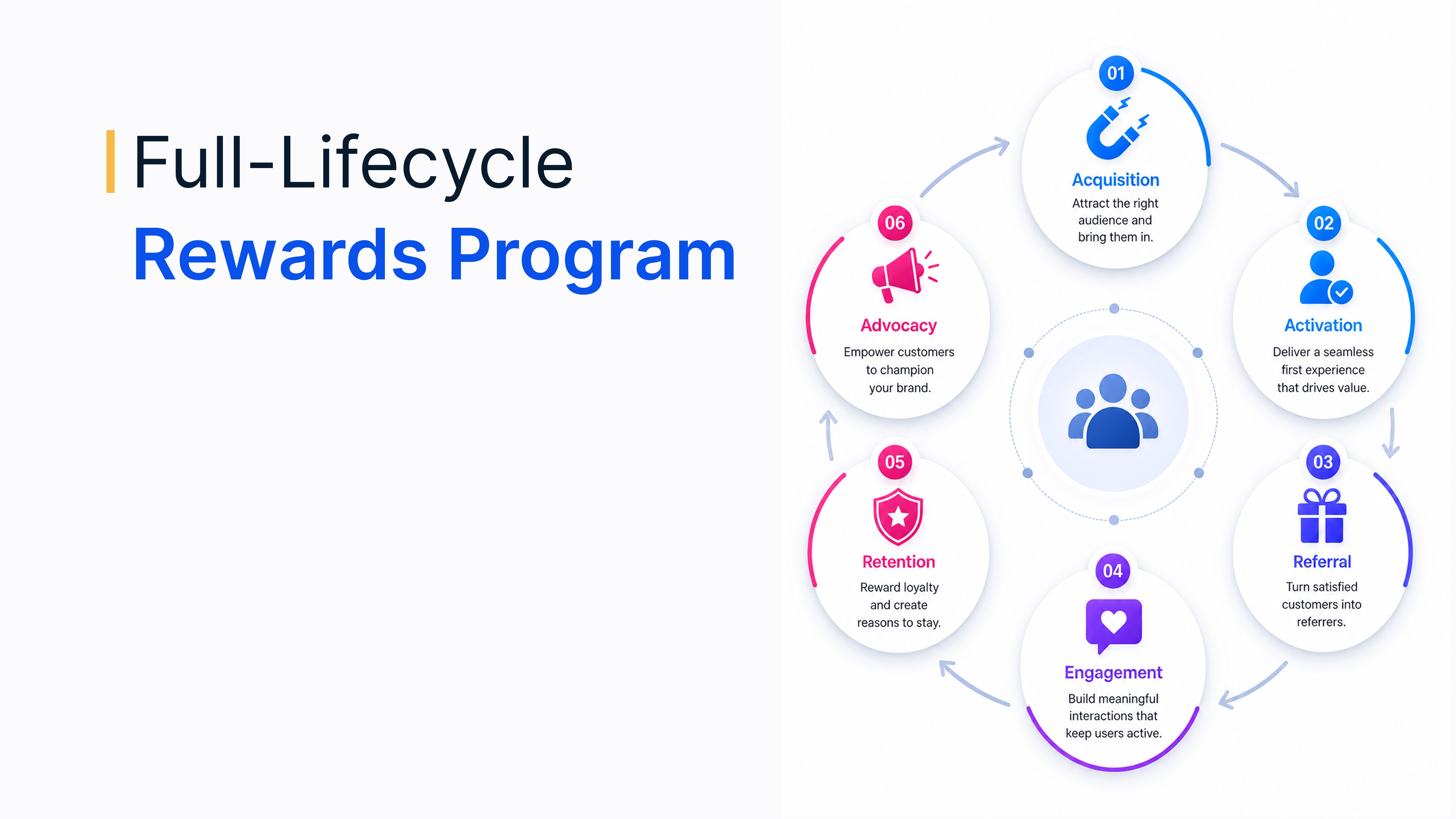
A common evolution: launch with points to build frequency and data collection. Once member behavior data is sufficient to segment meaningfully, introduce tiers to concentrate investment in high-value customers. As digital infrastructure matures, add gamified campaigns to drive engagement between transactions. The result is a hybrid program where different mechanics serve different objectives within one coherent system.
Hybrid programs require higher organizational and technical maturity. Real-time segmentation, cross-channel data integration, and configurable rule engines are prerequisites. The complexity must remain in the backend; customers should experience it as one simple, responsive program.
| Model | Best for | Purchase frequency | Data maturity | Retention impact |
|---|---|---|---|---|
| Points | High-volume, broad base | High | Low | Medium |
| Tiered | CLV segmentation, premium brands | Medium-high | Medium | High |
| Paid | Ecosystem businesses, engaged segments | High | Medium | High |
| Cashback | Price-sensitive, card-linked BFSI | High | Low | Medium |
| Coalition | Multi-brand, reach-first strategies | Variable | Low-medium | Medium |
| Hybrid | Mature enterprise programs | Variable | High | Very high |
How to choose the right loyalty program model
Model selection is not about finding the most sophisticated option. It is about finding the right match.
Customer behavior. How often do customers buy? How price-sensitive are they? What motivates return? High-frequency, low-decision-friction categories fit points programs well. Categories where value is concentrated in a premium segment fit tiered structures.
Business model. Subscription loyalty requires frequent usage and continuous value delivery. Tiered models require skewed value distribution to justify concentrated investment. Cashback depends on margin structure and scales poorly in thin-margin categories.
Data and technology maturity. Points programs can run on basic rule logic. Tiered programs require segmentation and tracking over time. Hybrid models depend on real-time data, channel integration, and continuous optimization.
Program objective. Cashback and referral programs are activation levers. Tiered structures drive retention and share of wallet. Gamification increases engagement frequency. Define the primary objective before selecting a model.
For enterprise programs in regulated industries, two additional criteria apply: compliance readiness (data sharing across coalition partners, payment processing for subscription fees) and integration readiness (CRM, POS, and transaction systems capability).
According to research by Bain and Company and Harvard Business Review, a 5% increase in customer retention can boost profits by 25 to 95%. The model you select determines whether the program sustains that retention long term or plateaus after the launch period.
| Step | Action | Considerations |
|---|---|---|
| Step 1 | Define your primary goal | Retention / frequency / acquisition / share of wallet |
| Step 2 | Map customer behavior | Purchase cycle, price sensitivity, engagement potential |
| Step 3 | Assess tech and data maturity | Rule-based vs. real-time segmentation capability |
| Step 4 | Select and layer your model | Start simple, add complexity only as data supports it |
See how leading brands structure their customer loyalty program strategy.
How Loyalife supports every loyalty model without locking you in
Most loyalty platforms are designed around one default structure. You configure points, add a tier system later, and face a custom development project every time the business needs something different.
Loyalife is built to support every loyalty program model in a single platform. Whether your program requires a pure points engine, a tiered membership structure, a paid benefits layer, a cashback mechanism, or a hybrid combination, the logic is configured from one system, without raising an IT ticket for each rule change. Program managers can adjust earn rates, tier thresholds, benefit sets, and redemption logic independently.
Flexibility. Configure any model without dev dependency. Adjust earn rules, tier thresholds, and benefit sets without raising an IT ticket.
Catalog. 10M+ rewards options globally. 30+ categories across 150+ countries, ready across every model type.
Compliance. SOC 2 certified, GDPR compliant. On-premise deployment for BFSI with strict data residency requirements.
Integration. API-first for BFSI integration. Connects with CRM, POS, and core banking systems without custom middleware.
Scale. 5,000+ enterprises. 150+ countries. 10M+ rewards options. $5B+ rewards distributed. G2 Leader 2026.
Choose the model that fits your business, not your competitor's
There is no universally correct answer when it comes to types of loyalty programs. Points, tiered, paid, cashback, coalition, and hybrid models each solve a different problem in a different context.
What fails consistently is selection by imitation: copying a competitor's model without asking whether it fits your customer base, your business economics, or your data infrastructure. The right program is calibrated to how your customers behave and what outcome you need to move.
Start with your objective. Match the model to customer behavior. Build what your infrastructure can support. Layer complexity only once the foundation is working.
How Loyalife helps you configure the right model for your business
The choice of loyalty model determines what your business can accomplish with the program and how efficiently you can operate it over time. Loyalife provides the flexibility to run every model-points, tiered, paid, cashback, hybrid-without the friction of custom development or vendor lock-in.
Whether you are starting simple with points and evolving to hybrid as your data matures, or launching a tiered program for a premium segment, the platform adapts to your strategy without requiring code changes. That agility turns model evolution into a lever for growth rather than an IT constraint.