Key Takeaways
US gifting thresholds don't transfer globally - a $50 gift can read as insulting or suspicious depending on the market.
Compliance operating costs for cross-border gifting programs have risen more than 60% in recent years.
Consolidating global gifting onto one platform removes a vendor and compliance checkpoint per market.
Your best-performing gifting sequence just flopped in Singapore. The $75 gift card that books three demos a week in Austin sat unopened in a Tokyo inbox, and your SDR has no idea why.
Most ABM teams build one gifting playbook and run it everywhere. That works until the target account list crosses a border, and then acceptance rates, show rates, and even legal exposure start moving in directions the US playbook never accounted for.
This isn't a translation problem. It's a strategy problem.
Why US-Centric Gifting Strategies Fail With International Accounts
A US gifting program is built on assumptions that don't travel. Gift-card thresholds, acceptable occasions, even what counts as a "gift" versus a "bribe" shift sharply once the recipient sits outside North America.
79%
of marketers
say personally relevant communication engages buyers best
Source: Gartner.
The three failure points repeat across most global ABM programs:
- Wrong value tier. A $50 gift that reads as generous in the US can look either insultingly small or suspiciously large elsewhere.
- Wrong occasion. Gifting tied to a "book a demo" trigger works differently depending on how a market views vendor gifts during an active sales cycle.
- Wrong channel. Email-first delivery assumes an inbox culture that doesn't hold everywhere WhatsApp or SMS dominates.
None of these are minor details. Each one changes whether the gift gets opened, redeemed, or reported to legal.
Cultural Gifting Norms Across Key ABM Markets (EMEA, APAC, LATAM)
Gifting norms aren't a footnote to your ABM strategy. They decide whether the gift builds trust or creates an awkward moment your champion has to explain internally.
Roughly 45% of US companies maintain formal gift-giving policies with limits typically between $25 and $100, compared with about 32% of companies in Germany, and Middle East norms diverge again in the opposite direction, where declining a gift can itself be seen as impolite. The table below maps the practical differences ABM teams need to plan around.
| Region | Gift acceptability | Typical value comfort zone | Compliance sensitivity |
|---|---|---|---|
| EMEA (Western Europe) | Moderate, policy-driven | Low ($25–$75) | High - strict internal gift registers common |
| EMEA (Middle East) | High, relationship-first | Medium–high | Moderate - norms favor gifting, but disclosure rules still apply |
| APAC | High, but occasion-specific | Medium ($50–$150) | High - many markets require gift disclosure above set thresholds |
| LATAM | Moderate, warmth-driven | Low–medium ($25–$100) | Moderate - enforcement varies by country |
| US (baseline) | Moderate, policy-driven | Low–medium ($25–$100) | High - formal policy adoption near 45% |
A gift that clears every box in one row can trip a compliance review in another. That's the gap a single global template can't close.
See how Plum localizes gifting by market automatically
Currency, language, and compliance handled per region, out of the box.
See Plum in actionTrusted by 5,000+ companies
Currency, Compliance, and Tax Considerations by Region
Compliance isn't the interesting part of gifting, until it's the reason a campaign gets frozen mid-quarter. Compliance operating costs tied to cross-border programs have risen more than 60% in recent years as regulatory complexity has grown, and gifting sits squarely inside that complexity for any company running true global ABM.
60%+
rise in compliance operating costs
across cross-border programs
Source: Deloitte research (via Slice).
Three variables drive most of that overhead:
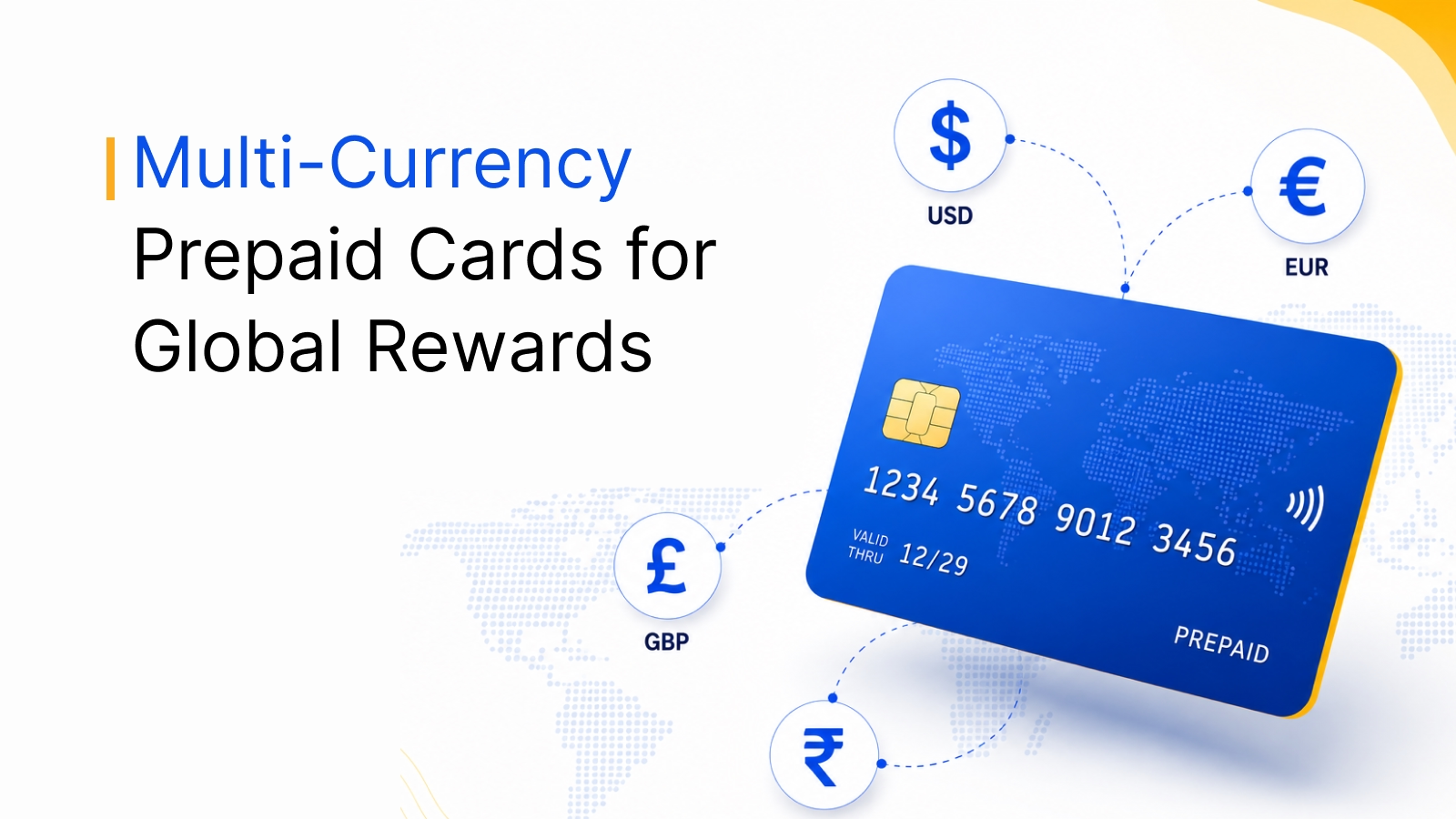
- Currency conversion. A flat-value gift priced in USD lands as an odd, sometimes awkward number once converted.
- Tax treatment. Some markets treat digital gift cards as taxable income to the recipient above certain thresholds; others don't.
- Sanctions and restricted-party screening. Global account lists occasionally include entities that can't legally receive value transfers at all.
None of this is exotic. It's the cost of doing gifting right once accounts cross a border.
Building a Global Reward Catalog: What Brands Resonate in Each Market
A reward catalog built around US retail brands is a catalog most of your target accounts won't recognize. Relevance is what makes a gift land as thoughtful instead of generic, and relevance is entirely local.
The fix isn't a bigger catalog. It's a catalog that adapts to the recipient, swapping local brand relevance in and out by market instead of forcing everyone through the same short list, as covered in digital rewards versus physical gifts.
Three signals tend to predict which brands actually convert in a given market:
- Local retail penetration (a brand present in-market beats a global brand with weak local reach)
- Digital redemption ease (some markets have limited card networks or payment rails)
- Category fit with the persona (a CFO and a growth marketer redeem differently, even within the same country)
Get this wrong and the reward becomes friction. Get it right and it becomes the reason a cold outreach sequence gets opened at all. See how a live global partner incentive program handles this at scale.
Multi-Language Reward Delivery: Email, SMS, and Landing Page Localization
The reward is only half the experience. The other half is the delivery, and delivery localization gets skipped more often than the catalog does.
A landing page in English, sent to a prospect who redeems more naturally in Portuguese or Bahasa, adds a layer of friction most teams never measure. It shows up as a lower redemption rate with no obvious cause.
Three delivery elements need localization, not just translation:
- Channel choice. Email dominates in some markets, WhatsApp or SMS in others.
- Landing page language. Matched to the recipient's preferred language, not the sender's default.
- Currency display. Showing the reward value in local currency, not a converted USD figure the recipient has to calculate themselves.
Skipping any one of these doesn't kill the campaign outright. It just quietly taxes the conversion rate on every send.
Managing Global Gifting Without Adding Headcount
Scaling a gifting program across five markets sounds like it needs five sets of local vendor relationships, five compliance reviews, and a headcount line to manage all of it. That's the assumption that keeps most ABM teams regional by default.
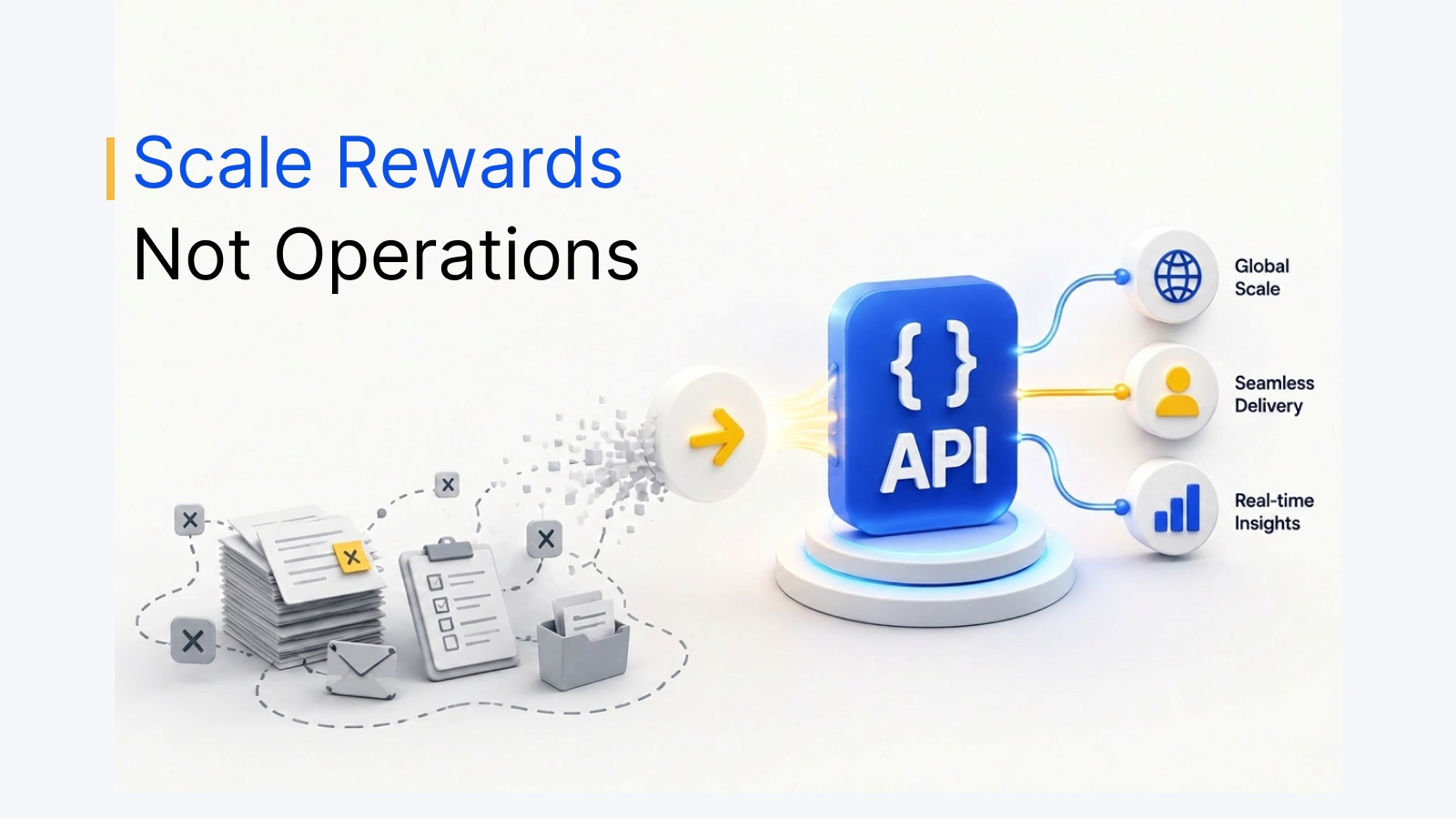
It doesn't have to. The operational case for consolidating reward infrastructure onto one platform is straightforward: one integration point handles catalog localization, currency conversion, and delivery routing instead of a patchwork of country-specific vendors.
The math is simple. Every additional market managed manually adds a vendor relationship, a compliance checkpoint, and a reconciliation process. A platform layer absorbs all three without adding a person to the team.
GDPR, PDPA, and Local Gifting Law Compliance
Data privacy law and gifting law overlap more than most marketing teams expect. Sending a gift means collecting a name, an address or contact channel, and sometimes payment or redemption data, and that data collection is exactly what GDPR and similar frameworks regulate.
GDPR governs how EU recipient data gets collected, stored, and processed, even for something as simple as a gift redemption flow. PDPA does the same across several APAC markets, with its own thresholds and consent requirements that don't map cleanly onto GDPR's.
The practical risk isn't usually the gift itself. It's the redemption data trail behind it, sitting unmanaged in a spreadsheet that was never built to be a compliance-grade record.
How Plum Delivers 10M+ Rewards Across 150+ Countries for ABM Teams
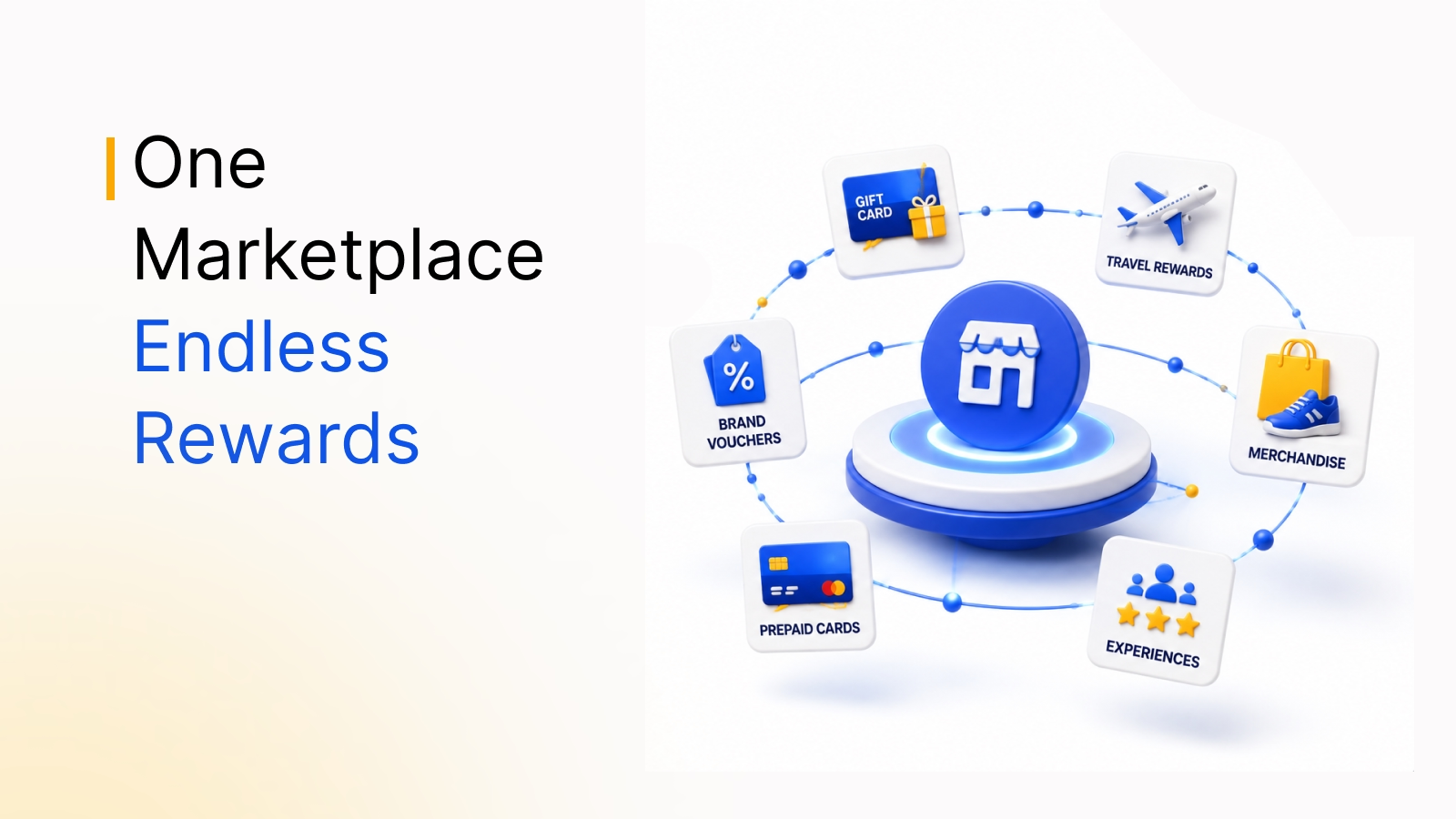
Global gifting doesn't need to mean five vendors and five compliance headaches. Xoxoday Plum runs as a single layer that handles catalog localization, currency, delivery, and compliance across regions at once. Plum's catalog spans over 10 million reward options across 150+ countries, automatically localized by recipient currency and language.
- Trigger-based rewards. Reward triggers connect directly into ABM platforms and CRMs, firing the moment a target account books a demo or hits a milestone.
- Auto-localized catalog. Catalog adapts to recipient currency and language automatically, no manual configuration per market.
- Region-aware compliance. Value thresholds, tax treatment, and screening applied by region without a manual review per send.
- Real-time tracking. Delivery and redemption status visible across every market from one dashboard.
A global SaaS company running ABM and referral gifting across MENA and APAC used exactly this setup: automated reward workflows tied to campaign triggers, auto-localized catalog by recipient currency and language, and custom branded landing pages built for lead capture. The result was measurable growth in active recipient engagement across markets that had previously run on disconnected, manual gifting processes.
5,000+
enterprises
150+
countries
10M+
rewards options
$5B+
rewards distributed
G2
Leader 2026
That's the difference between gifting as a US-first tactic bolted onto global accounts, and gifting as infrastructure built for wherever the account sits.