Every HR leader eventually hits the same wall: the CFO asks what last year's recognition spend actually produced, and the honest answer is nobody tracked it that way.
The tracking gap gets worse at scale. A 50-person team can run recognition off goodwill and a Slack channel. A 2,000-person org needs something that holds up across departments, doesn't blow the budget by month three, and still feels personal to the person receiving it.
The assumption that meaningful recognition requires enterprise money is mostly wrong. Below are the 10 platforms built to run bulk, budget-conscious appreciation programs, what separates a genuinely cost-efficient one from a repackaged enterprise tool, and where Empuls fits.
45% less likely
to leave within two years
when employees feel well-recognized (Gallup)
31% lower
voluntary turnover
at organizations with strong recognition programs (Gallup)
What actually makes recognition "budget-friendly" at bulk scale
Cheap and budget-friendly are not the same thing. A tool that charges less per seat but requires a dedicated admin to manage redemptions across 12 countries isn't actually saving anyone money.
Three things separate a genuinely cost-efficient platform from one that just looks cheap on a pricing page: whether the pricing model punishes you for unused credits or idle seats, whether the reward catalog covers everywhere your people actually are, and whether the platform stretches a fixed budget by targeting who needs recognition most instead of spreading it evenly.
The targeting point gets ignored constantly, and it's the expensive mistake. Most recognition budgets go to whoever is already visible, the loud team, the office everyone walks past. The quiet performer three time zones away gets whatever's left, which is usually nothing.
The math on skipping recognition entirely is worse than any software subscription. Gallup puts the cost of replacing a frontline employee at roughly 40% of their salary, a technical hire at 80%, and a manager at 200%, once training and lost productivity are counted.
A modest recognition budget is cheap insurance against those numbers. SHRM has recommended 1% to 2% of total payroll for recognition programs for years, a figure most companies still undershoot.
Quick comparison: budget-friendly, bulk recognition platforms
Ten platforms, side by side. Here's what matters when you're rolling recognition out to a lot of people without a lot of budget.
| Platform | Pricing model | Recognition model | Reward network reach | Budget-fit strength |
|---|---|---|---|---|
| Xoxoday Empuls | Per-seat, bundles recognition + surveys + comms | Peer + manager + AI-flagged | 150+ countries | AI targets budget at under-recognized employees instead of spreading it evenly |
| Bonusly | Per-seat, tiered | Peer-to-peer point gifting | Gift cards, donations, merch | Simple setup, strong fit for SMB and mid-market |
| Guusto | Pay-per-redemption, no platform fee | Manager-led gifting | Gift card network | No cost for unused credits or idle seats |
| Nectar | Per-seat, budget-tiered | Peer-to-peer, points | Global gift card network | Built for a first structured recognition rollout |
| Vantage Circle | Per-seat, bundled with perks | Peer-focused, AI-assisted | Large local-option catalog | Localized rewards across many regional offices at once |
| Kudos | Per-seat | Peer appreciation, values-tagged | Regional gift card network | Mid-market pricing, ties recognition to company values |
| Bucketlist Rewards | Per-seat | Points, experience-based | Curated experience + gift catalog | Redemption catalog controls how far points stretch |
| Motivosity | Per-seat | Peer + manager visibility | 200+ countries | Manager dashboards flag who hasn't been recognized recently |
| Applauz | Per-seat, SMB-priced | Peer recognition, incentives | Gift card network | Priced specifically for small and mid-size teams |
| Halo Recognition | Per-order, bulk pricing | Milestone and tangible awards | Physical merchandise catalog | Built for bulk, tangible recognition orders since 1935 |
Make your recognition budget go further
AI-targeted recognition and a 150+ country reward catalog, built for bulk rollouts with Xoxoday Empuls.
Book a free 30-min demoTrusted by 5,000+ companies
The 10 best platforms for budget-friendly, bulk employee recognition, ranked
1. Xoxoday Empuls
Empuls runs recognition, surveys, rewards, and internal communication as one platform instead of four separate subscriptions, which matters when the budget question is total cost, not just the recognition line item. An AI layer flags employees who haven't been recognized recently, so a fixed budget goes to people managers are actually missing instead of the same visible few. The reward catalog spans 150+ countries. A bulk rollout across regions doesn't hit a wall outside one home market.
Stand out: AI that targets the budget at whoever's being missed, not just a lower price tag.
2. Bonusly
Bonusly keeps peer recognition inside the chat tools teams already use, with a point-gifting model that lets any employee recognize any other. Rewards redeem for gift cards, charitable donations, or merchandise. Its tiered per-seat pricing and fast rollout make it a common first pick for SMB and mid-market teams working with a modest budget.
Stand out: the fastest rollout inside Slack and Teams.
3. Guusto
Guusto charges only when a reward is actually redeemed, not a flat platform fee, which removes the risk of paying for unused credits at bulk scale. Recognition here is manager-led rather than a full peer-to-peer feed. HR teams that want to test a program without a big upfront commitment tend to start here.
Stand out: zero cost on unused credits or idle seats.
4. Nectar
Nectar runs a straightforward points-based peer recognition model backed by a global gift card network, priced specifically for companies launching their first structured program. It's built for distributed teams from the ground up rather than adapted from an office-first tool. The simple setup keeps the budget conversation short.
Stand out: the simplest setup for a first structured recognition program.
5. Vantage Circle
Vantage Circle bundles recognition with wellness programs and a large catalog of local perks, which matters when a bulk rollout spans offices with very different regional benefit expectations. The platform layers in AI-assisted engagement suggestions on top of a peer-focused recognition model. Teams managing recognition across many regional offices at once tend to land here.
Stand out: localized rewards across many regional offices at once.
6. Kudos
Kudos ties peer appreciation directly to a company's stated values, letting employees tag recognition to the specific behavior it reinforces. The regional gift card network keeps redemption straightforward without a heavy admin lift. It suits mid-market teams that want recognition to reinforce culture, not just hand out points.
Stand out: recognition tagged directly to company values.
7. Bucketlist Rewards
Bucketlist swaps generic gift cards for experience-based rewards, redeemable against a curated catalog of activities and merchandise. The points system gives HR direct control over how far a fixed budget stretches per redemption. Teams that want recognition to feel like an actual reward, not a transaction, use this model.
Stand out: experience-based rewards instead of generic gift cards.
8. Motivosity
Motivosity runs on a "ThanksMatters" points system with manager dashboards that surface who hasn't been recognized in a while, similar in spirit to Empuls's AI-flagging but built around dashboards rather than automated nudges. Reward redemption spans 200+ countries. Its Slack and Teams integrations suit teams that want visibility into recognition gaps without a heavier platform.
Stand out: manager dashboards that flag recognition gaps directly.
9. Applauz
Applauz is priced specifically for small and mid-size teams, running standard peer recognition alongside incentive programs on a gift card network. It doesn't carry the feature depth of larger platforms on this list, which is exactly the trade-off smaller budgets are making. Teams under 500 employees are the natural fit.
Stand out: pricing built specifically for teams under 500 people.
10. Halo Recognition
Halo has run bulk, tangible recognition awards since 1935, specializing in milestone and merchandise-based rewards rather than a digital points feed. Per-order bulk pricing suits a large, planned recognition event, like an anniversary program, more than ongoing day-to-day peer recognition. Teams that want a physical award at scale, not another software login, use Halo.
Stand out: bulk, tangible awards for major milestone events.
Want to see how Empuls stretches a recognition budget across a bulk rollout? Book a free 30-min demo.
How Empuls approaches budget-friendly recognition at scale
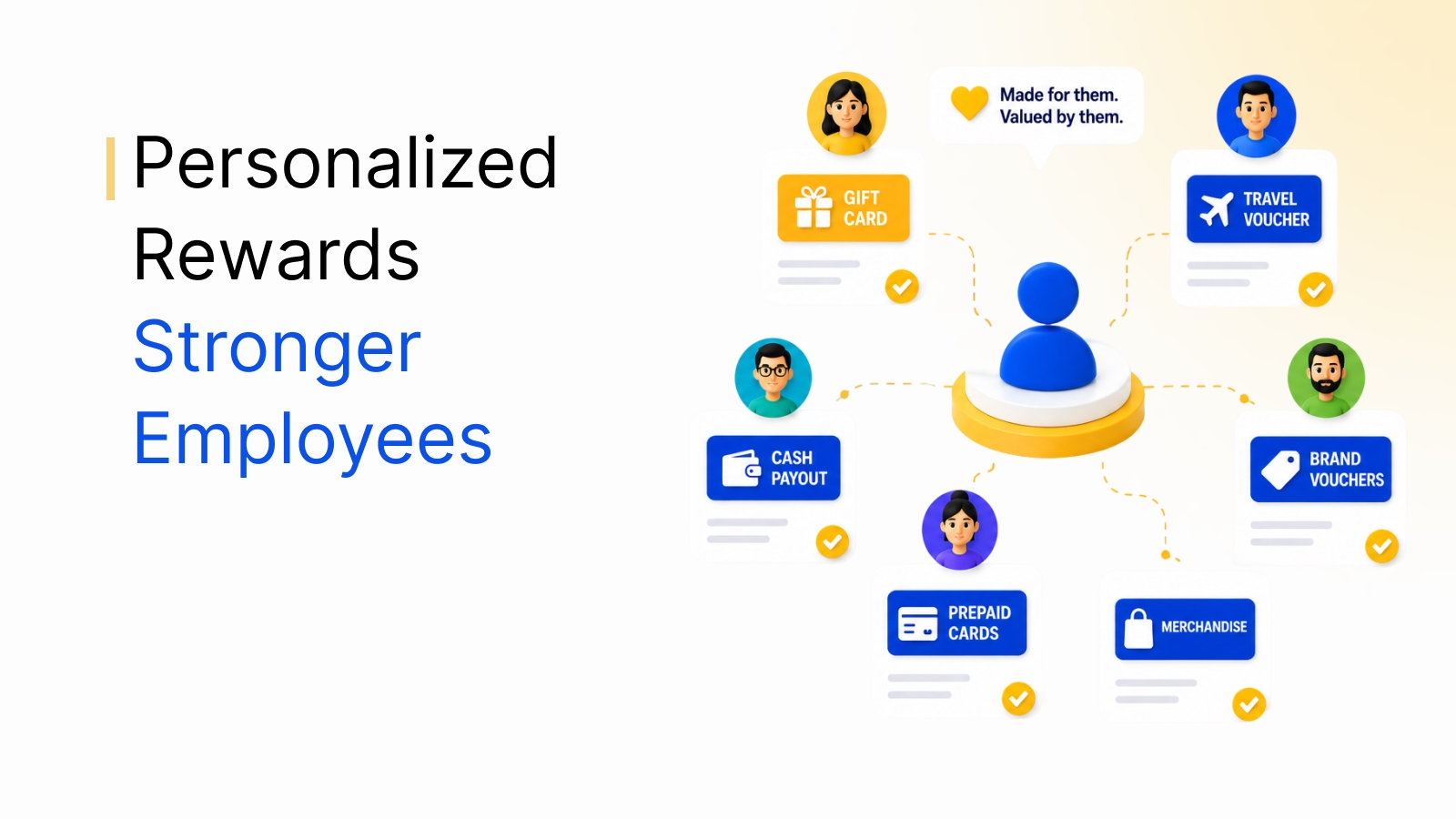
Most platforms on this list solve one half of the problem: either the price is low, or the reach is wide, rarely both without a trade-off. Empuls treats the budget itself as the thing to optimize, not just the sticker price.
The AI layer doesn't just track who got recognized. It flags who didn't, so a fixed budget stops defaulting to the same visible employees every quarter.
01 · Targeted
AI-flagged recognition gaps
The Copilot layer surfaces employees who haven't been recognized recently, so a limited budget reaches the people managers are actually missing.
02 · Reach
One catalog, 150+ countries
A bulk rollout across regions redeems from the same catalog instead of hitting a wall outside one home market.
03 · Consolidated
One platform, not four subscriptions
Recognition, surveys, rewards, and communication in one dashboard means one line item for finance, not four.
Common mistakes when buying recognition software on a budget
Buying on price per seat alone is the most common miss. A platform that's 20% cheaper but requires a dedicated admin to manage regional catalogs manually costs more in hours than it saves in subscription fees.
Another mistake: assuming a "free" tier scales. Most free plans cap out well below what a real bulk rollout needs, and the upgrade cost at that point is rarely disclosed upfront.
The quietest mistake: treating recognition budget as a flat spend instead of a targeting problem. Two companies can spend the same $40,000 a year, and one gets a measurable drop in regretted turnover while the other just spreads the money evenly and hopes.
How to choose the right platform for your budget
Start with actual headcount and rollout timeline, not the sticker price on the vendor's homepage. A per-seat cost that looks fine for 200 employees can double a budget nobody planned for at 2,000.
Then check whether the platform's reward catalog covers every location your team sits in, not just the headquarters office. A recognition program that works cleanly in one country and stumbles everywhere else isn't actually budget-friendly at bulk scale. It's a deferred cost.
Ready to see how Empuls makes a recognition budget go further? See Empuls in action.