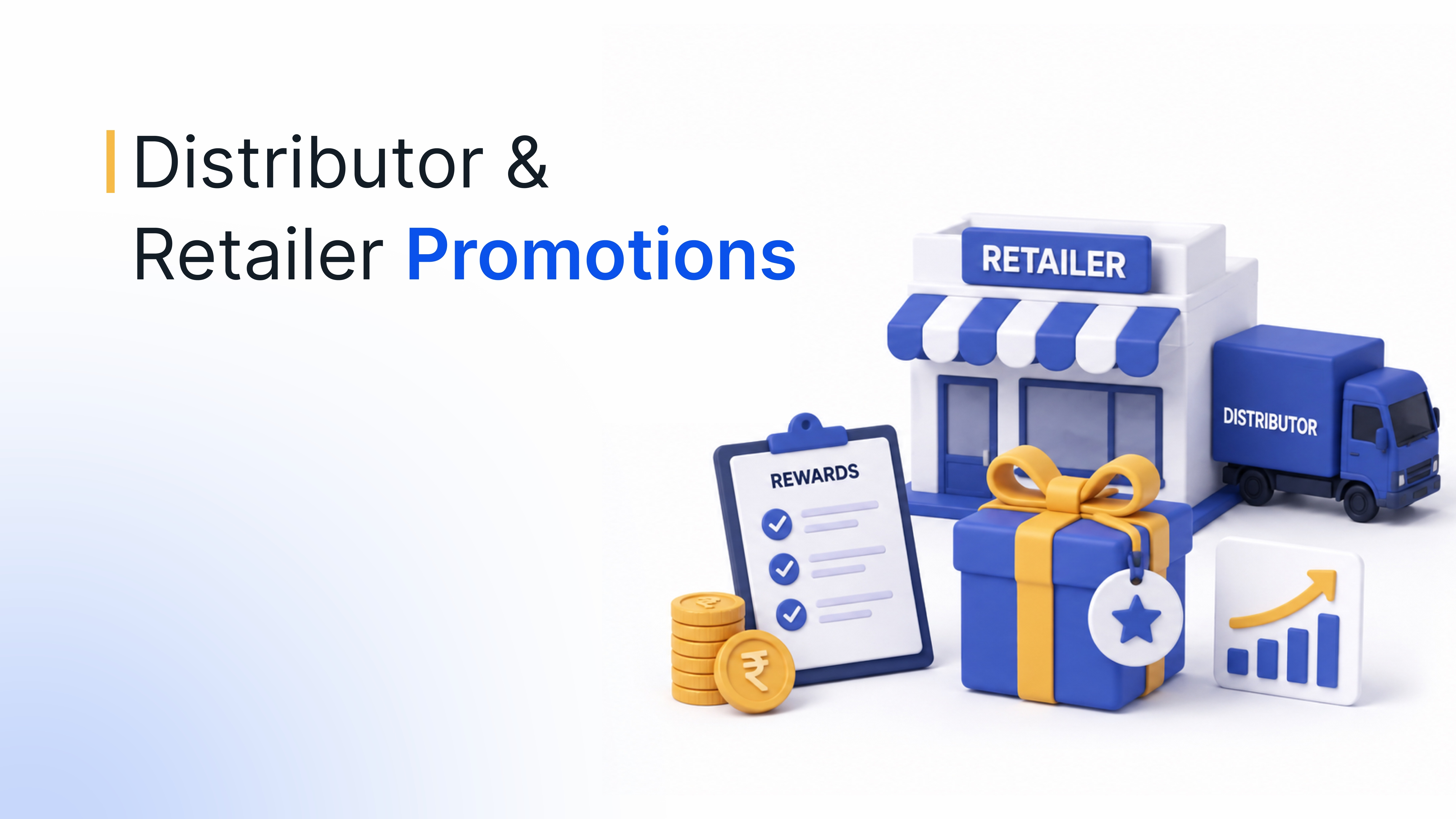
Key Takeaways
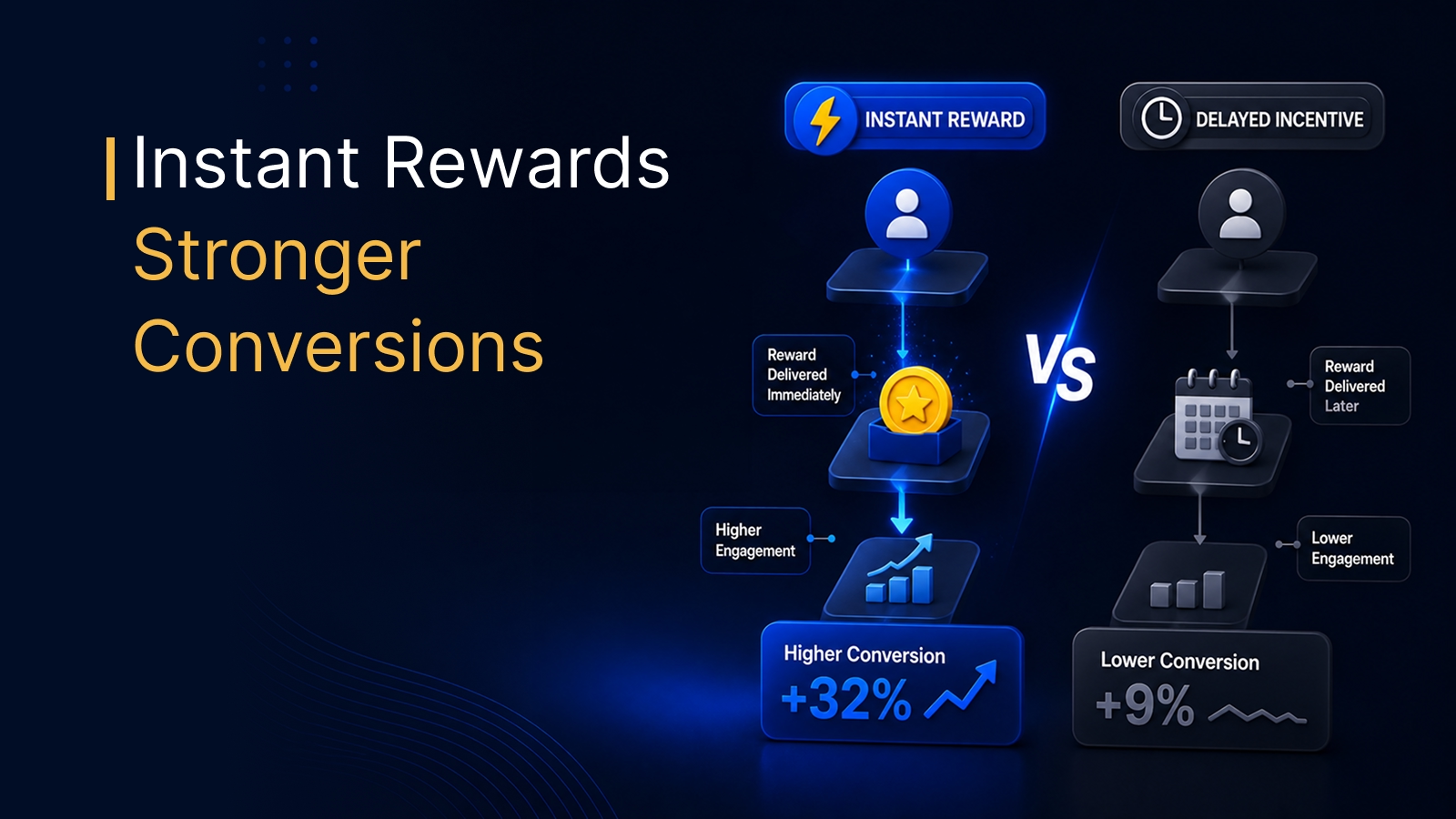
Discount-led promotions buy volume, not loyalty, and competitors match them within a week.
Roughly 3 in 4 dollars of world trade move through distributors and retailers, not direct sales.
A QR-code cashback promotion turned a one-time liquor purchase into a spin-the-wheel moment shoppers redeemed 20,000+ times.
A regional distributor blows past this month's sales target by 15%, and finds out what that's worth six weeks later, buried in a rebate statement finance already priced into next quarter's margins.
A shopper picks up a bottle because it's the cheapest option on the shelf that week. Next week, a rival brand undercuts it, and she can't remember which brand she bought last time, only that it was on sale.
Both of them just lived through a promotion that cost the brand real money and changed nothing about how they feel about it. A discount with no reason to remember the moment is money spent on volume, not on recall.
What are distributor and retailer promotions with rewards?
Distributor and retailer promotions with rewards replace or supplement a price cut with a gamified, instantly redeemable prize tied to a specific action: a distributor crossing a sales milestone, or a shopper completing a purchase. Instead of lowering the price everyone sees, the brand adds a moment the distributor or shopper has to actively engage with to claim something of value.
Three mechanics account for most of these campaigns:
- Spin the wheel: one spin per entry, with prize segments the brand sets in advance, a cashback amount, a gift card, or a "better luck next time" outcome if the admin enables it.
- Scratch and win: a single scratch reveals a prize or a miss, built for a moment that resolves in seconds, usually right after a purchase or a code entry.
- Roll the dice: up to three rolls in a row, with the participant needing to land a six before they become eligible to claim anything.
Each format uses points, codes, or reward links as the entry cost, and the brand pays for participation and results rather than for every unit sold at a discount.
Which mechanic fits depends on who's claiming the reward. A distributor chasing a monthly case-sold target wants a payout that feels earned and substantial, so milestone-based rewards paired with a marketplace choice fit better than a one-tap spin. A shopper standing at a shelf wants the reveal to happen before she puts the bottle back down, which is why scratch cards and quick spins dominate on the retail side.
This is different from the pop-up spin-the-wheel a shopper might see on a random e-commerce checkout page. Those exist purely to capture an email address. A distributor and retailer promotion built this way ties the mechanic to a real, verifiable action, a purchase, a scan, a sales number, and pays out through the same reward infrastructure a brand already uses for every other incentive program it runs.
Why generic discounts fail to spike sales or build brand recall
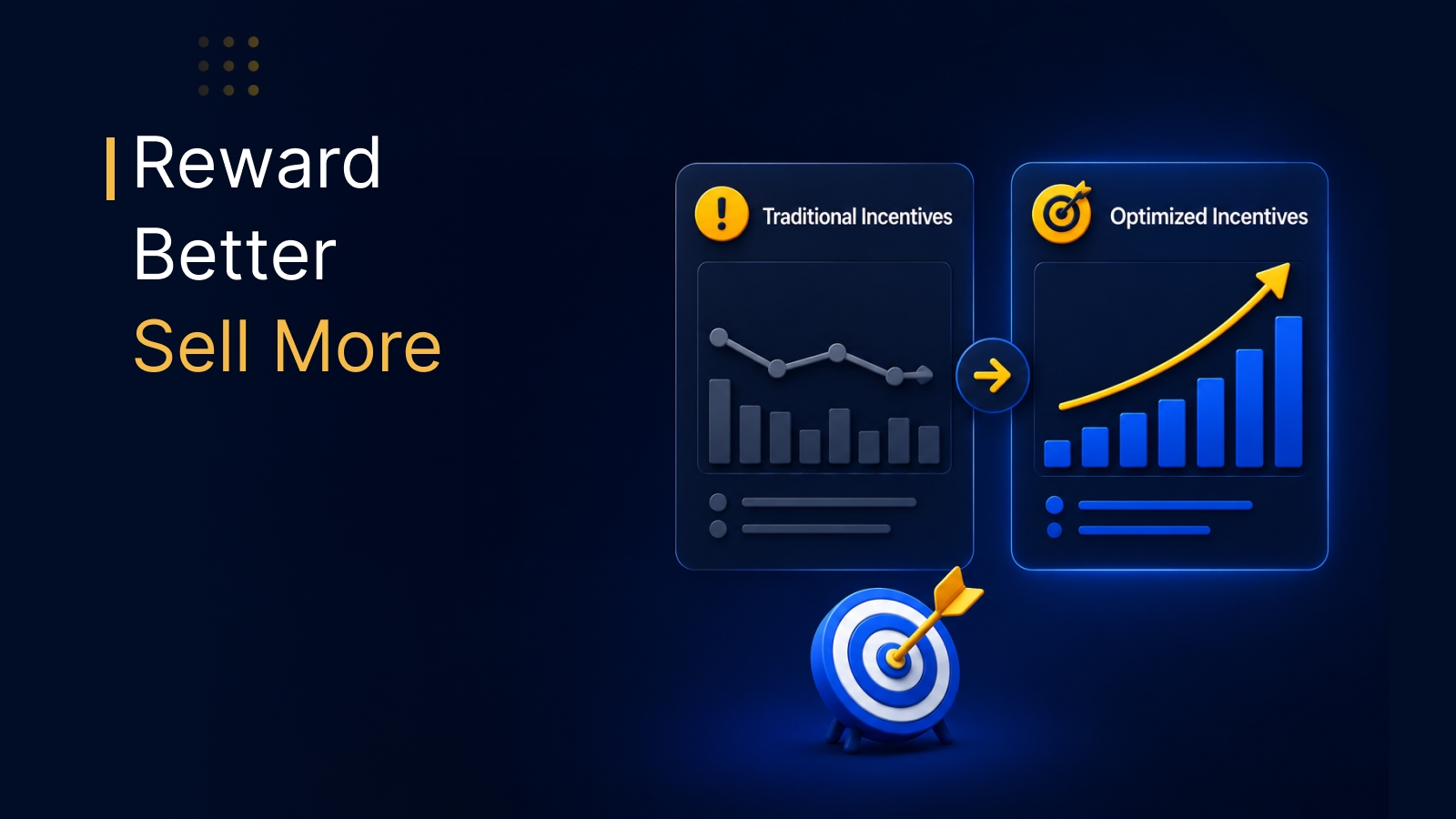
Price discounts are the easiest promotional lever to pull, and the easiest for a competitor to match a week later. That trade-off buys short-term volume without buying any loyalty.
- Shoppers switch to whichever brand is discounting hardest that month. A rival undercutting by even a few points resets loyalty to zero, because price was the only reason to buy in the first place.
- Distributors and retailers miss sales targets, because volume sold at a discount doesn't scale into a program finance can repeat next quarter without eating margin.
- Brand loyalty weakens with every cycle where the only reason to buy is the lowest price on the shelf that week.
- Marketing budgets shrink, and the same blunt discount lever gets pulled more often with less money behind it, which compounds the problem instead of solving it.
- Acquisition and repeat sales both stay low, because nothing about a price cut is memorable enough to bring someone back once the sale ends.
Picture a regional soft-drink brand that runs 20% off for a week to defend shelf space. By Thursday, the two competitors on either side of it are running 25% off the same category, and the original promotion has cost margin without moving any volume it wouldn't have sold anyway. All three brands just paid to shuffle which discount table a shopper stood in front of.
The psychology behind why rewards work isn't complicated. A discount is certain and forgettable: you know exactly what you'll get, so there's nothing left to remember once you've gotten it. A spin, a scratch, or a milestone payout introduces a moment of not knowing, and people remember the moment they didn't know how something would turn out far longer than they remember a price.
The channel matters more than most promotion budgets reflect. According to Forrester, roughly three in four dollars of global trade move through distributors, retailers, and other indirect partners, not direct sales.
3 in 4
dollars of world trade
Move through distributors, retailers, and other indirect channels rather than direct sales.
A promotion that fails to motivate that channel doesn't just lose one sale. It loses shelf space and the sales push behind an entire product line.
See it in action
See how Plum runs a gamified promotion campaign.
Book a free 30-min demoTrusted by 5,000+ companies
What a rewards-based distributor and retailer promotion looks like in practice
The shift from discount to reward isn't theoretical. Here's how it plays out for two different audiences in the same promotion: the distributor moving the product, and the shopper buying it.
Milestone rewards for distributors hitting sales targets
A distributor who hits a monthly case-sold target gets an automatic notification and a link to a branded spin-the-wheel page, instead of a check that shows up weeks later. They spin, win a cashback or gift-card prize, verify their phone number with a one-time code, and get redirected to a marketplace to pick the reward they actually want.
That's the same distributor from the opening scenario, except now the payout shows up while the sale is still fresh, not six weeks after finance has already priced it into next quarter.
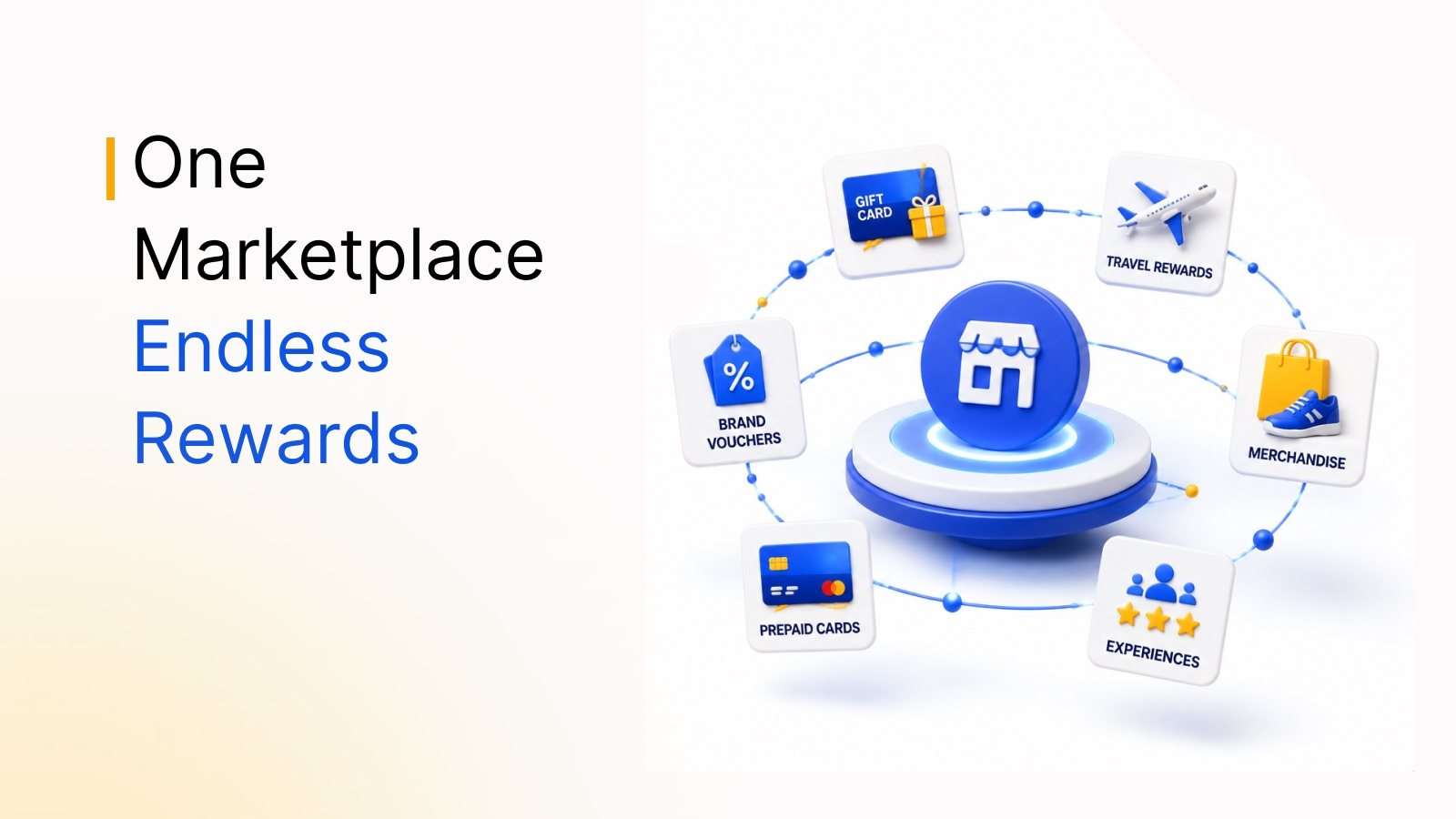
The reward, once won, isn't fixed to a single item either. The distributor lands on a marketplace screen with a live catalog spanning multiple categories, gift cards, merchandise, travel, and lifestyle options, and picks whichever one matches what they actually want that month, rather than the fixed hamper or gift a legacy incentive program often defaults to.
- Distributor hits monthly sales milestone.
- Redirected to spin-the-wheel campaign page.
- Verified via one-time code and phone number.
- Redirected to marketplace to claim preferred reward.
If the distributor picks physical merchandise instead of cashback, redemption follows a standard e-commerce flow from there: browse the catalog, select the product variant and quantity, redeem points at checkout, and get order confirmation and delivery tracking without starting a separate purchase process.
More brands are building rewards like this directly into their channel incentive programs instead of running them as a side program.
Point-of-purchase rewards for retail shoppers
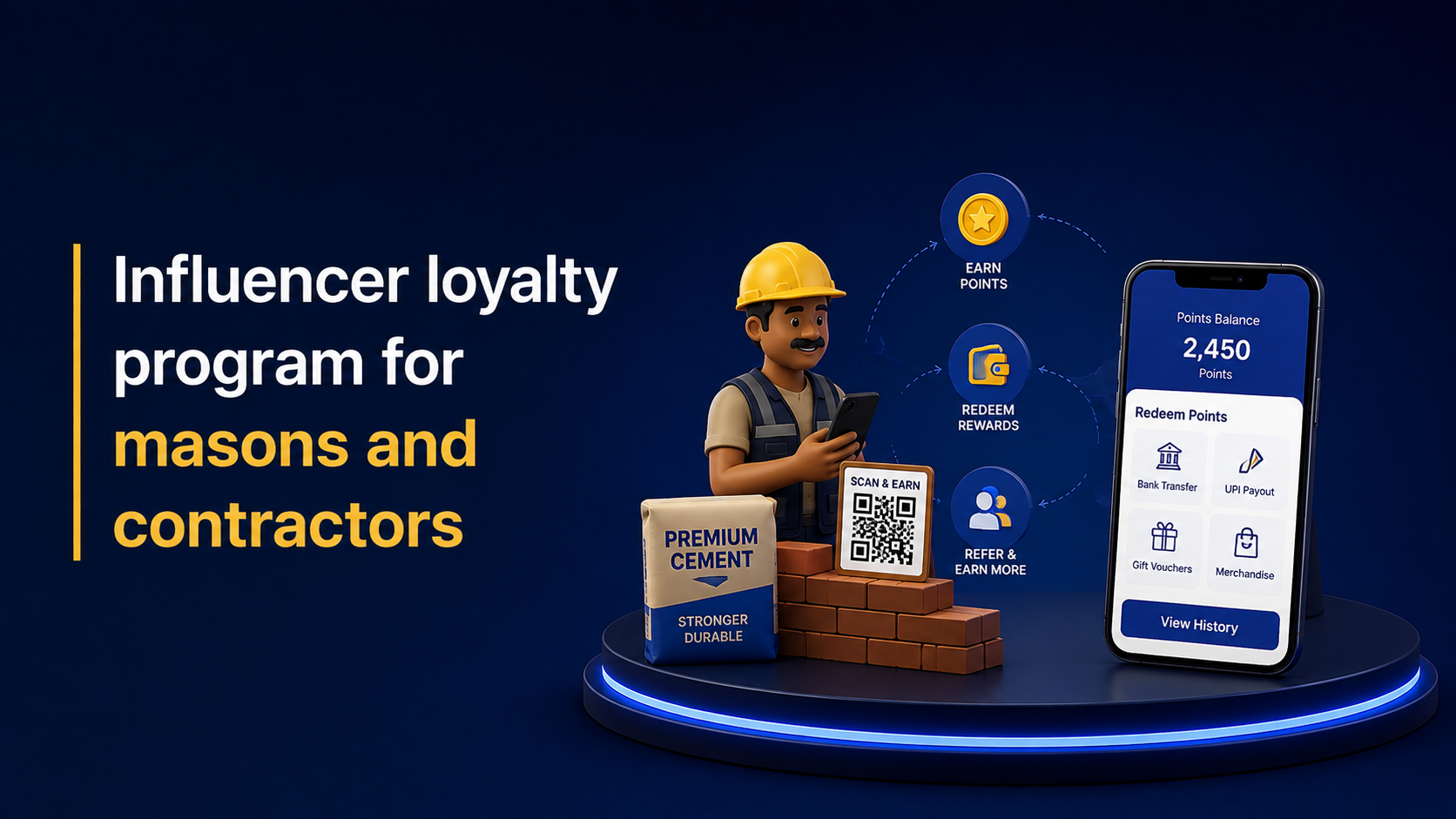
A leading liquor manufacturer needed the same instant gratification on the shopper side. It printed a one-time QR code on limited-edition bottle packaging and told buyers to scan it to win a prize.
Scanning the code took shoppers to a landing page where they entered the code and their phone number, then spun a wheel for a cashback prize. Every purchase also earned 100 loyalty points, redeemable for cashback on top of whatever the wheel paid out.
That single-use restriction on the code isn't a minor detail. Without it, the same code circulating in a group chat could get scanned hundreds of times by people who never bought the product, turning a promotion meant to reward buyers into free money for anyone with a screenshot.
That's also the moment the shopper from the opening scenario was missing: something to remember beyond the price.
Sales spikes
Across every geography the campaign ran in
~$6,000 cashback
Distributed to shoppers who scanned and claimed
20,000+ redeemers
Customers who scanned, claimed, and redeemed cashback
Source: Xoxoday internal case study, 2026
How Plum runs end-to-end distributor and retailer promotion campaigns
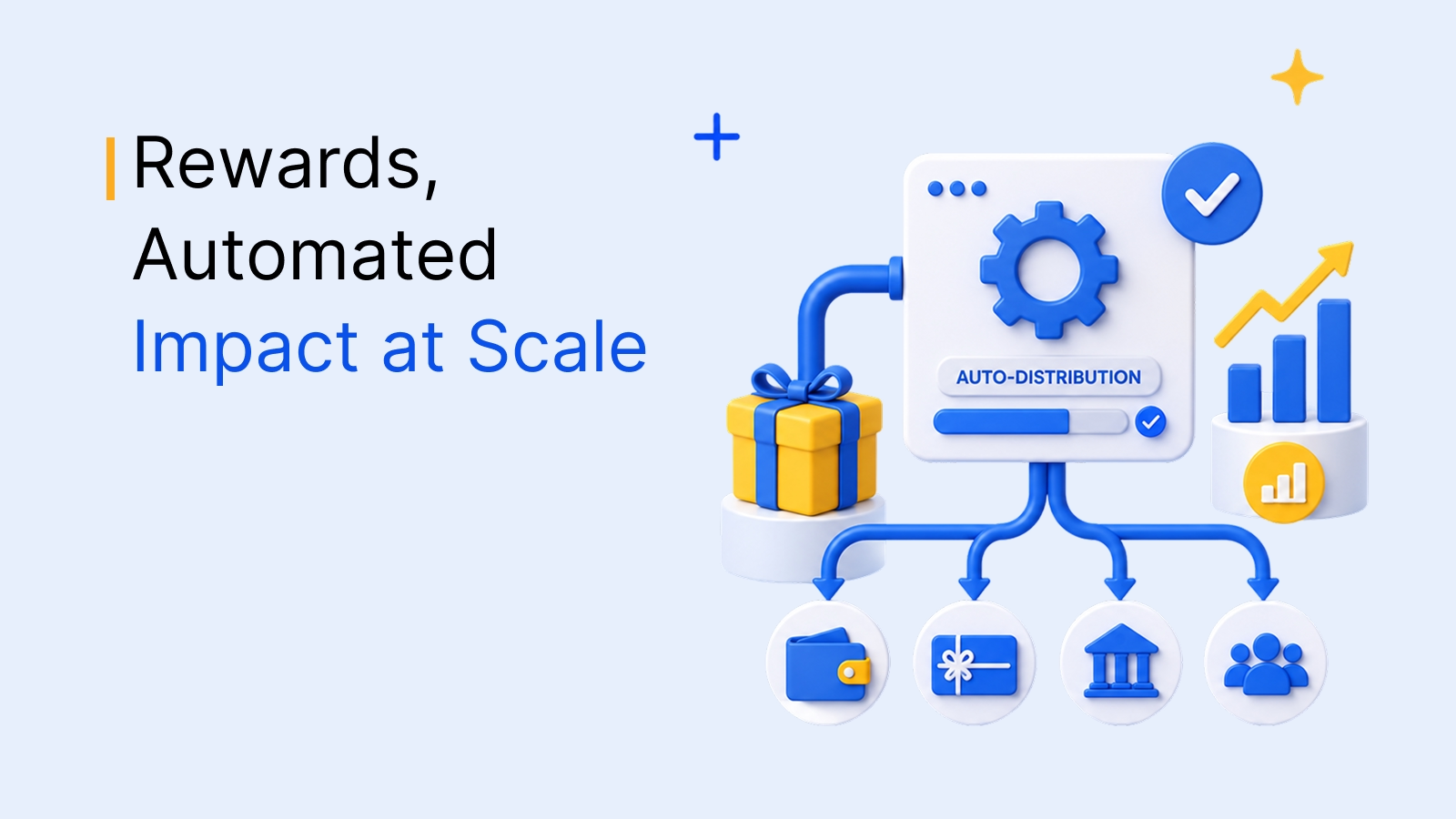
Plum gives a brand one system to build the reward mechanic, push it across the channels a distributor or shopper already uses, and track redemption for both sides of the same promotion.
Gamification layer: spin the wheel, scratch cards, and sweepstakes
Setting up a promotion doesn't require a developer. A brand picks a mechanic, spin the wheel, scratch cards, instant wins, sweepstakes, or slot machines, and configures it directly: promo period, participant count, validation method, winner count, and the maximum reward value per campaign.
For example, a regional launch might cap participation at a fixed number of winners inside a short promo window, while a national campaign runs open-ended with a daily reward cap instead. Because the mechanic is decoupled from the reward, the same spin-the-wheel setup can pay out cashback to a shopper in one campaign and a gift card to a distributor in another.
Launching a campaign from the brand's side
A marketing team configuring one of these campaigns doesn't start with a developer ticket. They pick the mechanic, set the prize tiers, and define the promo window and participant cap directly in the platform, the same controls covered above, but now from the operator's seat instead of the redeemer's.
Finance gets its own view: a budget cap for the campaign, real-time visibility into how much has been committed against it, and a maker-checker step before any reward actually goes out the door. A regional team running the same campaign in a second country gets scoped admin access, enough to launch and monitor locally, without the ability to touch another region's budget or catalog settings.
That division of access is what lets one promotion run across multiple countries at once without a separate approval chain for every region it touches.
Omnichannel reward distribution and redemption
A promotion is only as good as how easy it is to claim. Plum syncs QR codes, SMS, email, and WhatsApp so a distributor or shopper can redeem through whichever channel they're already using, then pulls from a global rewards catalog with localized options so currency conversion never becomes the recipient's problem.
Consider a retailer in a market where a smartphone is common but a bank account tied to a rewards app isn't. WhatsApp already sits on that phone, so a distributor or shopper redeeming through a WhatsApp message doesn't need to download anything new or create a fresh login just to collect a prize they already won.
Redemption happens in one click once the reward is claimed, without a login or a separate app to install.
Budget visibility and spend governance
Reward budgets have a way of disappearing without anyone noticing until the campaign is over. Plum keeps a live view of what's been committed against a campaign's budget and what's actually been redeemed, not just what's been sent, which is the number that matters when a promotion runs for months instead of days.
An admin wallet tracks spend centrally, with configurable threshold alerts before a campaign runs over budget. Category-level redemption limits cap how much of a reward pool goes toward any one gift category, so a spin-the-wheel prize table doesn't quietly skew toward whichever option participants claim most.
None of this requires finance to pull a report after the fact. The visibility sits inside the same dashboard marketing uses to run the campaign day to day.
A brand running the same wheel-and-scratch setup across three product lines can see, at a glance, whether one line's reward pool is burning faster than the other two, and pause or top up that specific line instead of pausing the entire promotion.
Campaign controls, CRM sync, and reporting
Every reward that goes out passes through a maker-checker approval step before it reaches a distributor or shopper, which matters when a campaign runs across a country and a finance team wants a second set of eyes before money moves.
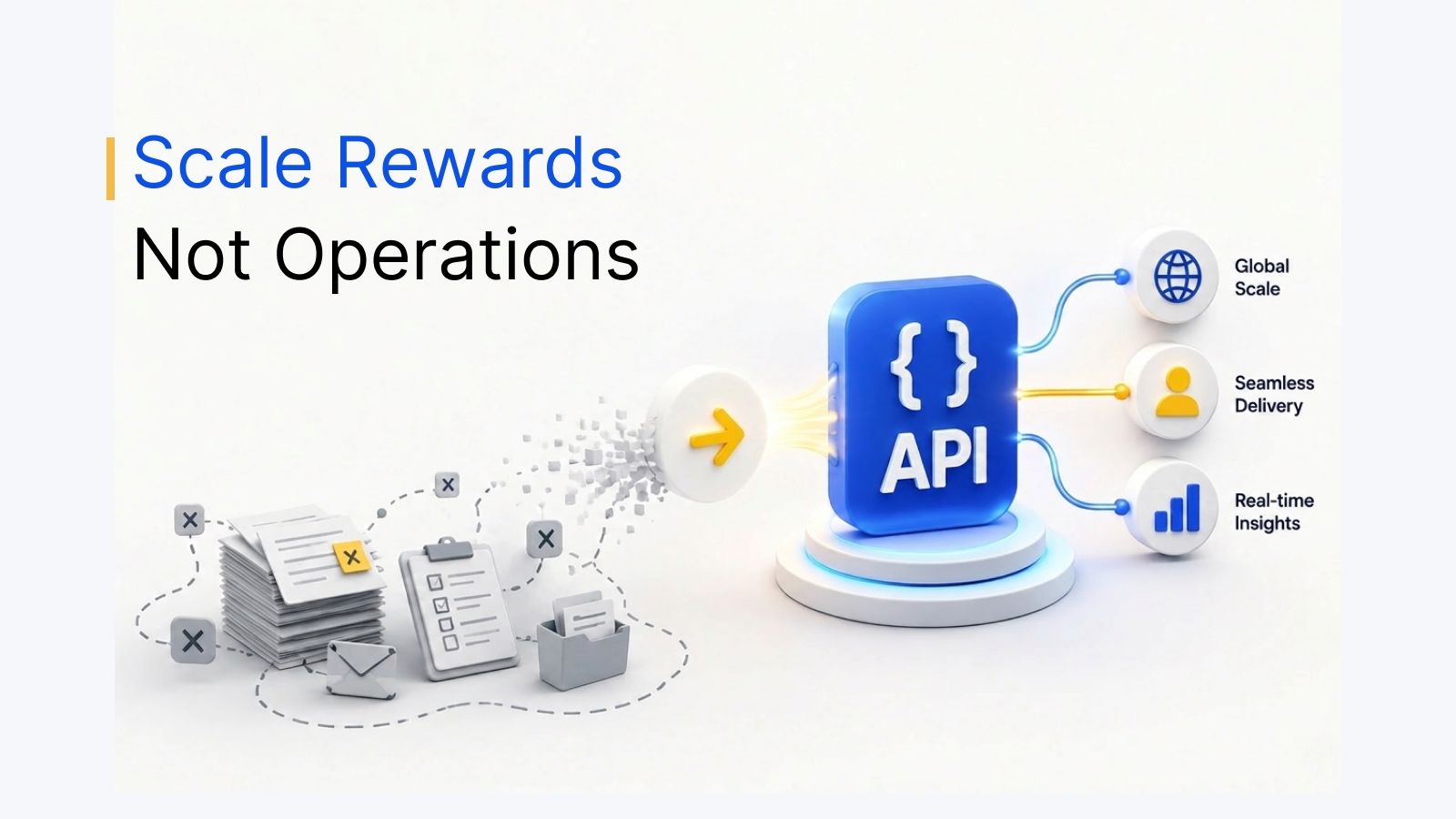
Custom reports filter by rewards sent, redemption date, and reward type, and the same data syncs into a CRM so a marketing team isn't reconciling spreadsheets after the campaign ends. Multi-admin access, bulk recipient upload, multi-currency payout, and pay-on-redemption pricing round out the parts that usually turn a promotion into an operations problem.
How to choose the right promotion mechanic for your campaign
Match the mechanic to the outcome you're paying for, not to what looks impressive in a demo.
- Milestone rewards work for the distributor side, where the trigger is a hard number, cases sold or revenue booked, and the payout has to feel earned rather than random.
- Spin-the-wheel campaigns work for broad participation, when everyone who takes the qualifying action should feel like they won something even if the prize varies.
- Scratch cards work best at the point of purchase, when the shopper wants the payoff in the same moment as the reveal, not after entering a code on a separate page.
- Roll the dice works when a brand wants to slow the win rate down on purpose. Requiring a six across up to three rolls creates real odds instead of a guaranteed prize, which suits a high-value reward a brand can't give to everyone.
Most single promotions don't need to pick only one mechanic. The liquor brand above ran a shopper-facing spin-the-wheel off the back of a purchase, and nothing about that setup would stop the same brand from layering a separate milestone campaign for the distributors moving the product into stores in the first place. The two audiences claim rewards through different triggers, but both can run inside the same overall promotion.
The distributor from the opening scenario doesn't need a bigger check eventually. The shopper doesn't need a deeper discount next week. Both need a reward they can claim the moment they earn it, one they'll actually remember.