Key Takeaways
Recognition is a relationship system, not a reward system, according to Myntra's CHRO Govindraj MK
Gallup and Workhuman tracked 3,400+ employees and found high-quality recognition in 2022 predicted 45% lower attrition by 2024
Personalisation is the recognition pillar most programmes miss, and the one that needs a system rather than a policy
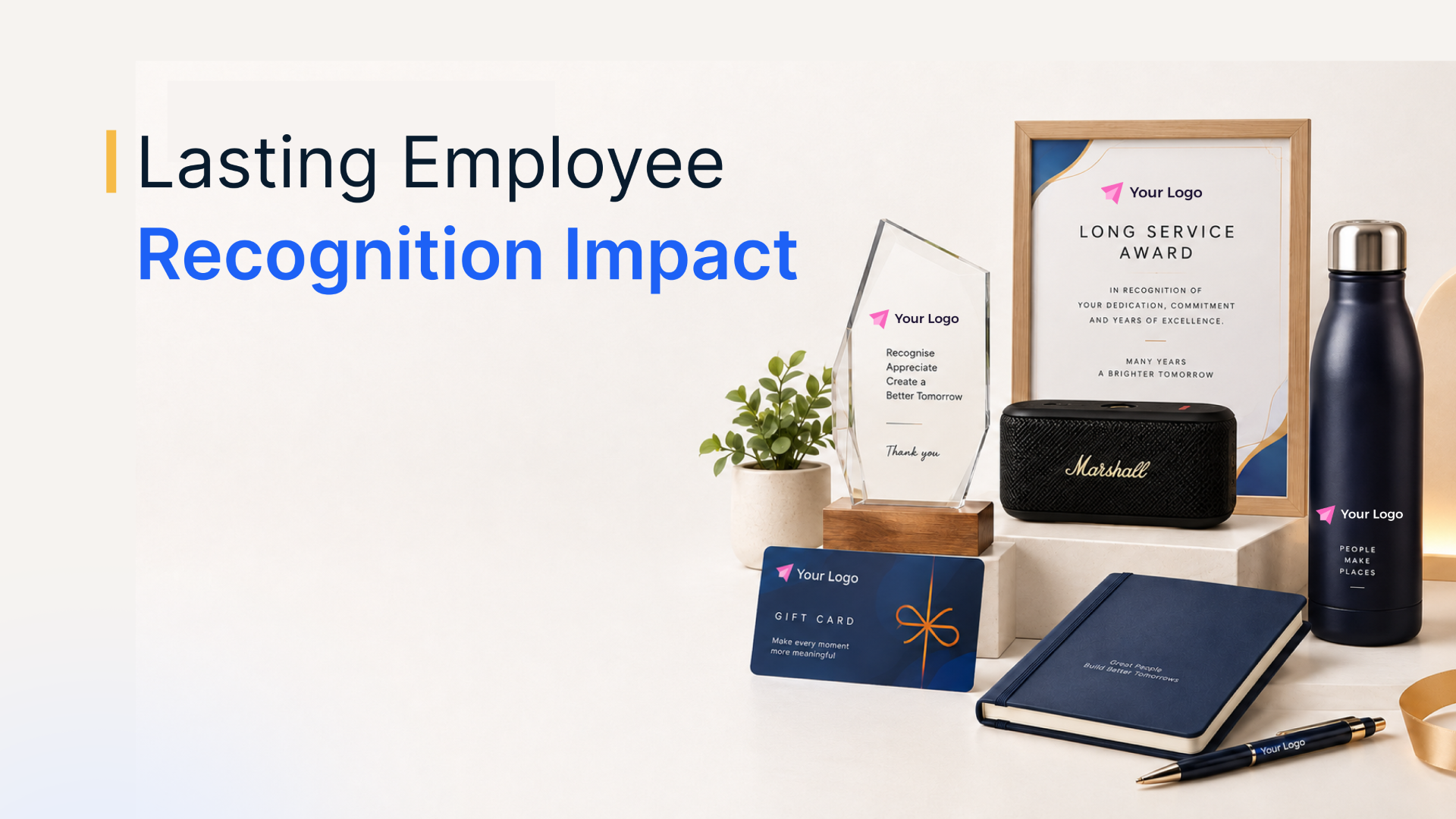
Myntra flies in the families of its annual award winners, sends a car to their homes, walks them in on a red carpet, and has the entire leadership team stand and applaud as they enter the hall. The CHRO who runs that programme says it is not what makes recognition work.
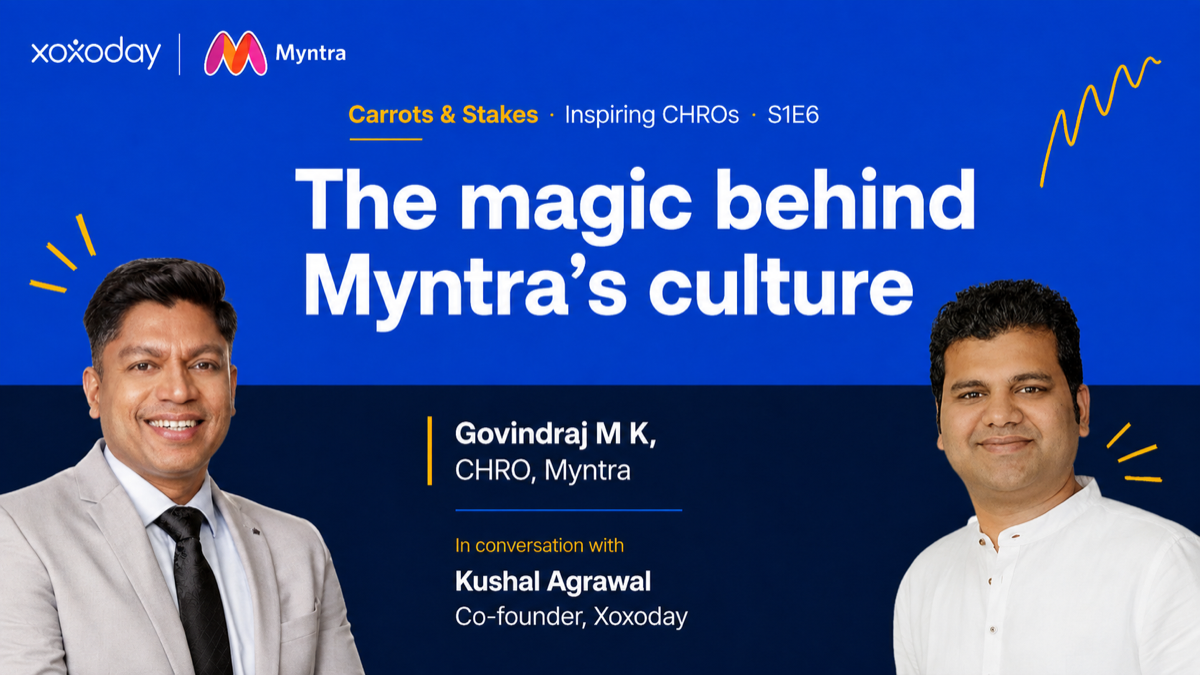
Govindraj MK joined Myntra as Chief Human Resources Officer in March 2024. On the Carrots & Stakes podcast with Kushal Agrawal, co-founder and CMO of Xoxoday, he made a distinction that reframes how most companies budget for recognition, and then explained why the expensive part of his own programme sits below the cheap part in order of importance.
About the speaker: Govindraj MK is Chief Human Resources Officer at Myntra, the Flipkart-owned fashion, beauty and lifestyle platform. He has around 25 years of HR experience across India, Singapore and Dubai. Before Myntra he spent roughly five years at Flipkart, where he was VP of Human Resources for the technology group and led people tech and analytics. Earlier roles include DAMAC Properties, Jones Lang LaSalle, NBC Universal, Oracle in Singapore, and Cognizant. He is an alumnus of Madras School of Social Work.
What is the difference between employee recognition and employee rewards?
A reward is a transaction against an outcome. Recognition is an act between two people that changes how one of them feels about belonging in the organisation. Govindraj's position is that treating recognition as a subcategory of compensation is what causes companies to over-invest in ceremonies and under-invest in the behaviour that actually produces retention.
"Recognition is not a reward system in a company. Recognition is a relationship system."
He grounds it in two capacities he thinks predict wellbeing at work: a sense of gratitude, and the ability to appreciate someone else. Without gratitude, an employee will not appreciate a colleague. Without the humility to appreciate a colleague, going the extra mile stops being a natural act and becomes something managers have to extract.
The external evidence supports the priority. Gallup and Workhuman tracked more than 3,400 employees over two years and found that high-quality recognition in 2022 correlated with a 45% lower likelihood of having left by 2024. The same body of research puts the current gap at 22% of employees saying they receive the right amount of recognition, a figure that did not move between 2022 and 2024.
Govindraj also reports the correlation inside Myntra. When recognition scores go up in the annual survey, overall engagement scores go up.
What does a complete employee recognition framework look like?
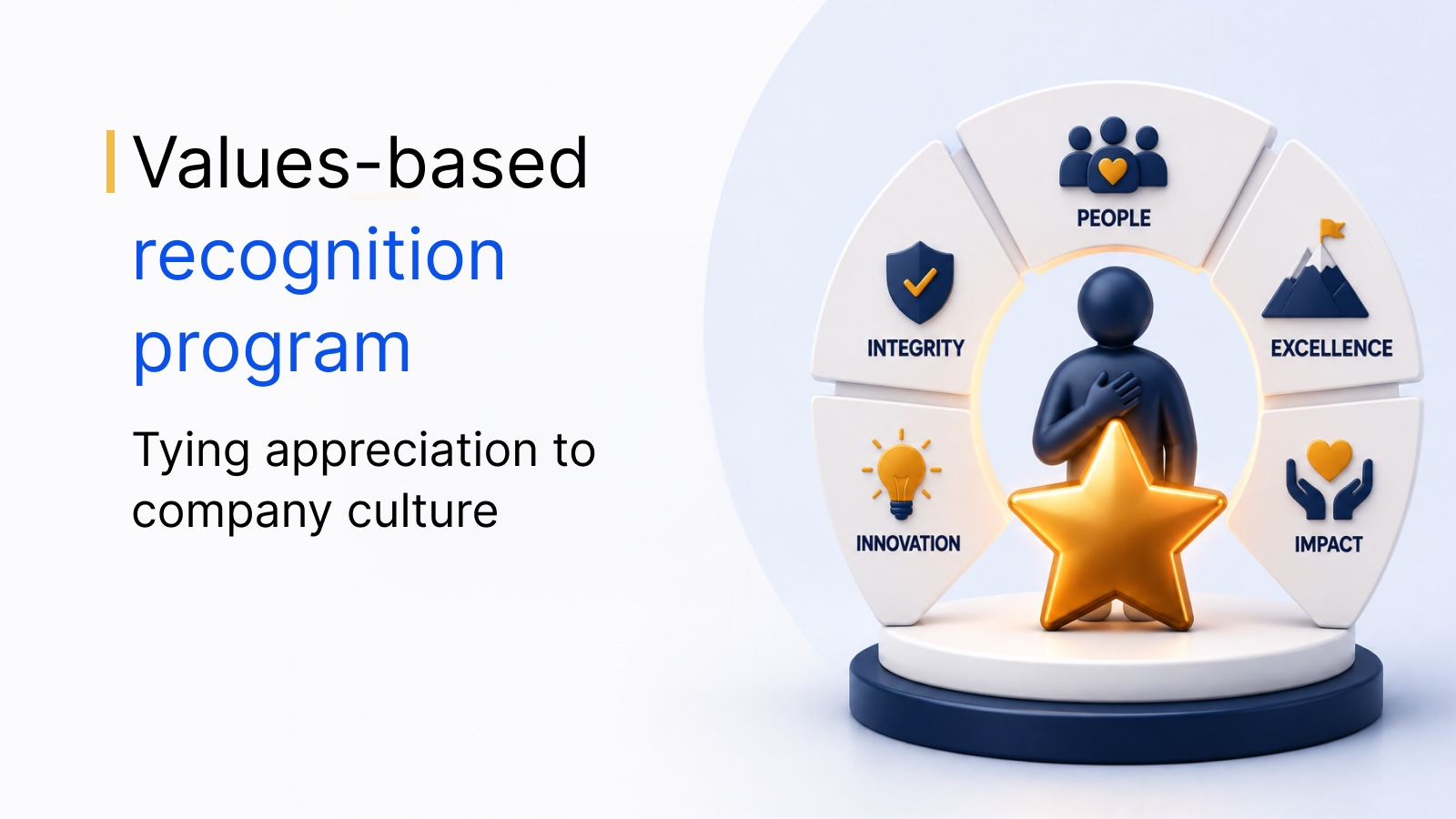
Three tiers of formal programme, all anchored to the same value set, sitting underneath a layer of daily informal appreciation that carries no budget at all. Myntra's values are an acronym, MAGIC, and every award category maps back to one of them: Make it happen, Aim high, Great together, Integrity, Customer first.
| Tier | What it is | Monetary value | What it is for |
|---|---|---|---|
| In-the-moment appreciation | A specific verbal acknowledgement in a daily meeting or a group conversation, anchored to a value | None | Frequency and authenticity - Govindraj's view is that this is where recognition actually lives |
| Spot awards | Small, immediate, given for catching someone doing the right thing | Very small | Making the informal layer visible and repeatable |
| Business-unit awards | Recognition run inside each BU against the MAGIC values | Yes | Proximity - recognised by people who saw the work |
| Quarterly and annual awards | Company-wide, roughly 20 to 30 individual winners across value categories, plus team awards | Yes, with a dedicated budget | Concentrated public status and organisational storytelling |
The annual award mechanics are deliberate theatre. Families are invited and seated separately, a car is sent to the winner's home, and the leadership team stands and applauds as winners walk in. Govindraj is clear about why that scale of effort is justified and equally clear about where it ranks.
"All of this is fine, this is still programmatic. What really matters is a simple word of appreciation said in the most authentic manner at the time when it happens."
His operating instruction to managers is a posture rather than a process.
"We should always be ready to catch people doing the right thing."
The obstacle he names is that improvement culture trains leaders to scan for the error. Reviews, retros and standups are built to surface what went wrong, which is correct and also means the default attention pattern in a high-performing company points away from what went right.
How Myntra's approach maps to Gallup's five pillars
Gallup and Workhuman define high-quality recognition against five pillars: fulfilling, authentic, personalised, equitable, and embedded in culture. Myntra's design covers most of them, and the gap is instructive.
| Pillar | Where Myntra's design addresses it | Gap |
|---|---|---|
| Authentic | Explicitly the point of the in-the-moment layer | Covered |
| Embedded in culture | Every award category maps to a MAGIC value | Covered |
| Equitable | Recognition can come from anyone, not only the manager | Covered in principle - equity across teams needs data to verify |
| Fulfilling | Annual awards carry high social status; spot awards carry immediacy | Covered |
| Personalised | Not described in the episode | Open - the clearest place for most companies to improve |
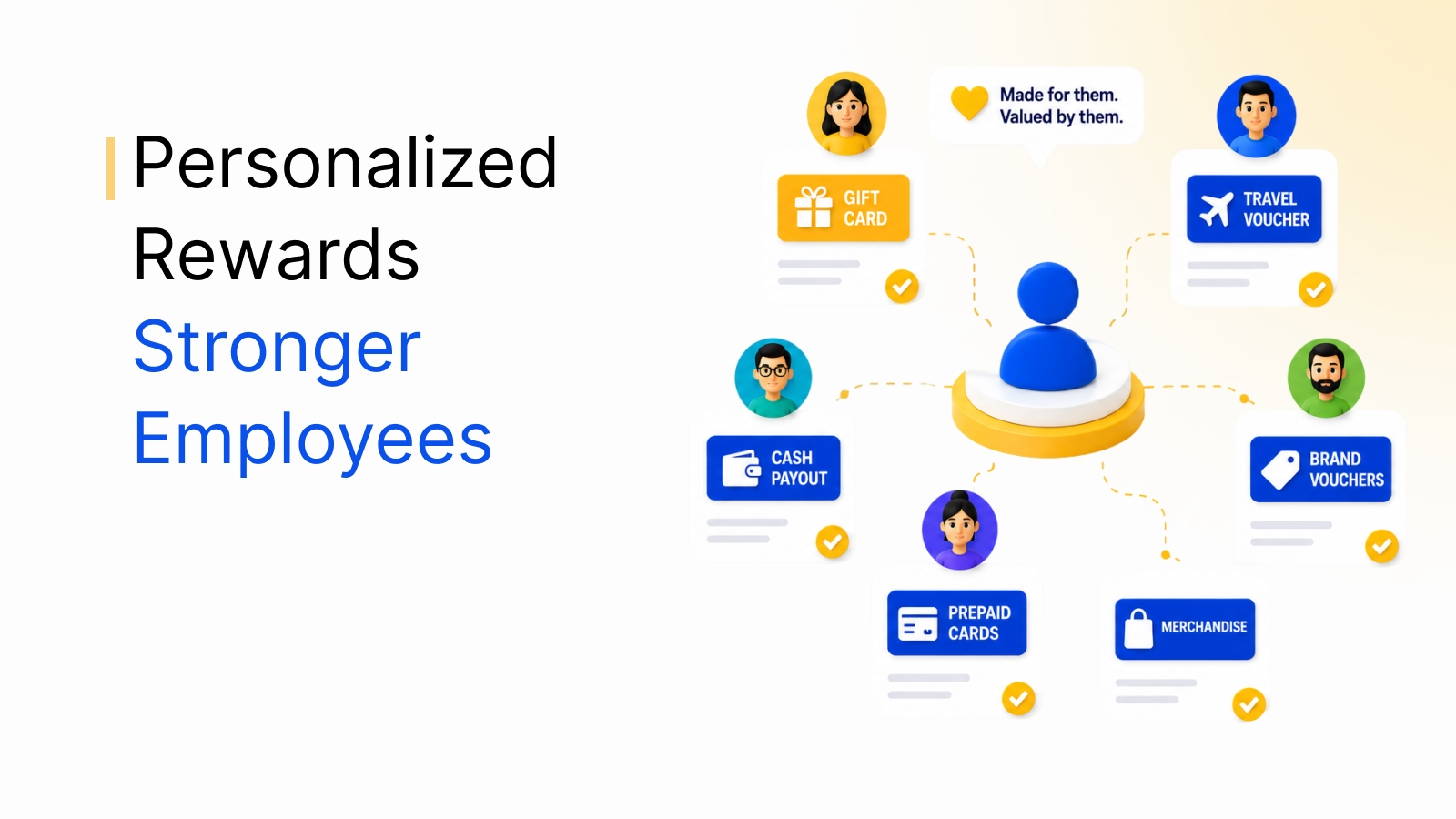
Personalisation is the pillar that reliably fails without tooling, because it requires knowing what a specific person values before you reward them, and knowing that at scale is a data problem rather than a management problem.
Why does Myntra recognise projects that did not hit their targets?
Because the alternative teaches people to lower their ambition. Govindraj's framing is that if you aim for the stars you may only reach the treetops, and the treetops are still further than you were. Myntra recognises those attempts explicitly in the annual awards and in ordinary conversation.
His condition is that the recognition attaches to inputs and learning. When Myntra launched FWD, its Gen Z proposition, and M-Now, its 30 to 60 minute delivery service, nobody knew how either would land. The message to the teams was that the input is what matters, the output numbers may sit above or below the plan, and the question worth asking is what got learned and how much faster the next iteration can run.
He avoids the word failure for these. His reasoning is that the project did not work the way it was intended and that is a different thing from having failed, because the ambition was correct and the learning is real.
For anyone designing a recognition programme, this is the cheapest differentiator available. Most award categories reward outcomes, which means they systematically over-reward whoever got the safest brief.
Try Empuls
Build recognition your team actually uses, mapped to your values, inside Slack and Teams.
Book an Empuls demoTrusted by 5,000+ companies
How often should leaders communicate with employees?
Every day. Govindraj uses Michael Phelps as the analogy. Phelps practised every single day for seven to eight years, through Christmas, through birthdays, and his stated reason was that stopping does not pause progress, it reverses it. Practise through Saturday, take Sunday off, and Monday does not resume at Saturday's level. It starts behind.
"Leaders should do it 365 days."
Scheduled forums still exist: town halls, all-hands, the monthly cadence. Govindraj treats the schedule as the floor. The practice is everything that happens between the scheduled forums, and it counts only when it runs in both directions. Telling without listening is broadcast.
Myntra layers several listening mechanisms on top of the annual survey:
- Pulse surveys run at milestones through the year.
- Zespresso, Govindraj's own sessions with Gen Z employees.
- Common threads, where senior leaders meet cohorts from outside their own teams.
- CX call listening, where leaders sit with actual customer complaints - Govindraj describes these as humbling.
- Non-customer research, where the team meets people who buy fashion elsewhere to understand why.
The last two are unusual for an HR function to own. They exist because Myntra's cultural target is what Govindraj calls a founder's mindset, meaning ownership, insurgent thinking, and a frontline disposition. Leaders deliver orders to customer homes themselves.
Why is HR tech adoption so low?
Because HR software still requires training and consumer software does not. Govindraj's question to the industry is direct.
"Why are people tech entrepreneurs not giving consumer grade experience in whatever they build to employees?"
His comparison is his own product. A first-time Myntra user needs no training. They browse, check the price, check the fit, buy, and return it if it does not work, and selection through to delivery happens in one place. HR technology fragments the same employee across an appraisal system, a recognition system, a talent system and a learning system, then asks why adoption is low.
He traces the history fairly. The ERPs of 25 to 30 years ago, PeopleSoft, Oracle HCM, SAP, moved labour-intensive manual work into proper systems, which was progress. Vertical specialists followed, and there are now good individual players in learning, recruitment, compensation, rewards and recognition. His objection is that employees do not experience work in verticals.
What he wants from the category is three properties held together: integration, consumer-grade interaction, and personalisation, with the personalisation working the way a feed does, surfacing what this employee needs without being asked.
On the current wave of AI claims his assessment is short.
"Everybody promises it but nobody gives it yet."
This complaint is not idiosyncratic to Myntra. Parneet Soni, Head of HR at Piramal Finance, made an almost identical argument on the same podcast, using Zomato, Uber and Swiggy as her comparison and describing current agentic AI marketing in HR tech as ahead of the reality. When two CHROs in different industries independently name the same failure, the problem sits in the category.
When should a founder hire their first HR head?
At the point where the founder can feel the company's DNA diluting and can no longer transmit their vision and energy consistently to everyone. Govindraj answers with a feeling instead of a headcount, though he notes that founders can usually hold it personally up to somewhere around 100 to 300 people.
Early on, founders interview and hire everyone themselves, and they do it carefully. What breaks is not their judgement. It is their calendar. Growth pressure, investor conversations, competition and logistics compound, and the hours available for culture transmission shrink at exactly the point where more people need it.
He separates two things founders conflate. A talent acquisition hire solves hiring, and should come earlier. An HR leader is for something else: defining the organisation's values and ways of working, codifying them, and making them a way of life across the company.
He is firm that this is not delegation. The founders are institutionalising something, and they still have to show up and communicate it themselves.
Kushal Agrawal offered a common trigger from his own board experience. Founders often realise they need HR when they find they cannot exit a bottom performer, because they are afraid they will not be able to replace them. Govindraj's response is that the exit is the wrong first step. Specific feedback comes first, then fairness in how much time and support the person is given, then an honest conversation if the gap remains. HR leaders are trained through that sequence and can coach a founder through it or sit in the room.
What should you look for in your first HR leader?
The same bar you would apply to a CFO, applied to a different function. Govindraj pushed back on the premise that hiring an HR head is a special problem. When you hire a CFO you check functional depth first, in accounts receivable, accounts payable and taxation, then you assess the person. HR is the same exercise with a different functional core.
Four things he screens for:
- Functional expertise. The technical HR craft, at the depth the role needs.
- Business acumen. He puts heavy weight here - understanding the business well enough to be a partner in it. A service desk does not qualify.
- Empathy, the real kind. His disqualifier is memorable: someone whose reason for being in HR is that they like people is not demonstrating empathy. Empathy is understanding another person's perspective and acting on it.
- Integrity, verified. Do the background check properly.
Above those sits a test he applies specifically to functional depth, and it is worth stealing: being good at rewards is not sufficient. The candidate needs to articulate which behaviours a given reward design will produce. In a scaling company the HR leader is writing the rules from scratch, with a level of autonomy they would never get at a multinational where the schemes already exist. That autonomy is only an asset if they can connect a mechanism to an outcome.
The one context-dependent variable is environment fit. Startup intensity and structured-multinational intensity are different jobs, and a candidate who has only run the second may struggle with the first.
What to change in your recognition programme this quarter
Sequenced from Govindraj's account, in the order that costs least first.
- Audit the ratio. Count how many recognition moments in your organisation last month were informal and immediate versus ceremonial. If the ceremony dominates, the programme is running upside down.
- Anchor every award category to a named value. If your values are not memorable enough to be recalled in the moment, recognition cannot reference them, and it decays into generic praise.
- Add a category for ambitious attempts that missed. Define it around inputs and learning so it does not become a consolation prize.
- Make recognition possible from any direction. Govindraj is explicit that it does not have to come from the boss.
- Instrument personalisation. This is the Gallup pillar most programmes miss and the one that needs a system rather than a policy.
- Check where the tool lives. If employees have to leave their work to recognise someone, they will not do it often enough for frequency to matter.
How Xoxoday Empuls helps you build what Govindraj describes
01 · Frequency
Peer-to-peer recognition in Slack and Teams
Recognition possible from any direction, inside the tools your team already uses, so it does not have to come from the boss.
02 · Culture
Awards mapped to your own values
Every award category anchors to a named value, the way Myntra's MAGIC framework does, so recognition never decays into generic praise.
03 · Signal
Pulse surveys and eNPS
Layer listening on top of the annual survey to catch engagement shifts between scheduled forums.
04 · Reach
A reward catalogue that holds up everywhere
Relevant reward options in every country you employ people in, not just an aggregate catalogue that is thin where it matters.