Key Takeaways
Plum connects a bank's points program to multiple airline partners through one integration instead of a deal per airline
Consumers actively use only 5 of the roughly 8 loyalty programs they join, and 51% of multi-program members use just one
A bank connects its points ledger to Plum once; airline verification, mileage crediting, and network growth run on Plum's side
A member logs into their banking app hoping to turn reward points into a flight, only to find the airline they fly isn't on the list. That gap between what a loyalty program promises and what it can actually deliver is where redemption value quietly leaks away.
Closing that gap by negotiating and building each airline connection separately takes a team months per partner, and the work doesn't stop once it ships. Xoxoday Plum's marketplace closes it differently, giving a bank or loyalty program one connection into a network of airline partners instead of one deal at a time.
Here's exactly how that exchange runs end to end, what building it yourself actually involves, and how Plum's infrastructure handles each piece of it.
Plum's exchange network links one program to many airlines through a single connection
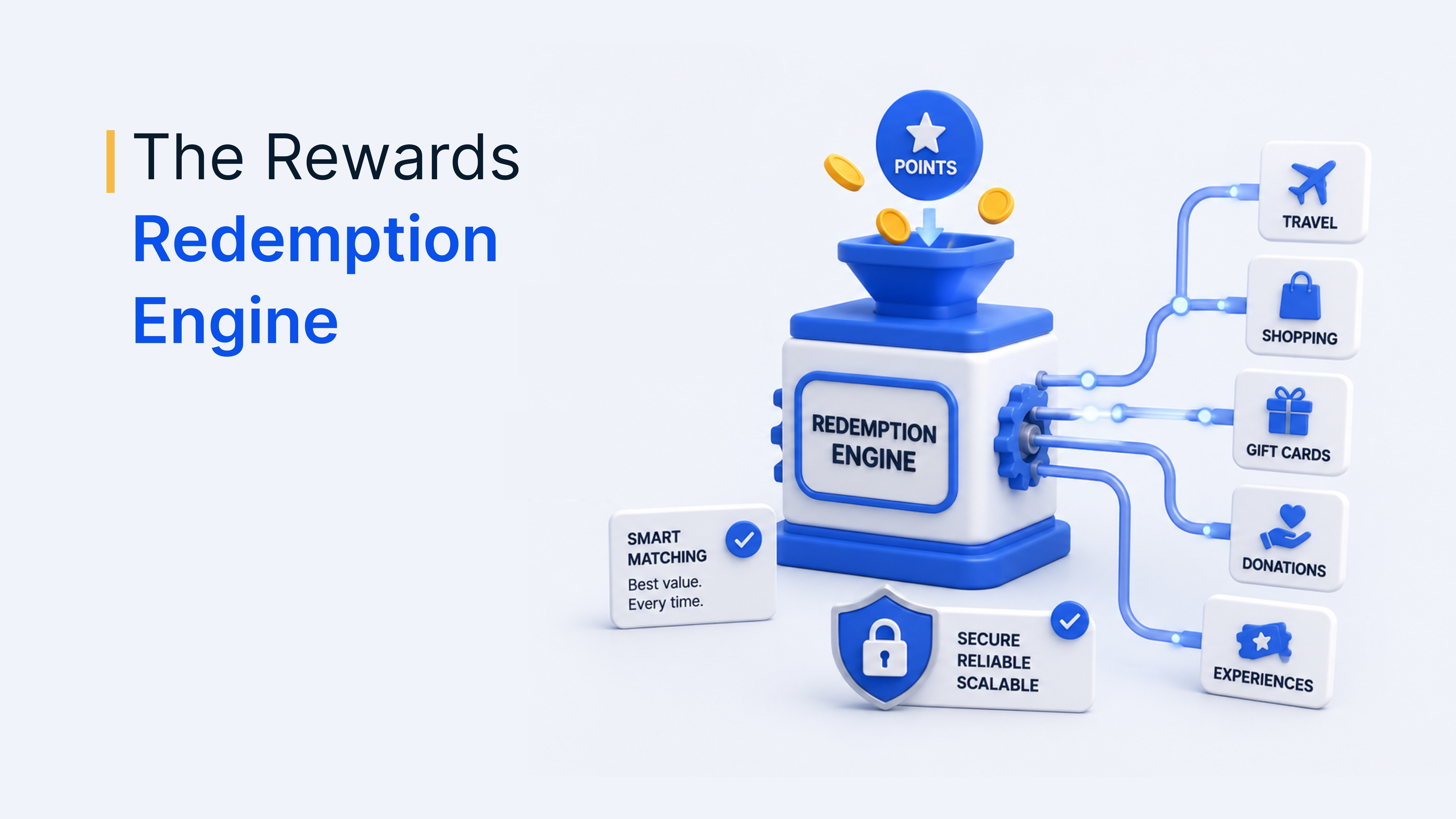
Plum's points-to-airline-miles exchange connects a bank or loyalty program's points to multiple airline partners through one integration, instead of a separate deal with each airline. A member picks a denomination, chooses the airline program they want, and Plum handles verification and transfer on the back end.
The airline partners on the other side of that connection are already onboarded to Plum's network, so a bank isn't recruiting or negotiating with each airline itself. It's inheriting a network that already exists.
That single connection pays off on both sides. For the member, a bigger redemption network raises how much their points are actually worth. For the bank, every airline reachable through the network is one less reason a member looks at a competing card instead.
What building this in-house actually requires
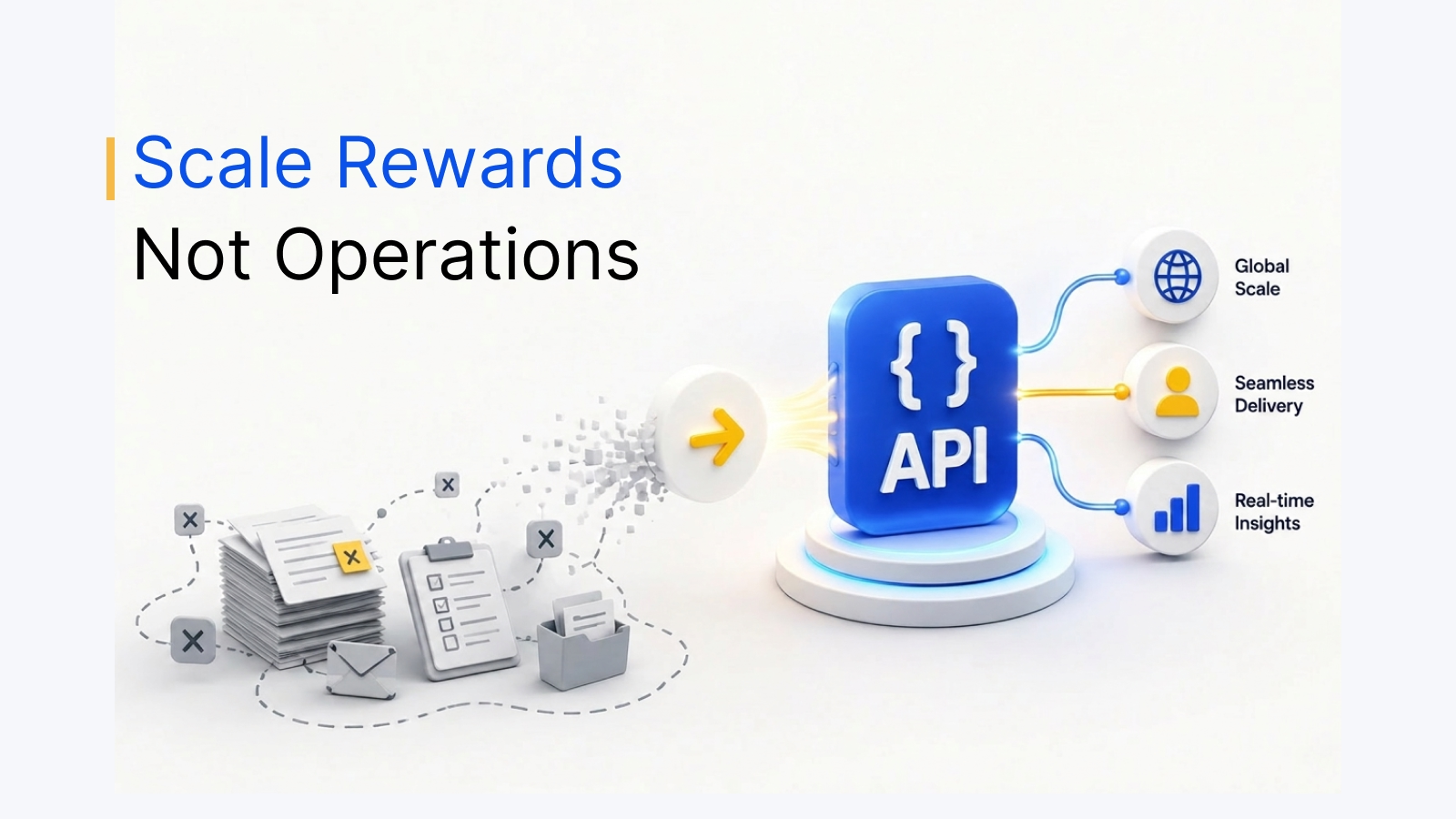
Skipping an exchange network doesn't mean skipping the work, it means doing it separately for every airline. Each partner needs its own integration built and maintained, and none of it is reusable from one airline to the next because airlines don't standardize any of it across each other. That build typically includes:
- A membership-verification call specific to each airline's system, so a member's account is confirmed before any points move
- A mileage-crediting integration per airline, since each program credits miles through its own API
- Denomination and currency logic per partner, because exchange ratios and minimums differ by airline
- A redemption UI or storefront experience, since airlines don't provide one for the issuing bank's members
- An audit trail for points movement, needed for compliance once real value is changing hands
A team managing five direct airline integrations is maintaining five separate versions of that list, and every API change or rate renegotiation repeats the work for that one partner.
What a narrow redemption catalog costs a loyalty program
The fewer airlines a program can exchange into, the more members hit a dead end when they try to redeem, and that dead end has a measurable cost.
5 of 8
Loyalty programs consumers actively engage with
Source: Deloitte 2025 Consumer Loyalty Program Survey
51%
Of multi-program members use just one
Source: Deloitte 2025 Consumer Loyalty Program Survey
72%
Say loyalty programs increase their spend with a brand
Source: Deloitte 2025 Consumer Loyalty Program Survey
The same research found 80% of consumers say they get more value from the brand because of its loyalty program. A catalog too narrow to use doesn't add that value, it pushes a program toward the unused half of that gap.
For the issuing bank, that gap is a preventable form of churn: a member with a bigger, more useful program available elsewhere has an obvious reason to move their spend. A wider exchange network closes off that reason.
See how Plum's exchange network could plug into your loyalty program
Get a walkthrough of how points move from your program into airline miles.
Book a free 30-minute demoTrusted by 5,000+ companies
How the exchange runs on Plum, step by step
Here's what actually happens on Plum's platform when a member exchanges points for miles, from the moment they open the storefront to the moment miles land in their airline account.
- The member logs into the bank's app or portal, and Plum's storefront opens through an SSO session that already knows who they are, so no separate login is needed
- The member selects a denomination of points to transfer and enters their airline program membership number in Plum's storefront
- The member chooses which airline program to transfer into from the airlines available on Plum's network
- Plum routes the request to the selected airline partner and verifies the membership number against that airline's system before anything moves
- Once verified, Plum's API credits the equivalent value as miles directly into the member's airline account, and the member gets a confirmation inside the same session
Airline programs in scope for Plum's exchange network
Plum's exchange network is built to reach a wide spread of carriers across regions rather than a handful of hub airlines, so a bank isn't limited to whichever airline happened to have a direct deal already. Airline programs in scope for the network include:
- Singapore Airlines, ANA Airways, Japan Airlines, Korean Air, and Cathay Pacific across Asia
- Air India, Qantas, and Turkish Airlines across South Asia, Oceania, and the Middle East corridor
- British Airways, Air France, Lufthansa, and Virgin Atlantic across Europe
- American Airlines, Delta Airlines, and Air Canada across North America
- KLM, rounding out a transatlantic and long-haul spread
The specific list a bank can exchange into depends on which airlines are live on Plum's network at the time of integration, since network coverage expands over time. The point for a loyalty team evaluating this isn't any single airline on the list, it's that the list keeps growing without the bank building anything new.
What the bank connects once
The bank integrates its points ledger with Plum a single time, either through SSO for the marketplace redirection flow or through the Rewards API if the bank's team wants more control over the checkout experience. That one connection is where the bank configures its own denomination rules, currency handling, and branding for the storefront.
Once that connection is live, Plum's network of airline partners sits behind it. The bank's team isn't the one maintaining membership-verification logic or mileage-crediting integrations for each airline, and isn't the one absorbing the work when an airline changes its API or its exchange terms. That maintenance runs on Plum's side of the connection, not the bank's.
What the airline gets from being on the network
For the airline, joining Plum's network means access to every bank or loyalty program already running on it, without negotiating a custom deal with each one individually. A single connection to Plum opens an inbound acquisition channel across all of Plum's issuing partners at once, rather than one relationship built and maintained per bank.
That also means the airline isn't the one fielding integration requests from each new bank that wants to offer its miles as a redemption option. Plum handles that onboarding on the network side, so the airline's own team stays focused on running its loyalty program rather than building bank-facing infrastructure.
What Plum's exchange infrastructure actually includes
Everything below is a specific piece of what a bank is buying when it runs its exchange on Plum, not a generic feature list.
A white-labelled storefront that handles currency and language per member
Plum's storefront runs the member-facing side of the exchange: denomination choice, currency, and language, set per member and per market. A bank serving several regions doesn't stand up a separate front end for each one.
Four integration patterns, from zero-build to fully custom
Marketplace redirection sends the member to a prebuilt, SSO-authenticated exchange flow with no UI work on the bank's side. An embedded iFrame keeps the same flow inside the bank's own app. The headless Rewards API hands a bank's engineering team full control over the exchange UI and checkout, with a sandbox and real-time reporting. A Custom Storefront option lets a bank's tech team build a fully bespoke front end on Plum's fulfillment backend underneath.
Conversion, tiering, and approval controls for finance and compliance teams
Because exchanged points carry real value, Plum's storefront includes point-to-currency conversion rates that can be adjusted per category without downtime, tier-based catalog visibility so different member tiers see different exchange options, and maker-checker approval so no single admin can change exchange terms alone. Real-time dashboards show exchange volume and redemption behavior as they happen.
Multi-region deployment for data residency
Plum's poly-cloud deployment keeps program data within the region it's required to stay in, which matters for banks operating under in-country data residency rules.
| Criteria | Building it in-house | Plum's exchange network |
|---|---|---|
| Airline integrations | One membership-verification and mileage-crediting build per airline | One connection into Plum's existing airline network |
| Partner reach | Limited to whatever your team has negotiated and built | Every airline already on Plum's network, from day one |
| Member experience | A different flow per airline unless your team unifies it | One white-labelled storefront, per-member currency and language |
| Time to add a new airline | Months of engineering and negotiation per partner | No new build, added within the existing connection |
The decision isn't really about any single feature on this list. It's whether your team wants to keep rebuilding this per airline, or connect once through Plum and add partners without rebuilding anything.