Key Takeaways
Retaining a player costs 5 to 25 times less than acquiring a new one, but most reward programs still spend like retention doesn't matter.
In-game points lose all value the moment a player considers leaving. Redeemable rewards don't.
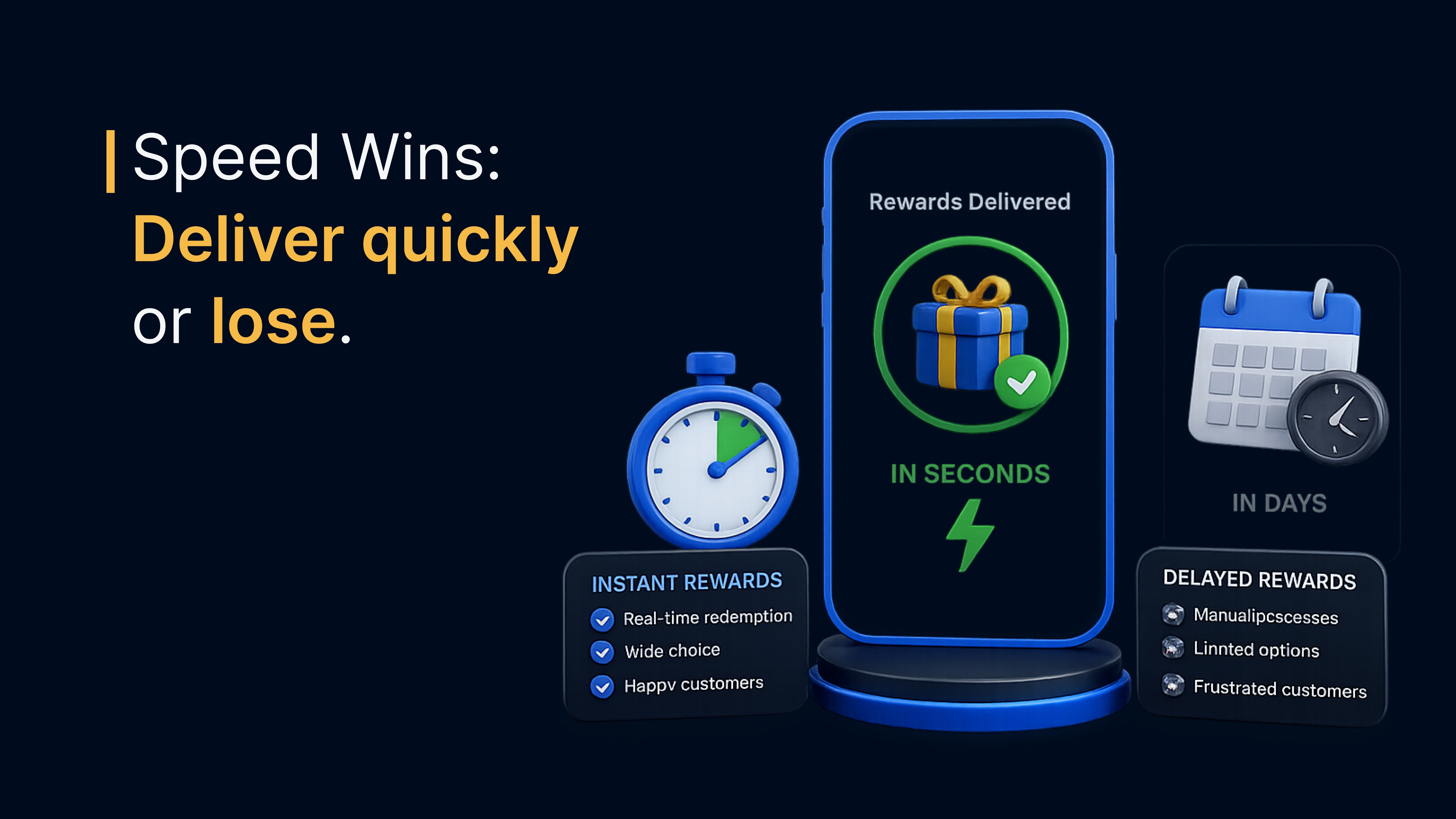
Reward codes let platforms reward a threshold the instant a player hits it, without an account creation step or a balance to manage.
A new player costs five to twenty five times more to acquire than an existing one costs to keep. Yet most gaming apps still hand new players the same tool they give everyone else: in-game points that only work inside the app.
That mismatch is why retention keeps slipping even as acquisition budgets climb. The fix isn't a bigger ad budget. It's giving players gaming rewards and incentives that drive player engagement that still have value the day they consider leaving.
What a player retention rewards program actually does
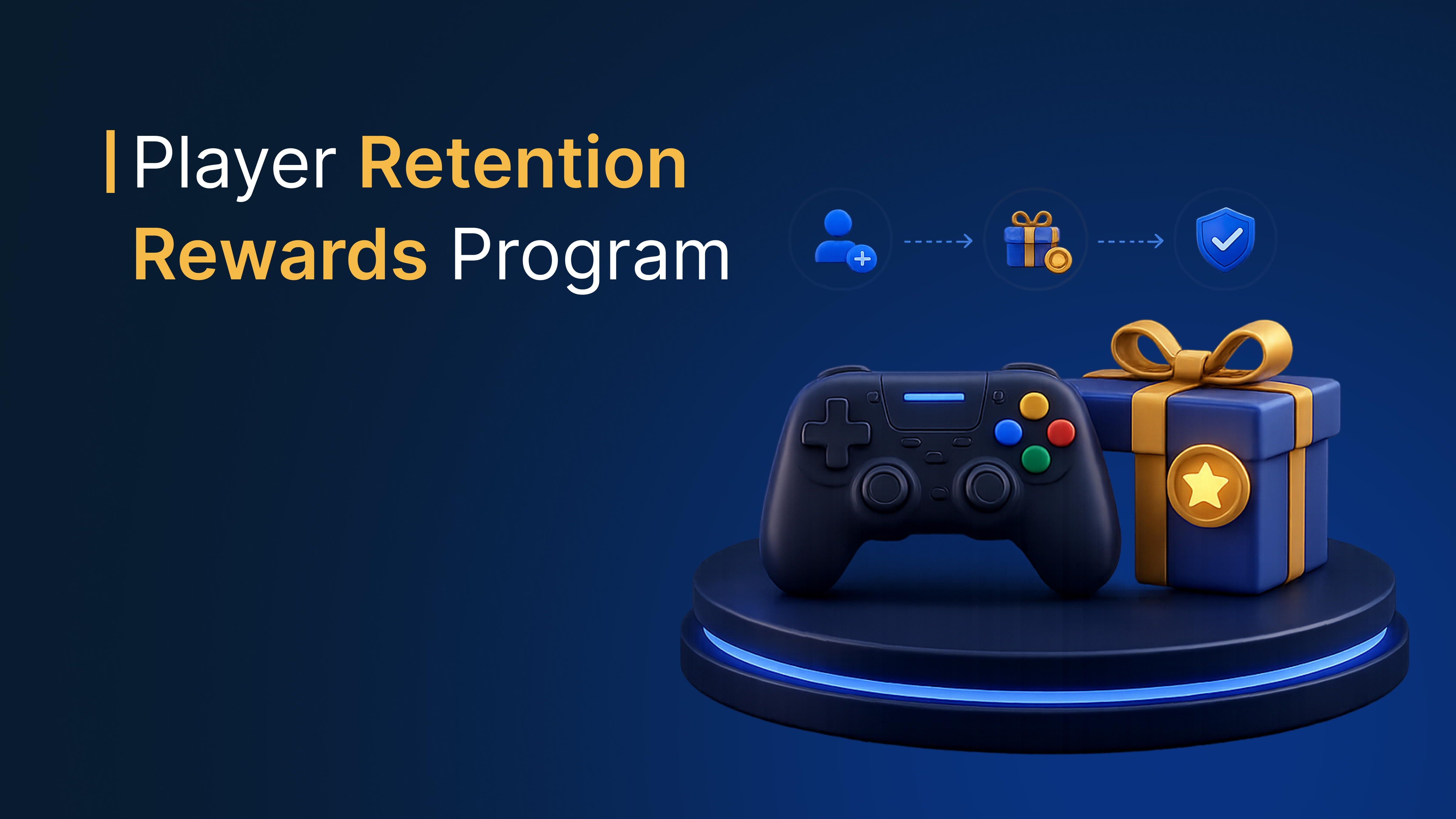
A player retention rewards program replaces in-game points with real, redeemable rewards tied to specific behaviors: adding money to a wallet, playing for a set duration, hitting a milestone, referring a friend. The player earns something they can spend anywhere, not just inside one app.
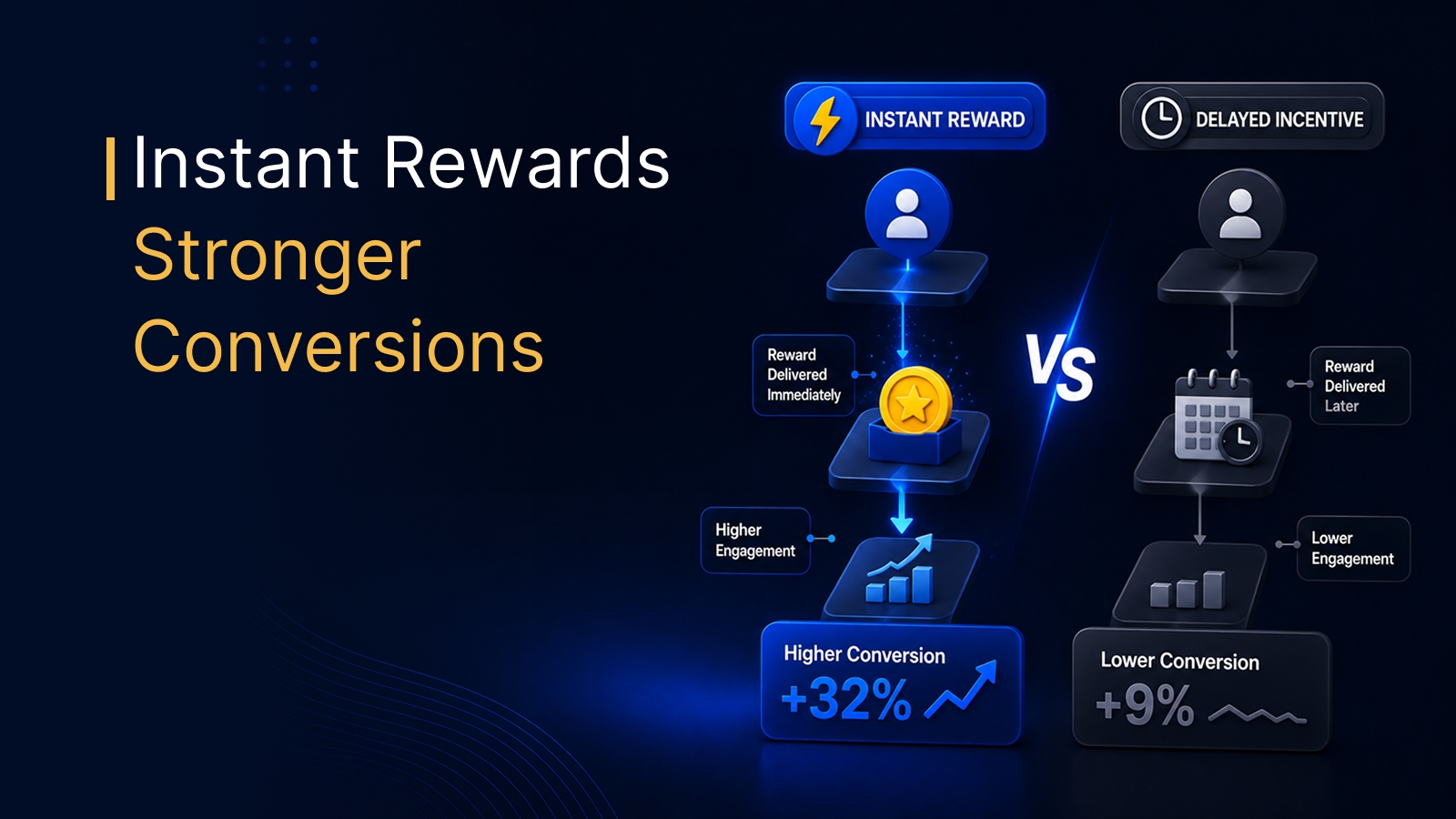
In-game currency has one flaw that never goes away. It only has value if the player keeps playing, so the moment they consider leaving, the incentive to stay disappears with them. A redeemable reward doesn't have that problem, because it has value the second it lands, whether the player logs in tomorrow or not.
Why player churn and rising CAC are the real threat right now
Churn and acquisition costs are rising together, and most gaming apps are fighting both with the same broken tool: manual, spreadsheet-driven reward distribution that can't keep pace with either problem. The same pattern shows up across most platforms:
- Incentives that don't outlast the session, so players churn once the novelty wears off
- Session frequency dropping as competition for player attention increases
- In-game points with no real-world value the moment a player stops playing
- Reward operations run by hand, which delays the reward past the moment it should have landed
- Global payouts complicated by currency and compliance requirements once the platform scales past one market
Why retention economics favor rewards over ads
Most gaming apps still budget for acquisition and treat retention as whatever's left over. The numbers argue for the opposite allocation. A dollar spent keeping an existing player active returns more than the same dollar spent finding a new one, and the gap between the two keeps widening as paid channels get more expensive and more crowded.
5-25x
Cheaper to retain an existing player vs. acquire a new one
Source: AppSamurai / Statista, 2025
$25B
Spent industry-wide on gaming user acquisition in 2025
Source: AppsFlyer, State of Gaming for Marketers 2026
82%
Of mobile game developers say reward-based acquisition outperformed traditional UA
Source: adjoe developer survey, 2025
Together, these numbers make the same point twice: retention is cheaper than acquisition by an order of magnitude, yet most of the industry's $25 billion in annual UA spend still chases players who churn out as fast as they come in, even though reward-based acquisition already outperforms traditional ads.
Rewards work as an acquisition channel and a retention lever at once. Redirecting acquisition spend into reward-funded retention cuts CAC by reducing how many new players are needed to hit the same growth number.
See Plum's gaming rewards API in action
Get a walkthrough of reward codes, integration options, and the redemption catalog.
Book a free 30-minute demoTrusted by 5,000+ companies
How this plays out across the player lifecycle
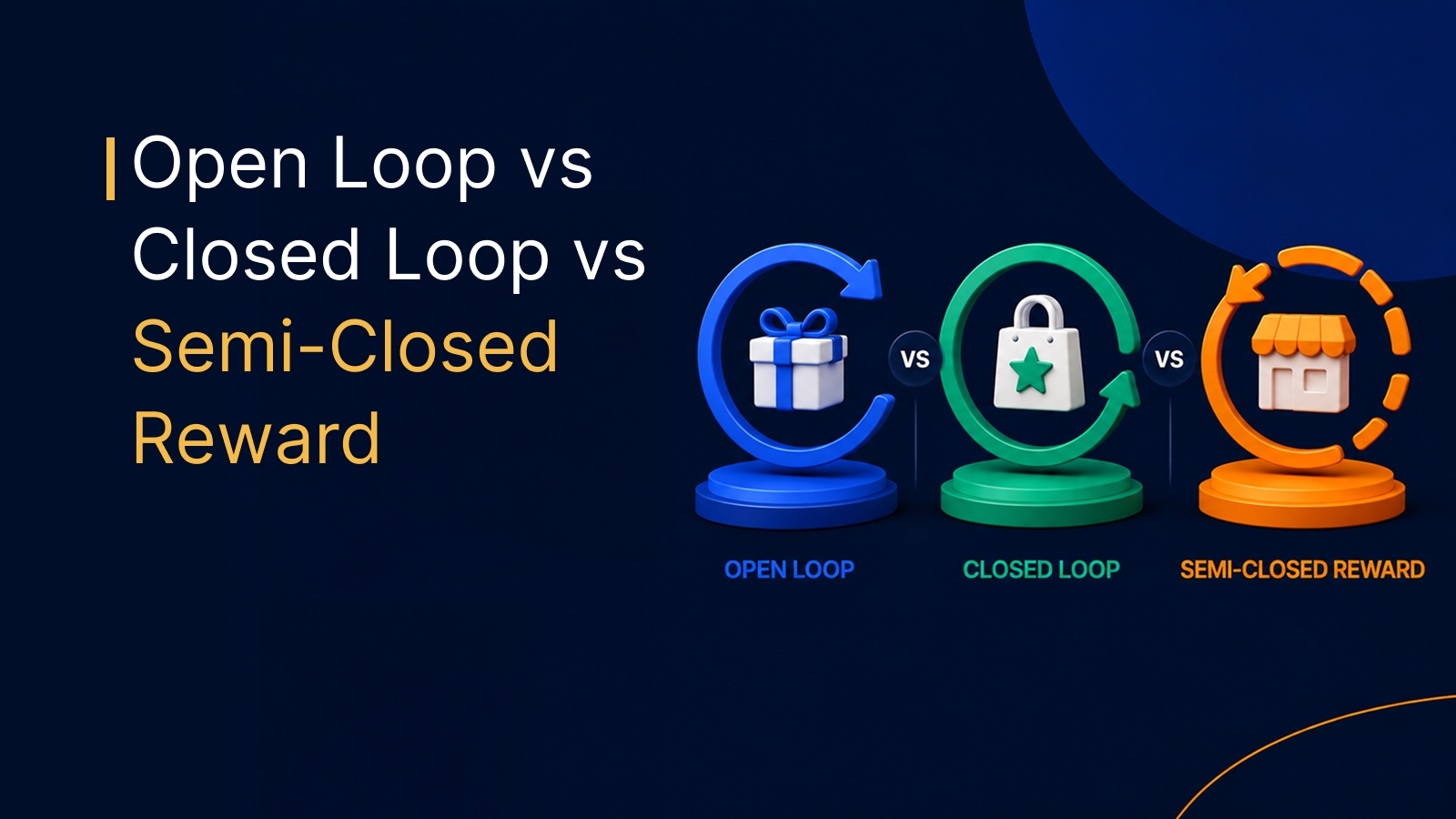
Plum supports four reward formats: points, codes, links, and direct gift cards. Which one fits depends on whether the recipient has an account, needs to accumulate a balance, or just needs a one-time payout. Gaming rewards almost always default to codes, and there's a concrete reason why.
Retaining high-paying players
Players who add money to their wallet and play consistently have the most to lose by leaving. Rewarding that exact combination, a wallet top-up plus a defined play duration, with a code gives high-value players a concrete reason to keep that pattern going.
Boosting new-player engagement
New players who maintain a minimum balance and play a set number of hours in their first days are the ones most likely to stick around long term. Rewarding that early consistency catches engagement while it's still forming, instead of waiting until loyalty is already proven.
Expanding redemption choice for loyalty-tier members
Loyalty members who can only redeem points for in-app perks eventually hit a ceiling on what those perks are worth to them. Letting top-tier members redeem for third-party vouchers and offline gifts gives the loyalty program a reason to keep climbing, instead of a reason to cash out and leave.
Why codes, not points or links, fit gaming rewards
Points require the recipient to hold a login and a persistent balance, which works for an ongoing loyalty program but adds friction when the reward needs to land the instant a player hits a threshold. Links work for a single one-time payout but can't be combined or partially redeemed. Codes solve both problems at once.
| Attribute | Points | Links | Codes |
|---|---|---|---|
| Login required | Yes | No (guest) | No (guest) |
| Partial redemption | Yes | No | Yes |
| Combine multiple | Yes (balance) | No | Yes (up to 10) |
| Best for | Ongoing loyalty | One-time payout | Threshold-triggered rewards |
That's why a player who hits a deposit-and-playtime threshold gets a code, not points. The code redeems instantly without an extra login step, and if the player earns two more later, they stack all three into one bigger redemption.
A reward code flow, from trigger to redemption
A reward code program runs in four steps: a player hits a defined threshold, the platform issues a unique code, the player redeems it in a rewards store, and the platform tracks the redemption in real time.
| Step | Trigger | What happens |
|---|---|---|
| 1 | Player hits a defined threshold | Wallet top-up plus a set play duration, or another qualifying behavior |
| 2 | Code issued | Platform generates a unique, trackable reward code |
| 3 | Player redeems | Player visits the rewards store and redeems the code, no new account required |
| 4 | Redemption tracked | Platform logs the redemption in real time for reporting |
Codes work well for this because redemption doesn't require the player to create a new account, which matters when the reward needs to land the moment a threshold is hit. A few other things make the mechanic flexible in practice:
- Players redeem without creating a separate account
- Multiple codes can be combined or partially redeemed for a bigger reward
- Each campaign gets its own landing page and reward catalog
- Expiry dates are set per campaign, matched to how long it should run
How Xoxoday Plum powers a player rewards program end to end
Xoxoday Plum's gaming rewards platform runs the reward code and delivery layer behind a player rewards program. It issues the codes, delivers them through the player's preferred channel, and connects to a global catalog so the reward has real value the moment it's redeemed.
Integration options that fit the existing stack
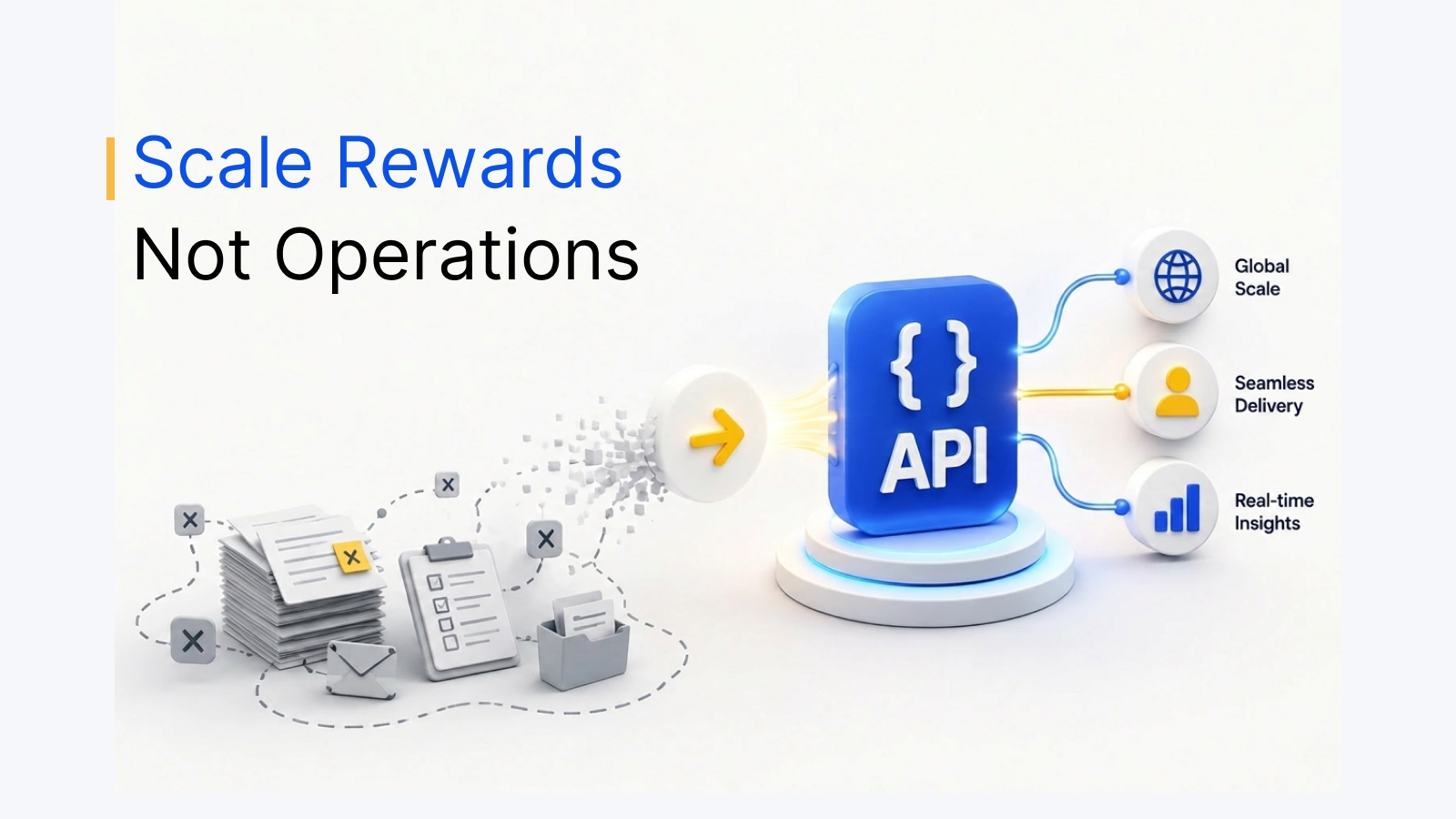
Plum connects to a gaming platform through Rewards API for full control over the redemption UI, Reward Marketplace for a prebuilt checkout that launches faster, or an Embedded iFrame for rendering the catalog directly in-app or via WebView. All three run through SSO, so a player never re-authenticates to redeem.
Fraud controls and governance that scale with volume
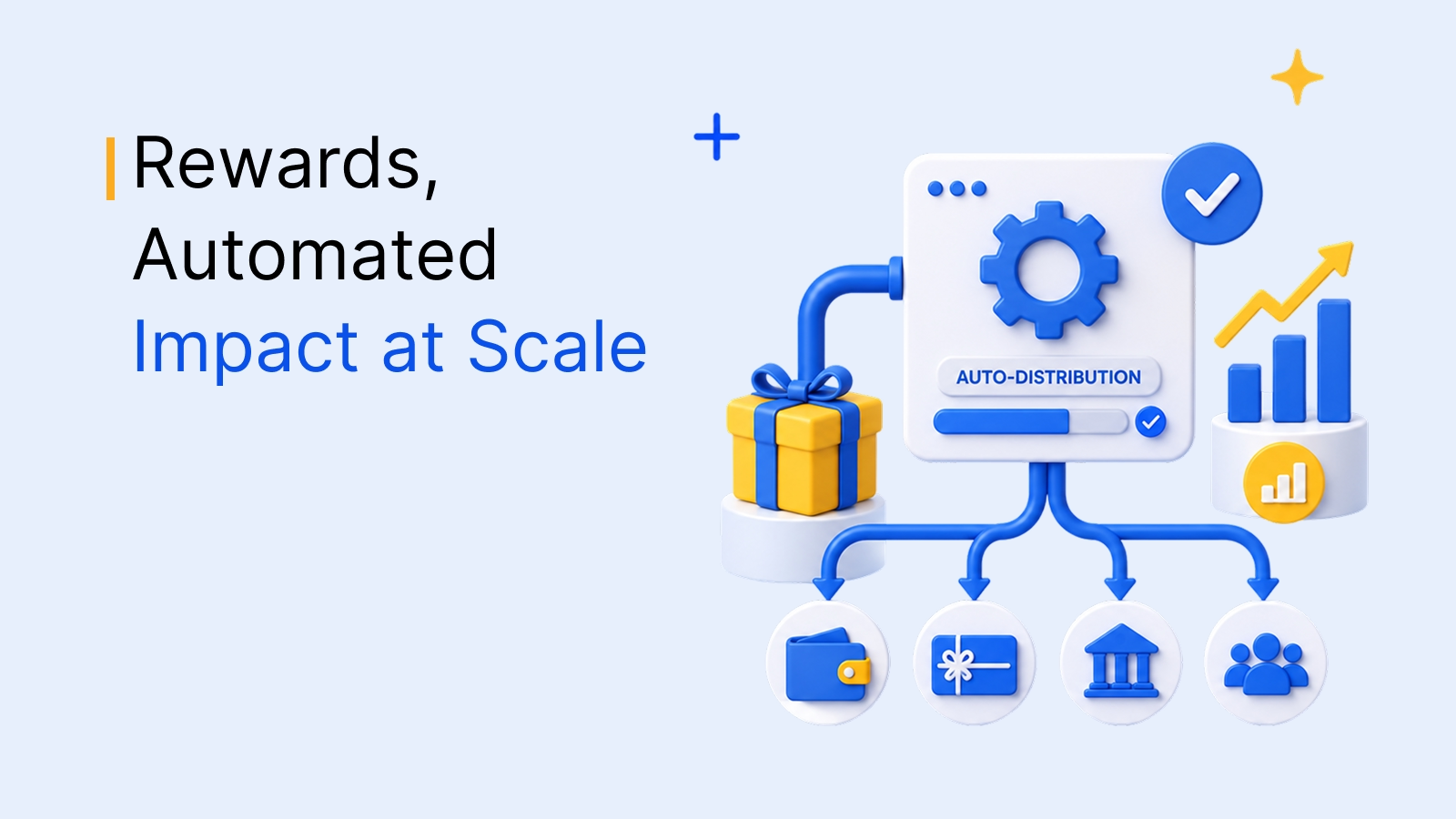
A reward program that pays out automatically needs guardrails that don't depend on someone checking manually. Plum runs velocity controls to catch abnormal claim rates, budget thresholds that alert before spend runs over, and role-based access so only approved admins can change the catalog or issue high-value codes.
Every issuance and redemption logs to a real-time dashboard with a full audit trail, which matters most in gaming, where reward abuse, one player farming multiple accounts, for instance, is a real cost if it goes undetected.
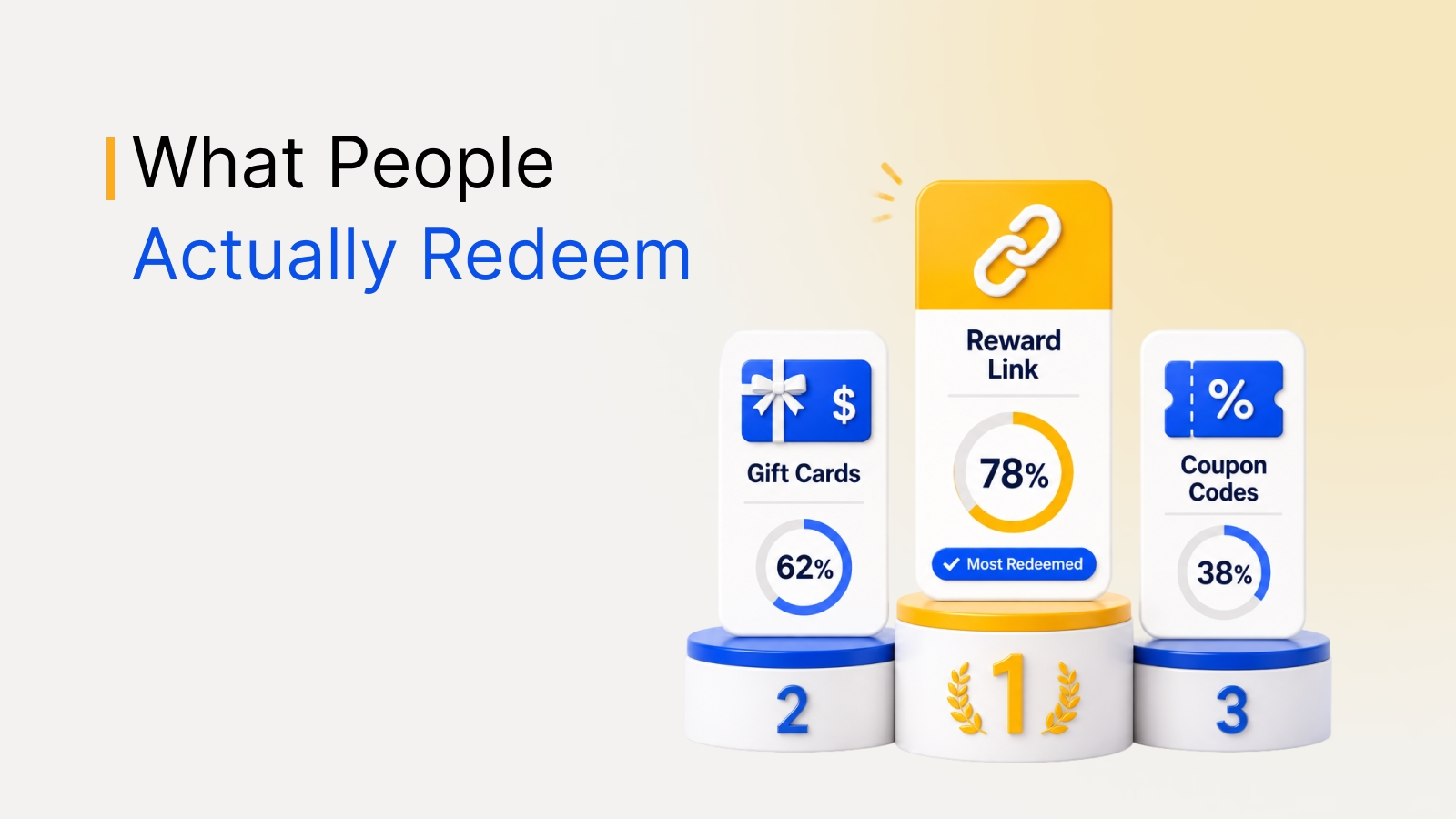
What players can actually redeem, and why choice drives retention
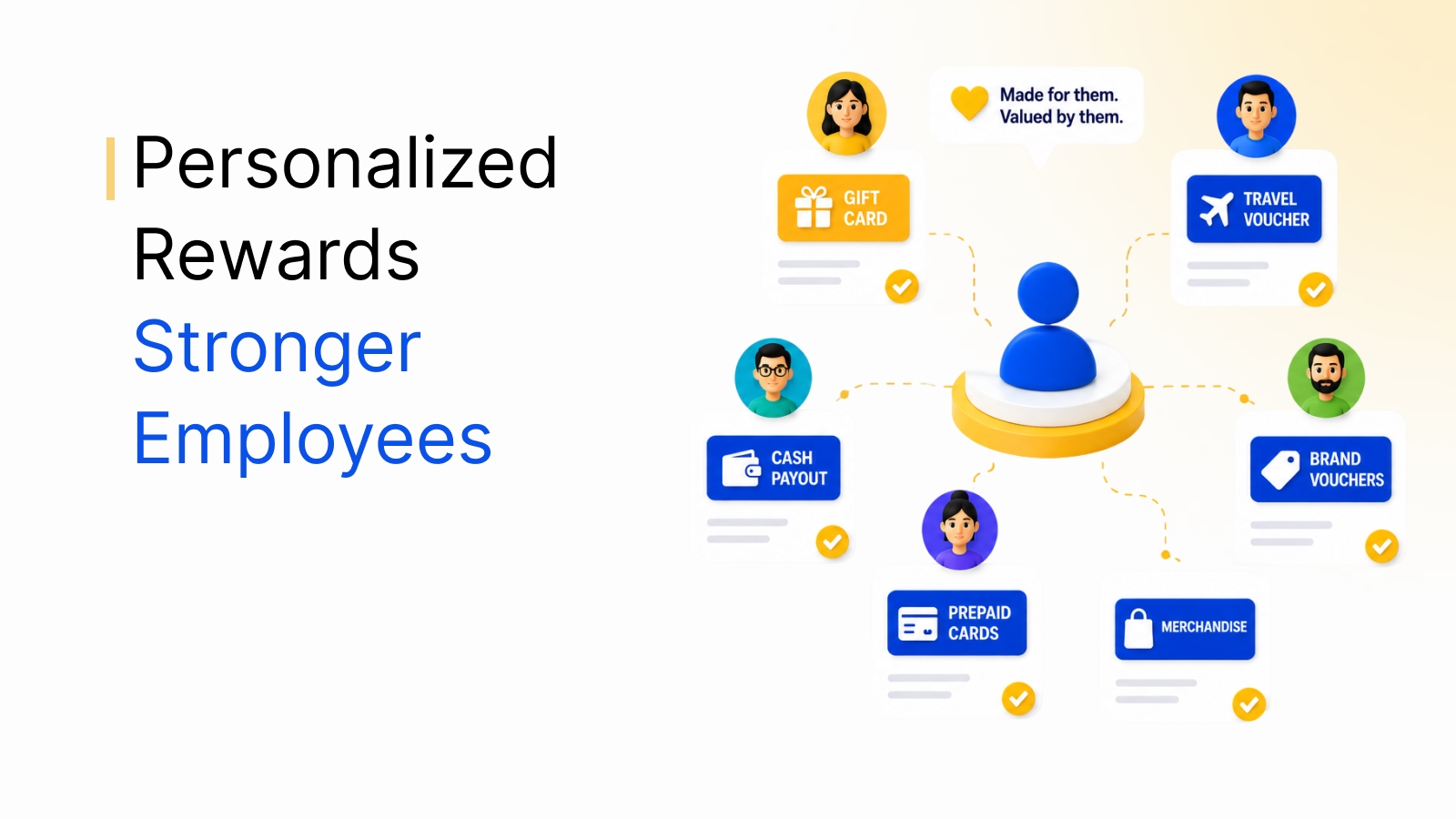
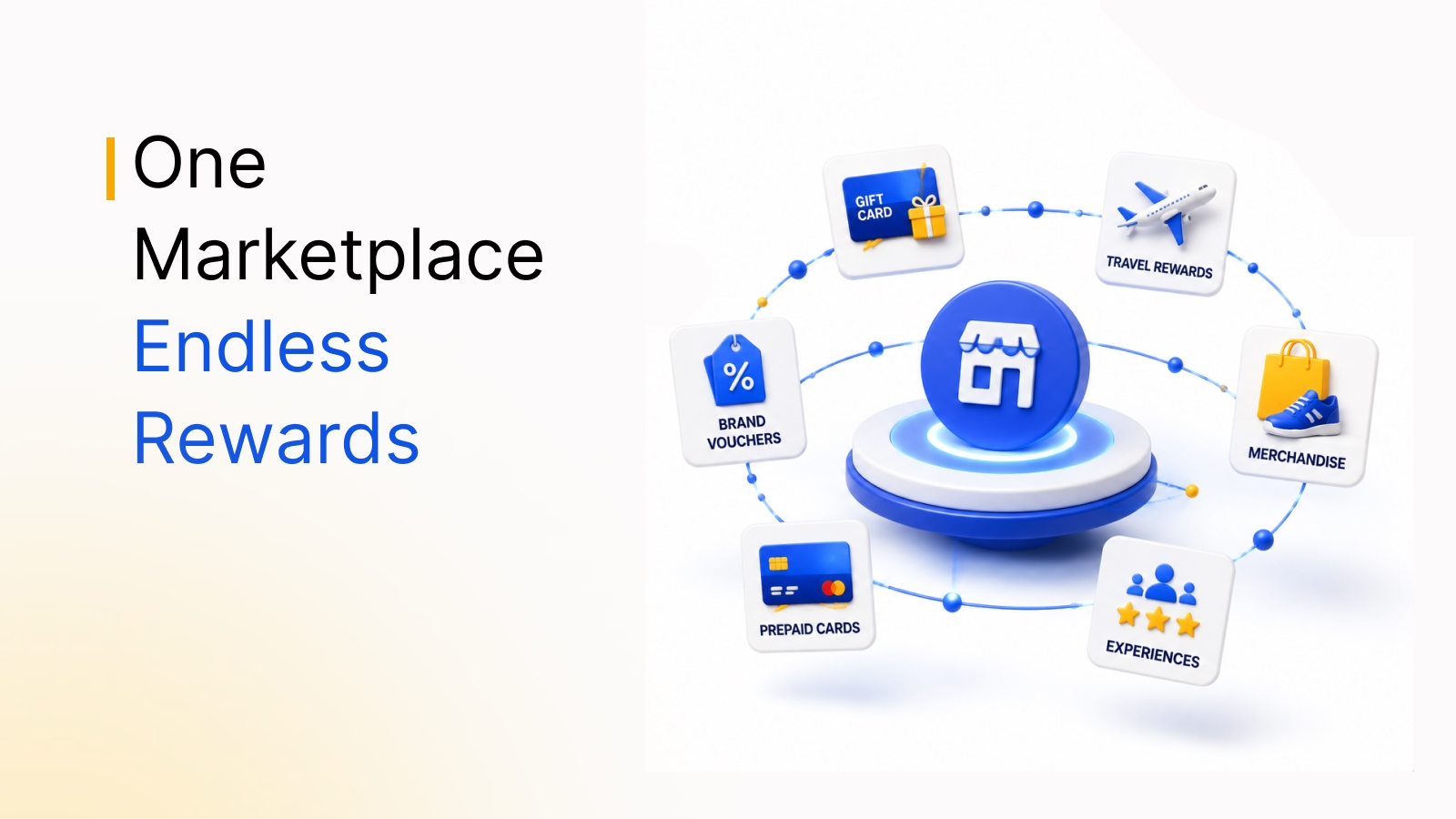
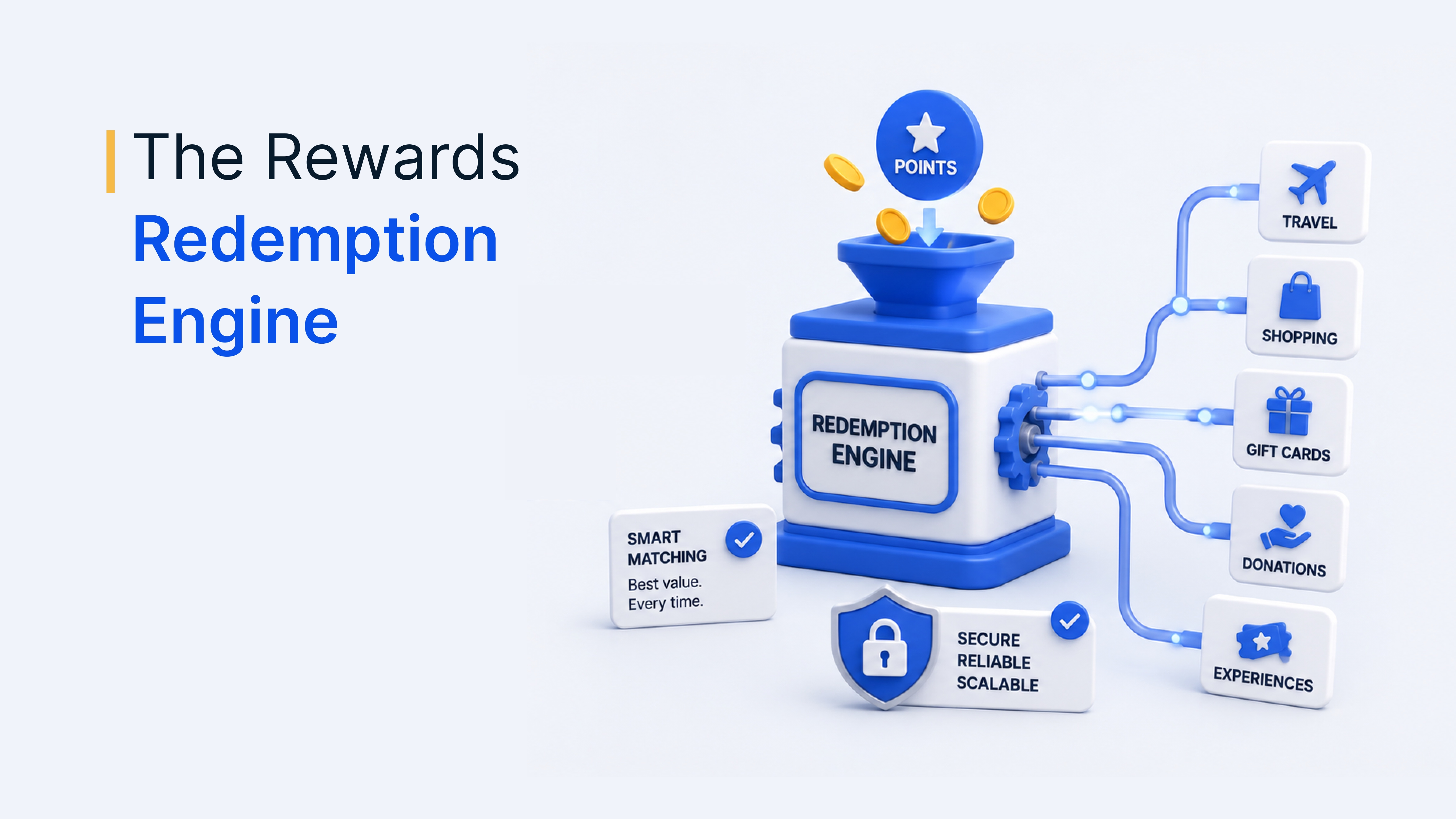
A reward only motivates a player if they actually want it, which is why redemption choice matters as much as the reward mechanic itself. Xoxoday Plum's catalog spans over 10 million rewards options across more than 150 countries, covering e-gift cards, physical gift cards, merchandise, travel, experiences, and top-ups.
That breadth matters because a platform with players across regions can't rely on one reward type landing well everywhere. A player in one market might want a mobile top-up; another wants a hotel booking credit. Giving players a catalog wide enough to cover both keeps the reward relevant instead of generic. Some platforms pair retention rewards with gaming gift cards for player acquisition on the front end, so the same catalog covers both sides of the funnel.
Built for scale without the compliance risk
A rewards program that works for a handful of players has to work the same way at ten times the volume, without breaking on currency, language, or data protection requirements. Xoxoday Plum is built on GDPR, SOC 2, and ISO 27001 standards, with support for 50 or more currencies and languages so a global player base can redeem in their own currency and language.
Round-the-clock support and dedicated account management matter here too, because reward issues that stall for even a few hours can undo the retention effect the reward was meant to create.