Key Takeaways
People remember the first and last items in a sequence best; the middle is the easiest part to forget.
Lead with your most important message in subject lines, headlines and openings, and end with one clear call to action.
Design onboarding with a quick first win and a satisfying finish, such as a completed checklist or a welcome reward.
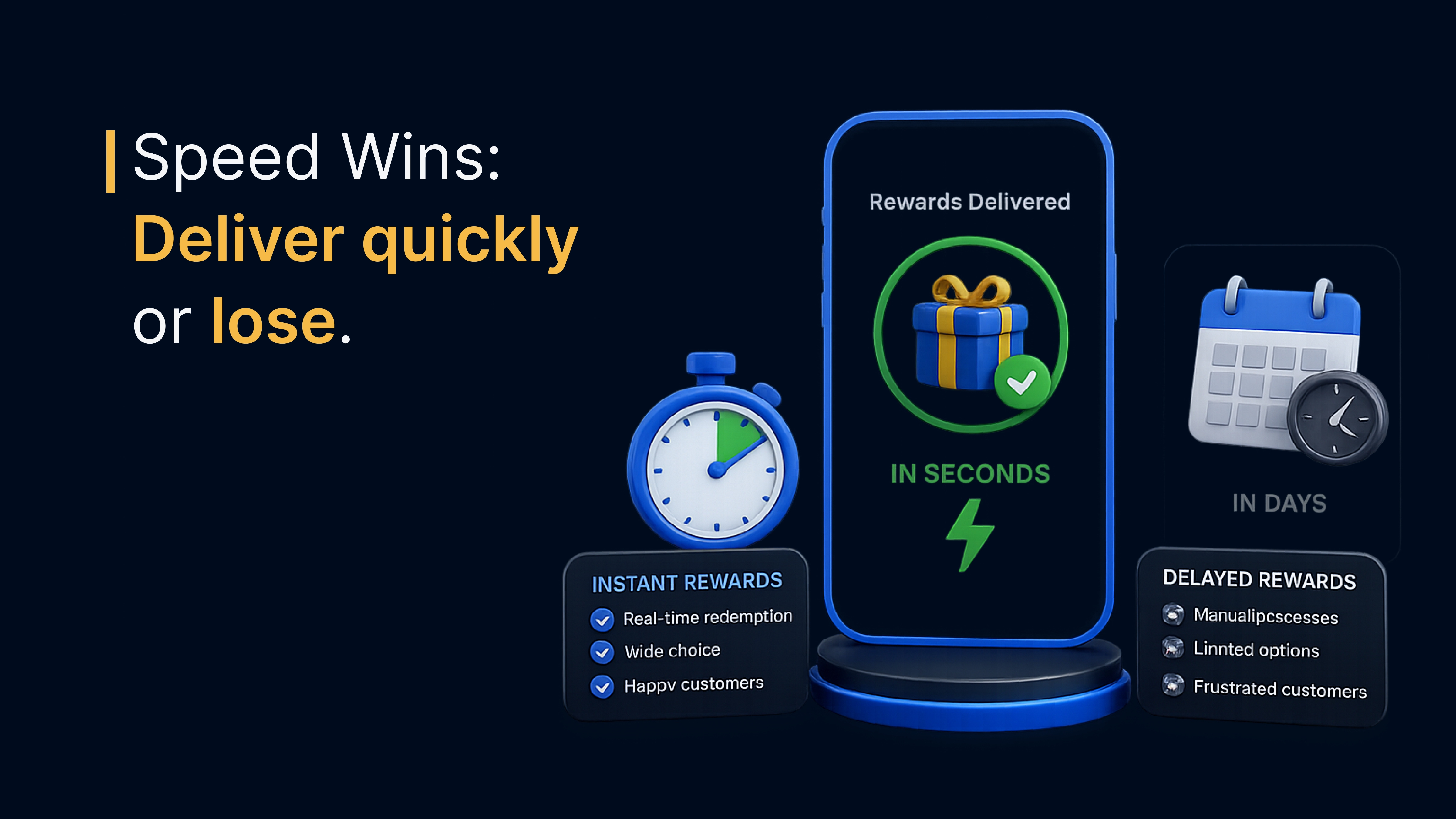
Time rewards to end interactions on a high, and deliver them instantly so they stay linked to the action.
Use the serial position effect to highlight what matters, never to hide important terms in the middle.
Marketers spend a lot of effort crafting the perfect message, but in a crowded feed it's not the loudest message that wins. It's the one people remember. The primacy and recency effect explains why: people remember what they see first and last far better than what sits in the middle.
That makes order a marketing decision. Where you place the headline, the key benefit, the call to action and even the reward can change what a buyer remembers and does next.
This guide explains how the primacy and recency effect works, why the middle gets forgotten, practical examples across email, landing pages, onboarding and rewards, and how to apply it across the AIDA funnel.
What is the primacy and recency effect?
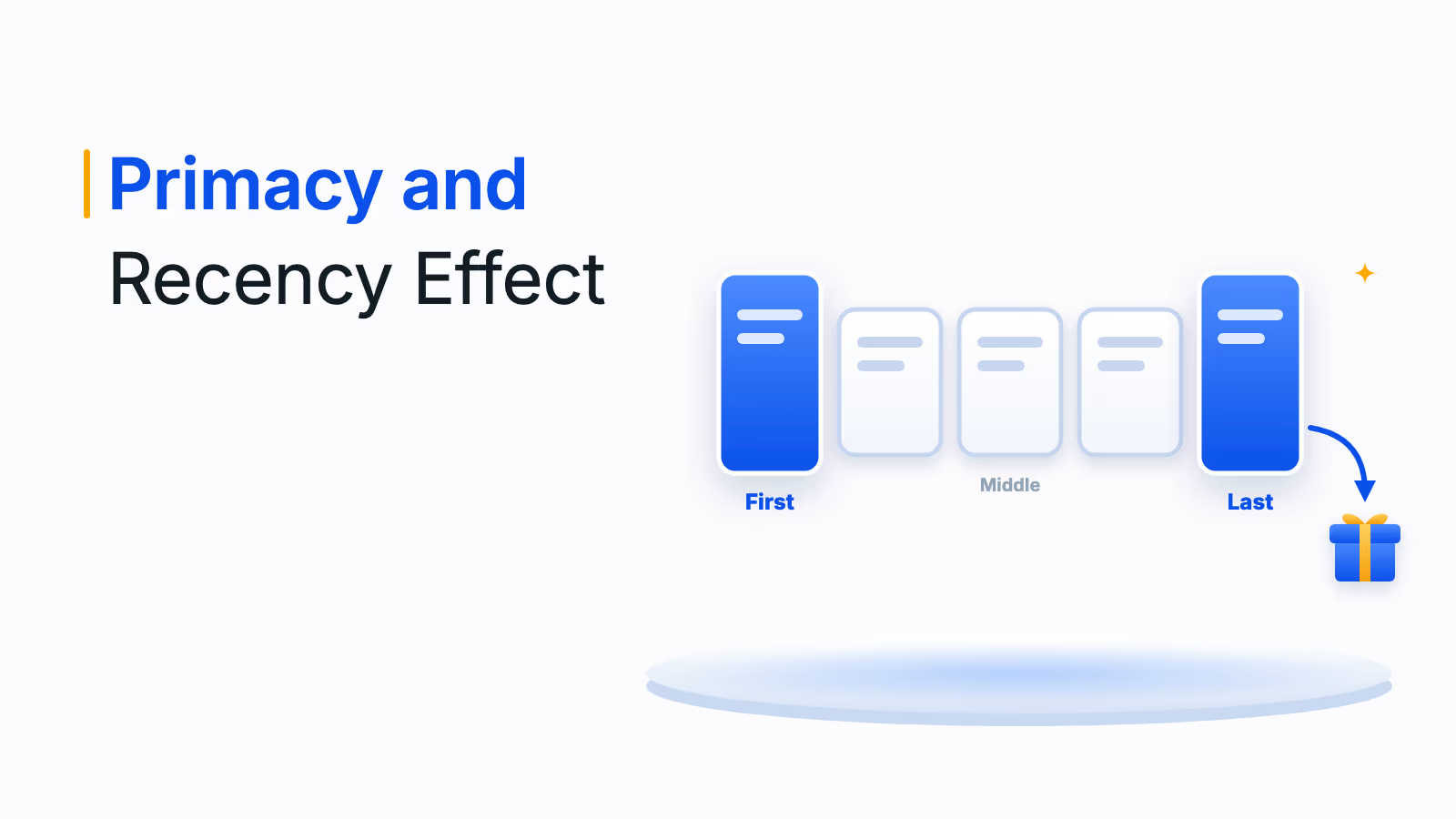
The primacy and recency effect, also called the serial position effect, is the tendency to recall the first and last items in a sequence better than the items in the middle. Plotted on a chart, recall forms a U-shape: high at the start, dipping in the middle and rising again at the end.
- The primacy effect is our tendency to remember the first items we encounter. They get more attention and mental rehearsal, so they are more likely to move into long-term memory.
- The recency effect is our tendency to remember the last items we encounter, because they are still fresh in short-term or working memory.
If you read someone a list of ten words, they will usually remember the first couple and the last couple best. The same pattern shows up in ads, emails, sales calls and product tours.
The psychology behind the serial position effect
The serial position effect is one of the most established findings in cognitive psychology. Each end of the sequence is remembered for a different reason.
Why first impressions stick
- Deeper processing: Early information gets more attention and rehearsal, so it is more likely to be stored long term.
- Anchoring: The first message sets the frame for everything that follows. A strong opening shapes how later details are interpreted.
That is why a headline, or the first benefit listed on a landing page, carries so much weight.
Why final impressions matter
- Working memory: The last thing people saw is still active in their minds when they decide.
- Closure: People look for a sense of conclusion, which makes closing messages feel weightier and more persuasive.
That is why a clear call to action at the end of a message works so well.
The middle problem
Content in the middle is overlooked for three reasons: information at the start and end interferes with it, attention fades after the opening, and it lacks the prominence of being first or last. If something matters, don't bury it in the middle.
New research: even AI shows order effects
Order effects are not limited to people. A 2025 study of ChatGPT, Gemini and Claude repeated Solomon Asch's classic 1946 experiment, in which two candidates with identical traits are described in different orders. The models' choices shifted depending on whether positive or negative traits came first, and the direction differed by model. As more buyers use AI assistants to compare vendors and summarize options, how you order information may matter to machines as well as to people.
End every interaction on a high
Send instant digital rewards the moment customers finish a survey, demo or referral, in 150+ countries.
Talk to our ExpertTrusted by 5,000+ companies
Primacy effect in marketing: put the most important thing first
The primacy effect in marketing means your opening sets the tone for the whole experience. Use it to lead with the message you most want remembered.
- Headlines and subject lines: Lead with the main benefit, not a generic greeting.
- Landing pages: Put the core value proposition and the strongest proof above the fold.
- Feature lists and pricing pages: List the most important feature or recommended plan first.
- Sales calls and presentations: Open with the customer's problem and the outcome you deliver, then go into detail.
- First-touch experiences: A buyer's first interaction with your brand, whether a website visit, a webinar or a welcome email, colors every interaction after it.
Recency effect examples: finish strong
The recency effect means the last thing people experience is what they carry into their decision. These recency effect examples show how to use it:
- Emails: End with one clear call to action, and repeat the key benefit in the closing line or P.S.
- Landing pages: Restate the offer and the CTA at the bottom of the page for readers who scroll all the way down.
- Video and audio ads: Close with the brand name and tagline; podcast sponsors often get a final mention near the end.
- Checkout: Finish with reassurance, such as free returns, security or a guarantee, right before the buy button.
- Sales meetings: Recap the agreed next step and the main value point at the very end.
Examples across email, landing pages and onboarding
Most marketing assets have a clear beginning and end. The table shows where to place your strongest elements in each.
| Channel | Primacy: put first | Recency: put last |
|---|---|---|
| Benefit-led subject line and opening sentence | Single clear CTA and a P.S. with the key point | |
| Landing page | Value proposition and strongest proof above the fold | Restated offer, CTA and a risk reducer |
| Onboarding | A quick, satisfying first win in the first session | A completed checklist, a reward or a celebration |
| Presentation | Preview of the main message | Recap and next step |
| Product packaging | Brand and key benefit at the top | Proof points or usage cues at the bottom |
| Webinar | The most valuable insight early | The offer or CTA, plus a thank-you |
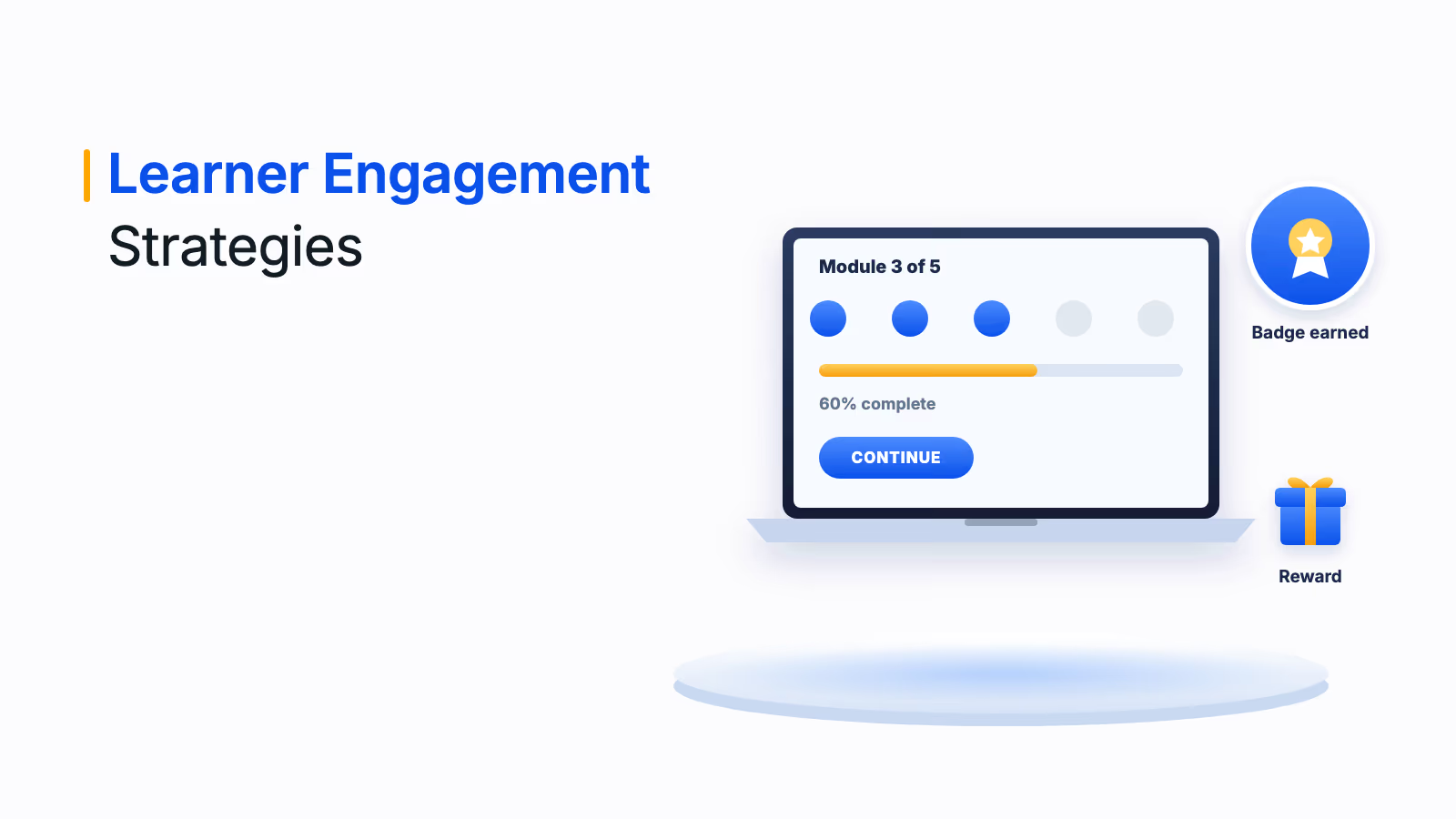
Onboarding deserves special attention. The first session is the primacy moment for a new customer, so design it to deliver a quick win. The end of onboarding is the recency moment, so close it with a sense of completion, such as a finished checklist, a badge or a welcome reward.
Reward timing: end on a high
Rewards follow the same rule. People judge an experience heavily by how it ends, so the timing of a reward shapes how the whole interaction is remembered.
- Reward at the end of the effort: Deliver a thank-you reward right after a survey, demo or referral, so the final memory of the interaction is positive.
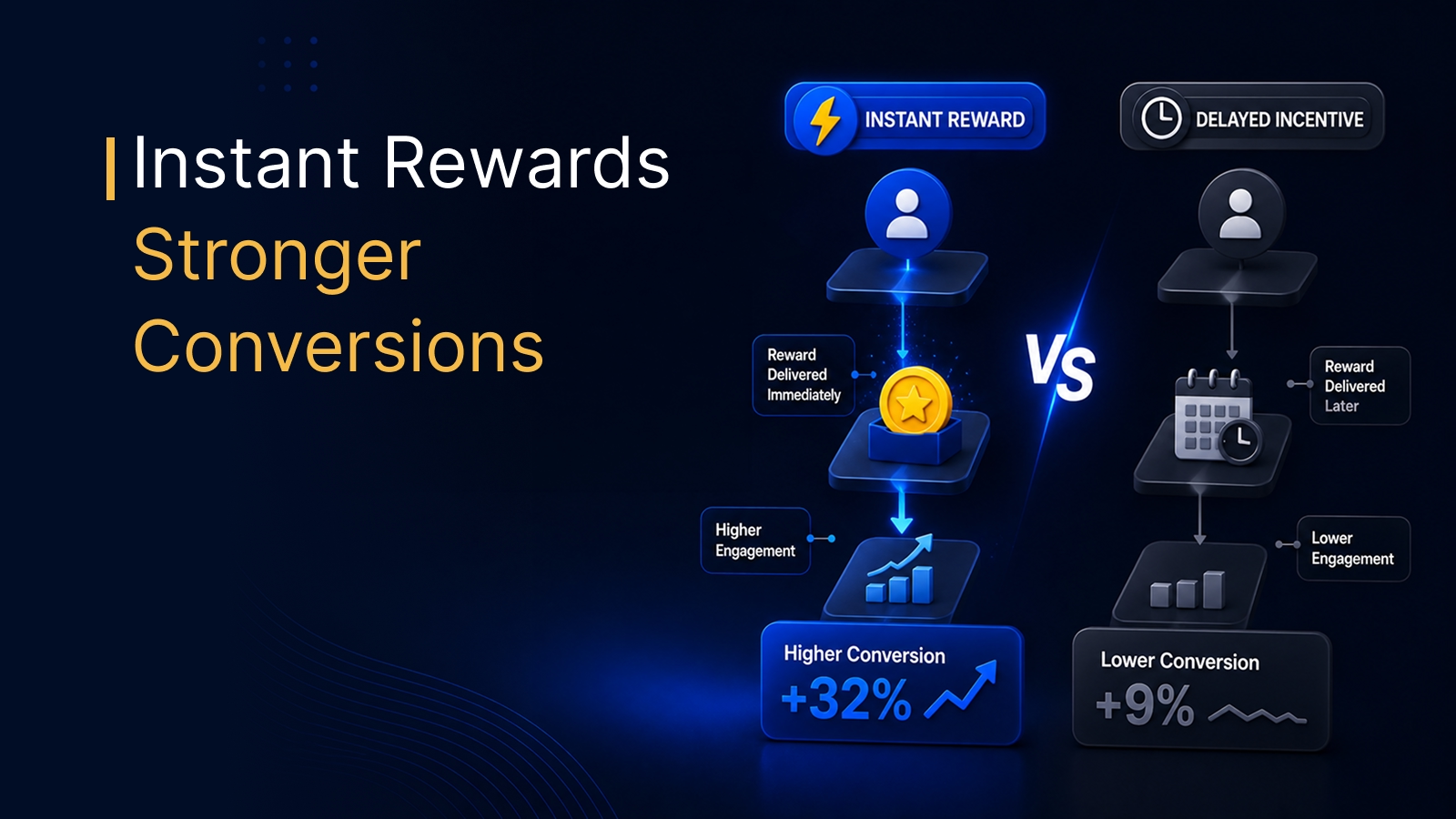
- Deliver instantly: A reward that arrives weeks later is disconnected from the action. Instant digital delivery keeps the reward and the action linked in memory.
- Start with a welcome: A small welcome reward at sign-up creates a positive first impression that colors later interactions.
- Avoid ending on friction: If the last step is a confusing redemption process, that is what people will remember. Make claiming the reward simple.
Loss aversion works alongside these effects: people feel losses more strongly than equivalent gains. This guide to applying loss aversion shows how to frame incentives with that in mind.
Using primacy and recency across the AIDA funnel
The AIDA model (attention, interest, desire and action) maps naturally onto first and last impressions. For a deeper look at the framework, read this guide to AIDA email marketing.
Attention: win the first impression
At the top of the funnel, many prospects don't know you yet and may not even know they have a need. Your first appearance should be helpful and memorable, not a hard sell.
- Use surveys and polls to learn what your audience cares about, and thank participants with a small reward.
- Work with subject matter experts to create high-value content that establishes trust early.
- Deliver value up front, then end with a small ask, such as subscribing to a newsletter or podcast. That last action leaves a stronger memory.
- Host webinars and attend events, and incentivize speakers and attendees to boost turnout.
Interest: make the middle memorable
This is the hardest stage, because prospects now have you and your competitors on their radar. Lead every asset with your most distinctive point, then use demos, testimonials, reviews and influencer content to build confidence. End each interaction with a positive cue, such as an exclusive invite or a small reward for registering for a live demo or completing a lead form, so the last impression pulls them forward.
Desire: open with emotion, close with a hook
At the desire stage, buyers know what you offer. What's missing is the emotional pull. Open with a benefit that feels like a breakthrough, tell vivid customer stories and bring in aspiration through endorsements. Then end the meeting, webinar or ad with a compelling final hook, such as early access, a time-limited bonus or a surprise upgrade.
Action: make the last step easy and rewarding
At the bottom of the funnel, small barriers derail conversions. Make sure your brand is the last thing on the buyer's mind when they decide:
- Send timely reminders by email, SMS or messaging apps.
- Retarget people who abandoned a cart, checkout or form.
- Optimize landing and checkout pages with clear CTAs, fast load times and simple forms.
- Add urgency with early-bird offers or limited-time bonuses.
- Use incentives thoughtfully, such as points or a bonus for completing the purchase, and reward the sales and partner teams who close deals.
Use marketing psychology principles responsibly
Marketing psychology principles like the serial position effect are powerful, so use them with integrity:
- Be transparent: Use first and last positions to highlight what genuinely matters, never to hide important terms in the middle.
- Stay true to value: Your opening and closing messages should reflect real benefits, not exaggerated claims.
- Help buyers decide well: The goal is confident, informed choices, not impulsive decisions people regret.
Put the primacy and recency effect to work
The primacy and recency effect is a simple, research-backed way to make marketing more memorable: lead with your most important message, finish with a clear and positive close and never bury what matters in the middle. A strong launch sets the long-term impression, and regular, well-timed touchpoints keep refreshing it.
Rewards are one of the easiest ways to create a positive first and last impression. Xoxoday Plum lets you send instant digital rewards from 10M+ options across 30+ categories in 150+ countries, delivered by email, SMS or reward link the moment someone completes a survey, attends a demo or makes a referral.
Book your Plum demo
Frequently asked questions
The primacy effect is the tendency to remember the first items in a sequence, because they get more attention and are more likely to enter long-term memory. The recency effect is the tendency to remember the last items, because they are still fresh in working memory. Together they form the serial position effect.
It depends on timing. Recency tends to dominate when people decide right after seeing the information, while primacy tends to dominate when there is a delay before the decision. Because you rarely control timing, the safest approach is to put important messages both first and last.
Put the main benefit in the subject line and first sentence, keep supporting details in the middle and end with one clear call to action. A P.S. line that repeats the key point or offer is an easy way to use the recency effect.
Place the value proposition and strongest proof above the fold, where every visitor sees them first, and repeat the offer and call to action at the bottom for visitors who scroll. Avoid putting critical information, such as pricing terms, only in the middle of a long page.
Give the reward right after the customer completes the action, such as a survey, demo or referral, so the interaction ends on a positive note and the reward stays linked to the behavior. Instant digital delivery makes this practical. A small welcome reward at sign-up also creates a strong first impression.
Not when it is used to make genuinely important information easier to remember. It becomes manipulative if it is used to hide terms, fees or limits in the middle of a message. Use first and last positions to help buyers understand and decide, not to mislead them.