Key Takeaways
The ABM framework has three steps: identify the right accounts, engage the buying group, then land and expand.
The three types of ABM, strategic, lite and programmatic, differ by how many accounts you target and how deeply you personalize.
Since 2024, effective ABM tactics reach whole buying groups, use intent data for timing and use AI to personalize at scale.
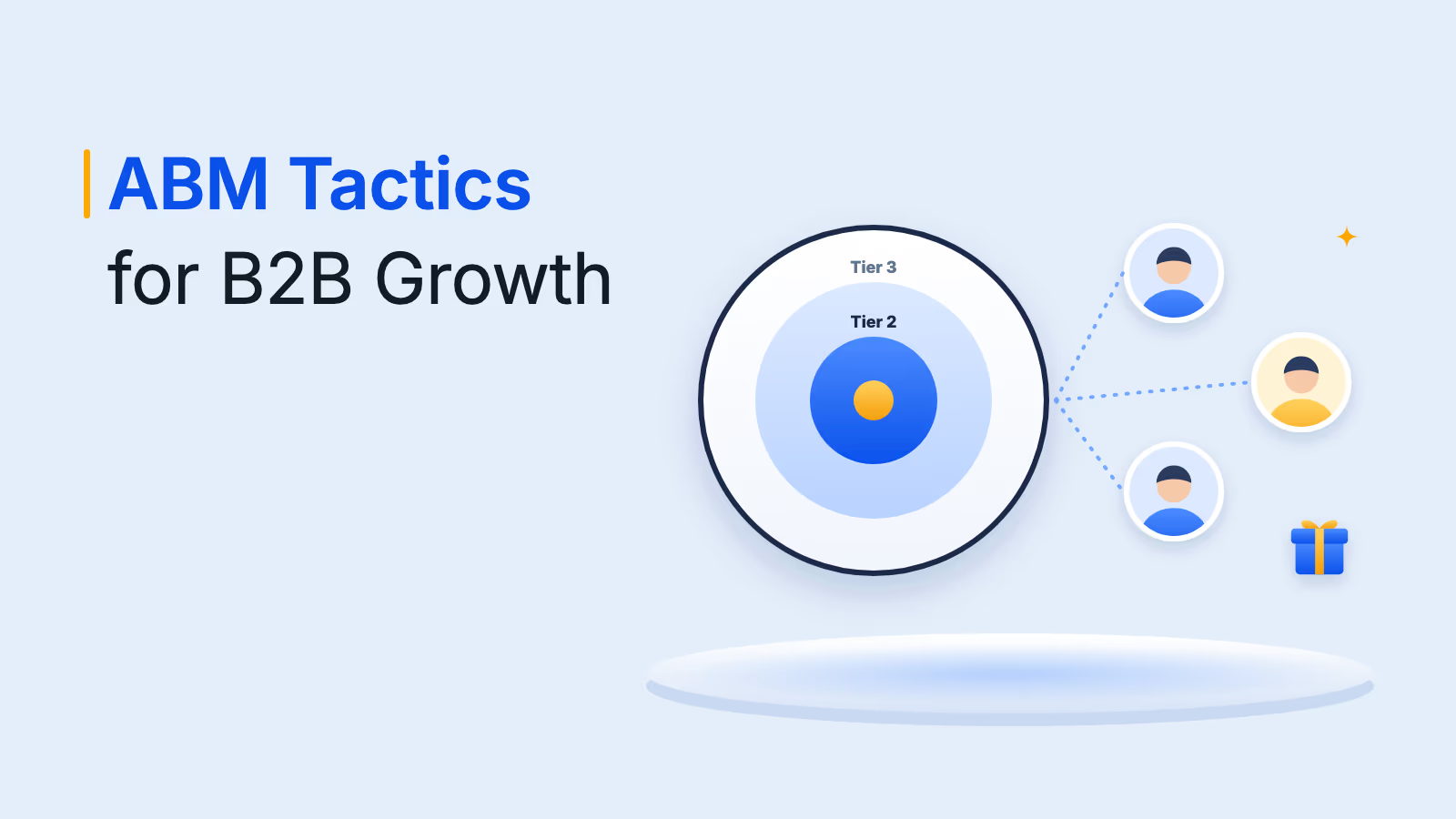
Match tactics to tiers: custom plays for tier 1, cluster plays for tier 2 and automated, triggered plays for tier 3.
Rewards work at every tier, from curated experiences for executives to automated gift cards when a contact books a demo.
High-ticket sales, greater revenue, acquiring users at scale, warming up cold leads, upsells and cross-sells: whatever you aim to achieve with account-based marketing campaigns, the right account based marketing tactics decide whether your target accounts notice you or ignore you.
Before diving deeper into ABM tactics, let's first understand everything about account-based marketing: the ABM framework steps, how ABM differs from traditional marketing, the types of ABM and why it matters so much for B2B teams in 2026. Then we'll walk through 15+ ABM tactics for B2B growth, each with practical steps you can use this quarter.
If you are completely new to the topic, start with this complete guide to account-based marketing.
What is account-based marketing (ABM)?
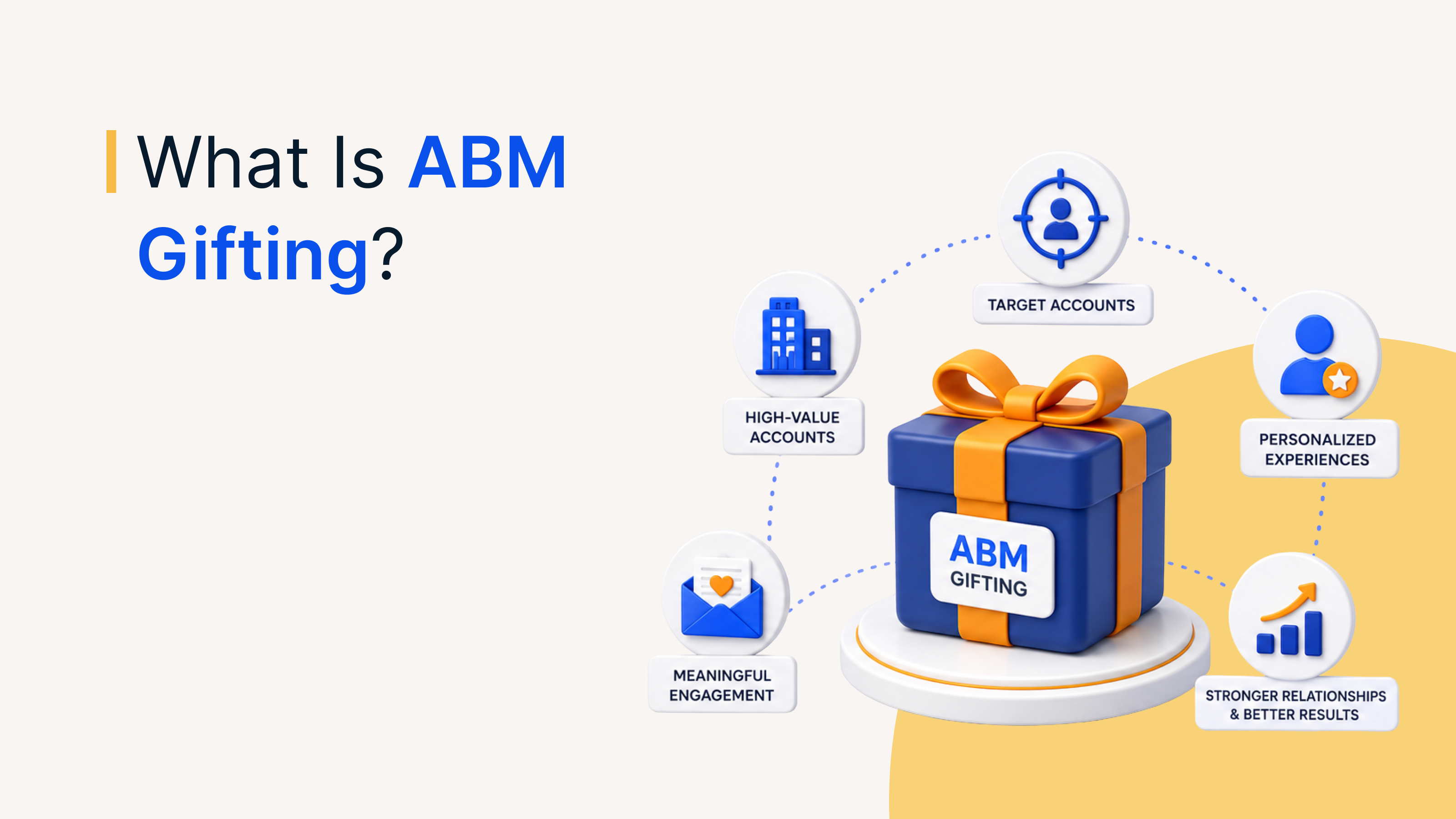
Account-based marketing (ABM) is a strategic approach focused on high-value accounts within a market or organization. It creates personalized buying experiences to improve acquisition, strengthen relationships and drive business growth. Put simply, ABM is a growth strategy where marketing and sales collaborate to create personalized buying experiences for a selected set of high-value companies.
With ABM, you treat each high-value account as a unique market. This leads to better ROI and stronger customer loyalty because you tailor the buyer's journey and customize communication, content and campaigns for each of these accounts.
Account-based marketing framework steps
Account-based marketing is the exact opposite of traditional or inbound marketing practice. A traditional or inbound approach is like casting a wide net and hoping to catch the fish (your target audience), then nurturing them subtly until they reach a buying decision. ABM starts with the fish you want and goes after them directly.
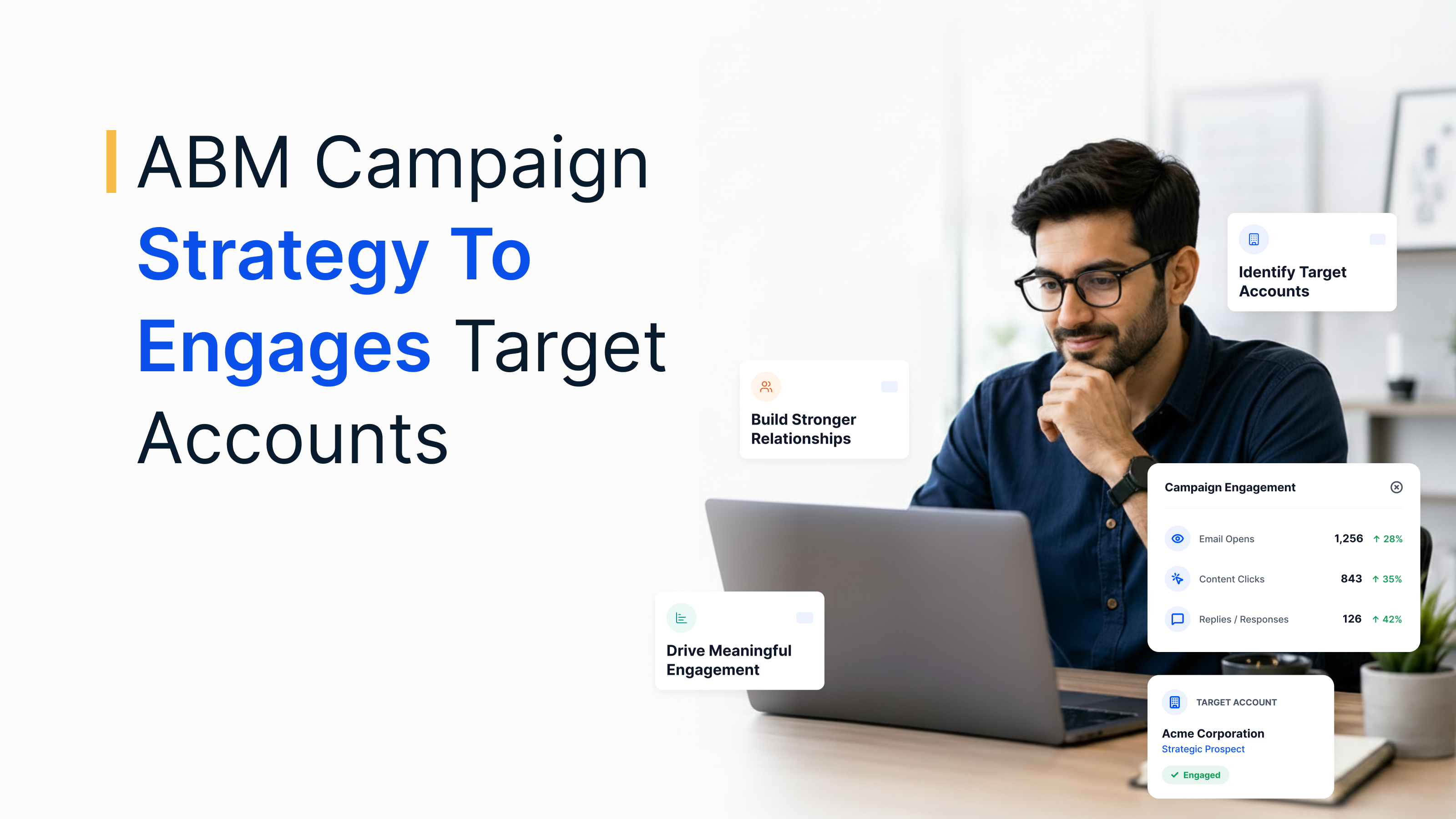
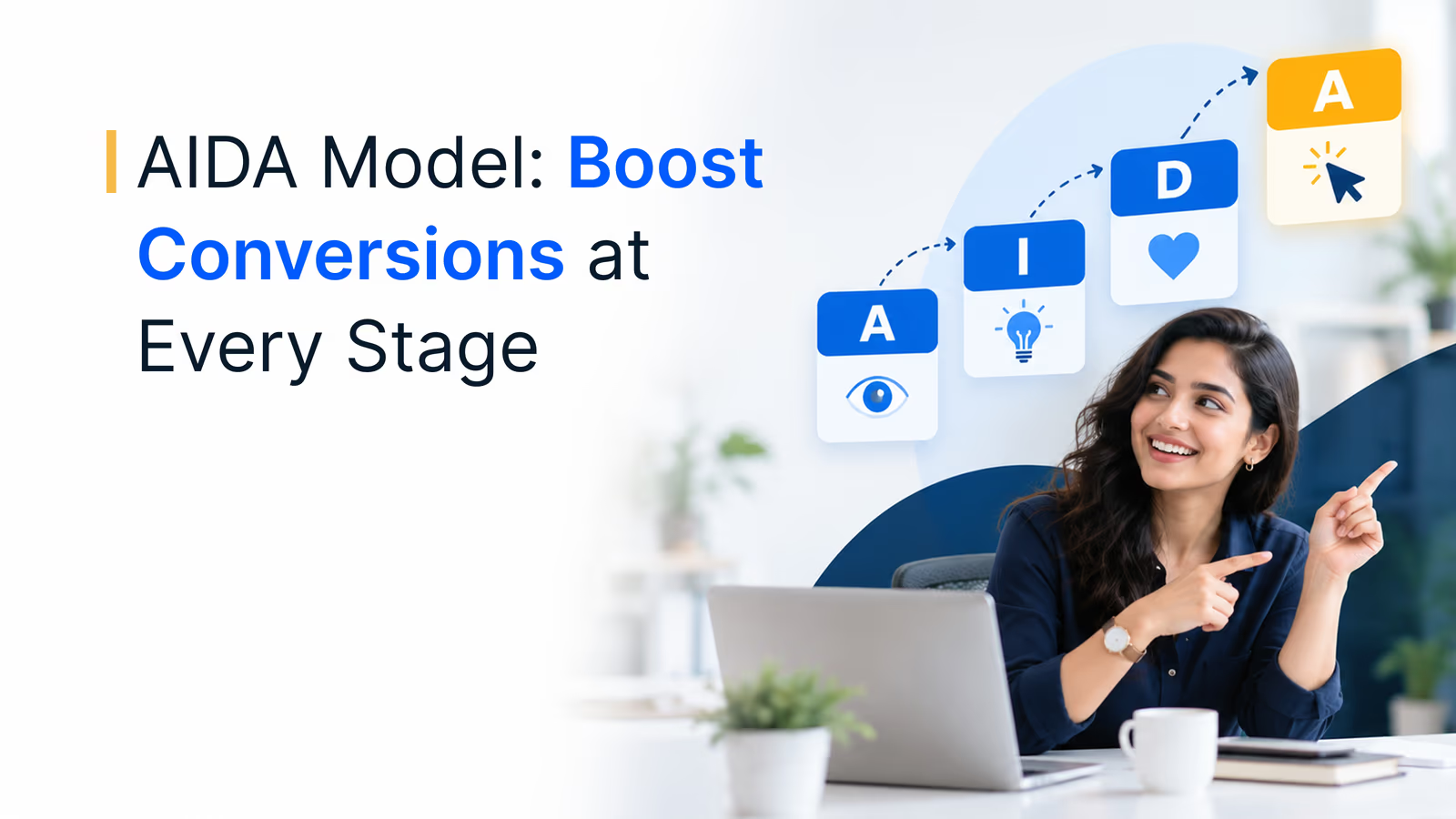
Broadly speaking, the ABM framework has three steps:
1. Identify
Account-based marketing starts with identifying the right accounts. Instead of filling a wide funnel, you narrow in on high-fit targets based on your ideal customer profile (ICP). Use data and tools to streamline this process: firmographics, technographics, intent signals and fit with past wins. These accounts may come from your existing client base or be entirely new prospects, depending on your campaign goals, whether that is deepening partnerships or acquiring new customers.
2. Engage
This stage involves reaching out to the account through multiple channels, such as email, LinkedIn, webinars, ebooks, targeted ads, videos, direct mail, gifting and events. Success depends on delivering content that is driven by the account's pain points, visually appealing and compelling. Since 2024, engagement also means reaching the whole buying group, not just one contact, because B2B purchases now involve many more people than they used to.
3. Land and expand
The goal now is to land a meeting with key decision-makers. Sales takes over to pitch growth opportunities, whether that is new user acquisition, a high-ticket deal or another business goal. Once the deal is won, the work continues: keep delivering value so you can expand the account through renewals, upsells, new teams and referrals.
Account-based marketing works especially well for new categories where awareness is low, while inbound marketing thrives once your product and audience are established. Both approaches support different growth stages, and many B2B teams run them side by side. For how these steps map to funnel stages, read this guide to building an ABM campaign strategy.
How ABM is different from traditional marketing
ABM takes a one-to-one marketing approach with a heavy focus on relationship building, instead of the traditional one-to-many approach. It almost literally flips the conventional marketing funnel by proactively pursuing high-value target accounts from the very beginning.
| Factor | Traditional marketing | Account-based marketing |
|---|---|---|
| Approach | Runs blanket campaigns to draw as many leads as possible, then weeds out the unqualified or less valuable ones | Laser-focused: treats target accounts as individual markets and starts with the most profitable accounts |
| Starting point | A broad audience | A named list of best-fit accounts |
| Unit of focus | Individual leads | Accounts and their buying groups |
| Personalization | By segment or persona | By account, often by stakeholder |
| Team model | Marketing hands leads to sales | Sales and marketing plan and execute together |
| Success metric | Lead volume | Account engagement, pipeline and revenue |
ABM goes beyond identifying high-quality leads. It targets and builds relationships with the most qualified prospects, the ones most likely to convert. It is close to a zero-waste strategy because it avoids the irrelevant leads that broad traditional campaigns often generate.
Benefits of account-based marketing
Account-based marketing delivers strong ROI because it focuses effort precisely, is highly trackable and measurable, allows for iterative optimization and minimizes wasted energy and budget.
While the initial investment in time and resources can be high, it drops as you refine your strategy, and the returns are often far greater than those from traditional marketing. Add in the intangible benefits, and the overall impact compounds over time.
- Unlocking new opportunities: ABM demands strong synergy between sales and marketing teams, which unlocks new capabilities and builds a real competitive edge for your organization.
- Shorter sales cycles: You target decision-makers from the beginning instead of letting frontline contacts work their way up gradually. That frees time to work more accounts and grow revenue.
- Solid brand-customer relationships: Memorable customer experiences build trust, which opens up opportunities for upselling and cross-selling.
- Greater return on investment: Because you target the accounts with the highest probability of success, your budget goes where it is most likely to pay back.
- Increased revenue: Larger deal sizes, better win rates on target accounts and expansion revenue from existing customers all add to the top line.
- Scalable user acquisition: Automation and a modern tech stack help you acquire customers without manually nurturing every account. Jump to the programmatic ABM section if that is what you are looking for.
- Brand attention: Positive word of mouth from a well-known account (which is what most ABM programs target) brings social proof and free visibility for your brand.
Importance of account-based marketing for B2B
Account-based marketing matters for B2B because B2B purchases are made by groups, not individuals, and ABM is built to reach and persuade the whole group. According to Forrester's State of Business Buying 2024, an average of 13 people are involved in a purchase decision, and 89% of purchases involve two or more departments.
Identifying and targeting key accounts has always been a best practice for B2B marketing and sales teams. What's different about account-based marketing today is the advanced tech stack: tools for shortlisting key accounts, finding verified contacts, reading intent signals, managing customer relationships, capturing leads, measuring engagement, personalizing content with AI and sending digital gifts.
Such a tech stack strengthens your account-based marketing many times over. For B2B marketing, this is essential, because it is the most efficient way to use your team's time, energy and budget.
Types of ABM
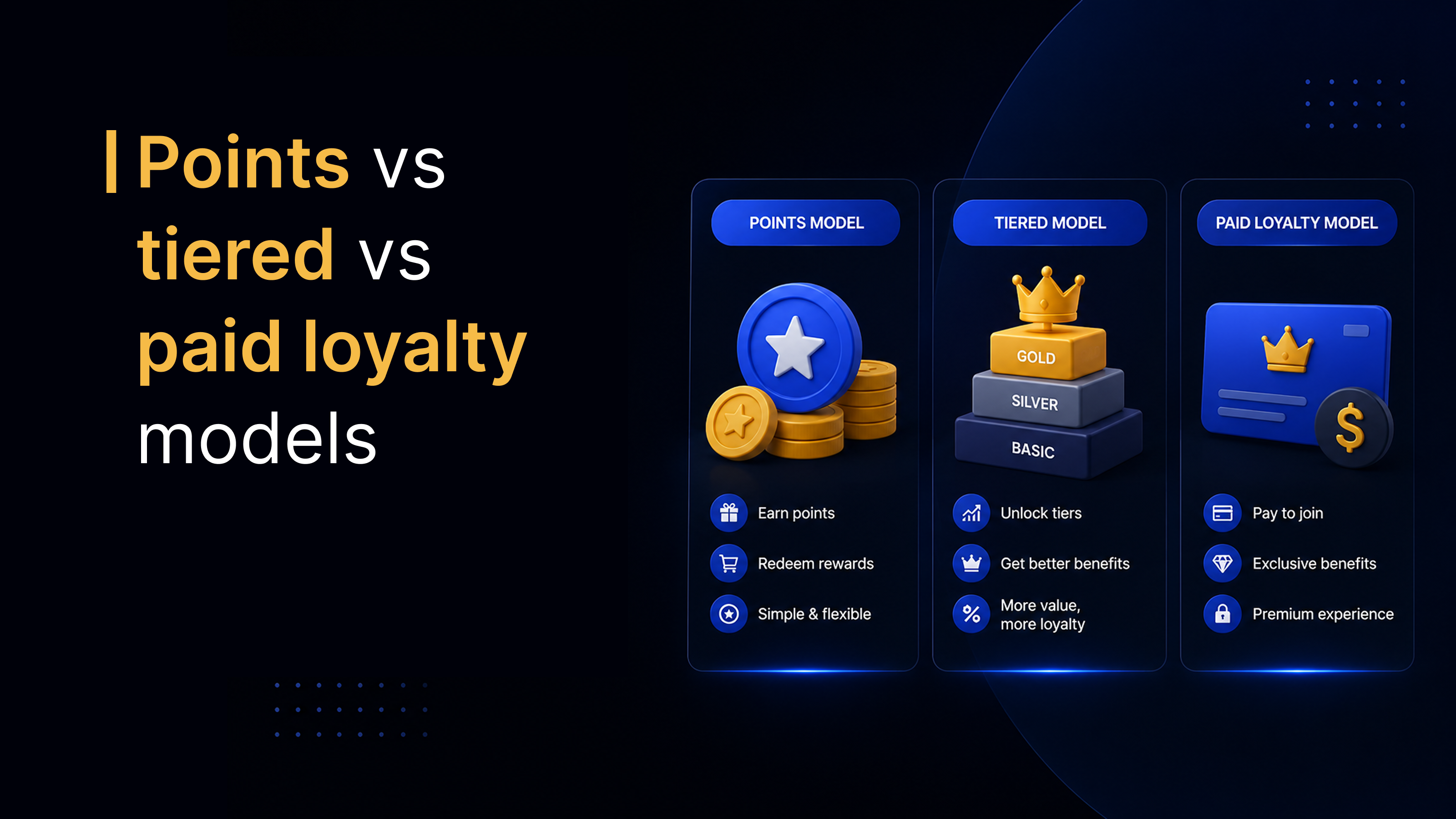
There are three types of ABM: strategic (one-to-one), ABM lite (one-to-few) and programmatic (one-to-many). They differ in how many accounts you target and how deeply you personalize for each, and most mature programs run all three at once for different tiers of accounts.
| Type | Accounts | Personalization | Typical tactics |
|---|---|---|---|
| Strategic ABM (one-to-one) | A handful of tier 1 accounts | Fully custom plan per account | Executive briefings, custom research, curated gifts, private events |
| ABM lite (one-to-few) | Small clusters of similar tier 2 accounts | Shared content per cluster, tailored by industry or pain point | Industry content, roundtables, targeted ads, meeting incentives |
| Programmatic ABM (one-to-many) | Hundreds or thousands of tier 3 accounts | Automated and data-driven | Intent-based ads, email sequences, triggered digital rewards |
Strategic ABM: one-to-one
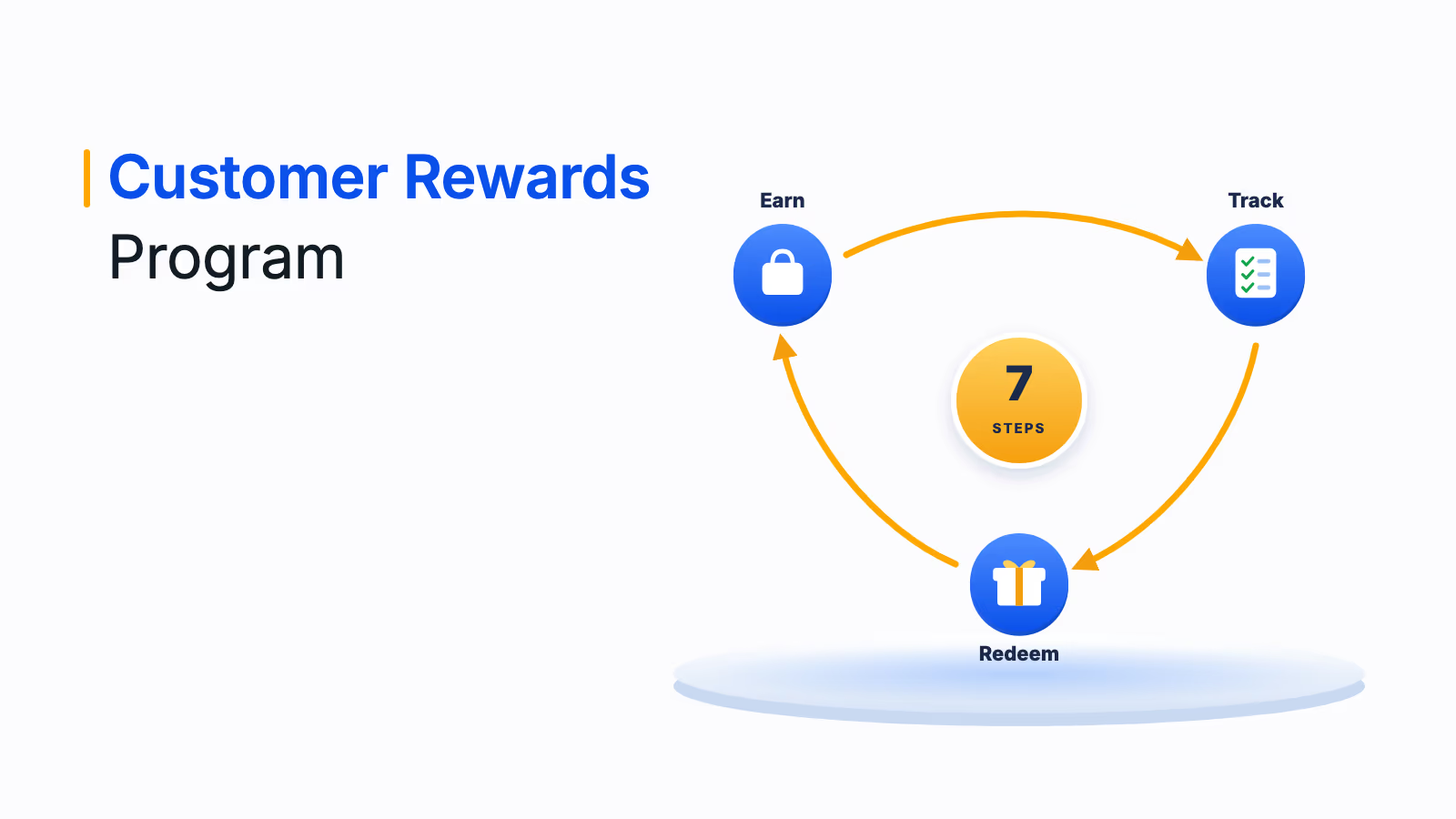
Strategic account-based marketing is like entering a long-term partnership with a premium client. It requires a deep understanding of their business, tailored solutions and a company-wide commitment to making their success your own. It focuses on building lasting value, not just driving sales, and demands active human involvement to deliver outcomes like revenue growth, advocacy and customer lifetime value. Here's the streamlined seven-step process:
- Step 1, know what is driving the account: Understand the client's business drivers and where you can add more value, through deep research and tech-enabled insights.
- Step 2, play to the client's needs: Identify existing or new offerings that align with their goals and build on your company's strengths.
- Step 3, map and profile stakeholders: Understand who is involved in decision-making and how each person influences the buying journey.
- Step 4, develop targeted value propositions: Focus your pitch on benefits like efficiency, speed, revenue growth or value creation to make a compelling case.
- Step 5, plan integrated sales and marketing campaigns: Involve both teams from the start. Sales understands the account's problems and solutions, and marketing knows how to turn that information into a narrative that moves the account.
- Step 6, execute integrated sales and marketing campaigns: Besides sales and marketing skills, account managers need project management skills to run campaigns with many moving parts.
- Step 7, evaluate results and update plans: Review what worked at a set cadence and adjust. This sounds obvious, but it is what keeps a strategic ABM program successful over years.
ABM lite: one-to-few
With ABM lite, campaigns target small groups of accounts with shared characteristics and pain points, such as the same industry, region or growth stage. Key sales insights guide the program: which accounts to pursue, the decision points, the relevant business issues, positioning and how to tailor content. Technology plays a larger role than human effort in execution and measurement.
ABM lite is ideal for scaling outreach beyond your strategic accounts, and it serves as a bridge between strategic and programmatic ABM. For example, a payroll software company might group mid-sized logistics firms that are all expanding into new countries, then run one campaign for the cluster with an industry report, a roundtable invite and a meeting incentive for each stakeholder.
Programmatic ABM: one-to-many
Programmatic ABM enables personalized engagement at scale using advanced technology for targeting, analytics and automation. With limited resources, marketers can reach hundreds or thousands of accounts by using tools that gather insights from intent data and social listening, serve account-targeted content and nurture leads throughout the buying journey. Since 2024, AI has made this tier far more practical, because it can research accounts and draft personalized first versions of messages in minutes.
Here is what programmatic ABM entails:
- Identify target accounts: Use data on existing high-value customers to define and shortlist similar accounts.
- Find decision-maker contacts: Use tools like LinkedIn Sales Navigator or Dealfront (formerly Leadfeeder) to gather key contact information.
- Research pain points: Use data-driven tools and intent signals to understand each account's specific needs and challenges.
- Plan the campaign: Choose platforms (LinkedIn, email and others), define touchpoints, create messaging and set budgets and timelines.
- Prepare content: Create pain-point-driven, personalized and visually engaging content (ebooks, case studies, templates and more) with input from sales and design teams.
- Execute the campaign: Use automation tools like HubSpot to manage workflows, track touchpoints and trigger actions based on audience behavior.
- Measure and optimize: Track engagement metrics with analytics tools and refine your ABM strategy based on performance data.
What has changed in ABM since 2024
Three shifts now shape which ABM tactics work: larger buying groups, better intent data and AI-driven personalization.
- Buying groups, not single contacts: With an average of 13 people involved in a purchase (Forrester, 2024), tactics have to reach the whole group, not just one champion.
- Intent data guides timing: First-party signals (site visits, content downloads, product usage) and third-party intent topics show which accounts are actively researching, so teams engage when interest is high instead of on a fixed schedule.
- AI personalization at scale: The same Forrester research found almost 95% of buyers expected to use generative AI in their purchase process within a year. Sellers use AI too, to research accounts, draft tailored messages and summarize engagement, which makes one-to-few personalization realistic for smaller teams.
Reward every stakeholder in the buying group
Trigger meeting, demo and event rewards from your CRM and deliver them in 150+ countries.
Talk to our ExpertTrusted by 5,000+ companies
15+ account-based marketing tactics to drive growth
Almost every element of ABM is based on relationship building. Let's look at the account-based marketing tactics that drive growth by building relationships with your target accounts.
1. Build a list of high-value accounts and create an ideal customer profile
ABM prioritizes quality over quantity. It requires you to handpick best-fit accounts that closely match your ideal customer profile (ICP).
Connect as many data points as possible to build that profile. At the account level, these include industry, company size, location, revenue, growth stage and tech stack. At the contact level, include role, seniority, motivations, goals and challenges. Then sort the list into tiers (tier 1, 2 and 3) so the effort you spend on each account matches its value.
Your job as an account-based marketer doesn't end with the list, because meaningful engagement is a crucial element of ABM. You need to build a trusting, long-term relationship with each high-value account by educating, nurturing, adding value and following up. The goal is to win the business of new accounts or retain and grow existing customers.
2. Identify growth opportunities for customers
Before you engage with any high-value account, shift your mindset from selling a product to unlocking customer growth. Modern B2B buyers are no longer interested in generic pitches. They want partners who understand their industry, anticipate their pain points and offer a path to measurable improvement.
To do this:
- Use data and insights: Combine intent data, website activity, social signals and tech stack intelligence to understand what the customer is struggling with or investing in.
- Audit their current state: Benchmark their digital presence, customer engagement or revenue channels, and show where they stand compared to their peers.
- Map pain points to business value: Instead of pitching features, show how your offering will help them increase efficiency, lower costs, expand reach or grow revenue.
Remember: People don't buy tools, they buy outcomes. Your messaging should clearly communicate how working with you gets them closer to being a better version of their business.
3. Personalize sales enablement content
Personalized content is key to ABM success. Beyond content, personalized messaging, web pages and buying experiences play a big role in converting ABM-focused accounts into paying customers, because they help you relate to each target account and its stakeholders and strengthen your relationship with them.
Personalization in ABM lets you show target accounts how your solution can benefit their business in different ways as you appeal to different stakeholders. A CFO wants the cost case, an IT lead wants security and integration details, and an end user wants to know their day will get easier. This ABM tactic goes a long way toward building lasting relationships.
Bring marketing and sales teams together to prepare personalized content that sales can share with prospects. Ask marketing to build templates with fields left open for customization, such as industry examples, role-based value points and relevant case studies. AI writing tools can now fill a first draft of these fields, but have a person review anything that goes to a tier 1 or tier 2 account.
4. Create offers to land a personal meeting
Getting a foot in the door with a decision-maker is the single most crucial part of ABM. The best way to do that? Deliver value upfront.
Here's how:
- Free audits or assessments: Offer tailored insights relevant to their business, such as a quick performance audit or a technology gap analysis. These act as conversation starters while proving your expertise.
- Custom quality scores: Evaluate a specific business area (for example a content performance score, a CX readiness score or a sales conversion health check) and offer a personalized report with actionable tips.
- Free consultations: Provide a no-strings-attached session with one of your specialists, someone who speaks the target account's language and can help them see new opportunities.
Make sure the path to the meeting is smooth:
- Use one-click scheduling tools such as Calendly or Chili Piper.
- Send personalized emails that reference their pain points or growth goals.
- Optionally, sweeten the offer with an incentive, such as a coffee e-gift card sent through Xoxoday Plum, especially when targeting senior stakeholders. Check the recipient's gift policy first.
Pro tip: The more specific and relevant your offer, the more likely they'll say yes. Generic pitches get ignored, while insight-driven value propositions open doors. The ABM demo incentive playbook covers how to set up meeting incentives across regions.
5. Recognize and tag target accounts on social media for visibility
Email is not the only channel for targeting high-value accounts. Not every person or company spends most of their time on the same channel, or wants brands to reach them there.
Social media, direct mail, phone, video, webinars and in-person events are also used to pursue and nurture ABM-focused accounts. Use different channels to stay top of mind, share content, interact and strengthen your relationship with prospects.
Acknowledge your target accounts by featuring them in your content, such as top company lists, rising startup roundups or customer spotlights, and tag them on LinkedIn and X to increase visibility. You can also add key decision-makers to a curated public list on X. Engage with their leaders' posts through thoughtful comments to spark meaningful interaction and strengthen brand recall.
6. Use advanced tools
To execute account-based marketing effectively, you need more than strategy. You need the right tools to bring it to life. These platforms support every stage of the ABM funnel, from targeting to engagement:
- Account selection tools: Platforms like ZoomInfo, Demandbase, 6sense and HubSpot's Breeze Intelligence (formerly Clearbit) help identify high-value accounts using firmographics, intent data and buying signals. This keeps your effort focused on prospects showing real interest.
- CRM platforms: CRMs such as Salesforce and HubSpot track account activity across touchpoints and keep sales and marketing aligned. With every interaction logged in one place, teams can engage with precision and avoid repeating outreach.
- Ad targeting tools: LinkedIn Campaign Manager lets you reach key decision-makers within your target accounts, with targeting options that put the right content in front of the right people at the right time.
- Content personalization platforms: Solutions like Uberflip or PathFactory deliver dynamic content and create tailored journeys for each account. Personalized landing pages, resource hubs and adaptive messaging raise engagement and relevance.
- AI assistants: Generative AI tools help research accounts, summarize earnings calls and news, and draft personalized emails and ad copy, so small teams can personalize at a scale that used to need a large one.
- Rewards and gifting platforms: Xoxoday Plum plugs into ABM workflows by sending personalized digital rewards. It connects with ABM platforms like Demandbase, 6sense and RollWorks and CRMs like HubSpot, Salesforce, Zoho and Pipedrive, so you can send gift cards to incentivize meetings or reward account engagement without manual work.
Together, these tools help you deliver a cohesive, personalized experience across your ABM campaigns, scaling relevance without sacrificing efficiency.
7. Automate to scale
Strategic ABM requires your sales team to handle each account personally. But for programmatic ABM and ABM lite, you can automate a large share of the process with the right tools. Automate:
- Email drips for different personas and buying stages.
- CRM workflows for scoring and routing leads.
- Gifting triggers based on campaign actions, such as a booked demo or webinar attendance, using tools like Xoxoday Plum.
- Retargeting ads for accounts that show intent signals.
Automation doesn't just save time. It brings consistency, better segmentation and real-time personalization at scale.
8. Tie your ads with gifts and rewards
Social media platforms are flooded with ads. LinkedIn alone offers many ad formats, from sponsored content and conversation ads to document, video and lead gen form ads. If you want to cut through the noise, gifts and rewards can go a long way when aligned with effective ABM tactics.
To grab attention:
- Bundle rewards with your ad campaigns: Offer a coffee voucher, an Amazon gift card or a charity donation for attending a demo.
- Use personalized messaging: Highlight the reward and why it is relevant to the person seeing the ad.
- Enable direct reward redemption: Use an integrated platform like Xoxoday Plum, where the recipient redeems through a link with no login or account needed. Adding value upfront creates an instant hook and lifts ad engagement, especially in competitive markets.
9. Target multiple decision-makers on LinkedIn
LinkedIn ads support company-specific targeting. Media managers can upload a list of target companies and serve ads to the key influencers at those companies, with tailored content for every stakeholder.
Modern B2B buying groups are large, often 10 or more people, so LinkedIn lets you:
- Target by job title, seniority and function: Reach the right roles across your specific target companies.
- Serve personalized ads to each role: CTOs get technical deep dives, CFOs get cost and ROI narratives and CMOs get growth outcomes.
- Layer ads with tailored offers: Add ebooks, consultations or event invites. A multi-persona, multi-touch approach ensures no decision-maker is left behind.
10. Use account-based retargeting
Create multiple touchpoints on social media by retargeting engaged contacts. Tie each touchpoint to a valuable offering like an ebook, case study, template or guide. You can also pair these offerings with gifts, such as Amazon gift cards, coffee vouchers or product discounts, for better results.
Keep your brand top of mind with persistent, relevant content across touchpoints:
- Retarget visitors: Reach people from target accounts who engaged with your site, ads or emails.
- Offer gated assets: Share industry reports, ROI calculators or playbooks.
- Enhance the offer with a reward: For example, "Download our industry trends report and get a $10 coffee voucher." This combination of content and reward creates a strong incentive loop that drives action.
11. Rock the trade shows and on-ground events
Plan engagement activities and rewards in advance to target your shortlisted accounts at trade shows and physical events. For more ideas, read our guide to event engagement strategies.
Don't treat trade shows as passive lead collection exercises. Instead:
- Identify high-value attendees beforehand.
- Send pre-event rewards (like a gift for booking a meeting) to build anticipation.
- Host mini contests or personalized demos at the booth and reward participation.
- Use a reward platform like Xoxoday Plum to deliver instant rewards by email, SMS or WhatsApp that boost engagement, create memorable touchpoints and drive timely action.
12. Create a buzz with digital gifts
When building meaningful touchpoints in ABM campaigns, digital gifting stands out as a memorable, frictionless way to capture attention and deepen engagement. With hybrid workforces and distributed buying groups now the norm, brands need faster, more scalable ways to delight prospects and customers without relying on physical logistics.
Digital gifts offer just that: instant delivery, customizable options and seamless tracking, which fits the precision of account-based strategies. But impact depends on intention. Gifting isn't about handing out rewards at random. It's about tying them to the right moments across the buyer journey.
Instead of gifting for the sake of it, create value-driven experiences that leave a lasting impression:
- Offer fine dining or gourmet delivery vouchers before a product demo to set a relaxed, personalized tone.
- Send experience gifts like spa days, movie nights or short getaways as post-meeting thank-yous or milestone rewards.
- Use gift cards to let recipients choose what matters most to them, which shows respect for their preferences and time.
Platforms like Xoxoday Plum help you automate these interactions, triggering rewards based on campaign behaviors or lifecycle milestones. From e-gift cards to curated experiences, the right digital gift becomes more than a gesture. It becomes a conversation starter, a trust builder and a catalyst for stronger relationships. This guide to ABM gifting explains formats and ownership in more detail.
13. Host events
Events for local accounts are a great way to develop strong relationships with key people at target accounts. Nothing beats face-to-face interaction.
Local meetups, executive roundtables and invite-only dinners offer premium networking opportunities:
- Target key accounts in a region: Craft highly curated invites for several stakeholders from each account.
- Offer personalized perks: Think customized goodie bags or VIP experiences for attendees.
- Follow up after the event: Send thank-you gifts or exclusive content offers. These intimate interactions humanize your brand and open the door to stronger, long-term partnerships.
14. Measure and recalibrate
Measuring the right ABM metrics is key to evaluating campaign success. Measure at the account level, not the lead level. Track core KPIs like deals closed, average deal size, sales cycle length, time to close and revenue earned.
Since ABM thrives on relationship building, also monitor engagement metrics such as stakeholders reached per account, meetings earned, event participation, content consumption, email performance and reward redemption.
Use CRM-integrated tools to assess account interactions, identify what's working and refine your ABM tactics for better outcomes. Review results monthly and shift budget toward the tactics that move accounts forward. To see how rewards fit each stage from first touch to closed-won, read this guide to ABM gifting across the full funnel.
15. Customize customer kits and packages
Personalized kits built around an account's world stand out in a way generic swag never will. Segment accounts with similar profiles, then tailor the kit to their shared technology, personas and challenges, and support it with direct mail, personalized content and follow-ups.
A well-known example: to get McDonald's attention, ad tech company GumGum sent top decision-makers burger-themed kits. Each kit used Big Mac ingredients to explain GumGum's technology, along with custom touches like an AR tattoo, and short videos shared on social media amplified the campaign. It ultimately led to a meeting with McDonald's key stakeholders.
Physical kits need addresses and shipping, which is harder with remote buyers in many countries. A digital kit, such as a personalized video plus a reward link the recipient redeems in their own currency, gives a similar surprise without the logistics.
16. Adapt your digital strategies
ABM programs that depend on a single channel are fragile. When the COVID-19 pandemic cancelled in-person events, teams such as Blue Yonder, a digital supply chain solutions provider, shifted their ABM programs to digital: they started small, aligned sales and marketing, and scaled gradually with creative content, data-driven targeting, A/B testing and automation.
Their engagement mix included digital ads, direct mail, custom virtual events and personalized content, and they adjusted their messaging to the moment. The lesson still applies in 2026: keep a hybrid plan, so that if events, budgets or buyer behavior shift, you can move the same accounts to digital touchpoints without losing momentum.
17. Start a rewards campaign
ABM focuses on a niche audience and on closing high-value deals, and rewards help at every step. With Xoxoday Plum, you can run marketing campaigns with automated reward workflows, with no developer needed.
Plum offers 10M+ reward options across 30+ categories in 150+ countries, with personalized redemption experiences in the recipient's local currency. Use it for corporate gifting, survey incentives, referral rewards, loyalty programs and more. Trigger-based automation links lead sources and campaign events to rewards, so every referrer, attendee and meeting-taker gets a seamless experience.
Matching ABM tactics to account tiers
The best ABM strategy for growth puts your most personal, most expensive tactics on the few accounts that justify them, and automates the rest.
| Tactic | Tier 1 (strategic) | Tier 2 (ABM lite) | Tier 3 (programmatic) |
|---|---|---|---|
| Buying group mapping | Every stakeholder, researched by hand | Key roles per cluster | Role-based targeting |
| Content | Custom research and proposals | Industry or use-case content | Dynamic, AI-assisted content |
| Advertising | Highly tailored, small audience | Cluster-specific ads | Intent-triggered ads |
| Gifting and rewards | Curated gifts and experiences | Meeting and event incentives | Automated digital rewards on actions |
| Events | Executive briefings, private dinners | Roundtables and local meetups | Webinars |
| Sales involvement | Daily, account team owns the plan | Weekly, shared plays | Triggered by engagement thresholds |
3 benefits of leveraging ABM tactics
ABM tactics offer advantages that can positively impact many types of businesses. Here are three of the most important.
- Keeps marketing and sales teams aligned: ABM ensures sales and marketing share goals, budgets and roles. That leads to better teamwork, clear communication and a seamless experience for every account, whatever its stage.
- Increases relevance for high-value accounts: ABM tailors content and communication to each account, which makes your business more relevant by clearly addressing their specific challenges and positioning your offering as the right solution.
- Delivers consistent customer experiences: By treating each account as its own market and aligning teams, ABM delivers uniform, personalized experiences with timely campaigns, accurate product information and tailored pricing at every touchpoint.
Leverage account based marketing tactics for your business
Account based marketing tactics are effective regardless of industry, company size or current marketing approach. As buying groups grow and AI makes personalization cheaper, ABM will keep getting easier to run and more important for B2B growth. For campaign-level ideas you can run this quarter, see these ABM campaign ideas.
To make your ABM even more impactful, use Xoxoday Plum, a rewards platform that helps you build stronger relationships with decision-makers through personalized, timely digital gifting. From e-gift cards to curated experiences, Plum runs the reward workflows that delight and convert your most valued accounts.
Supercharge your ABM strategy with Xoxoday Plum
Xoxoday Plum brings precision, personalization and automation to your account-based marketing through rewards that resonate. Here's how:
- CRM-integrated reward automation: Connect Plum to HubSpot, Salesforce, Zoho or Pipedrive, or to ABM platforms like Demandbase, 6sense and RollWorks, to send rewards automatically at key touchpoints: after a demo, a meeting, event participation or a milestone. Reward status and redemption data sync back to your CRM.
- Webinar and event triggers: Connect Zoom, BlueJeans or Hubilo to reward registration, live attendance or post-event engagement and cut no-shows from target accounts.
- Personalized gifting at scale: Send gift cards, prepaid cards, merchandise and experiences that reflect each prospect's preferences, role or region, branded with your logo, colors and message.
- More meetings and engagement: Use incentives to nudge decision-makers to accept meeting invites, attend webinars, join reference calls or respond to research surveys.
- A global reward catalog: Access 10M+ reward options across 30+ categories in 150+ countries, filtered to each recipient's country and currency, so your gift is always relevant wherever the account is located.
- Delivery the way recipients prefer: Send reward links or codes by email, SMS or WhatsApp. Prospects redeem in one click with no login or account, and you can schedule sends ahead of an event or launch.
- Real-time tracking and spend control: Dashboards show distribution, redemption rates and campaign attribution, with per-user and per-campaign limits, overspend alerts and fraud checks such as duplicate detection.
- Delight buying groups, not just individuals: Reward every stakeholder at an account, from the champion to the economic buyer, in their own currency.
- No manual effort: Plum's automated workflows send rewards instantly and securely, saving your team hours of coordination. Most ABM teams go live in under a week.
Freshworks, for example, used Plum with Zapier to trigger localized rewards in 19 currencies for ABM programs, referral drives, virtual events and meeting incentives across the Middle East and APAC. Read the Freshworks case study.
Book a demo to see how Xoxoday Plum can elevate your ABM campaigns with the power of rewards.
Book your Plum demo
Frequently asked questions
An ABM strategy defines which accounts you target, how you tier them, what goals you set and how sales and marketing work together. ABM tactics are the specific actions you take to reach and move those accounts, such as role-based LinkedIn ads, curated events, personalized content, meeting incentives and account-based retargeting.
Strategic ABM (one-to-one) builds a fully custom plan for a handful of top accounts. ABM lite (one-to-few) runs shared campaigns for small clusters of similar accounts. Programmatic ABM (one-to-many) uses data and automation to personalize outreach for hundreds or thousands of accounts.
Small teams usually get the most from ABM lite and programmatic tactics: a tightly tiered account list, intent-based prioritization, role-based LinkedIn ads, account-based retargeting, AI-assisted personalization and automated rewards for meetings or demos. Save fully custom work for a few tier 1 accounts.
Map the roles involved in the decision for each account, such as the economic buyer, champion, technical evaluators, users and procurement. Then tailor content and ads by role, invite several stakeholders to the same event or briefing, and give your champion materials they can share internally.
Gifting is effective when it is tied to a meaningful moment, such as booking or attending a meeting, and when it respects the recipient's gift policy and local norms. Digital gifts let recipients choose what they value and can be triggered automatically from your CRM, which makes them practical for every account tier.
Measure at the account level. Track engagement such as stakeholders reached, meetings held and event attendance, then pipeline metrics such as opportunities created and stage velocity, and finally revenue metrics such as win rate, deal size, sales cycle length and expansion revenue compared with non-target accounts.