
Key Takeaways
Insurance company culture is the set of everyday behaviors and norms that shape how people at an insurer work, decide and treat customers and each other.
Talent attraction and retention is now a top business challenge for insurers, which makes culture a competitive advantage rather than a soft extra.
Culture in insurance should be defined as specific role-level behaviors, because compliance and tenure metrics show stability, not how people act under change.
Fast recognition, cross-team visibility, regular pulse feedback and rewards for learning are the most practical levers for culture transformation in insurance.
AI helps insurers close recognition gaps, summarize feedback and flag attrition risk early, freeing managers to focus on people.
Insurance company culture is the set of everyday behaviors, habits and norms that shape how people at an insurer work, decide, treat customers and treat each other. A strong one helps insurers attract and keep talent in a tight labor market, because people stay where they feel seen, heard and valued, not just where the rules are clear.
Many insurance companies rely on tried-and-tested systems, long-established processes and strict regulations. These are strengths. But when it comes to employee engagement and culture, they can also create challenges. Routines feel rigid. Recognition often stays formal or delayed. Communication lacks energy. As a result, employees feel disconnected from both their teams and their purpose.
Building a strong culture starts with creating an environment where people feel seen, heard and valued. Employees want more than tasks and targets. They look for appreciation, connection and moments that feel meaningful, and that is hard to achieve with spreadsheets, emails and disconnected tools. This guide covers why culture now decides insurance talent retention, the challenges insurers face, the strategies and AI tools that work, a step-by-step way to start and how to measure progress. For the wider engagement picture, read our guide to employee engagement in the insurance industry.
Why insurance company culture now decides who stays
Talent has become the top business problem for many insurers, and culture is the lever they control most directly. Three recent figures show the pressure from hiring, flexibility expectations and automation anxiety.
72%
of UK insurers find it harder to hire qualified candidates
Gallagher Bassett, 2026
71%
of US carriers expect most staff to work hybrid
Jacobson and Aon, Q1 2026
32%
of insurance employees fear their job will be eliminated by technology
Gallup, 2026
Hiring, flexibility and automation pressures on insurance talent
Gallagher Bassett's The Carrier Perspective: 2026 Claims Insights survey of 250 insurance leaders ranked talent attraction and retention as the top business challenge for the second year running, and 72% of UK respondents reported more difficulty finding qualified candidates, with claims management and adjusting hit hardest. Their responses are cultural as much as financial: 60% are growing their own talent through training, 58% are enhancing benefits and 63% prefer hybrid work.
In the US, The Jacobson Group and Aon's Q1 2026 Insurance Labor Market Study found that carriers are putting more focus on retention programs and proactive performance management, and that 71% expect most employees to work a hybrid schedule. Meanwhile, Gallup's State of the Global Workplace 2026 research found that 32% of insurance employees think their job is likely to be eliminated by automation or AI within five years. Uncertainty like that erodes trust unless the culture gives people a clear reason to stay and grow.
Culture in insurance is behavior, not compliance
Insurers are good at measuring adherence: tenure, compliance rates, audit results and survey scores. Those numbers show stability, but they do not tell you how people behave when a claim is messy, a customer is upset or a new AI tool changes the job. Writing in Insurance Thought Leadership in 2026, culture consultant Tamar Cohen argued that insurers often confuse culture with process compliance, and that culture has to be defined at the level of specific behaviors employees can act on.
A practical way to start building culture in insurance companies is to name the behaviors you want in each core role, and the ones you want to retire. The table below is a starting point to adapt with your own teams.
| Role | Behaviors to encourage | Behaviors to retire |
|---|---|---|
| Claims | Owning the customer outcome, explaining decisions in plain language, flagging process gaps | Hiding behind policy wording, passing cases between queues |
| Underwriting | Sharing risk insights across teams, testing new data and tools, coaching juniors | Hoarding expertise, defaulting to "we've always priced it this way" |
| Agents and advisors | Advising on real needs, staying in touch after the sale, learning new products | Selling to the target only, going quiet after issuance |
| Customer service | Resolving on first contact, escalating with context, showing empathy | Scripted answers that ignore the customer's situation |
| Managers | Recognizing effort weekly, acting on feedback visibly, explaining change | Saving appreciation for annual reviews, treating surveys as a formality |
Once the behaviors are named, recognition, feedback and rewards can reinforce them every week. That is what turns a values poster into a working culture. Our guide to a values-based recognition program shows how to link awards to specific values.
Top culture challenges in insurance companies
Insurance organizations often operate in controlled environments. Policies, processes and risk management dominate daily operations. While this builds discipline, it can also create distance between employees and the workplace culture. Here are six common challenges that HR and people leaders in insurance face:
- Delayed or infrequent recognition: Appreciation gets reserved for annual reviews or long-tenure awards. Day-to-day contributions often go unnoticed.
- Disconnected teams: Field agents, claims processors, underwriters and support staff rarely engage with each other. Many feel isolated, especially in hybrid and distributed setups.
- Low visibility into contributions: Wins remain hidden within departments. Managers struggle to track effort, progress and team morale consistently.
- Slow feedback loops: Employee feedback stays buried in survey spreadsheets or gets lost in long approval chains. Nothing changes fast enough.
- Rigid tools and processes: Engagement programs, if any, tend to rely on manual workflows. They require time, effort and heavy coordination.
- Attrition in customer-facing roles: Frontline employees often face burnout, lack recognition and receive little support for well-being or career development.
Without regular recognition, accessible feedback channels and clear communication, culture turns cold. Morale drops. Retention suffers. Add the uncertainty that AI and automation bring, and people start looking elsewhere for a workplace where they feel valued.
Make recognition a habit across claims, underwriting and agents
Automate spot awards, milestone celebrations and pulse surveys so every insurance team feels seen.
Talk to our ExpertTrusted by 5,000+ companies
Culture transformation in insurance: five strategies that work
Small, consistent actions can change how employees feel about their workplace, and insurance companies can build a stronger culture by focusing on five core areas: recognition, connection, milestones, feedback and motivation. Recognition comes first because it is the fastest, most visible signal that the culture is changing, and the other four strategies build on it.
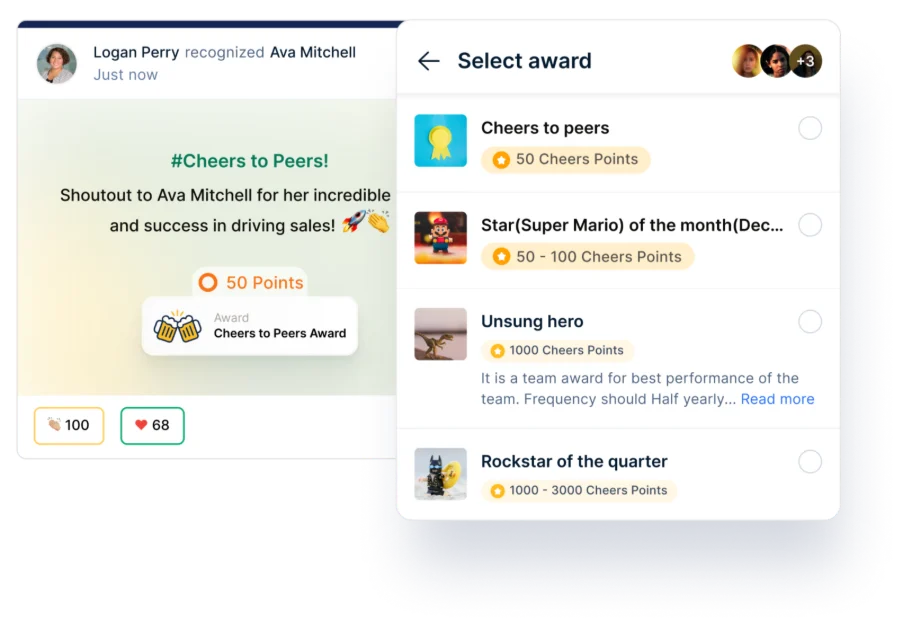
1. Recognize contributions without delay
Set up recognition workflows that don't require approvals or long waits. Managers and peers should be able to appreciate good work instantly.
- Use spot awards to acknowledge effort during critical claims processing.
- Tie recognition to core values such as accuracy, empathy or customer service.
- Highlight every award on a shared wall of fame for maximum visibility.
2. Make people feel seen across roles and locations
Move beyond headquarters. Celebrate every team: agents, underwriters, claims handlers and operations. Recognition should also be fair, so check that remote and field staff get the same share as office teams. Our explainer on recognition equity covers how to measure that.
- Create a shared feed for achievements, birthdays and milestones.
- Launch interest-based groups where employees connect beyond roles.
- Share wins, customer appreciation and praise from brokers or partners across departments.
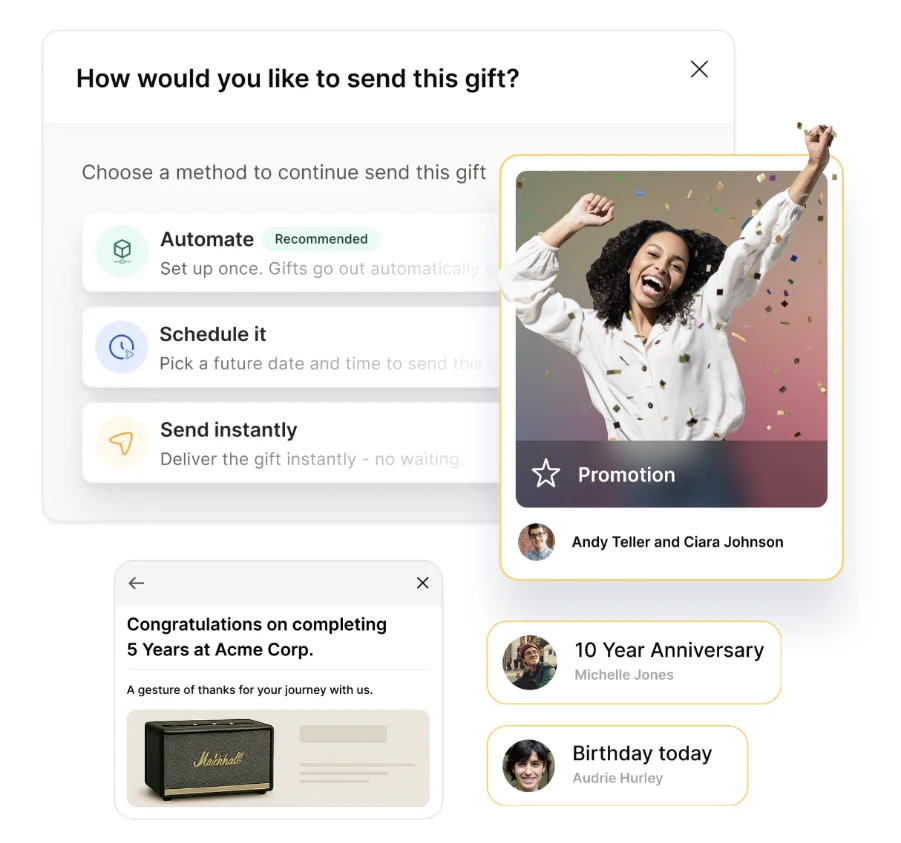
3. Support every milestone with gifting and swag
Add a personal touch to work anniversaries, onboarding and special occasions.
- Set up automated gifting for birthdays and long service milestones.
- Offer employees reward points they can redeem for items or experiences they actually want.
- Use curated swag packs to welcome new hires or celebrate top performers.
4. Listen closely, act quickly
Employees want to feel heard. Short, frequent surveys work better than long forms that go unanswered.
- Send pulse surveys every few weeks to check morale.
- Use anonymous channels to gather honest feedback.
- Share back the results and actions taken. Transparency builds trust.
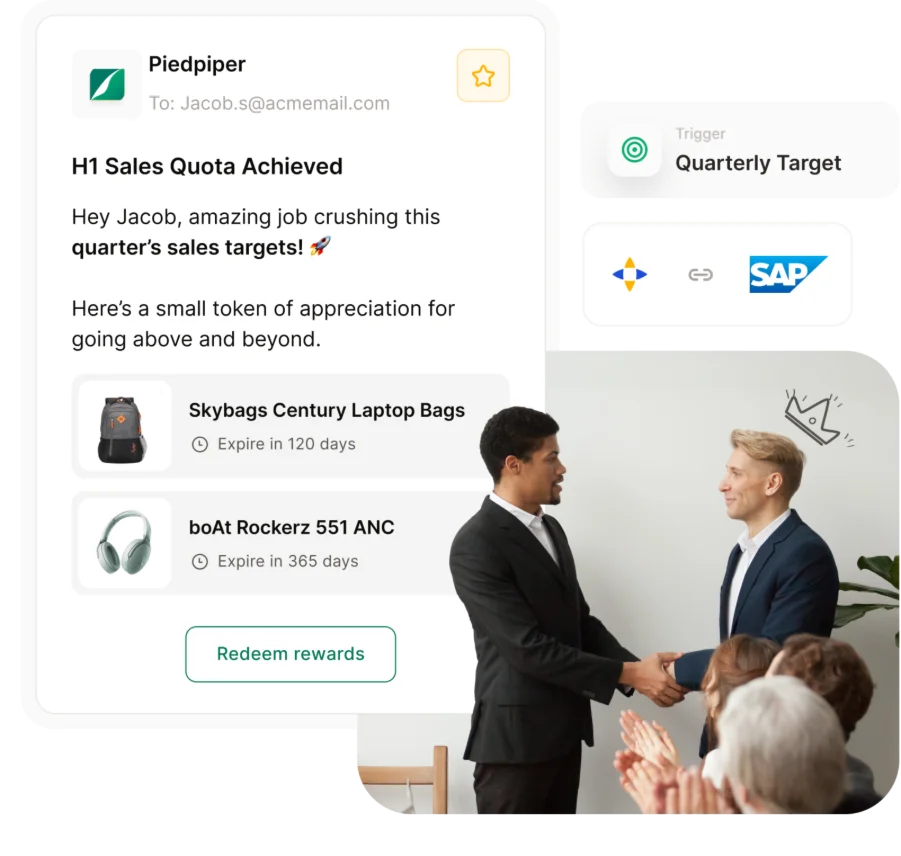
5. Reward the right behaviors
Recognize not only output but also effort, learning and collaboration. With AI reshaping underwriting and claims work, rewarding people for learning new tools is one of the clearest ways to show them they have a future at the company.
- Encourage knowledge-sharing or upskilling through custom challenges.
- Set up reward cycles for KPIs linked to sales, claims closure or CSAT.
- Share leaderboard results to keep the energy high without adding pressure.
Simple changes across these areas lead to better retention, stronger teams and a culture where recognition becomes a habit, not an event.
How AI helps insurance companies build a better culture
Manual engagement programs often stall. They rely on time-consuming processes, busy managers and scattered data. AI brings consistency, speed and accuracy to every part of the employee experience, in six main ways:
- Spot recognition gaps early: AI tracks who gets recognized and who doesn't. If someone hasn't received appreciation in a while, the platform nudges their manager to act. This prevents uneven recognition and keeps every team member visible.
- Generate award messages instantly: Writing thoughtful appreciation messages takes time. AI drafts personalized award notes based on achievements, so recognition stays timely and consistent across teams.
- Highlight skill trends across the workforce: By analyzing recognition messages, AI identifies key strengths across departments, like problem-solving, empathy or ownership. That builds internal skill maps that support learning and performance decisions.
- Predict attrition risk: AI scans patterns across recognition, feedback and participation to spot early signs of disengagement, so HR can step in with timely support or conversations.
- Summarize feedback for action: AI reads open-text survey feedback and delivers summaries with clear action points, which saves HR time and turns feedback into progress without delays.
- Protect workplace communication: AI screens posts and messages for inappropriate content, keeping interactions respectful and inclusive and supporting compliance.
AI doesn't replace human connection. It makes space for it. With manual work out of the way, managers and HR teams can focus on people, not processes. For more on the technology itself, see our guide to AI in employee engagement.
How to start building culture in insurance companies
A better culture doesn't need months of planning or a full HR overhaul. It begins with five small actions, repeated often across teams and touchpoints, and recognition comes first because it creates momentum the other four can build on.
1. Start with recognition
Peer-to-peer appreciation empowers employees to recognize effort without waiting for a formal review or leadership approval. Managers can also use spot awards to highlight great work in real time. When these recognitions are tied to values like empathy or precision, they reinforce the behaviors that matter in customer service, underwriting and claims. Automating milestone rewards for onboarding, anniversaries and exits ensures every key moment gets acknowledged.
2. Share updates where people will see them
Visibility matters. Sharing company wins, customer stories or policy updates on a common feed builds transparency and helps employees feel involved. You can take this further by using TV screens in lobbies or break rooms to display celebrations and announcements.
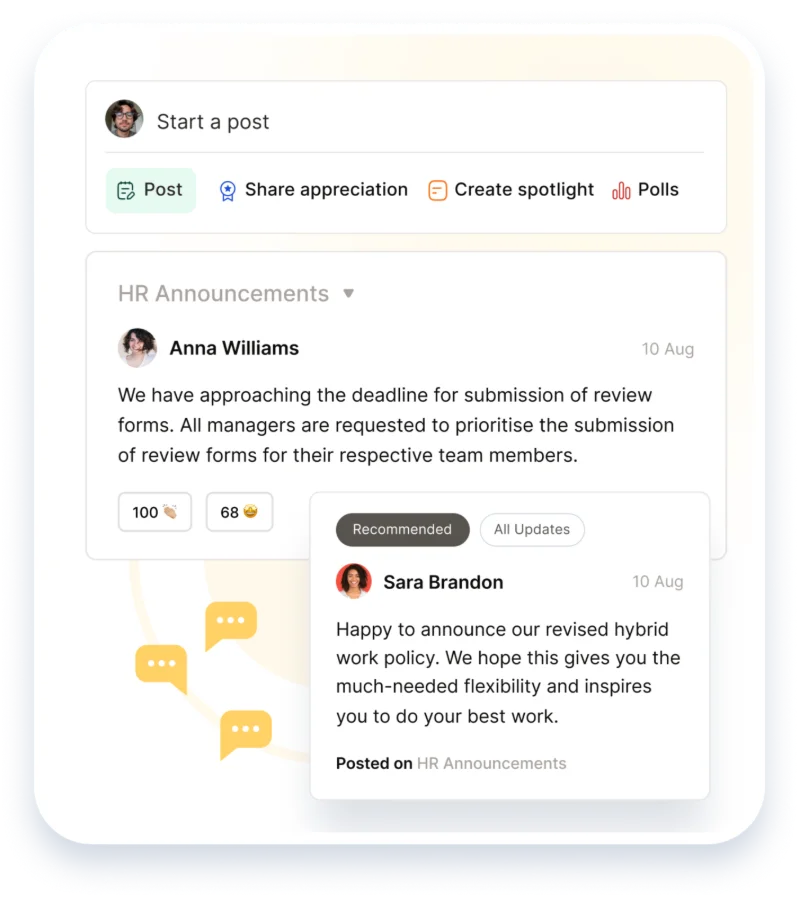
Even something as simple as pinning a message to the top of the company newsfeed keeps attention on what's most relevant. Be open about change, too: if AI is coming into claims or underwriting, explain what it means for roles and what training is available. Updates then become part of daily conversation instead of getting buried in inboxes.
3. Make feedback part of the routine
Feedback works best when it's simple and regular. Pulse surveys let HR gather honest input in under a minute. Anonymous responses encourage openness, and automated summaries help turn input into action quickly.
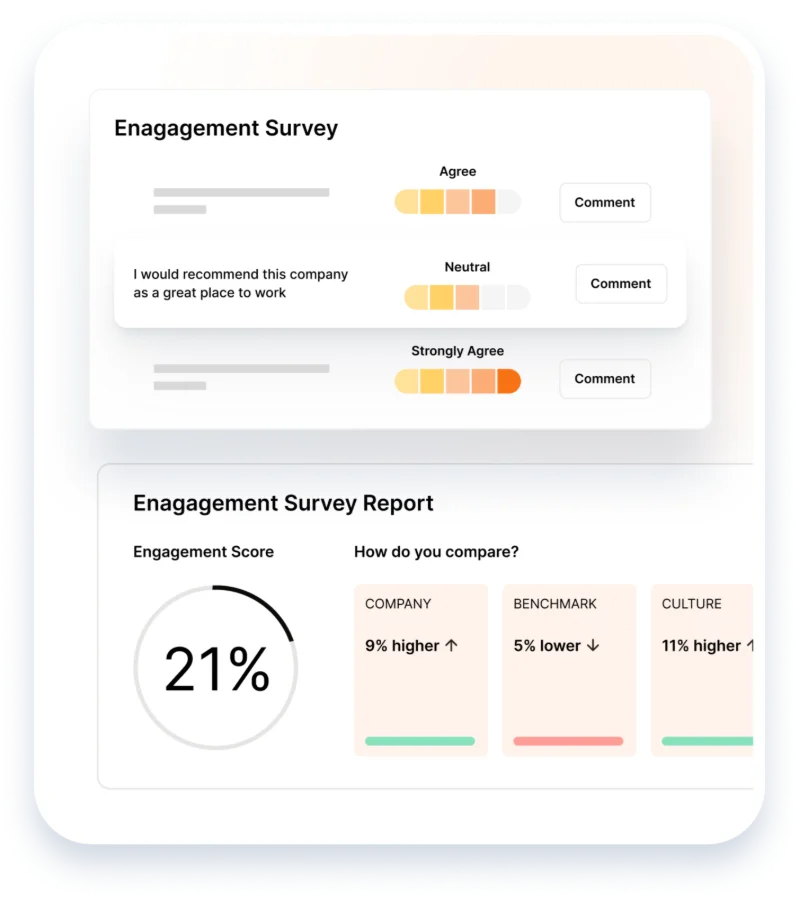
Sharing what you learn and what you're doing about it builds trust across all levels. Employees don't expect instant fixes, but they do notice when their voices lead to visible change.
4. Offer choice in rewards
Each employee values something different. Some prefer gift cards, others want merchandise, experiences or the ability to donate to causes they care about. A flexible reward catalog with gift vouchers, travel and lifestyle options respects these preferences, and a pay-on-redemption model lets companies manage budgets while keeping the process smooth for everyone.
5. Welcome and celebrate consistently
First impressions and milestones leave a lasting impact. Automated onboarding packs, welcome messages and branded swag help new hires feel included from day one, which matters in an industry where early-tenure dropout is common among agents and service staff.
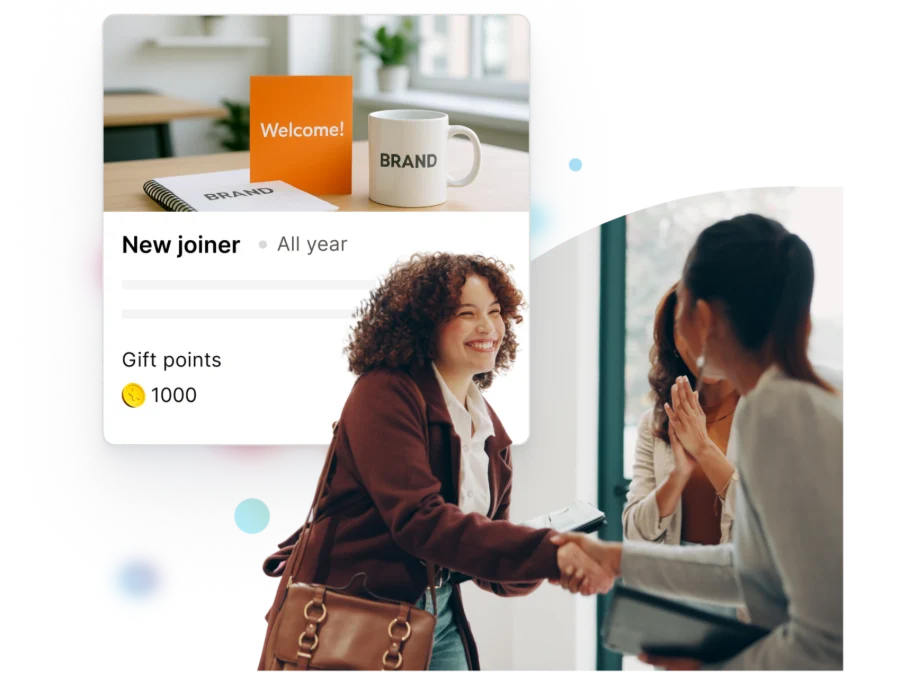
Birthdays, work anniversaries and project completions are moments worth celebrating, and doing so doesn't need to be time-consuming. Digital wishboards where teammates and leaders share messages, photos and videos strengthen relationships and reinforce a culture of appreciation.
How to measure culture transformation in insurance
Culture change shows up in behavior before it shows up in annual survey scores, so track leading and lagging indicators together. Review them quarterly and compare office staff with field and agency teams, because averages can hide where culture is weakest.
| Metric | What it tells you | Where to get it |
|---|---|---|
| Recognition frequency and spread | Whether appreciation reaches every team, not just headquarters | Recognition platform reports |
| Pulse survey participation | Whether people trust that feedback leads to action | Survey tool |
| eNPS | How likely employees are to recommend the company as a place to work | Quarterly pulse survey |
| Early-tenure attrition | Whether onboarding and first-year culture hold new hires | HRIS, split by agents and office staff |
| Regretted attrition in claims and underwriting | Whether you keep the roles that are hardest to replace | HRIS and exit interviews |
| Training and upskilling uptake | Whether people see a future at the company as roles change | Learning platform |
| Customer satisfaction or complaint rates | Whether internal culture reaches policyholders | CX and complaints data |
Pair these with the insurance employee engagement measures in our employee engagement action plan guide, and use employee retention strategies to act on what the numbers show.
How Empuls supports insurance employee engagement
Empuls is Xoxoday's employee engagement platform, and it brings the strategies above into the flow of work for office teams and distributed staff alike:
- [Recognition](/empuls/recognition): Spot awards, nominations, values-based badges, external praise from partners and a wall of fame.
- [Surveys](/empuls/surveys): Pulse and lifecycle surveys, action plans and AI sentiment analysis.
- [Celebrations](/empuls/celebrations) and [milestone rewards](/empuls/milestone-rewards): Automated onboarding, service awards, birthdays and life events.
- [Social intranet](/empuls/social-intranet): A shared feed, announcements, groups and leaderboards that connect agents, claims and underwriting teams.
Build a culture that works for your people
Insurance companies thrive when people feel invested, not just in tasks but in the mission of protecting customers. Recognition, connection and feedback turn everyday work into something meaningful. A strong insurance company culture doesn't need a complete rebuild. It needs clear behaviors, structure, consistency and intent.
Start where it matters most: with your people. Culture follows.
Book your Empuls demo
Frequently asked questions
Insurance company culture is the shared set of behaviors, values and norms that shape how people at an insurer work, make decisions and treat customers and colleagues. It covers how claims are handled, how underwriters share knowledge, how agents advise customers and how managers recognize effort. A strong culture balances the discipline that regulation demands with appreciation, openness and room to learn.
Culture matters in insurance because the product is a promise, and people deliver it. Employees who feel valued handle claims with more care, explain policies more clearly and stay longer, which protects customer trust and reduces costly turnover. With insurers reporting that talent attraction and retention is now a top business challenge, culture has become a direct competitive advantage in hiring.
Insurance companies improve talent retention by recognizing work frequently, offering clear career and upskilling paths, supporting hybrid flexibility and acting visibly on employee feedback. Retention efforts work best when they are tailored by role, because agents, claims handlers and underwriters leave for different reasons. Tracking early-tenure and regretted attrition by team shows where to focus first.
Employees commonly leave insurance jobs because of limited career growth, heavy workloads, slow or absent recognition and a sense of disconnection from the wider company. Frontline and customer-facing staff also face burnout from difficult conversations and targets. Uncertainty about automation adds pressure, so insurers that explain how roles will change and invest in training tend to keep more people.
To change the culture of an insurance company, start by naming the specific behaviors you want in each role, then reinforce them every week through recognition, rewards and manager habits. Run short pulse surveys, share what you will change and follow through. Leaders must model the new behaviors themselves, because employees copy what gets noticed and rewarded, not what the values poster says.
AI is changing insurance employee engagement in two ways. It reshapes jobs in claims and underwriting, which creates anxiety that culture must address with transparency and training. It also improves engagement programs by nudging managers to recognize overlooked employees, drafting award messages, summarizing survey comments and flagging attrition risk early, so HR teams spend less time on admin and more on people.
An insurance company is a great place to work when people understand how their work protects customers, get regular recognition, have room to grow and can work flexibly. Clear communication about change, fair pay and supportive managers matter too. The best insurers also connect field agents and office teams so nobody feels like an outsider to the company's culture.





































































































































































































































































































































































































































































































































































