
Key Takeaways
Long service awards thank employees for their loyalty at set anniversaries through a personal message, public celebration and a reward they value.
Median US employee tenure was 4.1 years in January 2026, so a first award at five years misses many employees; recognize years 1 and 3 too.
Employees who receive high-quality recognition were 45% less likely to have changed organizations two years later, according to Gallup and Workhuman.
Every tier should include choice, because not every 5-year employee wants the same reward, and each tier should feel visibly bigger than the last.
Avoid cash-only bonuses, tenure-based raises and fixed prizes; automate reminders, peer wishes, rewards and certificates so no milestone is missed.
Long service awards recognize employees for staying with your organization over a set number of years, usually through a personal message, a public celebration and a reward the employee values. Done well, they turn a work anniversary into a moment that strengthens trust, retention and culture. Done badly, they become a forgettable plaque or a bonus nobody remembers.
When employees choose to stay, grow and contribute over the long haul, that commitment deserves more than a passing thank you. This guide explains what long service awards are, why they matter, 12 long service award ideas, the awards to avoid and a milestone planner you can use to build or refresh your own long service recognition program.
What a long service award is
A long service award is a form of employee recognition that thanks a person for their loyalty and contribution over a period of years, typically presented at set service anniversaries such as 1, 3, 5, 10, 15, 20 and 25 years. Employee service anniversary awards vary from organization to organization, but the best ones combine three things: a sincere message about what the person has contributed, visibility in front of peers and leaders, and a reward the employee actually wants.
Employees are rarely rewarded with gold watches or carriage clocks anymore. Today the common choices are reward points, gift cards, experiences, wellness perks, personalized keepsakes and time off, often chosen by the employee from a catalog. Long service awards have become a standard part of most employee recognition programs, and they sit alongside everyday appreciation rather than replacing it.
Why long service awards are important
Tenure is earned, not expected. The US Bureau of Labor Statistics reports that the median employee had been with their current employer for 4.1 years in January 2026, and just 3.0 years for workers aged 25 to 34. People who stay five, ten or twenty years are giving you something many of their peers do not.
Recognition also changes whether they keep staying. Gallup and Workhuman research that tracked nearly 3,500 US employees from 2022 to 2024 found that employees who receive high-quality recognition were 45% less likely to have changed organizations two years later, yet only 22% of employees say they get the right amount of recognition.
45%
less likely to leave
for well-recognized employees after two years (Gallup and Workhuman)
22%
of employees
get the right amount of recognition (Gallup and Workhuman)
4.1 years
median employee tenure
US wage and salary workers, January 2026 (BLS)
3.0 years
median tenure at ages 25 to 34
Younger workers move on sooner (BLS, 2026)
Why long service recognition matters now
The idea of giving long service awards is about more than a trophy or a memento. Six benefits make them worth doing well, and retention matters most because replacing an experienced employee is far more expensive than keeping one.
- Recognition and appreciation: A long service award is a formal moment to thank someone for their commitment to your company and the value they have created along the way.
- Motivation: Recognized employees are more likely to keep raising their own bar. A milestone is a natural point to celebrate past work and set up the next chapter.
- Employee satisfaction: Behind every satisfied customer there is usually a motivated, loyal employee. Long service recognition is one of the drivers of employee satisfaction that tenured staff notice most.
- Retention: If you want to keep talented people, you need to recognize them and give them room to grow. A long service program gives managers a reliable reason to do both.
- Stronger culture: Running a long service awards program signals that your organization notices individuals and the contribution they make over time, not just this quarter's results.
- Sustained productivity: Experienced employees carry institutional knowledge, customer relationships and judgment that new hires take years to build. Keeping them keeps that capability in the business.
How to recognize employee loyalty with long service awards
Loyal employees spend a considerable part of their lives with your organization, and their sense of ownership is often so strong that a standard cash amount or generic gift falls short. These seven practices show how to recognize employee loyalty in a way that feels earned, and rethinking your milestone timeline comes first because it decides who gets recognized at all.
1. Celebrate early employee milestones
A first award at five years leaves most of your workforce out. With median tenure around four years, many employees never reach a five-year anniversary, so recognizing years 1 and 3 shows appreciation while it can still influence the decision to stay.
Look at the lifecycle of your own employees: on average, how long do they stay, and when do most leave? Use that data to reset your timelines. Smaller annual acknowledgments combined with bigger awards at major milestones keep appreciation consistent, and our guide to employee appreciation covers the everyday side.
2. Make it a management moment
A long service award recognizes time, but the conversation should recognize contribution. Ask managers to reflect on the values the employee has shown, the projects they shaped and the people they helped since their last milestone, and tie the message back to your organizational values.
Specific beats generic. "Your work rebuilding the onboarding process has helped every new hire since 2022" lands far better than "Thanks for your hard work."
3. Make it social
Long service anniversaries are a big deal, so celebrate them where colleagues can see and join in. Give a shout-out at all-hands meetings, post the milestone on your recognition feed and invite peers to add wishes.
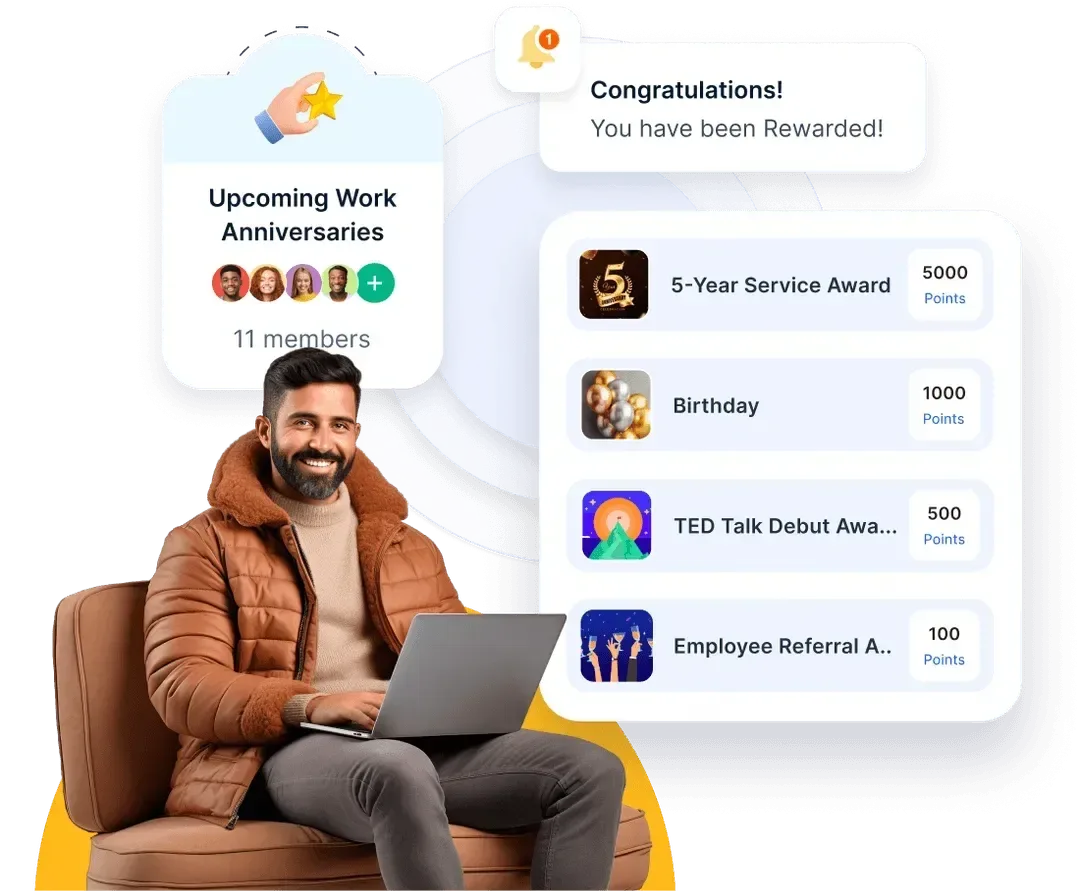
For major milestones, have a senior leader present the award: a CEO, president or division head, depending on the size of your organization. Public recognition shows employees and candidates that you are an employer that notices commitment.
4. Engage employees with experiences
Experiences create memories that a gift card rarely does. A weekend getaway, a cooking class, a concert or an adventure activity becomes a story the employee tells for years, and that story stays linked to your organization.
Personalization matters most here, because one person's dream trip is another person's ordeal. Our guide to experiential rewards covers how to choose and deliver them.
5. Take a proactive approach
Every organization should run a long service awards program, but each one should reflect its own vision, values and goals. Decide in advance which milestones you recognize, what each tier includes and who is responsible for each step, so no anniversary depends on someone remembering it.
6. Personalize and offer a choice
When selecting rewards, think about what that specific employee would want most. Each person has added unique value during their tenure, and individualized rewards recognize that. Unless your HR team knows every employee intimately, the most reliable way to personalize is to let employees choose from a curated catalog of gift cards, experiences and merchandise.
Our guide to choosing the right employee rewards and recognition platform explains what to look for in a catalog that works across locations.
7. Automate the award process
Automation is the difference between a program that works and one that depends on spreadsheets and calendar reminders. A recognition platform connected to your HRMS can detect each anniversary, notify the manager, collect peer wishes, issue the reward and generate a certificate on time, every time.
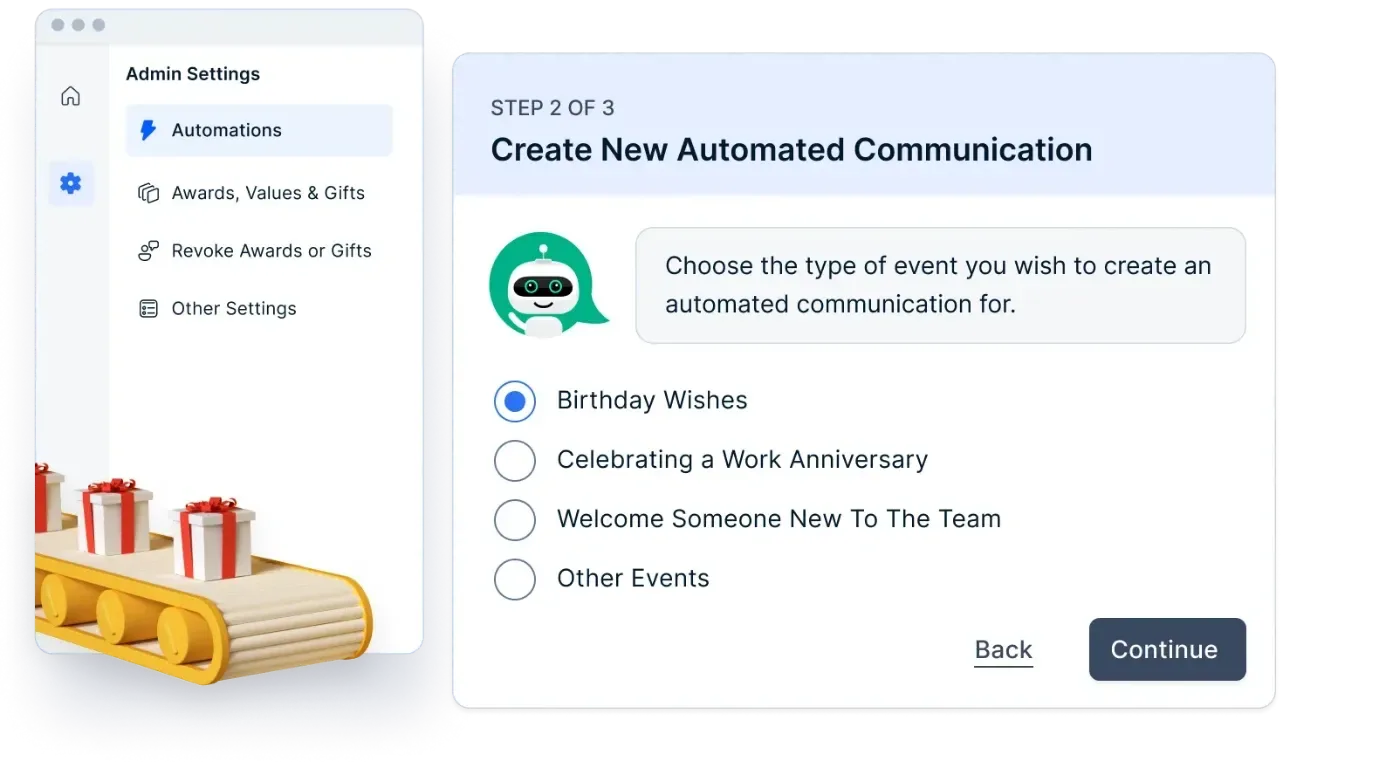
Never miss a work anniversary again
Automate long service awards with tiered rewards, peer Wishboards and certificates, straight from your HRMS.
Talk to our ExpertTrusted by 5,000+ companies
12 long service award ideas
When it comes to long service award ideas, one size no longer fits all. The 12 ideas below blend choice, personalization and lasting impact, and the first three, a gift of choice, a personal message and public visibility, belong in every tier of your program.
1. Gift cards and reward points
Gift cards and points remain a favorite because they combine flexibility with immediate value. Employees choose what matters to them, you avoid the wrong gift and recognition scales across locations and currencies. Personalize them with your logo and a custom message so they feel like recognition rather than a transaction. See our guide to employee gift card programs for setup tips.
2. Personalized video messages from leadership
A short video from a team leader, department head or the CEO makes recognition feel sincere. Share it in the celebration post on your recognition feed or internal channels so colleagues can add their own wishes.
3. Wall of Fame digital spotlight
A dedicated spot on a digital Wall of Fame, shown on office screens or in Slack and Microsoft Teams, gives long service milestones company-wide visibility. It encourages peer acknowledgment and takes the celebration beyond HR and leadership.
4. Memory book or service timeline
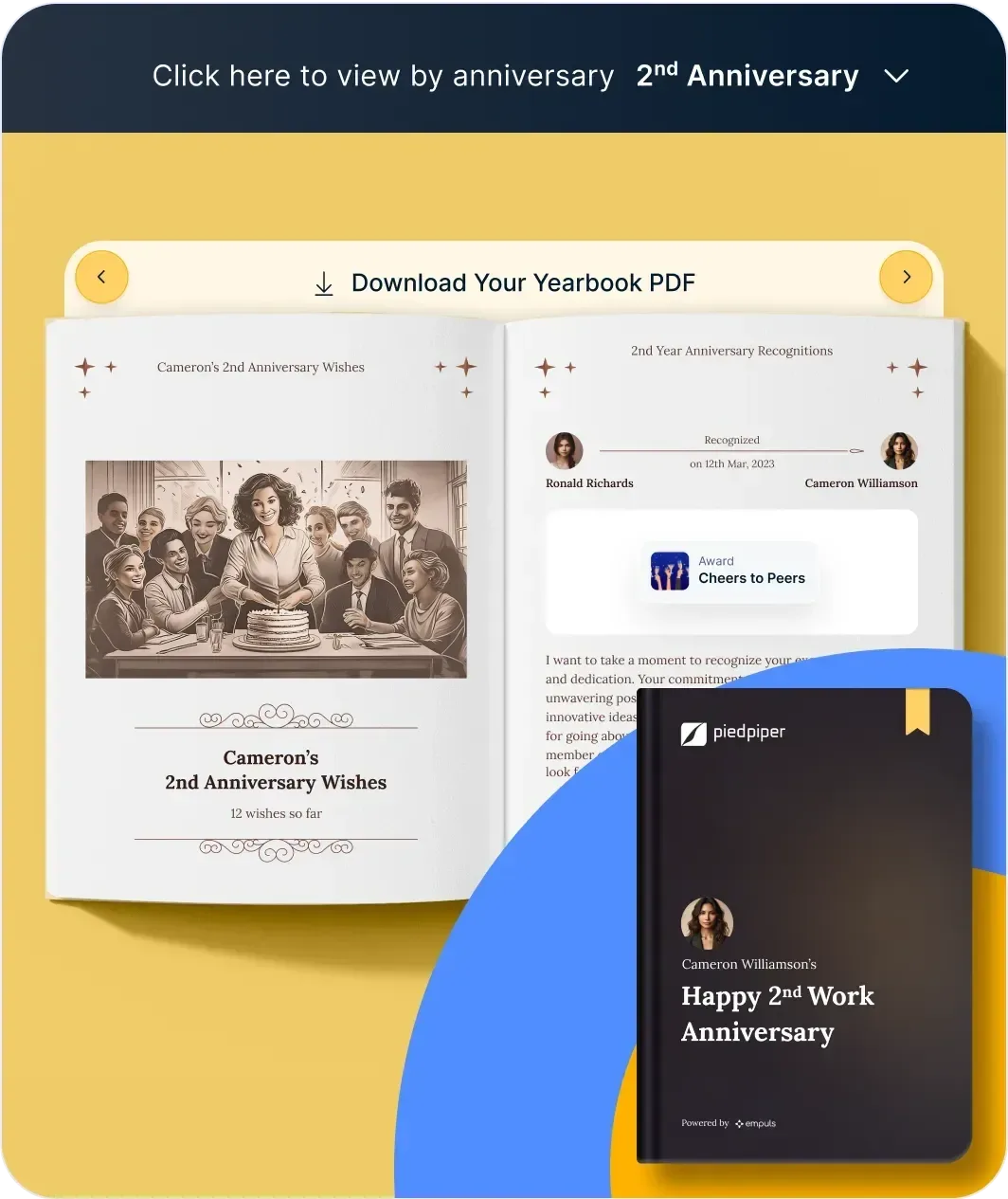
Celebrate an employee's journey with a personalized memory book that highlights key achievements, past recognitions, photos and wishes from teammates. A digital yearbook can collate these automatically and be downloaded or printed as a keepsake.
5. Travel experiences and sabbatical rewards
A travel voucher or paid sabbatical is a memory in the making. A weekend getaway, an extended holiday or time off to recharge shows deep appreciation, and works especially well for 15, 20 and 25-year milestones.
6. Time-off bonuses
Recognition does not always need to be tangible. An extra paid day off, a choose-your-own day or an additional week of leave at a major milestone encourages balance and recognizes dedication in a restorative way.
7. Wellness kits and fitness perks
Long-tenured employees have invested years in your company, and investing in their health is a fitting way to give back. Wellness kits, fitness gear, meditation app subscriptions or a wellness retreat show a culture of care.
8. Personalized keepsakes
The most valued rewards often carry emotional significance. High-quality plaques, engraved watches, service pins or framed journey maps that highlight tenure and achievements become cherished reminders, especially when paired with a gift of choice.
9. Tech gadgets and electronics
Wireless earbuds, smartwatches, tablets and premium headphones are practical and aspirational. Offer them through a catalog so employees pick the device they want rather than receiving one they already own.
10. Curated experience boxes
A themed box packed with surprises adds excitement: a gourmet dinner kit, a relax-and-recharge box with a candle, journal and teas, or an adventure box with vouchers for kayaking or go-karting. Print the employee's name and milestone year on the box.
11. Company-branded swag kits
A premium swag box with a hoodie, mug, journal or tote, personalized with the employee's name and milestone year, builds pride and brand affinity. Keep quality high; cheap swag at a 10-year milestone sends the wrong message. Our list of corporate swag ideas has options.
12. Learning and growth opportunities
For many tenured employees, the best reward is a new challenge: a course, a certification, a conference or a mentoring role. Growth rewards tell long-serving people that you see their future, not just their past.
For gift ideas matched to each anniversary year, see our guide to employee milestone gift ideas, and for rewards beyond service milestones, our list of employee reward ideas.
Long service award planner by milestone
This planner shows what a complete long service recognition program can include at each milestone, from a first-year welcome to a 25-year celebration. Use it as a starting template: keep every row's message and visibility elements, then set reward values that fit your budget and local norms.
| Milestone | Message | Visibility | Reward | Who presents |
|---|---|---|---|---|
| Year 1 | Manager note on first-year impact | Recognition feed post with peer wishes | Small gift of choice or points | Direct manager |
| Year 3 | Manager and skip-level message | Feed post and team meeting shout-out | Gift of choice, certificate | Direct manager |
| Year 5 | Personal letter on contributions | Wall of Fame, team celebration, yearbook | Larger gift of choice or experience, keepsake | Department head |
| Year 10 | Leadership video message | All-hands mention, Wall of Fame, yearbook | Experience or travel, premium keepsake, extra leave | Senior leader |
| Year 15 and 20 | CEO or executive letter | Company event, internal story or interview | Major experience or sabbatical, engraved keepsake | Executive team |
| Year 25 and beyond | CEO message and peer tributes | Dedicated celebration, memory book | Signature experience or sabbatical, legacy gift | CEO |
Two rules keep the planner fair. First, the jump between tiers should be visible, so a 10-year award never feels like a 1-year award. Second, every tier includes choice, because not every 5-year employee wants the same thing. If you run awards across many countries, our guide to long service awards at global scale covers localization and delivery.
How to build a long service recognition program
Six steps take a long service recognition program from idea to launch, and reviewing your tenure data comes first because it decides which milestones matter. Each step builds on the one before.
- Review tenure data: Find out how long employees stay on average, by team and location, and where people tend to leave. Set your first milestone before that point.
- Choose milestones and tiers: Pick the anniversaries you will recognize, such as 1, 3, 5, 10, 15, 20 and 25 years, and define what each tier includes using the planner above.
- Set a budget per tier: Decide reward values for each milestone, check tax treatment in each country and plan for the number of anniversaries expected each year.
- Assign roles: Make clear who writes the message, who presents the award and who handles the reward at each tier, so managers know what is expected of them.
- Automate the workflow: Connect your HRMS to a recognition platform that triggers reminders, peer wishes, rewards and certificates automatically.
- Measure and refine: Track redemption, peer participation and retention among recognized employees, and ask recipients what made their milestone meaningful. Our guide to measuring employee recognition programs explains which metrics to use.
Long service awards to avoid
Good long service awards are as diverse as the people who receive them, but poor ones are easy to list. These three mistakes come up most often, and plain cash bonuses top the list because they are the most common.
- Bonuses on their own: Everyone has expenses, and extra cash gives people a chance to indulge. In practice, though, a cash bonus is usually spent on everyday bills and quickly feels like part of salary rather than a thank you. It can also create entitlement: an employee who gets 5% at ten years may expect 10% at twenty. Pair any cash with a personal message and visible celebration.
- Raises based on tenure: A pay increase is a more permanent reward, but it can backfire. Raises should reflect performance and market value, not time served. Rewarding tenure alone tells high performers that effort matters less than staying put.
- Fixed prizes: A long service award should never be limited to a small pool of options, or worse, just one. Giving a tablet to someone who rarely uses technology wastes money and loses the message of gratitude. Offer a choice at every tier.
How Empuls helps you run long service awards
Empuls automates long service recognition from Year 1 to Year 25 and beyond, so every milestone gets a message, a celebration and a reward without manual tracking. Anniversaries come straight from your HRMS, and managers get a nudge before the day arrives.
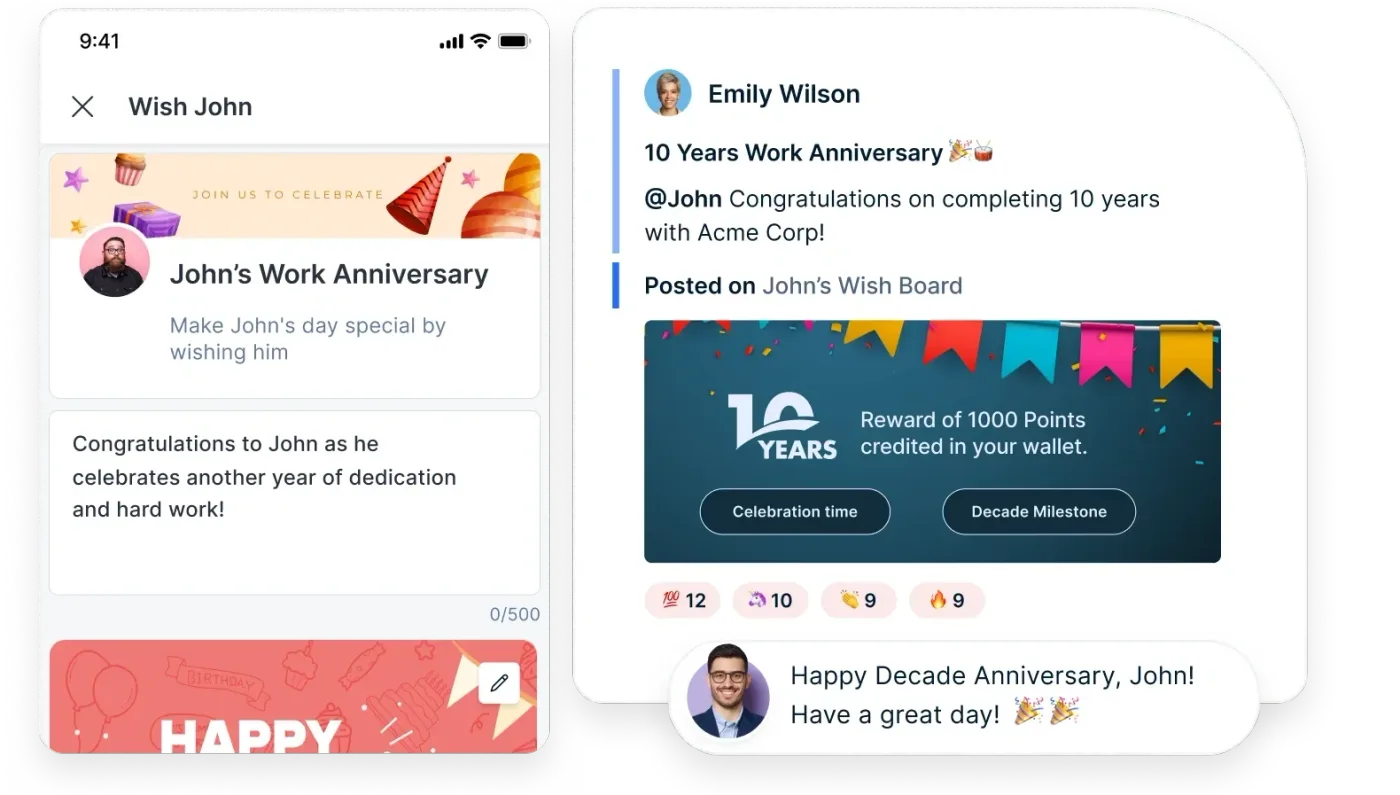
- Set separate reward values, gift collections and messages for each tenure tier with Empuls service awards, including an auto-generated certificate and anniversary yearbook.
- Invite peers to a Wishboard and get AI-drafted messages based on tenure, role and recent contributions through Empuls celebrations.
- Let employees choose rewards from a global catalog of gift cards, experiences and merchandise, and reward other achievements with Empuls milestone rewards.
- Recognize everyday contributions between anniversaries in Slack, Microsoft Teams or mobile with Empuls recognition.
Celebrate loyalty with intention
Employee loyalty reflects dedication, trust and a deep connection to your organization's mission. Long service awards that go beyond formality reinforce your culture, lift morale and encourage others to stay and grow with you. Start recognizing earlier, make every milestone personal and public, give employees a choice of reward and automate the workflow so no anniversary is ever missed. For what is changing in service recognition, see our roundup of long service awards trends.
Book your Empuls demo
Frequently asked questions
A long service award is recognition given to an employee for staying with an organization for a set number of years, such as 5, 10 or 25. It usually combines a personal message from leadership, a public celebration and a reward such as a gift of choice, an experience, a keepsake or extra time off.
There is no fixed rule. Many organizations recognize 5, 10, 15, 20 and 25 years, but with median US tenure at about four years, more employers now start at year 1 or year 3. Base your milestones on how long your own employees typically stay, and recognize them before the point where most people leave.
A good 10-year service gift is meaningful and personal: a travel experience, a premium keepsake such as an engraved watch, extra paid leave or a high-value gift of choice from a curated catalog. Pair it with a leadership video or letter that names the employee's specific contributions and a celebration their colleagues can join.
There is no universal benchmark. Set a value per tier that grows visibly with each milestone, fits your overall recognition budget and suits local norms, then multiply by the number of anniversaries expected each year. In the US, also check the IRS limits on tax-free length of service awards before setting values.
Usually, unless they meet specific rules. In the US, tangible property given for length of service can be excluded from wages up to $400, or $1,600 under a qualified plan, but not in the first five years of employment. Cash, gift cards, vacations, meals and tickets are taxable. Rules differ by country, so check with a tax advisor.
Name the milestone, then be specific about the person's contribution: projects they led, people they helped and values they showed. Thank them sincerely and look ahead to what comes next. For example: "Ten years ago you joined as an analyst; today the reporting process you built guides every decision we make. Thank you."
They help when they are part of a broader recognition culture. Gallup and Workhuman found employees who receive high-quality recognition were 45% less likely to have changed organizations two years later. A long service award alone will not keep someone, but timely, personal milestone recognition combined with everyday appreciation strengthens loyalty.
Work anniversary celebrations usually mark every year with a message, peer wishes or a small gift. Long service awards mark major milestones, such as 5, 10 or 25 years, with a bigger reward and formal presentation. The strongest programs combine both, so employees feel recognized every year and celebrated at the milestones that matter most.





































































































































































































































































































































































































































































































































































