
Key Takeaways
Employee recognition is the timely, specific acknowledgment of an employee's effort, behavior or results, from managers, peers or the company.
Well-recognized employees were 45% less likely to have left their jobs after two years in Gallup and Workhuman's 2022 to 2024 study.
Only 22% of US employees say they get the right amount of recognition, so most organizations have room to improve quickly and cheaply.
Effective employee recognition is timely, specific, tied to values, visible where people work and open to everyone, not just managers.
A strong program mixes everyday peer recognition with structured types such as milestones and service awards, then reviews reach and fairness regularly.
Employee recognition is the practice of noticing and acknowledging what people do at work, their effort, behavior and results, in a way that feels timely, specific and sincere. Done well, it is one of the cheapest levers you have for engagement and retention: in Gallup and Workhuman research, well-recognized employees were 45% less likely to have left their jobs two years later.
Building a great workplace is not only about salaries, benefits or ping-pong tables. It is about something simpler and far more powerful. Every well-deserved "thank you," every small win celebrated and every effort acknowledged keeps your team moving forward with heart.
This is your complete employee recognition guide. It explains why appreciation matters more than ever, what effective employee recognition looks like in practice and how to build an employee recognition plan that sticks without feeling scripted or stale. We cover the what, why, when, where, who and how of recognition, plus a 30-day plan you can copy.
What employee recognition means
Employee recognition is the act of giving special attention to an employee's actions, behavior, effort or performance and acknowledging it openly. It can be as small as a specific thank-you in a team meeting or as structured as an annual award, and it can come from a manager, a peer, a customer or the company as a whole.
Recognition can come from formal and informal programs, and it supports business strategy by encouraging the specific behaviors, such as extraordinary accomplishments, that drive organizational success. It typically happens right after the achievement, based on goals or performance standards the employee is expected to meet, or on company values they bring to life.
Recognition is related to, but not the same as, rewards and appreciation. Recognition acknowledges what someone did, a reward attaches something of value to it, and appreciation values who the person is regardless of output. This guide to employee appreciation explains that difference in detail, and this breakdown of benefits, perks, gifts, awards, incentives and rewards clears up the wider vocabulary.
Why employee recognition matters
Employee recognition is critical to a positive workplace culture and to organizational goals, and the evidence for it has grown stronger in the last two years. The figures below set the scene, and the five reasons that follow explain where the impact shows up first, starting with engagement because the other four build on it.
45%
less likely to leave
well-recognized employees after two years (Gallup and Workhuman, 2024)
22%
of US employees
say they get the right amount of recognition (Gallup, 2024)
20%
global engagement
lowest level since 2020 (Gallup, 2026)
26x
more likely to stay another year
with integrated recognition (O.C. Tanner, 2026)
Why employee recognition deserves a place in your people strategy
1. Enhances employee engagement and performance
Recognition significantly boosts employee engagement, and engagement is in short supply. Gallup's State of the Global Workplace report found global engagement fell to 20% in 2025, the lowest level since 2020. Engaged employees are more productive, less stressed and more committed, so recognition that lifts engagement shows up in the work itself.
The quality of recognition matters as much as the quantity. Gallup and Workhuman found that employees whose recognition met at least four of their five pillars of strategic recognition were nine times as likely to be engaged as those whose recognition met none.
2. Builds a culture of appreciation
A systematic approach to employee recognition establishes a culture where appreciation is part of the organizational fabric. Employees thrive when they feel supported and valued, yet many organizations overlook this despite the benefits of employee recognition. A well-defined recognition program turns appreciation into a strategic business driver that lifts morale and performance. For the habits that make it stick, read how to create a culture of recognition.
3. Improves retention rates
The link between employee recognition and retention is now well measured. In a longitudinal study that tracked nearly 3,500 employees from 2022 to 2024, Gallup and Workhuman found that well-recognized employees were 45% less likely to have left after two years, and those receiving high-quality recognition were 65% less likely to be looking for another job.
That matters because turnover is expensive. Gallup estimates that replacing an employee costs about 40% of salary for frontline workers, 80% for technical roles and up to 200% for leaders and managers.
4. Encourages consistent recognition practices
Effective employee recognition is consistent and reliable. Setting clear expectations for when and why people should be recognized makes appreciation part of everyday interactions rather than a quarterly event. Recognition moments, such as work anniversaries or project completions, should be timely and specific to have their full impact.
5. Strengthens manager-employee relationships
Managers play a crucial role in recognizing employee contributions, and personal, specific recognition strengthens the relationship. The reverse also holds: the O.C. Tanner Institute's 2026 State of Employee Recognition report, a survey of 4,243 employees in 10 countries, found that when employees feel leaders do not know their recognition preferences, their odds of thriving at work drop by 89%.
A robust employee recognition program lifts morale and productivity and builds a workplace where people feel valued and connected to the mission. For the full business case, with more evidence on performance and cost, read the importance of employee rewards and recognition.
Make recognition an everyday habit
Give every employee a simple way to recognize peers, celebrate milestones and reward great work in the tools they already use.
Talk to our ExpertTrusted by 5,000+ companies
Types of employee recognition
Employee recognition is not one-size-fits-all, and different types cater to different needs, roles and moments. The table compares eight types at a glance, and the sections after it explain each one. Most strong programs combine peer-to-peer recognition for everyday moments with a few structured types for milestones and big wins.
| Type | Who gives it | Best for | Typical cost | Frequency |
|---|---|---|---|---|
| Peer-to-peer | Any colleague | Everyday help and teamwork | Free or small points | Daily |
| Team-based | Managers, leaders | Shared projects and targets | Low to medium | Per milestone |
| Social media | Company, leaders | Big wins, promotions, customer praise | Free | Occasional |
| Point-based | Peers and managers | Continuous recognition with choice | Budgeted per head | Ongoing |
| Behavior-based | Anyone | Reinforcing company values | Free or small points | Weekly |
| Service awards | Company, managers | Tenure milestones | Medium | On anniversaries |
| Wellness | HR, peers | Healthy habits and balance | Low | Per challenge |
| Training and development | Managers, L&D | New skills and certifications | Low | On completion |
1. Peer-to-peer recognition
Peer-to-peer recognition lets employees acknowledge each other's contributions, which builds trust and appreciation across the workplace. Gratitude flows freely, not just from leaders but across all levels. Employees feel more connected when recognition comes from colleagues who saw the work up close, and when done right it becomes part of daily culture, breaking silos and strengthening team relationships. See how to run peer-to-peer recognition well.
2. Team-based recognition
Team-based recognition celebrates collective achievements, project completions or group milestones. It reinforces belonging and highlights the value of collaboration. Whether it is finishing a big project or reaching a department-wide target, celebrating wins as a team builds loyalty and a culture where shared success is appreciated.
3. Social media recognition
Recognizing employees on social media is a modern, public way to celebrate achievements. It gives employees a moment in the spotlight and shows the outside world how your company treats its people. To work, it should be timely, genuine and aligned with the employee's comfort and privacy preferences, so ask before you post. Sharing milestones, promotions or big wins on platforms like LinkedIn lifts engagement internally and externally. Praise that comes from customers and partners is covered in this guide to an external recognition program.
4. Point-based recognition
Point-based recognition awards employees points for actions, behaviors or accomplishments, which they later redeem for rewards. The system gives people flexibility and ongoing motivation, because they can track their progress and choose rewards that matter to them. It also encourages continuous recognition, where small wins do not go unnoticed. For reward types, tiers and budget, read how to design an employee reward program.
5. Behavior-based recognition
Behavior-based recognition reinforces the right actions and attitudes rather than just outcomes. It highlights the how behind performance, such as collaboration, innovation, initiative, integrity or customer focus. Tied to company values, it builds a values-driven culture and makes recognition more personal. This guide to a values-based recognition program shows how to set it up, and this list of employee behaviors to recognize gives you a starting set.
6. Service award recognition
Service award recognition celebrates loyalty and long-term commitment. Employees reaching key tenure milestones, such as 5, 10 or 20 years, are acknowledged through personalized awards, messages or benefits. Done meaningfully, it strengthens emotional connection to the company and shows that long-term dedication is valued. Read more about long service awards.
7. Wellness and wellbeing recognition
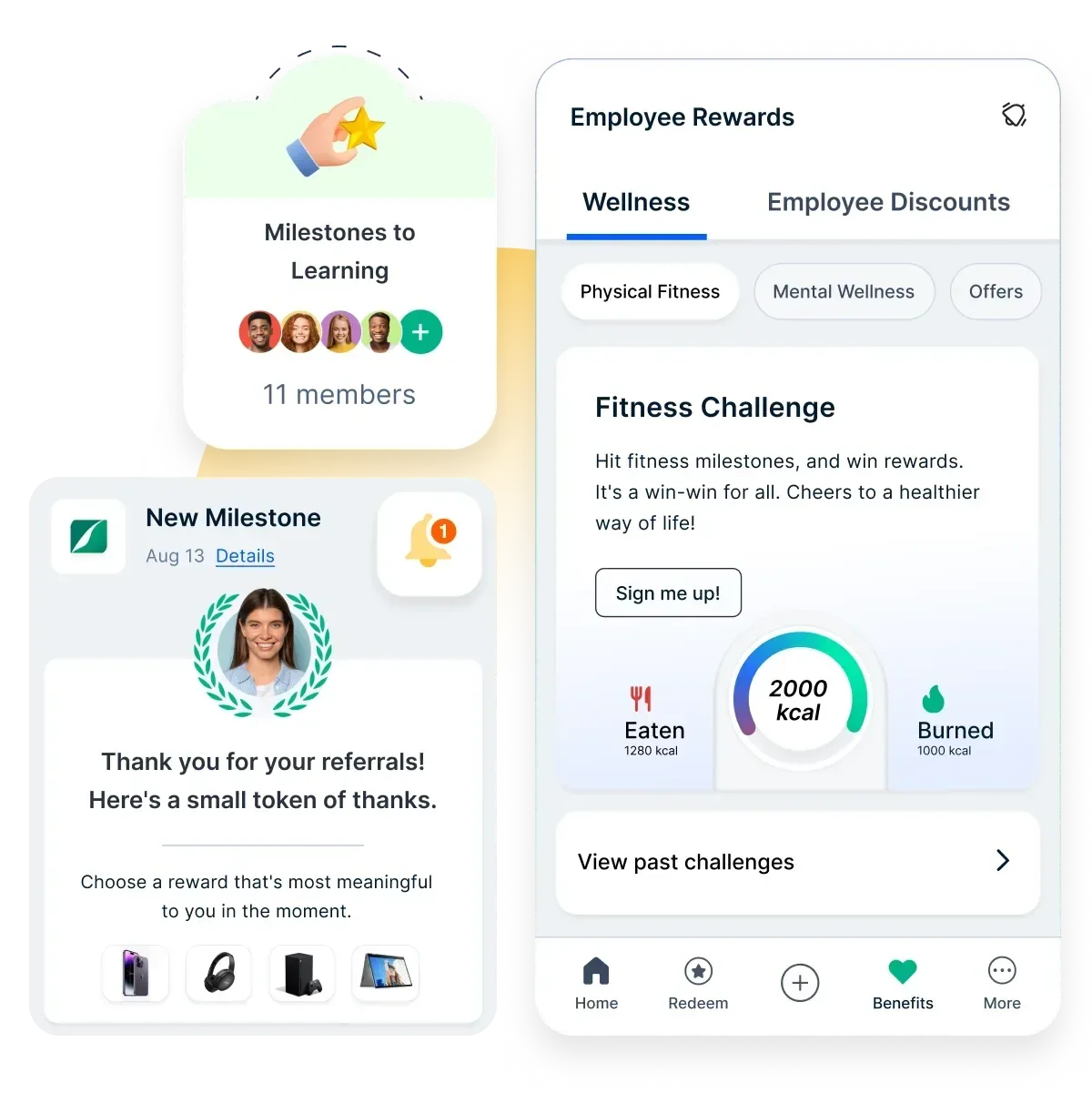
Wellness recognition acknowledges employees who actively look after their physical and mental wellbeing. Recognizing participation in health programs, mindfulness practices or healthy work-life habits shows that the organization cares about people beyond their output, which supports a healthier culture and helps reduce burnout.
8. Training and development recognition
Training and development recognition celebrates employees who learn new skills, complete certifications or mentor others. It signals that growth is encouraged and appreciated, boosts confidence, encourages people to apply what they learned and spreads knowledge across teams.
When to recognize employees
The short answer is as close to the moment as possible. Recognition has a shelf life. Say it too late and the sparkle fades, and what could have been a powerful nudge of motivation ends up feeling like an afterthought.
You do not need to wait for annual reviews, appraisals or a scheduled R&R event to say, "You did something great." The moment after someone solves a tough bug, delivers under pressure or lends a helping hand is your window. For quick ways to act in that window, use these on-the-spot recognition ideas.
Recognition is not always tied to big wins either. Often it is the everyday moments, the quiet overtime, the extra revision, the calm in a storm, that matter most. A well-timed thank-you in those moments builds emotional equity. It tells people they matter and that someone noticed. Recognizing effort while it is still warm shows you are paying attention not just to results, but to the people behind them.
Where recognition should happen
Recognition should happen wherever it feels genuine and shared. It does not need a stage, just a place where people feel seen and heard.
A quick shout-out in a team huddle can lift the room. A thoughtful message in Slack or Microsoft Teams can cut through a stressful workday. A public post on a recognition feed can trigger a ripple of reactions that turns a regular Tuesday into something memorable.
The point is that recognition should live where your people already are: in daily tools, regular meetings and shared spaces. Do not tuck it away in private chats or bury it in formalities. Make it visible and let others join in, because the real magic is often a teammate adding "couldn't have done it without you." One caveat: some people prefer private praise, so a visible culture should still respect individual preferences.
Who should recognize employees
Everyone should. If your recognition program begins and ends with HR or the leadership team, it is not a culture, it is a calendar invite. When recognition flows only from the top, it becomes formal, infrequent and easy to forget.
Real impact happens when everyone picks up the mic: the intern, the designer, the operations lead who never says much but knows who pulled an all-nighter. Peer-to-peer appreciation has more context and more warmth. Managers matter, but they are amplifiers rather than gatekeepers: they set the tone by recognizing often and encouraging their teams to do the same. Here is how to make recognition everyone's business:
- Empower with tools: Give employees a platform where anyone can recognize anyone, whether peers, juniors or seniors, in a couple of clicks.
- Make it a loop, not a ladder: Appreciation should move sideways, diagonally and upward, not just top-down. The more directions it comes from, the more meaningful it feels.
- Train managers to model it: When leaders lead with appreciation, teams follow. It is not about grand gestures but visible consistency. O.C. Tanner's 2026 research found employees at companies with recognition champions are 3x more likely to regularly recognize coworkers.
- Encourage daily shout-outs: Start meetings with "Who do we want to thank today?" Make recognition as normal as asking for an update.
- Reinforce values: Link recognition to your company's core behaviors, so praise for "putting the team first" also reinforces what your culture stands for.
The goal is to make it feel normal to say "thanks," "well done" or "you saved the day." When recognition becomes a reflex rather than a responsibility, you have built something real.
How to recognize employees: 9 effective employee recognition practices
Employee recognition is a year-round practice because it is so easily ignored, and creative ideas fail when they happen once a year. These nine effective employee recognition practices are the cornerstone of a recognition framework, and the first one matters most because it decides what every other practice reinforces.
1. Tie recognition to core behaviors
A lot of applause goes to outcomes, but the path to the outcome often hides the real gems: creative thinking, empathy toward a colleague, taking initiative on a slow day. Recognizing these behaviors reinforces what matters most to your culture.
"Thanks for staying late" is fine, but "Thank you for stepping up and managing the entire shift when we were short-staffed" lands differently. It sets the tone for others to follow, not just the work but the attitude behind it.
2. Let everyone join the applause
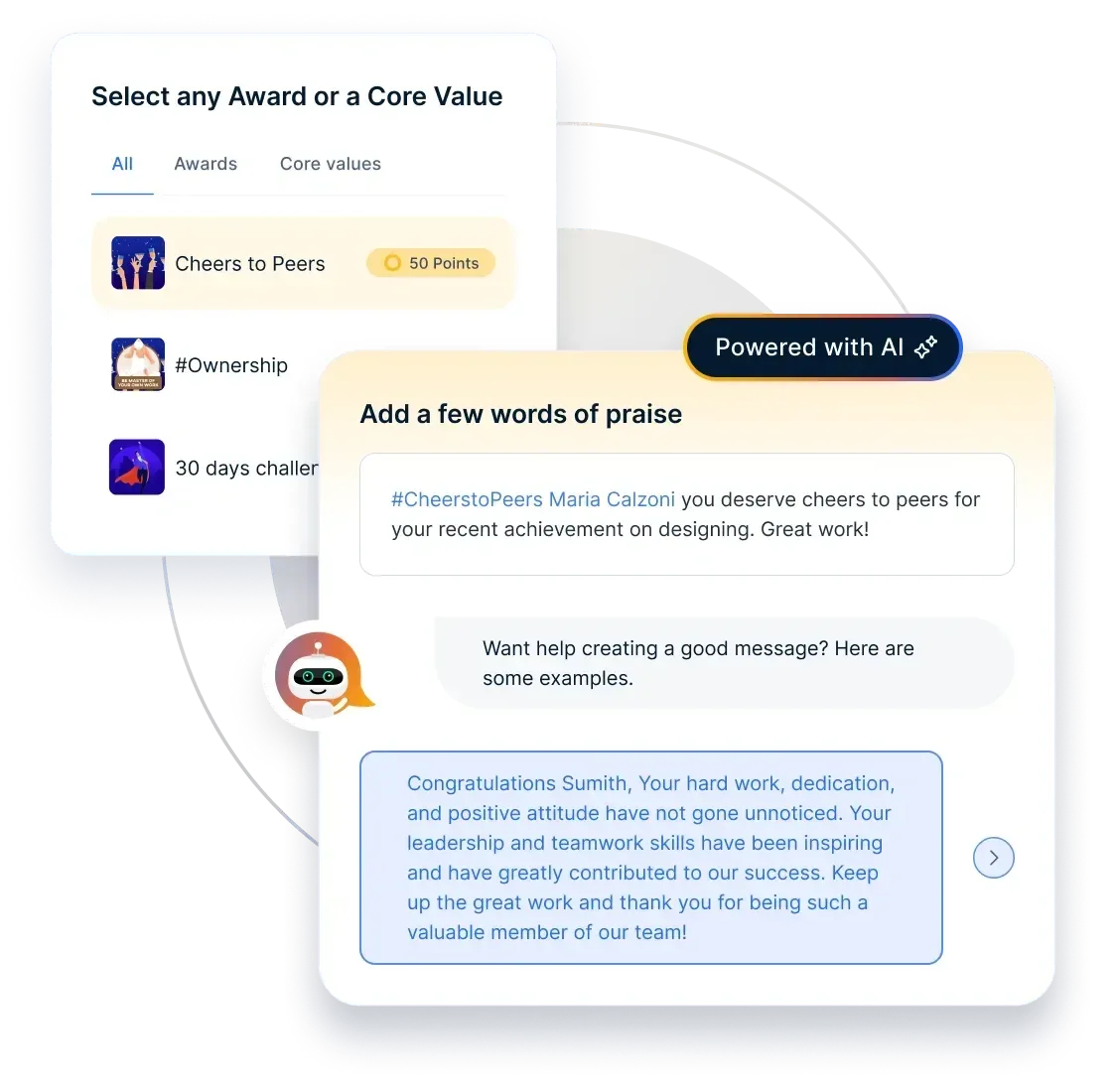
Recognition is no longer a manager's job alone, and the best kind often comes from people who saw the work up close. A peer-to-peer recognition program makes it real-time, spontaneous and visible, not a formal email.
Your designer can thank the marketer who helped word a tricky ad, or an intern can appreciate the senior who took time to explain dashboards. When anyone can send a value card or a shout-out with points, applause does not wait for HR or a calendar.
3. Mix it up
Not everyone loves the spotlight, and not every achievement needs a big moment. Some people prefer a quiet thank-you note, others thrive on team-wide appreciation. Vary your formats: team huddles, digital cards, chat shout-outs or a handwritten note stuck to a laptop. The goal is not volume but the variety that makes people feel seen in the way they prefer. For more formats, browse these employee recognition ideas and non-monetary employee recognition options.
4. Let milestones speak
Work anniversaries, first sales, the 100th bug fix: milestones may look small from the outside, but they matter to the person crossing them. Do not wait for decades of service to clap. Marking progress, growth and those little firsts reminds people their journey is being noticed and remembered. For gift ideas tied to these moments, see these employee milestone gift ideas.
5. Build rituals, not reminders
If you have to remind yourself to recognize someone, it is probably already late. Build rituals instead: a Friday wins roundup, monthly gratitude posts or shout-outs during retrospectives. When recognition becomes a rhythm rather than a checkbox, it turns into culture, the kind people look forward to and that survives heavy workloads.
6. Give meaning to the reward
A voucher is nice. A voucher that comes with "We loved the way you handled the client feedback and turned it into a winning idea" is better, because the gift is just the cherry on top. What matters is the context. Whether it is points, an experience or a personalized card, tie the recognition back to the story behind it. That is what makes it memorable.
7. Recognize effort, not just outcomes
The project might fail or the campaign might flop, but if the effort, creativity or hustle was there, it still deserves a nod. When you only recognize wins, you accidentally tell people it is not safe to take risks. Recognizing effort builds a culture where trying hard and thinking differently are always worth it.
8. Make managers recognition champions
If recognition is just another HR checklist, it dies quietly. When managers lead the charge, cheering small wins, calling out effort in team meetings and sending a surprise value card, it starts to feel real. Train managers to look for moments of excellence and gratitude, not just performance reviews, and check that recognition is spread fairly; this guide shows how to prevent bias in recognition programs.
9. Close the feedback loop
Recognition is not a one-way street. When you recognize someone, give them space to respond and to recognize others. Maybe someone gets a public shout-out and immediately tags two teammates who helped. Recognition that sparks more recognition is culture in motion. To track whether it is working, use these metrics to measure employee recognition programs.
A 30-day employee recognition plan you can copy
Most programs stall because nobody owns the first month. This plan turns the practices above into four weeks of concrete work, and the first week matters most because the decisions you make there shape every recognition message that follows.
| Week | What to do | Owner | Done when |
|---|---|---|---|
| Week 1: Decide | Pick 3 to 5 behaviors or values to recognize, set who can recognize whom, and agree a budget per head if you add points or rewards | HR and leadership | A one-page recognition charter is shared |
| Week 2: Equip | Choose the channel (meetings, chat, a recognition platform), brief managers on the message formula and set up milestone reminders | HR and managers | Every manager has sent at least one specific recognition |
| Week 3: Launch | Announce the program, start a weekly ritual such as a Friday wins post, and invite peers to recognize each other | Managers and team leads | At least half of each team has given or received recognition |
| Week 4: Review | Check who is and is not being recognized, ask a few employees how it feels, and fix gaps in reach or fairness | HR | You have a baseline for participation and a list of next fixes |
If you want a deeper roadmap, this guide to planning an employee rewards and recognition program covers timing, budget and stakeholders, and this one on implementing an employee rewards and recognition program covers launch and rollout. To see where your current program stands, take the free recognition program scorecard.
How Empuls makes employee recognition effortless
Spreadsheets, sticky notes and thank-yous buried in inboxes do not scale. If you want appreciation to flow freely and often, you need a place built for it, and that is where Empuls comes in. Peer-to-peer shout-outs, manager praise and milestone celebrations sit in one place, visible to everyone.
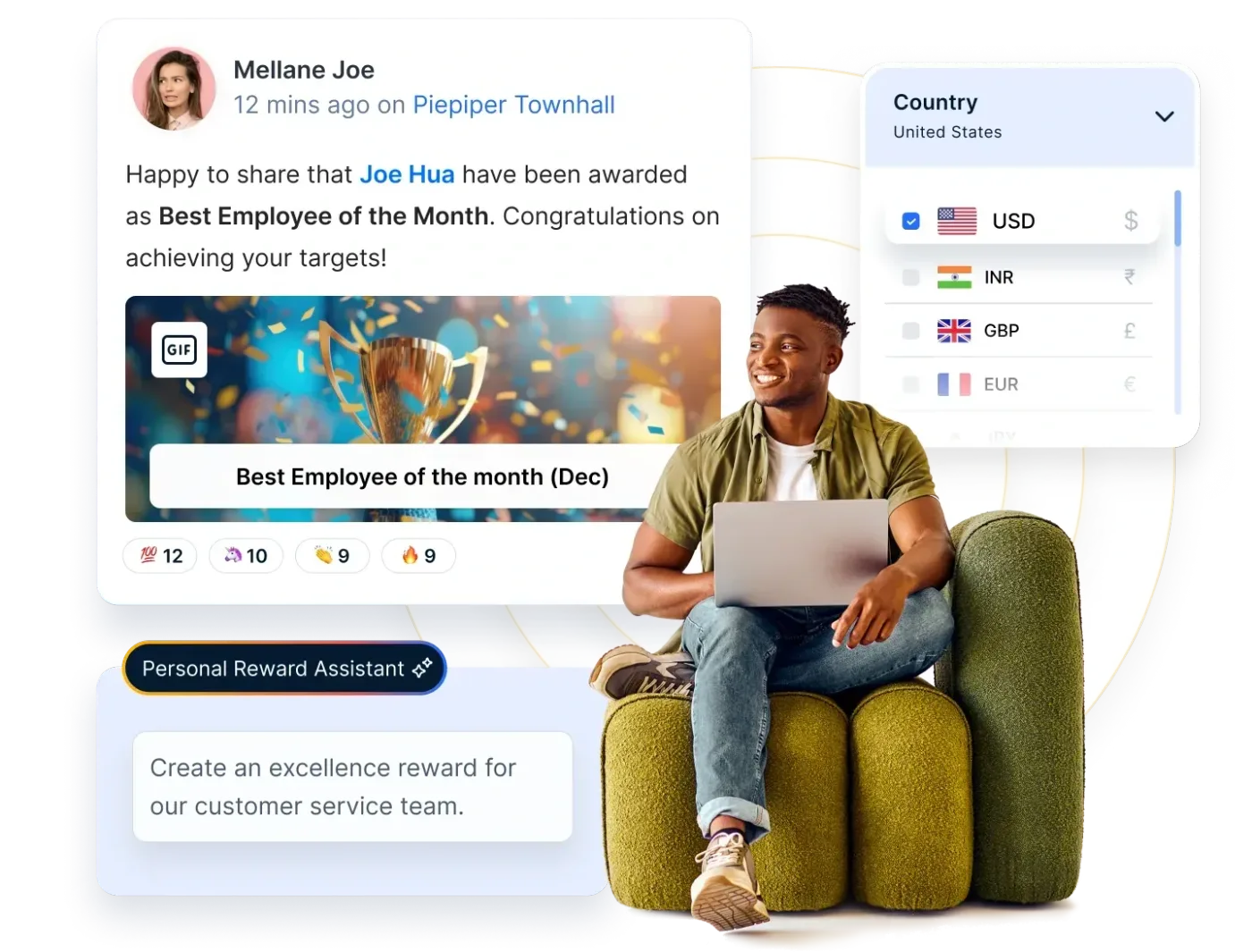
- Recognition in every direction: Anyone can recognize anyone with value cards, awards and points through Empuls recognition, including spot awards for in-the-moment wins.
- Milestones on autopilot: Birthdays, work anniversaries and other milestone rewards trigger automatically, so no moment is missed.
- Where people work: Recognition, rewards and redemption run inside Slack and Microsoft Teams, as well as web and mobile.
- Visible results: Reports show participation, award spread and redemption, so you can see the culture and fix gaps early.
Results from Empuls customers show what this looks like at scale. A digital healthcare enterprise that moved from a manual program to Empuls saw a 5x rise in award distribution and 97% active adoption, as described in this healthcare recognition case study. A global developer-testing team saw recognition activity grow 117% after bringing recognition inside Slack.
The small things are not that small
Employee recognition is not a luxury or a nice-to-have. It is the glue that holds teams together, the push behind great work and often the reason someone chooses to stay one more year.
It is not about expensive gifts or grand gestures. It is about seeing people, acknowledging effort and making sure no one feels invisible. Done right, recognition becomes part of your culture rather than a quarterly ritual. So build the habit: say thank you, call out the quiet wins and let appreciation flow from every desk. In the end, people do not just remember the work. They remember how it felt to be recognized for it.
Book your Empuls demo
Frequently asked questions
The purpose of employee recognition is to show people that their work and behavior are noticed and valued, and to reinforce the actions the organization wants more of. It raises engagement, strengthens relationships between colleagues and managers, and lowers turnover. In Gallup and Workhuman's research, well-recognized employees were 45% less likely to leave within two years.
The main benefits of employee recognition are higher engagement, better retention, stronger performance and a healthier culture. Recognized employees feel more connected to their team and mission, managers build trust faster, and desired behaviors spread because people see them celebrated. Recognition is also inexpensive compared with the cost of replacing an employee who leaves.
There is no single ideal frequency, because people's needs differ, but recognition should feel regular rather than rare. A practical rule is that every employee should hear specific recognition at least every couple of weeks, from a manager or a peer, with bigger moments marked as they happen. Consistency matters more than size.
Formal recognition is structured and planned, such as service awards, employee of the month or annual awards with set criteria. Informal recognition is spontaneous, such as a thank-you message, a shout-out in a meeting or a peer note. Effective programs use both: informal recognition for frequency and warmth, formal recognition for milestones and standout contributions.
Effective employee recognition is timely, specific, sincere and personal. It names what the person did and why it mattered, happens close to the moment, matches how the person likes to be recognized and is fair across teams. Linking it to company values and making it visible where people work helps it become a habit.
No. Many of the most valued forms of employee recognition are free, such as a specific thank-you, public praise, a handwritten note or a chance to lead a project. Monetary rewards can add weight to bigger moments, but the message and context matter more than the value. Many organizations combine free recognition with a modest points budget.
Start by choosing three to five behaviors or values to recognize, deciding who can recognize whom and setting a small budget if you plan to add rewards. Then equip managers, pick a visible channel, launch with a weekly ritual and review participation after a month. Fix gaps in reach and fairness before you scale.





































































































































































































































































































































































































































































































































































