
Key Takeaways
To engage millennials at work, offer steady growth and internal promotion, frequent feedback and recognition, flexibility, financially meaningful rewards and transparent leadership.
Millennials, born roughly 1981 to 1996, are now about 30 to 45 years old, and many are the managers responsible for engaging everyone else.
Gallup found engagement among Gen Z and younger millennials fell eight points between 2020 and 2025, alongside sharp drops in feeling cared about and having chances to learn and grow.
Deloitte's 2026 survey shows 67% of millennials are interested in senior leadership, but most prefer steady progress to rapid promotion.
Cost of living is millennials' top concern, so rewards and benefits that ease financial stress are among the most effective millennial retention strategies.
To engage millennials at work, give them steady growth and internal promotion paths, frequent feedback and recognition, real flexibility, rewards and benefits that ease financial pressure and transparent leadership that connects their work to a clear purpose. Millennials are now in their 30s and 40s, so engaging them also means supporting them as managers, parents and future leaders.
Millennials have shaped workplace culture for more than a decade. Their preference for flexibility, meaningful roles and continuous feedback changed how many companies work, yet research shows engagement among younger millennials has fallen sharply since 2020. Traditional engagement strategies are not enough on their own.
This guide explains who millennials are at work today, what millennials want at work, 12 proven strategies for motivating millennials, millennial retention strategies that work and how the right tools help.
Who millennials are at work today
Millennials are the generation generally defined as born between 1981 and 1996, which puts them between about 30 and 45 years old in 2026. They are no longer just young professionals. Many are now at the peak of their careers, managing teams, buying homes and raising families, after navigating the 2008 financial crisis, a pandemic and rapid shifts in how work gets done.
Millennials were often labeled entitled job-hoppers for wanting feedback, recognition and flexibility. Those traits actually reflect a desire for growth, purpose and engagement, not a lack of commitment, and the need for feedback and recognition spans every generation, from Gen Z to Baby Boomers.
Today, many millennials are also the managers responsible for engaging everyone else. That matters because Gallup's State of the Global Workplace 2025 report found engagement among managers under 35 fell five points in a single year. For how the youngest generation differs, see our guide to Gen Z employee recognition.
Why millennial employee engagement matters
Millennials make up a large share of today's workforce and an even larger share of its managers. When they disengage or leave, the cost goes beyond hiring: teams lose institutional knowledge and the people who coach newer employees.
The warning signs are clear. Gallup's January 2026 analysis of US engagement found that engagement among Gen Z and younger millennials dropped eight points between 2020 and 2025. Younger millennials and Gen Z were also far less likely to strongly agree that someone at work cares about them or that they have opportunities to learn and grow.
-8 pts
engagement drop among Gen Z and younger millennials, 2020 to 2025
Gallup, 2026
41%
strongly agree someone at work cares about them, down from 54%
Gallup, 2026
37%
strongly agree they have opportunities to learn and grow, down from 48%
Gallup, 2026
Younger millennial engagement is slipping
Motivating millennials with the right tools, opportunities and recognition creates a workplace where they want to stay and do their best work, which benefits them and your business.
What millennials want at work
Deloitte's 2026 Gen Z and Millennial Survey, based on responses from 8,211 millennials in 44 countries, shows a generation focused on stability, wellbeing and steady growth. Cost of living is the top concern for the fifth year running, 52% of millennials have delayed major life decisions because of their finances, and 67% are interested in senior leadership roles, though 45% prefer steady progress over rapid promotion. Here is what that means in practice:
| What millennials want | What it looks like at work |
|---|---|
| Steady growth | Clear career paths, internal promotion and stretch projects |
| Frequent feedback | Regular one-on-ones and coaching, not just annual reviews |
| Recognition | Timely, specific appreciation and meaningful rewards |
| Flexibility | Control over when and where they work, especially as parents |
| Financial wellbeing | Fair pay, useful benefits, perks and tax-saving options |
| Purpose and transparency | Honest communication and a clear link between their work and the mission |
| Wellbeing | Manageable workloads and support for stress and burnout |
Keep your millennial talent engaged
Recognize work as it happens, reward milestones and listen with pulse surveys in one platform.
Talk to our ExpertTrusted by 5,000+ companies
How to engage millennials at work: 12 strategies
These 12 strategies for motivating millennials run from daily management habits to long-term career and reward systems. Growth carries the most weight, because Gallup's data shows learning and development is where younger millennials' experience has slipped furthest, so the list opens with feedback and promotion.
1. Provide encouragement, guidance and feedback
Millennial employees are more likely to stay loyal to jobs with development opportunities, and ongoing mentorship, guidance and feedback are the best way to deliver them. It is a win-win: feedback helps them get better, which adds more value to your company.
Be clear about expectations too. Gallup found clarity about what is expected at work has fallen more than any other engagement element since 2020, so regular one-on-ones that cover goals and priorities, not just tasks, make a real difference.
2. Promote them internally
As part of their drive to grow, millennials like to earn promotions and help shape their departments. Promote internally wherever possible, and create new roles and titles with specific employees in mind.
Millennials will not wait around if they see no opportunities for progression, and you will quickly lose talent to competitors. Since most prefer steady progress to rapid jumps, make the path visible: what the next step is, what it takes and when you will review it.
3. Provide more learning opportunities
Updating skills is a necessity, not a nice-to-have, especially as AI changes roles. Deloitte's 2026 survey found 79% of Gen Zs and millennials use AI to identify learning and development opportunities, which shows how actively they look for growth.
Offer learning budgets, online courses, certifications, mentoring and stretch assignments, and reward progress. For ideas on making learning stick, see our guide to gamified learning.
4. Give them the tools they need
You would not ask a lumberjack to cut down trees without an axe, yet many companies expect miracles from employees without the right tools. Approve reasonable budget requests for software and equipment that help people do their best work.
Millennials grew up alongside fast-changing technology and notice clunky systems quickly. Good tools remove friction and signal that you trust them to work efficiently.
5. Offer flexibility
Work-life balance is a top priority for many millennials, and the rigid nine-to-five no longer fits how most of them live. Deloitte found 46% of millennials see work-life balance concerns as a barrier to taking on leadership roles.
Many millennials will put in extra effort when work demands it, as long as you offer the same flexibility in return: time off for family, the occasional afternoon off and control over where and when they work.
6. Improve the work environment
Improving the work environment is one of the surest ways to keep millennial employees. Review pay against the market, help people balance work and life, offer competitive benefits, encourage friendly relationships and trust employees with responsibility.
Show that you care about people as people. Gallup's finding that younger millennials have become much less likely to feel someone at work cares about them points to a simple fix: managers who check in on the person, not just the work.
7. Give out rewards
Rewarding millennial employees for good work keeps them enthusiastic about it. Rewards can also spark friendly competition between teams and raise overall job satisfaction.
Given the financial pressure many millennials feel, choose rewards with real value, such as points they can redeem for what they need, experiences or gift cards, and use a platform that makes giving them quick and consistent.
8. Recognize and appreciate
Everyone likes to see their work recognized, but millennials value recognition especially highly, and if they do not get it, they are much more likely to leave. Recognize good work as it happens, make it specific and let peers recognize each other too.
For a structured approach that ties appreciation to your values, see our guide to a values-based recognition program.
9. Recognize long service
Make a point of recognizing employees who stay for the long haul. Celebrating work anniversaries and service milestones signals that you value loyalty and encourages millennials to stay longer.
Many millennials now have 10 or more years of tenure, so make service awards personal rather than generic. Our guide to long service awards that feel personal at scale shows how, and keeping tenured employees engaged covers what comes after the award.
10. Ask for feedback
Millennials will tell you if they think something is wrong, so ask them regularly. Do not save it for annual reviews; make listening an ongoing part of your culture through pulse surveys, one-on-ones and open forums.
Once you receive feedback, act on it and say what changed. Feedback that disappears into a void does more harm than not asking.
11. Be transparent
Transparency matters to a generation that grew up with social networks, where it is almost impossible for companies to bend the truth without someone calling it out. Millennials expect the same honesty, authenticity and trust from employers that they expect from the brands they buy from.
Share how the business is doing, explain the reasons behind big decisions and be honest about pay bands and promotion criteria wherever you can.
12. Support side projects and passions
Many companies still use generic employment terms that prevent any side projects. A growing number of employers now give people room to pursue passion projects, as long as there is no conflict of interest.
It is understandable to worry about employees taking clients with them, but supporting growth outside work builds loyalty and skills. Set clear conflict-of-interest rules, then encourage the creativity that often flows back into the day job.
Millennial retention strategies that work
Retention follows from the strategies above, but a few millennial retention strategies deserve extra focus because they match this generation's life stage:
- Visible career paths: Publish what each next role requires and review progress twice a year, so steady growth feels real.
- Financial wellbeing support: Offer flexible benefits, perks, discounts and options such as emergency loan programs that ease financial stress.
- Family-friendly flexibility: Flexible hours, remote days and parental support matter more as millennials raise families.
- Manager support: Many millennials now lead teams, so train them as managers and recognize their leadership, not just their individual results.
- Stay interviews: Ask high performers what would make them leave, before they do.
For a full playbook beyond one generation, read our guide to employee retention strategies, and for the motivational drivers behind these tactics, see what employee motivation is.
How Empuls helps you build a workplace millennials will not want to leave
Millennials do not just work for a paycheck. They want purpose, recognition and benefits that genuinely improve their lives. Empuls, Xoxoday's employee engagement platform, helps you build a millennial-friendly workplace:
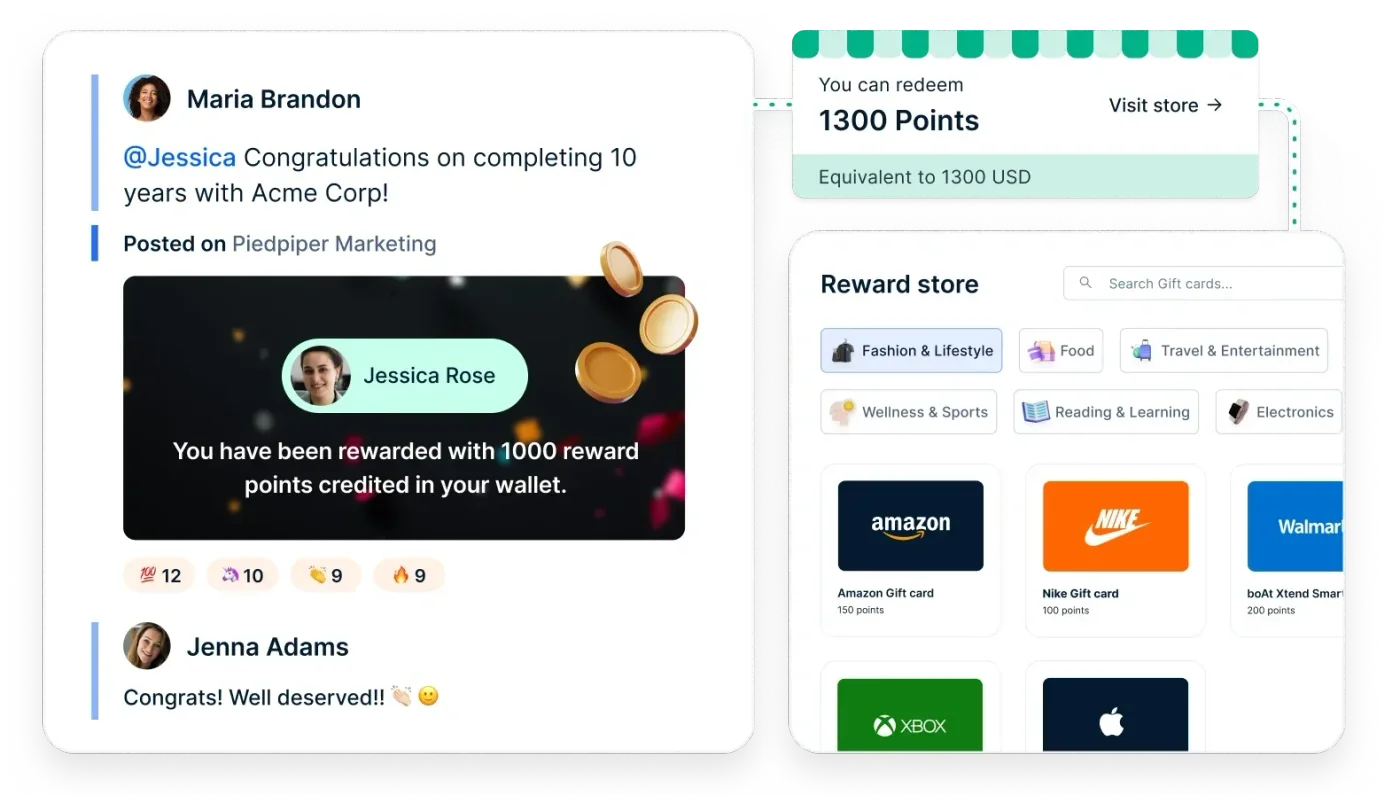
- Recognition that resonates: Peer-to-peer appreciation, milestone rewards and service awards through Empuls recognition make sure people feel valued.
- Perks that matter: Flexible benefits, perks and discounts support financial wellbeing and work-life balance.
- A workplace that listens: AI-powered pulse and engagement surveys capture real-time feedback so millennials feel heard.
- Connection and transparency: A social intranet keeps company news, celebrations and conversations in one place.
Engaging millennials, today's core workforce
Millennials are too large a part of the workforce, and too large a share of its managers, to ignore. If they feel overlooked, they will find a workplace that values and motivates them.
Share a common purpose, give steady growth, recognize often and support their financial and personal wellbeing, and you will keep your best millennial talent engaged and loyal for years. For tips on another group that is easy to overlook, see how to engage introverts.
Book your Empuls demo
Frequently asked questions
Millennials are motivated by steady career growth, regular feedback, recognition for good work, flexibility and a sense of purpose. Financial security matters too, since cost of living is their top concern in Deloitte's 2026 survey. Managers who explain how each role contributes to the mission, invest in development and reward results fairly tend to get the most effort from millennial employees.
Millennials are generally defined as people born between 1981 and 1996, which makes them about 30 to 45 years old in 2026. Some research uses slightly narrower ranges; Deloitte's 2026 survey, for example, defines millennials as born between 1983 and 1994. Either way, most millennials are now mid-career professionals, and many manage teams.
Millennials most often leave because they see no clear path to grow, feel underpaid given cost-of-living pressure, lack flexibility or do not feel recognized or cared about by their manager. Poor transparency and burnout also play a part. Clear career paths, fair pay, flexible work and regular recognition address the most common reasons millennials start looking elsewhere.
Most millennials prefer frequent, specific and two-way feedback rather than a single annual review. Regular one-on-ones that cover goals, progress and development work well, along with quick feedback in the moment after a project or presentation. They also want to give feedback upward and see it acted on, so build listening into the same conversations.
Millennials are mostly mid-career, so engaging them focuses on steady promotion, leadership development, flexibility for family life and financial wellbeing. Gen Z employees are earlier in their careers and often need more onboarding, mentorship, clarity about expectations and frequent, instant recognition. Both generations value purpose, transparency and growth, so many strategies work for both with different emphasis.
Many do. Deloitte's 2026 Gen Z and Millennial Survey found 67% of millennials are interested in pursuing senior leadership roles at some point, though only a small share see a leadership title as their primary career goal. Concerns about work-life balance, stress and burnout are the main barriers, so supportive manager roles with realistic workloads attract more millennial leaders.
Millennials tend to value benefits that ease financial pressure and support family life, such as health coverage, retirement contributions, flexible schedules, paid parental leave, learning budgets and perks or discounts that stretch their paycheck. Flexible benefits that let each person choose what fits their life stage usually land better than a one-size-fits-all package.
Start with three habits: hold a regular one-on-one with each millennial team member about goals and growth, recognize specific contributions within days rather than months and explain the reasons behind decisions that affect them. Then remove one source of friction they raise, such as a tool, process or scheduling issue. Quick, visible action builds trust and engagement fast.





































































































































































































































































































































































































































































































































































