
Key Takeaways
The defining employee experience trends of 2026 are mental health, flexible and shorter workweeks, everyday AI, better onboarding, personalization and continuous listening.
A 2025 Nature Human Behaviour study of 141 organizations found four-day weeks cut burnout and raised job satisfaction, and over 90% of firms kept them.
Only 20% of employees use only company-approved AI tools, so clear AI policies and approved tools are now part of employee experience.
New hires need attention: Qualtrics found new-hire engagement at its lowest level since 2021 in its 2026 study.
Listening more often pays off, with engagement at 87% where companies increased listening versus 44% where it declined.
The biggest employee experience trends in 2026 are mental health support, shorter and more flexible workweeks, everyday AI at work, better onboarding, personalization, a frictionless digital workplace and continuous listening. Together they shift employee experience from perks and policies toward how work is actually designed, supported and measured.
Employee experience trends are the shifts in what employees expect from work and how employers respond across the employee journey. This guide covers 12 global employee experience trends defining workplaces in 2026, the data behind each one and what you can do about them as you plan for 2027. If you need the basics first, read this guide on what employee experience is.
Workplace experience trends at a glance
Employee experience now extends well beyond job satisfaction to every part of an employee's journey, from daily tools to professional growth. The numbers below show why expectations are changing faster than many workplaces.
20%
of employees worldwide are engaged
lowest since 2020 (Gallup 2026)
72%
of employees went through major change
in the past 12 months (Qualtrics 2026)
30%
of US employees use AI frequently
a few times a week or more (Gallup, May 2026)
54%
of remote-capable US employees work hybrid
August 2026 (Gallup)
Employee experience trends 2026: the numbers behind the shifts
Gallup's State of the Global Workplace 2026 report puts global engagement at 20%, with low engagement costing the world economy about $10 trillion in lost productivity. Qualtrics' 2026 Employee Experience Trends study of 33,831 employees found that change itself is not the problem: employees who saw new technology introduced reported 78% engagement, while those who went through layoffs reported 61%.
Act on employee experience trends faster
Listen, recognize and support employees from one platform built for hybrid and frontline teams.
Talk to our ExpertTrusted by 5,000+ companies
12 global employee experience trends to watch in 2026
Unpredictable economic conditions, new technology and changing expectations will all shape how people want to interact with their workplaces. The 12 trends below run from wellbeing and flexibility, which employees feel most directly, through technology, to the management and growth practices that hold everything together.
1. Mental health moves to the center of employee experience
The World Health Organization's mental health at work fact sheet estimates that 16% of working-age adults had a mental disorder in 2023, and that depression and anxiety cost the global economy 12 billion working days and US$1 trillion in lost productivity every year. That makes mental health a business issue as much as a personal one.
Leading employers provide accessible counseling, mental health apps and an employee assistance program. Regular, private check-ins help employees learn stress management techniques and coping strategies, and a culture of open communication reduces stigma. For the full picture, read these employee wellness trends.
2. Shorter workweeks and flexible schedules gain ground
Demand for flexible schedules keeps growing, including the four-day workweek. Many companies now see that a results-oriented culture benefits the business more than enforcing fixed hours.
The evidence is getting stronger. A 2025 study in Nature Human Behaviour followed 2,896 employees at 141 organizations that trialed a four-day week with no pay cut. Employees reported less burnout, higher job satisfaction and better mental and physical health, and the gains were largest where hours fell by eight or more a week. More than 90% of the companies kept the shorter week after the trial.
This employee experience strategy does not need to cover the whole organization. Businesses that run around the clock can use compressed schedules, rotating long weekends or flexible shifts instead.
3. AI becomes part of everyday work
Early fears about AI replacing jobs have given way to steady everyday use, with AI increasingly seen as a tool that removes repetitive work. Gallup's AI at work indicator shows 30% of US employees used AI a few times a week or more as of May 2026, and employees whose managers actively support AI use are 1.7 times as likely to use it frequently.
There is a catch. Qualtrics found that only 20% of employees use only company-provided AI tools, which means most have turned to tools their employer has not approved. To improve the employee experience and protect data, give people approved tools, clear guidelines and training. AI will continue shaping the workplace by:
- Removing repetitive tasks so employees can focus on strategic work
- Encouraging collaboration and innovation through better data insights
- Personalizing career development based on individual strengths
- Spotting burnout risk by analyzing workloads and schedules
- Helping HR track wellbeing, engagement and productivity
Data privacy and security still matter. Protect employee and candidate information and comply with regulations such as the EU's GDPR. For a deeper look, read how AI is reshaping employee experience.
4. Onboarding gets a bigger investment
Investing more time and resources in onboarding is a basic but often neglected employee experience strategy. New employees want to feel welcome, and the sooner they feel they belong, the better. The need is urgent: Qualtrics found new-hire engagement fell 7 points in a year to 65%, its lowest level since 2021.
Onboarding is more than filling in forms. Companies send equipment, company merchandise and welcome gifts ahead of day one, assign buddies and set clear 90-day goals. One Kentucky healthcare data provider, for example, began delivering all the equipment new remote hires needed to their homes, along with company merchandise and balloons for a human touch. Employee experience platforms then help bring new employees up to speed on processes and tasks. These onboarding gifts for new hires can make the first week memorable.
5. Personalization reaches the employee experience
Personalization has changed how people use technology: streaming services recommend shows, music apps build playlists and grocery apps suggest shopping lists. Businesses are now applying the same thinking to the employee experience.
Internal communication is a key area. Instead of generic announcements, companies tailor messages by role, department, location or tenure, so employees only receive what matters to them. Rewards, benefits and learning are following the same path, with employees choosing from options rather than receiving one-size-fits-all packages.
6. The digital workplace becomes frictionless
Remote and hybrid work exposed how much poor IT support and clunky tools hurt the employee experience, even for organizations with strong IT teams. In response, more companies are moving to cloud-based software, IT service management tools and virtual desktops that are easier to set up, manage and support from anywhere.
Single sign-on is part of the same shift. Instead of juggling many passwords, employees use one secure login for every tool they need, while IT can grant or revoke access instantly when someone joins or leaves and can spot potential breaches more easily. Fewer logins and fewer broken tools mean less daily friction, which employees notice immediately.
7. Flexible benefits replace one-size-fits-all perks
With hybrid work here to stay, companies want to offer equal perks and benefits to every employee, wherever they work. Free lunches, reserved parking and a foosball table do little for remote or field employees.
Employers are shifting to flexible benefits: lifestyle spending accounts, partnerships with retailers and fitness providers, and broader health coverage that includes mental health. A fully distributed software company, for instance, offers unlimited paid time off, a home office stipend, sabbaticals, paid parental leave and learning stipends so remote employees get the same value as anyone else. See the wider shifts in these employee benefits trends.
8. Wellbeing is built into how work is designed
Remote work did not hurt productivity as much as feared, but it blurred the line between work and home, and many employees found themselves working around the clock. Burnout followed, so wellbeing now needs to be built into workloads and policies, not added as a perk.
Governments are stepping in too. Australia's right to disconnect lets most employees refuse to monitor or respond to work contact outside working hours unless the refusal is unreasonable. Employers are adopting practices such as:
- No emails after a set hour and no weekend work by default
- Free therapy sessions for employees facing burnout
- One-on-one coaching to help employees reach their career goals
- Virtual mentorship programs that connect remote employees with mentors
- Paid parental leave for all parents
- Mental health days and menstrual leave policies
9. Continuous listening replaces the annual survey
Annual surveys arrive too late to fix problems, so companies are moving to short, frequent pulse and lifecycle surveys. Qualtrics found that where companies listened more often, engagement was 87% and intent to stay was 73%, compared with 44% and 47% where listening decreased. Yet only 25% of employees say their company increased listening, while 42% want leaders to listen more.
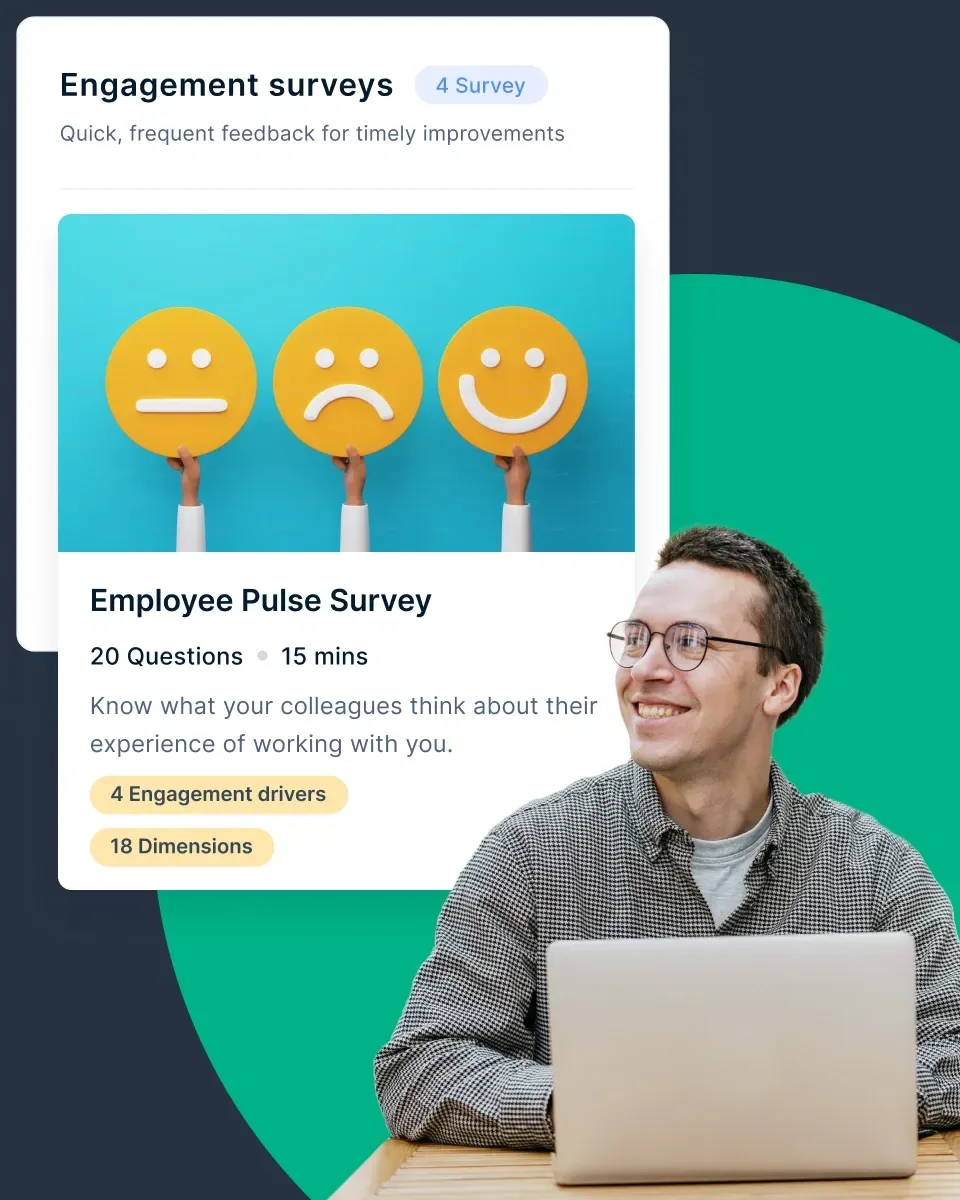
The key is closing the loop: share what you heard and what will change. Here is more on why annual employee surveys fail and what to do instead.
10. Hybrid work settles in as the default
Remote work eroded the shared experience of working alongside colleagues, and many companies have since reopened their offices. Gallup's hybrid work indicator shows that as of August 2026, 54% of remote-capable US employees work hybrid, 25% work fully remote and 21% work on-site, while only 6% would prefer to be fully on-site.
On-site work helps team bonding and culture, while remote work saves long commutes but can bring isolation and fatigue. The best approach for employee experience is to give people a say, test new arrangements for a few months before writing them into policy and avoid forcing everyone into one model, which tends to increase attrition. Tools for remote and hybrid work help keep distributed teams connected.
11. AI in HR comes with new guardrails
AI is now used across HR: hiring, onboarding, training, performance reviews and engagement. It works quickly and improves with each iteration, which helps large organizations with high-volume hiring. For employees, it can make HR processes more transparent, make learning new skills easier and improve communication with management.
Used carefully, AI can also reduce bias by focusing hiring decisions on skills and merit. Used carelessly, it can amplify bias, so regulators are paying attention. The European Union's AI Act treats AI used in recruitment and worker management as high-risk, which means more transparency and human oversight. Explain to employees where AI is used, audit it for bias and keep a human in the loop for decisions about people. This guide to AI in employee engagement covers practical use cases.
12. Managers and career growth get serious investment
AI can handle many analytical problems, but the human element remains the most important factor for employees. Gallup found manager engagement fell from 27% to 22% in a single year, and since managers shape most of their team's daily experience, that drop flows straight through to employees.
Clear two-way communication between leaders and employees matters more than ever in hybrid teams. Collaboration apps such as Slack and Microsoft Teams make it easier for employees to reach leaders directly, and regular appreciation gives people a sense of purpose. Company-wide pulse surveys and one-on-ones between managers and employees help you gauge the quality of the experience. Finally, invest in career paths: steady pay progression, growing responsibilities and lateral moves when a promotion is not available keep people learning and motivated.
Employee experience strategy trends: what to do next
Trends are only useful if they change what you do. The table below turns each group of trends into a practical next step for HR and people leaders, so you can decide where to start.
| Trend group | What employees expect | Your next step |
|---|---|---|
| Mental health and wellbeing | Support that is easy to reach and workloads that are sustainable | Audit workloads, promote your EAP and set after-hours norms |
| Flexibility and hybrid work | A say in when and where they work | Pilot a flexible schedule with one team and measure results |
| AI and the digital workplace | Approved, useful tools with less friction | Publish an AI policy, offer approved tools and add single sign-on |
| Onboarding and personalization | A welcoming start and choices that fit their life | Build a 90-day onboarding plan and flexible benefits |
| Listening and managers | Being heard and supported by their manager | Run quarterly pulse surveys and train managers to act on results |
To prioritize, start with your own data. Look at survey scores, early attrition and exit feedback, then pick the two or three trends that address your biggest gaps. This guide on how to improve employee experience walks through the process step by step, and these employee retention trends show what keeps people from leaving.
The future of employee experience
The future of employee experience revolves around engagement, wellbeing and flexibility. With remote work now familiar, businesses are adopting digital-first tools, AI-powered HR systems and real-time feedback so employees have a voice. Companies will keep prioritizing mental health, work-life balance and inclusive cultures, and they will invest in learning and transparent leadership to build a sense of belonging.
Data-driven approaches will help organizations track engagement and productivity and adapt quickly. The organizations that combine smart technology with genuinely human management will be the ones employees choose and stay with.
- Short term: Fix onboarding, listening and approved AI tools, because these show results within a quarter or two.
- Medium term: Rebuild benefits and schedules around flexibility and personal choice.
- Long term: Develop managers and career paths, which shape employee experience more than any single tool.
Stay ahead of employee experience trends with Empuls
As employee experience trends evolve, you need tools that keep employees engaged, heard and connected. Empuls, Xoxoday's employee engagement platform, brings recognition, pulse and lifecycle surveys with AI sentiment insights, a social intranet, flexible benefits and wellness programs into one place. With Empuls AI and integrations with Slack and Microsoft Teams, you can act on these trends where your employees already work.
Book your Empuls demo
Frequently asked questions
The top employee experience trends for 2026 are mental health support, shorter and flexible workweeks, everyday AI at work, bigger investment in onboarding, personalization, a frictionless digital workplace, flexible benefits, wellbeing built into work design, continuous listening, hybrid work, AI guardrails in HR and stronger investment in managers and career growth.
The future of employee experience is personal, flexible and data-driven. Employees will expect choice in where and when they work, benefits they can tailor, approved AI tools and managers who coach rather than control. Employers will listen continuously, act on feedback quickly and measure experience with the same care they apply to customer experience.
AI is changing employee experience by removing repetitive tasks, personalizing learning and benefits, answering HR questions instantly and surfacing insights from surveys. Gallup reports 30% of US employees used AI frequently in May 2026. The risk is unapproved tool use and bias, so employers need clear policies, approved tools, training and human oversight of decisions.
Yes. A 2025 study in Nature Human Behaviour of 2,896 employees at 141 organizations found four-day weeks with no pay cut reduced burnout and improved job satisfaction and health, and more than 90% of firms kept the schedule. It suits some roles better than others, so many employers use compressed or flexible schedules instead.
Employee experience trends describe changes in how work is designed and delivered, such as tools, schedules, onboarding and benefits. Employee engagement trends describe changes in how companies build commitment, such as recognition, culture and purpose. The two overlap, because a better experience is what raises engagement, but experience trends focus on the system around employees.
HR leaders should start with their own data, including survey scores, early attrition and exit feedback, then choose the two or three trends that address their biggest gaps. Pilot changes with one team, measure the results and scale what works. Training managers is usually the highest-impact step because managers shape most of the daily experience.
Onboarding is growing in importance because new hires are struggling. Qualtrics' 2026 study found new-hire engagement fell 7 points in a year to its lowest level since 2021, and fewer new hires feel they can speak up. A structured first 90 days with a buddy, clear goals and early recognition helps new employees settle and stay.
Continuous listening means collecting employee feedback regularly through short pulse surveys, lifecycle surveys at key moments, open comments and conversations, rather than relying on one annual survey. It lets employers spot problems early and show employees that their input leads to action, which raises trust, engagement and intent to stay.





































































































































































































































































































































































































































































































































































