
Key Takeaways
Healthcare employee engagement is how committed clinical and support staff feel to their organization's mission, and it directly affects patient safety and retention.
US hospital RN turnover rose to 17.6% in 2025, and replacing one bedside RN costs about $60,090, according to the 2026 NSI report.
Gallup's 2024 meta-analysis links top-quartile engagement with 58% fewer patient safety incidents than bottom-quartile units.
Reducing healthcare worker burnout starts with safe staffing, protected breaks, psychological safety and acting visibly on staff feedback.
Recognition, mentorship for new nurses and relevant benefits are among the most effective healthcare staff retention strategies.
Healthcare employee engagement is how committed nurses, physicians, technicians and support staff feel to their organization's mission and to the patients they serve. You improve it by listening and acting on feedback, recognizing everyday effort, protecting staff safety and well-being, developing strong leaders and offering benefits that ease real pressures. These steps also reduce burnout and turnover, which directly affect patient care.
Are your healthcare employees truly motivated and engaged in their roles? For many hospitals and clinics, the honest answer is not enough of them. Turnover remains high, a large share of nurses plan to leave within five years, and burnout is still widespread across clinical and support roles.
This doesn't just affect morale. It affects patient care, retention and financial results. The good news is that with the right strategy and tools, you can improve employee engagement in healthcare and restore purpose, productivity and well-being in your teams. Below are 12 practical ways to do it, plus activities, metrics and a case study. If you also employ teams in research, manufacturing or field sales, see our guide to employee engagement in the pharma industry.
What healthcare employee engagement means
Start by separating employee happiness from employee engagement. Engagement describes how connected employees feel to their workplace. Happy employees may be content, but engaged employees are committed to the organization's mission and values, and that commitment shows up in their work.
Unlike happiness, engagement directly influences team performance. In healthcare, engaged employees make a measurable difference to:
- Patient satisfaction and experience
- Patient safety
- Quality of care
- Staff retention and teamwork
Gallup's Q12 meta-analysis (11th edition, 2024) found that business units in the top quartile of engagement had 58% fewer patient safety incidents, such as mortality and falls, than units in the bottom quartile, along with 78% lower absenteeism.
Why healthcare employee engagement is under pressure
Staffing has improved since the pandemic peak, but the latest data shows turnover rising again and burnout still common. Three numbers frame the problem for hospital leaders.
17.6%
hospital RN turnover in 2025
up 1.2 points (NSI, 2026)
39.9%
of RNs intend to leave or retire
within five years (NCSBN, 2025)
$60,090
average cost to replace
one bedside RN (NSI, 2026)
Turnover, cost and intent-to-leave signals in US healthcare
The 2026 NSI National Health Care Retention and RN Staffing Report, based on 527 hospitals, puts overall hospital turnover at 18.5% and RN turnover at 17.6% for 2025. Each percentage point change in RN turnover costs or saves the average hospital about $295,000 a year. The National Council of State Boards of Nursing's 2024 workforce study found that 39.9% of RNs and 41.3% of LPN/VNs intend to leave the workforce or retire within five years, and about 41.5% of those planning to leave cite stress and burnout.
Physicians are under strain too. The American Medical Association reported that 43.2% of physicians had at least one symptom of burnout in 2024. That is an improvement from 53% in 2022, but still close to half the workforce.
Common challenges in healthcare employee engagement
Healthcare organizations face five recurring engagement challenges. Stress and burnout come first because they make every other challenge harder to solve:
- High stress and burnout: Frontline professionals face long hours, emotionally intense work and unpredictable schedules, which lead to fatigue and burnout.
- High turnover and talent shortages: A lack of appreciation and limited career progression push skilled clinicians to look elsewhere, and every departure adds workload for those who stay.
- Limited feedback and communication loops: In high-pressure environments, staff often feel disconnected from leadership, and feedback is infrequent or goes unheard.
- Fragmented, shift-based teams: Staff working different shifts, units and sites rarely meet, which weakens collaboration and belonging.
- Difficulty measuring engagement: Without clear data, HR teams struggle to track satisfaction, engagement and the impact of their programs.
Recognize your caregivers on every shift
Run peer recognition, pulse surveys and wellness programs that reach clinical and support staff on mobile.
Talk to our ExpertTrusted by 5,000+ companies
12 ways to improve healthcare employee engagement
The 12 ways below run from listening and recognition, which you can start this month, to leadership, succession and culture changes that take longer. Listening to employees (way 1) carries the most weight, because it tells you which of the other 11 your own staff need most.
1. Listen to employees
A major barrier to engagement in healthcare is weak internal communication. When employees feel leadership overlooks their input, engagement and satisfaction drop.
Run regular employee engagement surveys and build an action plan around the feedback. Surveys give leaders crucial insight into employee sentiment and the obstacles affecting performance and satisfaction. By identifying these challenges and sharing what you will change, leadership builds trust. Psychological safety matters here: Press Ganey's Nurse Experience 2025 report found 74% of healthcare workers say mistakes are treated as learning opportunities, down from 77%. People won't speak up if they fear blame.
2. Offer opportunities for recognition
Recognition strongly influences motivation and the likelihood that employees stay. When regular appreciation is missing, employees feel overlooked, and the extraordinary effort of healthcare workers gets treated as just part of the job. A recognition program inspires employees to:
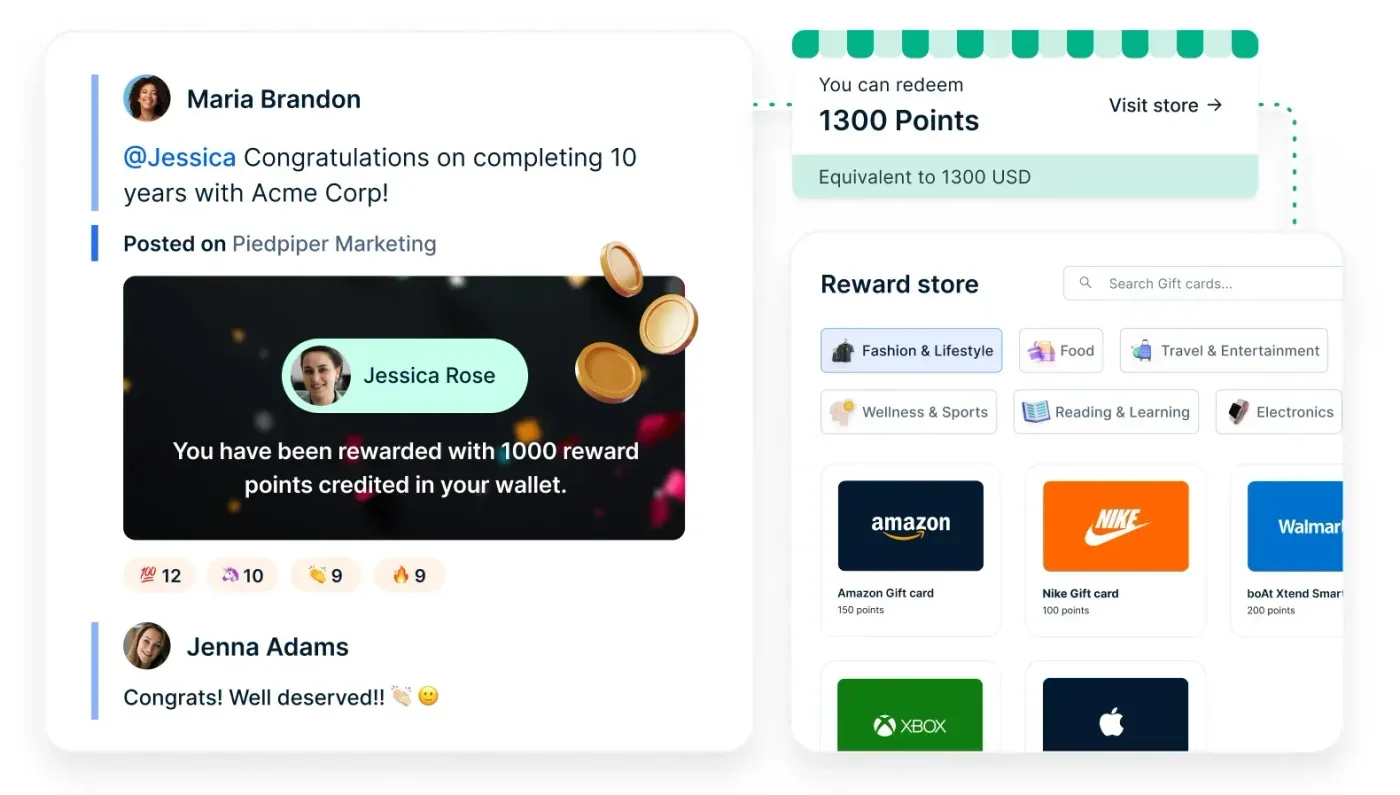
- Thank colleagues for their dedication
- Highlight great actions, such as a catch that prevented a medication error
- Make team members feel valued across shifts and units
An employee engagement platform makes it easy for staff to appreciate and reward each other, including on mobile during a busy shift.
3. Quantify engagement
Every plan to improve engagement should start by measuring where you are. Knowing your current engagement level gives you a baseline to measure change against, and shows you the strong and weak points across units and roles.
Measure regularly, over a long period, so you understand which factors affect job satisfaction in your hospital. Short pulse surveys work better than long annual ones, because conventional surveys can be tedious and cause survey fatigue among time-strapped healthcare workers. Our guide on why annual employee surveys fail explains the alternatives, and the employee engagement index shows how to turn results into one trackable score.
4. Prioritize employee safety and well-being
The first goal of every healthcare leader is to help professionals become excellent caregivers, and that starts with their own physical and psychological safety at work. Health care and social assistance recorded 562,500 injury and illness cases in 2023, more than any other private industry sector, according to the US Bureau of Labor Statistics (December 2024).
If you are asking how to reduce healthcare worker burnout, this is where to start: safe staffing levels, protection from workplace violence, protected breaks, access to counseling and peer support, and schedules that allow real recovery between shifts. The focus has to expand from patient health and safety alone to the well-being of the professionals who provide care. For current approaches, see our guide to employee wellness trends.
5. Connect staff to the patient experience
Healthcare workers give both physical and emotional dedication, and most chose the profession to help patients. Engagement drops when they feel systems, paperwork or understaffing stop them from giving the care they want to give.
Keep patient care quality at the center, including facilities, training, staff skills and efficient processes. Share patient feedback and outcomes with teams, celebrate compliments by name and involve staff in fixing the issues that drag satisfaction down. Monitoring patient satisfaction and the factors behind changes in it helps staff see the impact of their work.
6. Strengthen your leadership team
Effective leaders lift others up. They act as role models and provide encouragement, mentorship, guidance and motivation. When leaders seem disconnected or lack interpersonal skills, the result can be a negative workplace culture.
Leaders should not assume their own experience reflects the floor. Train charge nurses and unit managers in coaching and feedback, give them time to round on staff as well as patients, and hold them accountable for engagement results in their units.
7. Invest in succession planning and backup coverage
Healthcare workers often face high-stress, overworked conditions, and emergencies frequently require overtime. While emergencies are a given in healthcare, leaders can build a robust succession and coverage plan to prevent burnout from extended hours.
Succession planning ensures specific roles and duties are delegated to a designated person or team during an emergency or absence. It also gives ambitious staff a visible path to the next role, which is itself a strong retention lever.
8. Provide meaningful perks and benefits
Beyond salaries and shifts, healthcare employees value benefits that support their lives and well-being. Perks such as earned wage access, flexible benefits, child care support, commuting help for night shifts and wellness allowances relieve financial and emotional stress, which is common in healthcare roles.
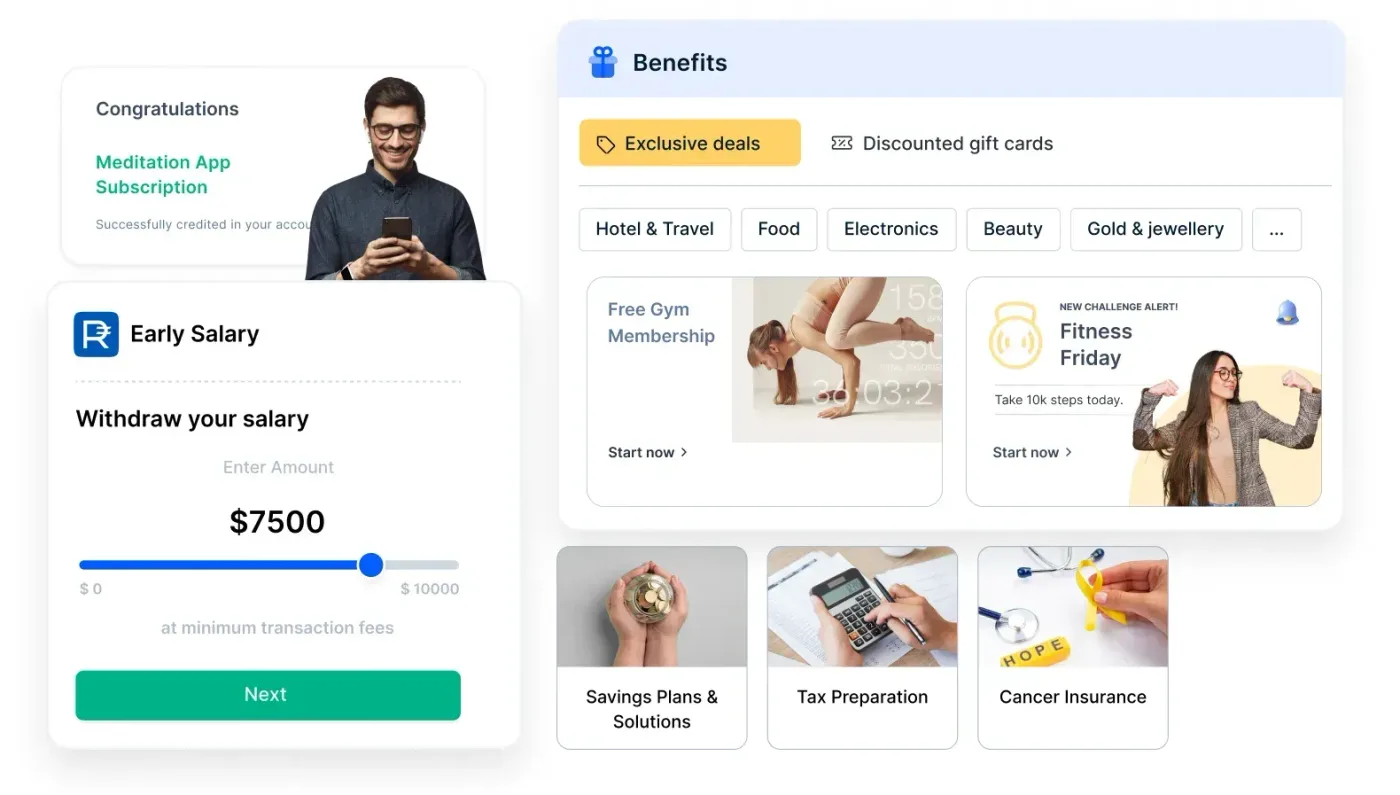
When employees feel supported outside work, they are more likely to stay engaged at work. It is not about lavish benefits, it is about relevant ones. Our guide to types of fringe benefits covers the main options.
9. Foster cross-functional collaboration
In healthcare, collaboration is not just helpful, it is life-saving. When professionals across departments work well together, both employee satisfaction and patient outcomes improve, while silos and communication gaps create friction and disengagement.
Encourage teamwork, knowledge sharing and informal peer connections through shared projects, interdisciplinary huddles, community groups and digital spaces to celebrate wins. Stronger relationships build trust and loyalty across shifts.
10. Run mentorship and peer support programs
Strong support and mentorship lift employee spirits, and they matter most for new graduates. Press Ganey found that 24% of Gen Z registered nurses left their jobs in 2024, so engaging nurses and healthcare staff early in their careers is critical to retention.
Coaching, preceptorship and peer support programs build solid professional bonds. For healthcare professionals dealing with difficult situations, having someone to talk to can make a real difference. If you set up a program, assess it through surveys and one-on-one feedback, and keep improving it based on what participants say.
11. Build a culture of accountability
Accountability is pivotal in healthcare because every role affects patient care and outcomes. In an engaged organization, it means everyone is involved, and medical and administrative staff own their actions, decisions and consequences.
Accountability works best alongside a just culture: people are responsible for their choices, but errors are treated as chances to fix systems rather than to assign blame. That balance keeps standards high without driving people into silence.
12. Reward and recognize winning behaviors
Recognizing the dedicated work of healthcare professionals is essential. Their relentless effort is too often seen as just part of the job, which it shouldn't be. Link rewards to the behaviors you want more of, such as teamwork, patient advocacy, safety catches and mentoring.
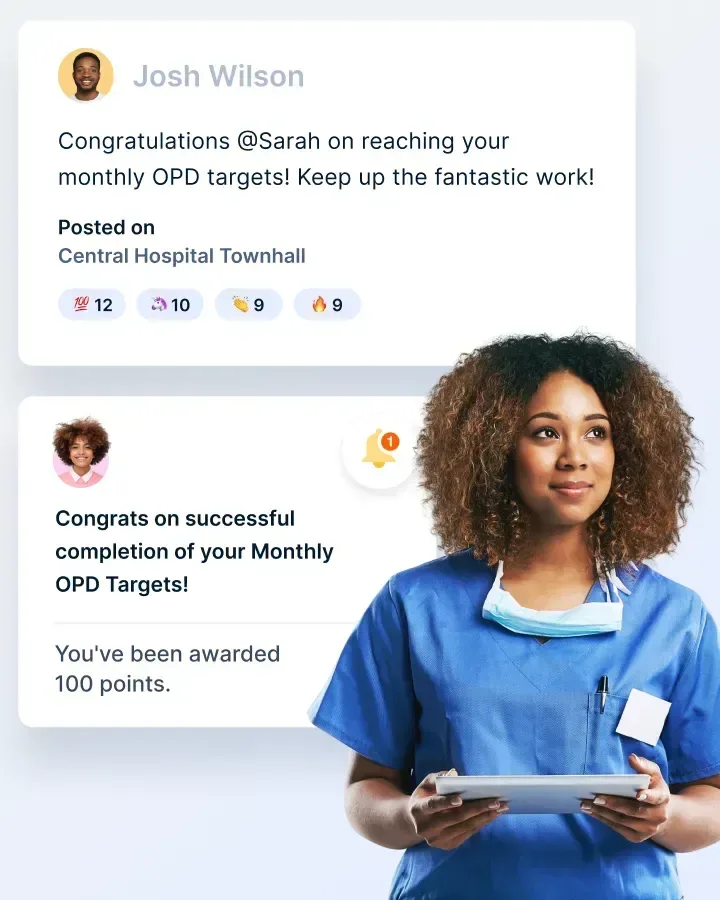
Aster DM Healthcare, for example, faced challenges in motivating its doctors and used Xoxoday's rewards platform to offer a wide range of reward options and track how well the program worked, so recognition was timely, relevant and measurable. A well-run reward and recognition program has a strong effect on engagement and performance in healthcare.
Healthcare staff retention strategies at a glance
Most burnout and turnover in healthcare traces back to a handful of drivers. Use this table to match each driver to the engagement fix and the metric that shows whether it is working:
| Burnout or turnover driver | Engagement fix | Metric to track |
|---|---|---|
| Workload and short staffing | Backup coverage, succession plans, protected breaks | Overtime hours, vacancy rate, RN turnover |
| Feeling unheard | Pulse surveys with visible action plans | Survey participation, eNPS, action plans closed |
| Feeling unappreciated | Peer and manager recognition across shifts | Share of staff recognized each month |
| Few growth paths | Mentorship, preceptorship, clear career ladders | Internal moves, first-year turnover |
| Financial stress | Earned wage access, flexible benefits, wellness allowances | Benefit uptake, voluntary exits citing pay |
| Low psychological safety | Just culture, leader rounding, safety recognition | Safety reports, psychological safety scores |
For a broader view of retention beyond healthcare, read our guide to employee retention strategies.
Employee engagement activities in the healthcare sector
Activities make the strategies above tangible for busy teams. These five are simple to run and fit around shift work:
- Spotlight everyday healthcare champions: Recognize the nurse who handled a difficult case or the technician who covered an extra shift, on a shared feed or at the start of a huddle, so small wins get seen across the hospital.
- Launch wellness campaigns to tackle stress: Weekly step challenges, hydration goals, mindfulness sessions or virtual yoga support physical and mental well-being, especially when they include night-shift times.
- Give staff a voice that drives change: Run short structured feedback programs, then share what changed as a result, so staff see that speaking up is worth it.
- Celebrate milestones that matter: Mark one year on the job, a new qualification or the end of a tough rotation, so people feel seen through their whole journey.
- Create digital communities for support and sharing: Give employees a space to share, connect and support each other with colleagues who understand the work, beyond the shift schedule.
How Empuls supports healthcare employee engagement
Empuls, Xoxoday's employee engagement platform, helps hospitals and healthcare enterprises put these strategies into daily practice for clinical and non-clinical staff:
- Recognition on every shift: Peer and manager recognition from mobile, with automated service awards and milestone rewards so no anniversary is missed.
- Continuous listening: Pulse, lifecycle and eNPS surveys with AI sentiment analysis that turns open comments into action plans by unit or site.
- Well-being and benefits: Wellness challenges and flexible benefits that support caregivers outside work.
- Connection across shifts: A social intranet for updates, celebrations and community groups that reaches staff who rarely sit at a desk.
According to an Empuls case study, a global digital healthcare enterprise with 1,200 to 1,500 employees replaced a manual, email-based awards process with Empuls, integrated recognition with Zoho People and Slack and automated jury-based awards. The result was a 5x rise in award distribution, a 2x increase in engagement and 97% active adoption across its global workforce.
Making healthcare employee engagement a priority
Improving employee engagement in healthcare is no longer optional. In an industry where stress runs high and burnout is common, keeping your workforce motivated, connected and appreciated directly affects both employee well-being and patient outcomes.
Start small with simple, high-impact steps, like celebrating milestones, running short pulse surveys and introducing peer recognition. Then build toward the longer-term work of leadership development, safe staffing and career paths. Investing in healthcare employee engagement pays off in lower turnover, higher productivity and better care.
Book your Empuls demo
Frequently asked questions
Healthcare employee engagement is the level of commitment and connection that nurses, physicians, technicians and support staff feel toward their organization's mission and their patients. Engaged healthcare employees go beyond the minimum, work well in teams and stay longer, which improves patient safety, patient experience and quality of care while lowering turnover costs.
Reduce healthcare worker burnout by fixing workload first: safe staffing, backup coverage and protected breaks. Then add psychological safety, regular recognition, access to counseling and peer support, and schedules that allow real recovery. Listening through short pulse surveys and acting visibly on the results shows staff that leaders take their wellbeing seriously.
Employee engagement is important in healthcare because engaged staff deliver safer, higher-quality care and are less likely to leave. Gallup research links high engagement with fewer patient safety incidents and lower absenteeism, while every nurse who leaves costs a hospital tens of thousands of dollars and adds workload for the colleagues who stay.
Hospitals engage nurses and healthcare staff by recognizing their work often and specifically, involving them in decisions about their units, offering mentorship and clear career paths, and supporting their wellbeing with relevant benefits. Strong unit managers who round on staff, share feedback and act on concerns make the biggest day-to-day difference.
The best healthcare staff retention strategies combine safe staffing, competitive pay, flexible scheduling, recognition, mentorship for new hires and visible career ladders. Track turnover by unit, first-year attrition and engagement scores together, so you can spot units at risk early and focus leadership attention where it will prevent the most departures.





































































































































































































































































































































































































































































































































































