
Key Takeaways
The iceberg model of culture splits culture into a small visible layer, such as perks and dress code, and a much larger hidden layer of values, beliefs and assumptions.
The cultural iceberg idea is commonly traced to Edward T. Hall's 1976 book Beyond Culture and maps closely to Edgar Schein's three levels: artifacts, espoused values and basic assumptions.
Culture change that only touches the surface rarely lasts, because behavior is driven by the assumptions below the waterline.
Who gets recognized and why is one of the clearest surface signals of an organization's real values.
Use the model as a diagnostic: list visible elements, surface hidden beliefs, find the gaps and change the systems that teach assumptions.
The iceberg model of culture says that the parts of a culture you can see, such as perks, dress code, office design and language, are only the tip. Most of what drives behavior sits below the waterline: values, beliefs, attitudes toward authority and unspoken assumptions. For organizations, the model is a simple way to diagnose why visible changes often fail to shift how people actually work.
When you see an iceberg, the portion above water is only a small part of a larger whole. Think of organizational culture the same way. People often judge a company by the characteristics they can see: perks, benefits, dress code, office environment, amenities, location and people. In reality, these are the outward signs of deeper components of culture, the ideas, priorities and preferences we call values and attitudes.
Deep below the waterline lies a much larger, invisible mass that holds every ingrained assumption, the things that are hardest to change. These are mostly learned ideas of what is good, bad, right, wrong, desirable, acceptable and unacceptable. They become visible only through the way people act, the words they use, the rules they make and how they communicate.
What is the iceberg model of culture
The iceberg model of culture is a framework that splits culture into a small visible layer (surface culture) and a much larger hidden layer (deep culture). It helps you assess how well your organization's real values align with its goals and trace performance problems back to their root causes.
The cultural iceberg model is commonly attributed to anthropologist Edward T. Hall, whose 1976 book Beyond Culture described how most of a culture's rules operate out of conscious awareness. Hall was writing about national and societal cultures, not companies. Management thinkers later adapted the idea to the workplace, and the organizational culture iceberg is now one of the most widely used ways to explain why culture change is hard.
Organizational culture itself is the set of beliefs and values that drive what people do and how they do it. It is the implicit norm that defines which behaviors are accepted, rejected, encouraged or discouraged. For a full definition and the main types, see our guide to what organizational culture is.
| Surface culture (above the waterline) | Deep culture (below the waterline) | |
|---|---|---|
| Examples | Perks and benefits, dress code, technology, language, rewards and recognition, office design, rituals | Attitudes to authority, wellbeing philosophy, purpose, communication norms, engagement, learning, collaboration, underlying assumptions |
| Visibility | Easy for outsiders and new hires to see | Felt by insiders, rarely written down |
| How it changes | Quickly, through policy or budget decisions | Slowly, through consistent leadership behavior over time |
| What it tells you | What the organization says and shows | What the organization actually believes and rewards |
How the iceberg model compares with Schein's three levels of culture
The iceberg model of organizational culture closely mirrors the three-level model from MIT organizational psychologist Edgar Schein, which many HR teams use alongside it. Schein's version is useful because it splits the hidden part of the iceberg in two, separating what people say they value from what they truly assume.
| Schein's level | Where it sits on the iceberg | Workplace examples |
|---|---|---|
| Artifacts | Above the waterline | Office layout, dress code, tools, logos, ceremonies, how meetings run |
| Espoused values | At the waterline | Published values, mission statement, stated strategy and policies |
| Basic underlying assumptions | Deep below the waterline | Unspoken beliefs about trust, hierarchy, risk and what really gets rewarded |
The practical lesson from both models is the same: culture change that targets only artifacts or espoused values rarely sticks unless it also reaches the assumptions underneath.
Surface culture: what people see
Surface culture is the part of culture an outsider notices first, and it gives people shortcuts for working out how things get done. The five elements below are ordered from the most commonly noticed to the most revealing, and rewards and recognition matters most because who gets rewarded is a direct statement of what you truly value.
1. Perks and benefits
Do you promote work-life balance and flexible hours? Do you encourage employees to look after their wellbeing? Most successful organizations strive to create a culture where employees feel supported in all aspects of their life, and perks and benefits play a big role. Remote and hybrid options, team retreats and flexible work arrangements all shape behavior and engagement.
2. Dress and appearance
Does your workforce come in formal wear, jeans and t-shirts or uniforms? How do you expect employees to appear? Dress style has a big effect on how culture is perceived. Formal dress codes have been fading for a couple of decades, and most companies now let employees dress casually and feel comfortable in their own shoes, pun intended.
3. Technology
Are your tools aligned with company goals? Do you use technology to reinforce culture? The technology an organization uses can make it look modern and agile or old-fashioned and rigid. Technology alone cannot create or change culture, but it is an essential tool for reinforcing it, because it reflects and shapes values and keeps the organization relevant for the future workforce.
4. Language
What cues do you use to communicate about your organization, and what tone do you use? Language gives culture away through manner of speaking (polite or blunt), behavior (formal or casual), delivery (direct or indirect) and choice of words. How you communicate shapes how your culture comes across, so choose words, tone and channels with care.
5. Rewards and recognition
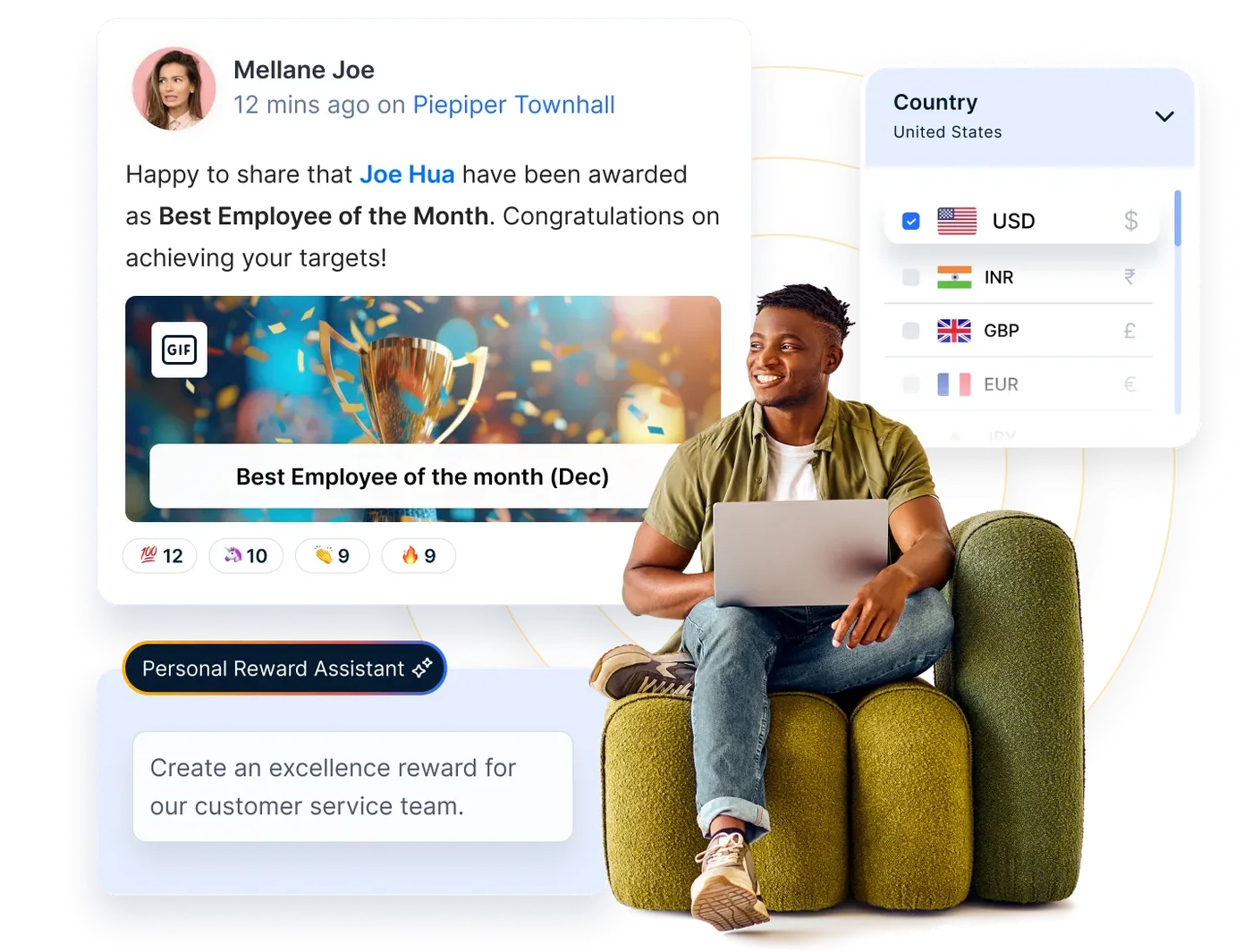
Rewards and recognition have an immense impact on employee experience and culture. Who gets rewarded or recognized, and why, is an unmistakable statement of an organization's actual values. Recognition also shows people that their work is meaningful, helping them find focus and purpose in daily tasks and lifting motivation.
Recent research shows how much quality matters. A 2024 Workhuman and Gallup study that tracked more than 3,400 employees found those who received high-quality recognition in 2022 were 45% less likely to have left their job by 2024. Yet 55% of US employees receive no recognition or recognition that meets none of the study's quality criteria.
45%
less likely to leave
after high-quality recognition
55%
of US employees
get no or low-quality recognition
3,400+
employees tracked
2022 to 2024
Source: Workhuman and Gallup, 2024.
We all simplify complex information and generalize from what we see and hear. Surface culture gives outsiders those shortcuts. What we see on the surface, though, reflects what the organization is built on deep down: values, beliefs and assumptions that drive behavior.
See what sits below your culture's waterline
Pair values-based recognition with pulse surveys and eNPS to read both layers of your culture.
Talk to our ExpertTrusted by 5,000+ companies
Deep culture: the hidden aspects of company culture
Deep culture is where the real drivers of behavior live, and it is the part leaders most often overlook. The seven elements below are the hidden aspects of company culture that matter most in practice, starting with authority because who gets to decide shapes every other element on the list.
1. Authority
Do employees feel they have the right level of decision-making authority? Do they feel heard in decisions that affect them? Successful organizations involve employees in decision-making and stay open to their opinions and feedback. People feel valued when their views are heard and when they take part in discussions that shape the organization's growth, which leads to higher job satisfaction.
2. Health and wellbeing
What is your organization's philosophy about health and wellbeing, and do you support employees' healthier choices? Organizations increasingly recognize that physical, emotional, mental and financial wellbeing all shape engagement and culture. Healthy, supported employees are more productive and less likely to burn out or leave.
Simply having a program won't improve wellbeing by itself. It has to be part of the culture, for example when managers model taking time off, and its impact must be reviewed regularly. Our roundup of employee wellness trends for 2026 shows where leading HR teams are investing.
3. Purpose and meaning
Do employees understand your vision and mission, and do they know how their roles contribute to something larger? Purpose has become a bigger part of the culture iceberg as millennials and Gen Z have grown into the largest share of the workforce. When employees know why they do what they do, it drives engagement, motivation and business results.
4. Communication
Do you communicate frequently and consistently with your teams? How transparent are you, and do you listen enough? An organization with open, transparent and constructive communication builds healthy working relationships with fewer conflicts. Healthy communication opens channels between employees and management for a real exchange of ideas, suggestions and feedback.
5. Employee engagement
Do you value your workforce as key contributors to success? Do you understand the pulse of your employees? A positive and open culture builds trust and loyalty, which drives passion and dedication. When organizations seek employee feedback and communicate openly about difficult news, such as restructuring or pay changes, it reassures employees and lifts engagement.
Employees feel engaged when they are invested in the company's future, find purpose in their jobs and have strong relationships with coworkers. Engagement sits below the waterline because it is felt, not seen. Our explainer on culture vs engagement covers how the two differ and how to measure each.
6. Learning and development
Do you give employees enough learning and growth opportunities, and do they get challenging new projects? Prioritizing learning promotes innovative thinking and creativity and improves the agility a business needs in a fast-changing environment. In the same 2024 Workhuman and Gallup study, employees who strongly agree their organization encourages them to learn new skills were 8.4 times as likely to see a path to grow there.
7. Collaboration and teamwork
Do you encourage cross-functional work, with clear ownership? A culture of teamwork assumes that planning, thinking and decisions are better when done together. Making collaboration part of the culture needs buy-in from everyone, a plan that sets out ownership and ways of working together, and regular recognition of teamwork.
These are only some of the aspects that form organizational culture. Understanding and improving each of them can be vital to long-term success.
How to use the iceberg model of culture in your organization
The model is most useful as a diagnostic tool, not a poster. The five steps below move from the surface down, because visible evidence is the easiest place to start and the gaps you find there point you to the assumptions that need work.
- List what sits above the waterline: Write down your perks, policies, rituals, tools and recognition patterns. Include what new hires notice in their first month.
- Surface the hidden layer: Use anonymous surveys, focus groups and exit interviews to ask how decisions really get made, what gets people promoted and what behavior is quietly tolerated.
- Find the gaps: Compare stated values with lived behavior. The biggest gap is usually where your culture problems start, for example a stated value of collaboration alongside individual-only bonuses.
- Change the systems that teach assumptions: Adjust hiring criteria, promotion decisions, recognition and leadership behavior so they reward the beliefs you want. Changing a perk without changing these rarely moves the deeper layer.
- Track progress over time: Re-run the same questions every quarter and watch both surface signals and deeper sentiment. Deep culture moves slowly, so look for trends over months, not weeks.
Use the worksheet below during steps 1 to 3. Each row pairs an element of the iceberg with the red flag that most often shows a gap between what you say and what you do, so you can spot where to dig first.
| Element | Layer | Red flag that signals a gap |
|---|---|---|
| Perks and benefits | Surface | Perks with low usage, or perks leaders never use themselves |
| Dress and appearance | Surface | A stated value of trust alongside a detailed dress policy |
| Technology | Surface | Recognition or feedback takes many clicks and an approval chain |
| Language | Surface | Company messages talk about targets far more than people |
| Rewards and recognition | Surface | Awards that are not tied to any stated value |
| Authority | Deep | The most senior person makes every recent decision |
| Health and wellbeing | Deep | Late-night messages get praised |
| Purpose and meaning | Deep | Employees cannot link their work to the mission |
| Communication | Deep | Feedback is collected but nobody hears what changed |
| Employee engagement | Deep | One annual survey and no visible follow-up |
| Learning and development | Deep | Recognition only for results, never for learning |
| Collaboration and teamwork | Deep | Incentives reward individual wins only |
For a full program of fixes, see our guide on how to improve organizational culture.
How Empuls helps strengthen culture above and below the surface
The iceberg model shows that a great culture is not only about visible perks; it also means nurturing the values and beliefs that drive behavior. Empuls, Xoxoday's employee engagement platform, helps HR leaders work on both layers.
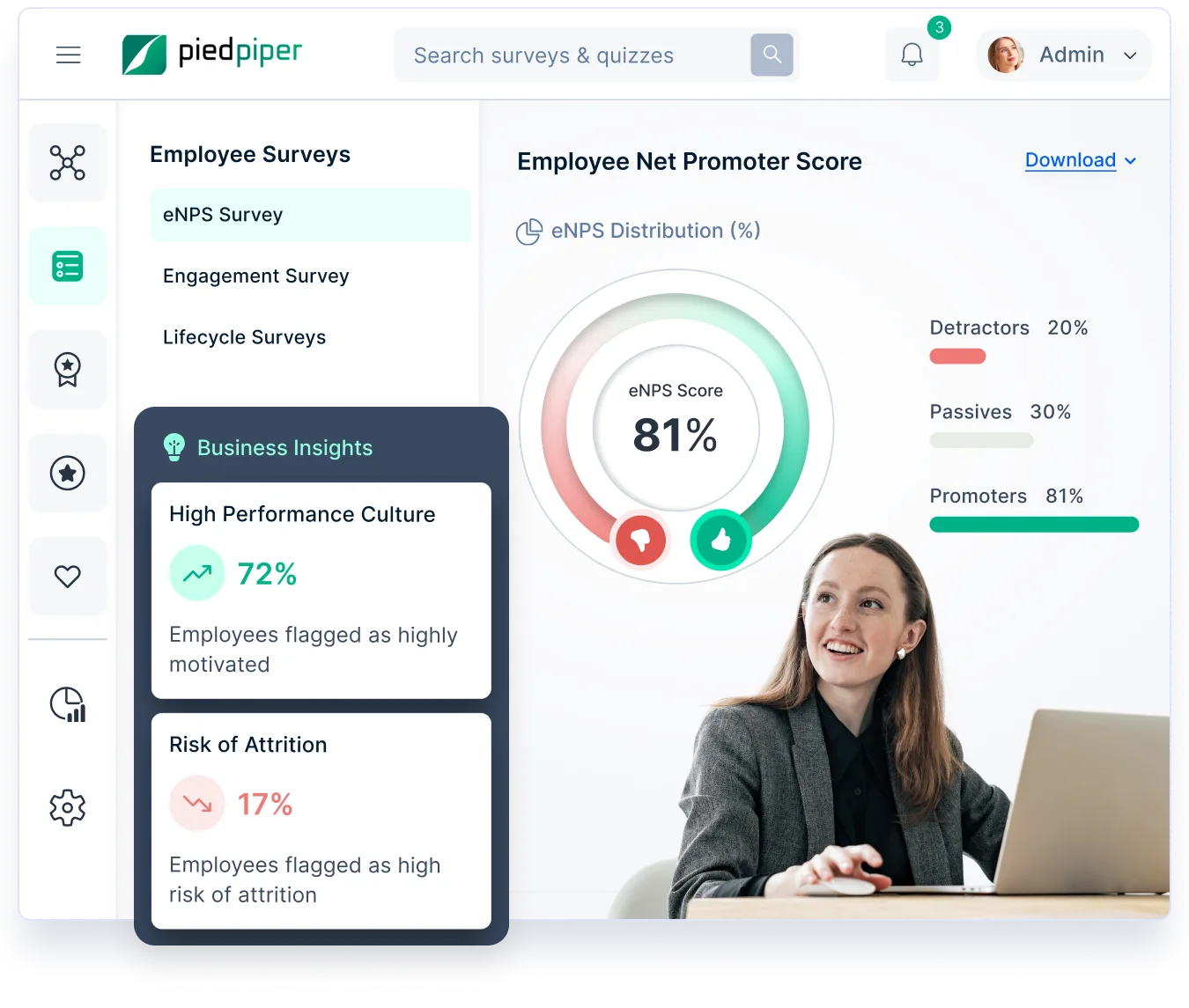
- Reinforce surface culture: Deliver recognition, flexible benefits, celebrations and wellness programs employees can see and feel every day.
- Make values visible: Tag every award to a company value and showcase values in action on the Wall of Fame. See culture and values in Empuls.
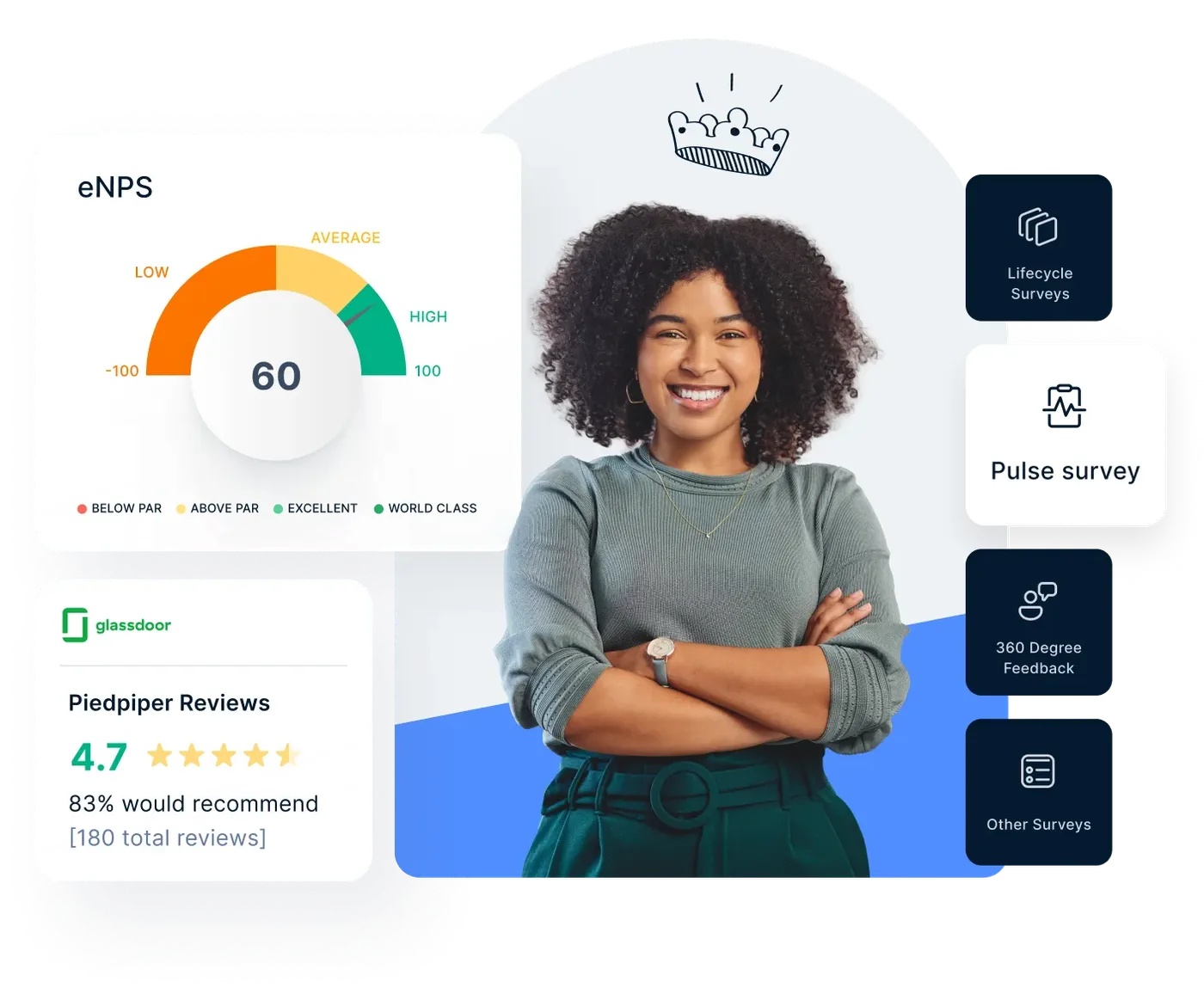
- Read the deeper layer: Surveys, eNPS and the Mood-o-Meter capture how people feel, while Action Plans turn findings into owned, time-bound changes.
- Design culture with data: Reports and analytics show recognition frequency, participation and sentiment trends, so you manage culture by design, not by default.
Final thoughts
Understanding the iceberg theory of culture helps you get to the root causes of problems and change behavior at scale. Culture has an immense impact on engagement, productivity, performance and employee experience. Only a small part of it shows above the surface, but the deeper values and beliefs are what move the organization forward.
Leadership behavior, beliefs and actions play the biggest role in shaping culture and carrying strategy through. When strategy, culture and leadership are in sync, you see organizations where:
- Employees understand how leadership expects them to respond in a given situation.
- Employees genuinely believe the expected response is the right one.
- Employees are confident they will be appreciated for living the organization's values.
Book your Empuls demo
Frequently asked questions
The iceberg model of culture is commonly attributed to anthropologist Edward T. Hall, whose 1976 book Beyond Culture explained that most cultural rules operate below conscious awareness. Hall focused on national and societal cultures. Management writers later adapted the idea to organizations, and it is often used alongside Edgar Schein's three levels of organizational culture.
Surface culture includes the things anyone can see, such as perks and benefits, dress code, office design, technology, language and who receives recognition. Deep culture includes the hidden drivers behind them, such as attitudes toward authority, beliefs about wellbeing, sense of purpose, communication norms, approach to learning and assumptions about collaboration versus competition.
It explains why visible changes, such as new perks or a refreshed values poster, often fail to change behavior. By separating what people see from what they believe, the model helps HR teams diagnose the real cause of problems like low engagement or high turnover and focus effort on the systems that shape underlying assumptions.
The two are closely related. The cultural iceberg model uses two layers, visible and hidden. Edgar Schein's model uses three levels: visible artifacts, espoused values such as the published mission, and basic underlying assumptions. Schein's version is more precise because it separates what an organization says it values from what people actually take for granted.
Ask questions that reveal how things really work, not how they are supposed to work. Anonymous surveys, focus groups, exit interviews and a review of who gets hired, promoted and recognized all surface hidden beliefs. Comparing those findings with your stated values shows where the gaps are and where culture work should start.





































































































































































































































































































































































































































































































































































