
Key Takeaways
HR finds, pays, develops, protects and engages the people a business needs, across the whole employee lifecycle from hiring to exit.
The nine core functions of HR are talent acquisition, onboarding, compensation and benefits, learning, performance, employee relations, compliance, engagement and workforce planning.
Modern HR plays three roles at once: administrator, employee champion and strategic partner to leadership.
Common myths paint HR as rule enforcers, but the best HR teams build psychological safety, community, growth and care into everyday work.
HR responsibilities grow with company size, so fix hiring, onboarding and fair pay first, then add engagement programs and people analytics.
What does HR do? HR finds, pays, develops, protects and engages the people a business needs to succeed. In practice that means recruiting and onboarding, compensation and benefits, learning and development, performance management, employee relations, compliance, engagement and workforce planning, with a growing role in data and AI.
Human resources (HR) is the business function responsible for the employee lifecycle, from hiring to exit, and for the policies, culture and systems that help people do their best work. The future of work may be changing, but human connection is here to stay. Whether people work from the office, from home or across time zones, someone has to make them want to show up, thrive and grow. That is HR's job.
Yet HR is still one of the most misunderstood teams in any company. This guide explains the role of HR, the main HR responsibilities and roles, the myths that hold the function back and how the job is changing, with a checklist of HR responsibilities by company size you can use to plan your own team.
What is human resources
Human resources is both a department and a discipline. The department is the team that runs people processes; the discipline is the practice of managing people so that both the business and its employees succeed. Economics deals with the unpredictability of human nature and so does HR, which is why the best HR teams combine process, data and judgment.
Modern HR plays three roles at once:
- Administrator: Runs payroll inputs, records, policies and compliance accurately and on time.
- Employee champion: Represents employees' needs, handles concerns fairly and builds a culture where people feel heard and valued.
- Strategic partner: Works with leaders to plan the workforce, build skills and design the organization the business strategy needs.
Most HR teams start with the first role and grow into the third. For a deeper look at HR's strategic side, see our guide to the role of HR in employee engagement.
Functions of the HR department
The functions of the HR department cover the whole employee lifecycle. There are nine core HR responsibilities, and talent acquisition usually comes first because every other function depends on hiring the right people.
| HR function | What it covers | Example activities |
|---|---|---|
| Talent acquisition | Finding and hiring the right people | Job descriptions, sourcing, interviews, offers, employer brand |
| Onboarding | Helping new hires become productive and connected | Paperwork, orientation, buddy programs, 30-60-90 day plans |
| Compensation and benefits | Paying people fairly and offering benefits they value | Pay bands, payroll inputs, health and retirement plans, perks |
| Learning and development | Building the skills the business needs | Training, leadership programs, career paths, upskilling |
| Performance management | Setting goals and helping people improve | Goal setting, check-ins, reviews, feedback, promotions |
| Employee relations | Keeping the workplace fair and safe | Handling grievances, investigations, discipline, mediation |
| Compliance and policy | Following employment law and keeping data safe | Handbooks, labor law, health and safety, privacy, audits |
| Engagement and culture | Helping people feel motivated and connected | Surveys, recognition, internal communication, wellbeing |
| Workforce planning and analytics | Planning the workforce and measuring what works | Headcount plans, succession, attrition analysis, HR metrics |
In small companies one person may handle all nine. In larger ones each becomes a specialist team, and HR technology connects them so employees get one consistent experience.
Key HR roles and what they do
HR teams are built from a mix of generalists and specialists. The six roles below are the most common, and the HR business partner is the one that links HR most directly to business strategy.
| Role | Main responsibilities |
|---|---|
| HR generalist | Handles day-to-day HR across several functions, common in small and mid-size companies |
| HR business partner | Works with one business unit's leaders on workforce planning, talent and organization design |
| Talent acquisition specialist | Sources, screens and hires candidates and manages the hiring process |
| Compensation and benefits specialist | Designs pay structures, runs benefits programs and checks pay equity |
| Learning and development manager | Plans training, leadership development and career programs |
| Chief human resources officer (CHRO) | Leads the people strategy and advises the CEO and board on talent, culture and change |
HR is also a growing career. The US Bureau of Labor Statistics reports that human resources managers earned a median of $149,280 a year in May 2025, and it projects 6% employment growth from 2025 to 2035, faster than the average for all occupations. BLS lists their duties as planning the workforce, linking management and employees, overseeing benefits, advising managers and handling hiring and staffing issues.
Spend less time on admin and more time with people
See how Empuls brings surveys, recognition, community and benefits into one platform for HR.
Talk to our ExpertTrusted by 5,000+ companies
What does HR do: debunking the myths
For a team that specializes in job descriptions, HR's own job description is surprisingly vague, which is why so many myths stick to it. Here are six common ones, each with a real example of what HR actually does, and the first myth matters most because it shapes whether employees trust HR at all.
Myth 1: HR just raises tickets
What people think HR does: Process requests and forms. What HR actually does: Raises the game by making sure employees' voices shape decisions.
FedEx has long run on a People-Service-Profit philosophy: take care of employees, they will deliver great service and profit follows. HR teams that live this idea use surveys and feedback programs not as box-ticking but as a way to find out what employees need and change policies in response. Those forms everyone fills in serve a bigger goal: building a workplace that reflects what people actually care about.
Myth 2: HR builds walls and ceilings
What people think HR does: Enforces rules that hold people back. What HR actually does: Builds a second home where people feel cared for.
The Cadbury brothers were pioneers in employee welfare. In 1879 they moved their factory out of crowded Birmingham to the countryside and later built the Bournville village for workers, with green space, sports facilities and housing that were radical for the time. More than a century later, the idea that work can feel like a community still inspires human-first HR leaders.
Myth 3: HR plays mind games
What people think HR does: Plays politics and keeps secrets. What HR actually does: Builds psychological safety so people can take smart risks and speak up.
When people know they will not be punished for an honest mistake or a new idea, they try more and learn faster. HR builds that safety by removing needless red tape, training managers to respond well to bad news and recognizing people publicly for the effort behind good work, not only the results. Public recognition of ability often does more for morale than a one-off bonus.
Myth 4: HR reins people in
What people think HR does: Controls how people behave. What HR actually does: Helps people bring their real selves to work.
Hyatt describes its purpose as caring for people so they can be their best, and applies it to its own colleagues as well as guests, on the view that people who feel cared for pass that care on. In a similar spirit, Southwest Airlines asked an employee design team from several departments to help create the uniforms it introduced in 2017. Instead of reining people in, HR gives them a voice and lets them shine.
Myth 5: HR only hires
What people think HR does: Fills open roles. What HR actually does: Takes people higher through growth, purpose and community.
Cisco's Time2Give program gives employees paid days off to volunteer for causes they care about, connecting people over something bigger than a business target. Programs like this, along with learning, mentoring and internal mobility, are how HR helps people grow beyond their job description.
Myth 6: HR polices people
What people think HR does: Watches over employees to catch mistakes. What HR actually does: Watches over them like a guardian when life gets hard.
HR often does its most important work quietly: arranging leave and flexible work after an accident or illness, helping a new parent return to work or connecting someone to mental health support. In these unplanned moments HR shows its best face, keeping both the employee's interests and the organization's in view. Our guide to employee wellbeing programs covers how to build this support into everyday benefits.
How the role of HR is changing
HR has moved from personnel administration to people strategy, and the pace is speeding up. Four shifts define the modern role of HR, and the move to data and AI is the one changing day-to-day work fastest.
- From admin to advisor: Automation handles more routine transactions, so HR spends more time advising leaders on talent and organization design.
- From annual to continuous: Yearly reviews and surveys are giving way to regular check-ins, pulse surveys and real-time recognition.
- From instinct to data: People analytics helps HR predict attrition, spot engagement problems and show the return on programs.
- From tools to AI: AI now drafts job descriptions, answers policy questions and summarizes feedback, which means HR must also set rules for using it fairly.
The AI shift is already here. Gallup's AI indicator found that 52% of US employees used AI at work at least a few times a year in 2026, yet only 25% said their organization had communicated a clear AI plan. Closing that gap, with training, policy and fair use, is quickly becoming an HR responsibility.
These shifts bring new pressures too. Our guide to the biggest HR challenges explains how HR teams are handling them.
Every team needs a touch of HR
If you think HR is a single department in one corner of the office, think again. For every great result from sales, IT or product, someone in HR has usually cleared obstacles out of the way, often without anyone noticing. Five everyday situations show how HR supports the rest of the business:
- The product manager: Needs fresh thinking, so HR builds cross-team programs and training that spark new ideas.
- The supervisor: Wants to reward a quiet, consistent performer, so HR provides a fair recognition program.
- The sales leader: Needs a team to hit its stride, so HR offers coaching, incentives and clear goals.
- The operations leader: Wants more time with teams, so HR streamlines processes and removes admin.
- The executive: Wants to shape culture from the ground up, so HR creates forums where leaders meet employees at every level.
When people are stuck, their go-to move is usually the same: call HR. That is why there is a little bit of HR in every manager and every leader.
HR responsibilities checklist by company size
What HR does changes as a company grows. Use this checklist to see which HR responsibilities you should have in place at your stage and which to plan for next.
| HR responsibility | Startup (under 50 people) | Growing (50 to 500) | Enterprise (500+) |
|---|---|---|---|
| Hiring | Founder-led hiring with a simple process | Recruiters and structured interviews | Talent acquisition team and employer brand |
| Onboarding | Checklist and buddy | Standard 30-60-90 day plan | Automated onboarding journeys by role |
| Pay and benefits | Market-based pay and core benefits | Pay bands and flexible benefits | Total rewards strategy and pay equity audits |
| Performance | Regular one-on-ones and goals | Quarterly check-ins and annual reviews | Continuous performance management and calibration |
| Engagement | Team rituals and peer recognition | Pulse surveys and a recognition program | Continuous listening, analytics and action plans |
| Compliance | Contracts, payroll and basic policies | Handbook, training and HR system | Multi-country compliance, audits and AI governance |
| Learning | On-the-job learning | Manager training and learning budgets | Leadership pipeline and skills strategy |
| People data | Headcount and turnover tracking | Engagement and attrition dashboards | Predictive people analytics |
How Empuls helps modern HR teams
Empuls helps HR leave outdated perceptions behind by making listening, recognition, community and benefits part of everyday work. It answers each of the myths above with a practical tool.
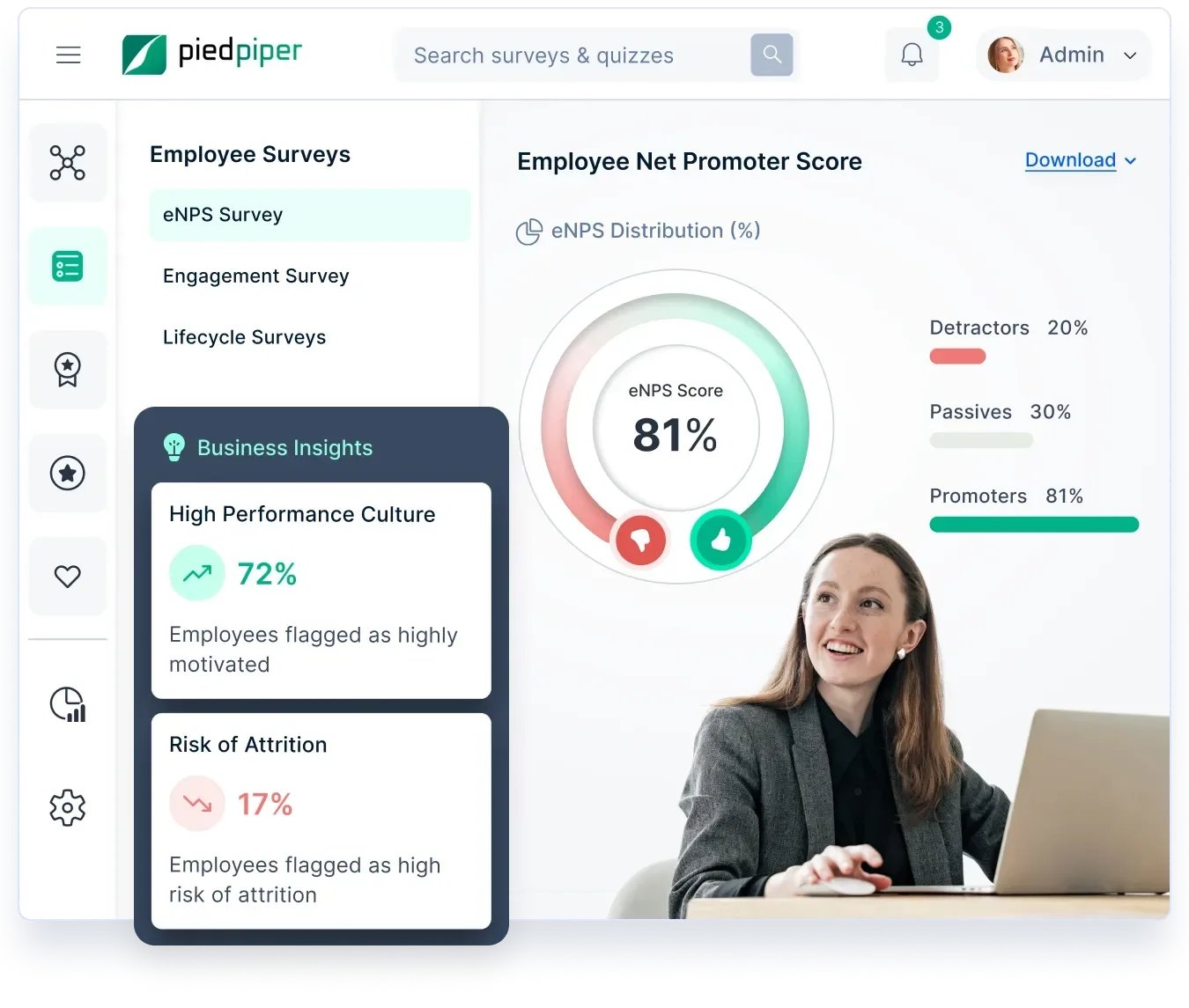
- Listening that leads to action: eNPS, pulse and lifecycle surveys capture feedback at every stage of the employee journey, and AI groups comments into themes so HR can act early.
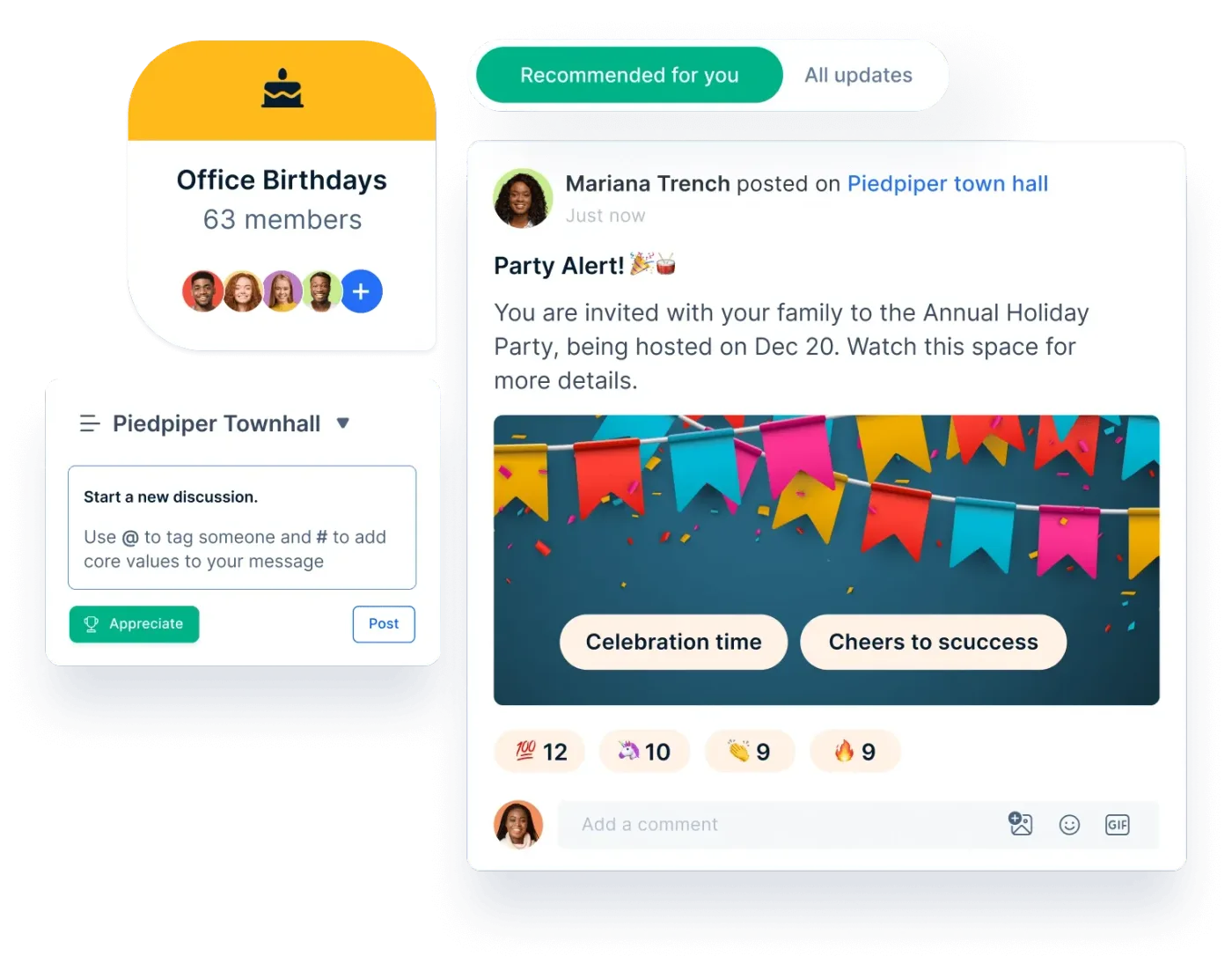
- A digital second home: The social intranet brings news, groups, celebrations and wishboards into one feed, so remote and office employees feel part of one community.
- Recognition that lets people shine: Peer, manager and values-based recognition with rewards, plus milestone rewards for anniversaries, learning and wellness achievements.
- Care for every life stage: Benefits such as flexible wallets, tax-saving benefits and discounts, alongside wellness programs and challenges.
Empuls also includes an AI copilot, Em, that recommends who to recognize and generates reports on demand, so HR spends less time on admin and more time with people. HR is not just a function; with the right tools it becomes a multiplier of culture, performance and belonging.
Book your Empuls demo
Frequently asked questions
On a typical day, HR answers employee questions about pay, leave and benefits, interviews candidates, onboards new hires, advises managers on performance or conduct issues, updates records and policies and works on longer projects such as surveys, training programs or workforce plans. The mix depends on company size and whether the person is a generalist or a specialist.
Seven functions most lists include are recruitment and selection, onboarding and training, compensation and benefits, performance management, employee relations, compliance and health and safety, and HR planning and analytics. Many modern HR teams add employee engagement and culture as a distinct function, because it drives retention and productivity.
HR is there to help employees, but it also protects the organization, so share facts rather than rumors, avoid exaggerating or speculating about colleagues and keep personal details that are not relevant to the issue private. Report harassment, safety concerns or discrimination clearly and in writing. Ask how information will be used if you are unsure about confidentiality.
HR serves both. Its job is to protect the organization by applying policies and laws fairly, and that same fairness protects employees. Good HR teams act as a trusted, neutral party that listens to employees, investigates concerns properly and advises leaders on doing the right thing, because a fair workplace is in everyone's interest.
People operations is a newer name for HR that emphasizes employee experience, data and process design over administration. In practice the responsibilities overlap heavily: both cover hiring, pay, development and engagement. Companies that use the term people operations often place more focus on treating employees as internal customers and using technology to improve their experience.
Most small businesses do not need a full HR department, but they do need someone responsible for HR tasks, such as compliant contracts, payroll, policies and fair hiring. Many start with a founder or office manager plus outsourced payroll and legal advice, then hire a first HR generalist at around 50 employees as people issues grow.
HR professionals need strong communication and listening, sound judgment and discretion, knowledge of employment law, business understanding and comfort with data and HR technology. As AI spreads, the ability to use AI tools responsibly and explain their limits is becoming important too. Empathy matters most, because HR handles people at their best and worst moments.





































































































































































































































































































































































































































































































































































