
Key Takeaways
Motivating airline employees starts with fixing fatigue and unpredictable rosters, because no reward program can offset chronic exhaustion.
Boeing forecasts demand for nearly 2.4 million new pilots, technicians and cabin crew by 2044, and two-thirds will replace people lost to attrition.
Timely, mobile recognition matters in aviation because crews rarely sit at a desk and small wins happen on every shift.
Ground staff, cabin crew and pilots face different stressors, so engagement plans should be tailored by role rather than generic.
Track attrition, sick leave, pulse survey scores and recognition coverage by base to see whether engagement efforts are working.
Motivating airline employees comes down to three things: recognize good work the moment it happens, protect people from fatigue and roster chaos, and give every role a visible path to grow. Pay matters, but in aviation the daily experience of the job decides whether crews and ground staff stay engaged.
Motivating airline employees is no small task. You are dealing with people constantly on the move, juggling time zones, stress and sky-high passenger expectations. Whether it is a pilot managing back-to-back flights or ground staff handling frustrated travelers, every role in the aviation chain carries its own pressure. That is why airline employee engagement is not a nice-to-have: it is directly tied to on-time performance, safety culture and customer satisfaction.
An engaged airline workforce shows up on time, supports each other mid-crisis and handles delays with grace. This guide breaks down what airline staff face, what truly motivates them, seven proven ideas to put into practice and how to tailor your approach for ground staff, cabin crew and pilots. For the psychology behind it, see our pillar guide on what employee motivation is.
Why motivating airline employees matters more than ever
Airlines are competing hard for the same people. Boeing's 2025 Pilot and Technician Outlook forecasts demand for nearly 2.4 million new commercial aviation personnel by 2044, and says two-thirds of them will be needed to replace people lost to attrition rather than to support growth.
2.4M
New pilots, technicians and cabin crew needed by 2044
Boeing, 2025
1M
Of those are cabin crew, the largest group
Boeing, 2025
2/3
Of new hires will replace people lost to attrition
Boeing, 2025
Aviation's people challenge in numbers
Every crew member or ground agent you keep is one you do not have to recruit, train and certify again. Engagement is the lever that keeps them, and it is in short supply everywhere: Gallup's State of the Global Workplace report found that only 20% of employees worldwide were engaged in 2025.
The unique challenges airline staff face
Working in the airline industry is not a typical nine-to-five job. Employees from cabin crew to ground staff to pilots face challenges that are rarely visible to passengers but heavily affect wellbeing and performance:
- Irregular schedules: Flight timings do not follow a standard clock. Employees often work weekends, holidays and odd hours, and sudden roster changes disrupt sleep and make a personal routine hard to keep.
- Jet lag and fatigue: Constant travel across time zones leads to physical exhaustion. Jet lag affects alertness and mood, especially for long-haul crew who do not get enough rest between flights.
- High-pressure roles: Airline staff make quick decisions, follow strict safety protocols and handle customer complaints all at once. Disruptive passengers add to the strain, and it leaves little space to recharge during shifts.
- Physical and mental exhaustion: Long hours on foot, passenger queries and difficult situations in crowded airports or during delays wear people down. Cabin crew also manage turbulence, medical situations and tight turnaround times.
- Limited autonomy: Many employees feel decisions about scheduling or operations are made for them without their input, which leaves them disconnected from the bigger picture.
- Work-life imbalance: Time away from home is a reality in aviation. Missing birthdays, festivals and family moments is common, and over time that emotional distance affects engagement.
Recognizing these issues helps employers build programs that acknowledge these stressors and reduce their long-term impact, rather than asking people to simply push through.
Top drivers of motivation in the airline industry
Motivating airline employees goes beyond offering high salaries. It is about creating an environment where people feel valued, supported and connected to the mission, and these seven drivers decide how engaged your staff stay, whether they work at the gate, in the cabin, in the cockpit or in the hangar:
- Appreciation from leadership: A genuine thank-you from a manager or public praise in front of the team does wonders. Recognizing quick thinking during a delay or calm handling of a tough passenger reinforces exactly the behavior you want.
- A sense of purpose: Airline employees help families reunite, support tourism and make global business possible. When onboarding and internal communication reinforce that purpose, people feel part of something bigger.
- Team bonding and camaraderie: Cabin crew working together through turbulence and ground teams racing a tight boarding window depend on each other. Shared wins and peer recognition build stronger bonds across departments.
- Growth and learning: People do not want to feel stuck. Upskilling, cross-department training and mentoring help them map a career inside the airline rather than outside it.
- Meaningful rewards, not just money: Financial incentives work, but personalized rewards such as hotel stays, lounge passes or a family dinner voucher have a lasting impact. If you want to understand why, read how incentives influence behavior.
- Respect and autonomy: When employees feel trusted, they step up. Room to make decisions during passenger interactions or operational hiccups builds ownership, and real-time problem-solving is part of every shift in aviation.
- A supportive, transparent culture: People stay longer where they feel safe to speak up. Feedback channels, visible responses to concerns and involvement in decisions build trust.
Recognize crews wherever they fly
Give cabin crew, pilots and ground staff mobile recognition, rewards and pulse surveys with Empuls.
Talk to our ExpertTrusted by 5,000+ companies
7 proven ideas for motivating airline employees
These seven ideas turn the drivers above into practice, and a one-size-fits-all approach will not work because every role carries a different kind of responsibility. Flexible rostering comes first because fatigue and unpredictable schedules undermine every other effort, so fix that before you invest in rewards.
1. Offer flexible roster planning
Rigid rosters can push even the most committed employees toward burnout. When schedules constantly shift or lack predictability, they disrupt sleep, personal plans and health. Flexible roster systems, where employees can bid for shifts, swap with peers and see their schedules in real time, make a big difference.
Publishing rosters weeks in advance eases anxiety and reduces absenteeism and last-minute no-shows, because people can manage their time better. Airlines that respect their teams' time get respect in return.
2. Recognize efforts consistently and publicly
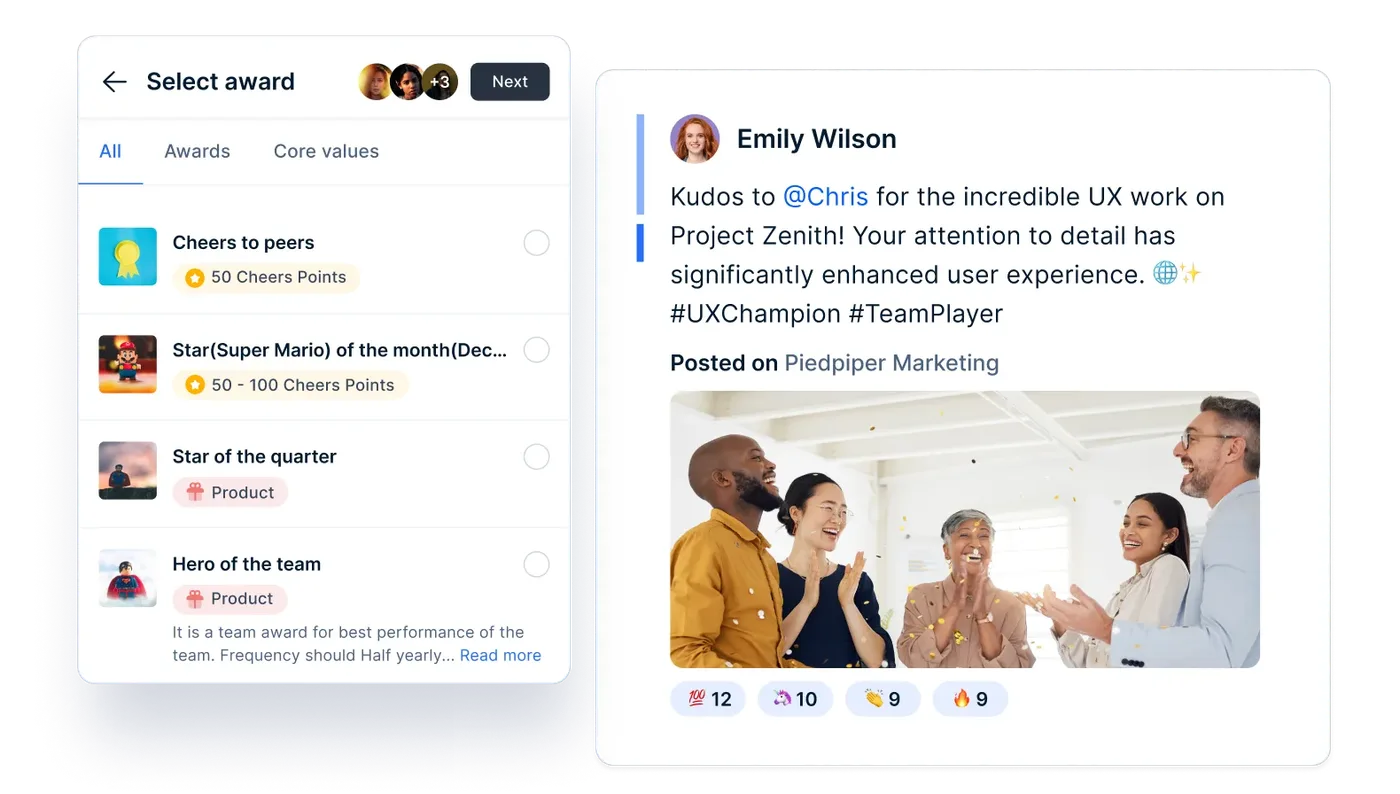
Recognition should not be reserved for annual awards. In aviation, where every day is unpredictable, small wins matter, and catching someone doing something right, like handling a flight delay with calm professionalism, deserves timely recognition. Timeliness and quality both count: a Gallup and Workhuman study found that well-recognized employees were 45% less likely to have left their organization after two years.
Mobile recognition tools let managers send instant kudos, award digital badges or run peer-nominated spot awards from anywhere, and make the recognition visible to the wider team. Whether it is an "Above and Beyond" award for crew or a "Customer Delight" shoutout for ground staff, consistent airline crew recognition builds a culture of appreciation.
3. Support wellness and mental health for all staff
The airline work environment is physically demanding and mentally draining. Extended duty hours, time zone changes and passenger conflict take a toll, and ignoring them leads to burnout, absenteeism and disengagement. Airlines need to go beyond health insurance and offer proactive support:
- Counseling on call: Confidential access to mental health professionals, including after difficult incidents.
- Fatigue management: Fatigue reporting without blame and rest planning built into rosters.
- Rest spaces: Quiet rest and meditation areas in crew lounges and break rooms.
- Skills workshops: Practical training on managing stress and de-escalating customer conflict.
You can also recognize healthy habits, such as joining wellness sessions or taking proper breaks. When staff see wellness as part of company culture, not a buzzword, they start prioritizing their own wellbeing too.
4. Build two-way communication
Employees feel disconnected when communication only flows from the top. Regular updates about business changes, safety protocols and appreciation for performance during peak seasons build trust, and a mobile feed reaches crew who rarely check email.
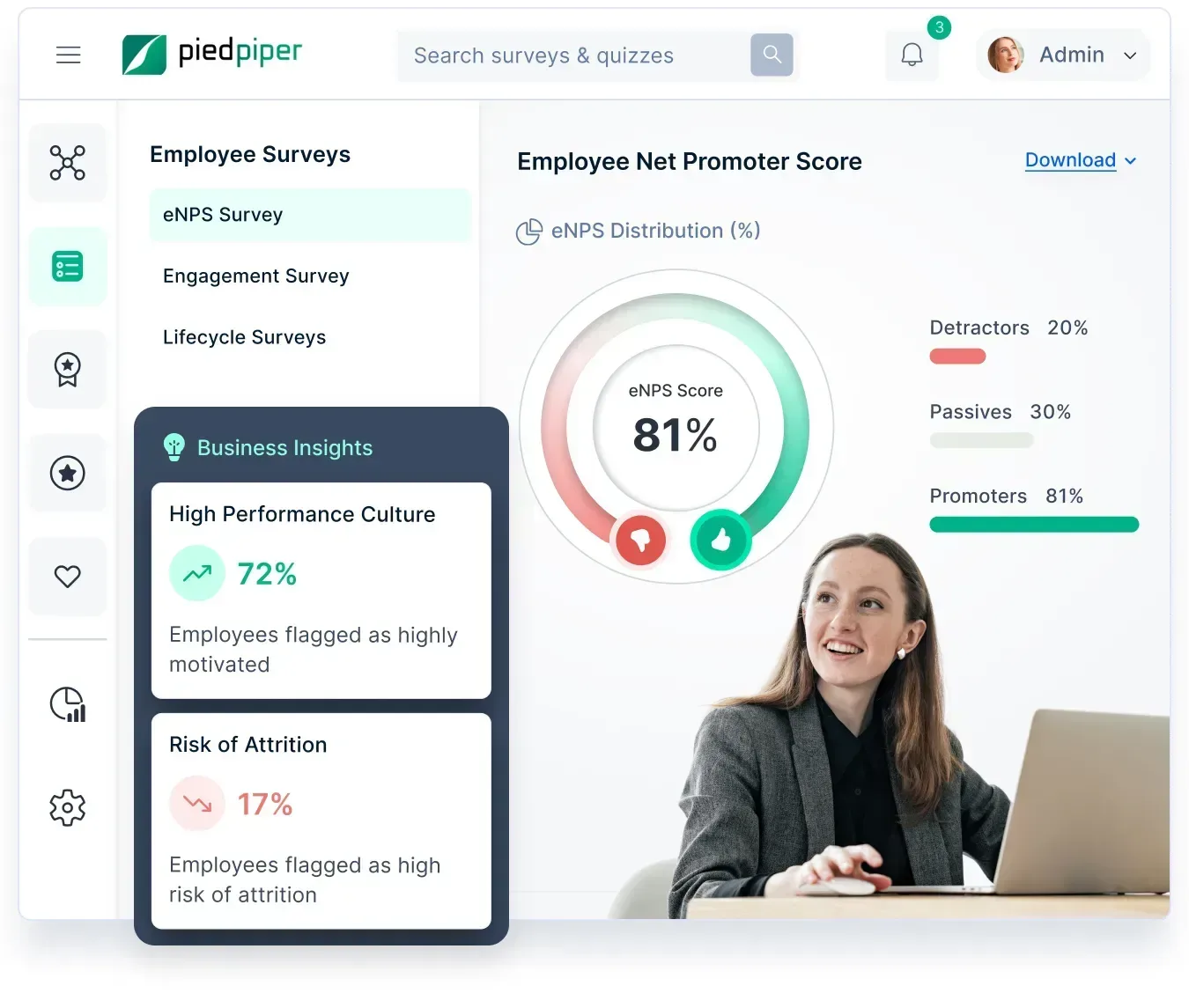
Employees also want to be heard. Pulse surveys help management collect feedback at scale, spot trends quickly and act on them, whether the issue is a new uniform policy or recurring scheduling problems on certain routes. Closing the loop, by telling people what changed because of their feedback, is what keeps them responding.
5. Invest in cross-training and growth
Airline staff disengage when they cannot see a future beyond their current job title. Structured learning programs let even entry-level staff aspire to higher roles, and cross-training fills gaps internally while giving employees fresh skills. For example:
- Cabin crew: Learning the basics of ground operations.
- Ground staff: Training in customer service escalation and disruption handling.
- Senior crew: Joining training and recruitment panels.
Make internal mobility easy with regular skill assessments, mentoring and clear promotion criteria, so people grow within the airline instead of looking elsewhere.
6. Reward high performance with personalized incentives
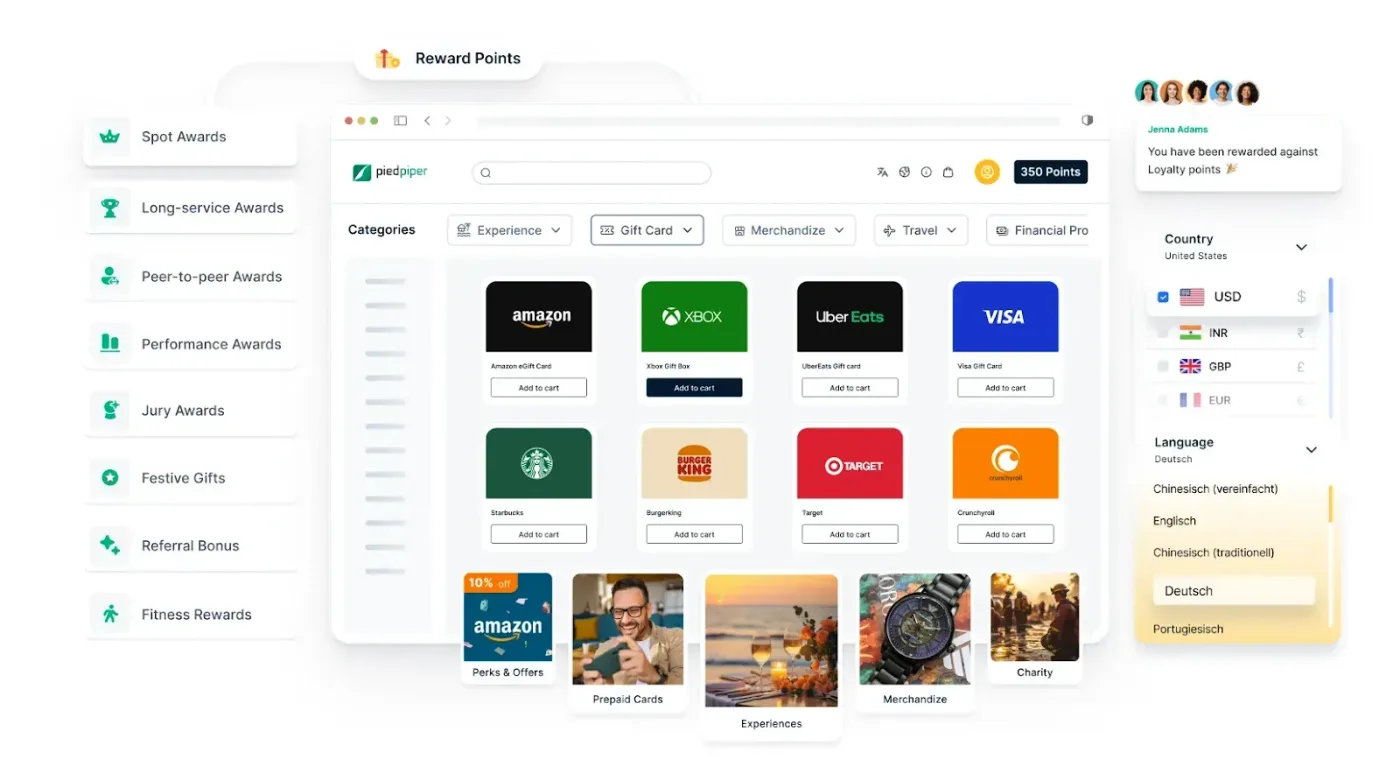
Standard bonuses do not always hit the mark, while personalized rewards create a deeper emotional impact. Someone who flies international routes might value hotel vouchers for their family, while someone working night shifts might prefer extra days off. Letting employees choose from gift cards, experiences, gadgets or charitable donations makes them feel in control.
Performance incentives should also be transparent: employees must know what qualifies, how it is tracked and when they will be rewarded. Delta shows how powerful a clear, shared incentive can be. Its profit-sharing program paid employees $1.3 billion for 2025, equal to 8.9% of eligible earnings, or just over four weeks of extra pay on average.
7. Involve employees in operational decisions
When employees are treated as executors of plans, motivation drops. When they are invited to shape those plans, such as adjusting turnaround procedures or suggesting inflight service upgrades, they feel trusted and empowered.
Form small cross-department working groups to co-design improvements, pilot their suggestions and recognize the contributions openly. This drives innovation and strengthens commitment, because employees helped build the roadmap themselves.
How to engage ground staff, cabin crew and pilots differently
Every role in an airline comes with different pressures, so engagement has to be role-specific rather than generic. The table summarizes the three core groups, and the sections below go deeper on each, starting with ground staff because they absorb the most passenger frustration with the least public credit.
| Role | Biggest stressors | What motivates them most | Recognition that fits |
|---|---|---|---|
| Ground staff | Disruption, rebooking, passenger anger, peak-hour staffing | Adequate staffing, real-time appreciation, a voice in fixing processes | Monthly "Frontline Hero" badges, on-the-spot points |
| Cabin crew | Fatigue, irregular rest, time away from home, unruly passengers | Wellness support, autonomy in service, visibility | Mobile peer shoutouts, crew-nominated awards |
| Pilots | Responsibility, tight schedules, little contact with leadership | Trust, involvement in safety and planning, continuous learning | Formal appreciation of good decisions, not just tenure |
Ground staff: consistency, support and recognition
Ground staff are the first point of contact for passengers. They handle everything from check-in delays and excess baggage disputes to rebooking during disruptions, often bearing the brunt of customer frustration without much credit. Engagement strategies that work for them:
- Staffing and breaks: Provide proper staffing levels and shift breaks, especially during peak travel.
- Real-time recognition: Highlight outstanding service under pressure as it happens.
- Frontline Hero badges: Run monthly awards based on peer or supervisor nominations.
- Upskilling: Offer ticketing system certifications and conflict resolution workshops.
- A channel for issues: Give them a simple way to report operational problems and suggest fixes.
Cabin crew: wellness, empowerment and visibility
Cabin crew are the smiling face of the airline, but behind the scenes they deal with physically demanding work, limited rest and unpredictable passenger behavior, while spending long stretches away from home. Engagement strategies for cabin crew:
- Wellbeing check-ins: Offer mental health check-ins around long-haul trips.
- A say in layovers: Let crew vote on rest hotel options where possible.
- Service autonomy: Give room to personalize the inflight experience and resolve passenger requests.
- Mobile recognition: Let colleagues and leads send appreciation from their phones, wherever they are.
- Crew communities: Run crew-only events and digital groups that keep people connected across routes.
Pilots: trust, growth and involvement
Pilots carry immense responsibility but often feel disconnected from engagement programs. Their schedules are tight, contact with leadership is limited and recognition tends to come only in extreme situations. Here is how to motivate flight crew in the cockpit:
- Involvement: Invite pilots into safety improvement and route planning discussions.
- Continuous learning: Offer simulator time, technology briefings and instructor pathways.
- Everyday appreciation: Recognize decisions that avoid delays, handle emergencies well or support fellow crew, not just years of service.
- Anonymous feedback: Use pulse surveys on scheduling, rest and cockpit resources.
Airline staff motivation ideas worth borrowing
The airlines with the strongest cultures rarely rely on one big gesture. The two examples below show recognition and shared incentives at scale, and the third is a pattern any airline can copy without a large budget.
- Southwest Airlines, peer recognition as currency: Southwest's SWAG program (Southwest Airlines Gratitude) lets employees thank each other with points that can be redeemed for gift cards, merchandise and travel. After its December 2022 holiday disruption, the airline granted every employee SWAG points as thanks for the extra strain, showing how a recognition platform can respond quickly when crews need it most.
- Delta Air Lines, sharing the upside: Delta's long-running profit-sharing plan pays a share of profits to employees every February, which ties everyone, from ramp agents to pilots, to the same goal of a reliable, profitable operation.
- Crew feedback loops, a pattern any airline can copy: A quick post-flight form in the crew app lets crew flag frustrations or wins. Reviewing that data weekly helps scheduling and operations fix recurring route, equipment and roster issues, and crew see their input lead to change.
How to measure airline employee engagement
Track a small set of metrics before and after you launch new initiatives. Attrition and absence come first because they carry the clearest cost, and the rest tell you why they are moving:
| Metric | What it tells you | How often |
|---|---|---|
| Voluntary attrition by role and base | Where you are losing people and how fast | Monthly |
| Sick leave and no-show rate | Fatigue and disengagement building up | Monthly |
| Pulse survey engagement and eNPS | How people feel and whether it is improving | Quarterly |
| Recognition sent and received per team | Whether appreciation reaches every base and shift | Monthly |
| Internal promotion and cross-training rate | Whether people see a career inside the airline | Quarterly |
| Customer satisfaction and on-time performance | The business impact of engagement | Monthly |
How Empuls helps airlines motivate their people
Empuls, Xoxoday's employee engagement platform, is built for teams that are rarely at a desk. Crew and ground staff use the Empuls mobile app to give and receive recognition, redeem points from a global rewards catalog and stay connected through a social feed. Empuls surveys capture pulse feedback on rosters, rest and morale, and Empuls wellness supports physical and mental health. For more on reaching deskless teams, see how Empuls supports the frontline workforce and our guide on how to motivate frontline employees.
Book your Empuls demo
Frequently asked questions
Motivate airline employees by recognizing good work quickly, building predictable and flexible rosters, supporting physical and mental wellbeing, offering clear growth paths and involving staff in operational decisions. Personalized rewards and transparent incentives add to this. The most effective programs work on mobile, so cabin crew, pilots and ground staff can take part wherever they are.
Airline employee engagement drives on-time performance, safety culture and passenger satisfaction, because engaged staff handle disruption calmly and support each other under pressure. It also reduces attrition at a time when Boeing forecasts demand for nearly 2.4 million new aviation personnel by 2044, most of them replacing people who leave. Keeping trained staff is far cheaper than replacing them.
The biggest challenges for airline staff are irregular schedules, jet lag and fatigue, high-pressure customer situations, physical exhaustion, limited say in decisions and long periods away from family. Disruptive passengers and frequent roster changes add stress. Airlines that address these directly, through rest planning, wellness support and two-way communication, see stronger motivation and lower attrition.
Airlines can recognize cabin crew through mobile peer shoutouts, crew-nominated awards, points that can be redeemed for rewards, and personal thank-you messages from leadership after difficult flights. Recognition should be specific, naming what the crew member did, and timely, ideally within the same rotation. Visible recognition on a shared feed also helps crew feel connected across routes.
Motivate flight crew and pilots by involving them in safety and planning discussions, offering continuous learning such as simulator training and instructor pathways, protecting rest, and recognizing good decisions rather than only years of service. Anonymous pulse surveys on scheduling and resources give pilots a voice, and acting on that feedback builds trust with leadership.
Airline employees often value rewards that give back time and family experiences, such as extra days off, hotel stays, dining vouchers and travel. Choice matters more than any single item, so a points-based catalog where people pick gift cards, experiences or charitable donations works well. Shared incentives like profit sharing also build a sense of common purpose.
Airlines can reduce cabin crew attrition by making rosters more predictable, managing fatigue, offering mental health support, recognizing crew regularly and creating clear career paths into senior crew, training or ground roles. Exit and pulse survey data show which bases and routes have the biggest problems, so fixes can be targeted instead of applied across the whole network.
Most airlines benefit from short pulse surveys every month or quarter, plus a longer annual engagement survey. Quick post-flight or post-shift feedback can capture operational issues in near real time. Frequency matters less than follow-through: share what you heard and what changed, or response rates and trust will fall over time.





































































































































































































































































































































































































































































































































































