
Key Takeaways
Cultural alignment is the degree to which an organization's values, beliefs and behaviors match those of its employees and its strategy.
Gartner found in 2025 that only about one in four employees believe in, understand or act on their organization's culture.
Aligning culture with strategy means translating each strategic priority into behaviors, then changing recognition, goals and promotions to reward them.
A simple cultural alignment framework checks four layers in order: values, behaviors, systems and signals.
The gap between how leaders and employees rate the same values questions is one of the clearest measures of cultural alignment.
Cultural alignment is the degree to which an organization's values, beliefs and behaviors match those of its employees and its strategy. You build it by defining clear values, translating them into behaviors, having leaders model them, hiring and rewarding for them and measuring the gap between stated and lived culture on a regular rhythm.
Walk into a truly aligned workplace and you feel it before anyone says a word. Conversations flow without friction. Decisions land faster. People show up because the work means something, not because they have to. That is cultural alignment in action: felt in daily decisions, not just printed on a poster.
Strong cultural alignment creates a cohesive environment where employees feel a sense of belonging and purpose, which leads to better collaboration, engagement and retention. Achieving it takes clear communication, consistent leadership and hiring for values, while still welcoming diverse perspectives that fuel innovation.
In this guide, you will learn what cultural alignment is, why it matters, how to spot misalignment, how to align culture with strategy, a practical cultural alignment framework, how to measure it and the tools that make it stick.
What is cultural alignment?
Cultural alignment happens when employees' values, behaviors and goals reflect the organization's culture, and when that culture supports the company's strategy. You can feel it in a shared sense of purpose, see it in smoother collaboration and spot it in consistent decision-making. When alignment is strong, work feels connected and meaningful.
It does not stay that way by default. Hybrid schedules, team silos and rapid growth can nudge culture off course. The fix is not a one-time kickoff but ongoing care: clear communication, simple rituals that reinforce "how we work here" and the right tools to keep priorities visible and decisions repeatable. Do that, and everyone rows in the same direction without hitting each other with the oars.
Cultural alignment in the workplace is not the same as hiring people who all think alike. Alignment is about shared values and behaviors, not shared backgrounds or personalities. The healthiest cultures look for "culture add," people who share the values but bring new perspectives, rather than a narrow "culture fit." If you are still defining those values, start with our guide to core values in the workplace.
Why cultural alignment matters
When people genuinely connect with your company's culture, they do not just show up, they buy in. Cultural alignment unlocks real engagement, deeper loyalty and the kind of intrinsic motivation no pizza party can manufacture.
It is also measurable, and the current numbers show how much room most companies have to improve. Gartner's October 2025 culture research found that only 26.7% of employees believe in their organization's culture, 26.4% understand it and 26.4% act on its behalf, all down from 2022. Gallup's organizational culture indicator shows what is at stake: employees who feel strongly connected to their culture are 4.3 times as likely to be engaged and 47% less likely to be looking for a new job.
26.7%
of employees believe in their organization's culture
Gartner, 2Q 2025
26.4%
act on behalf of their culture
Gartner, 2Q 2025
4.3x
more likely to be engaged when strongly connected to culture
Gallup, 2025 data
The cultural alignment gap
Aligned cultures deliver measurable outcomes such as:
- Higher employee engagement: When employees know the company's values and believe in them, they are more connected and motivated.
- Better performance: Alignment puts everyone on the same track, so teams spend less effort on conflicting priorities and more on results.
- Reduced turnover: When employees find their personal values match the company's culture, they are far more likely to stay.
- Stronger brand reputation: Consistent values carry through to customers and partners, who learn to trust the company.
For the full business case, read why organizational culture is important.
Signs your organization lacks cultural alignment
The first and most critical step in solving any culture challenge is recognizing where alignment has slipped. Even well-intentioned strategies fall flat when they work against the culture. Watch for these common signals:
- Employees cannot name the values: If people struggle to say what the company stands for, that is a major red flag. Values should be learned, lived and used to guide everyday choices.
- Leaders say one thing and do another: Leadership sets the tone. When words and actions do not match, trust erodes fast, and employees mirror that inconsistency, which leads to confusion and disengagement.
- Turnover is high and retention is low: Cultural mismatch is a prime driver of exits. When values do not resonate, or are not actually practiced, people look for workplaces that fit their beliefs better.
- Collaboration and engagement lag: Silos harden and teams avoid partnering when the culture does not support it. Low engagement often signals a gap between what employees value and what the organization reinforces.
- Customer complaints rise and reputation dips: Misalignment is not just internal. When employees do not believe in the company's values, service quality suffers, and so does the brand.
Many of these symptoms sit below the surface before they show up in exit data. The iceberg model of culture is a useful lens for finding them early.
Aligning culture with strategy
Aligning culture with strategy means making sure the behaviors your culture rewards are the same behaviors your strategy needs. A company chasing speed cannot reward caution in every decision, and a company betting on customer intimacy cannot reward only internal efficiency. Start from the strategy, then work backward to culture:
- Name the strategic priorities: List the three to five priorities for the next two to three years, such as entering a new market or moving upmarket.
- Translate each into behaviors: Ask what people must do differently to deliver each priority, such as faster decisions, more cross-team work or deeper customer research.
- Compare with current behavior: Use surveys and manager input to see which of those behaviors already happen and which do not.
- Adjust the systems: Change goals, recognition, promotion criteria and meeting rhythms so they reward the behaviors the strategy needs.
- Communicate the link: Explain to every team how their daily work and the company values connect to the strategy.
| Strategic priority | Behavior it needs | Cultural signal to reinforce |
|---|---|---|
| Faster product launches | Decisions made at the team level | Recognize teams that ship small experiments quickly |
| Better customer retention | Frontline staff solve problems without escalation | Reward ownership of customer outcomes |
| Expansion into new regions | Respect for local norms within shared values | Celebrate local teams that adapt practices well |
| Cost efficiency | Challenging spend and simplifying processes | Spotlight process improvements in town halls |
Alignment does not mean every team must look identical. Deloitte's 2024 Global Human Capital Trends research found that 71% of business and HR leaders rate focusing on individual teams as a place to build culture as very or critically important, and it recommends a "culture of cultures": team microcultures tailored to local needs while staying aligned to organization-wide values.
Close your cultural alignment gaps
Tag recognition to values, run culture pulse surveys and see where alignment is slipping by team.
Talk to our ExpertTrusted by 5,000+ companies
How to build cultural alignment: 7 practical ways
Culture is not a one-time project but a daily practice, especially in hybrid and high-growth settings. The seven moves below build on each other, and the second one, leadership behavior, carries the most weight because employees follow what leaders do far more than what they say.
1. Define clear core values
Cultural alignment starts with values. Without them, expectations are unclear.
- Co-create values: Involve employees so they feel ownership.
- Make them actionable: Translate values into everyday decisions and behaviors. If you value collaboration, design more team-based work.
- Communicate clearly: Reinforce values in meetings, emails, training and onboarding materials.
Our guide to organizational values explains how to separate true core values from aspirational ones before you launch them.
2. Embed culture in leadership behavior
Leaders are the model. If leaders do not live the values, alignment stalls.
- Lead by example: Reflect values in decisions, communication and how you handle pressure.
- Reinforce through decisions: Tie promotions, recognition and resources to behaviors that demonstrate the core values.
Consistent leadership builds trust, sets expectations and normalizes cultural standards across levels.
3. Align hiring and onboarding
Alignment begins at the door.
- Recruit for values alignment: Assess candidates for values alignment alongside skills, using behavioral questions rather than gut feel.
- Onboard with purpose: Introduce history, mission, values and expected behaviors so new hires know how work gets done here.
Strong alignment early reduces friction, speeds integration and strengthens long-term performance.
4. Communicate transparently across teams
Open communication powers alignment.
- Encourage feedback: Create safety for questions, ideas and concerns.
- Use multiple channels: Pair email, the intranet, meetings and pulse surveys for consistent reinforcement.
- Promote collaboration: Enable cross-functional work around shared goals.
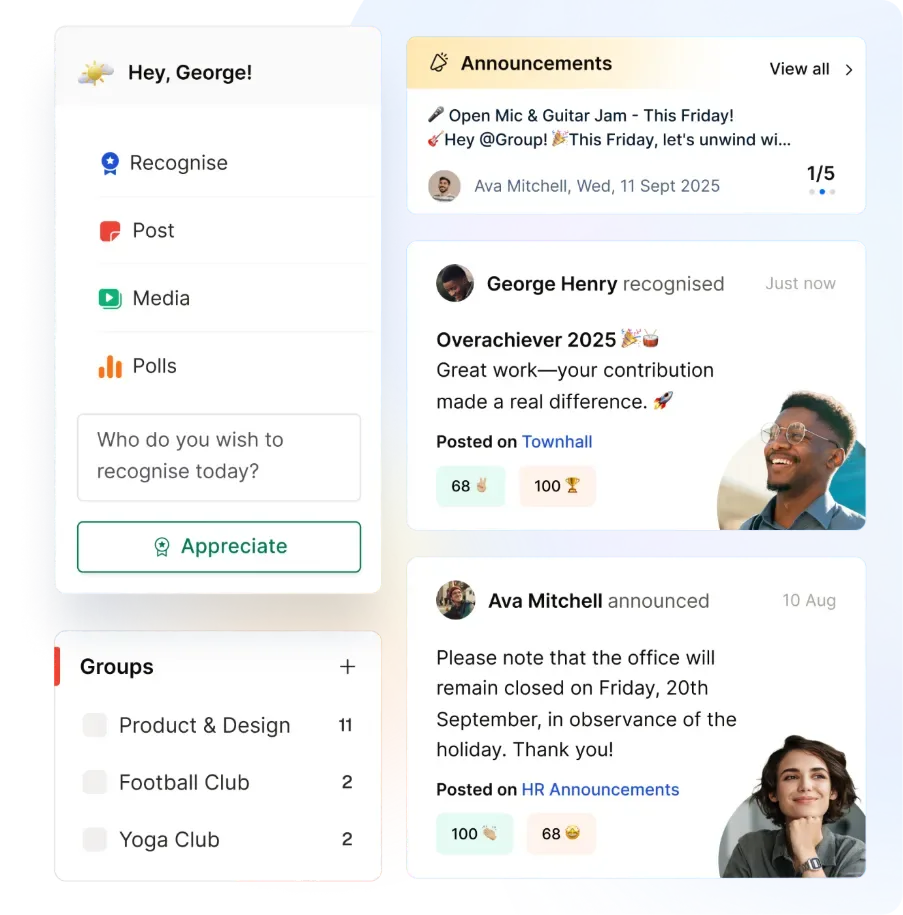
5. Recognize and reward aligned behaviors
What you reward repeats.
- Tangible rewards: Bonuses, awards or perks for values-driven actions.
- Social recognition: Public shout-outs in meetings, newsletters or internal platforms that name the value behind the behavior.
Consistent recognition motivates people and clarifies what the organization values most. A values-based recognition program makes this systematic.
6. Invest in development and growth
A learning culture sustains alignment.
- Training programs: Offer leadership and values-based training connected to company goals.
- Mentorship: Pair people with leaders who model the desired behaviors.
- Career paths: Show progression routes that reward the behaviors the culture expects.
Development builds loyalty and spreads cultural norms across teams.
7. Measure, monitor and adjust
Culture needs regular check-ins.
- Surveys and pulse checks: Track engagement, satisfaction and cultural perception.
- Metrics and KPIs: Monitor turnover, absenteeism, productivity and customer satisfaction as alignment indicators.
- Adjust strategies: Use the data to refine processes, communication and leadership practices.
Ongoing measurement keeps culture aligned with business objectives as the organization evolves.
Cultural alignment frameworks and tools
Sustaining cultural alignment takes deliberate strategy and the right systems, so expectations feel consistent across the organization. Without frameworks to assess progress and tools to put values into practice, even strong strategies drift over time. These four options help you assess where you are, find gaps and turn values into everyday behavior:
- OCAI (Organizational Culture Assessment Instrument): Uses the Competing Values Framework to compare your current culture with the culture you want. It helps leaders pinpoint gaps and prioritize improvements.
- Denison Organizational Culture Survey: Evaluates four dimensions, mission, adaptability, involvement and consistency, to reveal strengths and weaknesses. The insights guide practical steps that bring behaviors in line with stated values.
- Schein's three levels of culture: Breaks culture into artifacts (visible structures and processes), espoused values (stated principles and strategies) and underlying assumptions (deep-seated beliefs). Understanding these layers helps leaders align what people do with what the organization believes.
- Digital engagement platforms: Tools such as Empuls put values into daily work through values-tagged recognition, onboarding journeys, pulse surveys and feedback loops, creating a consistent employee experience that reflects company values.
If you want one simple cultural alignment framework to run the whole effort, use four layers and check each one in order:
| Layer | Key question | Evidence of alignment |
|---|---|---|
| Values | Do we have a short, clear set of values that serves our strategy? | Employees can name the values and explain what each means |
| Behaviors | Have we defined what each value looks like in daily work? | Managers can point to recent examples of each behavior |
| Systems | Do hiring, recognition, reviews and promotions reward those behaviors? | Recognition and promotions consistently cite the values |
| Signals | Are we measuring how well values are lived, and acting on it? | Survey scores on values improve after action plans |
How to measure cultural alignment in 5 steps
Strong cultural alignment does not happen by accident. Building on a five-step approach from Great Place To Work, the steps below start with clear values, move through honest assessment and end with steady follow-through across the employee experience.
- Define and communicate your core values: Begin with purpose and principles. Ask what your mission is, which behaviors guide daily decisions and how you want people to feel at work. Replace generic labels with behavior statements: instead of "teamwork," try "we win together and back each other in good times and hard ones." Work values into hiring questions, performance reviews and meeting rhythms, and open all-hands meetings with recent examples of employees living the values.
- Assess current cultural alignment: If values are your north star, listening tools are the compass. Use surveys, focus groups and one-on-ones to learn how culture shows up in real work.
- Identify gaps and opportunities: Analyze results to find misalignments, especially differences between what leaders think and what employees experience, and disconnects across departments or levels. Start with the most critical issues and the quick wins, and share the findings openly.
- Develop and implement alignment strategies: Data only matters if it drives action. Train leaders to connect with people and communicate well (Cisco, for example, trains new and existing leaders to bring out the best in their teams), strengthen onboarding and tie recognition to values (Capital One's Spot Awards give points to associates who live its values).
- Continuously monitor and refine: Culture evolves as you grow. Track indicators like retention, promotion rates and time to productivity for new hires, compare survey gaps year over year and after action plans roll out, and adjust early when patterns emerge.
For step 2, these survey questions reveal whether people know the values, agree with them and see them being lived:
- How well do you understand our values, and what do they look like in practice?
- How easy or difficult is it to live our values in your role?
- How consistently do leaders model the values in actions and decisions?
- Do recent decisions feel aligned with our values? Why or why not?
- Do our values increase your connection to your team and the organization?
- How inclusive does our culture feel, based on how values are practiced?
- Where are the gaps between our stated values and how we actually operate?
- What one change would better align daily practices with our values?
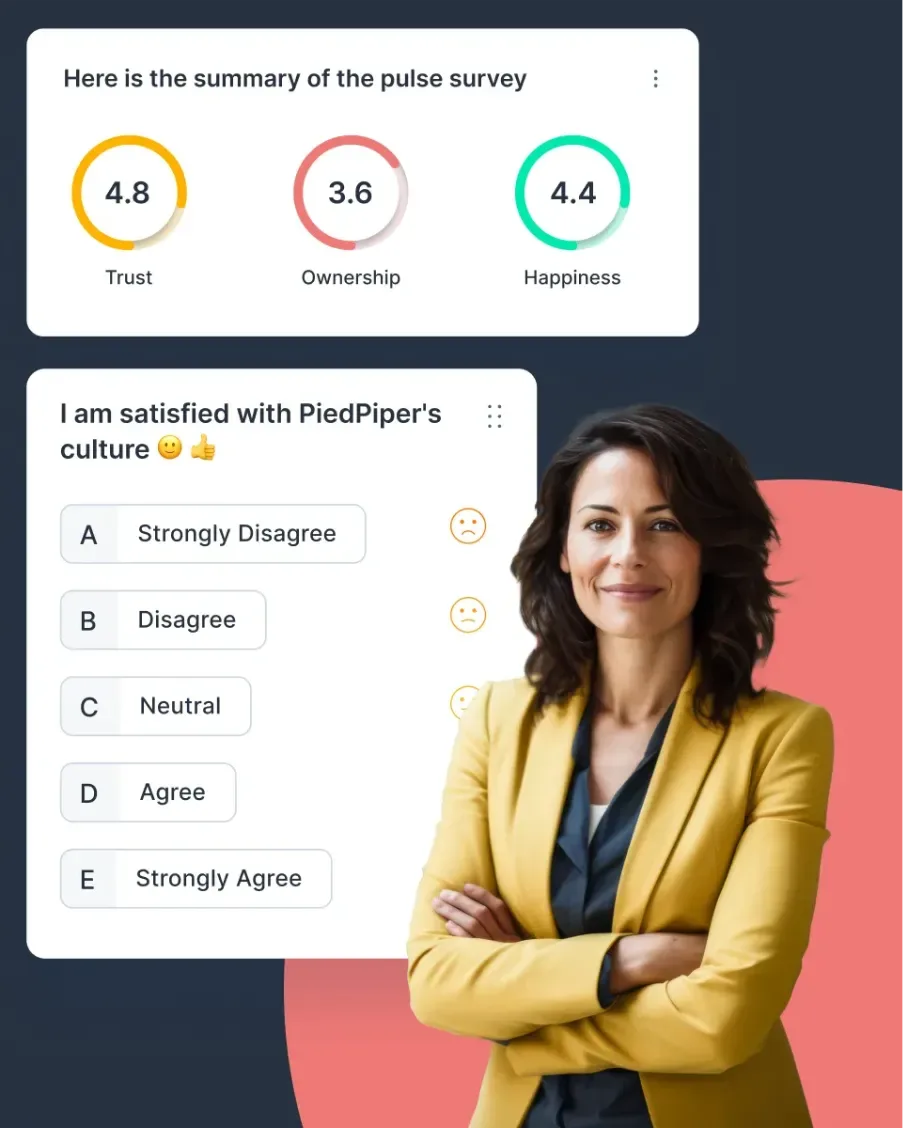
When you share findings in step 3, have the CEO thank participants and share organization-wide results, ask managers to review feedback with their teams and draft action plans, and give clear next steps and timelines through town halls, videos, newsletters and email. Transparency builds trust.
How Luminous turned recognition into cultural alignment
Cultural alignment turns values into daily behavior, building trust, collaboration and consistent decisions across plants, offices and hybrid teams. Luminous Power Technologies shows how this works in a 6,000-person workforce that includes blue-collar manufacturing teams.
The challenge: Luminous had a strong tradition of appreciation, but recognition varied by department, happened mostly around events and relied on paper certificates and printed t-shirts. Whether someone was recognized depended on the enthusiasm of their department head, which made culture feel inconsistent across locations.
The solution: With Empuls, Luminous:
- Standardized digital recognition: Moved 25 years of manual recognition onto a single platform with desktop and mobile access, so appreciation is timely and visible company-wide.
- Integrated with existing systems: Connected Empuls with its ERP and information management system for a fast, non-disruptive rollout.
- Offered an inclusive rewards catalog: Provided experiences, gift cards and more to suit different age groups and preferences, from plants to offices.
- Put values in action: Tagged recognition to Luminous's five core values, turning day-to-day shout-outs into building blocks of the culture.
The impact: Recognition became frequent, consistent and tied to values, with strong adoption even among plant workers who had never used a digital recognition tool. It worked because appreciation became easy, integrated and linked to values, so Luminous could scale the culture employees experience on the shop floor and in the field.
How Empuls helps you build cultural alignment
Aligning culture is a big lift, but the right platform makes it simpler and more engaging. Empuls, Xoxoday's employee engagement platform, helps you track, reinforce and celebrate cultural alignment across the employee lifecycle with its culture and values tools:
- Values-based recognition and rewards: Peer and manager recognition with value tags, automated milestones for joining dates, anniversaries and wins, points budgets and a global rewards catalog, so what you value shows up in daily behavior.
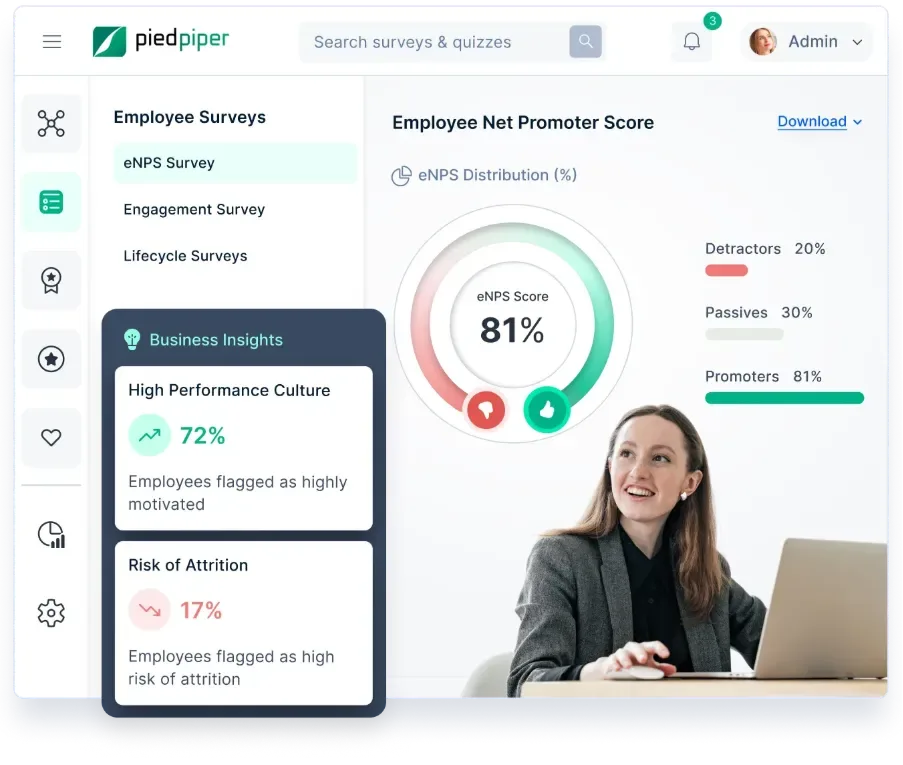
- Always-on feedback: Pulse surveys, eNPS and lifecycle check-ins with anonymous comments and action plans to spot alignment gaps early and close the loop fast.
- Integrated communication and rituals: A social intranet with a company feed, announcements and celebration posts, plus nudges inside Slack and Microsoft Teams, keeps mission and values front and center.
- Built for global and hybrid teams: Multi-currency rewards, localized catalogs and time-zone-aware campaigns help you scale culture consistently across regions.
- Dashboards and insights: Reports and analytics by team, location or function show value-adoption and recognition trends, so you know exactly where to act.
Make cultural alignment a daily habit
Cultural alignment is not a one-time launch. With clear values, behaviors tied to strategy, leaders who model them, systems that reward them and continuous listening, alignment becomes a durable advantage that people can feel, and choose to stay for.
Book your Empuls demo
Frequently asked questions
A company that values ownership and shows cultural alignment names one owner for every decision, recognizes people who take responsibility for outcomes and promotes managers who empower their teams. Employees can explain the value, point to recent examples and see it rewarded. If the same company punished every mistake, its stated value and lived culture would be misaligned.
Cultural alignment means employees share the organization's values and act on them, while culture fit is often used loosely to mean people who are similar to the existing team. Alignment focuses on values and behaviors, so it welcomes diverse backgrounds and ideas. Many companies now hire for "culture add": people who share the values and bring something new.
The five P's of corporate culture are purpose, principles, people, processes and practices. Purpose is why the organization exists, principles are its values and ethical codes, people are employees and leaders and their relationships, processes are the workflows and policies that shape behavior and practices are the daily actions that reinforce the culture.
The four types of organizational culture in the Competing Values Framework are clan, adhocracy, market and hierarchy. Clan culture focuses on collaboration and engagement, adhocracy on innovation and risk-taking, market on results and competition and hierarchy on rules, structure and efficiency. Knowing your type helps leaders choose alignment strategies that fit how the organization really works.
To align culture and strategy, list your strategic priorities, define the behaviors each one requires and compare them with how people behave today. Then change goals, recognition, promotion criteria and leadership habits to reward the required behaviors, and explain to every team how their work and values connect to the strategy. Review progress with regular surveys.
Measure cultural alignment with regular surveys that ask whether employees understand the values, see leaders model them and find them easy to live in their role. Compare scores across teams and between leaders and employees, and track related metrics such as retention, eNPS, internal promotion rates and how often recognition is tied to company values.
Start from your values and survey employees about what they need. Prioritize equitable, inclusive options that support wellbeing and growth, explain clearly how benefits work and review usage data regularly. A culture that values flexibility might emphasize choice-based benefits, while one that values growth might invest more in learning budgets and career development.
No, business cultures are not always aligned with national cultures. Global companies usually keep one set of organization-wide values while adapting practices to local norms, such as communication styles, holidays and how recognition is given. The goal is shared values with local flexibility, so teams in every country feel the culture fits their context.





































































































































































































































































































































































































































































































































































