
Key Takeaways
Diversity is who is in the room, and inclusion is whether everyone in the room feels valued, heard and able to contribute.
Corporate commitment to diversity has softened since 2021, yet most employees still support inclusion, so fair, open-to-all programs are the durable path.
Promoting diversity starts with measuring representation, promotion, pay and attrition by group, then fixing hiring, development and recognition processes.
Voluntary, repeated diversity and inclusion activities build everyday habits better than one-off training.
Anonymous inclusion survey questions, segmented by team and level, show whether people actually feel included and where to act.
Diversity and inclusion in the workplace means hiring people with different backgrounds, identities and ways of thinking, and then building a culture where every one of them is treated fairly, heard and able to do their best work. It is not just about compliance or corporate responsibility. Organizations that embrace different experiences and perspectives build a more innovative, collaborative and resilient workforce.
A workplace that celebrates differences and makes room for every voice sees higher engagement, better morale and stronger business outcomes. This guide explains what diversity and inclusion mean, why they matter, how to promote diversity in the workplace, diversity and inclusion activities for in-person and virtual teams, and the inclusion survey questions that show whether your efforts are working.
What diversity and inclusion in the workplace means
Diversity is the mix of people in an organization: a group of people who differ across many human and demographic dimensions and are brought together for their skills. Inclusion is the culture that nurtures this talent and gives everyone a healthy work atmosphere, so people can work together comfortably and contribute confidently. Put simply, diversity is who is in the room, and inclusion is whether everyone in the room feels valued and adds value.
Two related terms often sit alongside them. Equity means fair access to opportunity, pay and advancement, which sometimes requires removing barriers that affect some groups more than others. Belonging is the outcome employees feel when diversity, equity and inclusion are working: the sense that they can be themselves at work and still fit in.
| Dimension | Examples |
|---|---|
| Demographic | Gender, age, race, ethnicity, nationality, disability |
| Identity and belief | Religion, sexual orientation, gender identity, culture, language |
| Experience | Education, socioeconomic background, career path, military or caregiving history |
| Cognitive | Personality, working style, neurodiversity, problem-solving approach |
| Organizational | Function, seniority, tenure, location, remote or frontline role |
The importance of diversity and inclusion as a performance multiplier
Why should organizations focus on diversity and inclusion in the workplace through intentional strategies? Because an inclusive workplace raises performance. Diversity is not a passing fad or the newest workplace trend. Each social dimension, from race, gender and sexual orientation to age, education, socioeconomic background, personality and interests, matters equally, and all of them are linked to strong organizational values and environments where people feel psychologically safe.
If you think about it, it is simply human nature. Who wouldn't give their all to a business when they believe respect, acceptance and real support are offered to them, regardless of their background? The reverse also holds. Gallup reports that only 37% of US employees strongly agree they are treated with respect at work, a record low, and engaged employees are five times more likely than others to say they are respected. Respect and inclusion are not soft extras. They are part of what makes people engaged.
Companies that struggle with diversity, or give it only lip service, end up with less-than-optimal performance: narrower thinking, weaker employer brands and higher turnover among the people they worked hardest to hire.
The current state of diversity and inclusion in 2026
Progress on diversity and inclusion in the workplace is uneven. Commitment is softening in some places and growing in others, and employee views have become more divided.
67%
of US companies say diversity is a high priority, down from 90% in 2021
McKinsey and LeanIn, 2025
84%
of those companies remain committed to inclusion
McKinsey and LeanIn, 2025
52%
of US workers say focusing on DEI at work is a good thing, down from 56%
Pew Research Center, 2024
76%
of Australian workers support their employer taking action on D&I
Diversity Council Australia, 2025 to 2026
Diversity and inclusion at a glance
The 2025 Women in the Workplace report from McKinsey and LeanIn found that two in ten companies have stopped or scaled back bias training, and one in four has discontinued or scaled back remote and hybrid options. The "broken rung" persists: for every 100 men promoted to manager, 93 women are promoted, and only 60 Black women. Meanwhile Pew Research Center found that 21% of US workers now say focusing on DEI is a bad thing, up five points in a year.
The picture is different elsewhere. In Australia, the Diversity Council Australia Inclusion@Work Index found that 62% of workers say their organization is taking action on D&I, the highest since the index began in 2017, while reported discrimination or harassment fell from 30% to 24%.
Rules have shifted too. In the US, the EEOC's 2025 technical assistance makes clear that any program which excludes or limits people based on a protected trait, such as a mentoring scheme open to only one group, can be unlawful. Many employers have responded by keeping the goal and changing the method: programs open to everyone, transparent criteria and a focus on fair processes and belonging. Check your approach with legal counsel in each market where you operate.
Inclusion begins with retention, not just hiring
Moving the needle on diversity remains a big challenge. While hiring diverse talent is important, keeping that talent over a reasonable time has become far more important, which is why diversity is now practiced together with inclusion and built into organizational culture. People who are hired into a culture that doesn't welcome them leave, and the investment in hiring them leaves too.
Hybrid and remote work can help. With more flexibility, remote working can support the retention of women, caregivers, people with disabilities and others who carry extra demands outside work, and it widens access to talent that may not live near your offices. The 2025 McKinsey and LeanIn data adds a caution: women who work mostly remotely are less likely to have a sponsor or a recent promotion than on-site peers, so flexibility only works when visibility and sponsorship travel with it. It is clear that lip service is not enough. Strategic, data-driven action is required.
8 benefits of diversity and inclusion in the workplace
Diversity focuses on who gets hired, and inclusion focuses on how they feel at work. The eight benefits below run from the ones leaders track most closely, financial results and team performance, to the longer-term gains in brand and knowledge that compound over years.
1. Better financial results
A diverse and inclusive employee base is a significant asset in a fast-moving global economy. Research from consulting firms and academics over more than a decade has linked diverse leadership teams with stronger innovation and better financial performance, and companies that lead on diversity tend to pull ahead of laggards. To make the business case real in your own company, track the outcomes of inclusive teams against your own baseline:
- Focus on delivering the best experience at every employee touchpoint.
- Create channels for connection, communication and collaboration between people.
- Build a sense of shared purpose by aligning employees with company culture, values and vision.
- Seek regular employee feedback to keep improving culture and employee experience.
2. Better teams
Teams with diverse backgrounds are more likely to innovate, be more agile and anticipate shifts in customer needs, which helps their companies gain a competitive edge. Bringing together people from varied backgrounds and experiences means each person brings unique ways to improve your products and services.
3. Higher retention
With strong inclusion practices, employees feel heard, valued and part of the organization. Combine that with fair growth and advancement policies, timely feedback, reward and recognition and an employee-centric culture, and people have every reason to stay and grow. For more ideas, see these employee retention strategies.
4. Enhanced employee satisfaction
A wholesome working experience needs interventions at every stage of the employee lifecycle, from pre-hiring to exit. When inclusion sits at the foundation of people policies and the culture focuses on well-being and development, engagement scores and employee net promoter scores rise with it.
5. A global think tank
With talent from diverse backgrounds, cultures, nationalities and perspectives, the organization becomes a global think tank where ideas, debate and brainstorming flow freely. Because the group is diverse, the risk of everyone thinking alike, or holding back their views, drops considerably. That keeps every idea fresh and paves the way for innovation.
6. Enhanced performance
An inclusive culture thrives on openness and transparency. It makes it easier for employees to ask each other for help, receive feedback positively, learn and improve. In this process everybody learns and grows, and the organization's performance improves too. Inclusive decision-making also catches blind spots earlier, because more perspectives test each idea before it ships.
7. A preferred brand image
When diverse talent grows under well-placed inclusive practices, employees become your brand ambassadors. This connects you to diverse communities locally and helps you reach much further. The more consistently you act on inclusion, the more diverse, high-quality talent you attract and retain, and the stronger your brand becomes.
8. A strong knowledge base
A diverse workforce is a strong knowledge base of local cultural and social nuances. These insights are valuable when you serve new customer groups or expand into new markets. Employees' ties to local communities, associations and networks can also become good sources of information and talent.
Measure inclusion, not just headcount
Run inclusion pulse surveys, build open communities and recognize inclusive behavior with Empuls.
Talk to our ExpertTrusted by 5,000+ companies
How to promote diversity in the workplace
Knowing how to promote diversity in the workplace matters more than any statement of intent. These eight steps start with measurement, because you cannot fix what you cannot see, and end with accountability, because that is what keeps progress going after the launch:
- Measure where you are: Look at representation, hiring, promotion, pay and attrition by group and level, and run an anonymous inclusion survey. This becomes your baseline.
- Widen your hiring funnel: Post roles on varied job boards, partner with community organizations and universities, and write job descriptions that focus on skills rather than pedigree.
- Make selection fair: Use structured interviews, consistent scorecards and diverse interview panels so every candidate is assessed on the same criteria.
- Build inclusive leaders: Train managers to run fair meetings, give balanced feedback and notice who is being left out. Managers shape day-to-day inclusion more than any policy.
- Open development to everyone: Make mentoring, sponsorship and stretch assignments available to all, with transparent criteria, so no one depends on informal networks to get ahead.
- Offer flexibility and inclusive benefits: Flexible schedules, caregiving support, accessible workplaces and benefits that people can choose to suit their lives help a wider range of people stay.
- Recognize fairly: Check who gets recognized and rewarded, and correct gaps. Our guide to preventing bias in recognition programs shows how.
- Create accountability: Share progress openly, review it at leadership level and tie it to how leaders are evaluated.
Diversity and inclusion activities for in-person teams
Diversity and inclusion activities turn good intentions into everyday habits, and they work best when they are voluntary, well facilitated and repeated rather than one-off. These seven activities start with language, the quickest habit to change, and move toward bigger shared experiences:
- Inclusive vocabulary: Build a list of terms that help people feel included and acknowledged, and encourage everyone to use them, perhaps with a light-hearted forfeit for slip-ups. Person-first language ("a person who is visually impaired"), people's chosen pronouns and gender-neutral terms are good examples. After discussing the terms, ask people to share which ones they identify with most.
- "I am" statements: Create a safe space where employees can open up. Give each participant a sheet with the phrase "I am" and ask them to write ten statements about themselves. The more honest and judgment-free it feels, the better. Others can try to guess who wrote each list, which turns it into a fun way to get to know each other.
- Saying goodbye to stereotypes: Ask each participant to complete the phrase "I am ___, but I am not ___." Others can add to the lists as they are read out, which helps people bust stereotypes and shows the speaker that colleagues are on their side.
- A snapshot board: Few ice breakers beat someone's life in photos. A board of memories and personal mementos sparks conversation and builds mutual respect.
- Story links: Create a chain of real-life stories. One employee starts with "India is my country of origin," the next adds "I visited India as a kid," and so on. It opens conversations on all kinds of topics and helps coworkers bond.
- Dish-to-pass potluck: Food is a vital part of identity. A potluck where employees bring dishes from or inspired by their culture is an easy way to connect and try something new.
- Mini events: Use the cafeteria or lounge to host small events celebrating different arts and cultures, with open discussions where everyone is encouraged to ask questions.
Diversity and inclusion activities for virtual teams
Remote and hybrid work is no reason to drop inclusion activities. It is a reason to focus on them more, because people who rarely meet face to face can easily feel further apart than ever. These four activities run well on video calls and in online communities:
- Virtual book clubs: Assign a book or two each quarter by authors who write about diversity and inclusion. Good starting points include How to Be an Antiracist by Ibram X. Kendi, What Works: Gender Equality by Design by Iris Bohnet, This Chair Rocks by Ashton Applewhite, Privilege, Power, and Difference by Allan G. Johnson and Unruly Bodies by Susannah B. Mintz.
- Speak your truth: Invite people to share experiences, with prompts such as "When was a time you felt you didn't fit in?" or "Have you ever felt excluded?" These conversations go deeper than light-hearted games and help team members become more sensitive to each other's challenges.
- What do you prefer?: Group people by personal preferences, such as introverts, vegetarians, non-drinkers or pop-culture fans, and run playful debates. It is a fun, inoffensive way to celebrate small differences.
- How everyone got their name: Names carry history, family values and funny stories. Ask each team member, if they are comfortable, to share the story behind theirs.
Inclusion survey questions to ask employees
Activities build connection, but only data tells you whether people actually feel included. These ten inclusion survey questions cover perception of company efforts, fairness, voice and growth, and the table notes what each one reveals:
| Question | What it reveals |
|---|---|
| How well do you feel the company promotes workplace diversity and inclusion? | Whether your efforts are visible and well received |
| Do you feel you are treated fairly and equally, regardless of your race, gender, religion or other personal characteristics? | Perceived fairness in everyday treatment |
| Do you feel the company values diversity in its workforce and its leadership? | Belief in leadership's commitment |
| Does the company actively seek to understand and address the needs of employees from diverse backgrounds? | Sensitivity to different needs, such as culture, religion or caregiving |
| Do you feel your contributions are valued, regardless of your background or identity? | Possible bias in how work is recognized |
| Does the company provide equal opportunities for development and advancement to all employees? | Fairness in growth and promotion |
| Does the company create a welcoming and inclusive culture for all employees? | Overall cultural climate |
| How comfortable do you feel bringing your whole self to work, including your cultural background and identity? | Psychological safety and belonging |
| Have you witnessed or experienced discrimination or bias in the workplace? | Incidents that need action |
| What could the company do to improve its diversity and inclusion efforts? | Ideas straight from employees |
Run these questions anonymously, use a consistent agreement scale so you can track trends, and only show results for groups large enough to protect identities. Segment results by team, location, tenure and level to find gaps, then share what you heard and what you will do about it.
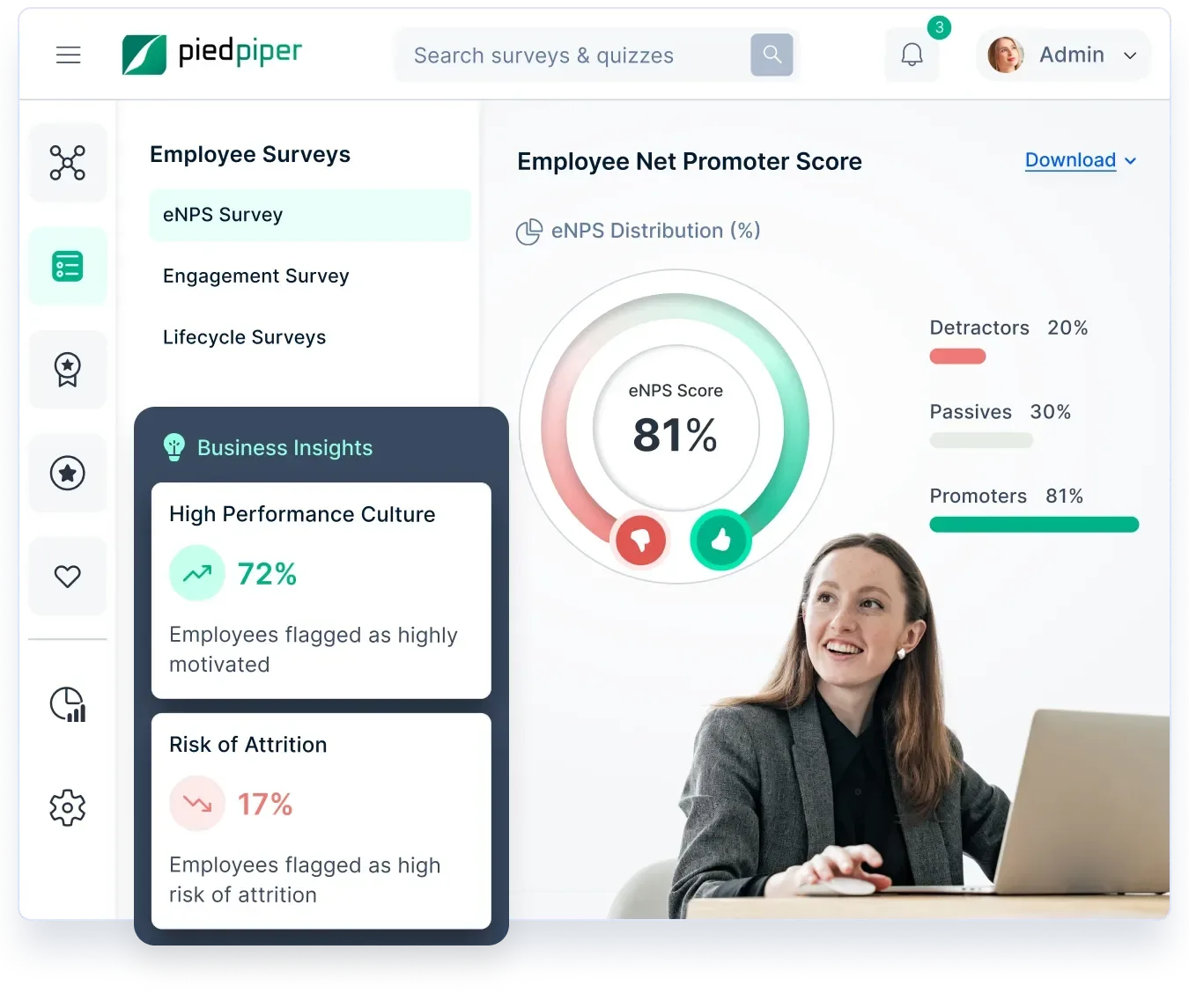
Repeat the survey at least twice a year, and use short pulse surveys in between to check specific actions.
Metrics that show whether inclusion is working
Survey sentiment tells you how people feel, and people data tells you what is happening to them. Track both together and review them every quarter.
| Metric | What to look for |
|---|---|
| Representation by level | Whether diversity holds from entry level to leadership or drops off at a particular rung |
| Promotion and hiring rates by group | Gaps in who gets hired, promoted or sponsored |
| Pay equity | Unexplained pay differences for similar roles and performance |
| Attrition by group | Whether some groups leave faster than others |
| Inclusion index | The average score on your inclusion survey questions, tracked over time |
| Recognition distribution | Whether recognition reaches every team, location and group fairly |
How Empuls strengthens diversity and inclusion
Empuls, Xoxoday's employee engagement platform, supports diversity and inclusion across four pillars: listen, act, recognize and sustain. The five practical uses below follow that order, starting with listening because every other action depends on knowing how employees feel.
| Pillar | Inclusion objective | Empuls capability |
|---|---|---|
| Listen | Understand inclusion sentiment | Pulse and lifecycle surveys, eNPS, custom inclusion questions |
| Act | Drive cultural and behavioral change | Social intranet, community groups, Em the AI copilot, manager dashboards |
| Recognize | Appreciate inclusive behaviors | Value-based badges, peer recognition, team awards |
| Sustain | Maintain momentum and measure outcomes | Reports and analytics, community engagement, inclusive rewards |
1. Run diversity and inclusion surveys
Use Empuls surveys to send pulse surveys with the inclusion questions above, segment results by department, region and tenure to spot gaps, and automate lifecycle surveys to understand experiences from onboarding to exit. Combine eNPS with inclusion questions to build a sentiment baseline.
2. Create safe spaces through the social intranet
Use the Empuls social intranet and groups to build communities such as Women in Tech, LGBTQIA+ allies or Multicultural Voices, open to anyone who wants to join. Share educational posts, heritage month highlights and an "inclusive word of the week," and encourage dialogue through polls and leadership ask-me-anything sessions.
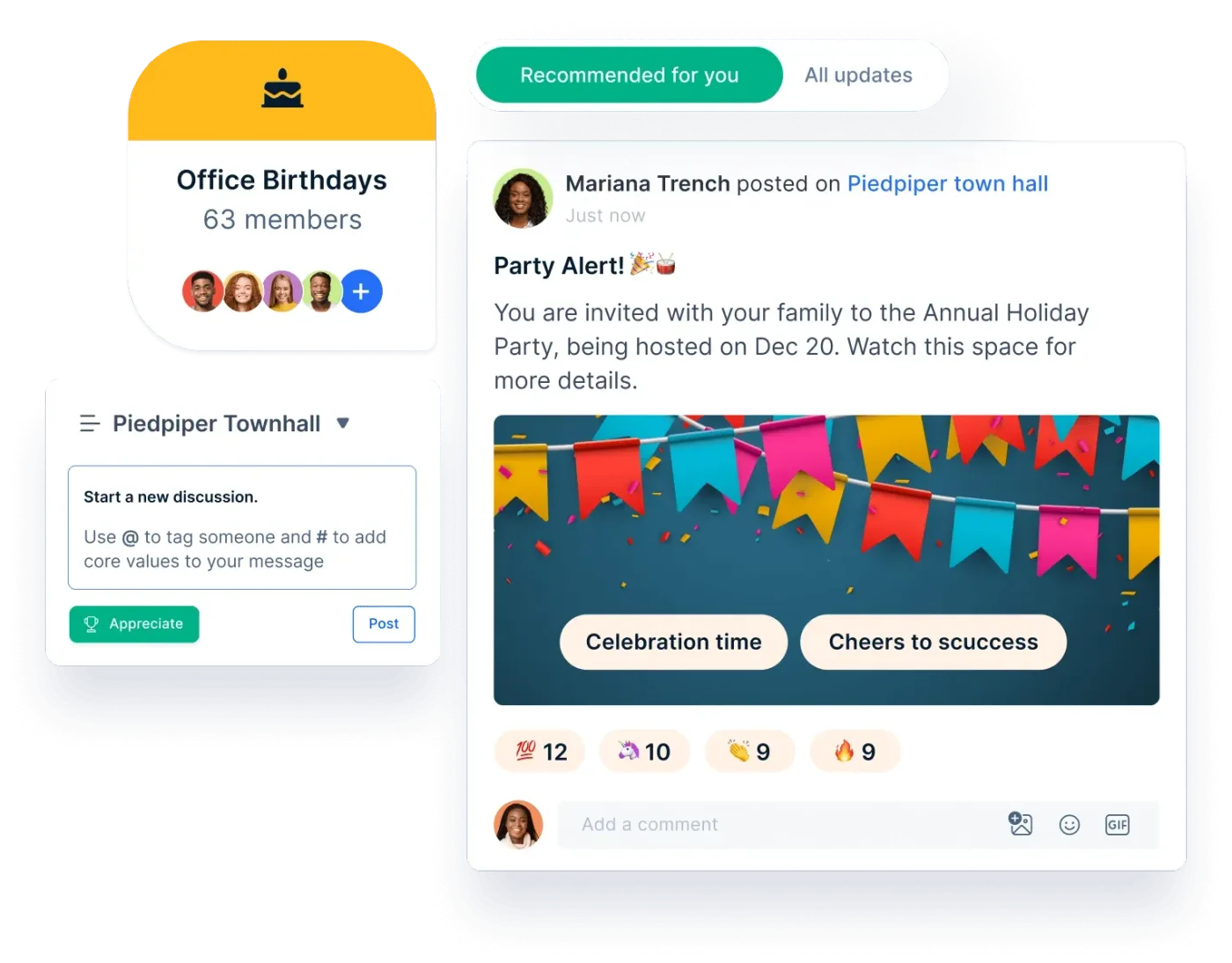
You can also pin activities like "How everyone got their name" or "I am" statements so remote and frontline employees can join in on their own time.
3. Celebrate differences through recognition
Set up value-based awards tied to inclusive behaviors, such as an "Ally of the Month," use peer-to-peer recognition to call out inclusive actions, and mark cultural moments like Pride Month or International Women's Day with celebrations. The wall of fame makes these moments visible across the company.
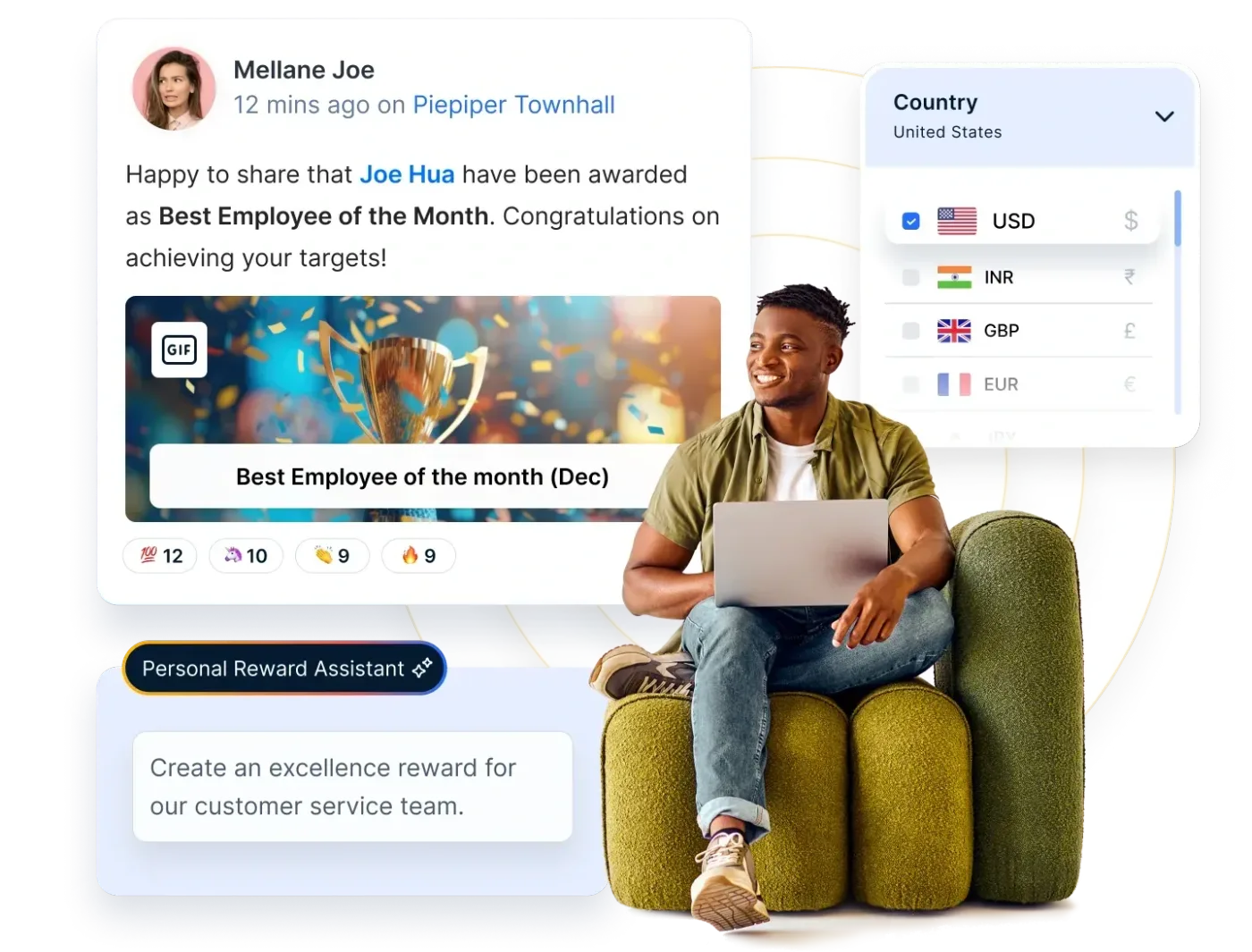
Rewards are localized by currency and adjusted for cost of living, so a reward feels equally meaningful to colleagues in different countries.
4. Run awareness campaigns through interest groups
Use community groups and gamification to run activities like stereotype-busting campaigns, culture potlucks, photo boards, virtual book clubs and storytelling sessions. Reward participation with badges and points, and let employees redeem points for gift cards, experiences or charity donations.
5. Offer inclusive and equitable benefits
Make sure benefits work for a diverse workforce. Flexible lifestyle accounts let people spend on what they need, such as mental health, family care or fitness, while discounts let employees pick what suits their lives. Financial wellness options such as salary advances or an emergency loan program can be a powerful equalizer for employees under financial stress.
Making diversity and inclusion part of how you work
Diversity and inclusion in the workplace are not optional. They are foundational to innovation, engagement and long-term success. By building a culture that values every employee's background and voice, companies strengthen their teams and create a lasting competitive edge.
From executive decisions to daily interactions, embedding inclusion keeps organizations future-ready, culturally aware and deeply human. The journey takes commitment, honest measurement and regular course correction, but the reward, a thriving and fair workplace, is worth it.
Book your Empuls demo
Frequently asked questions
Diversity describes the mix of people in an organization, such as differences in gender, age, ethnicity, background and thinking style. Inclusion describes how those people are treated: whether they feel respected, heard and able to contribute fully. A company can be diverse without being inclusive, which usually leads to disengagement and turnover among the people it hired.
Diversity and inclusion matter because they improve decisions, innovation and retention. Diverse teams bring more perspectives and catch blind spots, while inclusive cultures help people stay and do their best work. They also strengthen your employer brand, help you understand diverse customers and reduce the legal and reputational risks that come with unfair treatment.
DEI stands for diversity, equity and inclusion. Diversity is the mix of people, equity is fair access to opportunity and pay, and inclusion is a culture where everyone feels valued. Some organizations add belonging (DEIB) or accessibility (DEIA), and many now use terms such as inclusion and belonging to describe the same goals.
Popular diversity and inclusion activities include inclusive vocabulary sessions, "I am" statement exercises, stereotype-busting discussions, culture potlucks, photo snapshot boards and story-sharing circles. For remote teams, virtual book clubs, "how I got my name" sessions and preference games work well. Keep activities voluntary, repeat them regularly and let employees help plan them.
Measure inclusion with an anonymous survey covering fairness, voice, belonging and growth, then combine the scores with people data such as promotion rates, pay equity and attrition by group. Track an inclusion index over time, segment results by team and level, and only report groups large enough to protect anonymity.
Run a full diversity and inclusion survey once or twice a year so you can track trends, and use short pulse surveys every month or quarter to check specific actions. Lifecycle surveys at onboarding and exit add useful detail on how inclusion feels at different stages of the employee journey.
Managers shape inclusion more than any policy because they run meetings, assign work, give feedback and recommend promotions. Inclusive managers make sure every voice is heard, share stretch opportunities fairly, recognize contributions consistently and act quickly on bias. Training, clear expectations and accountability help managers turn inclusion goals into everyday behavior.
Diversity and inclusion goals remain lawful, but programs that exclude or favor people based on a protected trait such as race or sex can violate Title VII. Since the EEOC's 2025 guidance, many employers have opened mentoring, training and resource groups to everyone and focused on fair processes. Review programs with legal counsel in each market.





































































































































































































































































































































































































































































































































































