
Key Takeaways
The five biggest long service awards trends are personalized rewards, experiential rewards, digital and shareable recognition, wellness perks and gamified points and tiers.
Median US employee tenure rose to 4.1 years in January 2026, so more employees are reaching milestones that deserve recognition.
The Incentive Research Foundation found 65% of North American programs expect more participants to receive non-cash incentives in 2026.
Personalization and digital recognition are the easiest wins; experiences and tiered rewards fit the 10, 15, 20 and 25-year milestones.
Modern programs start before year five, offer choice at every tier, automate delivery from HR data and track redemption and retention.
The five biggest long service awards trends are personalized rewards, experiential rewards, digital and shareable recognition, health and wellness perks, and gamified points and tiers. Together they move service recognition away from the gold watch and the generic plaque toward rewards employees choose, celebrations colleagues join and recognition that happens on time, every time.
A simple thank-you note no longer cuts it for people who have given your organization five, ten or twenty years. This guide covers what is driving the shift, each of the five trends with examples and how to adopt it, a quick comparison of cost and effort, and an audit you can run on your own program.
What is driving long service awards trends
Modern long service awards are service anniversary awards that combine employee choice, public celebration and automated delivery, rather than a fixed gift handed out at five-year intervals. Three forces are behind these employee tenure recognition trends and service anniversary award trends.
First, more people are reaching milestones. The US Bureau of Labor Statistics reports that median employee tenure rose to 4.1 years in January 2026, up from 3.9 years in 2024, and reached 9.6 years for workers aged 55 to 64. Second, employers are investing in non-cash rewards and the technology to deliver them: the Incentive Research Foundation's 2026 outlook found 65% of North American programs expect more participants to receive non-cash incentives, and 62% expect program technology budgets to rise. Third, wellbeing is under strain: Gallup found that in late 2025, for the first time in its tracking, more US workers were struggling (49%) than thriving (46%).
65%
of North American programs
expect more people to receive non-cash incentives (IRF, 2026)
62%
expect higher tech budgets
for incentive and recognition programs (IRF, 2026)
46%
of US workers thriving
the lowest in Gallup's trend, Q4 2025
4.1 years
median US tenure
up from 3.9 years in 2024 (BLS, January 2026)
The forces behind modern long service awards
Recognition quality matters as much as the reward. Gallup and Workhuman research found that employees who receive high-quality recognition were 45% less likely to have changed organizations two years later, and describes quality recognition as incremental, well defined and personalized.
Traditional vs modern long service awards
The table compares how long service recognition used to work with how leading programs run it today. Most organizations sit somewhere in between, so use it to spot the rows where your program still looks traditional.
| Element | Traditional approach | Modern approach |
|---|---|---|
| First milestone | Five years | Year 1 or 3, then every major anniversary |
| Reward | One fixed item: watch, pin or plaque | Gift of choice, experience, wellness perk or points |
| Message | Generic card from HR | Specific note or video from manager and leaders |
| Visibility | Annual dinner for a few | Social feed, Wishboard, Wall of Fame, shareable badge |
| Delivery | Spreadsheets and reminders, often late | Automated from HRMS data, on the day |
| Measurement | Rarely tracked | Redemption, participation and retention tracked |
Bring your service awards up to date
Automate tiered anniversary rewards, Wishboards and certificates, with rewards employees choose.
Talk to our ExpertTrusted by 5,000+ companies
5 long service awards trends to watch
These five trends in years of service awards are reshaping how organizations recognize tenure, and personalization comes first because every other trend depends on it. Each trend includes examples, why it is growing and how to put it into practice.
1. Personalized awards transform long service celebrations
Years of service awards used to be a gold watch or a generic plaque. Today they are increasingly personal, because a reward tailored to the individual shows the company values them as a person, not a headcount.
Examples of personalized long service award ideas include:
- E-gift cards: Digital gift cards from a broad catalog, so employees choose their favorite stores or services.
- Customized travel: Trips built around the employee's interests, such as a culinary tour or a nature adventure.
- Personalized fitness gear: High-end equipment such as a custom bicycle or a smart home gym setup.
- Subscription boxes: Curated boxes based on interests such as gourmet food, books or hobbies.
- Engraved tech: Tablets or smartwatches engraved with the employee's name or a special message.
Personalization is growing because it drives engagement, and because today's workforce is diverse in demographics, preferences and lifestyles. A reward that fits one person can mean nothing to another.
Six strategies make personalization practical, even at scale:
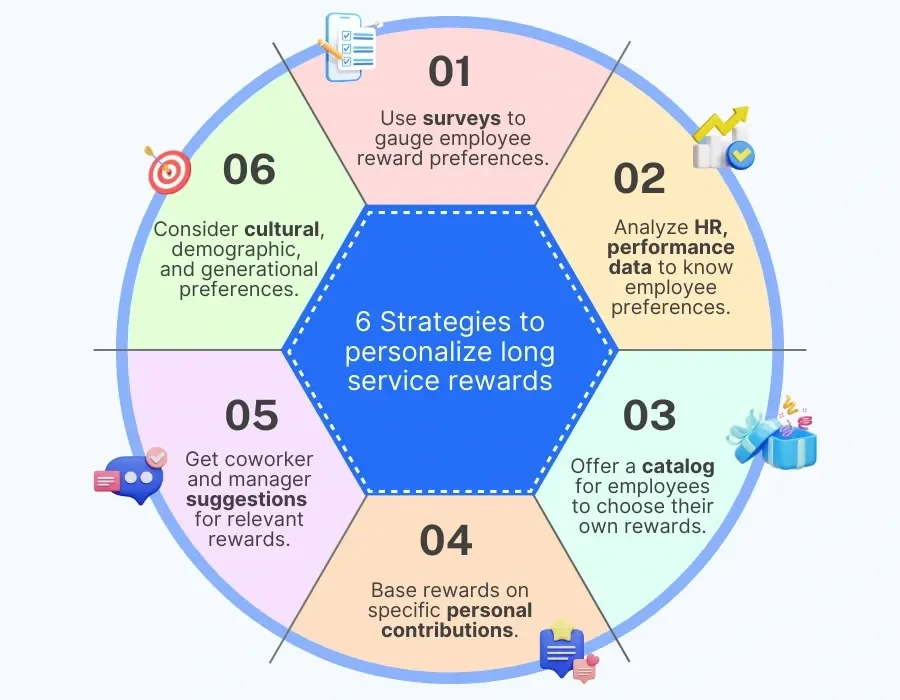
- Use surveys: Ask employees about their reward preferences, interests and bucket-list dreams.
- Analyze HR data: Onboarding profiles and performance records often reveal hobbies, family situations and goals.
- Offer a catalog: Let employees choose their own reward from a broad range of options.
- Base rewards on contributions: Tie the message and reward to what the person actually achieved.
- Ask coworkers and managers: Colleagues often know what someone would value most.
- Respect cultural, demographic and generational preferences: What feels celebratory differs across regions and age groups.
The payoff is higher morale, stronger retention and a culture of appreciation that helps attract talent. For tier-by-tier ideas, see our guide to long service awards.
2. Experiential rewards make milestones memorable
Experiences are becoming more popular than physical gifts. Travel vouchers, spa days, concert tickets and gourmet dining create memories that last far longer than an item forgotten in a drawer.
- Weekend getaways: A relaxing weekend at a resort or a charming bed and breakfast.
- Adventure experiences: Hot air balloon rides, skydiving or scuba diving lessons.
- Culinary experiences: Cooking classes, gourmet dining or wine tasting tours.
- Wellness retreats: Spa or wellness-focused breaks built around rest and renewal.
- Cultural experiences: Theater, concerts or exclusive art exhibitions.
Experiences are growing because they create stories employees share, they can be tailored to individual tastes and they lift happiness more than another possession. They also leave a lasting, positive association with the employer that provided them.
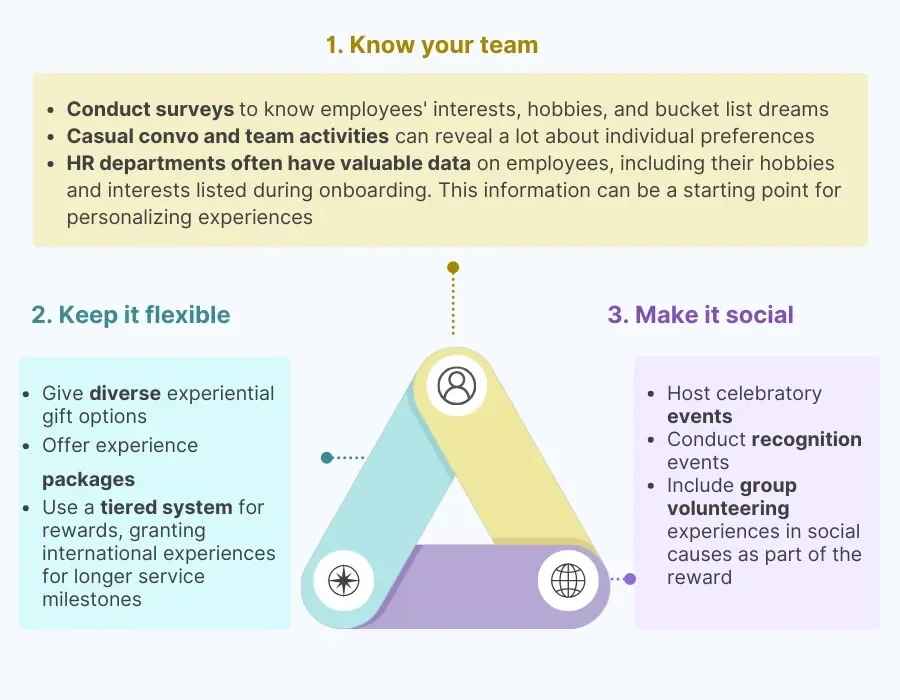
Three principles help you get experiential rewards right. Know your team: use surveys, casual conversations and HR data to learn each person's interests. Keep it flexible: offer a range of experiences, and use tiers so longer milestones unlock bigger experiences, such as international travel. Make it social: some experiences are better shared, such as celebratory events, group outings or volunteering. Our guide to experiential rewards covers sourcing and delivery.
3. Digital, shareable recognition goes mainstream
Digital recognition is more than a fad; it reflects how people work now. A digital badge or certificate is an online record of an achievement that employees can show on internal profiles or share on LinkedIn, and digital celebrations let colleagues in every location join in.
- Milestone badges: Named badges such as "Decade of Dedication" for 10 years or "Silver Service" for 25 years.
- Digital certificates and yearbooks: Auto-generated certificates and anniversary yearbooks with peer wishes, ready to download or share.
- Wishboards and feed posts: A shared board where teammates post wishes on the anniversary.
- Digital rewards: Learning subscriptions, wellness app memberships or a catalog of e-gift cards.
The trend is growing because digital recognition is instant, scales from a small team to a global enterprise, costs less than trophies and ceremonies, and is visible. Automation adds a further shift: platforms connected to the HRMS now detect anniversaries, nudge managers and draft personalized messages, so no milestone is missed.
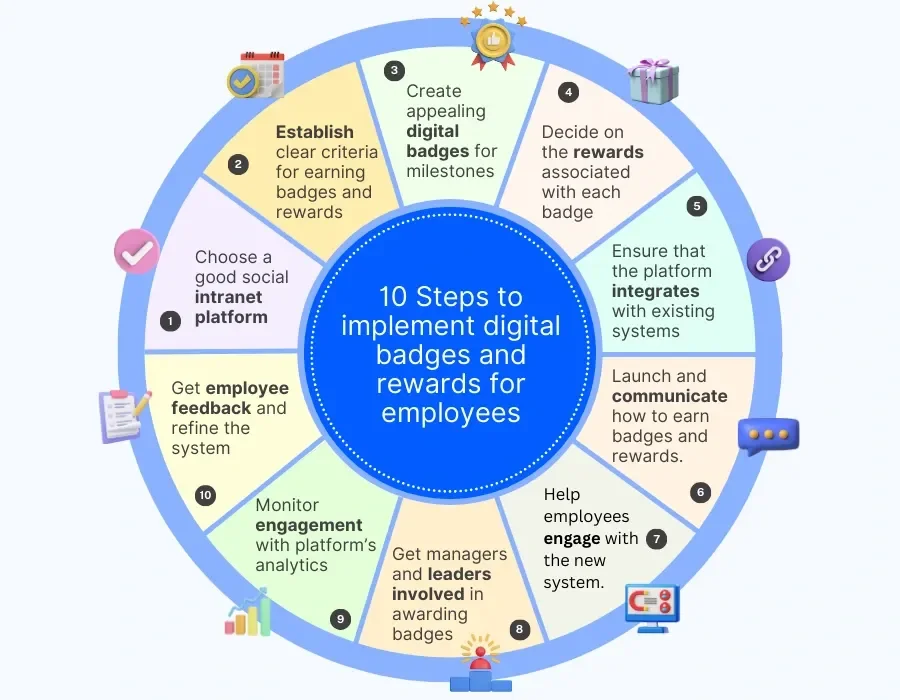
Ten steps take digital badges and rewards from idea to launch:
- Choose a platform: Pick a social intranet or recognition platform that supports badges and rewards and is easy to use.
- Establish criteria: Define clearly what earns each badge, aligned with your values and goals.
- Design badges: Create appealing badges for each milestone and achievement level.
- Attach rewards: Decide which reward, such as points, leave or gift cards, comes with each badge.
- Integrate systems: Connect the platform to your HRMS and to Slack or Microsoft Teams so anniversaries trigger automatically.
- Launch and communicate: Explain how badges are earned and how rewards are redeemed.
- Drive engagement: Help employees use the system and show badges on their profiles.
- Involve managers and leaders: Ask them to present badges and add personal messages.
- Monitor analytics: Track participation, redemption and peer engagement.
- Refine with feedback: Ask employees what works and adjust criteria and rewards.
4. Health and wellness perks gain traction
With wellbeing under pressure, rewards such as gym memberships, wellness retreats and meditation app subscriptions are becoming popular service awards. They show the company cares about the whole person, not just their work.
- Premium gym memberships: Access to top-tier gyms or fitness clubs.
- Wellness retreats: Packages built around relaxation, meditation and rejuvenation.
- Health and wellness gift cards: Choice across wellness stores and services.
- Healthy meal delivery: Subscriptions to nutritionally balanced meal services.
- Online fitness classes: Virtual classes or personal training sessions.
Wellness perks suit long-tenured employees especially well because needs change with age and life stage. To adopt them, survey employees about the perks they want, tailor offerings to lifestyle and health preferences, partner with wellness providers, promote the options clearly and review usage regularly. Our roundup of employee wellness trends covers the wider picture.
5. Gamified points and tiers keep recognition exciting
Gamification adds play, progression and achievement to recognition. For long service, it turns a once-in-five-years event into continuous recognition that keeps people engaged between milestones.
- Point-based systems: Employees earn points for each year of service and for milestones, then redeem them for rewards they choose.
- Tiered levels: Like levels in a game, each tenure tier unlocks new rewards or privileges, giving a clear sense of progression.
- Social leaderboards and celebrations: Virtual celebrations, badges and trophies make recognition visible company-wide.
- Challenges and quizzes: Friendly competitions linked to anniversaries or company milestones.
Gamified rewards work because they provide continuous motivation, add social recognition from peers and speak the language of younger employees who grew up with games. To adopt them, define the behaviors you want to encourage, choose rewards that matter to long-tenured employees, design points, levels and badges, integrate them into existing tools and monitor results. See our guide to employee gamification for more examples.
Long service awards trends at a glance
The table compares the five trends by cost, effort to set up and where each fits best. Personalization and digital recognition are the easiest wins for most organizations, while experiences and tiers are worth adding for the milestones that matter most.
| Trend | Relative cost | Setup effort | Best fit |
|---|---|---|---|
| Personalized rewards | Low to medium | Low with a reward catalog | Every tier, every milestone |
| Experiential rewards | Medium to high | Medium | 10, 15, 20 and 25-year milestones |
| Digital, shareable recognition | Low | Low once integrated with the HRMS | Every anniversary, distributed teams |
| Health and wellness perks | Low to medium | Medium | Employees at later life and career stages |
| Gamified points and tiers | Low to medium | Medium | Year-round engagement between milestones |
Long service awards trend audit
Use these eight questions to score your current program against the trends above. Give one point for every yes; a score of 6 or more means your program is modern, while 3 or less means it is time for a redesign.
| Audit question | Trend | If the answer is no |
|---|---|---|
| Do you recognize employees before their fifth anniversary? | Earlier milestones | Add Year 1 and Year 3 recognition |
| Can employees choose their reward at every tier? | Personalization | Offer a curated catalog of gift cards, experiences and merchandise |
| Do managers write or record a specific, personal message? | Personalization | Give managers a nudge and a message prompt before each anniversary |
| Do major milestones include an experience option? | Experiential rewards | Add travel, dining or wellness experiences from 10 years |
| Can colleagues join the celebration digitally? | Digital recognition | Use a Wishboard or social feed post for every anniversary |
| Do employees get a shareable certificate or badge? | Digital recognition | Auto-generate branded certificates and badges |
| Are anniversaries triggered automatically from HR data? | Digital recognition | Connect your HRMS to a recognition platform |
| Do you track redemption, participation and retention? | Measurement | Set up a quarterly report on program results |
Our guide to measuring employee recognition programs explains how to set up the metrics in the last row, and the employee recognition guide covers how service awards fit a wider recognition strategy.
How Empuls supports modern long service awards
Empuls brings all five trends together in one platform, so long service recognition is personal, social and automatic. Anniversaries flow in from your HRMS, and each tenure tier gets its own reward value, gift collection and message.
- Automate tiered service awards with certificates, Wishboards and anniversary yearbooks through Empuls service awards.
- Let employees choose from gift cards, experiences and merchandise, and reward other achievements with Empuls milestone rewards.
- Offer wellness programs and challenges alongside recognition with Empuls wellness.
- Run points, badges, leaderboards and contests with Empuls challenges and contests.
Long service recognition that looks forward
Long service awards are no longer just about commemorating tenure. They have become meaningful expressions of appreciation that look ahead to an employee's future with the company. Start with personalization and choice, add experiences for the biggest milestones, make every celebration digital and social, support wellbeing and keep people engaged between anniversaries with points and tiers. Run the audit above once a year to keep your program current.
Book your Empuls demo
Frequently asked questions
The main trends are personalized rewards chosen by the employee, experiential rewards such as travel and dining, digital and shareable recognition such as badges, certificates and Wishboards, health and wellness perks, and gamified points and tiers. Organizations are also recognizing earlier milestones and automating delivery from HR data.
A modern long service award gives the employee a choice of reward, includes a specific message from their manager or leaders, lets colleagues join the celebration digitally and arrives on the anniversary itself. It often starts at year 1 or 3 rather than year 5 and is tracked for redemption and impact.
Some organizations still give watches, pins or plaques, especially at 25 years, but fixed items are no longer the norm. Most programs now offer a choice of reward, and keepsakes such as engraved watches are usually paired with an experience, a gift card or points so employees receive something they actually want.
Experiences create memories and stories that last longer than physical gifts, can be tailored to each person's interests and leave a positive association with the employer. They suit major milestones such as 10, 15, 20 or 25 years, when a weekend getaway, a dining experience or a wellness retreat feels proportionate to the commitment.
Digital badges are online records of a milestone, such as a "Decade of Dedication" badge for 10 years, shown on internal profiles and often shareable on LinkedIn. They are instant, low cost and visible, and work best when paired with a reward, a personal message and a celebration colleagues can join.
Use points for each year of service that employees redeem for rewards, tiered levels that unlock new rewards or privileges at each milestone, badges and leaderboards for visibility, and friendly challenges linked to anniversaries. Gamification keeps recognition continuous between milestones instead of once every five years.
Review it at least once a year. Check redemption rates, peer participation, employee feedback and retention among recognized employees, compare the program against current trends using an audit, and update reward options, tiers and budgets so the program keeps pace with your workforce.





































































































































































































































































































































































































































































































































































