
Key Takeaways
High potential employees leave mainly over missing purpose, low trust in senior leaders, limited development, slow advancement and weak coaching, not pay alone.
DDI found high-potential individual contributors planning to leave within a year rose from 13% in 2020 to 21% in 2024.
HiPos whose manager rarely offers growth opportunities are 3.7 times more likely to leave within a year, according to DDI's Global Leadership Forecast 2025.
Warning signs of a top performer leaving include falling engagement, missed deadlines, more absences, avoiding long-term projects and withdrawing from the team.
Regular stay interviews, frequent specific recognition, clear career paths and protected work-life balance are the most reliable ways to retain high potential employees.
High potential employees leave when they stop seeing purpose in their work, stop trusting senior leaders, or stop growing fast enough, and rarely because of pay alone. DDI's 2025 research found high-potential talent is 3.7 times more likely to leave within a year when their manager does not regularly provide growth opportunities. Understanding why high potential employees leave, and spotting the warning signs early, is how you keep them.
A high potential employee, often called a HiPo, is someone with the ability, motivation and learning agility to grow into a bigger, usually leadership, role. Losing any employee to turnover hurts, but it is excruciating when one of your top performers or future leaders decides to go. Retaining that talent is vital for your team and your business, and it is getting harder.
Gallup found that 51% of US employees were either actively looking for a new job or watching for opportunities in late 2025. Your best people get the most offers. If you do not know why they would leave, you are already behind in the effort to get them to stay.
High potential vs high performing employees
The terms are often used interchangeably, but they are not the same, and the difference changes how you retain each group. Most high potentials are strong performers, while only some high performers have the drive and agility to step up:
| High performer | High potential (HiPo) | |
|---|---|---|
| Defined by | Strong results in their current role | Ability and ambition to succeed in bigger future roles |
| Main motivator | Recognition and reward for results | Growth, stretch work and a visible path upward |
| Biggest retention risk | Being overloaded and taken for granted | Stalled development and slow advancement |
| What keeps them | Fair pay, recognition, autonomy and balance | Development, sponsorship, purpose and trust in leaders |
This guide covers both groups, because they share many of the same reasons for leaving. Tools such as the 9-box grid for talent management help you identify who sits where.
5 signs a top performer is leaving
Some resignations come as a surprise, but most top performers show warning signs first. The five below usually appear in roughly this order, with engagement dropping well before attendance does, so the earlier ones give you the most time to act:
1. Decreased engagement and enthusiasm
Top performers are usually passionate about their work, taking initiative and driving results. A sudden drop in enthusiasm, such as less participation in meetings, avoiding extra responsibilities or disinterest in company goals, can signal disengagement. Employees who stop contributing ideas or seem indifferent to feedback may already be mentally checked out.
2. Lower productivity and missed deadlines
High achievers are known for exceeding expectations. If their output drops, they procrastinate more than usual or start missing deadlines, it could signal a shift in priorities. This often happens when employees begin to detach emotionally from their role or put their energy into job hunting.
3. Increased absences or frequent breaks
A noticeable change in attendance, such as more sick days, longer lunch breaks or sudden requests for time off, can be a red flag. Occasional absences are normal, but a consistent pattern may mean they are attending interviews, networking or simply disengaging from their role.
4. Lack of interest in long-term projects
When an employee avoids committing to future initiatives or leadership roles they would normally embrace, it is a sign they do not see themselves staying. If they seem uninterested in career development conversations or dismiss talk of future goals, they may already have one foot out the door.
5. Changes in attitude and communication
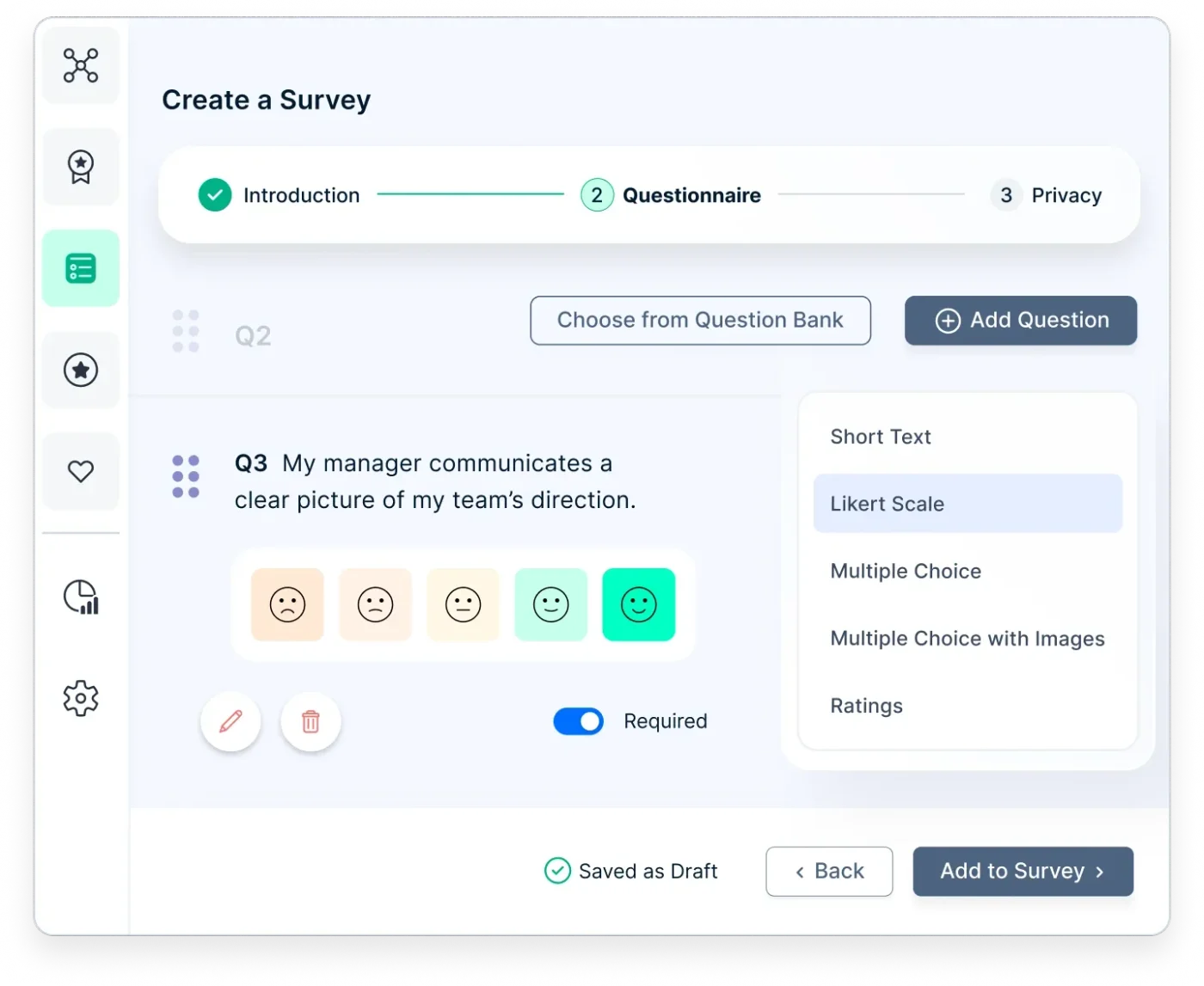
A top performer who once engaged openly may become distant, less responsive or frustrated with leadership and colleagues. If they stop contributing to team conversations, withdraw socially or voice dissatisfaction with company policies, they might be considering an exit. Short, anonymous pulse surveys with questions about managers, growth and workload help you see these shifts across teams instead of relying on one manager's instinct.
Spot flight risk before your best people resign
Empuls pulse surveys and recognition help you keep high performers engaged and heard.
Talk to our ExpertTrusted by 5,000+ companies
Reasons why high potential employees leave
DDI's Global Leadership Forecast 2025, based on responses from 10,796 leaders and 2,185 HR professionals in 2,014 organizations, found the share of high-potential individual contributors planning to leave within a year rose from 13% in 2020 to 21% in 2024. It also measured how much each factor raises the risk:
Those factors map onto seven common HiPo turnover reasons. They are ordered from the most visible, benefits and engagement, to the ones leaders most often overlook, feeling valued and trust:
1. You are not meeting their expectations for rewards and benefits
Your top performers value merit-based rewards and good compensation, which is not so different from most employees. But they also know they have the skills to get those needs met elsewhere if your company falls short. High performers tend to value flexible schedules, vacation time, retirement plans and training highly.
If you do not offer a range of rewards that recognize your highest performers, they are likely to look elsewhere and find an offer good enough to tempt them away. Creative perks cannot make up for pay that is clearly below market, so benchmark their compensation regularly and use employee benefits to round out a competitive package.
2. They do not find their work engaging or meaningful enough
You might assume your top performers are engaged because they are so productive. They might be less engaged than you think, and if you are not making real efforts to engage them, that is probably the case. Their biggest enemy is boredom: if they excel far beyond the rest of the team, they can tire of doing the same tasks, and if they are surrounded by a stagnant team, they start to feel stuck.
Purpose matters most of all. DDI found high potentials who lack a sense of purpose in their role are 4.8 times more likely to leave. Engage them with challenging, creative work and explain the why behind it, so they see how their work connects to something that matters.
3. Their career development is limited
Your top performers know they have exciting potential ahead of them at the right company. Few things frustrate them more than being passed over for promotion or languishing in the same role too long. If your best people cannot see a long and successful career with you, they will be out the door quickly.
Watch for the curse of competence: managers are sometimes reluctant to let their strongest people move on because they contribute so much. If you hold them back, they will leave, and they will leave the company as well as the manager. DDI found HiPos who are not advancing at an acceptable rate are 3.1 times more likely to leave. To help them progress:
- Hold regular career conversations: Talk about their goals and how they can achieve them with you.
- Keep them learning: Ongoing training and stretch assignments are highly valued by top performers.
- Fix patterns at the top: If high performers keep leaving over career frustration, your senior team needs to make room for growth.
4. They are overworked and burnt out
If the reward for being incredibly productive is more and more work, that is a recipe for dissatisfaction and burnout. Ask yourself how you are rewarding the extra output of your best people.
Offer compensation options that acknowledge contributions above and beyond, such as a separate bonus or raise pool for top performers, an extra merit increase or a one-time lump-sum bonus. Look at flexible work options too, such as compressed workweeks, job sharing, flextime or remote days, so top performers can recharge. It costs time and money, but far less than losing another high performer. Our guide on ways to prevent burnout has more ideas.
5. They do not have enough autonomy
Top performers know they are good at their jobs and can be trusted to deliver on time and to a high standard. That is why they dislike being micromanaged. Every employee wants autonomy and purpose at work, and your high performers have certainly earned it.
Tell them what needs to be done and trust them to do it. That can include a flexible schedule that is not available to everyone, because you already know they will deliver. Some customer service leaders go further and let frontline staff spend a set budget to fix a customer problem without asking for approval. Give them your trust, and you earn their loyalty.
6. They do not feel valued
Everyone wants to feel valued and appreciated at work. It is easy to take top performers for granted when they have been delivering for a long time and make hard tasks look easy. If their only reward for going above and beyond is a bigger workload, they feel taken advantage of rather than appreciated.
A yearly bonus will not cut it. Recognition needs to be frequent, specific and sometimes small to make an impact. A Gallup and Workhuman study found well-recognized employees were 45% less likely to have left after two years, yet only 22% of employees said they get the right amount of recognition. If you reward only tenure or pay by role rather than outcomes, top performers will feel overlooked.
7. They have lost trust in senior leadership
High potentials watch leaders closely, because those leaders shape their future. When strategy changes without explanation, promises about promotions go unkept or leaders say one thing and do another, trust erodes quickly. DDI found HiPos who do not trust senior leaders are 3.8 times more likely to leave.
Build trust through consistency: explain decisions, follow through on commitments and give high potentials direct exposure to senior leaders through sponsorship, projects and open forums.
Stay interview questions for high potential employees
The best way to find out why high performers quit is to ask them while they are still with you. Use these stay interview questions once or twice a year with every HiPo, grouped by the drivers that matter most. Listen for the warning signs in the right-hand column and agree on one action at the end of each conversation.
| Driver | Question to ask | Warning sign to listen for |
|---|---|---|
| Purpose | What part of your work feels most meaningful right now? | Struggles to name anything, or describes work as routine |
| Purpose | How clearly can you see the impact of your work on the business? | Feels disconnected from company goals |
| Growth | What skills do you want to build in the next 12 months? | Says they have stopped learning |
| Growth | How often does your manager offer you stretch opportunities? | Rarely or never |
| Advancement | Where do you see your career here in two years? | Cannot see a path, or the path feels too slow |
| Trust | How confident are you in the direction senior leaders are taking us? | Doubts strategy or leadership follow-through |
| Coaching | What could your manager do differently to support you? | Little coaching or unclear feedback |
| Recognition | When did you last feel recognized for your work, and how? | Cannot remember, or recognition felt generic |
| Workload | Is your current workload sustainable? What would you take off your plate? | Signs of exhaustion or resentment about extra work |
| Flight risk | What might tempt you to leave, and what would make you stay? | Mentions specific offers or recruiter contact |
Record the answers, look for patterns across your HiPo group and share the themes with senior leaders. One stay interview will not change much on its own. Acting visibly on what you hear, quarter after quarter, is what keeps people.
5 tips to retain high potential employees
High-potential employees bring innovation, leadership and long-term value, and losing them is expensive: Gallup estimates that replacing a leader or manager costs about 200% of their salary, and many HiPos are your future leaders. The five tips below are ordered by how strongly they address the drivers above, starting with growth, which DDI's data shows matters most to HiPos who plan to leave.
1. Offer clear career growth paths
High-potential employees are driven by ambition and want to see a future within the company. Without clear progression, they look elsewhere. Structured career paths, mentorship programs and leadership training help them picture long-term growth.
Regular career discussions, skill development and internal promotions show them a roadmap. When they know hard work leads to new opportunities, they stay engaged and committed. Make sure managers are coached to have these conversations well, since a manager who is not an effective coach raises HiPo flight risk by 2.7 times in DDI's data.
2. Recognize and reward performance
When employees feel their efforts go unnoticed, motivation fades. A structured employee recognition program helps you appreciate and celebrate top performers in meaningful ways.
Recognition does not always have to be monetary. Public appreciation, peer-to-peer recognition and career opportunities reinforce a culture of acknowledgment. Whether through bonuses, promotions or small but thoughtful rewards, employees who feel valued stay loyal.
3. Provide challenging and meaningful work
High-potential employees seek challenges that let them use their skills, think critically and make an impact. Repetitive, uninspiring tasks lead to disengagement, while meaningful projects keep them motivated.
Let them own projects, take part in decision-making and contribute ideas that shape strategy. Giving them autonomy while aligning the work with their career goals boosts both engagement and productivity, and connects them to the purpose that DDI found matters most.
4. Foster a positive workplace culture
A workplace where people feel supported, connected and included builds long-term commitment. Positive environments encourage collaboration, open communication and a sense of belonging.
Encourage social connection and team bonding, celebrate milestones together and keep hybrid and remote employees in the loop. When employees feel emotionally connected to their workplace and trust its leaders, they are far less likely to look outside.
5. Support work-life balance
Burnout is a major cause of turnover, especially among high-potential employees who take on more responsibility. A culture that prioritizes well-being keeps them refreshed, motivated and productive over the long run.
Encourage flexible work arrangements, mental health support and reasonable workloads. Benefits such as wellness stipends, paid time off and remote work options show employees their well-being matters. For a broader view of high potential employee retention at senior levels, see our guide on how to stop losing your best people.
How Empuls helps you retain your best talent
High-potential employees leave when they feel undervalued, unchallenged or disconnected, and salary alone will not keep them. Empuls helps you build the culture, recognition and listening habits that do:
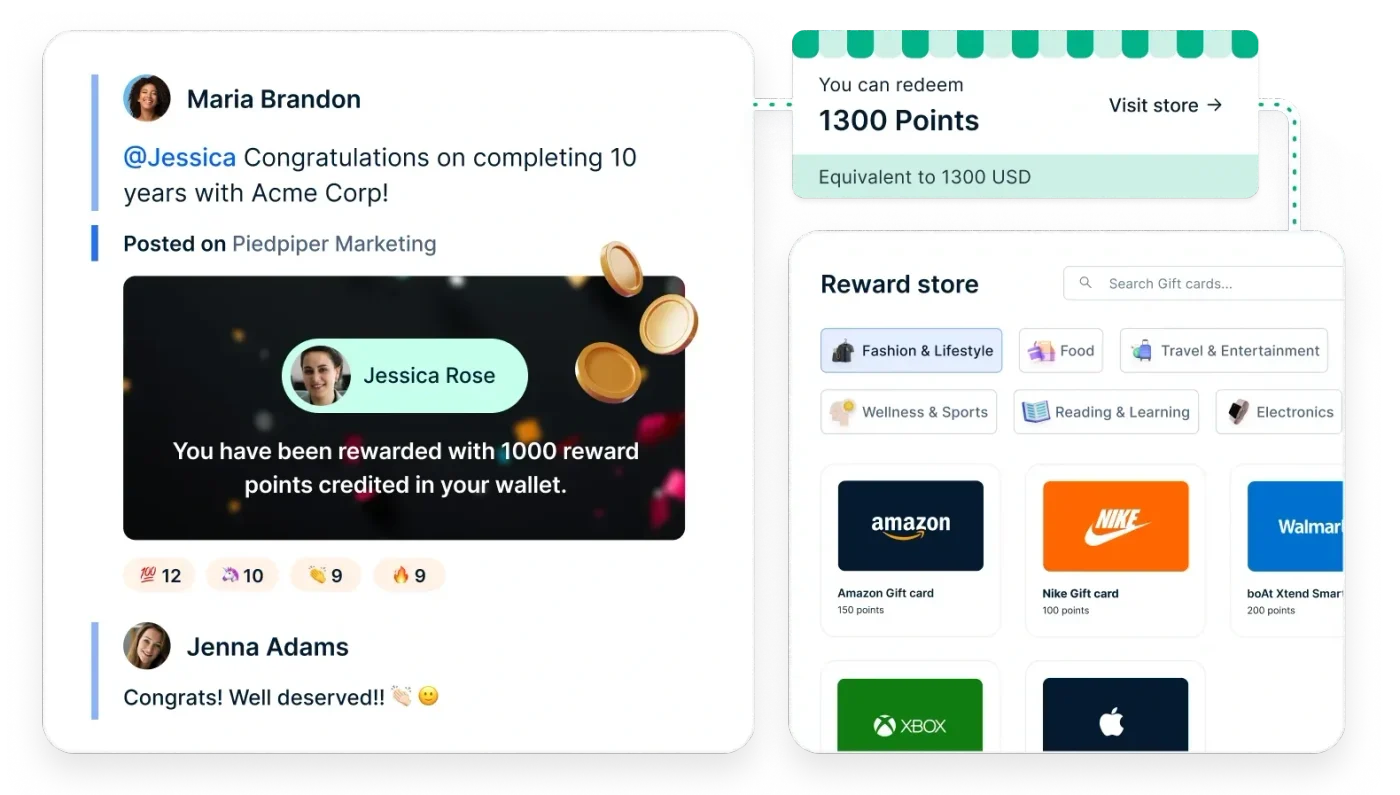
- Make recognition a habit: Peer-to-peer recognition and rewards keep appreciation frequent, specific and visible, with a reward store employees choose from.
- Give them a voice: Pulse surveys capture honest feedback on managers, growth and workload so leaders can act before concerns become resignations.
- Build a connected culture: A social intranet keeps teams and leaders connected, wherever people work.
- Support well-being: Employee benefits such as wellness perks and discounts show you care about life beyond work.
Keep your high potentials growing with you
High potential employees leave when they feel undervalued, stagnant or overworked, or when they lose purpose and trust. Lack of career growth, weak recognition and an unsupportive culture push them toward better opportunities.
If you are working out how to retain high potential employees, address these issues early: watch for the five warning signs, run stay interviews with the question bank above and act on what you learn through recognition, development and balance. For a wider framework that covers hiring through succession, read our guide to talent management strategy.
Book your Empuls demo
Frequently asked questions
High performers quit most often because they feel overworked and undervalued, see limited career growth, lack autonomy or lose confidence in their manager and senior leaders. Pay matters, but it is rarely the only cause. When the reward for strong results is simply more work, without recognition, development or a visible next step, top performers start looking elsewhere.
A high potential employee, or HiPo, is someone with the ability, ambition and learning agility to grow into a significantly bigger role, often in leadership. High potentials are usually strong performers, but not every high performer is a high potential. Organizations identify them through performance data, manager input and tools such as the 9-box grid.
Retain high potential employees by giving them clear career paths, stretch assignments and regular development conversations, along with frequent, specific recognition. Connect their work to a meaningful purpose, give them exposure to senior leaders to build trust and protect their workload from burnout. Hold stay interviews at least twice a year and act visibly on what you learn.
Common signs a high performer is about to quit include a sudden drop in enthusiasm, lower productivity or missed deadlines, more absences or unexplained time off, avoiding long-term projects and withdrawing from team conversations. No single sign proves someone is leaving, but several together are a strong signal to hold a stay conversation quickly.
Losing a high potential employee costs far more than recruiting fees. Gallup estimates replacing a leader or manager costs about 200% of their salary, and HiPos are often your future leaders. You also lose institutional knowledge, client relationships, team momentum and the investment already made in their development.
Ask what makes their work meaningful, what skills they want to build, where they see their career in two years, how well their manager supports them and when they last felt recognized. Close by asking what might tempt them to leave and what would make them stay. Agree on one concrete action and follow up within a month.
A counteroffer can work when the main reason for leaving is pay and the employee is otherwise happy. If the real reasons are growth, purpose, trust or their manager, money rarely fixes the problem and they may leave later anyway. It is more effective to address those issues early through stay interviews and development plans.





































































































































































































































































































































































































































































































































































