
Key Takeaways
Employee satisfaction is the level of contentment employees feel toward their job, manager, pay, growth and workplace, and it is a leading indicator of turnover.
The Conference Board found 68.9% of US workers satisfied in 2026, but satisfaction with individual job elements such as promotion and bonuses averaged just 59%.
Satisfaction is not engagement: satisfaction removes reasons to leave, while engagement creates reasons to give your best, and only 29% of US employees are engaged.
The five everyday employee satisfaction factors are meaningful work, recognition and rewards, career development, supportive management and a positive work environment.
Measure employee satisfaction with surveys, pulses, eNPS, one-on-ones and turnover data, and break results down by team and pay band to find hidden gaps.
Employee satisfaction is how content and fulfilled employees feel about their job, their manager, their pay and their workplace. You improve it by getting the basics right (fair pay, clear expectations, supportive managers, growth and recognition), then measuring it regularly and acting on what employees tell you.
If a single metric could represent the results of an organization's people management efforts, it would be employee satisfaction. Attrition and absenteeism are critical measures of the health of people management systems, but they are lagging indicators: by the time they move, the people have already left or checked out.
That is why employee satisfaction is one of the most widely studied topics in the workplace. A well-designed and well-run satisfaction survey can flag turnover risk early and help you prevent it. In this guide, you will learn what employee satisfaction means, how it differs from engagement, the employee satisfaction factors research has identified, 12 ways to improve it and how to measure it.
What employee satisfaction means
Employee satisfaction is the level of contentment and enthusiasm employees feel toward their job and workplace. It covers how people feel about their work, pay, benefits, manager, colleagues, growth prospects and working conditions. This guide looks at satisfaction from an organizational culture standpoint: what drives it, what you can control and how to measure it effectively.
Overall satisfaction can look healthy while specific parts of the job are not. The Conference Board's Job Satisfaction 2026 survey found that 68.9% of US workers are satisfied with their jobs, the highest level since tracking began in 1987, yet satisfaction with individual job elements averaged just 59%, with widespread dissatisfaction with promotion policies and bonus plans.
68.9%
of US workers are satisfied with their jobs
The Conference Board, 2026
59%
average satisfaction with individual job elements
The Conference Board, 2026
29%
of US employees are engaged at work
Gallup, August 2026
Satisfied is not the same as engaged
High employee satisfaction pays off in several ways:
- Lower turnover: Satisfied employees are less likely to start looking, which cuts hiring and onboarding costs.
- Better performance: Research consistently links job performance and satisfaction, and each tends to reinforce the other.
- Stronger employer brand: Satisfied employees recommend you to friends and leave better reviews, which helps hiring.
- Better customer experience: Content, well-supported employees give better service than frustrated ones.
Employee satisfaction vs engagement
Satisfaction and engagement are related but not the same. Satisfaction is how content someone is with their job; engagement is how much energy and commitment they invest in it. Gallup, which tracks engagement, describes engagement as a much higher bar than satisfaction: its employee engagement indicator shows only 29% of US employees were engaged as of August 2026, far below the share who say they are satisfied.
| Dimension | Employee satisfaction | Employee engagement |
|---|---|---|
| What it measures | Contentment with the job and conditions | Emotional commitment and discretionary effort |
| Nature | Passive: how people feel | Active: what people put in |
| Main drivers | Pay, benefits, security, conditions, manager | Purpose, recognition, growth, autonomy, belonging |
| Typical risk | Satisfied but coasting | Burnout if demands outpace support |
| Best measured by | Satisfaction surveys and turnover | Engagement surveys, eNPS and behavior |
You need both. Satisfaction removes reasons to leave, and engagement creates reasons to give your best. For the engagement side, read our guide to employee engagement, and for how culture fits in, see culture vs engagement.
Employee satisfaction factors
Employee satisfaction factors fall into three groups: the everyday drivers employees notice first, the organizational factors research has mapped in detail and the personal attributes each employee brings. The everyday drivers carry the most weight for most teams because managers can influence them this week, so start there.
Five everyday drivers of satisfaction
Organizations often focus on why employees leave, but it is just as important to understand what makes them stay. Research consistently points to five elements:
- Meaningful work: Employees stay in roles where the work is engaging and aligned with their personal values.
- Recognition and rewards: Regular acknowledgment of achievements and fair compensation play crucial roles in satisfaction and retention.
- Career development opportunities: Access to training and clear paths for advancement motivate employees to commit long term.
- Supportive management: Managers who communicate openly and provide support raise job satisfaction.
- Positive work environment: A culture of collaboration, respect and work-life balance keeps people content and loyal.
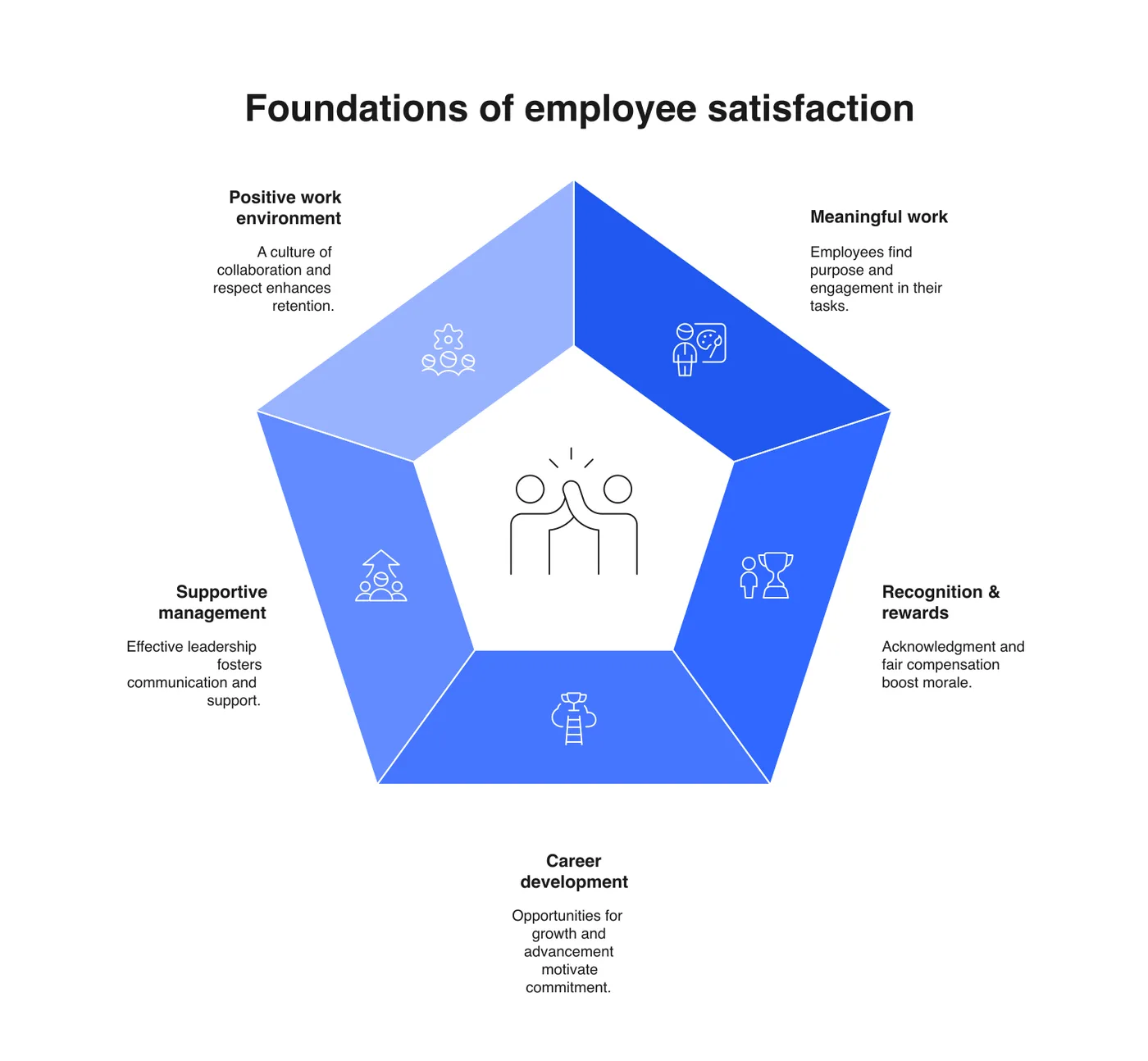
Focus on these five and you create roles with high satisfaction, lower turnover and a more committed workforce.
Organizational culture and nine research-backed factors
Organizational culture has shaped satisfaction research for decades. Dr. Elliott Jaques introduced the idea of culture from an organizational perspective in his 1951 book 'The Changing Culture of a Factory', which explored the values organizations need to nurture to earn their people's commitment. His later work on the 'requisite organization' described organizations that run efficiently and competitively by building trust and satisfaction among employees.
Trust and satisfaction have been constant subjects in people management ever since, and studies in the 1990s and 2000s showed a clear link between organizational culture and employee satisfaction. The practical takeaway is that culture is a factor you can control. A 2016 exploratory study by Ivana Petrović identified nine organizational factors behind job satisfaction:
| Factor | What it covers |
|---|---|
| 1. Conditions of work | Information to do the job, clear division of tasks, objective performance reviews, promotion on known criteria, respect for employee rights, room for initiative |
| 2. Relations between colleagues | Friendly atmosphere, good communication, support from colleagues, little conflict, competent and reliable coworkers |
| 3. The job itself | Challenging, stimulating work with few routine tasks, room for initiative, professional development and training |
| 4. Company's significance | Working in a field important to society, public image and reputation, being kept informed about the company |
| 5. Managers | Competent, organized managers who respect employees, are open to suggestions, available and supportive |
| 6. Compensation system | Pay tied to expertise and results, salary equal to effort, fair and non-discriminatory criteria |
| 7. Rewarding results | Fair pay and promotion, growth and training, quality onboarding, appreciation of a job well done, good cooperation across units |
| 8. Company as a support | A company employees can rely on in trouble, benefits, genuine care, transparency, reasonable overtime |
| 9. Basic work conditions | Safe and comfortable physical conditions, the equipment and information needed to do quality work |
If you want to strengthen the culture side of these factors, start with our guide to what organizational culture is.
Personal attributes and role perceptions
Culture is not the only determinant. Research by Brown and Peterson in 1993 found that, in addition to culture, employees' own characteristics and how they perceive their role shape their satisfaction.
In 2006, Markus Christen, Ganesh Iyer and David Soberman published a widely cited model in the Journal of Marketing that clarified how performance, effort and satisfaction relate. Their findings included:
- Performance raises satisfaction: The effect of job performance on job satisfaction is positive and highly significant.
- Effort and ability drive performance: Performance rises with greater effort or greater ability, and company productivity rises with job performance.
- Effort alone lowers satisfaction: Holding performance constant, more effort is negatively related to satisfaction, so work that feels like a grind without results wears people down.
- Pay matters: Compensation is directly and significantly related to job satisfaction.
- Job factors and role clarity help: Positive job factors and clear role perceptions improve both effort and satisfaction.
See what drives satisfaction on your teams
Run pulse surveys and eNPS, recognize good work and automate milestones in one platform.
Talk to our ExpertTrusted by 5,000+ companies
How to improve employee satisfaction: 12 ways
These 12 ways to improve employee satisfaction work whether an employee sees their role as a job or a career. They run from quick manager habits to bigger structural changes, and the later ones on career paths and rewards carry the most weight, because promotion policies and bonus plans are where satisfaction most often falls short.
1. Set clear expectations
Make sure your employees are not overworked, stressed or overwhelmed. Be clear about priorities, what good looks like and how success is measured, and be mindful of how much you assign, even if you lead an ambitious team.
Regular engagement and lifecycle surveys help you check the pulse. Configure surveys for each stage of the employee lifecycle, such as onboarding, wellness, learning and exit, and set questions, anonymity and audience so you can spot problems early and act on them.
2. Recognize good work
Managers must take time to make team members feel seen and appreciated. Celebrate small wins and big accomplishments, and be specific about the task, project and impact that earned the recognition.
Most employees do not feel they get enough praise, and that gap is costly. Gallup's 2024 research with Workhuman found that only 22% of employees get the right amount of recognition, and those who receive high-quality recognition are 45% less likely to have left two years later. In remote and hybrid teams, make recognition visible on shared channels so it is not lost.
3. Focus on long-term goals
When employees can see the organization's long-term goals, vision and strategy, they can connect their work to it and understand how they contribute. That sense of contribution raises satisfaction.
Make team members feel part of the bigger picture. Show that you value their input by inviting feedback on goals and plans.
4. Keep an open channel of communication
Constant communication builds relationships and makes sure important information is not missed. Lead by example: when you share openly, others feel safe doing the same.
Check in frequently with your team, personally and professionally. A shared social intranet helps remove silos and keeps everyone aligned on goals, news and information.
5. Care about employee wellbeing
Showing genuine care for wellbeing is one of the clearest ways to raise satisfaction. Support fitness and health goals, and encourage people to disconnect when they feel burned out.
Encourage managers to open one-on-ones with a personal check-in before jumping into work. Healthy, well-rested employees are more efficient and more satisfied. For current ideas, see our roundup of employee wellness trends for 2026.
6. Give them opportunities to learn
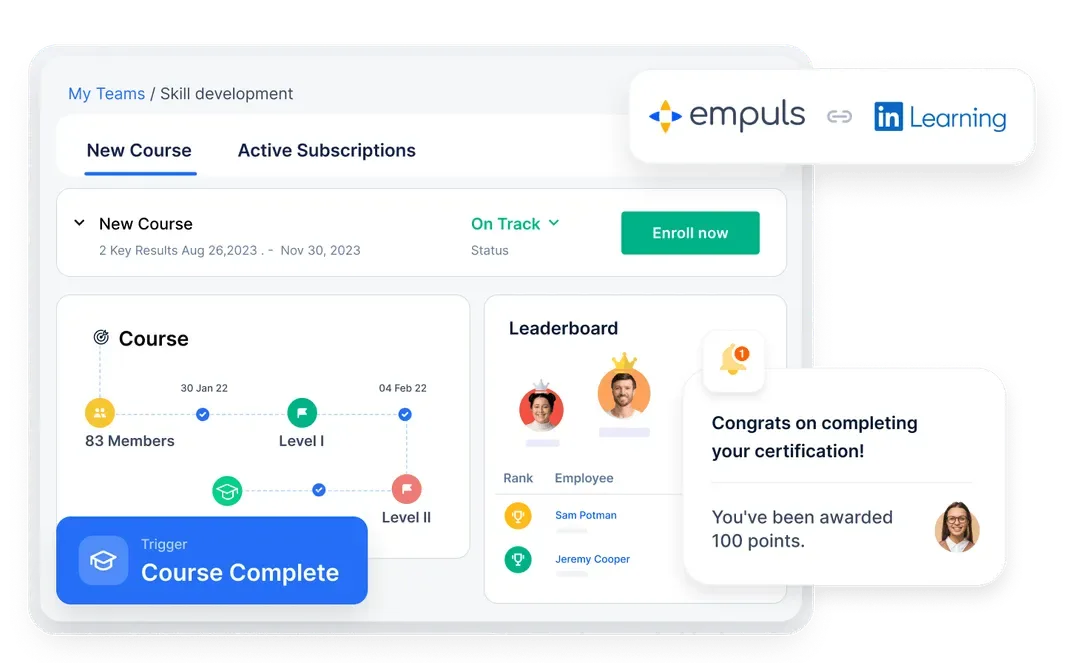
When employees stop learning, they start looking elsewhere for stimulation. Encourage people to build skills through courses, conferences, webinars and stretch projects, and talk with them about their goals so you can point them to the right resources.
LinkedIn's 2025 Workplace Learning Report found that providing learning opportunities is organizations' top retention strategy. Reward progress too: whether employees complete a training module, earn a certification or master a new skill, personalized recognition encourages them to keep investing in their growth.
7. Share feedback frequently
Whether an employee sees their work as a job or a career, they want feedback. It helps them work smarter and improve performance, and it shows you value their effort.
Phrase feedback so it is well received: specific, timely and focused on behavior, not personality. Monthly or quarterly development conversations, plus quick feedback in the moment, work well for most teams. A 360-degree feedback process can add perspectives beyond the manager.
8. Measure satisfaction and engagement regularly
Run pulse surveys and eNPS frequently. Annual surveys are no longer enough, and improving culture needs an agile approach that spots changes while you can still act. Our post on why annual employee surveys fail explains the shift.
9. Offer employee discounts and perks
Employee discounts are a perk almost everyone appreciates, from deals on groceries and apparel to medicines and electronics. They stretch paychecks and give your workforce another reason to stay.
Choose perks your people will actually use. Our guides to employee perks and how to run an employee discount program cover what to offer and how to launch it.
10. Foster relationships for better collaboration
Positive relationships at work lift overall job satisfaction. Encourage employees to bond over shared interests, through interest groups, buddy programs and team rituals.
Strong, trusting relationships fuel better collaboration. When people work better together, the business runs better too.
11. Provide a long-term career path
Help employees plan for long-term success. Mapping a career path shows that you are committed to their progress and willing to invest in their growth.
Be transparent about promotion criteria, since the Conference Board found promotion policy is one of the most widespread sources of dissatisfaction. Clear internal mobility options let people grow without leaving.
12. Link rewards, recognition and performance bonuses
Salary covers the basics, but rewards and recognition tied to results make a visible difference. Link performance to fair rewards, such as spot awards, team bonuses and milestone rewards, so people see a clear connection between effort and reward.
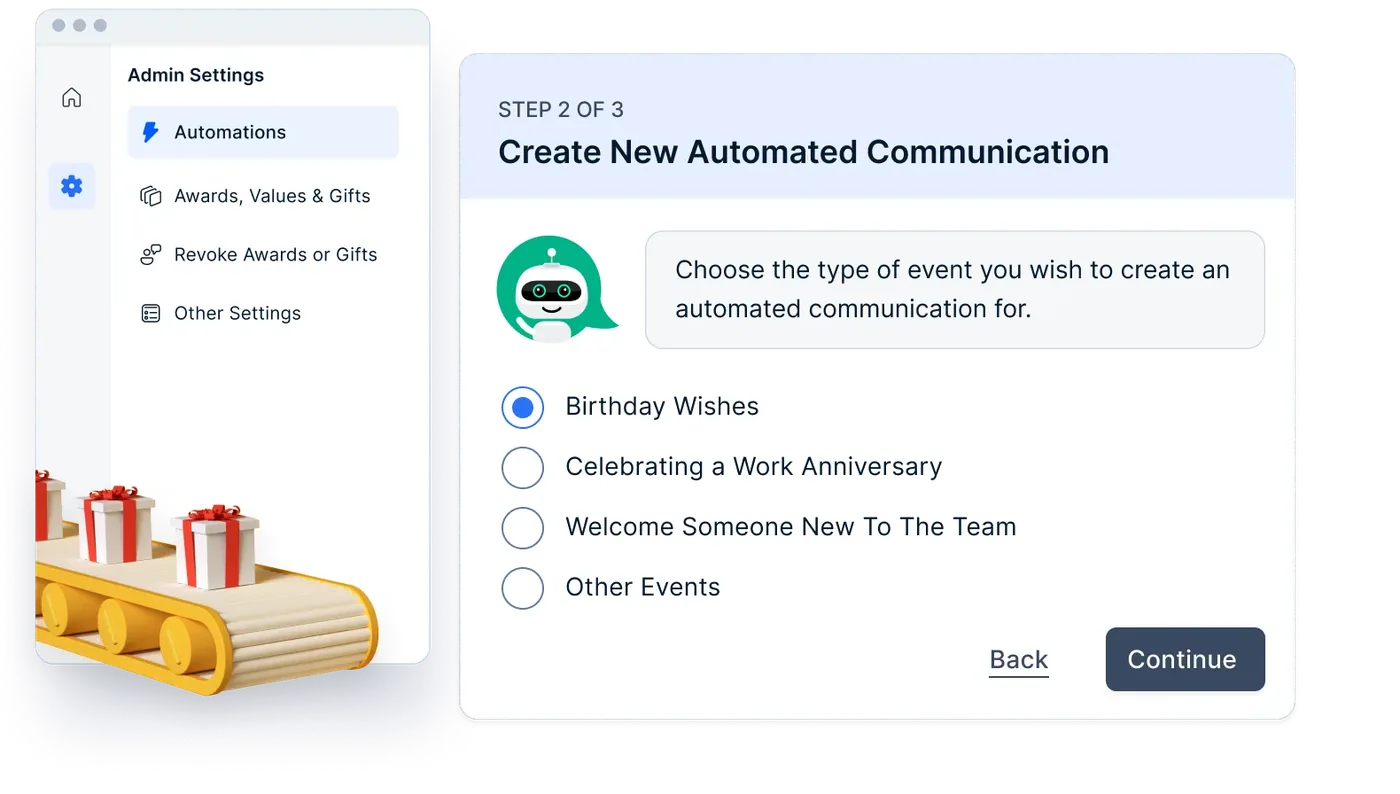
Automation keeps this consistent at scale: structured award workflows, approvals by nominators or jury panels and automatic triggers for birthdays, work anniversaries and other milestones make sure no one is missed. For a design blueprint, see our guide to a values-based recognition program.
How to measure employee satisfaction
Measuring employee satisfaction regularly helps you find what needs fixing before it shows up in turnover. To measure employee satisfaction well, combine direct feedback with behavioral data:
- Employee satisfaction survey: Run a full survey once or twice a year covering role, manager, pay, growth, work environment and culture. It shows strengths and the areas that need attention.
- Pulse surveys and eNPS: Short monthly or quarterly pulses and an employee Net Promoter Score track changes between full surveys.
- One-on-one meetings: Regular conversations surface how people feel about workload, growth and their manager, often things a survey misses.
- Turnover and retention rates: Rising turnover or falling retention, especially among high performers, often points to low satisfaction.
- Productivity and participation: Quality of work and participation in company activities are indirect signs of satisfaction.
- Stay and exit interviews: Ask current employees what keeps them, and leavers why they are going, then act on the patterns.
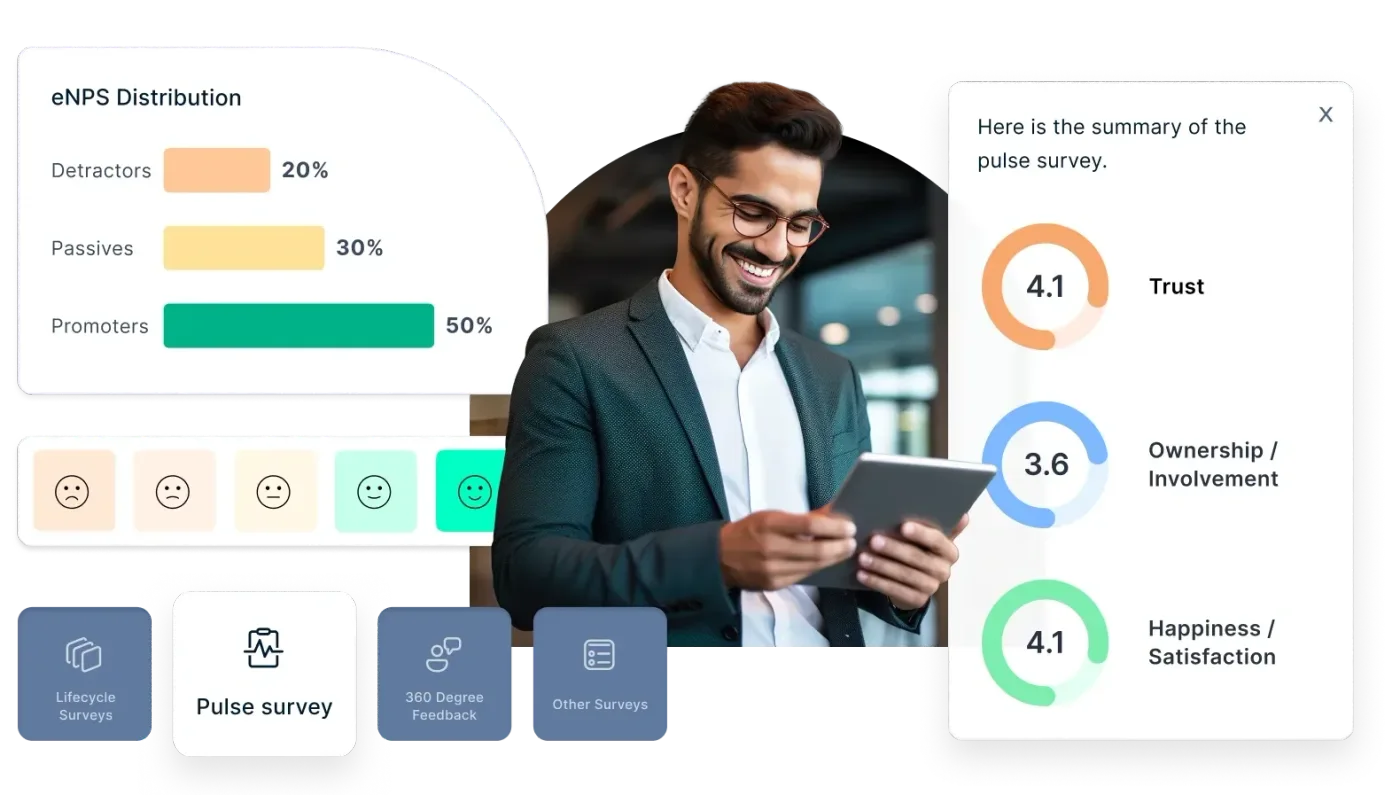
Use a consistent set of employee satisfaction survey questions so you can compare results over time. Ask employees to rate statements such as these on a five-point scale:
- I am satisfied with my job overall.
- I have the tools and information I need to do my job well.
- My manager supports me and gives me useful feedback.
- I am paid fairly for the work I do.
- I see a clear path to grow here.
- My work is recognized when I do a good job.
- I can maintain a healthy balance between work and personal life.
- I would recommend this company as a great place to work.
To roll several of these measures into one number, see how to build an employee engagement index.
How Empuls helps you improve employee satisfaction
Empuls, Xoxoday's employee engagement platform, brings the satisfaction drivers above into one place:
- Surveys and eNPS: Pulse, lifecycle and eNPS surveys with anonymity controls and insights show how satisfaction changes and why.
- Recognition and rewards: Peer and manager recognition, spot and jury-based awards and a global rewards catalog make appreciation frequent and fair.
- Automated milestones: Milestone rewards and automated messages for birthdays, work anniversaries, new joiners and course completions make sure no one is missed.
- Communication: A social intranet with announcements, groups and polls keeps everyone informed and connected.
- Perks and wellbeing: Flexible benefits, discounts and wellness programs support employees inside and outside work.
Make employee satisfaction a habit
Whether the employment is a job or a career, the best leaders and managers improve satisfaction, motivation and engagement together. Get the basics right, recognize good work, give people room to grow and measure regularly, then act on what you learn.
Employee satisfaction is not a one-time project. Treat it as a leading indicator you check often, and you will see problems early enough to fix them. For the role HR plays in making this happen, read the role of HR in employee engagement.
Book your Empuls demo
Frequently asked questions
Employee satisfaction is how content employees feel about their job, pay, manager, colleagues, growth and working conditions. It matters because satisfied employees are less likely to leave, tend to perform better and give customers a better experience. Because it shifts before turnover does, satisfaction also works as an early warning sign that something in the workplace needs attention.
Four key sources of job satisfaction are the work environment, compensation and benefits, the job role and its responsibilities and work-life balance. A positive, supportive workplace, fair pay and perks, meaningful tasks and a manageable workload with some flexibility together shape how satisfied most employees feel. Weakness in any one of them can pull overall satisfaction down.
Seven commonly used dimensions of job satisfaction are pay and benefits, work conditions, job security, career growth opportunities, work-life balance, relationships with colleagues and management and leadership support. Satisfaction surveys often group questions under these dimensions so employers can see which areas are strong and which need action, rather than relying on a single overall score.
Employee satisfaction measures how content people are with their job and conditions, while employee engagement measures how much energy, commitment and discretionary effort they invest. A satisfied employee can still be disengaged, doing the minimum without wanting to leave. Satisfaction removes reasons to quit; engagement creates reasons to perform. Most organizations track both, because each predicts different outcomes.
Measure employee satisfaction with an annual or twice-yearly satisfaction survey, short pulse surveys, eNPS and regular one-on-one conversations. Add behavioral data such as turnover, retention of high performers, absenteeism and exit interview themes. Track the same questions over time and compare results by team, location and tenure so you can see where satisfaction is rising or falling.
There is no universal benchmark, because scores depend on the scale and questions used. As a reference point, the Conference Board found 68.9% of US workers satisfied overall in 2026. For eNPS, any score above zero means more promoters than detractors, and scores above 30 are generally considered strong. The most useful comparison is your own trend over time.
Run a full employee satisfaction survey once or twice a year and short pulse surveys monthly or quarterly. The full survey gives a detailed baseline, while pulses show whether the changes you made are working. Add lifecycle surveys at key moments such as onboarding and exit. Always share results and actions quickly, or participation will drop.
The most common causes of low employee satisfaction are unfair or unclear pay, little recognition, poor management, no visible career path, heavy workloads and weak communication. Promotion policies and bonus plans are frequent sore points in recent surveys. Low satisfaction often concentrates in specific teams or pay bands, so look at segmented survey results rather than the company average.





































































































































































































































































































































































































































































































































































