
Key Takeaways
Employee motivation is the internal and external drive that leads people to start a task, put effort into it and keep going until it is done well.
The two types of employee motivation are intrinsic (purpose, growth, enjoyment) and extrinsic (pay, rewards, recognition), and strong workplaces support both.
Herzberg's theory shows that fixing pay and policies only prevents dissatisfaction, while recognition, growth and meaningful work create motivation.
Self-determination theory points to autonomy, competence and relatedness as the three needs that fuel lasting intrinsic motivation.
Gallup and Workhuman found well-recognized employees were 45% less likely to leave within two years, yet only 22% get the right amount of recognition.
What is employee motivation? It is the level of energy, commitment and creativity that people bring to their jobs, and it decides how hard and how long they work toward a goal. Motivation comes from inside (purpose, growth, enjoyment of the work) and from outside (pay, recognition, rewards), and the strongest workplaces deliberately support both.
Motivation isn't just about enthusiasm: it plays a direct role in business success. It drives productivity, improves retention and creates a positive work environment where employees feel engaged and valued. That is why businesses invest time in understanding what motivates employees and how to sustain that motivation over time.
Many assume financial incentives are the primary driver, but motivation goes far beyond compensation. Decades of employee motivation theories show that career growth, recognition, autonomy and workplace culture matter as much as pay, and often more. This guide explains the meaning of employee motivation, why it matters, the types of motivation, eight key theories, the factors that shape it and how to measure and improve it.
What employee motivation means
Employee motivation is the internal and external drive that leads an employee to start a task, put effort into it and keep going until it is done well. It is the driving force behind an employee's performance, creativity and overall contribution to an organization. It's not just about the paycheck; it's about feeling valued, having a sense of purpose and being part of something bigger.
When employees are motivated, they are more likely to go the extra mile, which results in higher productivity and a positive workplace culture. Highly motivated employees wake up ready to take on new challenges, eager to learn and willing to push their limits. No one stays motivated every single day, but motivated employees bring that energy most of the time.
Motivation is often confused with engagement and satisfaction. The three are linked, but they describe different things, and knowing the difference helps you pick the right fix:
| Concept | What it describes | Typical question it answers |
|---|---|---|
| Employee motivation | The drive behind effort: why someone acts and how hard they try | Why does this person put in effort? |
| Employee engagement | Emotional commitment to the work and the organization's goals | How invested is this person in our success? |
| Employee satisfaction | How content someone is with their job, pay and conditions | Is this person happy with the deal they have? |
A satisfied employee can still be unmotivated, and a motivated employee can disengage if the organization lets them down. For a deeper look at the other two, read our guides to employee engagement and employee satisfaction.
Technology has also changed how companies motivate employees. Businesses can now use tools to assess, monitor and lift motivation, such as pulse surveys, real-time recognition and personalized rewards. These tools make motivation strategies more personal and more sustainable, because they respond to what each employee actually needs.
Why employee motivation matters
Employee motivation matters because it is the gap between the work people are capable of and the work they actually do. Motivated employees not only excel in their roles but also inspire those around them, and when they move into leadership they drive teams toward success with focus and positive energy. Unmotivated employees, on the other hand, often feel bored, dissatisfied or burnt out.
Right now, that gap is wide. According to Gallup's State of the Global Workplace 2026 report, only 20% of employees worldwide were engaged in 2025, and low engagement cost the global economy an estimated $10 trillion in lost productivity. Manager engagement fell from 27% to 22% in a single year, which matters because managers are the people most responsible for keeping teams motivated.
20%
of employees worldwide engaged in 2025
Gallup
$10T
lost productivity from low engagement
Gallup
22%
of employees get the right amount of recognition
Gallup and Workhuman
41%
would quit without development opportunities
Randstad
The motivation gap in numbers
Recognition is one of the cheapest ways to close the gap, yet it is underused. Gallup and Workhuman research from 2024 found that just 22% of employees get the right amount of recognition for their work, and that well-recognized employees were 45% less likely to have left their organization two years later. Growth matters too: in Randstad's Workmonitor 2025, 41% of workers said they would quit a job that offered no development opportunities, up from 29% the year before.
Benefits of motivated employees in the workplace
How do companies benefit from having plenty of motivated employees? These are the eight most important benefits of motivated employees in the workplace:
- More innovation: Employees who enjoy their jobs and feel motivated to do their best also tend to develop new ideas and improvements. Unburdened by self-limiting beliefs, they have the energy to spot areas for improvement and make things happen, so the business becomes more innovative as a result.
- Higher employee engagement: Working with a group of demotivated employees can drag down even a highly engaged person. Joining a team of motivated employees does the opposite: it lifts overall engagement and commitment. Motivation and engagement tend to go hand in hand.
- More efficient, more productive employees: Motivated employees get more done in less time because they are excited to finish their tasks and do a great job. Their output is better in quantity and quality, and because they see their own performance as good, they keep improving it.
- Lower turnover: Employees who aren't motivated or engaged leave more often, especially top performers. Motivated employees see the impact of their work and feel inspired to stay and keep contributing. See our employee retention strategies for the full picture.
- Higher job satisfaction: Motivated employees believe the organization lets them grow and contribute. They see the environment as cooperative, fair and trustworthy, and they score higher on satisfaction and promoter surveys.
- Better morale: Motivation and morale go hand in hand. Letting people make decisions, making their jobs more meaningful, giving them responsibility and authority and encouraging creativity all lift both.
- Self-discipline: Motivation promotes self-discipline, and self-discipline gets far more done than discipline imposed by managers. A motivated employee manages their own work because they believe it serves their own interests.
- Organizational citizenship behavior: Motivated, satisfied employees identify with the organization's goals and values. They help colleagues, share knowledge and take on work beyond their job description that improves how the team functions.
Types of employee motivation
There are two main types of employee motivation: intrinsic and extrinsic. Intrinsic motivation carries more weight over the long run because it sustains effort without constant rewards, but extrinsic motivation is what most workplaces design first, so we cover both in turn.
Intrinsic motivation
Intrinsic motivation is the drive to do something because it is satisfying in itself. Examples include enjoying a hard problem, feeling proud of good work, learning a new skill or believing the work matters. It tends to produce persistence, creativity and higher-quality work.
Extrinsic motivation
Extrinsic motivation is the drive to do something for an outside outcome, such as pay, a bonus, a promotion, praise, a gift card or avoiding a penalty. It is useful for clear, measurable tasks and for signaling what the organization values. It works best when rewards are fair, meaningful and tied to behavior people can control.
The two types work together rather than against each other. Recognition, for example, is extrinsic in form but feeds intrinsic needs for competence and belonging. Our guide to intrinsic vs extrinsic motivation explains how to balance them, with examples for each.
Turn motivation theory into daily practice
Recognize wins, reward with choice and track motivation with pulse surveys in one Empuls platform.
Talk to our ExpertTrusted by 5,000+ companies
8 employee motivation theories in the workplace
There are many theories and studies on employee motivation, and eight of them explain most of what managers see at work. We start with the need-based theories (Maslow, Herzberg and self-determination theory), which explain what people want, then move to the process theories (expectancy, equity, goal-setting, attribution and nudge), which explain how people decide where to put their effort; self-determination theory has the strongest modern research behind it.
1. Maslow's hierarchy of needs
Psychologist Abraham Maslow introduced this theory in his 1943 paper "A Theory of Human Motivation." The basis of his theory is that people need their most basic needs met before they can find the motivation to pursue higher goals.
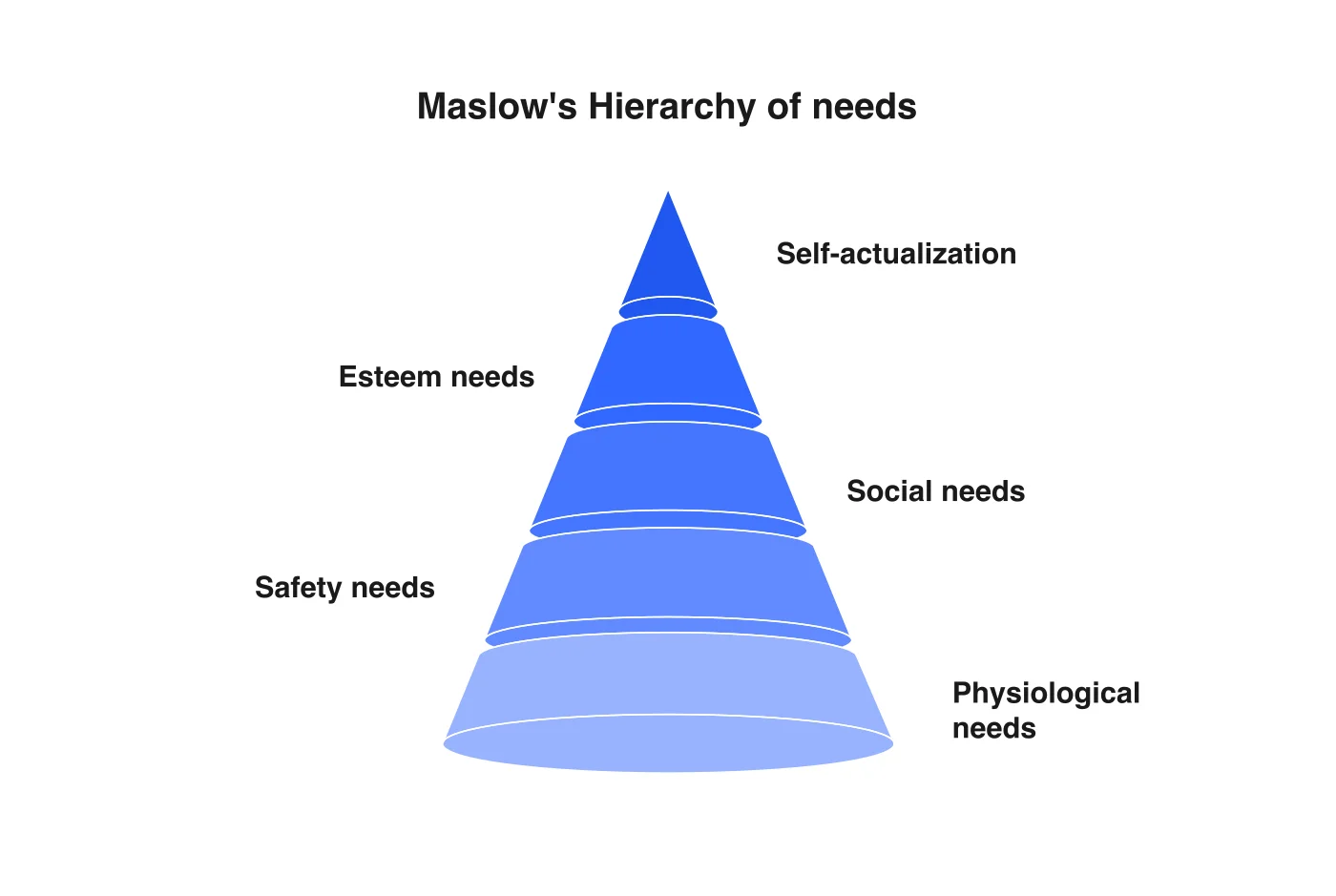
His hierarchy has five levels:
- Physiological: Basic needs such as food, water, sleep and shelter that a person needs to survive.
- Safety: Needs that help people feel safe, including health, freedom and personal and financial security.
- Social: Needs for connection, such as friendships, relationships, family and belonging.
- Esteem: Needs to feel good about yourself, confident, appreciated and recognized.
- Self-actualization: The top of the pyramid, the need to become your very best self.
This theory makes sense: if you're worried about how you'll afford your next meal, you're not going to do much top-notch thinking about strategic initiatives. An employee works up the hierarchy and, once one level is met, aspires to the next. So organizations should understand where each employee sits and help them reach the next level.
What it means for employee motivation: Supporting employees' needs outside of work is vital. People won't achieve what they'd like at work if they're uncertain about their next paycheck or consumed by daily worries. That's why many companies offer fair pay, financial wellness support, flexible schedules, wellness programs and employee perks. Needs also vary by context: a workforce of mostly frontline workers may have different priorities from a team of office-based knowledge workers, and an early-stage startup differs from a mature enterprise.
2. Herzberg's two-factor theory
Developed by psychologist Frederick Herzberg in the 1950s, the two-factor theory says two separate sets of factors influence employee motivation and satisfaction:
- Motivator factors: Factors that give employees positive motivation to do their best every day, such as feeling recognized and appreciated, enjoying their role, achievement and a clear career progression path.
- Hygiene factors: Factors that make employees dissatisfied and demotivated when they are missing, such as salary, benefits, job security, relationships with coworkers and managers, working conditions and company policies.
Both sets of factors matter, but they work independently. Fixing hygiene factors prevents low motivation, so employees feel fairly paid and comfortable with the people they work with. Raising motivation, however, means promoting the motivator factors, such as making recognition frequent and meaningful and giving people work they can grow in.
3. Self-determination theory
External factors are important, but it is just as effective to build a framework that increases internal motivation. That's where self-determination theory, developed by psychologists Edward Deci and Richard Ryan, comes in. It says that satisfying three basic psychological needs encourages intrinsic motivation and high-quality performance:
- Relatedness: The feeling of being cared for and belonging. This means making people feel heard, valued and appreciated.
- Competence: Feeling effective and growing. Trusting employees to do their jobs well while holding them accountable for achievable goals is key.
- Autonomy: Feeling in charge of your own actions and choices. Avoiding micromanagement and encouraging employees to take initiative fills this need.
This theory is all about creating a work environment that helps employees be their best selves. The need to grow, feel valued and trust your own skills becomes even more important during difficult times, such as restructuring or an uncertain job market.
4. Expectancy theory
Victor Vroom's expectancy theory says people choose how to behave based on the outcome they expect from that behavior. In short, we decide what we're going to do based on what we think will happen, and how much we want it. According to this theory:
Motivational force = Expectancy x Instrumentality x Valence
- Expectancy: The belief that effort will lead to good performance ("If I try, I can do this").
- Instrumentality: The belief that good performance will lead to a reward ("If I do this well, I'll get something for it").
- Valence: How much the person values that reward.
All three factors need to be high for employees to be motivated; because the formula multiplies, a zero on any one of them cancels out the rest. Even if the employer provides everything needed, an employee may still not be motivated unless they believe the employer has actually provided it.
What it means for employee motivation: People perform well when they believe there's a reasonable chance they'll get a reward they value. If you hand out small ornaments for great work, employees may think they have a good chance of getting one, but it isn't valuable to them. If merit raises are highly valued but rare, people won't be motivated because they don't see a realistic chance of earning one. Set achievable goals, then reward them with things employees actually want, such as a reward store where they pick their own reward.
5. Equity theory
John Stacey Adams's equity theory says people compare what they put into their work (effort, skill, time) and what they get out of it (pay, recognition, opportunities) with what others receive. When the ratio feels fair, motivation holds; when it feels unfair, people reduce effort, ask for more or leave.
What it means for employee motivation: Fairness is visible. Transparent pay ranges, consistent promotion criteria and recognition that reaches every team, not just the most visible people, protect motivation. Our guides on recognition equity and preventing bias in recognition programs go deeper.
6. Goal-setting theory
Edwin Locke and Gary Latham's goal-setting theory shows that specific, challenging goals lead to higher performance than vague goals such as "do your best," as long as people accept the goal and get feedback on their progress.
What it means for employee motivation: Agree on clear, stretching goals with each employee, explain why they matter, check in regularly and celebrate milestones along the way. Goals that are impossible, or that people had no say in, tend to demotivate rather than motivate.
7. Three-dimensional theory of attribution
People are always looking for meaning in what happens to them. That is the basis of Bernard Weiner's three-dimensional theory of attribution: we try to explain why things happen, and the reasons we settle on shape how we act in the future. The theory boils down to three questions we ask about a setback, such as a presentation that went badly:
- Stability: Is the problem temporary, like a bad night's sleep, or ongoing and stable, like a belief that we're not good enough?
- Locus: Was it caused by something external, like the presentation computer crashing, or by something internal, like our own ability?
- Controllability: Was it within our control, like a lack of preparation, or outside it, like an internet outage?
When people feel they lack innate strengths and skills, they tell defeatist stories about themselves and give up hope of improving, which is deeply demotivating. When they feel they can control the factors behind a problem and know how to fix them, they're far more likely to improve and feel motivated to do better. Feedback that focuses on effort and specific behaviors, not fixed traits, supports this.
8. Nudge theory
Nudge theory, popularized by Richard Thaler and Cass Sunstein, says you can steer people toward decisions in their broad self-interest by changing how choices are presented, without forcing or restricting them. Organizations can't force employees to adopt a behavior, but they can make the right choice the easy one.
Nudge theory can also help you understand negative influences on behavior and remove them. One common nudge is showing what peers do, for example how many colleagues joined a wellness challenge or recognized a teammate this week, which signals what is normal and desirable. Defaults, reminders and timely prompts are nudges too. For a related idea from behavioral economics, see how loss aversion shapes employee behavior.
Employee motivation theories compared
Seeing the theories side by side makes it easier to choose which one to apply to a specific motivation problem. Most real situations call for two or three at once, for example fixing a fairness issue (equity) while clarifying goals (goal-setting):
| Theory | Core idea | What managers can do |
|---|---|---|
| Maslow's hierarchy | Basic needs come before higher goals | Secure fair pay, safety and wellbeing before expecting stretch performance |
| Herzberg's two-factor | Hygiene factors prevent dissatisfaction; motivators create drive | Fix pay and policy gaps, then invest in recognition and growth |
| Self-determination | Autonomy, competence and relatedness fuel intrinsic motivation | Give choice, build skills and create belonging |
| Expectancy (Vroom) | Effort follows expected, valued outcomes | Make goals achievable and rewards meaningful and reliable |
| Equity (Adams) | People compare their input and reward with others | Keep pay, promotions and recognition fair and transparent |
| Goal-setting (Locke and Latham) | Specific, challenging goals with feedback raise performance | Agree clear goals and review progress often |
| Attribution (Weiner) | How people explain setbacks shapes future effort | Give feedback on controllable behaviors, not fixed traits |
| Nudge (Thaler and Sunstein) | Choice design steers behavior without force | Use defaults, reminders and social proof |
Factors that influence employee motivation
Studying motivation through organizational behavior research helps HR practitioners understand what drives it in isolation. Of the eleven factors below, employee involvement, a feeling of being involved in decisions that affect your job, has the greatest influence, so it comes first; the rest are ordered from basic security to growth and environment.
- Employee involvement: Create an environment where employees can influence the decisions and actions that affect their jobs. This is more a leadership philosophy than a tactic, and it lets people continuously contribute to the organization's success.
- Job security: A guarantee of regular income is the primary reason most people work, and the perceived risk of losing a job has a big effect on motivation. Perceived security depends on the trust employees have in the organization and their manager, their self-efficacy (how they judge their own performance) and how strongly they identify with the organization.
- Trust: Trust can be relational, based on the personal connection between manager and employee, or calculated, based on confidence in each other's abilities. Both raise the sense of security people need to take on challenges.
- Task-oriented leadership: Leaders who clarify goals, communicate efficiently and address unproductive behavior give people precise direction. When employees know exactly what to do, tasks get completed, and that clarity feels like security.
- Organizational identification: Employees who own the organization's successes and failures as their own tend to be more motivated and feel more responsible for its future.
- Supervisor support with personal problems: Personal problems are a major external cause of lost motivation and productivity. When a supervisor genuinely tries to help, employees are partly relieved of that stress, and their motivation recovers.
- Fair wages: Pay meets basic needs and is a classic hygiene factor, so a lack of it causes strong dissatisfaction. But motivation does not rise in step with pay increases; beyond fairness, other factors take over.
- Interesting work: Job enrichment makes work interesting and challenging. Explain how each person's goals fit the company mission, give them the right tools and training, build peer support, share information openly, reward initiative and offer variety through job rotation and stretch projects.
- Tactful discipline: Give clear guidelines, set key result areas accurately, look for root causes and give critical feedback in private, confidentially and without making it personal. Keep reassuring the employee and keep coaching until the issue is resolved.
- Promotion and career development: Opportunities for promotion, wider responsibility, new territories or new roles strongly affect motivation, whether they're based on proficiency, experience or training.
- Good working conditions: Working conditions affect health, safety, security and working hours. Beyond meeting statutory duties, that means suitable workspaces and tools, reasonable workloads and support for wellbeing, since daily stress remains above pre-pandemic levels in Gallup's data.
Signs of low employee motivation
Low motivation rarely announces itself. Watch for these signals, especially when several show up in the same team at once:
- Doing the minimum: Work gets done, but nobody volunteers ideas or extra effort.
- Missed deadlines and quality slips: Errors and rework rise without an obvious capacity problem.
- Rising absence and lateness: Unplanned absences and late starts creep up.
- Quiet meetings: Fewer questions, suggestions or debates than before.
- Low participation: Survey response rates, recognition activity and event attendance drop.
- Job searching: Updated profiles, more internal transfer requests and exit interviews that cite boredom or lack of growth.
If these signs persist, motivation has often turned into disengagement. Our guide to employee disengagement explains the causes and how to reverse them.
How to measure employee motivation
You can't improve what you don't measure. Combine what employees tell you with what they do, and track the trend over time rather than a single score:
| Metric | What it tells you | How to track it |
|---|---|---|
| Pulse survey motivation and engagement scores | How energized and committed people feel right now | Short monthly or quarterly pulse surveys |
| Employee Net Promoter Score (eNPS) | Whether people would recommend the company as a place to work | One question in each pulse cycle |
| Recognition frequency and reach | Whether effort is being noticed, and across which teams | Recognition platform reports |
| Voluntary turnover, especially of top performers | Whether motivation is turning into exits | HRIS data by team and tenure |
| Absenteeism | Early warning of burnout or disengagement | Attendance data by team |
| Learning uptake and internal mobility | Whether people see a future with you | Course completions, internal moves |
| Goal attainment | Whether effort is turning into results | Performance and goal tracking |
How to motivate employees: 7 practices that work
Knowing the theory is only useful if it changes what managers do. These seven practices apply the theories above and work in most teams and industries:
- Recognize effort often and specifically: Thank people for specific behaviors soon after they happen, and let peers recognize each other too. Regular, specific recognition meets the esteem and relatedness needs that Maslow and self-determination theory describe.
- Give autonomy over how work gets done: Agree on outcomes, then let people choose their approach. Avoid micromanaging.
- Set clear, challenging goals: Explain why each goal matters and review progress in regular one-on-ones.
- Make rewards meaningful and fair: Offer choice in rewards so they have real value, and apply the same criteria across teams.
- Invest in growth: Offer training, mentoring, stretch assignments and visible career paths.
- Support wellbeing: Watch workloads, protect time off and offer wellness and financial support.
- Listen and act: Run pulse surveys, share what you heard and show what changed as a result.
For a complete playbook with examples, read our 15 employee motivation strategies, and for inspiring discretionary effort specifically, see how to motivate employees to go the extra mile. If you use incentives, understand how incentives influence behavior before you design them.
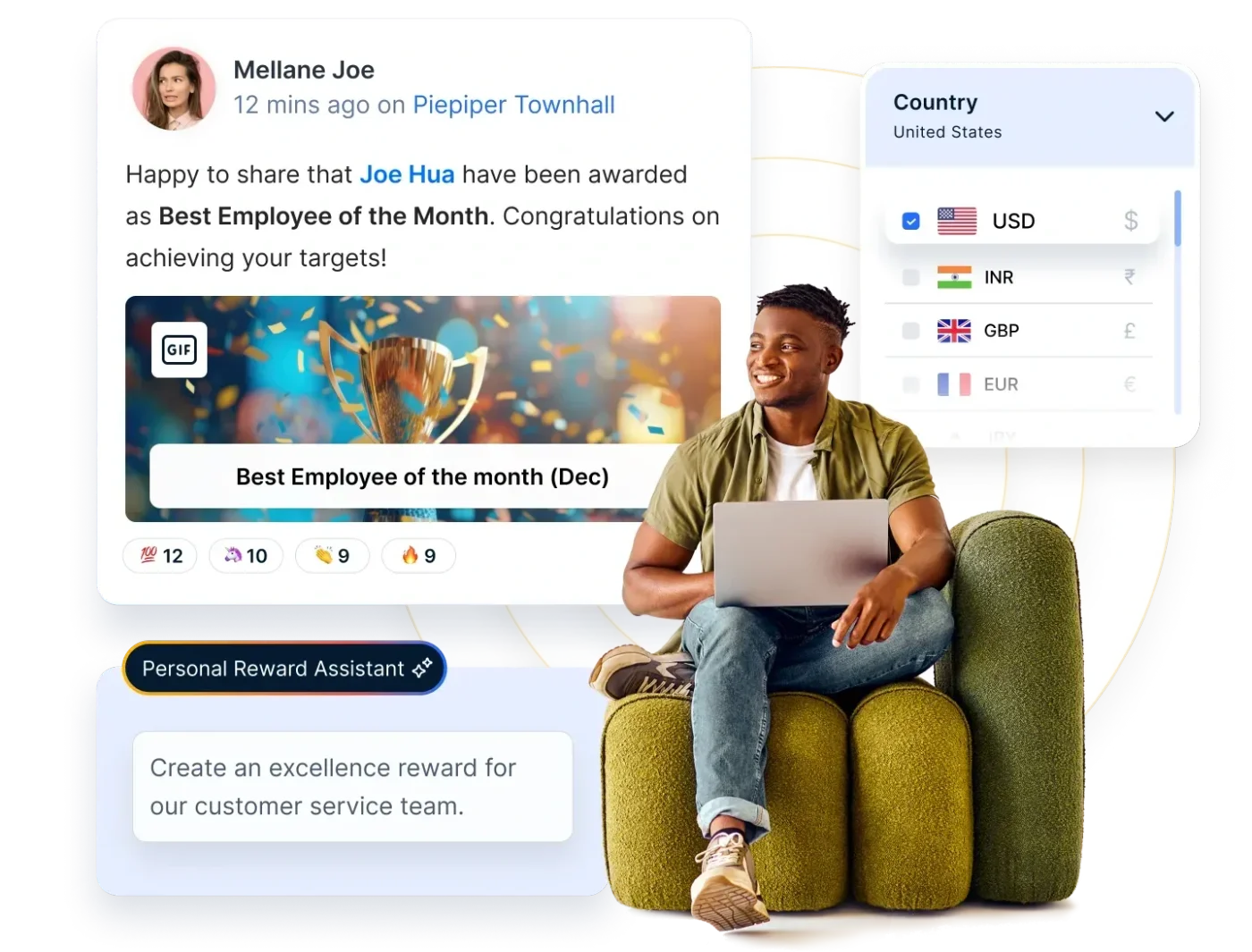
Drive employee motivation with Empuls
Keeping employees motivated goes beyond paychecks: it's about recognition, growth and a strong sense of belonging. Empuls, Xoxoday's employee engagement platform, brings these together in one place:
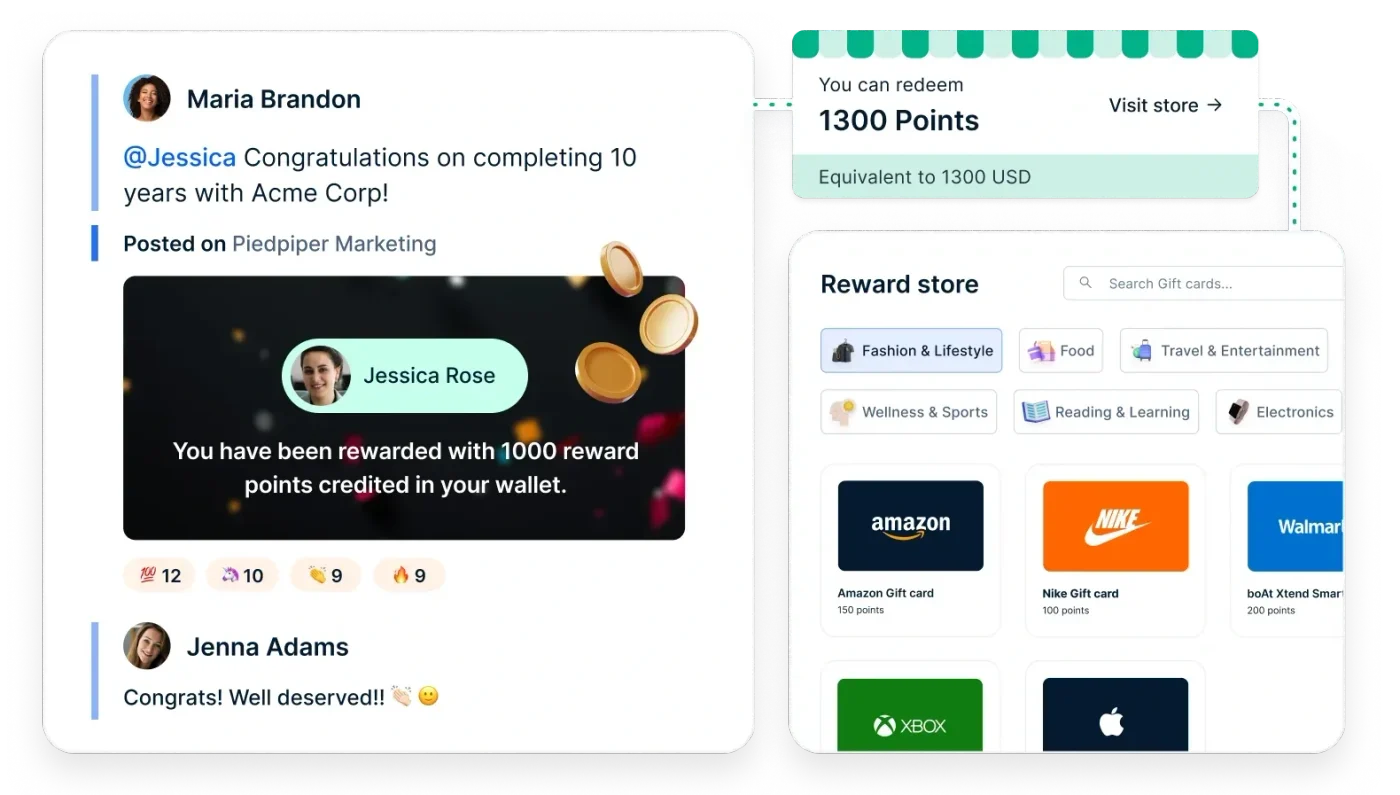
- Recognize and reward achievements: Celebrate milestones, performance and everyday wins with spot awards, nominations and points employees redeem for rewards they choose.
- Measure motivation and engagement: Track sentiment with pulse surveys and AI sentiment analysis, then turn results into action plans for managers.
- Build connection: Bring people together through a social intranet, celebrations and shared wins.
- Offer benefits people value: Add benefits and perks and wellness programs that support needs outside work.
Conclusion
Employee motivation is the drive that turns ability into results, and it shapes productivity, satisfaction, retention and business success. Theories such as Maslow's hierarchy of needs, Herzberg's two-factor theory, self-determination theory and expectancy theory have helped businesses understand what drives employees for decades. The lesson they share is simple: meet basic needs fairly, then give people autonomy, growth, recognition and a reason to care. Measure motivation regularly, act on what you learn and make recognition a daily habit rather than an annual event.
Book your Empuls demo
Frequently asked questions
The two main types of employee motivation are intrinsic and extrinsic. Intrinsic motivation comes from the work itself, such as purpose, learning and pride in a job well done. Extrinsic motivation comes from outside outcomes, such as pay, bonuses, promotions, recognition and rewards. Some frameworks add finer categories, such as social or achievement motivation, but they all fit within these two.
The most widely used employee motivation theories are Maslow's hierarchy of needs, Herzberg's two-factor theory, self-determination theory, Vroom's expectancy theory, Adams's equity theory and Locke and Latham's goal-setting theory. Weiner's attribution theory and nudge theory are also useful at work. Need-based theories explain what people want, while process theories explain how they decide where to put effort.
No single theory explains everything, but self-determination theory has some of the strongest research support today. It says people are most motivated when they feel autonomy, competence and relatedness. Many organizations combine it with Herzberg's two-factor theory, fixing hygiene factors such as pay and policy first, and with goal-setting theory to turn motivation into clear results.
The key factors are employee involvement in decisions, job security, trust in managers, clear leadership, fair pay, interesting work, recognition, career development, fair treatment and good working conditions. Supervisor support with personal problems and a sense of belonging also matter. Pay works mainly as a hygiene factor: it must feel fair, but growth and recognition drive motivation beyond that point.
Measure employee motivation with a mix of survey and behavior data. Run regular pulse surveys that ask about energy, purpose and recognition, and track eNPS. Then watch behavioral signals such as voluntary turnover of top performers, absenteeism, recognition frequency, learning uptake, internal mobility and goal attainment. Compare teams and track trends over time rather than relying on one annual score.
Employee motivation is the drive behind effort: why a person acts and how hard they try. Employee engagement is the emotional commitment a person feels toward their work and the organization's goals. Motivation is usually a precondition for engagement, but they can diverge: a motivated employee can disengage if the organization treats them unfairly or ignores their contributions.
Common causes of low motivation at work include lack of recognition, unclear goals, micromanagement, unfair pay or promotions, no visible career path, heavy workloads and burnout, poor relationships with managers and job insecurity. Personal stress outside work also plays a role. Most of these sit within a manager's influence, which is why manager training and regular check-ins are effective fixes.
Employee motivation is important because it turns skills into results. Motivated employees are more productive, more innovative and more likely to stay, which lowers hiring and training costs. They also lift team morale and customer experience. Low motivation does the opposite: Gallup estimates that low engagement cost the global economy about $10 trillion in lost productivity.





































































































































































































































































































































































































































































































































































