
Key Takeaways
Retail incentive ideas are rewards on top of hourly pay or commission that motivate store associates to sell more, serve better and stay longer.
A balanced retail employee incentive program mixes money, recognition, time and wellbeing, growth and experience rewards.
Tie each incentive to a store metric associates can influence on their shift, such as units per transaction, attach rate or loyalty sign-ups.
Pooling part of the reward by hours worked keeps retail incentives fair for part-time, weekend and stockroom staff.
Retail incentive games such as sales bingo, spin-the-wheel and beat your best add energy to long shifts at very low cost.
The best retail incentive ideas give store associates something they value for the results and behaviors that matter on the floor: bonuses and discounts for sales, recognition for great service, flexible scheduling and time off for consistency, and training and mentorship for growth. Below are 20 retail incentive ideas grouped by type, five retail incentive games, a planner that matches store metrics to incentives and four tips to make any program work.
Retail incentive ideas are rewards a store or retail brand offers its sales associates, cashiers and store managers, on top of hourly pay or commission, to motivate higher sales, better customer service and longer tenure. They work best when every associate on every shift has a fair chance to earn something, and when rewards arrive quickly after the result.
Why retail employee incentive programs matter now
Retail has always struggled to keep good people. In 2025, retail trade recorded an average monthly separations rate of 3.8%, nearly 7 million separations in the year, according to Bureau of Labor Statistics JOLTS data. Mercer's turnover research puts retail and wholesale at the highest turnover rate of any industry it tracks, 26.7%, and Gallup estimates that replacing a frontline employee costs about 40% of their salary.
3.8%
average monthly separations rate in retail, 2025
BLS JOLTS
26.7%
turnover in retail and wholesale, highest of any industry
Mercer
40%
of salary to replace a frontline employee
Gallup
27%
of retail frontline workers say they lack recognition or rewards
UKG, 2026
Why retail employee incentive programs pay for themselves
The job itself has also changed. The store is now one part of an omnichannel journey, and shoppers often check their phones in the aisle. To give people a reason to buy in person, associates need product knowledge and the energy to create a personal experience online shopping cannot match. A well-structured incentive plan helps turn store teams into brand advocates who deliver that experience every shift. UKG's 2026 global frontline workforce study of 8,200 workers found pay is still the top reason people quit and schedule flexibility is the second most important factor in whether they stay, so the best retail incentives address both.
20 retail incentive ideas for store teams
These 20 retail sales incentive ideas are grouped into five types so you can build a balanced mix. Start with the money and recognition ideas, because pay is the top reason associates leave and recognition is the cheapest gap to close.
Money and savings incentives
- 1. Monthly or quarterly bonus programs: Pay a bonus for hitting individual or store targets over a set period. A regular cadence keeps associates focused on longer goals while giving them something tangible to count on.
- 2. Product discounts and samples: Give top performers extra discounts on store products or first access to samples of new items. They feel like insiders, and using the products makes them better at selling them.
- 3. Personalized performance rewards: Instead of a generic prize, match the reward to the person: a gift card to their favorite store, concert tickets or an item they have had their eye on. Points that associates redeem from a catalog make this easy at scale.
- 4. Surprise gift packages: Send a curated package of snacks, tech accessories, gift cards or self-care products after a big weekend or a holiday rush. The surprise makes it memorable.
Recognition incentives
- 5. Recognition wall: Create a space in the break room or back office that shows top performers with their photo and what they achieved. It keeps achievements visible to everyone on every shift.
- 6. Social media shout-outs: Feature great associates on the company's social channels or internal feed. Public recognition builds confidence and shows customers the people behind the brand.
- 7. Recognition in company-wide meetings: At the end of each quarter, dedicate part of the all-hands or regional meeting to top performers from each store.
- 8. Lunch or dinner with leadership: Invite top performers to a meal with the store, district or regional leaders. It shows appreciation and gives associates a chance to share ideas from the floor.
- 9. VIP access to store events: Give top performers a role at product launches, VIP sales or brand events. It deepens their connection with the brand and what it sells.
- 10. Premium parking spot: Reserve the best staff parking spot for the associate of the month. It costs nothing and is especially valued at busy malls and city locations.
Time and wellbeing incentives
- 11. Extra paid time off: Reward strong results with an extra paid day off. It helps associates recharge after peak season and protects work-life balance.
- 12. Flexible scheduling rewards: Let top performers choose shifts first or swap shifts more freely. For many associates with family or study commitments, first pick of the schedule is worth more than cash.
- 13. Wellness rewards: Offer gym memberships, wellness app subscriptions or yoga and meditation sessions. Standing all day is physically demanding, and wellbeing support shows you care about the whole person.
Growth incentives
- 14. Career development opportunities: Offer a clear path from associate to key holder, department lead and assistant manager, with free training and seminars for those who perform. Walmart reports in its fiscal 2026 annual report that about 75% of its US salaried store, club and supply chain managers began in hourly roles.
- 15. Specialized training and certifications: Fund product, styling, technical or customer service certifications. They lift skills and give associates something to put on their resume.
- 16. Mentorship rewards: Pay a bonus or give recognition to experienced associates who train new hires through their first 90 days. It builds teamwork and helps new people stay.
Experience and milestone incentives
- 17. Experience-based rewards: Offer a cooking class, a weekend away or a hot air balloon ride instead of another gift. Experiences create memories associates talk about.
- 18. Performance-based travel rewards: Reserve a travel package for associates or store managers who hit a major annual target. Make the bar fixed, so every qualifier wins.
- 19. Charity donations: Donate to a charity of the top performer's choice. It appeals to associates who are motivated by giving back.
- 20. Anniversary rewards: Celebrate work anniversaries with a gift or extra time off. In a high-turnover industry, staying a year is worth celebrating.
For recognition program design across stores, see this guide to retail rewards and recognition. For the wider pillar on sales rewards, read the sales incentives guide.
Run store contests associates can track on their phones
Launch leaderboards, SPIFs and milestone rewards for every store and pay winners instantly.
Talk to our ExpertTrusted by 5,000+ companies
Retail incentive planner: match store metrics to incentives
The ideas above work best when each one is tied to a store metric associates can influence on their shift. Use this planner to pick a metric, a fitting incentive and a cadence.
| Store metric | What it measures | Incentive that fits | Cadence |
|---|---|---|---|
| Units per transaction (UPT) | Items sold per sale | Per-shift bonus or points for beating the store average | Daily or weekly |
| Average transaction value (ATV) | Value of each sale | Monthly bonus tier for ATV above target | Monthly |
| Conversion rate | Share of visitors who buy | Store team bonus pool when conversion beats last year | Monthly |
| Attach rate | Add-ons such as warranties or accessories | Small SPIFF per attachment | Two to four weeks |
| Loyalty sign-ups | New loyalty or credit card members | Points per sign-up, sales bingo square | Weekly |
| Customer satisfaction | Survey scores or mystery shopper results | Recognition wall and lunch with leadership | Monthly |
| Attendance and reliability | Shifts worked as scheduled | First pick of next month's schedule | Monthly |
| Shrink and accuracy | Inventory loss and count accuracy | Store team reward when shrink falls below target | Quarterly |
Here is how a simple store team bonus pool works. A store sets a monthly sales target of $400,000 and funds a pool of 1% of sales above target. If the store sells $450,000, the pool is $500. Split by hours worked, an associate who worked 120 of the store's 1,200 staff hours that month receives $50, while one who worked 60 hours receives $25. Pooling by hours keeps it fair for part-time and weekend staff.
For how commission itself works in stores, read how retail commission works, and for setting the rate, see this guide to retail commission percentage.
5 retail incentive games to motivate sales associates
Gamified incentives turn everyday targets into short challenges and keep energy high on long shifts. These five games are cheap to run, and the first two make sure everyone who hits the target wins something.
1. Mystery prize challenge
Associates who hit a set target pick a sealed envelope or a prize from a box. Prizes range from a gift card or a longer break to a paid day off. The surprise keeps the excitement going all day.
2. Spin-the-wheel rewards
When an associate reaches a milestone, they spin a prize wheel with rewards such as a cash bonus, a free lunch or an extra store discount. It adds a little luck while making sure everyone who qualifies wins something.
3. Sales bingo
Give each associate a bingo card of sales tasks. They mark off squares as they complete each task, and the first to complete a row or column wins a prize. Here is a sample card you can adapt:
| Column A | Column B | Column C |
|---|---|---|
| Sell a premium product | Sign up a loyalty member | Add a warranty or protection plan |
| Sale of 3 or more items | Get a 5-star customer review | Sell this week's featured item |
| Help a customer find an out-of-stock item online | Upsell to the next size or bundle | Sale over $150 |
4. Golden ticket hunt
Link golden tickets to specific challenges, such as a high-value sale or a set number of loyalty sign-ups. Each completed challenge earns a clue to a golden ticket hidden in the back of house, which is redeemed for a reward.
5. Beat your best
Challenge each associate to beat their own best day, week or month. Anyone who sets a new personal record unlocks a bonus or an extra discount. Because associates compete against themselves, new and part-time staff can win as easily as veterans.
For more short-term formats, see these sales SPIFF ideas, and for 25 ideas grouped by goal, see these sales incentive ideas.
4 tips to maximize the effects of retail incentives
Even good ideas fall flat if the program is built badly. These four tips decide whether incentives actually change behavior, and the first is the foundation for the rest.
1. Start from what motivates your associates
Performance is closely tied to motivation. In Maslow's hierarchy of needs, fair pay and security come first, and then belonging, a sense of accomplishment and reaching one's potential. Incentives that only address pay miss the top of the pyramid. Ask associates what they value through a short survey or in one-on-ones, and give standout performers special projects, such as setting up a new display, with a fair bonus attached. The challenge and the reward motivate together.
2. Strengthen skills with training
Retail changes fast, and many incentives assume associates already know the products, tools and service standards. Formal training is the prerequisite for great service and fair incentives. Train associates on the store's technology and data, such as inventory lookup and clienteling tools, and protect customer and employee data with role-based access so information is only available to the right people.
3. Keep money central, and let everyone win something
Money matters most in retail: the BLS reports a median wage of $17.03 an hour for retail salespersons in May 2025. But all-or-nothing contests with one winner disappoint everyone else and can turn colleagues into rivals. Make sure everyone who participates can earn something, with the winner earning more. A shared pot works well: associates take a set amount each time they complete an agreed task, and whoever has the most at the end of the day earns a bonus. Not every game has to be competitive. Personal targets paid daily, weekly or monthly also work.
Store discounts are another way to give financial value without cash. And strong pay and benefits are a retention strategy in themselves: Costco reports in its fiscal 2025 annual report that it retains about 94% of US and Canadian employees after their first year.
4. Think beyond financial compensation
Many associates value flexible hours and extra time off more than a small cash amount. Retailers that support healthy, balanced lives, with gym memberships, wellness sessions, team sports or a mental health day off, show they care about the whole person, and that care is an incentive in itself. Offer a wide variety of rewards, because different people value different things. A popular item from the store makes a practical prize and helps the winner sell it with first-hand knowledge.
How Empuls helps you run retail incentives
Traditional retail incentive programs often rely on spreadsheets and manual tracking, so rewards arrive late and associates lose interest. Empuls includes sales incentive management with live leaderboards, SPIFs, sales contests, badges, streaks and milestone rewards, tied to real plan data and running on web and mobile, so associates on the floor can check progress between customers.
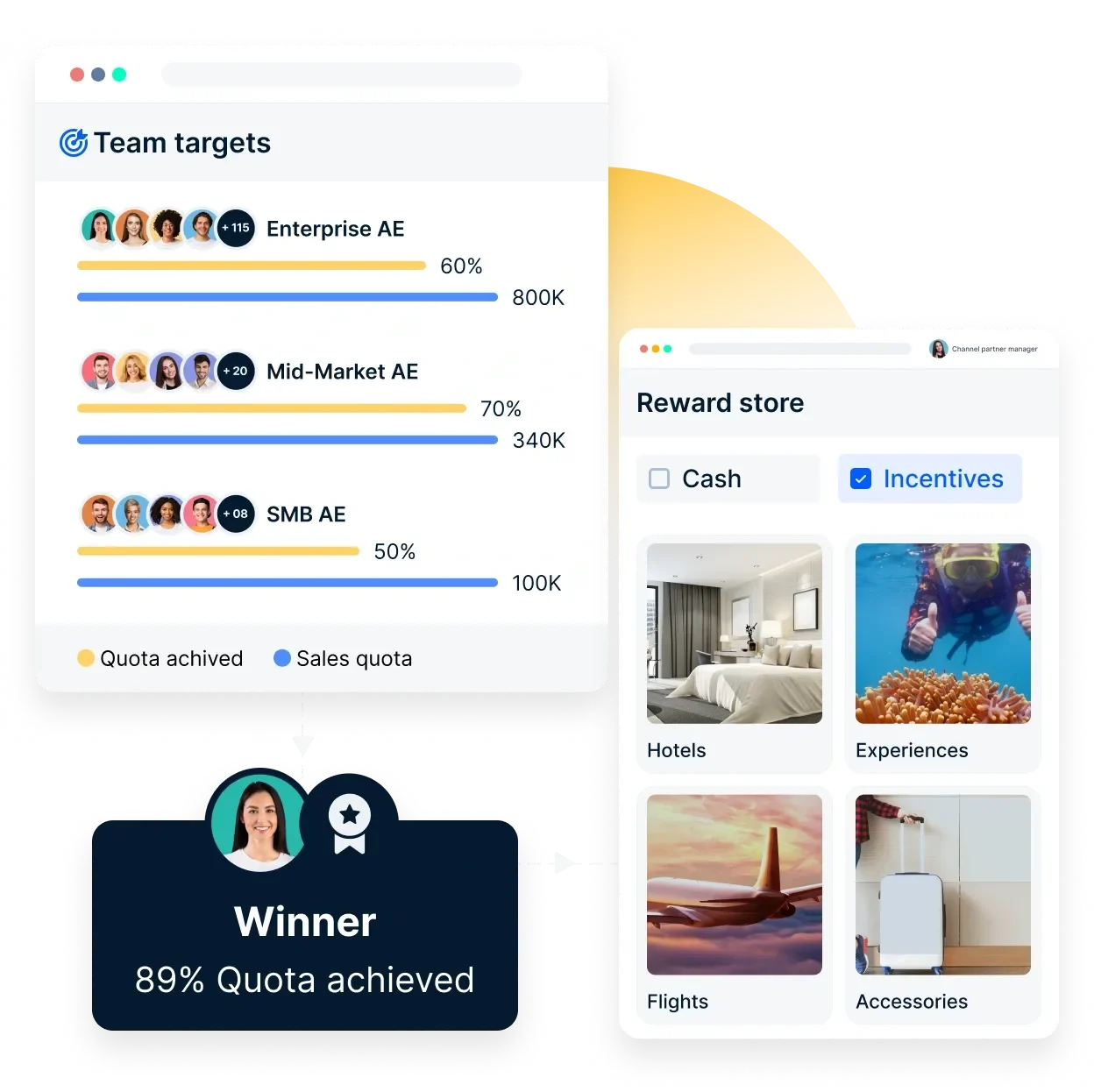
- Gamified challenges: Turn daily store goals into contests with leaderboards, badges and milestone rewards.
- Milestone rewards: Recognize associates at every stage, such as a set number of high-ticket items sold, not only at the end of the month.
- Fast, personal rewards: Associates redeem points for gift cards, experiences and merchandise they choose, in 50+ currencies.
- Recognition on the same platform: Managers can celebrate associates publicly alongside the incentive program.
Explore leaderboards, SPIFs and contests, Empuls for the frontline workforce and employee recognition. For platforms built for retail brands, see this list of sales incentive platforms for retail brands.
Make retail incentives part of the store culture
Retail roles are demanding, and high turnover follows when associates feel unseen. Retail incentives lift the quality of work and make the job more enjoyable, which is why they belong in every store's retention plan alongside fair pay and good scheduling. For the full retention picture, read about retail turnover rate and employee engagement in retail.
Start with a fair cash incentive and a recognition idea, add one game each month, and train associates so everyone can compete. Mix in time off, wellbeing and growth rewards, and keep asking your team what they value. When associates see that the store invests in them, they invest more in every customer.
Book your Empuls demo
Frequently asked questions
A common example is a monthly sales leaderboard where associates who beat the store's units per transaction target earn points they redeem for gift cards, plus a bonus for the top performer. Other examples include a SPIFF for each warranty sold, extra store discounts, first pick of shifts, a recognition wall and a paid day off for a strong quarter.
Use recognition, time and growth. Celebrate wins on a recognition wall and in team huddles, give top performers first pick of shifts or an extra day off, fund training and certifications, offer mentorship and a clear path to key holder or manager, and run low-cost games such as sales bingo. Ask associates which rewards they value most.
Use both. Individual incentives reward personal sales and service, but they can feel unfair when associates work different shifts or roles. A store or team bonus pool, split by hours worked, rewards everyone who contributes, including stockroom and fitting room staff. Many retailers pay a small individual reward and a larger store-level reward.
Reward metrics associates can influence on their shift: units per transaction, average transaction value, conversion rate, attach rate for add-ons, loyalty sign-ups and customer satisfaction scores. Store teams can also be rewarded for attendance and lower shrink. Avoid rewarding raw sales alone when associates have very different shift patterns or roles.
As quickly as possible. Retail associates respond best to rewards paid daily or weekly for short games and SPIFFs, and monthly for bonuses and team pools. Long gaps between the result and the reward weaken the link, especially for part-time and newer staff who may not be around for a quarterly or annual payout.
A retailer incentive is usually a program run by a brand or manufacturer to encourage retailers, or their store staff, to sell more of its products. It often takes the form of SPIFFs, points, volume bonuses or exclusive deals paid to the store or directly to associates. It differs from a store's own incentives for its employees.
Size the program against the extra gross profit it should create and the cost of turnover it prevents. Replacing a frontline employee costs about 40% of salary according to Gallup, so incentives that keep associates longer often pay for themselves. Use low-cost recognition and games often, and save bigger cash or travel rewards for major targets.





































































































































































































































































































































































































































































































































































