
Key Takeaways
Sales team retention strategies work best when they fix the real causes reps leave: unclear commissions, unrealistic quotas, weak coaching, no career path and too much admin.
The Bridge Group found median SDR attrition of 40% in 2024, with an average tenure of 1.9 years and a three-month ramp for each replacement.
Salesforce research found non-selling tasks take up 70% of reps' time, so better tools and automation are a retention lever, not just a productivity one.
A monthly flight-risk scorecard covering commission disputes, quota distance, activity, career stalls and recognition helps managers act before a top rep resigns.
Transparent, automated commission payouts and gamified recognition keep reps motivated between commission cycles and reduce sales turnover.
Sales team retention strategies are the pay, coaching, career, recognition and tooling practices that keep good sales reps from leaving. The ones that work best fix what actually drives reps out: unclear or late commissions, unrealistic quotas, weak coaching, no visible career path and too much admin. This guide covers the causes, a flight-risk scorecard you can use with your managers and 12 strategies to keep top sales performers.
Building a successful sales team is not just about hiring top performers. It is about keeping them engaged and motivated for the long run. When top salespeople leave, they take industry knowledge, client relationships and pipeline with them, and constantly replacing reps is expensive and hard on team morale and productivity.
Many businesses focus on recruitment but overlook how to retain sales reps, which leads to high turnover. A lack of career growth, unclear compensation and too little recognition often push talented reps to explore other opportunities. Without the right retention strategies, even a generous compensation plan will not keep people committed.
The real cost of sales turnover
Sales roles churn faster than most. Benchmark data from The Bridge Group shows how quickly the seat empties and how long it takes to fill it productively again:
40%
median annual SDR attrition
including promotions out of the role
1.9 years
average SDR tenure
before leaving or moving up
3 months
average SDR ramp time
before a new hire is fully productive
Source: The Bridge Group, 2025 SDR Metrics Report (2024 data, 351 B2B companies)
The Bridge Group's 2025 SDR Metrics and Compensation Report found median SDR attrition of 40% in 2024, made up of 11% voluntary exits, 13% involuntary exits and 16% promotions. Promotions are a healthy kind of turnover, but the other 24% is people leaving the company, and every exit restarts a hiring cycle and a ramp period with no full quota coverage.
A lot of that loss is avoidable. Gallup research found that 42% of employees who voluntarily left their job said their manager or organization could have done something to keep them. For sales leaders, that is the case for a deliberate retention plan rather than a counteroffer scramble when a top rep resigns.
To size the cost for your own team, multiply a rep's annual quota by the months the seat is empty plus the months of ramp, then divide by 12. A rep carrying a $1,200,000 annual quota whose seat sits empty for two months and whose replacement takes three months to ramp costs you about $500,000 in uncovered quota, before you count recruiting fees, manager time and lost client relationships.
Sales attrition causes: why good reps leave
Five sales attrition causes come up again and again, and compensation problems top the list because they hit trust and income at once. Losing top reps disrupts revenue growth and team dynamics, so sales leaders need to identify these causes early and address them proactively.
1. Inconsistent or poorly structured compensation plans
When commission structures change frequently, lack transparency or favor certain deals over others, top reps lose trust in leadership. Late or incorrect payouts make it worse. A misaligned incentive plan pushes reps toward companies with clear, predictable earnings. Our guide to the signs of a bad sales incentive plan covers the most common design flaws.
2. Weak leadership and lack of coaching
Sales reps expect guidance, not micromanagement. Leaders who fail to provide strategic coaching, constructive feedback or clear direction create frustration, and a lack of leadership development pushes ambitious reps to seek growth elsewhere.
3. Unrealistic quotas with no execution support
Setting aggressive targets without the right tools, leads or market insight leads to burnout. Salesforce's State of Sales research, a 2024 survey of 5,500 sales professionals, found 67% of reps did not expect to meet their quota that year and 84% had missed it the year before. Top reps do not stay where success feels impossible or where leadership ignores market realities.
4. Insufficient recognition and career progression
Salespeople thrive on recognition, whether through monetary rewards, promotions or leadership opportunities. When leadership overlooks top performers or offers no clear growth path, reps feel undervalued and leave, often for a title they could have earned with you.
5. Outdated sales processes and tools
Top reps expect streamlined workflows and automation that cut admin work. The same Salesforce research found non-selling tasks such as admin and meeting prep take up 70% of reps' time. Companies relying on outdated CRM setups, manual reporting and slow decisions frustrate high performers who want to spend their time selling.
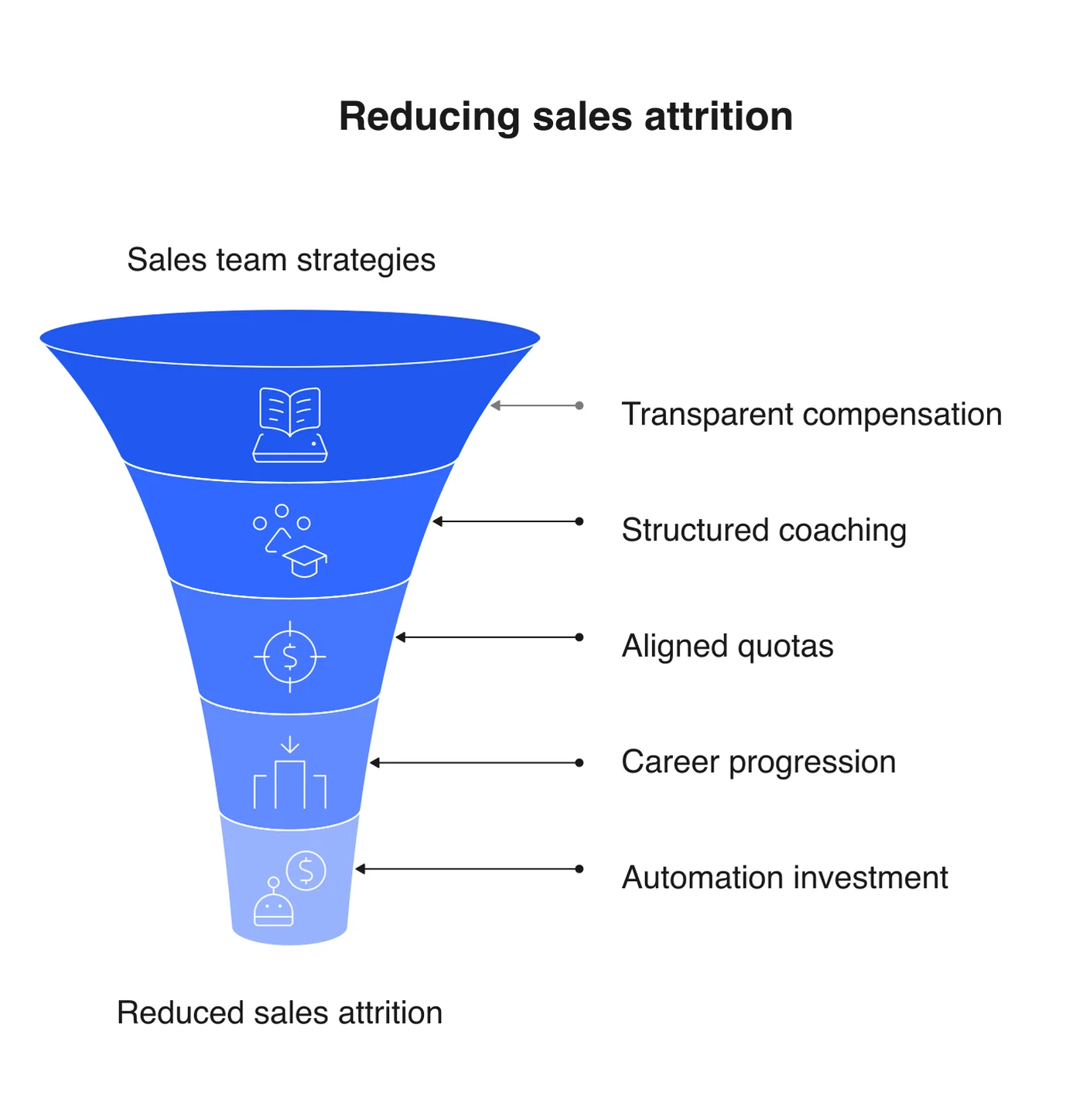
The fixes follow directly from the causes. Create transparent, data-driven compensation; implement structured coaching and leadership training; align quotas with market conditions and enablement; build clear career progression with performance-based promotions; and invest in automation that removes busywork. Sales reps do not leave just for better pay. They leave when leadership fails to create an environment where they can succeed.
Sales rep flight-risk scorecard
Most resignations announce themselves weeks in advance if you know where to look. Use this scorecard in monthly one-on-ones or pipeline reviews: score each signal 0 (not present), 1 (emerging) or 2 (clear), then add up the total for each rep.
| Signal | What to look for | Score (0 to 2) |
|---|---|---|
| Commission disputes | Repeated questions or disputes about payouts, splits or crediting | ______ |
| Quota distance | Two or more periods well below quota with no clear recovery plan | ______ |
| Activity drop | Fewer calls, meetings or CRM updates than their own baseline | ______ |
| Career stall | No promotion, title change or new responsibility in 18 months or more | ______ |
| Recognition gap | No public recognition or reward in the last quarter | ______ |
| Territory or account change | Recent loss of key accounts or a weaker territory | ______ |
| Manager change | New manager in the last six months, or a strained relationship | ______ |
| Disengagement in team rituals | Quiet in team meetings, skipping contests or kickoffs | ______ |
The scorecard does not replace judgment. It gives managers a consistent way to spot risk across the team and to start a stay conversation before a recruiter starts a better one. Pair each high score with one concrete action from the strategies below.
Stop losing your best reps
Empuls automates commission payouts and runs leaderboards and contests that keep sales teams motivated.
Talk to our ExpertTrusted by 5,000+ companies
Top 12 sales team retention strategies to retain key performers
The 12 strategies below are grouped roughly from understanding your reps, through pay and growth, to the tools and team habits that keep them motivated. If you can only start with three, fix commission transparency, coaching and recognition first, because they reduce sales turnover fastest by addressing the causes above.
1. Understand what motivates each rep
What motivates your top and middle performers? Money matters, but it is rarely the only factor. Some reps want better incentives, others want more paid time off, more autonomy or a path into leadership.
Since expectations vary, personalize your approach. Ask directly in one-on-ones and stay interviews, then reward people the way they prefer. Employees feel included when they are recognized in ways that matter to them, and they contribute more toward the success of the team.
2. Maintain a transparent work culture
A transparent culture builds trust. Reps should know the goals that relate to them, the criteria for each promotion level and exactly how commissions are calculated, including splits, accelerators and clawbacks.
Involve them in changes to territories, quotas and plans before they take effect. Transparency builds trust, and trust is what keeps people in your organization longer.
3. Cultivate a strong sales culture
A strong sales culture builds good relationships between team members who are working toward a common goal. Healthy competition, clear accountability, transparent policies and fairness in incentives all contribute to it.
Celebrate collaborative wins as well as individual ones, such as a solutions engineer who helped close a deal or an SDR who sourced it, so competition never turns into a culture where reps hoard leads.
4. Maintain competitive compensation plans
Top performers are in high demand and easy for competitors to woo away. Devise a compensation plan that matches their contribution, benchmark base and on-target earnings against the market at least once a year and keep the plan simple enough that reps can calculate their own pay.
Avoid mid-year plan changes wherever possible. When you must change something, explain why, model the impact on typical earnings and give reps time to adjust. Predictable earnings are one of the strongest reasons reps stay.
5. Offer growth opportunities
Top talent looks for career growth, and when there is no scope for it, they start looking elsewhere. Offer growth opportunities at predictable intervals: SDR to account executive, account executive to senior or enterprise roles, and paths into team leadership or sales enablement.
Over the years, top and middle performers focus more on advancing in their roles than on monetary rewards alone. They want to widen their skill sets as the hierarchy narrows. Publish the criteria for each step so reps know exactly what it takes to move up.
6. Invest in coaching and training
Coaching is how career growth actually happens. Hold structured coaching sessions built on call reviews and deal reviews, not just pipeline inspection, and make sure first-line managers have the time and skills to coach.
Enroll top sales talent in training for career advancement, from negotiation and executive selling to leadership programs. Many universities offer executive programs that help experienced sellers keep up with the latest developments in their field. Gamified learning can keep that training engaging; see how gamified learning lifts completion and recall.
7. Provide new challenges to satisfy their hunger for growth
Highly talented salespeople are always hungry to learn. They are drawn to challenging tasks and are happy to own them. Making them part of new challenges is a win for both the rep and the business.
For example, if you are planning an expansion into a new region, ask a top rep to lead the first push with a clear time frame. Give them a new product launch, a strategic account or a mentoring role for new hires. Each one keeps the work fresh and signals that you see their potential.
8. Conduct regular one-on-ones and stay interviews
Feedback helps organizations steer better. Regular meetings with top and middle performers show you their mindset and clear the air when there are unaddressed issues. They also build rapport between leadership and the people who carry the number.
Add a stay interview at least twice a year. Ask what keeps them here, what might tempt them away and what one change would make their job better. Then act on the answers, and use the flight-risk scorecard above to decide who needs the conversation first.
9. Provide support with sales tools
Automation drives modern sales. Give reps the tools they need to save time and focus on selling: a clean CRM, sales intelligence, conversation tools and AI assistants that draft follow-ups and update records.
Setting high expectations without the support to meet them breeds discontent. The Salesforce research found two-thirds of reps on teams using AI said they had no intention of leaving, compared with just over half on teams without AI. Discuss with your team which tools would make them more efficient before you buy.
10. Encourage innovation
Top and middle performers like to find better ways of working. They test new outreach approaches, messaging and processes that make work less daunting and more productive.
In some organizations, rigid rules forbid any deviation from the playbook, which frustrates the best reps and pushes them out. Give them room to experiment, share what works with the team and recognize the people who improve the process for everyone.
11. Automate incentives and commission payouts
Few things irritate reps more than chasing commissions after closing a good deal. Over time, late or disputed payouts drive top performers out of the organization.
Invest in tools that automate incentive calculation and payout. With predefined criteria, reps know exactly what they will earn, payouts arrive on time without reminders and disputes fall because everyone sees the same numbers. Our guide on how to automate the sales commission process walks through the steps, and our roundup of the best incentive management software compares the options.
12. Use gamification techniques
Sales is a stressful job with many KPIs and targets. Gamification helps teams stay focused on goals, makes incentive programs more transparent and creates more engagement between commission cycles.
Performance leaderboards encourage healthy competition and real-time tracking of progress. Contests, badges and short sprints relieve stress, reinforce the right behaviors and make selling more enjoyable. For tools and design ideas, read our guides to sales gamification software and employee gamification.
How to keep top sales performers who show flight risk
When a high performer shows clear flight risk, speed matters more than a perfect plan. Work through these steps in order:
- Hold a stay conversation within a week: Ask what has changed and what would make them want to stay. Listen more than you pitch.
- Fix the money first if it is the issue: Resolve any payout disputes, check their earnings against the market and correct errors immediately.
- Offer a visible next step: A stretch account, a mentoring role, a promotion timeline with clear criteria or a seat on a strategic project.
- Recognize them publicly: Make sure their recent wins are celebrated in front of the team and leadership.
- Check in every two weeks for 90 days: Track whether the scorecard signals improve, and adjust if they do not.
Retaining sales employees with Empuls
Retention is not just about competitive salaries. It is about keeping reps engaged, recognized and striving for the next milestone. Empuls brings recognition, incentives and gamification together so every milestone and commission is visible and rewarding.
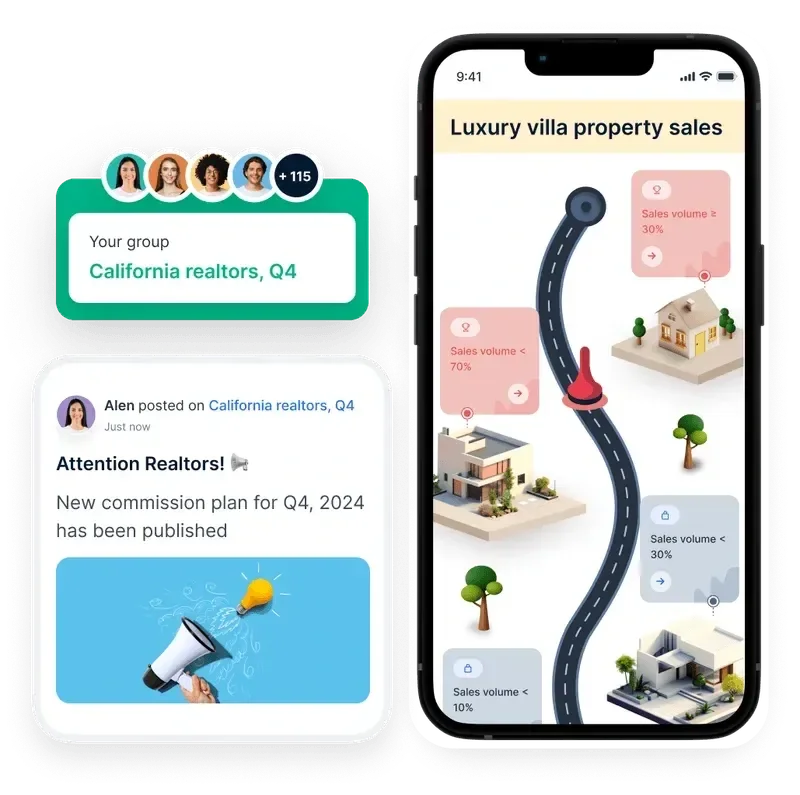
- Timely, accurate incentives: Xoxoday sales incentive software automates commission calculation and payouts, so reps see their earnings without chasing anyone.
- Gamification for long-term engagement: Sales gamification adds live leaderboards, SPIFs, contests, badges and streaks tied to real incentive plans.
- Recognition the whole company sees: Sales wins and milestone rewards are shared on a social feed, so top performers get credit beyond their own team.
- Goal tracking and transparency: Reps always know where they stand, how close they are to the next payout and what it takes to level up.
Build a sales team people want to stay on
Retaining top sales talent takes more than competitive salaries and commissions. Strong sales team retention strategies focus on transparent pay, realistic quotas, real coaching, visible career growth, recognition and tools that let reps sell. When reps feel valued, supported and fairly paid, they stay and perform at their best.
Start with the flight-risk scorecard this month, fix the top two causes it reveals and review progress each quarter. For broader retention ideas that apply beyond sales, see why high potential employees leave and our guide to employee retention strategies.
Book your Empuls demo
Frequently asked questions
Sales turnover runs well above most functions. The Bridge Group's 2025 report found median SDR attrition of 40% in 2024, though 16 points of that were promotions, leaving about 24% who exited the company. Benchmark each sales role separately, and track voluntary exits of top performers most closely, since those are the losses that hurt revenue.
You can retain sales reps without raising base pay by making commissions transparent and paying them on time, setting realistic quotas, coaching consistently and offering a visible career path. Public recognition, new challenges such as strategic accounts, better tools that cut admin work and gamified contests also keep reps engaged at a fraction of the cost of a raise.
The main causes of sales attrition are inconsistent or unclear compensation plans, unrealistic quotas without support, weak coaching and leadership, limited recognition and career progression, and outdated processes that bury reps in admin. Territory changes, manager turnover and missed payouts often act as the final trigger for a rep who was already frustrated.
Replacing a sales rep costs recruiting fees and manager time, plus lost revenue while the seat is empty and the new hire ramps. A useful estimate is annual quota multiplied by vacancy months plus ramp months, divided by 12. For a $1.2 million quota with two vacant months and a three-month ramp, that is about $500,000 in uncovered quota.
Keep top sales performers motivated with uncapped or accelerated commission for overachievement, public recognition of wins, stretch opportunities like strategic accounts or new markets, and a clear path to senior or leadership roles. Ask each top performer what matters most to them in regular stay interviews, because motivators differ widely between reps.
A stay interview is a structured one-on-one conversation in which a manager asks a rep what keeps them in the job, what frustrates them and what might tempt them to leave. Unlike an exit interview, it happens while you can still act. Hold one at least twice a year, and immediately when a rep shows signs of flight risk.
Sales gamification can improve retention when it is tied to real incentive plans and run fairly. Leaderboards, contests and badges give reps visible progress and recognition between commission cycles, which keeps motivation up during long sales cycles. It works best when rewards reach the whole team, not just the top three names on the board.





































































































































































































































































































































































































































































































































































