
Key Takeaways
Sales productivity is the sales output a team produces for the time, people and money it puts in.
Time is the first lever: Salesforce found sellers spend only 40% of their time selling, and top performers spend about twice as long with buyers as average reps.
A weekly selling-time audit that moves four admin hours to selling raises selling time by 25% for a rep at 40% selling time, with no new hires.
A lean, connected tech stack beats a large one, because half of sellers already feel overwhelmed by sales technology.
Track selling time share, meaningful conversations, pipeline progression, conversion, forecast accuracy and revenue per rep together.
To improve sales productivity, give reps more hours with buyers and make each of those hours count: audit where selling time goes, automate the admin, trim the tool stack, coach often and give every rep a clear daily plan. The 15 effective ways below split into nine moves for managers and six habits for sellers, with a selling-time audit and the metrics to track progress.
Sales productivity is the amount of sales output, such as revenue, pipeline or closed deals, that a team produces for the time, people and money it puts in. Productivity isn't about working longer hours. It's about working smarter: removing roadblocks so sales teams spend more time selling and less time on tasks that do not move a deal forward.
What sales productivity means in practice
Productivity refers to how efficiently results are achieved within a given timeframe. If a task originally takes four hours but can be completed in two, productivity for that task has doubled. In sales, it shows up as more revenue per rep, more pipeline per hour of prospecting and shorter time from first meeting to close.
Productivity can be tracked at every level, from an individual sales rep to a whole department. It is closely related to sales performance, but not the same: performance is the result against target, while productivity is the efficiency behind that result. For the result side, see this guide on how to improve sales performance.
Where sales time goes today
Most reps spend the majority of the week on work that is not selling. Salesforce's 2026 State of Sales research found the average seller spends 40% of their time selling, that reps spend nearly one full day a week on prospecting and that 48% say they lack the bandwidth for adequate cold outreach.
The Ebsta and Pavilion 2025 GTM benchmark report found sellers spend less than 2 hours a day selling on average, against about 4 hours for top performers. Tools can make this worse as well as better: a Gartner survey of 1,026 B2B sellers found 50% feel overwhelmed by the amount of technology their job requires.
40%
of a seller's time is spent selling
Salesforce, 2026
48%
lack bandwidth for cold outreach
Salesforce, 2026
50%
of sellers overwhelmed by sales technology
Gartner, 2024
< 2 hrs
a day selling, vs about 4 for top performers
Ebsta and Pavilion, 2025
The sales productivity gap in numbers
The gap between average and top performers is mostly a gap in time with customers. That makes time the first lever to pull, before hiring more reps or buying more tools.
The four principles behind sales productivity
At its core, improving sales productivity comes down to four operating principles that govern people and processes. They are easy to overlook in a hybrid or remote sales team, so check each one before you add new tactics.
01 · 01
Consistency in operation
A firm sales structure and a set rhythm for the rep's day build good habits, while leaving reps room to adapt minor things to their style. Lessons from what works can then be shared across the team.
02 · 02
Focus over distraction
Reps are not at their best all day. Protect peak hours for prospects and move admin and internal work to other parts of the day, or productivity drops fast.
03 · 03
Constant improvement
When reps settle into a groove and hit quota, inefficiencies creep in unnoticed. Keep reviewing tools, operations and training as buying changes.
04 · 04
A healthy work culture
Sales is high stress, with rejection and quota pressure every week. Healthy competition helps, but watch for burnout and keep engagement high.
What affects sales productivity
Several factors pull sales productivity down. Most of them sit in process and management rather than in the individual rep, which is why fixing the system usually beats pushing people harder.
- Process gaps: Inconsistent sales strategies, vague activity priorities and a fuzzy ideal customer profile (ICP).
- Skill gaps: Weak onboarding and infrequent coaching that leave reps learning on live deals.
- Pressure without support: Unrealistic targets and excessive pressure that lead to burnout.
- Tool problems: Resistance to useful tools, or so many tools that reps waste time switching between them.
- Misalignment: Poor communication between sales and marketing, or from leadership down.
- Wasted time: Poor scheduling and route planning, manual data entry and avoidable internal meetings.
- Culture: Negativity and mistrust that drain energy and focus.
Sales productivity metrics to track
When reps are productive, it shows across a handful of metrics. Track the six below by rep and by team every month, because together they show both how much time goes to selling and how well that time converts.
| Metric | What it shows | How to calculate |
|---|---|---|
| Selling time share | How much of the week goes to customer-facing work | Hours with prospects and customers divided by total working hours |
| Meaningful conversations | Quality of activity, not just volume of dials and emails | Conversations with qualified contacts that reach a next step, per week |
| Pipeline progression | Whether opportunities move or stall | Share of opportunities advancing a stage in the period |
| Lead conversion rate | How well leads turn into opportunities and deals | Converted leads divided by total leads, by source |
| Forecast accuracy | How predictable the team is | Actual closed revenue divided by forecast revenue |
| Revenue per rep | Overall output per seller | Closed revenue in the period divided by number of quota-carrying reps |
Run a weekly selling-time audit
The fastest way to improve sales productivity is to find the biggest time drains and remove them one by one. Ask each rep to log a typical week, then use the table below to match each drain to a fix and an owner.
| Time drain | Sign you have it | Fix | Owner |
|---|---|---|---|
| Manual CRM updates | Reps update records after hours or not at all | Automatic activity capture, fewer required fields per stage | Sales ops |
| Research and prep | An hour or more of research per first meeting | Account briefs from sales intelligence or AI tools | Sales ops and reps |
| Chasing unqualified leads | Low lead to opportunity rate | Shared lead scoring and a clear ICP with marketing | Marketing and sales leaders |
| Internal meetings | More than a few hours a week in status meetings | One pipeline review, one coaching slot, the rest async | Sales manager |
| Commission questions | Reps keep spreadsheets to check their pay | Automated calculations with live earnings visibility | Sales ops and finance |
| Tool switching | Same data typed into several tools | Consolidate tools, integrate the rest with the CRM | Sales ops |
Here is what the audit can be worth. A rep working 40 hours a week at 40% selling time spends 16 hours with buyers. Cutting four hours of admin and moving them to selling raises that to 20 hours, a 25% increase in selling time with no new hires. If each selling hour produces the same pipeline as before, pipeline grows by roughly the same share.
Stop reps losing hours to commission spreadsheets
Automate incentive calculations and give every rep live earnings and attainment.
Talk to our ExpertTrusted by 5,000+ companies
9 ways managers can improve sales productivity
Good sales productivity means consistently and predictably meeting or exceeding sales expectations, and managers control most of the levers. These nine ways run from tools and people to process and motivation; start with the tech stack and onboarding if reps are new or overloaded.
1. Build a lean, connected tech stack
Specialized sales tools automate processes and reduce administrative work, and AI tools can help generate and prioritize qualified leads, cutting time spent on prospecting. The core sales productivity tools are:
- CRM: The single source of truth for accounts, contacts and deals.
- Sales engagement: Sequences, dialers and email tracking for outreach at scale.
- Conversation intelligence: Call recording and analysis for coaching and deal insight.
- Sales intelligence: Account and contact data for research and targeting.
- Incentive and commission management: Automated calculations and live earnings for every rep.
More tools are not always better. Integrate every tool with the CRM, retire what nobody uses and train reps properly on what remains, so technology saves time instead of adding to it.
2. Establish an effective onboarding process
Sales keeps evolving to meet customer needs, and reps must master new skills, channels and tools to perform. Companies often hire experienced reps and expect them to perform as they did elsewhere, but results come only after thorough onboarding on the product, the buyer and the process.
Give new hires a ramp plan with weekly milestones, a buddy from the top performers and early shadowing of live calls. The employee onboarding checklist covers the wider onboarding steps.
3. Hire the right talent
While most people can become good at sales with training, some are naturally suited to it. They are driven, competitive and meticulous, quickly join the top performers and lift the people around them.
If you cannot find that expertise locally, cast a wider net. Remote and distributed teams make it far easier to hire across regions than it used to be, as long as onboarding and management are set up for it.
4. Develop business acumen in sales reps
Reps must understand how their prospects' businesses run, so the pitch is clear and leaves no gaps that create doubt. Trust is critical in sales, and reps build it fastest when they show a firm grasp of the target market and how the product fits.
Run short industry briefings, share account plans from won deals and ask reps to present a customer's business model in team meetings. For top performers, this broadens their reach across multiple verticals.
5. Create a clear sales plan
A solid sales plan puts the team's training and talent to work. It should set the metrics that define success, the target segments and the deadlines for assigned quotas, so reps can focus on qualified leads and proven plays.
Build in a feedback loop where reps are coached and retrained as the market changes. The compensation side of the plan matters too; see these sales commission and incentive plans for plan types.
6. Align sales and marketing
Marketing and sales teams often fall out of sync, especially with poor communication. Promoting products without consulting sales confuses leads and wastes rep time on poor-fit prospects.
Create a joint process with a shared definition of a qualified lead, a common view of the ICP and a monthly review of lead quality. For pipeline growth strategies that depend on that alignment, see these ways to increase B2B sales.
7. Gamify the sales process
Gamification brings game design principles into the sales process to add friendly competition and energy to routine tasks. Team leads set the parameters and rewards and display scores on a common leaderboard for everyone to see.
Point contests at the activities that drive productivity, such as meetings booked, CRM hygiene or follow-ups completed within a day, not only revenue. For formats and rules, see this guide to sales gamification.
8. Create an ongoing coaching culture
However well reps perform, they can always improve. In most teams a small group of high performers carries much of the revenue: Ebsta and Pavilion found just 14% of sellers drive 80% of revenue. The rest can gain the most from coaching and motivation.
Coaching is often scheduled for underperformers once or twice a year, which is far too rare. Salesforce found 46% of sellers rarely get feedback on their sales conversations. Coach weekly, and encourage peer-to-peer coaching so top performers share what works.
9. Embrace automation and AI
Automation can boost efficiency across the sales process. Lead routing tools assign the most qualified leads to the right reps, and conversation intelligence tools surface insights that help reps move prospects through the funnel.
Automation also frees reps from admin by sending follow-up emails, scheduling meetings and updating records. Salesforce found sellers expect AI agents to cut prospect research time by 34%. Start with the single biggest drain from your time audit, prove the time saved, then expand.
6 sales productivity tips for reps
Managers set the system, but great sales productivity also begins at the individual level. These six sales productivity tips help any rep get more from the same week.
1. Start with the right mindset and stay organized
Sales can be demotivating because of constant rejection. Staying optimistic is key to getting past rejections and staying motivated, and resilience is a skill you can build by reviewing what went well each day, not only what went wrong.
Being organized matters just as much. Plan tomorrow before you log off, group similar tasks together and keep your peak hours for prospects.
2. Set daily targets and goals
Ambitious goals are great, but they must be realistic. Write down specific daily goals, such as calls, meetings booked or proposals sent, and define how you will track them.
Handle your most challenging prospects first, when energy is high and ideas flow freely. Know your limits and set daily targets accordingly so work does not pile up.
3. Create a personal development plan
To stay on top of your game, learn and grow at every stage. A personal development plan defines the skills you need and a timeframe to build them.
Start with one skill a month and record your progress. When in doubt, ask your manager which skill would make the biggest difference to your results.
4. Learn from a sales coach or mentor
A mentor or coach can give you precise insight into your strengths and weaknesses and help you work on them. A mentor outside your reporting line also offers a useful outside perspective on situations at work.
Ask a top performer if you can shadow two of their calls a month, and offer to share your notes in return.
5. Track your progress
Track your progress both in numbers and in how you feel you are performing. Record your activity, conversion and pipeline numbers every week in your development plan so you know exactly where you stand.
Share them with your manager and mentor and ask where you could perform better. Live earnings and attainment views make this easier, because you see the effect of each deal as it closes.
6. Get creative with your approach
Managers and clients appreciate creative approaches. Follow the playbook to get the basics right, then add your own ideas to stand out, such as a short custom video, a relevant insight about the prospect's market or a useful introduction.
Experiment in small, low-risk ways and keep what works. Share the wins with your team so the playbook improves too.
Keep sales productivity steady in a downturn
Every sales organization faces a crisis at some point, in the company, the industry or the economy. The question then shifts from how to increase sales productivity to how to protect it:
- Prioritize existing customers: They are the most likely to buy again; Ebsta and Pavilion found 52% of new revenue in 2024 came from existing accounts.
- Cut unused spend: Cancel tools and services nobody uses and keep what clearly pays for itself.
- Reframe the pitch: Lead with cost savings, risk reduction and fast payback.
- Build relationships: Check in with customers to help, not only to book the next meeting.
- Keep prospecting: Protect pipeline for the recovery while existing accounts keep revenue running.
- Stay optimistic: Recognize small wins publicly so morale does not slide with the market.
Watch workload closely in these periods too. These ways to prevent burnout help managers keep pressure sustainable.
How Empuls helps improve sales productivity
Sales teams perform better when they know exactly how their efforts turn into rewards, without keeping their own spreadsheets. Empuls automates commission and incentive calculations from CRM, ERP and HRMS data, so payouts are accurate and on time and reps stop spending hours checking their pay.
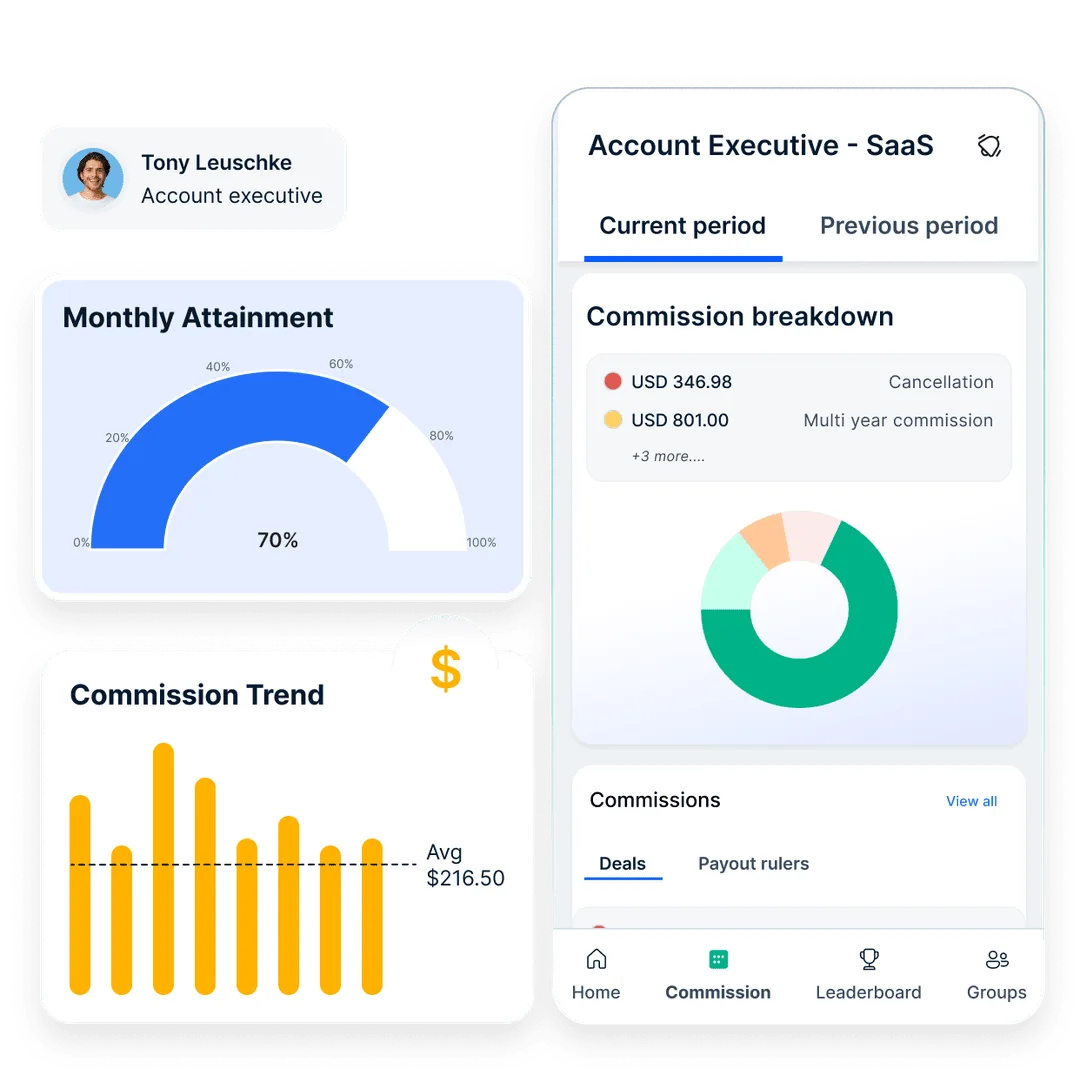
Reps see their KPI scorecard, earnings and leaderboard rank in one place, managers see quota attainment by team, region and plan as deals close, and live leaderboards, contests and badges keep focus on the activities that matter. Explore Empuls sales incentives, automated payouts and sales intelligence and performance analytics.
Start with time, then scale what works
To improve sales productivity, start at the level of the individual rep: good habits, a positive mindset and openness to learning. Then improve the team with the enablers around them: a lean tech stack, clear plans, frequent coaching and fair, visible rewards.
Run the selling-time audit, fix the biggest drain first and measure the change in selling time and pipeline. Repeat every quarter, and the gains add up.
Book your Empuls demo
Frequently asked questions
Sales productivity is the sales output, such as revenue, pipeline or closed deals, a team produces for the time, people and money it invests. A productive team spends more of its week with buyers and converts that time well. It is usually tracked as revenue per rep, selling time share, conversion rates and forecast accuracy.
Start with a one-week time audit for each rep, then remove the biggest drain, usually manual CRM updates, research or internal meetings. Automating one admin task and protecting peak hours for prospects can add several selling hours a week. Pair that with weekly coaching and a short contest on a high-value activity to turn extra time into pipeline.
Sales performance is the result against target, such as revenue, quota attainment and growth. Sales productivity is the efficiency behind that result: how much output the team gets from its time and resources. A team can hit quota while being unproductive, for example by adding headcount, so tracking both shows whether growth is sustainable.
The most useful sales productivity metrics are selling time share, meaningful conversations per week, pipeline progression, lead conversion rate, forecast accuracy and revenue per rep. Together they show how much time goes into selling and how well it converts. Track them monthly by rep and team so you can spot drains and coaching needs early.
Core sales productivity tools are a CRM, a sales engagement platform for outreach, conversation intelligence for call insight and coaching, sales intelligence for research and an incentive and commission platform for automated pay and live earnings. Integrate them with the CRM and retire unused tools, because too many tools add switching time instead of saving it.
AI improves sales productivity by taking over research, drafting, note taking, data entry and lead prioritization, so reps spend more time with buyers. Sellers in Salesforce's 2026 research expected AI agents to cut prospect research time by about a third. Results depend on clean CRM data and training, so start with one clear use case and measure the time saved.
Managers improve productivity by setting a clear sales plan, onboarding reps well, coaching weekly, aligning with marketing on lead quality and removing admin through automation. They should also keep internal meetings lean, recognize progress and watch for burnout. Measuring selling time and conversion by rep shows where each person needs support.





































































































































































































































































































































































































































































































































































